


If you are the kind of person who heroically eats a few pounds of salmon every week, chases it with sardines, and lectures your friends about the virtues of oily fish, congratulations: you are doing the best thing for your body.
In the modern nutrition universe, that level of commitment deserves an applause. But for those who don’t live in a Nordic fishing village, the nutrition company Zinzino has built its omega-3 research and formulations around these principles, combining biomarker testing, antioxidant protection and traceable sourcing across both sustainably harvested small-fish oils and a vegan marine-microalgae alternative. It’s biohacking at the next level.
They explain why: Because omega-3 fatty acids, the famous EPA and DHA found in marine foods, remain among the most important structural fats in the human body. They support brain signaling, heart health, immune balance and cellular communication. Unlike trendy nutrients that cycle through wellness blogs, omega-3 has survived decades of scientific scrutiny.
But here is the catch: most people are not eating enough of the right seafood. And supplement companies may be giving you confusing information.

Walk into any health store and you’ll see shelves lined with omega-3 oils promising brain health, heart health, joint support and more. Yet not all omega-3s are created equal, and the differences go far beyond price or flavor. You might assume the best oils are the ones that taste the strongest or come from the coldest waters on Earth. But before you shop, it helps to understand what you’re actually getting. Where does the oil come from? Is fishing sustainable? Can vegan sources really replace fish? And does the body actually absorb what’s written on the label?
These questions sit at the intersection of environmental integrity, science-backed innovation and sustainability and we ask these questions today to a company that makes the gold standard omega-3 for pescetarians and vegans.
Founded in Norway and headquartered in Sweden, Zinzino approaches omega-3 as both a nutritional and biochemical challenge. Rather than simply sourcing oil and labeling it, the company focuses on how to deliver EPA and DHA in a form the body can actually use while protecting fragile fatty acids from oxidation.
Think Mediterranean oil-pressing traditions adapted to modern nutrition science.
Its BalanceOil+ blends purified oil from small wild-caught fish such as sardines, mackerel and anchovies with cold-pressed extra-virgin olive oil rich in early-harvest polyphenols. Small fish, they say, are less likely to accumulate heavy metals from the food chain. The olive oil antioxidants come from Picual olives grown in Spain and Koroneiki olives from Cyprus, creating a protective environment for the omega-3 while supporting absorption.

Recently Emmalee Gisslevik, PhD, Senior Research & Development Specialist – BalanceOil, spoke to Green Prophet to talk about environmental integrity, science-backed innovation and sustainability, and how omega-3 supplements are evolving alongside these priorities.
Omega-3 science, algae versus fish, and why quality, source and oxidation protection may matter more than most people realize. Below is our conversation.
Let’s start simple: why are omega-3s still such a big deal nutritionally today?
Because omega-3s are not just fashionable nutrients—they are structurally important fats that are incorporated into cell membranes throughout the body to facilitate key functions in the body such as heart, brain and immune health. The long-chain marine omega-3s, EPA and DHA, are especially relevant because they are the biologically active forms most closely linked to established physiological functions, while the body converts only limited amounts from plant omega-3 (ALA). They also remain highly relevant today because many people do not eat oily fish regularly, even though marine foods are still the main dietary source of EPA and DHA. So from a practical nutrition perspective, omega-3 remains important because intake is often inconsistent, while the physiological need does not disappear.
Many people assume eating fish once in a while is enough. From your research, when does supplementation actually make sense?
Eating fish is a very good strategy—but ‘once in a while’ is not the same as consistently reaching the usual target of about two servings of fish per week. Supplementation makes the most sense when seafood intake is low or irregular, when someone avoids fish, follows a vegan diet, wants a more standardized daily intake, or wants to check whether their actual omega-3 status matches what they think they are getting from food. In practice, this is where testing becomes useful: it moves the conversation from assumptions to actual biological status.
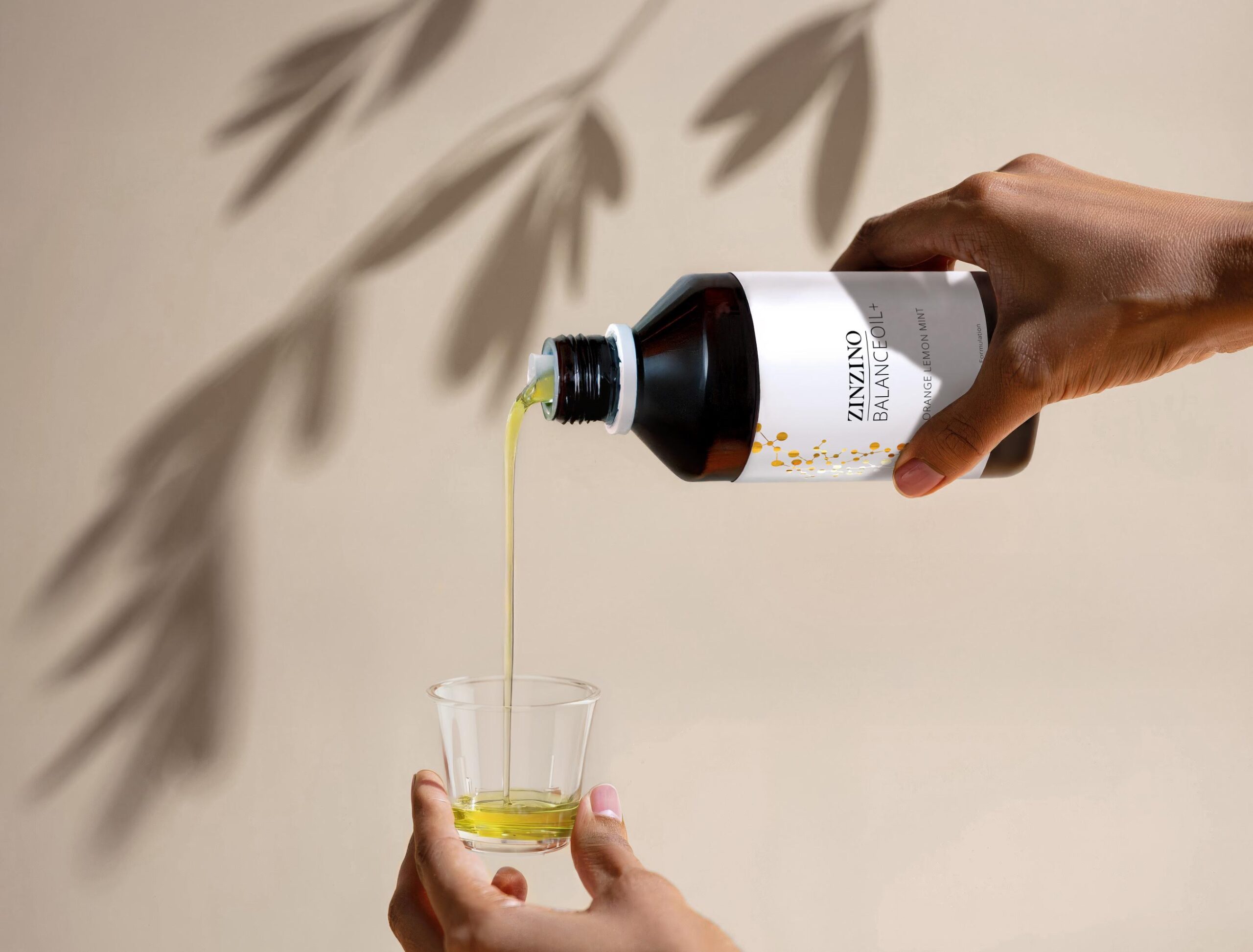
Zinzino offers both fish-derived and vegan omega-3. From a biological perspective, do they deliver comparable EPA and DHA? And what’s the price point compared to other oils?
From a biological perspective, the key question is how much EPA and DHA the product delivers—not whether the source is fish or microalgae. In Zinzino’s standard 12 ml serving, BalanceOil+ provides about 2.0 g EPA+DHA (approximately 1.3 g EPA + 0.7 g DHA), while BalanceOil+ Vegan provides about 1.9 g EPA+DHA (approximately 0.8 g EPA + 1.1 g DHA), and with SDA for endogenous production of EPA. So the total long-chain omega-3 delivery is broadly comparable, although the profile differs. The fish-based version is more EPA-forward, while the vegan version is more DHA-forward. That distinction can matter depending on what aspect of omega-3 nutrition you want to emphasize, but both are designed to deliver meaningful amounts of long-chain marine-type omega-3. One challenge with vegan formulations is achieving robust EPA delivery, because many algae oils are naturally more DHA-rich than EPA-rich.
Our vegan formulation addresses that by combining microalgal oil with Ahiflower® oil, which contains SDA—an omega-3 fatty acid that converts to EPA more efficiently than ALA does. Combined with olive oil, this creates a broader fatty acid strategy than a simple single-source algae oil. From a pricing perspective, vegan omega-3 oils are typically more expensive than standard fish-based omega-3 oils, largely because microalgal EPA/DHA production is still costlier and more technologically controlled. In practice, that means the vegan option is usually positioned as a premium product.
Sustainability is a major concern for our readers. How do you ensure your fish oil sourcing doesn’t contribute to overfishing or marine damage?
Using sustainably sourced, natural ingredients is an essential part of our brand’s core values. We strongly believe that to maintain balance in our body, we also have to respect the balance of the planet and its resources. Our omega-3 supplement is certified by Friend of the Sea, the global certification standard for upholding a sustainable marine environment, Zinzino was first certified by Friend of the Sea in 2018 and we have since maintained our commitment towards sustainability. The fish oils used by Zinzino are derived from short-lived, wild-caught fish, harvested by sustainable fisheries in authorized areas, and following the Friend of the Sea criteria.
Vegan omega-3 often comes from algae, essentially the original source of marine omega-3. What makes microalgae oil effective compared to plant oils like flax or chia? How do we know that the algae is clean and free from microplastics and PFASs?
Microalgae oil is effective because it provides preformed EPA and DHA directly. By contrast, flax and chia mainly provide ALA, which is nutritionally valuable, but the body converts only a limited amount of ALA into EPA—and very little into DHA. So if the goal is specifically to increase long-chain omega-3 status, microalgae offers a more direct and efficient route. In terms of purity, one important advantage is that microalgae is cultivated in controlled production systems rather than harvested from open marine ecosystems. That gives much tighter control over sourcing, consistency, and raw material quality.
Your formulations combine omega-3 with early-harvest olive polyphenols. This isn’t common in most supplements? What problem does this solve? Or how do you stand out in this regard.
This solves a real formulation problem: Omega-3s are delicate—they can break down and go rancid pretty easily. So instead of just putting omega-3 into a capsule on its own, we pair it with extra-virgin olive oil that’s rich in natural antioxidants; polyphenols. That way, we’re not simply adding “another oil”—we’re building extra protection right into the blend.
Those olive polyphenols help defend the omega-3s against oxidation, and the olive oil also changes the overall fat environment in a way that’s more supportive than a basic fish oil or algae oil by itself. The goal is simple: help keep these sensitive fatty acids more stable, both in the product and once you’ve taken it. That’s one of the ways our formula stands out. We don’t treat omega-3 as a standalone ingredient—we build it into a more complete fat system designed for stability, function, and context.
Third-party certifications: Friend of the Sea, Informed Sport, Cologne List, The Vegan Society, Halal, GMP, EU and EFSA. Tell us how difficult it is to get some of these certifications.
Some third-party certifications are relatively straightforward if your documentation is solid and your suppliers are well organized — while others are genuinely demanding because they require ongoing testing, deep traceability, or even regulatory-level scientific evidence. The toughest ones tend to be “continuous-control” programs. Informed Sport is a great example: it’s considered difficult because it typically involves rigorous quality requirements and regular batch testing for banned substances, not just a one-time audit. Cologne List can also be demanding in practice because products are often tested and listed by batch, which means you need consistency and repeat testing to stay current.
Audit- and traceability-based certifications sit in the middle — but can become hard with complex supply chains. Friend of the Sea usually requires strong sourcing transparency and traceability (sometimes through multiple suppliers). GMP can be smooth if your manufacturer already runs a mature quality system — but if not, it can take real work to build the documentation, procedures, training, and audit readiness needed. Ingredient- and process-driven labels are very achievable — as long as you can prove what’s in (and not in) the product. The Vegan Society and Halal typically hinge on ingredient verification, supplier declarations, and preventing cross-contact in production (especially if lines are shared with non-vegan or non-halal materials). They’re very doable, but they get more complex when you have lots of raw materials or shared facilities.
And a quick nuance: “EU and EFSA” aren’t really certifications like the others — they’re regulatory frameworks. If you mean getting an EFSA-backed health claim approved in the EU, that’s usually one of the hardest routes because it requires a formal scientific dossier and a high standard of evidence.
Fun but honest question: if someone says, “I hate fish and I don’t trust supplements,” – I get my nutrition from eating a kilo of salmon a week. And I buy sardines. Real food is the best. What would you tell them?
If you hate fish but are still heroically eating a kilo of salmon a week and buying sardines, then you are already doing the hard part. Regular intake of oily fish is the gold-standard way to get preformed marine omega-3. That is the ideal, and it is the most natural and biologically complete way to obtain EPA and DHA. So to me, this is not really an argument about food versus supplements.
The real question is whether a person’s life and habits actually allow them to eat enough quality fish, consistently enough, to reach the blood levels they want. If that works, that is the superior option. If not, a well-designed supplement can help close that gap. And if your relationship with fish is a little on-and-off, it is good to know there are well-designed alternatives— and if you are skeptical, there are blood tests that can tell you whether they are truly effective for you.
How and where do we find your products in America, Canada, Europe and the rest of the world?
Zinzino’s products are not available for sale in retail stores because better health is personal, and all bodies are unique. Getting individual guidance is critical for a successful outcome. We want to connect with customers directly, build trust, understanding and mutual respect, and offer personalized solutions tailored to meet their specific needs and goals.
To this end, all our products are sold exclusively through a Zinzino Independent Partner who will join the customers on their health journey. We currently have at least 50 000 working at markets across the globe, and you may find the one nearest you on zinzino.com
Tell us more about the blood sampling and how and if biohackers can get involved? I know people who’d like to share that data.
The blood sampling is a finger-prick dried blood spot test that can be done at home. The current BalanceTest measures 11 fatty acids, does not require fasting, and you register it online using an anonymous test code. That makes it practical for repeat use and for before-and-after comparisons over time to monitor your body’s response to changes in diet and lifestyle. What makes it interesting to data-driven users is that it does not only report absolute omega-3-related values.
It also looks at the relationship between different fatty acid groups—for example, the balance between long-chain omega-3s and other fats—and includes calculated markers that help summarize different aspects of fatty acid status. For biohackers, that means it can be used as a structured feedback tool: test, adjust diet or supplementation, and retest after a meaningful interval. If people want to share their data, the important part is that this should be done through a clear, consent-based framework, with appropriate respect for privacy and data handling. That is where personal experimentation can become genuinely useful rather than just anecdotal.
::Zinzino