Houthis Red Sea rockets causing Yemen’s population to starve

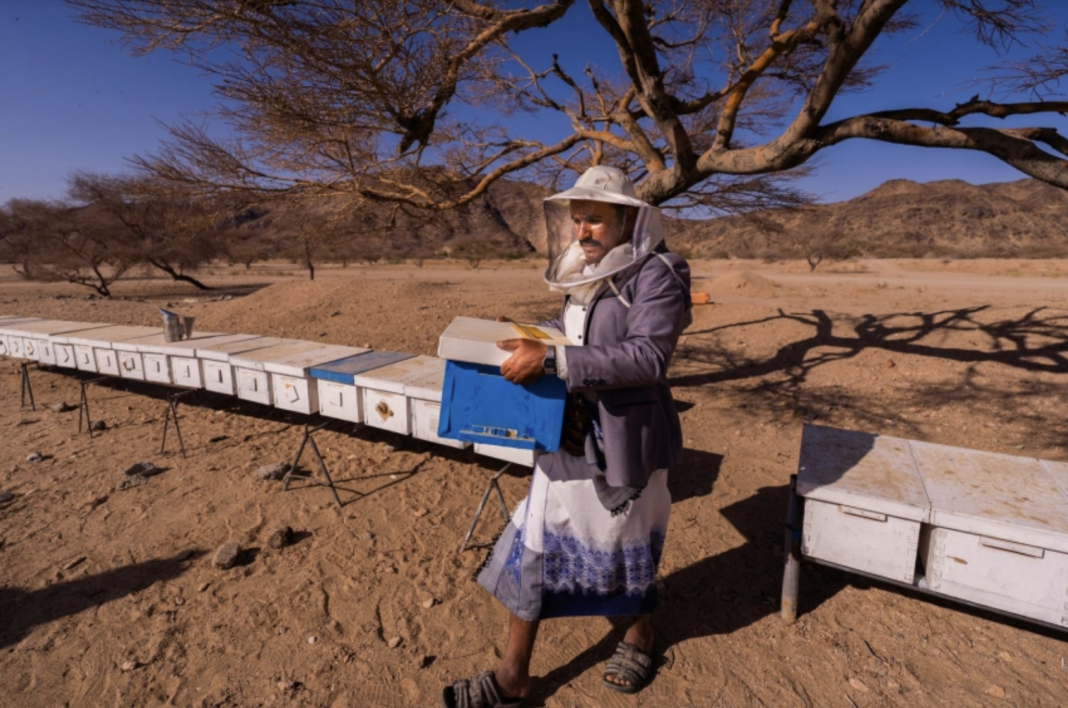
Yemen beekeepers keep ancient tradition alive
Yemen beekeepers

Houthi terror rockets affecting dire humanitarian situation in Yemen – the UN warns

The escalation of the Houthis Red Sea attacks where they sink ships with fertilizer, is poised to accelerate the increase in shipping costs, delay the delivery of essential food or lead to a complete suspension of trade routes and closure of Yemeni ports, a new report released by the Food and Agriculture Organization of the United Nations (FAO) finds. Yemeni people who struggle to afford essential food items will be at a dire risk for starvation.

According to the Potential Impacts of Red Sea Crisis Escalation on Food Insecurity in Yemen report, the food security situation in Yemen is already fragile and further shocks emanating from the Houthi attacks will cause additional harm to an already dire situation that can be described as one of the worst humanitarian emergencies in the world.

Almost 5 million people or 45 percent of the population analyzed in the Government of Yemen’s controlled areas is estimated to be in Crisis or worse.

Read Also: These Yemenis have a special song for the Houthis

Yemen relies heavily on imports for the food requirements of its population, with around 90 percent of its needs in staple cereals imported. According to the FAO report, if the current escalation is sustained for the next three months, imports will most likely slow down, affecting food availability and prices in the domestic markets.

While commenting on the key findings of the report, the FAO Representative in Yemen, Hussein Gadain, urged the international community to address the possible deterioration of the already severe humanitarian crisis in Yemen. He emphasized that the Red Sea conflict has erupted at a time when focus on Yemen is receding as humanitarian actors shift their attention and resources to other global hotspots, including Ukraine, Gaza and the Sudan.

Read Also: How the Houthis are using water as a weapon

“We cannot afford to wait until the humanitarian emergency worsens even further. This is the time to coordinate efforts and de-escalate the Red Sea crisis,” Gadain said. “We should facilitate an uninterrupted flow of commercial and essential humanitarian food supplies. This crisis, if not attended to, threatens to reverse the gains we have made in restoring livelihoods of Yemenis since the start of the conflict eight years ago.”

The report warned that a further escalation of the crisis will also disrupt livelihoods and certain value chains. Fishermen, for example, may abandon their activities due to increased insecurity at sea and at landing sites, which would not only impact their income opportunities and livelihoods but also affect the availability of fish – an important source of protein – in the market.

Additionally, increased military activities in the Red Sea may lead to the destruction of critical infrastructure, including ports and storage facilities, further hampering efficient distribution and storage of food in the country and aggravating food insecurity.

locusts in Yemen
Yemenis are often overrun by locusts which attack their food supply.

In the latest release from the FAO where Yemenis are facing starvation from lack of impacts, they do not mention the Houthis by name, but rather mention a “Red Sea” crisis ongoing which also makes no mention of terror operatives hurting their own people. Sounds like Greenpeace’s inability to condemn the Houthis. On one hand Greenpeace and the UN supports terror, but they can’t say so publicly. The plus side to all the Houthi attacks: the world now knows that Yemen exists. That it’s one of the world’s driest countries and that it’s been facing acute starvation for decades. In 2022 there was the locust crisis. 

Karin Kloosterman
Karin Kloostermanhttp://www.greenprophet.com
Karin Kloosterman is an award-winning journalist, innovation strategist, and founder of Green Prophet, one of the Middle East’s pioneering sustainability platforms. She has ranked in the Top 10 of Verizon innovation competitions, participated in NASA-linked challenges, and spoken worldwide on climate, food security, and future resilience. With an IoT technology patent, features in Canada’s National Post, and leadership inside teams building next-generation agricultural and planetary systems — including Mars-farming concepts — Karin operates at the intersection of storytelling, science, and systems change. She doesn’t report on the future – she helps design it. Reach out directly to [email protected]

Hot this week

The Fitness App Revolution: Building the Future of Wellness Through Strategic Development

In an era where smartphones are ubiquitous and health consciousness is at an all-time high, the fitness industry has undergone a radical digital transformation. Fitness applications have moved far beyond simple pedometers, evolving into comprehensive wellness platforms that serve as personal trainers, nutritionists, and community hubs right in our pockets.

A Brief History of Basil From India to Italy

Beloved, fortunate, sweet, and royal; an herb with a long and storied history in Asia and across the world. Called by many names, basil has featured in previous Green Prophet articles, so enjoy another serving, a brief history of basil.

How Renewable Energy is Revolutionizing the Way We Power Our World

Solar has become the star of the transition thanks to modular hardware and straightforward installation. It fits dense cities and remote towns alike. Many companies are turning to rooftop arrays and carport systems - and exploring commercial solar installation as a practical way to lock in future savings.

How does one start prepping?

Faced with an extreme winter storm this year, Americans wonder how to be prepared for catastrophe. Miriam has lived through wars in the Middle East - so she's prepared on giving you a guide to prepping.

Fishermen sue tire manufacturers on behalf of the salmon

A federal trial in San Francisco has brought US tire manufacturers, fishing groups, and environmental scientists into court over a chemical most drivers have never heard of — but which scientists say may be silently reshaping aquatic ecosystems.

Topics

The Fitness App Revolution: Building the Future of Wellness Through Strategic Development

In an era where smartphones are ubiquitous and health consciousness is at an all-time high, the fitness industry has undergone a radical digital transformation. Fitness applications have moved far beyond simple pedometers, evolving into comprehensive wellness platforms that serve as personal trainers, nutritionists, and community hubs right in our pockets.

A Brief History of Basil From India to Italy

Beloved, fortunate, sweet, and royal; an herb with a long and storied history in Asia and across the world. Called by many names, basil has featured in previous Green Prophet articles, so enjoy another serving, a brief history of basil.

How Renewable Energy is Revolutionizing the Way We Power Our World

Solar has become the star of the transition thanks to modular hardware and straightforward installation. It fits dense cities and remote towns alike. Many companies are turning to rooftop arrays and carport systems - and exploring commercial solar installation as a practical way to lock in future savings.

How does one start prepping?

Faced with an extreme winter storm this year, Americans wonder how to be prepared for catastrophe. Miriam has lived through wars in the Middle East - so she's prepared on giving you a guide to prepping.

Fishermen sue tire manufacturers on behalf of the salmon

A federal trial in San Francisco has brought US tire manufacturers, fishing groups, and environmental scientists into court over a chemical most drivers have never heard of — but which scientists say may be silently reshaping aquatic ecosystems.

Listening to Water: Tarek Atoui’s Next Work for Tate Modern

Born in Beirut, Lebanon in 1980 and now living in Paris, Atoui has spent years building instruments that don’t sit comfortably in concert halls. Many of them involve water, glass, and ceramics — materials that react to sound instead of simply producing it.

Leading Through a Dual-Energy Transition: Balancing Decarbonisation with Energy Security

Experience in one area of the energy industry isn't enough to guarantee readiness across all the others. That's where a structured program like an MBA in energy can come in. Today's advanced curricula explore energy economics, finance, policy, and strategic management alongside the technical subjects. And when pursuing an energy MBA online, professionals can skill up and retrain without having to step out of the labor market -- an important perk at a time when skilled professionals are already in short supply.

From Green Energy to Healthy Societies: Why old systems thinking is becoming relevant again

Across the Middle East and North Africa, large investments are being made in green hydrogen, renewable energy, water infrastructure and sustainability. Most of these efforts are discussed in the context of climate change, decarbonization and economic diversification. That framing is important, but it may not capture their full value.

Related Articles

Popular Categories