Nature is good for poor people

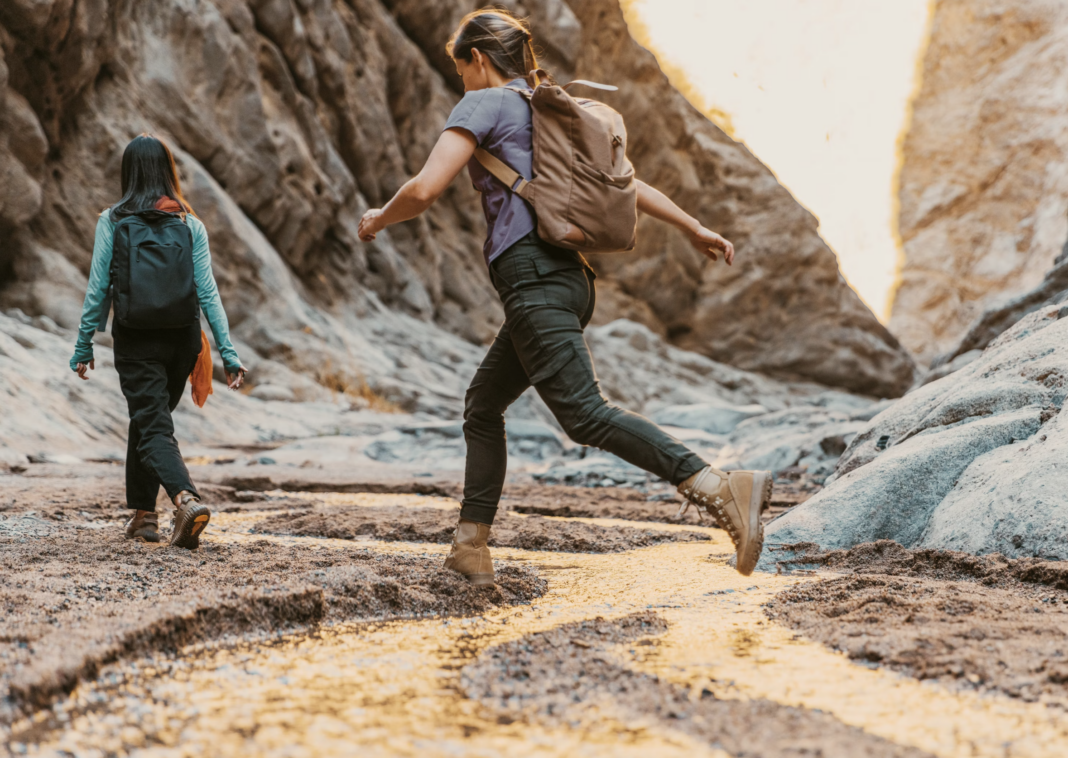
hiking in saudia arabia
Lowe income people do better when they are out in nature

Data from a representative sample of the Austrian population suggests that the relationship between nature contact and well-being is consistently stronger for people on lower than higher incomes. However, this pattern was only found when people actively visited nature and not when they merely lived near greenspaces.

Findings suggest the availability, accessibility and use of green and blue spaces can play an important role in reducing income-related health inequalities. The study was led by researchers of the University of Vienna in collaboration with the University of Natural Resources and Life Sciences Vienna and was recently published in the journal Health & Place.

Cultures around the world know that nature is healing. Shinrin-Yoku is the Japanese word directly translated as “forest bathing”. A visit to the forest for relaxation. Friluftsliv, translated as “open-air living”, this Swedish word describes the ancient Nordic philosophy of outdoor life. And waldeinsamkeit is the German for a feeling of forest solitude, being alone in the woods and a connectedness to nature.

We know nature is healing but can it help you when you are really down and out? Personally speaking we say yes. Now the researchers agree: people on low incomes are at a particularly high risk of suffering from mental health problems such as depression or anxiety. One way to promote good mental and physical health is through nature contact. Time spent in nature is associated with reduced stress levels, better immune functioning, improved cognitive functioning, better sleep and greater life satisfaction. However, these associations do not seem to be the same for everyone.

What you do is more important than where you live

forest bathing, OCD therapy, woman hipster contemplating nature in dark green forest
Forest bathing can help mental health and your relationships.

As part of a study funded by Austrian and European funding agencies, researchers surveyed 2,300 individuals across Austria representative on age, gender and region. The findings suggest that while people with higher incomes generally reported higher well-being, regardless of how often they visited nature, well-being among the poorest in society was much higher among those who visited nature often.

In fact, poorer individuals who visited several times a week had well-being levels nearly as high as the richest respondents. This pattern was clearly shown for both Austria as a whole and for those living in urban Vienna.

“What the results show is that the well-being benefits from visiting nature at least once a week across the whole year are similar to those from an increase in 1,000 Euros of income per year,” summarises doctoral student and lead author Leonie Fian from the University of Vienna.

Interestingly, these associations were only found for actively visiting nature, but not for the amount of greenness around people’s homes. In other words, what people did, appeared more important than where they lived. From a public health perspective, it is therefore important to both create greener neighbourhoods and natural recreation areas, and to ensure that they are accessible and used, especially by socio-economically disadvantaged groups.

“Especially for people on lower incomes, information about attractive natural recreation areas nearby and their accessibility by public transport plays an important role. They should therefore also be easily accessible by public transport at weekends,” says Arne Arnberger from the University of Natural Resources and Life Sciences Vienna.

Karin Kloosterman
Karin Kloostermanhttp://www.greenprophet.com
Karin Kloosterman is an award-winning journalist, innovation strategist, and founder of Green Prophet, one of the Middle East’s pioneering sustainability platforms. She has ranked in the Top 10 of Verizon innovation competitions, participated in NASA-linked challenges, and spoken worldwide on climate, food security, and future resilience. With an IoT technology patent, features in Canada’s National Post, and leadership inside teams building next-generation agricultural and planetary systems — including Mars-farming concepts — Karin operates at the intersection of storytelling, science, and systems change. She doesn’t report on the future – she helps design it. Reach out directly to [email protected]

TRENDING

April Is National Garlic Month

April is National Garlic Month! We’re close to the...

He’s selling a book. But Tony Cho is really selling a new model for cities

Tony Cho is a regenerative developer and community builder focused on designing cities as living ecosystems that support human connection and ecological balance. A key figure in Miami’s urban transformation, he helped shape the Wynwood Arts District and founded the Magic City Innovation District. Influenced by an unconventional upbringing that included time in an ashram, Cho brings a spiritual lens to real estate, blending culture, community, and capital into what he calls regenerative placemaking.

Israel and the UAE find that animal conservation can be as easy as adding new watering hole

Sometimes conservation doesn’t begin with moving animals around in...

Is Britain creating a smoke-free generation by banning sales to those born after 2008?

Today, Britain is attempting something that would have seemed unthinkable way back when.

Japan wants to build a solar panel ring around the moon

Unlike solar power on Earth, which is limited by night cycles, weather, and seasons, the Moon offers something close to uninterrupted exposure to the Sun. By placing solar infrastructure in orbit or along the lunar surface, engineers could generate continuous clean energy at a scale that may exceed global electricity demand,  the Japanese scientists say.

Nobul’s Regan McGee on Shareholder Value: “Complacency Is the Silent Killer” 

Why the governance framework designed to protect shareholders so...

Should You Invest in the Private Market?

startustartup Unlike public stock exchanges, which offer daily trading, strict...

How to build a 100-year-company

Kongō Gumi is a Japanese construction company, purportedly founded in 578 A.D., making it the world's oldest documented company. What can we learn about building sustainable businesses from them?

From Pilot Plant to Global Stage: How Aduro Clean Technologies’ 2026 Expansion Signals a Turning Point for Chemical Recycling Investors Like Yazan Al Homsi

The company's Next Generation Process (NGP) Pilot Plant in London, Ontario, has officially moved into initial operating campaigns, generating the kind of structured, repeatable data that separates laboratory promise from commercial viability.

How AI Helps SaaS Companies Reduce Repetitive Customer Support Work

SaaS products are designed for large numbers of users with different levels of experience, and also in renewable energy.

Pulling Water from the Air

Faced with water shortage in Amman, Laurie digs up...

Turning Your Energy Consultancy into an LLC: 4 Legal Steps for Founders in Texas

If you are starting a renewable energy business in Texas, learn how to start an LLC by the books.

Tracking the Impacts of a Hydroelectric Dam Along the Tigris River

For the next two months, I'll be taking a break from my usual Green Prophet posts to report on a transnational environmental issue: the Ilısu Dam currently under construction in Turkey, and the ways it will transform life along the Tigris River.

Related Articles

Popular Categories