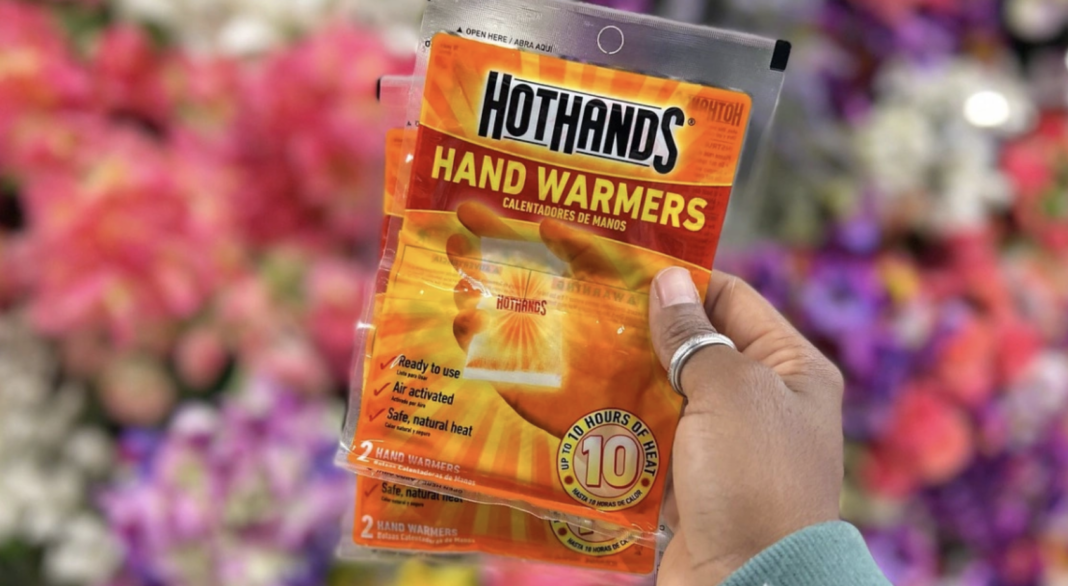

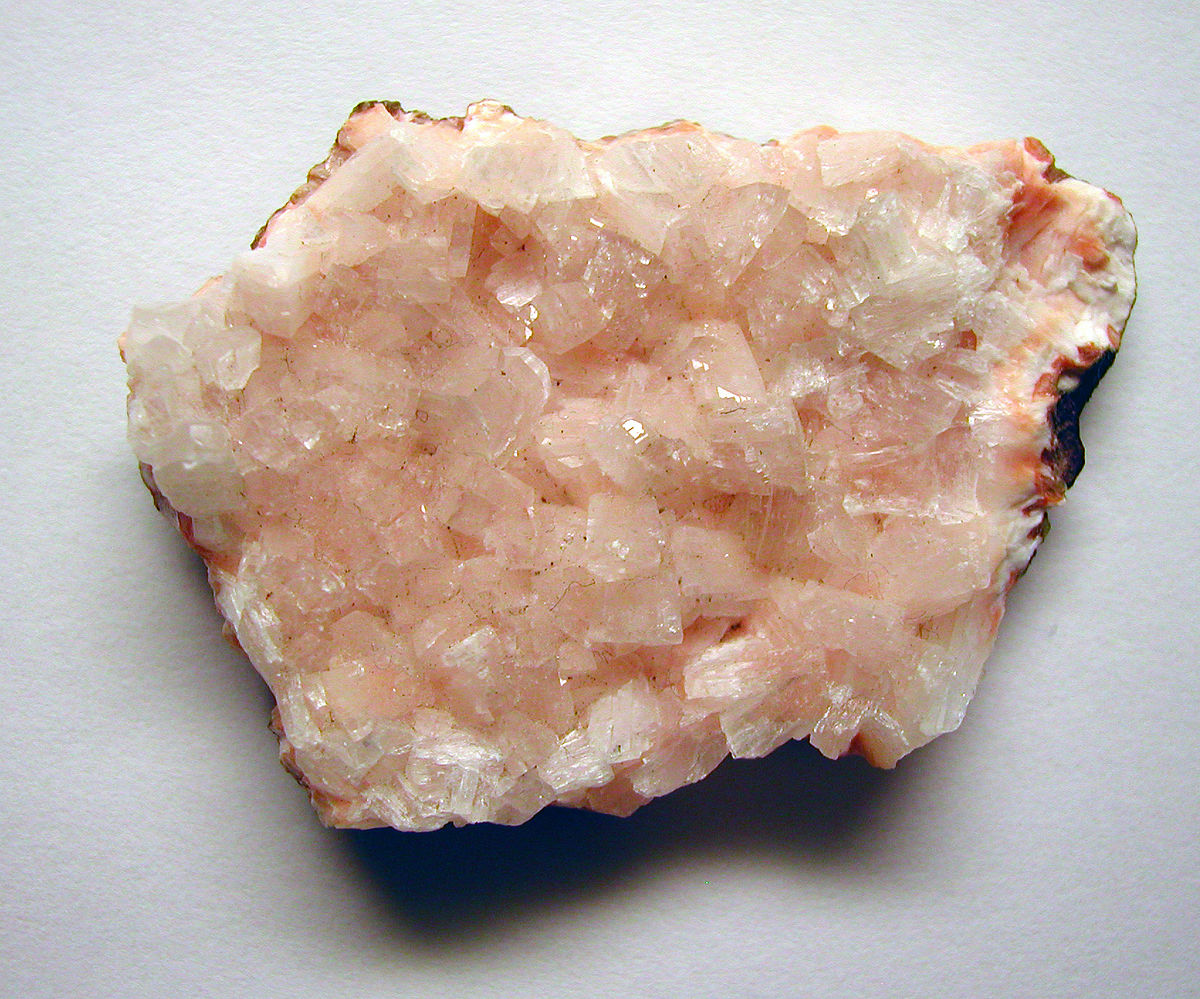
It was 1999 and we were preparing for Y2K, the millennium bug. Winter had already come and we placed a reusable heat pack into a pan of boiling water and let the white lump of sodium acetate melt into its clear liquid form.
As the liquid gradually cooled to room temperature it went into a supercooled state below the temperature where it normally should be solid. All it would take is for something to disturb it, a click of its embedded metal disk, to shock it to “remember” that it was supposed to be solid. It would then solidify and give up the excess stored heat.
You can find people experimenting with supercooled water, beer and other liquids on youtube. There is a legend of a supercooled Russian lake that froze solid, entrapping a herd of horses. Our story is more mundane but less tragic. We threw this heat pack into an emergency box in the attic and forgot about it after moving overseas.
Years later when we were preparing to sell the house we discovered the heat-pack was still in its liquid form. It had been subject to the -2°C to 50°C temperature range in our attic for several years. I clicked the clicker and watched the magic wave of crystallization and felt the warmth that had been stored in that pot of boiling water back in the 1990s.
I’d been thinking about Ukrainian people without power and heat during a frigid winter. Iceland has plenty of geothermal energy, North Africa and the Mideast have plenty of solar energy. I woke up in the middle of the night wishing there was a way to transport that heat and thought of those heat packs. But even in those bleary-eyed hours something told me that handwarmers would not store enough energy to make their transport worthwhile. The very next day GreenProphet’s founder and editor Karin Kloosterman told me she had heard that Germans were experimenting with Zeolite to store solar energy.
Swedish mineralogist Axel Fredrik Cronstedt who noticed that on heating, this mineral produced large amounts of steam. So he gave it a name that comes from Zeo the Greek word for boil and lithos, the Greek word for stone. So Zeolite is a boilstone.
Amman Mining Company explains:
Zeolite minerals are known as aluminum silicate, mainly sodium and calcium minerals and water. They are naturally formed from the interaction of ground water with volcanic rocks or clay minerals. Zeolite is made up of a group of natural minerals that are very useful in agricultural, industrial and environmental fields. Modern agriculture is witnessing large and wide uses of zeolite due to chemical and physical properties.
The zeolite ores in the Hashemite Kingdom of Jordan are located in many areas from the north east to the south and discovered on the surface and close to the roads in most geological discoveries.
According to the Memorial Sloan Cancer Society, Zeolites are used in detergents, water and air purifiers. They are also marketed as dietary supplements to treat cancer, diarrhea, autism, herpes and hangover, to balance pH and remove heavy metals in the body.
About 40 natural zeolites have been identified during the past 200 years; the most common are analcime, chabazite, clinoptilolite, erionite, ferrierite, heulandite, laumontite, mordenite, and phillipsite.
Zeolite is beginning to sound like cryptocurrencies, nanotubes and plastics. But wait there is more! Apparently zeolite can also dry dishes, clean oil spills, concentrate oxygen, remove methylene blue from textile wastewater, be used as kitty litter and clean nuclear waste. Zeolite does seem to be the jack of all trades of the material world. Watch this space for more on an amazing material that gives Graphene a run for the money. But can it store heat energy? Yes it can!
There are three main ways a material can be used to store heat energy in Thermal Energy Storage (TES) systems:
- Direct thermal mass: Hot water bottles, hot water tanks, stones, irons and oil-filled electric heaters use this method. Heat a large mass with a high heat capacity and it will stay warm for a long time.
- Latent Heat Phase transition: Those sodium acetate heat packs use this method. Heat something above its melting or boiling point and store it in that state. When a liquid freezes or a gas condenses, it returns to its lower energy phase and releases this stored heat. A block of ice is a very old and well-tested example of phase transition thermal energy storage even though it is the reverse of what we are looking for in seasonal heat storage systems. Halotechnics’ molten-salt used in Masdar’s solar-thermal power plants is another example.
- Thermo-chemical: Most exothermic (heat-producing) chemical reactions are not easily reversible. So while it’s easy to burn wood, coal and oil, the process of turning CO2 back into wood, coal and oil takes a great deal of energy and time, decades or millenia. But a few exothermic chemical reactions can be reversed over a short time scale and a reasonable high efficiency. The reaction where water molocules cozy up into the microporous structure of zeolite is one such reversible exothermic reaction.
According to an article published in Frontiers in Energy Research, the zeolite water reaction can have thermal storage densities of 50–300 kWh/m3. This compares favorably with water thermal mass storage of only 0 to 70 kWh/m3. Currently available zeolites are not yet commercially viable for thermal storage but there is room for improvement. Just as sugar, flour and eggs can be baked into many different, zeolites are class of minerals with thousands of possible variations of the same basic elements. Scientists have been experimenting with these to try to produce higher efficiency.
Heidrun Klostermann manages the ZeoMet project at Germany’s Fraunhofer Institute for Organic Electronics, Electron Beam and Plasma Technology with a goal of producing zeolites with higher heat storage efficiency. In a Fraunhofer press release he explained:
“We coated the zeolite pellets with aluminum – this doubled thermal conductivity after just the first attempt without negatively impacting water adsorption and desorption. We are currently aiming to increase this by five to ten times through adjusting the coatings.”
The solution is unlikely to come in time to help keep people warm during this winter, but they are making progress. The Fraunhofer article also explains that because Zeolites can be used to take and store heat from where it isn’t needed and release it where and when it is needed, it also can be used for cooling and drying. A variation of this is used in a Bosch dishwasher. We look forward to seeing what other spinoffs come from research into this versatile material!