
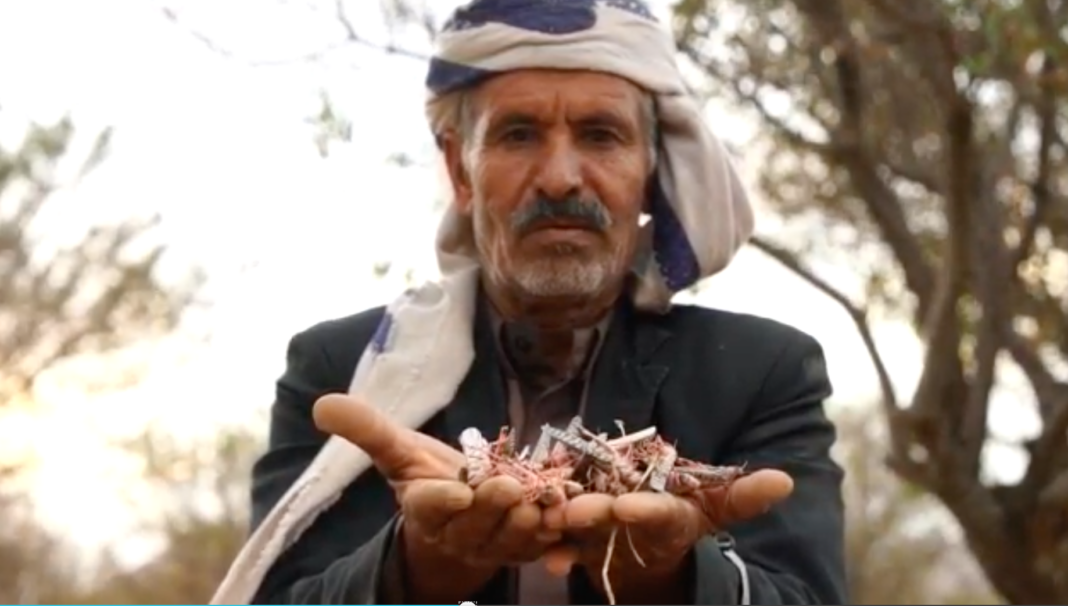


There is a real life plague of biblical proportions happening now in East Africa. It’s hitting Ethiopian, Somalia, Kenya, Djibouti and Eritrea – Horn of Africa countries and it’s threatening the Middle East. It’s the worst for Ethiopia and Somalia in 25 years and the worst for Kenya had experienced in over 70 years.
Let’s spell out what this means. When people don’t have food to eat, they go hungry or eat less nutritious food like bread. When people are hungry for a long time, health and political situations break down. This is what happened in Syria ten years ago. A breakdown from hunger, climate change, lack of water. Desperate people do desperate things. Conflict worsens or it will erupt.
The United Nation’s Food and Agriculture Organization (FAO) has assembled $15.4 million USD for instant aid as part of the $76 million requested from five countries. The outbreak will likely spread to other countries, in particular South Sudan and Uganda. Images we have here are from Yemen.
Again, this outbreak is not just about keeping people hungry. It’s about keeping conflict in check. Without help, large regions of Africa and the Middle East can be unstable.

It’s a region we already know suffers from food security, political fragility and climate change. The effects is East Africa will ripple up to Egypt, Israel, and the rest of the Middle East, and eventually Europe as migrants from these countries flee poverty, food security, and climate change.
Ten years ago I was invited to a panel on water security with Middle East countries, sponsored by the Swiss and Swedish governments because they know that water insecurity, pest infestation and climate change are all linked. If stable and democratic nations in Europe want to live as they are now there is a pressing need to help others before they lose hope.

“Timing and location is crucial. I hope we can work hard day and night so people do not lose their crops,” Qu Dongyu, the director of the FAO said.
Worst insect pest in the world
The Desert Locust is considered the most destructive migratory pest in the world and a small swarm covering one square kilometer (about half a square mile) can eat the same amount of food in one day as 35,000 people.
Pasture and croplands have already suffered damage in Ethiopia, Kenya and Somalia and there are potentially severe consequences for the region where nearly 12 million people are coping with severe acute food insecurity and many rely on agriculture for their survival.

The UN’s experts are on the ground, supporting control operations and initiating efforts to safeguard livelihoods, particularly of those already experiencing high levels of acute food insecurity. They are working closely with these countries as well as their neighbours, Djibouti and Eritrea, while monitoring Oman, Saudi Arabia, Sudan and Yemen for any developments.
“We need to act immediately because the locusts don’t wait, they will come and they will destroy,” said Maria Helena Semedo, FAO Deputy Director-General for Climate and Natural Resources. “We need to tackle the emergency but we need to think about livelihoods and the long-term.”
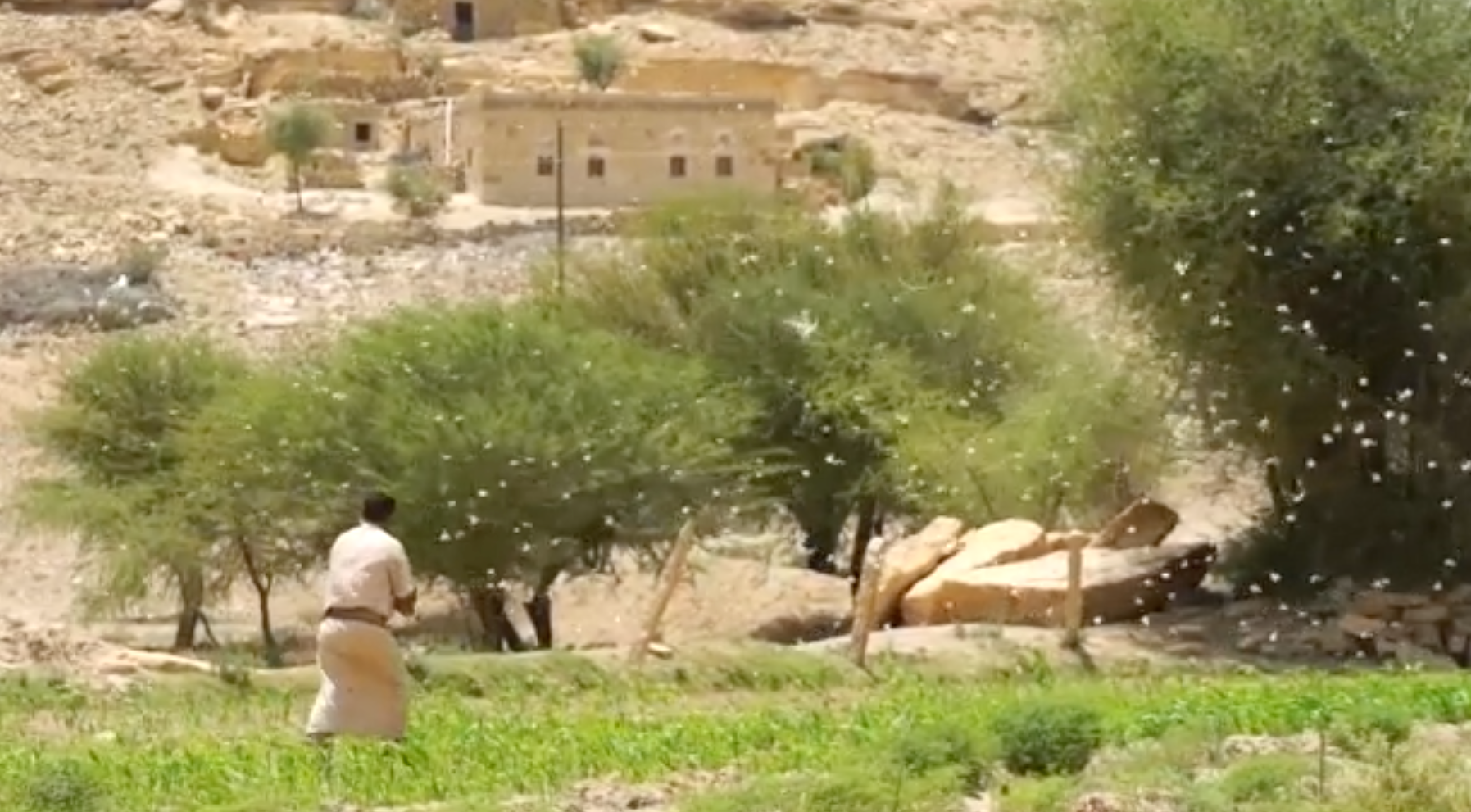
FAO’s Desert Locust Information Service says the situation is extremely alarming and will be further exacerbated by new infestations expected in early April.
Swarms of locusts invading Kenya
In Kenya alone, large swarms, up to 60 km long and 40 km wide, invaded all the country’s northern counties and some central areas in less than a month, causing substantial damage to crops and livestock deprived of pastureland. A total of 13 counties have so far been affected in Kenya.
A new generation of locusts is expected to hatch in February and with new swarms expected in early April that would coincide with the next season of planting. At that time, the seasonal winds will have shifted to the north, which is likely to allow the newly formed swarms in Kenya to reinvade Ethiopia and Somalia as well as to migrate to new areas of South Sudan and Sudan.
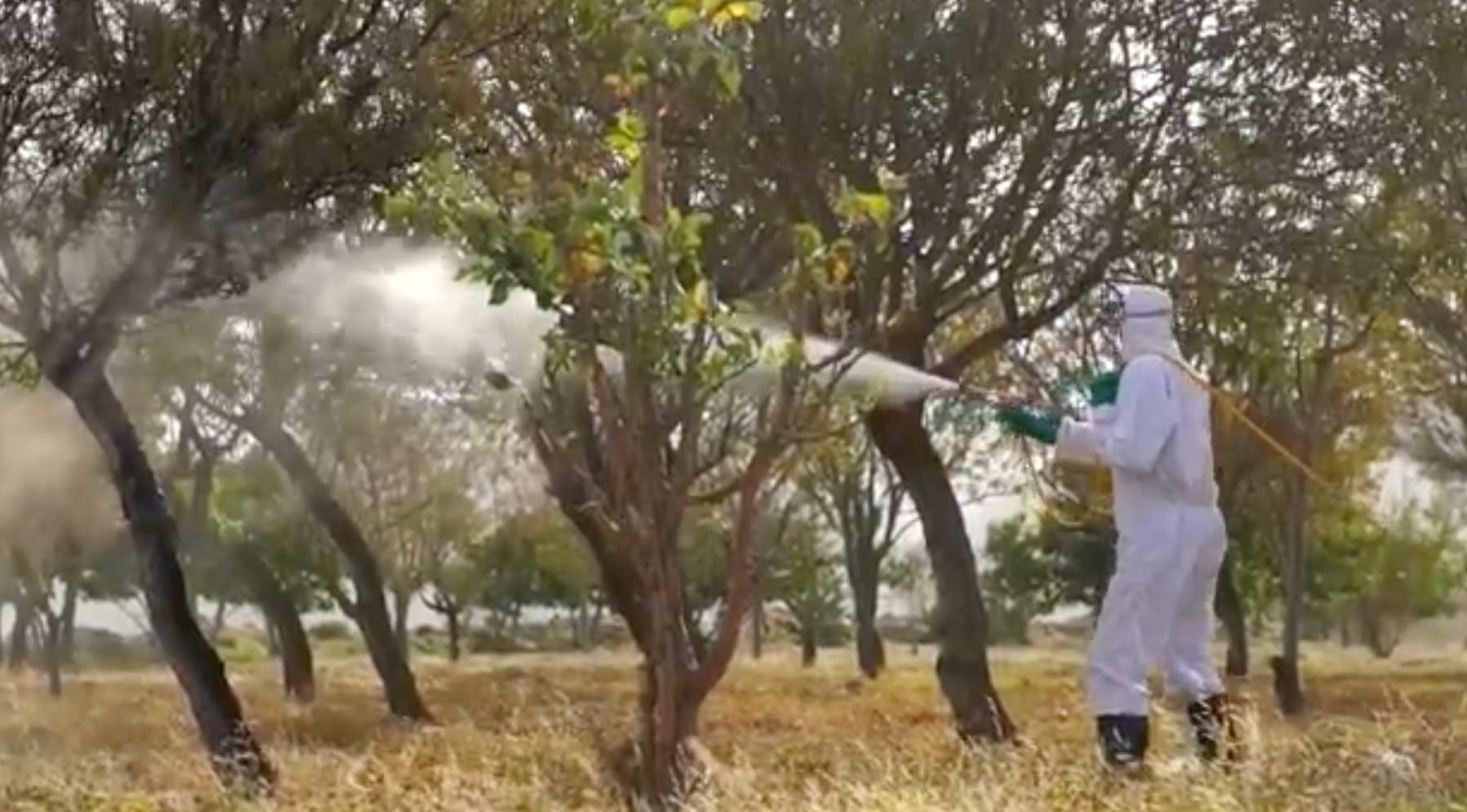
The rise in numbers is causing serious concern about the swarms in northern Kenya as they are only 200 kilometres from the country’s borders with South Sudan and Uganda. Both countries last faced locust invasions in 1961.
The Desert Locust upsurge represents an unprecedented threat to food security and livelihoods and has the potential to become a regional plague that could lead to further suffering and displacement.
In South Sudan, where food insecurity is already at an emergency level in many parts of the country, the Desert Locusts could wipe out pastures and crops causing the deterioration of an already alarming situation.
How to stop a plague of locusts
- Pray
- Pesticides as short term solution, according to this article on Vice: “We know locust plagues are affected by weather patterns, so understanding those patterns has helped us better predict where plagues might occur,” said Arianne Cease, a sustainability researcher at Arizona State University who investigates the spread—and mitigation—of locust plagues. “We’re looking to find any outbreak pockets of locusts when they’re young, before they start flying, and then targeting them with pesticides. That’s where we’re at right now, but we think that we can take a step back even before that.”
- Some numbers of locusts are good for the environment and ecosystem in general. They turn into plagues when natural barriers stop them. Planting more food forests, forests in general and permaculture can stop the swarms from starting in the first place.
- Stop climate change. This one is a hard one. And will requiring more of Step 1, and a huge international effort. A warming planet puts ecosystem balance in peril.
- Last step, if you can’t beat them join them. Enjoy a locust plague feast. Chef Basson from Jerusalem shows us how to cook them to perfection. If they aren’t local, you can order live locusts from Amazon here.
Cooking Locusts – A Recipe From Moshe Basson’s Kitchen
How to create a food forest garden, by Martin Crawford




[…] water resources, limits agriculture; it promotes famine and exacerbates pest infestations like the locust attack weighing down on Africa and the Middle East right […]