The best eco-friendly construction products

glass house design, hipster

Home improvement is very important as it can make your home look attractive as well as increase the value of your home. Commercial railings are designed to be used in commercial real estate, such as motels, apartment buildings or wherever there is a balcony that requires a security barrier. Commercial railing focuses on the strict requirements of safety. Here are some of the best eco-friendly home improvement or home construction products you should use

Non-toxic carpet

Faig Ahmed

You cannot think of a carpet as a measure of energy efficiency. But it has another advantage in addition to making the toes comfortable and reduces noise. Non-toxic carpets can also be beneficial to maintain the air temperature; cooler in the summer season and warmer in the winter season. If you are thinking of changing your flooring, sign up for a non-toxic carpet. Adding non-toxic carpet on your home improvement list, your lungs will be glad for choosing the eco-friendly option for home improvement.

Lumber options

Lumber options may seem confusing. Avoid old wood products or tropical hardwoods that are rare. Look for managed and certified forests, reclaimed or recycled wood or vehicles such as medium density fiberboard for cabinets and doors. The rapid growth of bamboo is one of the first things architects have to do to make floors beautiful and durable.

Polymer or rubber roofing
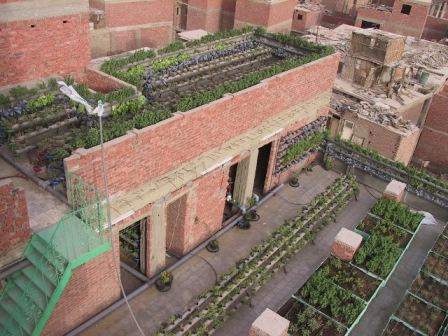
Recycled products occupy the market faster the aluminum cans during a sporting event. Look for polymer and rubber roofing that mimic the board to decrease weight and maintain. On the countertop, 75% recycled glass is blended with concrete for durable surfaces, showers, floors, and walls.

Reclaimed wood

Reclaimed wood can be used for the construction of walls, support beams or roof construction. Many green businesses specialize in building materials for old homes about to be demolished or rip to pieces. Instead of filling the landfills, reclaimed wood can be used in new construction.

Straw bales

Straw bales typically weigh between 23 and 41 kg and a 2,000 square foot home requires about 300 medium-sized straw bales to build. Although few authorities account for the construction of straw bales in local authorities, building code and cope with the construction on a case-by-case basis.

Artificial grass

The centerpiece of this patio is the luxurious green grass. The best part is totally free maintenance. Environmental artificial grass does not need water and stays green for years.

Bamboo butcher block

Formaldehyde-free bamboo is ideal for kitchens as it is safe for food and does not release harmful toxins. Bamboo grows quickly and matures in just four years. Harvesting is done by hand in tightly managed forests, which minimizes any negative impact on the environment.

Low emission windows
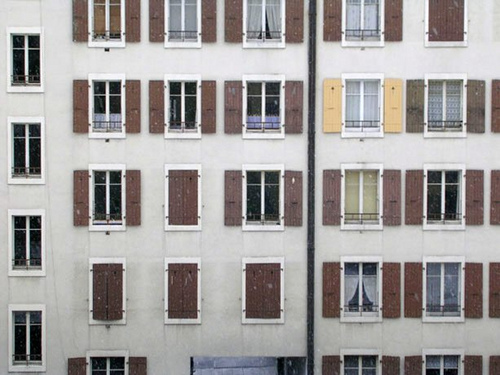
Low emission windows maintain the heat inside the house in winter and outside in summer. Low windows usually cost between $ 60 and $ 110 each. This is 10 to 15% higher than the transparent glass storm windows, but it certainly has advantages: it can halve the flow of heat through the glass, which will reduce heating costs.

Using these eco-friendly home improvement products can benefit you in many ways.

Karin Kloosterman
Karin Kloostermanhttp://www.greenprophet.com
Karin Kloosterman is an award-winning journalist, innovation strategist, and founder of Green Prophet, one of the Middle East’s pioneering sustainability platforms. She has ranked in the Top 10 of Verizon innovation competitions, participated in NASA-linked challenges, and spoken worldwide on climate, food security, and future resilience. With an IoT technology patent, features in Canada’s National Post, and leadership inside teams building next-generation agricultural and planetary systems — including Mars-farming concepts — Karin operates at the intersection of storytelling, science, and systems change. She doesn’t report on the future – she helps design it. Reach out directly to [email protected]

Read More

TRENDING

Ancient Jewish New Year for Animals revived with global campaign against factory farming

Jewish Vegan Life has launched a global campaign celebrating the New Year for Animals, with synchronized events in Washington, D.C., Los Angeles, Pittsburgh, Montreal and Jerusalem, alongside an international livestream on August 9 featuring partners including Mercy for Animals, The Good Food Institute and Freedom Farm Animal Sanctuary.

The Space Orchestra, and the search for extraterrestrial life, to eclipse celebration

The event will livestream eclipse views from Iceland and northern Spain, where the eclipse will be total, while the 35-member International Space Orchestra, made up of astronauts, scientists, engineers, and researchers—performs a new orchestral interpretation of Voyager by PJ Harvey.

Canada’s healthcare became the world’s digital health laboratory. Now Europe is taking notice

Canada's healthcare system may be under pressure, but its decades-long experience with digital transformation is becoming a model for Europe and beyond. In an interview with Nordic's Alison MacDonald, Green Prophet explores why successful AI in healthcare depends less on software than on empowering clinicians, improving workflows and building resilient systems.

Jewish Climate Network founded so innovators don’t leave their identity at the door

Rather than retreating from climate change work, the Jewish Climate Trust organization has backed a new initiative designed to strengthen both climate action and Jewish community.

The Hidden Components Powering the Renewable Energy Revolution

A rooftop solar system looks simple: panels, an inverter, a battery and a few cables. But beneath that simplicity lies a bill of materials thousands of lines long, where tiny current sensors, magnetic cores, gate drivers, capacitors and connectors quietly determine efficiency, safety and lifespan. These overlooked components—not the solar panels themselves—are why today's residential solar systems are smaller, smarter and far more reliable than those of a decade ago.

The Essential Guide To Sustainability in Project Management

Sustainability is an approach where businesses and individuals balance the environmental, social, and economic aspects of a project such that current and future stakeholders are not overburdened with the impacts of the project in future.

Yerukim Forms a New Green Economy Where the Money is Really Green

The Yerukim members who pick up the recyclables get to keep the monetary reward, the public earns "green" bills that can be used in shops, and business owners get to be associated with environmentalism.

Choosing Riyadh over Dubai? What Investors Should Know

Saudi Arabia is deploying capital at unmatched scale to catalyze tourism and advanced industry while rewiring its power-and-water backbone. The investable frontier is widening—especially in renewables, grid storage, water efficiency/desal retrofits, and hospitality operating platforms. Prudent investors will insist on phased delivery, enforceable KPIs (energy, water, biodiversity), and RHQ/zone compliance—while pricing political-economy and reputational risks alongside growth upside.

Sell your cooking oil for biodiesel money

Want to make money on old french fry oil? Sell it.

Qatar Alternative Energy Summit Pairs Investors And Innovators

Alternative energy investors and innovators can meet n' greet in Doha, Qatar March 16 and 17.

Here’s How To Implement The Four Pillars Of Employee Engagement

If you throw a party for your work team and they are vegans, don't make it a barbecue. Know the sustainability values of your team to boost moral and retain good people.

Locals From Rishon Fight IKEA

Big Box stores are a pretty new concept in Israel, and thank God that not every Israeli city wants them in their backyard. A word from someone who has see the beautiful farmland around her hometown Newmarket, Ontario stripped and converted into vulgar strip malls of big box shops: they have no place in a healthy and sustainable town or city.

The Jewish National Fund Meets An Inconvenient Truth

According to the JNF, it has transformed thousands of acres of barren land into green forests in Israel. They state that each person emits about 23 tons of carbon per year, estimating that each tree planted can absorb one ton of carbon in its lifetime. That's a whole lot of trees you'd need to be planting. Could so many fit in Israel?

Popular Categories