Over-Stressed Arabian Aquifer – Beyond Repair?

aquifers

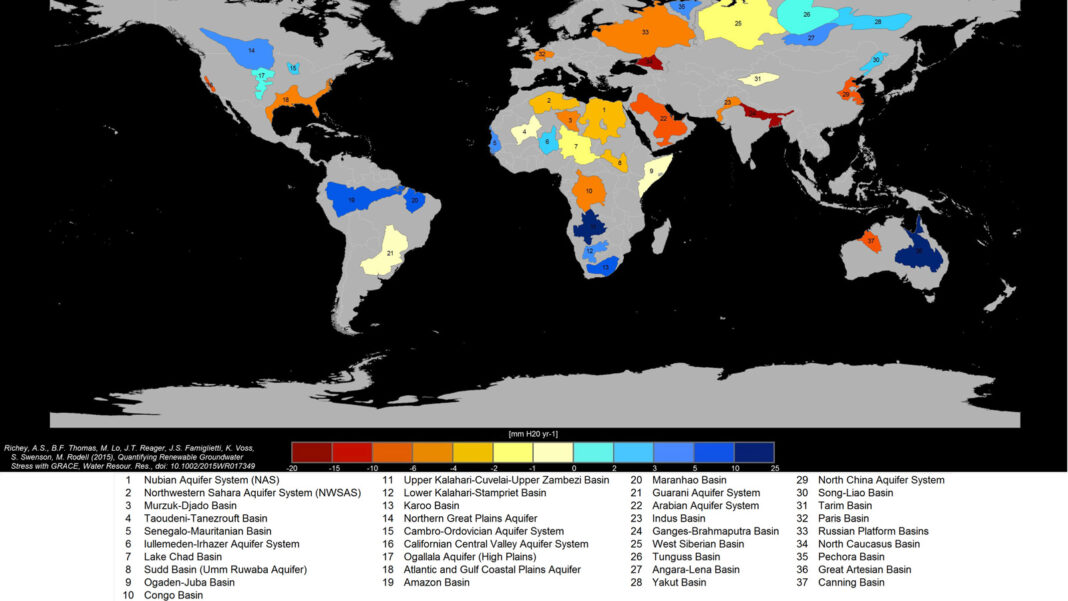
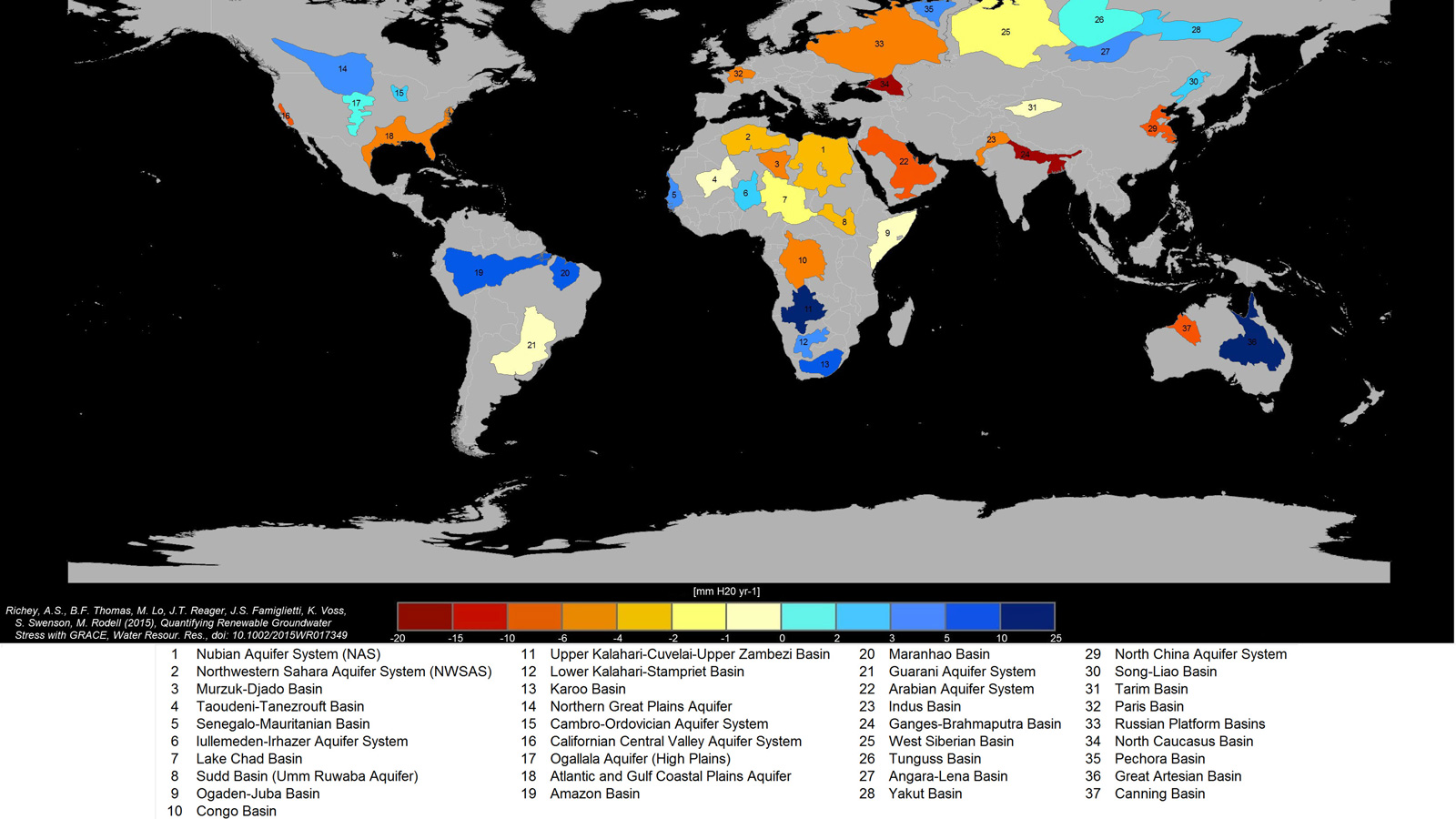
More terrible news from/for the Arabian Peninsula: The Arabian Aquifer System is the most over-stressed groundwater system in the world.

Using data gathered by NASA’s Gravity Recovery and Climate Experiment satellites, two new studies by the University of California, Irvine, came to conclude that 21 of the largest 37 aquifers on earth studied have exceeded their sustainability “tipping points,” meaning they lose more water every year than is being naturally replenished through processes like rainfall or snow melt. Of those 37, the Arabian Aquifer System was crowned to be the world’s most over-stressed. The terrible part of the news is: this aquifer supplies water for more than 60 million people; along with their livestock, agriculture, and aquatic wildlife.
iraq-drought

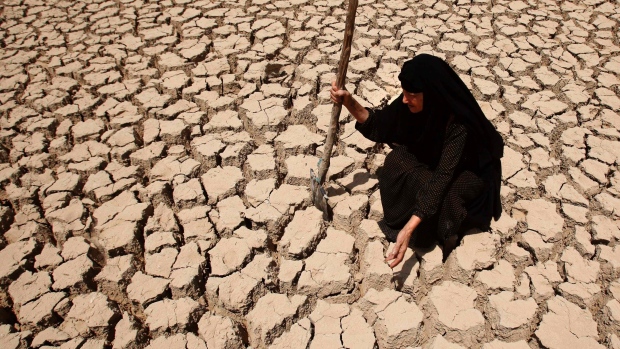
A closer look at its geographic extent, the aquifer lies beneath all of Saudi Arabia’s western and central provinces; most of the United Arab Emirates; all of Kuwait; all of the southern regions of Iraq and all the way to the eastern Syrian desert; most of Jordan; and most of northern Yemen. Mish-mash the droughts with outrageous political instability washing the region inside-out, and you’ve got a recipe for apocalypse.
oildonkey

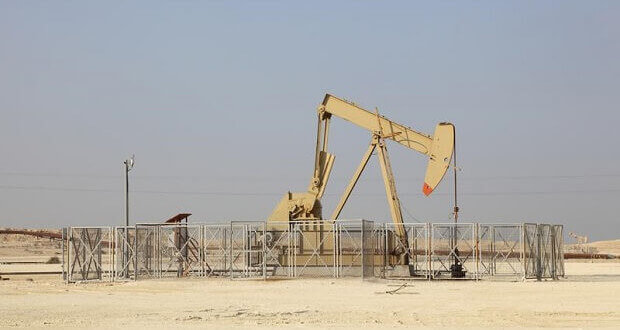
Sadly, the health of this particular aquifer has been abused throughout the 20th century since the first nodding donkey commenced its business in the Peninsula. With next-to-zero environmental policy and enforcement, the region’s groundwater, surficial water bodies, and the lithology in-between have been poisoned by the almost-century-long oil & gas industrial operations; let alone the countless -unreported- spills. I can imagine the horrendous lab results of a random groundwater sample in terms of potability parameters, total petroleum hydrocarbons, total dissolved solids, and/or attenuated levels of nutrients. Now, with the aquifer’s existence is threatened, any plans for effective remediation seem to be far-fetched, if not impossible.

Basel Ismaiel
Basel Ismaielhttp://www.greenprophet.com
Raised in Abu Dhabi, and made a living in Calgary. The lowest common denominator? Oil. Nothing against compressed corpses of the clade Dinosauria, per se, but Basel guesses that the industry might have accelerated the predictably grim Anthropocene. He consults in sustainability out of Ottawa, Canada. Basel runs marathons & hikes mountains. He plays football too. Talk to Basel at [email protected]
1 COMMENT

Comments are closed.

TRENDING

Japan wants to build a solar panel ring around the moon

Unlike solar power on Earth, which is limited by night cycles, weather, and seasons, the Moon offers something close to uninterrupted exposure to the Sun. By placing solar infrastructure in orbit or along the lunar surface, engineers could generate continuous clean energy at a scale that may exceed global electricity demand,  the Japanese scientists say.

African kids born in these Star Homes are less likely to die

What the Star Home demonstrates is something bigger: that health can be built into infrastructure. Instead of relying only on healthcare systems, communities can reduce disease at the source—through smarter design.

Art from Oman at the Venice Biennale

Oman is returning to the Venice Biennale with Zīnah, an immersive installation by artist and curator Haitham Al Busafi that transforms a traditional form of horse adornment into a large-scale sensory experience.

Korean researchers create battery from greenhouse gases

Professor Ji-Soo Jang, in collaboration with Professor Taekwang Yoon of Ajou University and Professor Hansel Kim of Chungbuk National University, has developed a novel energy device that generates electricity during the process of capturing greenhouse gases.

SunZia comes online and America’s 11B, and largest renewable project begins wind power

The impact is already being felt. California has broken its wind generation record multiple times in recent weeks as SunZia begins feeding electricity into the grid. It’s a glimpse of what a renewable-powered future could look like when large-scale infrastructure finally comes online. Can we start saying goodbye to Saudi Aramco and Arabian Gulf oil? 

Nobul’s Regan McGee on Shareholder Value: “Complacency Is the Silent Killer” 

Why the governance framework designed to protect shareholders so...

Should You Invest in the Private Market?

startustartup Unlike public stock exchanges, which offer daily trading, strict...

How to build a 100-year-company

Kongō Gumi is a Japanese construction company, purportedly founded in 578 A.D., making it the world's oldest documented company. What can we learn about building sustainable businesses from them?

From Pilot Plant to Global Stage: How Aduro Clean Technologies’ 2026 Expansion Signals a Turning Point for Chemical Recycling Investors Like Yazan Al Homsi

The company's Next Generation Process (NGP) Pilot Plant in London, Ontario, has officially moved into initial operating campaigns, generating the kind of structured, repeatable data that separates laboratory promise from commercial viability.

How AI Helps SaaS Companies Reduce Repetitive Customer Support Work

SaaS products are designed for large numbers of users with different levels of experience, and also in renewable energy.

Pulling Water from the Air

Faced with water shortage in Amman, Laurie digs up...

Turning Your Energy Consultancy into an LLC: 4 Legal Steps for Founders in Texas

If you are starting a renewable energy business in Texas, learn how to start an LLC by the books.

Tracking the Impacts of a Hydroelectric Dam Along the Tigris River

For the next two months, I'll be taking a break from my usual Green Prophet posts to report on a transnational environmental issue: the Ilısu Dam currently under construction in Turkey, and the ways it will transform life along the Tigris River.

Related Articles

Popular Categories