North Africa Coast Will Rise 60 Percent More than Previous Projection: New Study

safaga floods egypt red sea coast

New scientific reports suggests that coastal flooding for Middle East and North African countries will be much worse than estimated six years ago. What countries are bracing for the severe effects of climate change? Egypt sets the stage.

In 2007, the International Panel on Climate Change (IPCC) reported that global sea levels would rise between 8 inches and two feet over the next century. That was cause for concern along North Africa’s coast, especially in Egypt where rising sea levels would ostensibly drown Alexandria and much of the northern part of the country. Today, new evidence says it could be worse.

Scientists working for Environmental Research Letters believe that global sea levels will increase between 12 inches and 3 feet over the next century, or a 60 percent increase over the IPCC model.

For North Africa, this is a major worry, where much of the countries’ agricultural land is harnessed.

In Egypt, this means “Many of the towns and urban areas in the north of the Delta will suffer from the rise in the level of the Mediterranean with effect from 2020 and about 15 percent of Delta land is under threat from the rising sea level and the seepage into the ground water,” Environment Minister George Maged told a parliamentary committee in 2008 as reports began to flow over the future of sea levels.

The Nile Delta region is home to approximately half of Egypt’s 80 million people. The UN’s Environment Program says that a rise in only 0.5 meters (20 inches) would displace at least 4 million people and damage 1,800 square kilometers (700 square miles).

It gets worse still with a one-meter (39 inches) rise, which would displace at least 6 million people and damage more than double the farmland.

Efforts are already underway to limit the immediate impact of global warming in Alexandria.

In 2009, the local government spent approximately $300 million to build concrete walls to protect the city’s beaches, and in some areas sand is being dumped to help replenish deteriorating beaches.

Many of those barriers have yet to be completed.

According to an Alexandria government official, since the January 2011 uprising, no work has been done on the challenges facing the coast from climate change.

But there is hope, writes Shin-pei Tsay and Victoria Herrmann in a Carnegie Endowment brief on coastal water levels and the threat to major urban areas. Following a plan similar to what New York City has implemented may be a way of staving off the worst scientists’ predict, but it means more than erecting barriers.

“To help stave off these potentially devastating outcomes, coastal cities and communities should align comprehensive climate protection with economic development strategies,” they write.

“New York City, one of the world’s largest economic engines, is doing just that. PlaNYC began in 2007 as an economic development initiative, but when it became clear that the city would experience significant future impacts from climate change, the plan was transformed. Now it is a cutting-edge example of a city climate plan,” the paper continued.

For the MENA region, where vast numbers of population and agriculture exist today, the threat of rising sea levels is one that needs more action and more care if the region is to be able to cope with the environmental changes faced by climate change.

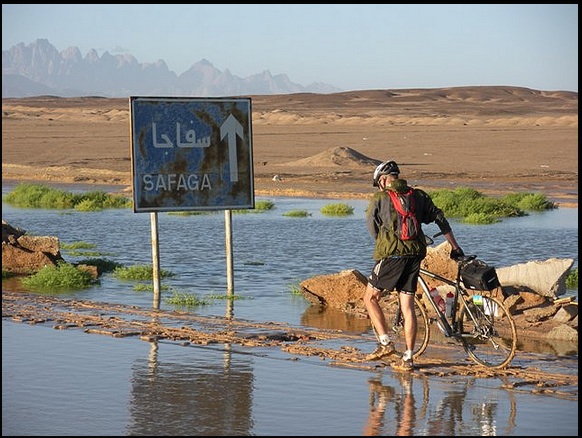
Image via tourdafrique

Read More

1 COMMENT
  1. The rising sea levels, caused by global warming, is caused by our human instinct to grow, dominate and profit from the environment relentlessly, 7 billion people and counting. Instead, people should exersize their intellect and think about the consequences and change before it’s too late.

TRENDING

Weston Higginbotham found dead in a Kyoto forest: is climate anxiety part of the story?

In some ways, Weston has become a symbol of a generation wrestling with environmental and technological anxiety. Friends and family described him as deeply concerned about environmental issues. Reports also noted that he questioned the growing role of artificial intelligence in daily life, even reportedly disagreeing with his mother about her use of AI.

Billie Eilish’s Mom Takes the Stage at Hollywood Climate Summit — But Does Hollywood Still Care About Climate Change?

Hollywood once promised to help save the planet. Leonardo DiCaprio warned of climate catastrophe from awards stages. Celebrities flew to climate conferences. Studios pledged greener productions. Streaming platforms rushed to commission environmental documentaries. But in 2026, with the aftermath of wildfires, heatwaves and floods becoming routine, a question lingers: Does Hollywood still care about climate change?

Can Scientists Predict Coral Bleaching Before It Happens?

Now researchers at the Woods Hole Oceanographic Institution (WHOI) in the US say they have developed a way to predict coral bleaching five to six months before it occurs, potentially giving reef managers enough time to intervene and save vulnerable corals.

10 Amazing Facts About the Sidr Tree

Most people in the West have never heard of the Sidr tree. That's strange when you think about it. This tough, thorny desert tree has fed people, bees, birds, and camels for thousands of years. It appears in Islamic tradition. Its honey sells for astonishing prices.

5 projects to help kickstart your company’s sustainability journey 

True progress happens when environmental ambition meets action. Decarbonizing efficiently is possible for any business in any sector, but actually getting started can sometimes feel daunting.   The trick? It’s to start small and build momentum. Here are five potential projects to help you get started.  

Yerukim Forms a New Green Economy Where the Money is Really Green

The Yerukim members who pick up the recyclables get to keep the monetary reward, the public earns "green" bills that can be used in shops, and business owners get to be associated with environmentalism.

Choosing Riyadh over Dubai? What Investors Should Know

Saudi Arabia is deploying capital at unmatched scale to catalyze tourism and advanced industry while rewiring its power-and-water backbone. The investable frontier is widening—especially in renewables, grid storage, water efficiency/desal retrofits, and hospitality operating platforms. Prudent investors will insist on phased delivery, enforceable KPIs (energy, water, biodiversity), and RHQ/zone compliance—while pricing political-economy and reputational risks alongside growth upside.

Sell your cooking oil for biodiesel money

Want to make money on old french fry oil? Sell it.

Qatar Alternative Energy Summit Pairs Investors And Innovators

Alternative energy investors and innovators can meet n' greet in Doha, Qatar March 16 and 17.

Here’s How To Implement The Four Pillars Of Employee Engagement

If you throw a party for your work team and they are vegans, don't make it a barbecue. Know the sustainability values of your team to boost moral and retain good people.

Locals From Rishon Fight IKEA

Big Box stores are a pretty new concept in Israel, and thank God that not every Israeli city wants them in their backyard. A word from someone who has see the beautiful farmland around her hometown Newmarket, Ontario stripped and converted into vulgar strip malls of big box shops: they have no place in a healthy and sustainable town or city.

The Jewish National Fund Meets An Inconvenient Truth

According to the JNF, it has transformed thousands of acres of barren land into green forests in Israel. They state that each person emits about 23 tons of carbon per year, estimating that each tree planted can absorb one ton of carbon in its lifetime. That's a whole lot of trees you'd need to be planting. Could so many fit in Israel?

How to quiet noise from construction in your office

Streets need to be resurfaced in New York but the humming and grinding noise is unsettling. Noise is environmental pollution. 

Popular Categories