

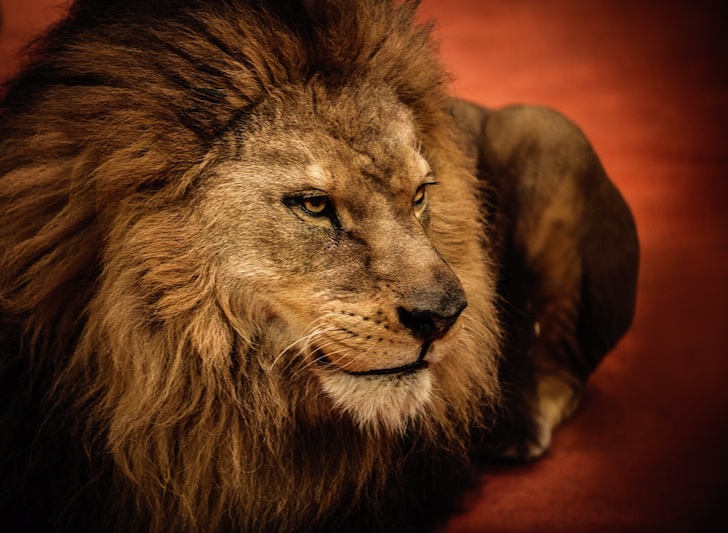
 Officials have confiscated 37 lions and tigers in Saudi Arabia, according to Arab News. The paper said that the National Commission for Wildlife Conservation and Development will be transferring the wild cats that had been illegally smuggled into the Kingdom over the last two years into facilities that comply with the Convention on International Trade in Endangered Species (CITES).
The move is likely to have resounding consequences not only in Saudi but throughout the Gulf region, where it is common to see men riding in cars with cheetahs and other wild animals, or walking them on a leash – violations that until now have eluded stiff penalties. (However, Dubai’s neighbor Ajman completely banned ownership of wild animals last year.)“These animals entered the country in violation of the Convention on International Trade in Endangered Species of Wild Fauna and Flora,” Ahmad Boug, general director of the National Wildlife Research Center was quoted as saying in a local newspaper.
He emphasized that it is illegal to buy or trade animals that are listed under the CITES convention, and should not be held in residential areas.
One person reportedly cut the claws of one lion, which Boug said is illegal (not to mention inhumane), and an increasing number of complaints have arisen about wild animals escaping from their captors.
“The municipality and police department should prevent this kind of danger and threat to citizens, after making sure, through the Ministry of Interior, that it entered the country in a legal way,” he added.
This remarkable adherence to CITES in Saudi Arabia comes after a disappointing day in Thailand, where conservation delegations have gathered for the 16th Conference of the Parties to re-evaluate the status of various endangered animals under the convention.
“The U.S. proposal to transfer polar bear (Ursus maritimus) from Appendix II to Appendix I was rejected this morning in Committee I of CITES CoP16 by CITES member countries by a vote of 38 support, 42 against, and 46 abstentions,” CITES reports.
“Trading our planet to extinction. 600 polar bears are killed and traded each year,” wrote Ofir Drori, an award-winning Israeli activist who has headed up one of the most successful anti-poaching organizations in Central and West Africa, on his Facebook page.
“You would think that stopping the trade in this endangered species would be a world consensus. But apparently most delegates think it’s a great idea and today the proposal to protect the polar bear was shot down.”
Similarly, “Burkina Faso and Kenya announced today the withdrawal of the proposal to amend the annotation for African elephant (Loxodonta africana) in the CITES Appendices,” despite an overwhelming increase in poaching for ivory that has led to the deaths of not only thousands of elephants but also people.
“The CITES UN convention is a big disappointment to many of us,” Drori wrote.
“With all the talks about the mega-crisis of elephants and rhinos poaching, governments are still talking freely about the trading ivory and greed is still in control.What else needs to happen so that CITES reintroduce the ban on ivory trade?”
While overall the CITES convention appears to be failing wildlife, it looks like Saudi Arabia has at last taken a stand against the culturally-acceptable practice of keeping wild animals as pets. That’s a good step.
Watch the CITES proceedings on a live webcast – if you like.
Image of male lion, Shutterstock




I all the time emailed this blog post page to all my contacts, as if like to read
it next my links will too.