
MENA Geothermal Powers West Bank Palestine Geothermally

MENA-Geothermal-Madaba-Jordan With a burgeoning population and no natural resources to provide energy, Palestine has found a hero in MENA Geothermal.

In a world where natural gas is diminishing and oil spills spoil our oceans, we would think there is no better means to generate energy.  Because if there were, surely we, intelligent beings that we are, would pounce at the opportunity to incorporate them.   Finally, MENA Geothermal has done just that.  In addition to its renewable, sustainable, zero emission heating and cooling systems for various commercial and residential applications, the company’s President, Khaled Al-Sabawi, recently signed an agreement with the US Consul General in Jerusalem to provide clean geothermal energy for the 522 unit Kober Affordable Housing Project near Ramallah.

The sun beams energy onto earth, half of which is stored underground.  Unlike outside temperatures that fluctuate, underground temperatures remain fairly consistent year round.  To capture this heat-energy, Al-Sabawi, a Canadian-Palestinian engineer (see video below), designed a system that provides 4.4 units of heating energy for every unit of electricity used.  According to the company’s website, this equates to a 440% efficiency rating.

mena-geothermal-pipes

First MENA Geothermal digs relatively shallow boreholes – which depth depends on external factors – and installs pipes carrying a liquid that absorbs the stored heat.  This is then pumped to an indoor compressor that raises the temperature and distributes the heat throughout the building.  Otherwise, in the summer, the same system extracts the building’s heat and pushes it underground.  MENA Geothermal’s system also has the capability to heat water.

Etihad Subdivision

Their first installation in Ramallah – which was supervised by the International Ground Source Heat Pumps Association and European Union’s MED-ENEC – was the Etihad subdivision that has a 23kW cooling load and a 21kW heating load.

There, annual heating and cooling costs have decreased from $9,100 to $2,960, which amounts to a staggering 70% energy savings.  How quickly the system costs pay off depends in part on each system’s heating and cooling requirement.  MENA’s systems are also relatively easy to maintain.  The underground pipes are built to last for decades, while the indoor components, such as filters are easy to replace when necessary.

Bigger and Better

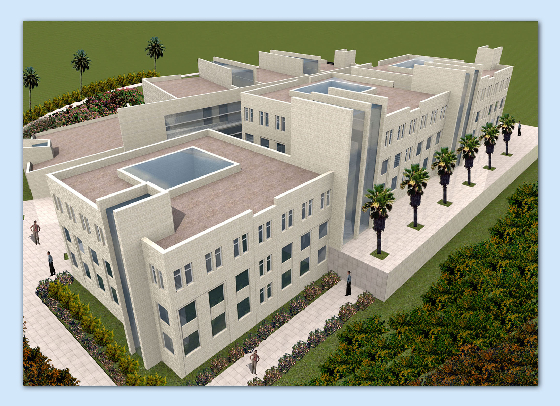
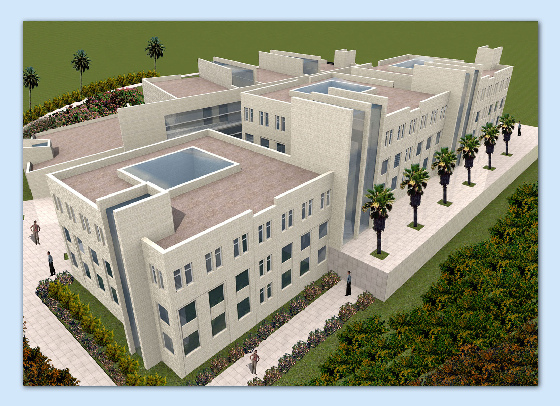
Success propels them to dare bigger and bigger projects.  The University of Madaba in Jordan, owned by the Latin Patriarchate of Jerusalem and blessed by the Pope, has installed a 1.6MW heating and cooling system.  The system comprises a unit for the College of Science Building (A) and the college of Business Building (B).

The former has a cooling load of 291 ton and heating load of 251 ton, while the latter has a 189 ton cooling load, and a 134 ton heating load.  What this means is that every year the University will save 200,000 kWh electricity and 100,000 litres of diesel fuel, and all this with zero emissions.

While we have barely begun to understand the potential consequences of this outstanding development, Al-Sabawi has set his sights high.  He understands that Palestine in particular, with its growing population and lack of natural resources, stands to benefit enormously from his technology.  His vision earned him the 2008 Energy Globe Award, but Palestinians stand to gain so much more: cheap, emissions-free energy for as long as the sun keeps shining.

More green news from Palestine:
Alexander River’s Still Polluted – Could Improve With Help From Palestinian ‘Friends’
Calling all Young Architects and Grad Students to Join ECOWEEK 2010
Construction Underway on Rawabi, First Planned Palestinian City

::MENA Geothermal website

(Tip via Jon Jensen)

Tafline Laylin
Tafline Laylinhttp://www.greenprophet.com
As a tour leader who led “eco-friendly” camping trips throughout North America, Tafline soon realized that she was instead leaving behind a trail of gas fumes, plastic bottles and Pringles. In fact, wherever she traveled – whether it was Viet Nam or South Africa or England – it became clear how inefficiently the mandate to re-think our consumer culture is reaching the general public. Born in Iran, raised in South Africa and the United States, she currently splits her time between Africa and the Middle East. Tafline can be reached at tafline (at) greenprophet (dot) com.

Read More

TRENDING

Saving Gourmet Wild Plants For The Future

Think of truffles, a gourmet wild food. The European...

Middle-Eastern spices and natural medicine (A through C)

In the Middle East, aromatic traditional foods are regarded...

Iran’s water mafia and thirst for war leaves the country on brink of being dry

Iran’s Lake Urmia, once the Middle East’s largest saltwater lake, has shrunk by 90 percent due to mismanagement, dams, and drought. As Tehran pours billions into foreign conflicts, water activists face repression at home. The crisis mirrors Syria’s drought-driven unrest, showing how water scarcity can destabilize entire regions.

Asia Powers Ahead in Global Renewable Boom, But Africa Risks Being Left Behind

Asia continues to dominate global renewable energy growth, accounting for 71% of new capacity added in 2024, while Africa and other developing regions remain far behind despite their potential. Solar and wind lead the charge, comprising 97.5% of additions, with solar alone adding 453 GW. Although global renewables capacity hit a record 582 GW, the world is still off track to meet the COP28 goal of tripling capacity by 2030. Without faster growth and more equitable investment, the energy transition risks deepening the global divide.

How EcoPeace Uses Environmental Education to Bridge Borders in the Jordan Valley

In a region long marked by political divides, armed conflict, and environmental degradation, EcoPeace Middle East is quietly advancing the power of peacebuilding. Peace through education. Through its cross-border teacher tours in the Jordan Valley, EcoPeace is bringing together educators from Israel, Jordan, and the Palestinian territories to address critical environmental issues.

Yerukim Forms a New Green Economy Where the Money is Really Green

The Yerukim members who pick up the recyclables get to keep the monetary reward, the public earns "green" bills that can be used in shops, and business owners get to be associated with environmentalism.

Choosing Riyadh over Dubai? What Investors Should Know

Saudi Arabia is deploying capital at unmatched scale to catalyze tourism and advanced industry while rewiring its power-and-water backbone. The investable frontier is widening—especially in renewables, grid storage, water efficiency/desal retrofits, and hospitality operating platforms. Prudent investors will insist on phased delivery, enforceable KPIs (energy, water, biodiversity), and RHQ/zone compliance—while pricing political-economy and reputational risks alongside growth upside.

Sell your cooking oil for biodiesel money

Want to make money on old french fry oil? Sell it.

Qatar Alternative Energy Summit Pairs Investors And Innovators

Alternative energy investors and innovators can meet n' greet in Doha, Qatar March 16 and 17.

Here’s How To Implement The Four Pillars Of Employee Engagement

If you throw a party for your work team and they are vegans, don't make it a barbecue. Know the sustainability values of your team to boost moral and retain good people.

Locals From Rishon Fight IKEA

Big Box stores are a pretty new concept in Israel, and thank God that not every Israeli city wants them in their backyard. A word from someone who has see the beautiful farmland around her hometown Newmarket, Ontario stripped and converted into vulgar strip malls of big box shops: they have no place in a healthy and sustainable town or city.

The Jewish National Fund Meets An Inconvenient Truth

According to the JNF, it has transformed thousands of acres of barren land into green forests in Israel. They state that each person emits about 23 tons of carbon per year, estimating that each tree planted can absorb one ton of carbon in its lifetime. That's a whole lot of trees you'd need to be planting. Could so many fit in Israel?

How to quiet noise from construction in your office

Streets need to be resurfaced in New York but the humming and grinding noise is unsettling. Noise is environmental pollution. 

Popular Categories