

 Jordan hits a fork in the energy development road: each route inciting ardent support and dissidence.
Environmental activists united in protest for a second time in six months urging public debate over Jordan’s emerging atomic energy program. Over two dozen anti-nuclear activists protested near Prime Minister Awn Khasawneh’s Amman offices last Saturday, in vocal reaction to a government policy statement reaffirming Jordan’s commitment to nuclear development.
At the center of the storm is planned construction of a nuclear research plant on the Jordan University of Science and Technology campus. The project is slated to commence in 2013, followed by a second reactor on the Gulf of Aqaba intended to power desalination processes.
Four additional nuclear electric power plants would be brought online by 2035. Activists accuse the Jordan Atomic Energy Commission of broadcasting a “feel-good” view: emphasizing job creation and energy independence yet keeping silent on environmental impacts and public safety concerns made more critical in the aftermath of the Fukushima disaster in Japan.
Nuclear energy is the thirstiest source of power; a single reactor drinks over 13 million gallons of water a day. Water scarcity is serious problem in Jordan with stiff competition to provide adequate supplies for public consumption, agricultural and industrial uses. Generation processes for solar and wind energy require little or no water.
At the same time, this same government is working to develop its renewable energy program. In May, the Ministry of Energy and Mineral Resources issued an RFP seeking interest in generation of electric power through renewable means, attracting 65 submissions, including proposals to construct solar and wind generators in Kingdom.
Salah al-Azzam, president of the National Energy Research Centre, supports domestic renewables.
Why Jordan should go for wind and solar power
“Jordan is endowed with a high number of sunny days, up to 330 days (per year) in some areas. Wind speeds are over seven meters per second in mountainous areas, well above the international standard minimum of five meters per second required for wind energy projects,” he said. “They are natural, perpetual, and inexhaustible sources that ensure that future generations have safe and non-life-threatening sources of energy.”
Jordan relies on imports for 96 percent of its energy needs, primarily in the form of natural gas. Annual population growth of 2.2% per year is outpaced by an annual 5 to 7% increase in demand for electricity. According to the National Energy Strategy for 2007-2010, by 2020, 10% of the country’s energy will come from renewable sources, 14% from oil shale, and 6% from nuclear energy.
Jordan currently has no renewable energy sources on a commercial scale.
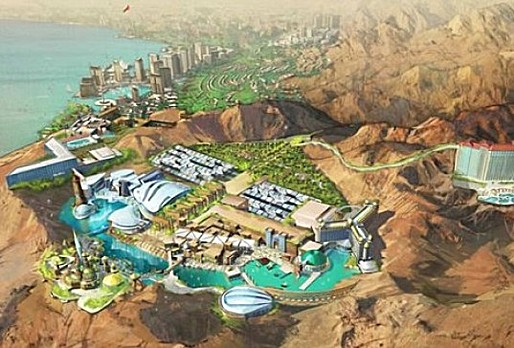
Above image via archinect



The Depressing energy policy in Jordan is reflected through pushing for nuclear power by a team short of expertise, credibility, patience and sustainable public policy has been called for since 2005 in conjunction with the systematic cessation of all other available energy resources; policy on energy efficiency, some wind projects that should have finished since 2008, thermal solar power decreased per number of households, biofuel projects of waste cancelled and above all trying to impede the use of oil shale and natural gas by extending Areva hegemony on uranium deposits into oil shale territory.