Radioactive Church in Tokyo Dangerous as Chernobyl Dead Zone

japan churchPraying in a Tokyo church could expose you to radiation levels higher than Chernobyl dead zones.

In the same manner that Japanese authorities failed to prevent the Japanese nuclear disaster earlier this year, the authorities are dealing with radiation fallout –– in Tokyo. They are not telling the whole story. Locals armed with their own dosimeters are clocking levels higher than at the exclusion zone of Chernobyl. What one resident found at his 11-year-old kid’s baseball field is radiation levels that can make you sick. Another test found the highest radiation dose, in an undisclosed area of a church. Some 20 hotspots have since been identified.

Church officials, reports the New York Times, do not want to announce the name of the church or the location of the radiation hotspot to avoid widespread panic.

In the locally-created Radiation Defense survey, the group says that the church is in the Sugamo district and it measured 2 million becquerels of cesium 137 in a square meter, well above the 1.5 in Chernobyl that forced residents to locate.

One physicist Edwin Lyman from Washington said the difference in Japan is that in Tokyo the radiation is occurring in hotspots. It is not widely dispersed. Given that, it is still advised to do a clean up because over time communities of people may be exposed to well over the recommended yearly dose of radiation.

Meanwhile watch out for nuclear wasabi from Japan. It could be contaminated as local farmers around the radiation hotspots near Tokyo had no idea that their land was contaminated.

Just after the disaster Tafline interviewed nuclear activist and scientist Dr. Helen Caldicott on the Japanese nuclear crisis, which affects not only the Japanese but the health of our planet.

Despite the writing on the wall, countries with unstable political futures like Saudi Arabia and Jordan are dead set on going nuclear. We feel ashamed that humanity doesn’t stop this destructive form of energy immediately.

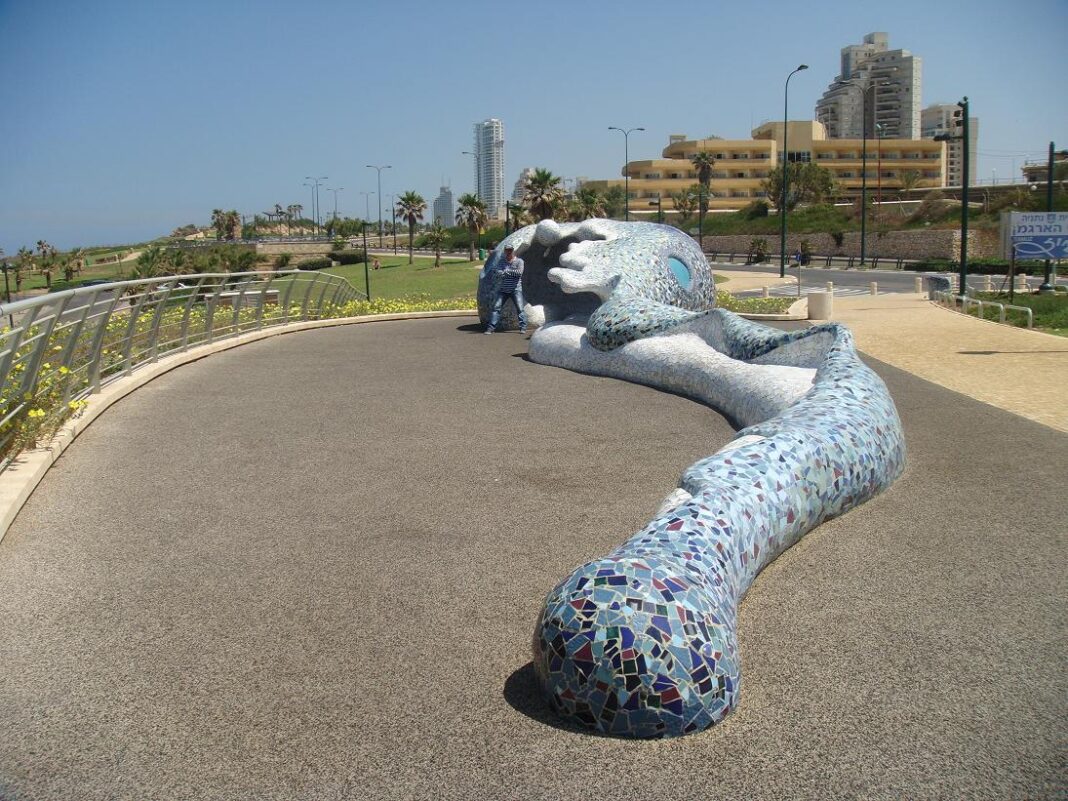
Update: Monday, Oct. 17 – the image above is not the church mentioned in the story, as a reader points out. It is for illustration purposes only.

::New York Times

Image of Japanese church via mujitra
Karin Kloosterman
Karin Kloostermanhttp://www.greenprophet.com
Karin Kloosterman is an award-winning journalist, innovation strategist, and founder of Green Prophet, one of the Middle East’s pioneering sustainability platforms. She has ranked in the Top 10 of Verizon innovation competitions, participated in NASA-linked challenges, and spoken worldwide on climate, food security, and future resilience. With an IoT technology patent, features in Canada’s National Post, and leadership inside teams building next-generation agricultural and planetary systems — including Mars-farming concepts — Karin operates at the intersection of storytelling, science, and systems change. She doesn’t report on the future – she helps design it. Reach out directly to [email protected]

Read More

7 COMMENTS
  1. Thank you for adding that note about the church.

    And sorry for my nitpicking. I thought the article was excellent, by the way. It was news in the true sense of the word — important information that we’ve never seen elsewhere. Please keep up the good work.

    “Clearly now is the time for the Pope to step in and stop nuclear energy plants for this planet’s sake. Agreed?”

    Agreed.

    Thanks again.

  2. @Adding it up: I think the Japanese Government let a lot of accountability issues fall to the waste side. I think what the NY Times reports is in line with what we’ve been hearing from Japan.

    @Factcheck: the image was used for illustration purposes as it’s mentioned that the location of the church has not been disclosed. I updated the story at the bottom so that worshipers at this Sapporo church will not be afraid. Clearly now is the time for the Pope to step in and stop nuclear energy plants for this planet’s sake. Agreed?

    Do you live in Japan?

  3. The church pictured is 500 miles from Tokyo and 380 miles from Fukushima.

    And Adding-it-up has a good point too. Seems irresponsible.

    The Catholic Church in Japan seems to be firmly on the anti-nuke side (not sure if this is the policy of the Vatican or the preference of politically active local parishioners). I don’t think they would hide it.

  4. So this locally-created group discovered what they claim is a significant public health threat in a major city and announce that it exists, but will not release the details to the public because church officials don’t want them to? That doesn’t really add up.

TRENDING

Weston Higginbotham’s Funeral Set for June 17 as Family and Friends Honor Environmentalist

The family of environmentalist and eco-engineer in training, James "Weston" Higginbotham will gather with friends, classmates, and supporters on June 17 in Birmingham, Alabama, to celebrate the life of the Auburn University student whose death in a Kyoto forest in Japan touched people around the world.

Before Funeral, Auburn University Creates Environmental Scholarship in Memory of Weston Higginbotham

The James "Weston" Higginbotham Endowed Scholarship will support Auburn students pursuing ecological engineering, ensuring that the work Weston cared about so deeply continues long after his passing.

Weston Higginbotham’s Family Declines to Release Cause of Death in Kyoto Forest

The family of Weston Higginbotham,an Auburn University student whose disappearance and death in the mountains near Kyoto, Japan, drew international attention, has declined to publicly release the cause of his death.

Weston Higginbotham found dead in a Kyoto forest: is climate anxiety part of the story?

In some ways, Weston has become a symbol of a generation wrestling with environmental and technological anxiety. Friends and family described him as deeply concerned about environmental issues. Reports also noted that he questioned the growing role of artificial intelligence in daily life, even reportedly disagreeing with his mother about her use of AI.

NEOM’s The Line is delayed as Saudi mirage hits reality

Without blinking indeed: Saudi Arabia has reportedly delayed major work on The Line,  the planned 170-kilometer mirrored city slicing through the desert, until after 2030. Tourism projects along the Red Sea are being pushed back, and Trojena, the fantasy ski resort in the mountains fueled with artificial snow, is also effectively frozen.

Yerukim Forms a New Green Economy Where the Money is Really Green

The Yerukim members who pick up the recyclables get to keep the monetary reward, the public earns "green" bills that can be used in shops, and business owners get to be associated with environmentalism.

Choosing Riyadh over Dubai? What Investors Should Know

Saudi Arabia is deploying capital at unmatched scale to catalyze tourism and advanced industry while rewiring its power-and-water backbone. The investable frontier is widening—especially in renewables, grid storage, water efficiency/desal retrofits, and hospitality operating platforms. Prudent investors will insist on phased delivery, enforceable KPIs (energy, water, biodiversity), and RHQ/zone compliance—while pricing political-economy and reputational risks alongside growth upside.

Sell your cooking oil for biodiesel money

Want to make money on old french fry oil? Sell it.

Qatar Alternative Energy Summit Pairs Investors And Innovators

Alternative energy investors and innovators can meet n' greet in Doha, Qatar March 16 and 17.

Here’s How To Implement The Four Pillars Of Employee Engagement

If you throw a party for your work team and they are vegans, don't make it a barbecue. Know the sustainability values of your team to boost moral and retain good people.

Locals From Rishon Fight IKEA

Big Box stores are a pretty new concept in Israel, and thank God that not every Israeli city wants them in their backyard. A word from someone who has see the beautiful farmland around her hometown Newmarket, Ontario stripped and converted into vulgar strip malls of big box shops: they have no place in a healthy and sustainable town or city.

The Jewish National Fund Meets An Inconvenient Truth

According to the JNF, it has transformed thousands of acres of barren land into green forests in Israel. They state that each person emits about 23 tons of carbon per year, estimating that each tree planted can absorb one ton of carbon in its lifetime. That's a whole lot of trees you'd need to be planting. Could so many fit in Israel?

How to quiet noise from construction in your office

Streets need to be resurfaced in New York but the humming and grinding noise is unsettling. Noise is environmental pollution. 

Popular Categories