
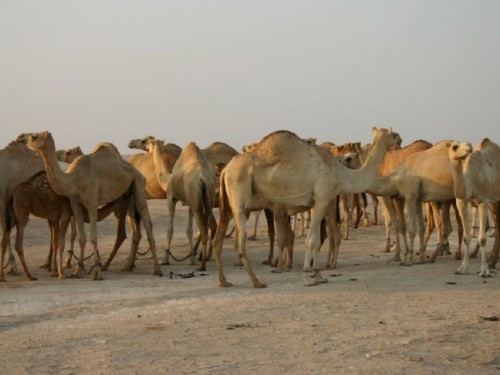

 The price a pedigree camel fetches could fuel a small town. Is it moral for camel races to continue, while much of the Arab world lives in poverty?
Walk a mile for a camel? It certainly seems like rich people living in Abu Dhabi and other UAE states are more than willing to do this – especially when the camels in question are pedigree racing dromedaries used for sport in the Sheikdom and other locations in the Middle East.
While possessing and racing these “splendid beasts,” as Lawrence of Arabia once referred them to be, is not really in itself environmentally damaging, spending so much money on them is an issue; especially if this kind of eccentric hobby is at the expense of abuse to the animals themselves and to children who care for and even race these ships of the desert.
The situation regarding children being forced to become “camel jockeys” became so serious that under pressure of international organizations such as the UN ‘s UNICEF children’s relief organization, camel racing by underage riders became illegal in 2005. And less than a year later, a conference was held in Riyadh, Saudi Arabia, to make camel racing using children a criminal act.
So taking all of this into account, you might wonder why camel breeding festivals are still held in Emirate states like Abu Dhabi, where recently a prized breeding camel fetched a hefty price of 10 million dirham ($2.7 million); and the wealthy purchaser of this expensive dromedary bought two more as well, for a combined price of more than $6.5 million?
One might expect this kind of camel trading to take place in Saudi Arabia, where camels are still considered as a symbol of wealth. But this is Abu Dhabi, which like Dubai is now supposed to be more enlightened and thus interested in environmental and clean technology projects such as its well-publicized Masdar City, whose ecological virtues we have featured in Green Prophet on numerous occasions.
I might add that Abu Dhabi also engineered the Masdar Clean Tech Fund which recently completed it’s first successful investment offering of more than $265 million.
Still, this is the Middle East, where camels are still very much a part of the local scene. And after all, prized race horses, including breeding mares, are sold for similar prices in many parts of the world, and purchased by the wealthy, including Arabs. But even though camel racing with child jockeys is supposedly illegal in places like the UAE and Saudi Arabia, it undoubtedly continues, as does human trafficking of women and children, now considered to be one of the most lucrative financial operations in the world today.
Getting back to the subject of camel trading in Abu Dhabi, this year’s festival even included contests like the most attractive “camel beauty queen,” the winner of which won a prize of $10 million. The camel trading market has even remained stable, despite the disastrous effects of the worldwide recession on the local real estate markets, especially in Dubai.

And what is known as the Al Ain Camel Market, near Dubai is considered to be a national heritage.
There are a lot of good qualities to this animal, besides being used for sport. Camels have been used to both carry loads and for transportation for more than 4,000 years. Their meat and milk are consumed with relish; and their hair and hides used to make clothing and for the walls of Bedouin tents. And last of all, their dung is used to make campfires to keep people warm on cold desert nights, as well as for cooking. But to pay so much money to own them, while many people are going hungry?
It might well be prudent for some of this camel wealth to be spread around to help improve the welfare of the children and their families who were (and maybe still are) involved in being camel jockeys, for the pleasure and enjoyment of the rich.
Images via Fohn; Dreamsofdubai.
More Mid East animal articles worth reading:
Circus Animals Brought to Lebanon Found Abused
Kosher Turkeys “Going to the Wolves” in Tel Aviv
Egypt Culls 300,000 Pigs in Response to Swine Flu Scare




you should help us
[…] Abu Dhabi Rich Pay Millions for Camels […]
[…] like argan trees. And some animal species survive the desert by storing fat around their bodies, like camels. And like Awassi sheep, bred to store fat in their tails. A mature ram’s tail can carry up to […]
[…] on luxury projects and excess in and around the UAE: Abu Dhabi Rich Pay Millions for Camels While Much of Arab World is Poor Burj Dubai is Finished, But at What Environmental and Economical Advantage? Will Abu Dhabi’s […]