Leaking electricity from electronics costs Americans millions annually. In fact about $750 million a year from leaky TVs and about $600 million a year from VCRs. To avoid the leaking of electricity, either unplug electronics when not in use, or plug them into a power strip that can be switched off.
Unplug
Community Supported Agriculture: Organic, Local and Tasty!
There’s no more satisfying way of enjoying what you eat than growing it yourself, but if you simply don’t have the time or know-how than the next best thing is to get to know the person who grows it for you.
That’s the idea behind Community Supported Agriculture (CSA), a small but growing movement of farms who deliver direct to their customers. Although most of Israel’s organic produce is exported overseas, some farmers have imported the CSA concept, (for example, the Tuv Ha’aretz program from Jewish eco-NGO Hazon) to help close the widening gap between farm and fork.
Many farms adopting the CSA model are also organic, so you not only get to know who grows your food, but also how they grow it.
Substitute
One important aspect of a greener life is what you eat. Try various substitutes for your less healthy foods.
Use brown sugar instead of white, or mix in whole wheat with your regular flour. These little changes don’t always make a big difference taste-wise and DO make a difference health-wise.
How do Bedouin survive in the desert?
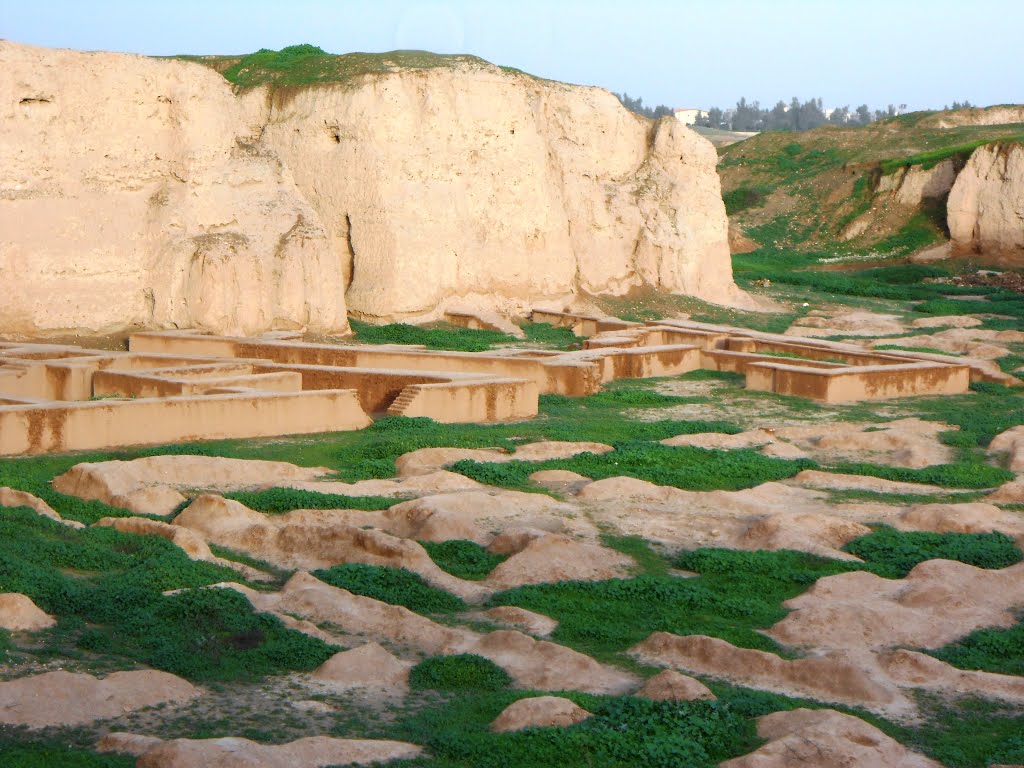
I’ve been researching Bedouin issues in the Negev Desert Israel for about 5 years, and one of the first individuals I met was Nuri El-Ukbi. Nuri and the El-Ukbi tribe have claims to the land named in Arabic El-Araquib, which is roughly situated between Rahat and Beersheva.
It is a vast area of land, roughly 19,000 dunams, and Nuri has documents showing ancestral tithes to this piece of land that stretch back to Mandate and Turkish rule.
In 1951 the El-Ukbi tribe were transferred to land around Hura.
Nuri, on behalf of his father and grandfather, both sheiks (deceased) of the El-Ukbi tribe, has lived in a protest tent on the land for several years now, conducting virtually a one-man non-violent protest against the powers-that-be who will not allow the tribe to live on or farm this piece of land.
Some of it has been given over to a gated settlement, Givaot Bar, and another chunk has been given to members of the Tarabin tribe. Attempts to plant trees and sow crops there by the El-Ukbi tribe and their many Jewish and International supporters meet with the Police and Green Patrol intervening and destroying trees and crops.
It is a visually stunning landscape. I was there yesterday with Nuri, and together we watched birds of prey circle overhead. Here is a short piece of film I made recently about Nuri….
Sadly, he told me the tree has now completely died. The new growth could not flourish. Nuri however, remains in El-Araquib, defiant and quietly optimistic. He is a great example of non-violent protest. He is, like the title of a book he has written about his life, ‘waiting for justice’.
Ecological reasons to ride the bus

Riding the bus is one of the simplest and most powerful actions an individual can take to reduce their environmental footprint. At a time when transportation accounts for nearly a quarter of global carbon emissions, shifting even a portion of daily trips from private cars to public transit can dramatically lower pollution. A single full bus can replace up to 50 private vehicles, reducing traffic congestion, cutting fuel consumption, and lowering greenhouse gas emissions that contribute to climate change. For cities struggling with smog, heat islands, and poor air quality, more people choosing to ride the bus translates directly into cleaner, healthier urban air.
Buses are increasingly part of the clean-energy transition. As electric and hybrid buses become mainstream, their emissions drop close to zero, especially when powered by renewable energy. This benefits not only the climate but also public health: fewer tailpipes mean lower rates of asthma, cardiovascular disease, and respiratory illness—conditions that disproportionately affect children and vulnerable populations. Choosing the bus also reduces noise pollution, making cities calmer and more livable.
Beyond the environmental benefits, riding the bus strengthens communities. It supports equitable mobility by ensuring everyone—regardless of income, age, or ability—can access jobs, schools, and essential services. Reliable bus systems encourage the development of walkable neighborhoods, reducing sprawl and protecting natural habitats from urban expansion. Every person who opts for public transit helps make the system more viable, improving frequency and coverage for everyone.
There’s also a personal advantage: taking the bus saves money. Between fuel costs, parking fees, insurance, and maintenance, car ownership is expensive. Public transit offers a cleaner, cheaper, and often less stressful way to travel. Instead of staring at brake lights, bus riders can read, work, relax, or simply enjoy the view.
In an era of rising temperatures and shrinking carbon budgets, small daily choices matter. Riding the bus may feel ordinary, but its impact is real. It’s a vote for cleaner air, quieter streets, and a more sustainable city. And it’s a reminder that climate solutions don’t always require new inventions—sometimes they’re already waiting at the corner.
WWOOFing It: Organic Farm Volunteer Opportunities in Israel

The almond trees are blooming and the sun is out, which makes many of us start thinking about being outdoors and making summer plans.
Whether you’re an Israeli looking to explore different areas of the country or a visitor looking for a unique way to make a positive change in Israel, the Israeli branch of World-Wide Opportunities on Organic Farms (WWOOF) offers a wide range of organic farming opportunities.
Let it Fill First

If when you wash your dishes or clothing you wait until the machine to be full you can save between 30%-45% on energy usage. So plan ahead and be a little patient and that way you can GreenYourselfDaily.
Into The Wild, and story of Christopher McCandless

Next time you find yourself wandering through the Wilderness of Zin, Trekking in Timna or lost in Lahav Forest, spare a thought for young Christopher Johnson McCandless, whose dreams of tramping to Alaska foundered in 2003 when he died trapped in an abandoned bus on his way there.
He was trapped in the sense that roots he had found nearby had proven to be the ‘wrong’ roots for human consumption, and they poisoned him and weakened him so much that he was unable to hunt wild game or forage further.
This remarkable but tragic true tale was documented by writer Jon Krakauer, ‘Into The Wild’, which has now been brought to the screen by Sean Penn, who wrote the screenplay as well as directed.
Seeing the film, and having read the book a year or two ago, it reminds me of the documentary ‘Grizzly Man’ (reviewed here), which also sees a young guy, (and why is it always guys?) disillusioned with people after a difficult childhood who heads into the wilderness to commune with nature and the beasts that populate it, and also comes to a grizzly end.
“Into The Wild’ has a lot of Hollywood slick production values, and the scenery shots are stunning (as is the multi-media film website), but the essence of needing to escape, being a bit naive, but also very caring to the people he met on his travels, is conveyed well, and the anthropomorphic need to be ‘immersed in freedom’ exudes from the screen.
If there are lessons from the lives and legacies of McCandless and indeed Timothy Treadwell, then they are that we need to tread lightly but with conviction as we explore the inner and outer Alaska, and let that sense of compassion for humanity and the natural world rule at all times.
“There is pleasure in the pathless woods,
There is rapture in the lonely shore,
There is society where none intrudes,
By the deep sea and the music in its roar;
I love not man the less, but Nature more.”
Lord Byron
Be Creative
In the spirit of the 3 R’s see try to think outside of the box. How canyou reuse household items in ways not originally intended for them? Forinstance, want to start an herb garden? Egg cartons make great planters forseedlings. Cottage cheese containers can be used as a great for organizinglittle things.
The Three R’s
What once was the considered the basic education needed – reading , ‘riting, and ‘rithmatic – is today’s the abc’s of a greener living: Reuse, Reduce, Recycle.
Reuse – Don’t be a pack-rat, but that is far from the standard of throwing everything away once it was used once.
Reduce – little things add up. Like if you can shut off the water while brushing your teeth, over the years that will make a big difference.
Recycle – while it’s been getting a bad rep lately it’s still better than simply throwing things out.
Plantware: Fantasies About Building Houses From Living Trees

By controlling the shape in which trees grow, the Israeli company Plantware creates products that are made of living trees. Their vision is to turn living trees and maybe the whole world “into a new building material, making effective contributions to the ecosystem,” they say.
We are thinking giant treehouses for everyone!
Plantware aims to significantly influence initiatives for global warming prevention and eco-living. Though their projects will take a lot of time to grow fruit, we could imagine living in live tree condo one day. Could you?
Fresh Paint With EcoOcean: A Splash of Green

This weekend the Young Israeli Art Fair, aka Fresh Paint, comes to Tel Aviv with an extra splash of green. The showcase for up-coming, independent artists has a special installation curated by environmental NGO, EcoOcean.
The Green Project will showcase environmental art that, the organisers say, “identifies art as an integral part of our environment, quality of life and future”.
In recent prophecies we showed how environmental issues are filtering into the mainstream of modern culture, whether through the media of clothing, design or poetry. In this spirit, works of green artwork will be available for auction with proceeds going towards EcoOcean’s work to preserve the marine ecosystems.
Fresh Paint runs from Thursday 6 March until Saturday 8 March at 47 Kibbutz Galuyot Road, Tel Aviv. Click for opening times and more details.
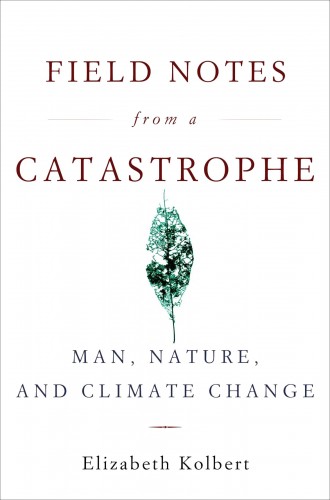
Joe Lamp'l's "Green Gardener's Guide," a Review

Here is a great book for all gardeners and garden lovers who want to go that wee bit further and work with the earth and plants in a truly green way. Joe Lamp’l has filled his new book, ‘The Green Gardener’s Guide’ with tips and actions that every gardener or green-conscious citizen can take immediately to conserve and preserve precious resources.
Lamp’l is a gardening writer and host of several tv shows in the US, with a clear passion for communicating about gardening and environmental stewardship. This book is in effect, a ‘call to spades’ for gardeners worldwide, detailing ecological methods to get, and keep, the garden green.
Geotectura Builds a Green Future for Israel’s Real Estate

Green building in Israel seems to be gaining momentum, as witnessed by the recent breakthrough of scientists from the Technion whose prize-winning research is going into building a green sanctuary in China (alas, not here!).
It’s being spearheaded with particular enthusiasm by architect Joseph Cory, whose company Geotectura professes to be committed to creating buildings that are environmentally friendly.
Staying Warm
When trying to stay warm in the winter make sure that your heater has a thermostat. Using a thermostat will make sure that you do not use excess energy. It’s great to reap the benefits of modern living and technology. That used to mean that you could stay warm at all. In today’s world it means that you can stay warm and save! Check your thermostats and GreenYourselfDaily!