Home Blog Page 664

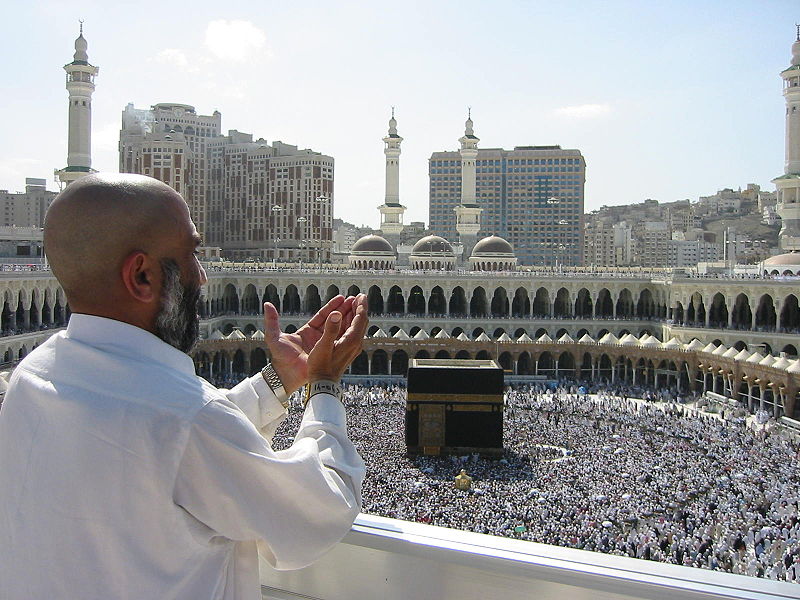
Mecca Becomes Mecca for Drugs

fasting, Ramadan
People go to Mecca for spiritual alignment, not to be exposed to drugs.

Some drugs like pot, gat and hash are natural. But antidepressant drug abuse in Mecca, Saudi Arabia is causing social problems.

Mecca province, home to the holiest site in Islam, has the highest rate of drug-related crime in Saudi Arabia, a university study has found. The national study, carried out by Dr. Ashraf Shilbi of the National Center for Youth Research at King Saud University in the capital Riyadh, calculated that the number of drug-related legal cases in Mecca province has steadily risen by around 1,000 each year. In 2009 it peaked at 9,000 cases.

Most countries in the world are facing issues of teenage drug addiction and other forms of substance abuse.

“Drugs is certainly a problem in Saudi Arabia and every day you hear about the government killing someone for smuggling drugs,” Wajiha Al-Huwaidar, a former teacher, told The Media Line. “I would think that the problem is more pronounced in Mecca because it’s very crowded and very easy to get a visa to come to Saudi Arabia for Hajj or Umrah, so many people can come as drug dealers under the guise of a pilgrim.”

The study, first reported by the Al-Madinah daily, found the Saudi capital Riyadh to be second in the number of drug-related cases, followed by the provinces of Jazan, the Eastern Province, Asir, Madinah, Tabuk, Al-Qassim and Al-Jouf.

While drug abuse made up the majority of cases, drug trafficking was also found to be on the rise. Despite a Saudi stigma that drug smuggling is led by foreigners, the study found the vast majority of drug smuggling cases to be Saudi citizens, with foreigners making up only 22 percent of drug trafficking cases.

The study also found that over the last decade Saudi hospitals in the country’s capital and commercial center have recorded a tripling of the number of drug addicts receiving treatment. The number of drug addicts seeking treatment in the Saudi capital Riyadh, for example, were found to have tripled, from 13,520 in 200 to 40,515 in 2009. The number of addicts treated in Jeddah more than tripled, from 10,876 in 2000 to 35,857 in 2009.

Ahmed Al-Omran (links to his blog Saudi Jeans), an influential Saudi critic and blogger, said it was unclear why Riyadh and Jeddah had witnessed such a notable rise in drug use. “There are likely many factors – unemployment, more people travelling inside and outside of the country, etc,” he said. “But it’s hard for me to speculate and the study should have looked more into the reasons for the rise in drug use.”

Al-Omran downplayed the importance of the study. “Drugs are everywhere in the world, the Mecca region is big and is not just the holy city of Mecca,” he told The Media Line. “So it doesn’t seem very weird that there would be a high rate of drugs in Mecca province.”

“Whenever the government publishes the news that they have seized a large amount of drugs coming into the country it indicates that there is a problem of drugs in the country,” Al-Omran said. “But the government only manages to seize a small percentage of what’s in the market, so they also need to work on awareness and make sure families know the dangers of drug use.”

Shilbi’s research found the most popular illegal drug in Saudi Arabia to be the antidepressant Catptagon, followed by hashish, Qat (or gat), heroin, amphetamine, opium and cocaine.

Hashish, dried cannabis also known as ‘hash’, made up the largest proportion of the drugs confiscated by Saudi authorities. The volume of Hashish seized has steadily increased by 18 percent each year. Qat, a plant with an amphetamine-like stimulant, made up the majority of drug seizures in the southern province of Jazan, with more than 10,000 recorded seizures of the plant last year alone. Seizures of cocaine and opium were very rare and recorded only in the capital Riyadh and Saudi Arabia’s commercial center Jeddah.

The study found that drug dealers in Saudi tend to be students or workers, and those most vulnerable to drug abuse tend to be young men aged 20 to 30. Bachelors and the unemployed were also found to be demographic groups more at risk for drug abuse.

The Saudi Interior Ministry announced last week that drug enforcement officials had completed one of the largest drug busts in its history, arresting 195 individuals over four months on charges of drugs smuggling. Authorities also seized eight million tablets of Captagon, two tons of hashish, and more than 20 kilograms of pure heroin.

Drug trafficking is punishable by death in Saudi Arabia, regardless of the quantity being trafficked. The knock-on effect is that if drug traffickers take the risk of doing business in the Saudi kingdom, to make it worthwhile they will usually traffic huge volumes of drugs with large profit margins.

More on Middle East drugs and conflict with the environment and human health:
Hashish Shortage Stokes Bitterness in Egypt
Yemen’s Environmental and Social Problems Blamed on Chewing Gat
Afghan Opium Growers Get the Burn-Out

This article is reprinted courtesy of The Middle East News Source, The Media Line.
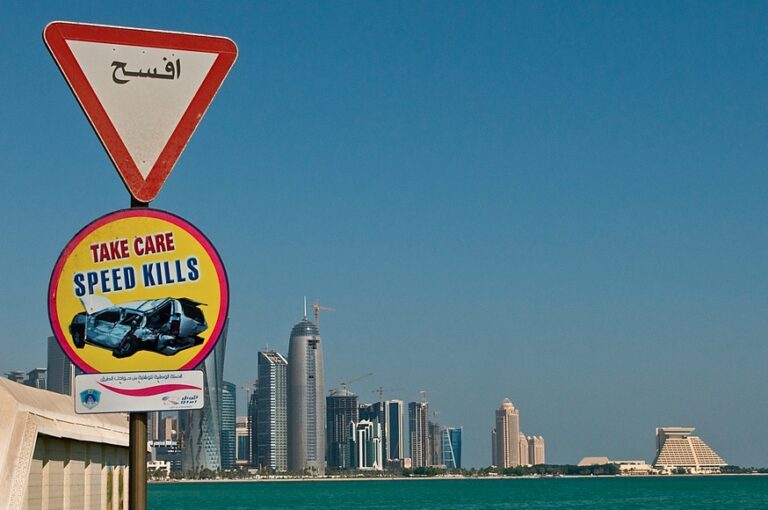
Qatar's Petroleum Industry Going Into Eco-drive?

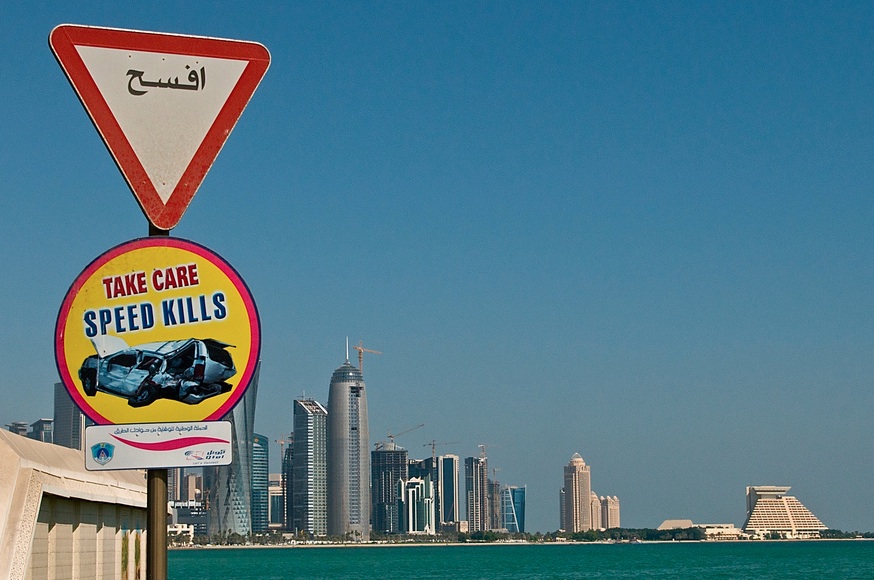
doha qatar speed signQatar’s petroleum industry is making efforts to “go green.” Is it speeding ahead in the right, or wrong direction?

We all know too well the devastation that the oil industry can cause. This weekend’s oil spill, the Deepwater Horizon Incident in the Gulf of Mexico is surpassing the devastation of the Exxon Valdez spill and is a pretty stark reminder about our responsibility to safeguard the environment (if signs of global warming aren’t enough).

While Qatar is not an oil-rich company, it’s rich in natural gas and is a member of OPEC, which means it can greatly influence environmental policies put in place in the oil and gas industry. The country hopes to bill itself as an environmentally-friendly one, getting a boost with the Qatar Petroleum Environment Fair that opened last week at the Doha Exhibition Centre, according to the Gulf Times. “Environment” and “Petroleum” are not normally words associated together in a fair in a positive way. While natural gas is not as polluting as oil or coal, it’s a limited resource which still pollutes, but less.

Qatar’s Vodaphone Leads Phone and Paper Recycling Program

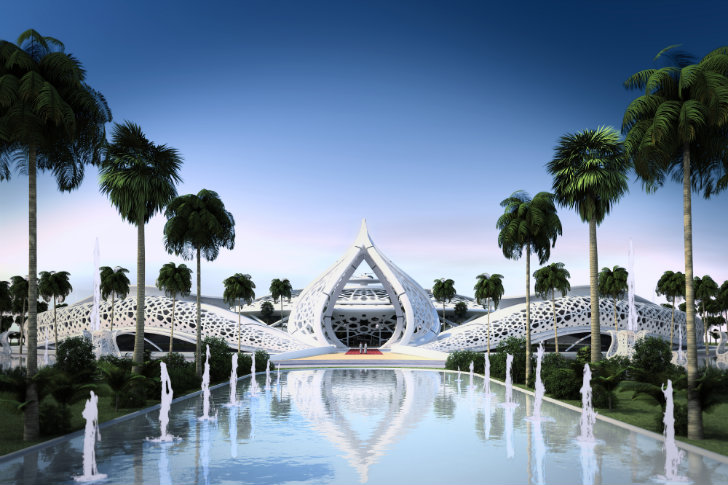
Qatar's palace for nature
With a palace for nature, Qatar looks to corporations to help educate about recycling

On Qatar Environment Day in February, the UK mobile phone company Vodaphone launched its program to give back 10% on new phone purchases if their Qatari customers recycle their old phones. In some countries like Canada, new device buyers actually have to pay a fee to offset recycling costs.

Around this time they also launched wind and solar powered base stations to cellular networks that need to be powered off-grid as par of international efforts to go green.

This week, members from the company’s Green Ambassadors program started recycling old company posters and flyers, setting a precedent in a country and industry that has a lot to learn about environmental awareness. The launch was at the company’s store in Mushereib and the material is to be sent to a recycling facility in Doha.

“It was amazing seeing the large white truck from the only paper recycling company in Qatar, coming to pick up our old paper, posters and flyers that will be recycled into blank paper rolls and used in a thousand new ways. The Green Ambassadors are thrilled to know that each small initiative we take plays an important role in protecting Qatar’s environment,” said Ahmed al-Manwari, the Green Ambassadors’ leader in a Gulf Times interview.

The link has since been taken down to the Gulf Times. But it is a great way to get daily news on the Gulf region.

I like seeing how mega multi-national companies take on environmental challenges that rub off in countries in need of more environmental awareness. Vodafone Group plc (LSE: VOD, NASDAQ: VOD) is a British multinational mobile network operator headquartered in Newbury, England.

Let’s hope that companies like Apple will create similar projects to recycle the iPhone and iPod.

Update to 2020 and Vodaphone is already talking about going 100% green.

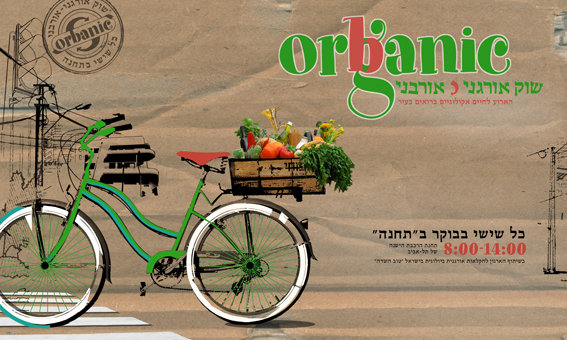
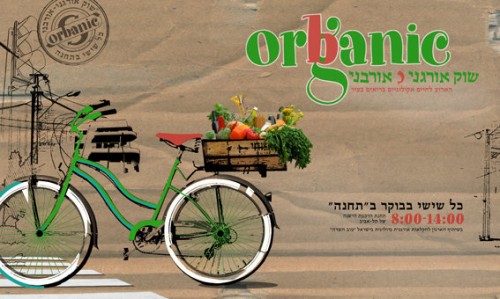
"Orbanic" Weekly Organic Farmer's Market to Begin This Friday at Tel Aviv's Historic Turkish Train Station

0

Traditional organic agriculture and gorgeous historic architecture come together at Tel Aviv’s restored Turkish train station.

The historic Turkish train station between Neve Tsedek and Jaffa in Tel Aviv, which in its former glory operated trains from Jaffa to Jerusalem, has laid in ruins for decades.  Over the past few years, though, the Tel Aviv Municipality has been restoring the complex and its beautiful historic buildings.  Someone must have thought it would be appropriate to restore traditional agricultural methods on the site as well, since this Friday “Hatachana” (or, “the station”) will be starting the city’s first all-organic farmer’s market.

Masdar and US to Collaborate on Carbon Capture and Clean Energy

0

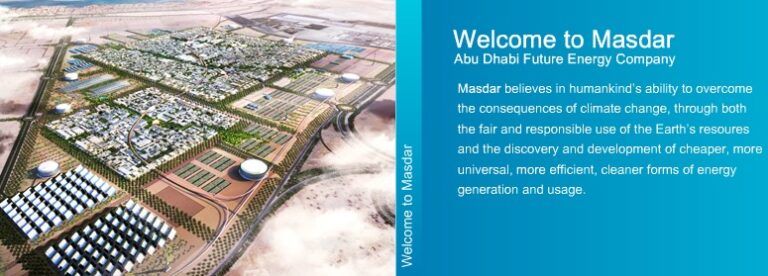
masdar city americaUnited Arab Emirate’s renewable energy company Masdar signed MoU with the US Department of Energy, Canada too.

Aligning America with United Arab Emirates? the The US Department of Energy (DoE) and Masdar, Abu Dhabi’s multifaceted renewable energy initiative which includes an eco-city with the same name, signed a Memorandum of Understanding this week to promote collaboration on clean and sustainable energy technologies, reports Carbon Capture Journal and a press release issued by Masdar.

Signed in the US by US Deputy Secretary of Energy Daniel Poneman and Dr. Sultan Ahmed Al Jaber, the CEO of Masdar, the agreement will build on a framework for cooperation in three important areas to tackle global warning, and to address depleting and polluting fuels: carbon capture and sequestration, water and bio-fuels, and clean technology.

"Look Ma, No Hands": Will GM's New Self-Guided Electric Car Catch on in Macho Middle East?

Will “no hands drivingwork in the macho Middle East?

It seems the race to create the most innovative electric powered vehicles has become even more bizarre: America’s General Motors recently unveiled its new EN-V Robot car in Shanhai China. The vehicle, which uses a GPS type guidance, vehicle-to-vehicle wireless communications system, is being promoted as a vehicle in which its occupants “need not touch their steering wheels ever again.” This concept of “hands off driving” is even more bizarre than the previous “road train” article we wrote about in which several cars will ‘link’ themselves together behind a truck and travel together down the road without their drivers having to steer them. And it also goes one step beyond the Honda U3-X electric unicycle that even goes sideways. Nice ideas but will these catch on in the super-macho Middle East?

Civilizations, Ancient and Present, Depend on Water

akkad helmet sculpture iraq

From leaps in the bronze age to massive droughts that wiped out cities, civilizations we learn from history, depend on water. We need to protect our life sustaining resources now. An Akkad sculpture from Iraq.

Over the course of history, numerous civilizations have peaked and then gradually fettered out or even disappeared abruptly. In many cases, the cause of both their rise and disintegration was the same: Water. This precious resource has been a driving factor of progress in the past and will prove to be a determining factor for development in the future as well.

The Indus Valley Civilization (IVC), located in present-day Pakistan and India, was based around the Indus River and its tributaries as early as 2,600 BCE. Its efficient management of water resources has led archeologists to consider it an extremely advanced civilization for its time: The Bronze Age.

The Harappans — named after the first IVC site discovered — constructed public baths, drinking water infrastructure, water storage facilities and intricate sewage network systems.  But did water also play a hand in its demise?

Till date archeologists debate over the ultimate cause for the collapse of IVC, but most of the possible theories involve water. The existence of defensive walls and multiple layers of silt found among the ruins have suggested that the civilization was destroyed by floods; an opposing theory suggests that rivers could have changed their course and caused drought and desertification. Either way, the Harappans found themselves at the mercy of water.

Konnichiwa World! Better Place Launches Electric Taxis in Tokyo

electric car better place japan photoTaxis can’t wait all night to recharge: The Better Place battery switch is showing another way for electric cars, in Tokyo.

A few days ago, Better Place electric car company sent out the press release. The Israeli-US company launched its electric taxis in Tokyo, Japan. The pilot will be small, with only 4 taxis which will replace their batteries, over time, with Better Place’s battery-switch system. Taking about 2 minutes to switch, this kind of solution is needed since taxis are in operation all day long and don’t have time to plugin and recharge the traditional way.

“Charging spots are not a realistic option for taxis that need to be on the go all day long,” Better Place CEO Shai Agassi said from Tokyo, during a conference call. The pilot project will last 3 months and is currently being funded by the Japanese government. Similar tests on taxis will be part of the pilot tests done in Israel later this year, Agassi (pictured below) said.

Bank Hapoalim Presents an Exhibition of 22 Futuristic Green Houses and 2 Green Mortgages

2

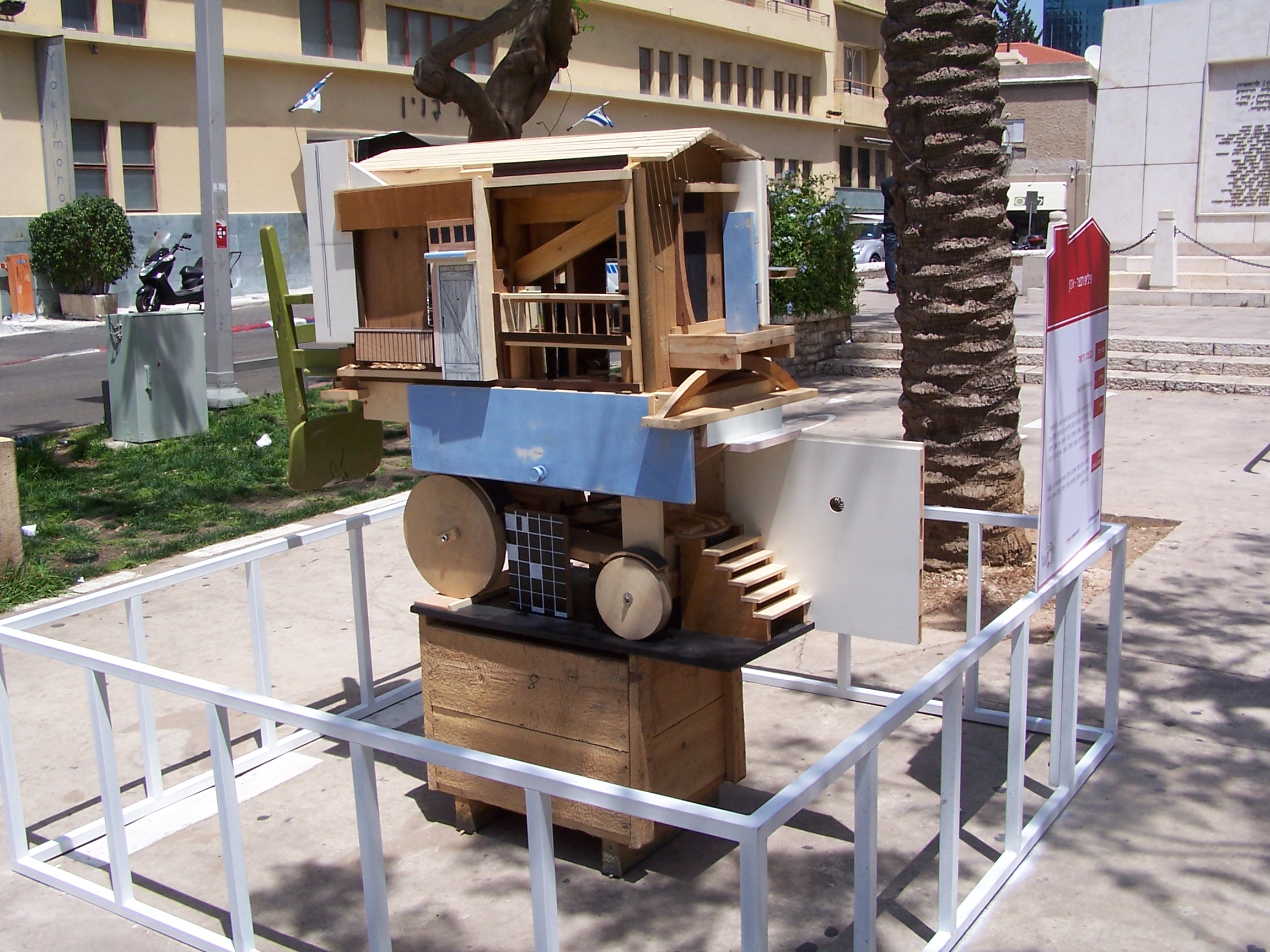
green homes tel avivAn Israeli bank tries to sell “green mortgages” with installation exhibit on busy boulevard.

As part of their campaign to sell “green mortgages” (in other words, mortgages for homes built with environmentally friendly construction or for financing the installation of solar home energy systems), Bank Hapoalim has sponsored an exhibition of futuristic green homes along Tel Aviv’s Rothschild Boulevard.  Rothschild Boulevard is often the venue for unusual exhibitions, including an installation of trees by environmental sculptor, Dani Karavan, a few years ago.  This exhibition of 22 homes – all made by Israeli designers, artists, and architects – spans from Betzalel Yafe Street to Herzl Street.  Some houses are scientific in nature, others are whimsical, and all of them are a little bizarre.

More Green Building Talk on TED: Catherine Mohr

1

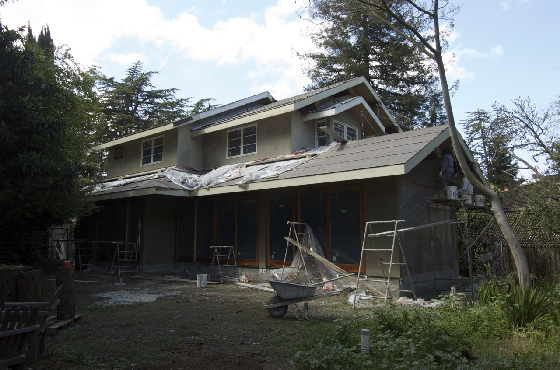
catherine-mohr-green-buildingBy taking into account embodied energy, Catherine and her husband half the energy required to build their home.

In her recent Ted talk, Catherine Mohr encourages us to look at the bigger picture when discussing and analyzing green stories.  Whether we weigh the benefits of a LEED certified project against the energy required to ship its raw materials, or evaluate the true sustainability of certain clothing, it is important to take into account the project or item’s embodied energy. Maybe there are some lessons to be learned here for people looking to build in the Middle East?

Old McDonald Gets Farmigo Software to Manage His Organic Farm

1

farmigo

Farmigo aims to improve day-to-day operations for small organic farms.

More and more Israelis are joining the worldwide move to buying their fresh produce from small, organic farms (and CSAs – see our list). But because they’re farmers, and not necessarily businessmen, most of these family-run businesses aren’t being run on the most optimal level.

Consumers who get the fresh produce delivered to their homes often don’t have a say in what kind of fruit and vegetables they’ll receive – will it be 10 radishes and two apples, or top heavy with red peppers? And despite the clear health benefits, the discrepancy in prices between store-bought and organic produce is too much for many consumers.

That’s where startup Farmigo and its CEO Benzi Ronen comes in Farmigo, aiming to improve day-to-day operations for small organic farms, making them more effective and hopefully profitable as well.

Ronen and his team interviewed farmers at 124 CSA (Community-Supported Agriculture) farms and discovered that their heads were in the ground – literally. They were focusing so much on the food they were growing, that the business side was being neglected.

Farmers complained that they often spent up to 30 hours a week on emails and calls dealing with member payment and delivery questions – time they would prefer to spend tending their gardens.

Most farms don’t have their own online store and it’s rare that they’re set up to take credit card payments. But when Ronen asked them questions like: “Did everyone pay you?” or “Did any checks bounce?” they would scratch their heads.

A shorter lifespan for the coming generation

Ronen says that the potential for organic farms (see our WWOOF list) is fast approaching a tipping point, and none too soon. With diabetes and obesity on the rise, the “generation coming of age now will be the first to have a shorter lifespan than their parents,” Ronen warns.

How did we get into this situation? According to Ronen, after World War II, there was a push to reduce the cost of food (families were paying up to 16 percent of their income for groceries at the time) and increase accessibility.

Those economies of scale led to huge ‘mono-crop’ farms, each focusing on only one to two crops. Small farms growing a more diverse selection were nearly driven out of business entirely until recent years when they’ve started to make a comeback.

Selling their produce to the big conglomerates just doesn’t make economic sense for organic farms that would earn only 20 cents on every dollar in such an arrangement. Going directly to the consumer is the only way to compete.

A Fortune 500 approach to organic farming

Ronen and his partner Yossi Pik met at SAP where they worked on software applications for Fortune 500 companies. Their vision for Farmigo is to build the same type of customer-relationship management and e-commerce systems for the CSA industry.

The Farmigo founders talked to hundreds of farmers and their customers to determine what would satisfy everyone and make the CSAs sustainable. Their research led to a system that includes an ordering engine that tracks and verifies payment in a variety of formats, including credit card validation; a delivery and reporting tool that prints box labels, route maps and site pick-up locations; a harvest module that helps farmers select what goes into each weekly produce box; and an online store and collaboration tool so that separate farms can work together to offer a wider variety of produce to their customers.

Farmigo charges nothing up front and no set-up fees. Instead it takes two percent of sales and even offers an initial 60-day money back guarantee. The entire service is hosted “in the cloud” (meaning it’s all web-based with no software to install locally) and is built using Google’s application environment.

Racing to do business before harvest time

It all began in 2008 and the company is still small with four employees in two locations – marketing and sales are located in the San Francisco Bay Area, R&D is in Israel. Ronen won’t divulge how much he’s raised, but says it’s from angels rather than VCs and is enough to keep the company going through until 2011 “as long as we stay lean.”

He’s optimistic about the growth of the organic farm market. In addition to families and individuals, small farms are increasingly selling directly to restaurants and schools. It’s important that they continue to supply their fresh produce to children, for many schools have moved to providing only food that can be “held in your hand” with no cutlery needed, which Ronen points out is too often unhealthy ‘fast food.’

Moving beyond produce, Ronen says that Farmigo could be applied to meat as well, although that would require a much more complex model. “You don’t know the weight until it gets to the customer,” he says. “And you also have to sell more parts of the cow to make it economically worthwhile.” Brains in the delivery box, perhaps? Wine and spices can also benefit from the Farmigo system, according to Ronen.

The company is first targeting the American market and Ronen admits that getting the interface to work in Hebrew is challenging. To date Farmigo has two new customers coming onboard every week and the race is on to June, which is peak harvest time. “Farmers won’t talk to us for three months after that,” Ronen says.

::Farmigo

GM foods shrinking sexual health in a womb near you

The USA allows them, and the EU has banned them, but the controversy over genetically modified foods is far from over, globally or in the Middle East. While Israel prohibits the import of genetically modified seeds, according to a 2009 article in Haaretz, even green-savvy consumers may be eating their fair share of Frankenfoods. (Genetically enhanced food sold unmarked).

“Agricultural products that underwent genetic engineering are sold in Israel without any marking to inform consumers, according to Milouda Quality Control Laboratories, which was testing food products containing soybeans…. The tests found that some baked goods, packaged schnitzel products and meat substitutes sold in stores around Israel contained soybeans that were essentially genetically modified organisms.”

This information isn’t new to readers of Green Prophet. We’ve cautioned readers on the dangers of this technology in previous articles (Israeli consumers at risk from GM foods), and on the importance of eating organic. Now, however, more recent research suggests that GM foods could have colossal consequences on our sexual health. In other words, eat genetically engineered foods at your own reproductive risk.

Dr. Jeffrey M. Smith is the author of Seeds of Deception and Genetic Roulette: The Documented Health Risks of Genetically Engineered Foods. In an article published March 2010 on Mercola.com, he covers many of the danger angles, including some that are very eco-unsexy. He’s not alone in tooting the trumpet of concern. Dr. Joseph Mercola, the founder of Mercola.com, recently was named the “Ultimate Game Changer in Wellness by Huffington Post.” They are just two in the medical field working to educate the public about GM foods.

The American Academy of Environmental Medicine (AAEM) is also extending its green arm to the cause, and has suggested that physicians prescribe non-GM diets to all patients. Quoting Dr. Smith, “They called for a moratorium on genetically modified organisms (GMOs), long-term independent studies, and labeling, stating, “Several animal studies indicate serious health risks associated with GM food, including infertility, immune problems, accelerated aging, insulin regulation, and changes in major organs and the gastrointestinal system…There is more than a casual association between GM foods and adverse health effects. There is causation…” (Doctors Warn: Avoid Genetically Modified Foods)

The evidence is enough to shrivel even the boldest pair. From birth defects, to infertility, to altered testicle color and size in animal studies, GM foods may be the beginning of the end of safe sex as we now know and enjoy it.

Dr. Smith writes: “GM foods are particularly dangerous for pregnant moms and children. After GM soy was fed to female rats, most of their babies died—compared to 10 percent deaths among controls fed natural soy.2 GM-fed babies were smaller, and possibly infertile.3

“Testicles of rats fed GM soy changed from the normal pink to dark blue.4 Mice fed GM soy also had altered young sperm.5

“Embryos of GM soy-fed parent mice had changed DNA.6 And mice fed GM corn had fewer, and smaller, babies.7

“In Haryana, India, most buffalo that ate GM cottonseed had reproductive complications such as premature deliveries, abortions, and infertility; many calves died.

“About two-dozen US farmers said thousands of pigs became sterile from certain GM corn varieties. Some had false pregnancies; others gave birth to bags of water. Cows and bulls also became infertile.8

“In the US, incidence of low birth weight babies, infertility, and infant mortality are all escalating.”

While it is true that “scientific progress on molecular biology has a great potential to increase our understanding of nature and provide new medical tools,” until we know more about the risks, environmental and otherwise, it behooves scientists, citizens and governments to avoid “turning the environment into a giant genetic experiment” (Greenpeace EU).The forbidden fruit may have a new label, but do you want to eat it? (Photo: Pameladrew212)So what can the average reader do with this information, in the Middle East or abroad? Our suggestion is to stay informed on the topic, and find out where you can purchase food free of genetic voodoo. If a label is iffy, find an alternative that you know is GM free.

Since 1996, these foods have slowly been entering our everyday lives, yet GM activism is still in its infancy in this part of the world. But as evidence mounts, and people respond at the grass-roots level, we may be able to score one for Mother Nature, and zero for those who want to experiment with her perfection, or our sexual well-being. (Which may in fact be in augmented in a positive way using natural male enhancement compounds.)

More food, sex and health:
Genetically Modified Hype in Israel
Are You and Eco-Sexual?
How Green is Your Garlic?
Greenprophet visits Amirim, a Vegetarian Paradise in the Galilee

Iron-Rich Whale Poop Essential in Middle Eastern Marine Habitats

1

whale poopBig recyclers and important for carbon storage: New evidence explores how important this large mammal is for regulating nutrients in the sea.

What does whale excrement, or poop, have to do with enriching the world’s marine environment? Plenty,  according to a recent  article on Greenbang. The “poop” the article is referring to is that contributed by whales whose diet is largely consisting of ingesting thousands of pounds of a small marine crustacean known as krill. Krill are small, shrimp-like creatures whose average size is that of a paper clip, and are full of iron that they obtains from the sea; especially from feeding on algae in many of the world’s oceans. Their poop, also, helps our oceans absorb the greenhouse gas carbon dioxide from the atmosphere. Now’s a better time than ever to Save the Whales!

Israel Plans Wind-Powered Lighting for Coastal Highway, Takes Initial Step to Buttress Shoreline Cliffs

1

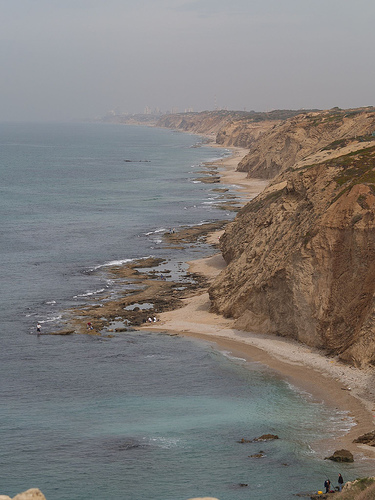
Israel's cabinet okays recommendations to combat cliff erosion

Israel’s cabinet has approved recommendations for preventing the further erosion of coastline cliffs.

The Israel National Roads Company  is preparing to publish tenders for the supply, installation and maintenance of wind turbines to generate electricity for highway lighting.

According to the Globes business daily, the CFO of Israel National Roads Co., Shay Yiftach, explained at a conference this week that small wind turbines could be installed on lighting poles on the coastal highway running along Israel’s Mediterranean coastline to exploit the sea winds.

Have You Ever Met a Green Sheikh?

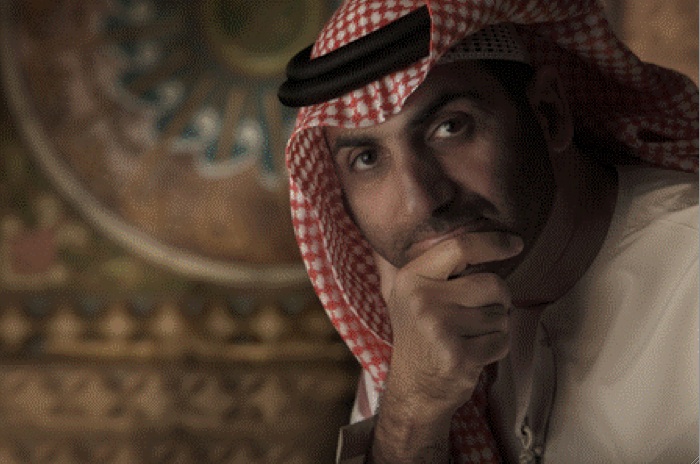
green sheik united arab emiratesGreen Prophet interviews the Green Sheikh, from the United Arab Emirates. He’s looking to change the “green” perceptions and reality of the Middle East.

The environment movement is no stranger to royalty: Prince Charles, the Prince of Wales has made his commitment to supporting the green movement, and over in Jordan, Prince Hassan has told Green Prophet that he’s committed to water protection and environmental education for his people. But green royalty from wealthy oil nations? From a ruling royal family in the United Arab Emirates, Green Prophet has befriended Sheikh Abdul Aziz bin Ali Al-Nuaimi, better known as the “Green Sheikh.

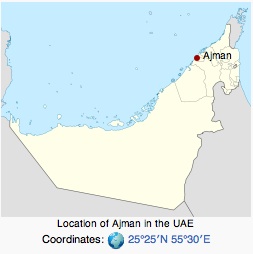
Sheikh Abdul Aziz, 44, is the nephew of Highness Sheikh Humaid bin Rashid al-Nuaimi (Arabic: شيخ حميد بن راشد النعيمي‎) – the Ruler of Ajmān and member of supreme council of the United Arab Emirates (UAE), one of the seven emirates of the United Arab Emirates UAE federation.
ajman province UAE
An emirate is a political territory that is ruled by a dynastic Muslim Monarch-styled emir. Ajmān, where the Green Sheikh lives, covers an area of just 260 km2 and is located along the Arabian Gulf. About 95% of the people in Ajman (population of 360,000) live in the city of Ajman. Historically the Emirate was was known for its fishing and trade industries; more recently as guardian of some of the UAE’s oil reserves, and for property development.

Gaining a reputation for his zealous interest in environmental issues, which started as a child, Sheikh Abdul Aziz, today is CEO of the of Al Ihsan Charity Centre, which supplies food and essentials to the needy. He has a life mission which is guided by Islam: “to achieve all manners of excellent deeds for the satisfaction of Allah (God).”

In that mission is protecting the environment.

Educated in chemical and petroleum engineering, with an MA in environmental management, and a PhD in clean production and industrial ecosystems, Green Prophet interviews this newcomer to the green scene, with high hopes that the Green Sheikh will radically reform education and respect for the environment in the Middle East.

He’s won awards for his research, and the Mayor of Miami has given the Green Sheikh a key to the city. He currently advises the public, private and academic sectors on environmental issues.

Here’s our interview:

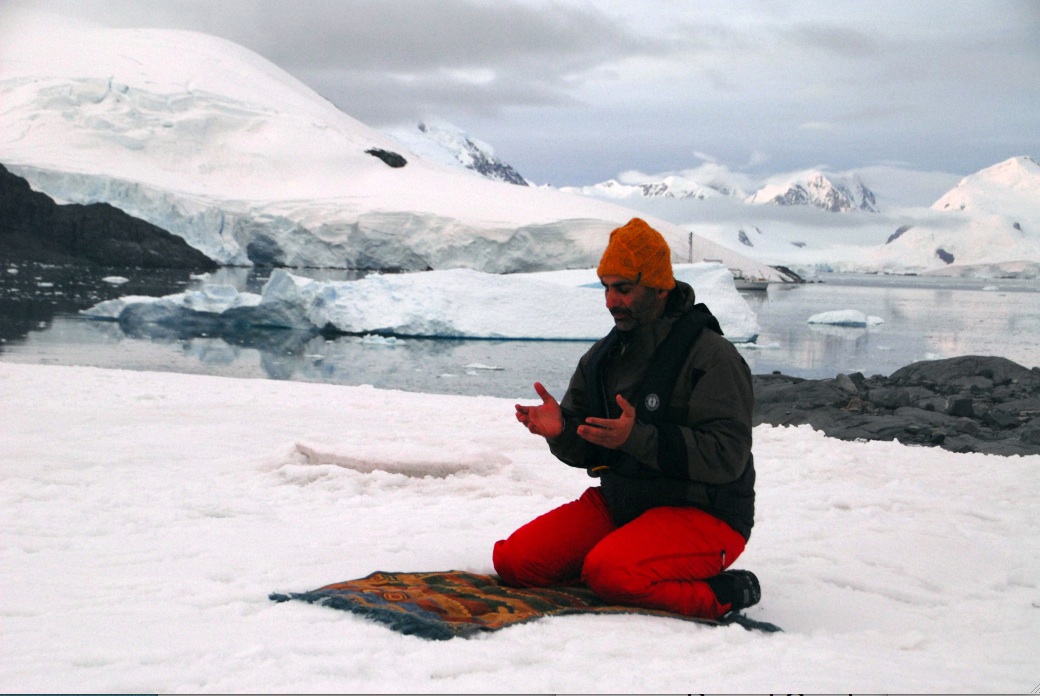
green sheik sheikh abdulaziz UAE praying snow

How has your passion for the environment influenced any policies in the Middle East?

I’ve activated and coordinated the formation of environmentally and socially responsible non-governmental organizations; I have created partnerships between public, private and local communities; have advised and raised awareness among decision makers, have participated in steering committees for strategic sustainability in major sectors, and have promoted these issues in the media in the regions of the United Arab Emirates, the GCC (Arabian Gulf Region), and in some other Arab countries, like Jordan.

Whatever inspired you to become a “Green Sheikh”?

It started in my childhood, when my father would train falcons to take with him on hunting trips. Subconsciously I had learned the balance of ecosystems without knowing. Also through my education in high school (science), and when I continued my career as a chemical and petroleum engineer, and worked in LNG Plant. This impacted me heavily.

I was the chairman of Environment Friends Society in the UAE for few years and was leading the Union for Youth and Environment in the region: I’ve been to the Antarctic as a polar explorer, have been awarded volunteering and competitions, and I love the colour green: the way to paradise!

Is there any Islamic philosophy guiding your way; or are you self-made?

Yes, I am following the core values of an Islamic philosophy based on appreciation and respect. The environment lies at the core of the Islamic faith, and the underlying principal that forms the foundation of the Prophet Muhammad’s holistic environmental policy is the belief in the interdependency between all natural elements, and the premise that if humans abuse or exhaust one element, the natural world as a whole will suffer direct consequences.

The three pillars of the Prophet’s environmental philosophy are based on the Quranic teachings and the concepts of tawhid (unity), khalifa (stewardship) and amana (trust).

In line with the concept of tawhid, the Prophet acknowledges that God’s knowledge and power covers everything which is why abusing any of his creations (a living being or a natural resource) is considered a sin.

The Quran explains that humankind holds a privileged position among God’s creations on Earth: he or she is chosen as khalifa, “vice-regent” and is entrusted with an amana – the responsibility of caring for God’s earthly creations.

The importance of sustaining the environment was highlighted by Prophet Muhammad:

“When doomsday comes, if someone has a palm shoot in his hand, he or she should plant it,” which suggests that even when all hope is lost for humankind, one should sustain nature’s growth.

How has your family and friends reacted to your green passion?

My family and friends continue inspiring and encouraging my passion, momentum and vision for a noble cause, even though there are many obligations and priorities.

What do you think are the biggest environmental problems in the Middle East, and what can Arab Nations do to change them?

The major challenges:

Water demand in the region is on the rise, as we live in the world’s most dry area, water is represents a challenge to the development and sustainability of the region’s economy.

What can be done:


  • Reinforcement of environmental regulations
  • Environmental awareness among decision makers
  • Databases and required information for environmental planning and policies
  • Public, private partnership is needed to address water challenges
  • Investment needed for the infrastructure and technologies of water and wastewater
  • Adaption of integrated water resources management
  • Put in place national polices for short and long term goals
  • Water demand management programs based on considering water as public goods without depriving the disadvantaged people
  • More efficient wastewater treatment technologies and reducing the cost of desalination processes.

Who do you think has more power to change the green problems in the Arab world: the people, the religion, or governments/ruling family?

If in the Arabian Gulf countries (GCC) it would be the royal families with government support, using religion values and the support of people. If in other than Arabian Gulf Countries, it would be the government, represented by the president.

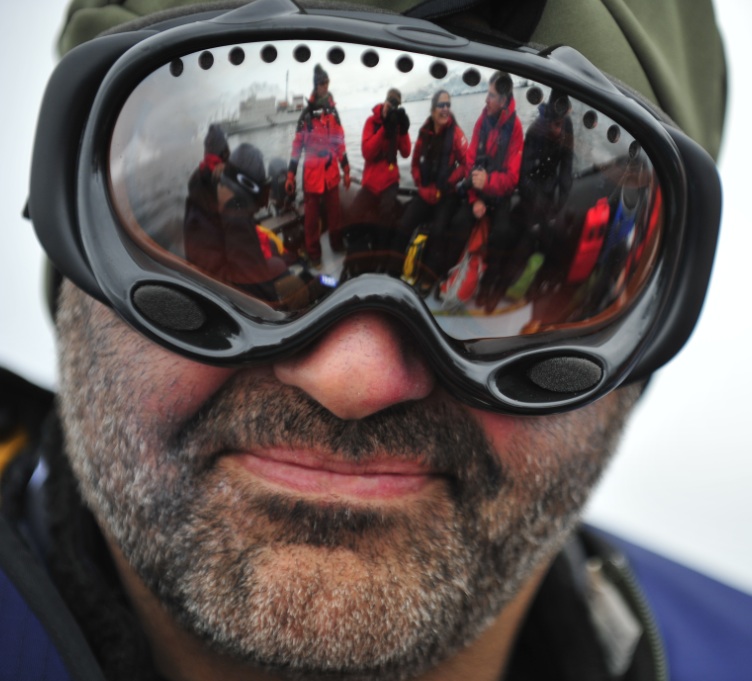
green sheik sheikh abdulaziz UAE


If you had one wish, what would it be?


Holistic living which describes one as being connected to the daily circle of life; balancing the spiritual, the intellectual, the physical, the emotional, the aesthetic, the environmental and my own inner peace to help spread peace throughout the world and in the process achieve wisdom.

Do you have any criticisms of the environment movement in the West (i.e. Europe and the US)? What are they?

Normally I never criticize anyone involved in noble causes and try to help people with their well being and try to sustain life for all God’s creation.

My values are based on those short letters:

3C’s and 3L’s:

No complaints…No comparison…No criticisms

Learn more…Love more…Lend more

What can the West learn from the Middle East?


  • Learning more about the true values of Islam
  • From Muslim women’s rights and her duties
  • History and heritage
  • Cultural understanding
  • Respect
  • Family relationships and tradition
  • Social responsibility
  • Arabic Hospitality
  • Arabic art and music
  • Our food and spices
  • Arabic medicine
  • Indigenous Arabs (Beduin from Al Badiyah or the deserts) have a lot of wisdom to share

Please let us know about a few of your favourite environment heroes, projects or organization anywhere in the world?


Heroes:

Favourite Organizations:

Favorite Green Projects:

  • Masdar City (World hub of renewable energy)
  • E-base in Antarctica
  • Industrial Symbiosis in Denmark

If you could meet one person, alive or dead, who would it be and what you ask them?

I’d like to meet Abraham the Father of Prophets and ask him: How can we learn in our modern day the lessons from the sacrifice of your son?

What are you currently working on now?

A new charity hospital with capacity of 50 beds specialized for less fortunate families in the UAE, and a new school for talented and less fortunate children, on a training centre for empowering young leaders and endowment projects.

Thank you!