With a little boost from the World Bank, Egypt hopes wind energy will provide 20% of energy needs by the end of the decade
Although Egypt continues to pursue a ruinous relationship with oil giant BP, it appears that some efforts are underway to develop its renewable energy market as well. The Board of Executive Directors of the World Bank approved a grant to Egypt, a loan of $1.2 billion Egyptian pounds to support the development of wind energy. 800 million pounds will be provided by the Clean Technology Fund, which will be a first for the fund in the Middle East and North Africa.
The UAE relocates the residents of Brakain order to build four nuclear power plants.
As the shovel hits the sand in the remote (former) village of Braka, the site of the United Arab Emirates future nuclear power plants, many argue that using solar power would not only be safer and more environmentally friendly, but also cheaper. The residents of Braka, a village described as a row of shacks on a white untouched beach, have been relocated to other parts of the kingdom after it was chosen due to its remote location far away from the population centers to host four nuclear reactors. When completed in 2020, these will produce 5,600 MW, or a quarter of the country’s electricity demands.
An earthquake inadvertently converts a statue into a musical installation; Dr. Duffey replicates the effect with his own designs
We’ve seen some interesting, creative applications of alternative energy. There is the father and son team in Gaza who created their own solar oven, though they had to stop filling orders when the glass ran out. And Maurice reported on giant windstalks that are poised to generate electricity from kinetic energy produced by the wind. But creativity has taken on a whole new dimension with Dr. Michael Duffey’s solar thermal music project and designs. The Land Art Generator Initiative (LAGI) has recently published two videos that demonstrate Dr. Duffey’s work, which derives its inspiration from a byte of Egyptian history.
Although the Tamar and Leviathan gas discoveries might seem like manna from heaven, Israel shouldn’t drop its guard just yet
Compared to its Arab neighbors, Israel’s oil and gas reserves are scant, of which the government is painfully aware. So eager are they to find and develop their own such reserves they passed the Israel Petroleum Law (1952), which essentially gives free reign to the first person to discover oil to rake it all up as swiftly as possible. They’ll take anything: oil shale, a very destructive and inefficient source of energy, and yes, they’ll take gas too.
3G Solar moves on-grid, where the market is more lucrative than off-grid, developing countries
The Israeli solar power firm 3G Solar will move on grid as part of a new ownership strategy, according to PlasticEletronics.com. What sets 3G Solar apart from most other photovoltaic solar companies is its unique technology based on the Dye Solar cell, invented in 1988 by Professor Michael Graetzel of Lausanne Polytechnique in Switzerland. Today Professor Graetzel is active in 3G solar, whose so called “Graetzel” cells are based on a layer of nano-sized titanium dioxide particles impregnated with dye.
Artificial photosynthesis
DSC technology can best be described as ‘artificial photosynthesis’ using an electrolyte, a layer of titania (a pigment used in white paint) and ruthenium dye sandwiched between two substrates, at least one of which is transparent.
Light striking the dye excites electrons, which are absorbed by the titania to become electric current. When the dye absorbs a photon, the resultant excitation injects electrons into the titanium oxide, which transports them to the negative electrode. They also claim that one of the advantages of dye solar cell is that it will offer low cost solar power with little capital imput or technical expertise by the manufacturer.
Wax off, wax on
3G Solar CEO Barry Breen added that the change of path for the company that previously focused on off-grid power production in the developing world towards an on-grid market occurred in combination with forthcoming new technological developments; the new owners aim to develop in the framework of a new three year R&D project that will boost efficiency and market share
The three year R&D period will serve as an indicator of how far away the DSC technology is from large scale commercial use. So far one of the few products that have reached the market is a backpack by the Welsh company G24 Innovation that lets is carrier load electrical batteries using a dye solar cell patch on the back of the backpack.
Low efficiency
One of the main problems with the dye solar cell technology is that it achieves only around 7% efficiency in their cells, which is lower than standard photovoltaic technology. On the other hand, it does not use silicone making it cheaper to produce and buy, hence the previous target of off-grid communities in the developing world.
Previous investors in 3G Solar include the Quercus Trust, US based 21Ventures (we’ve featured here) and the Israeli Chief Scientists Office.
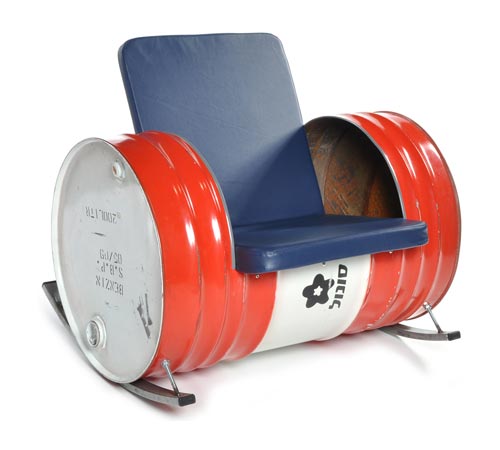
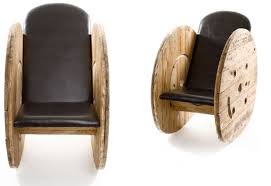
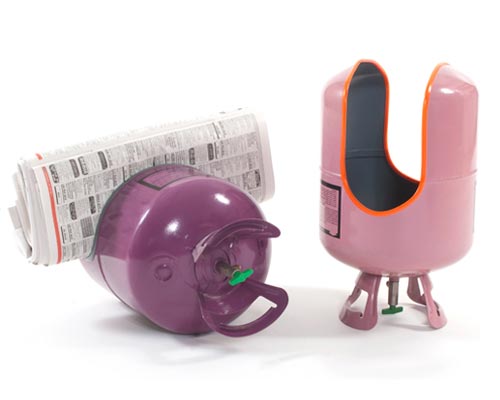
A Clearance sale and the approaching High Holidays provide good excuses to check out Junktion Studio’s upcycled, recycled, unique designs.
The Jewish High Holidays are coming up in just a couple of weeks, and for some of us this is a traditional time to exchange gifts. In Israel these gifts often come in the form of useful things for around the home, but how many hand towels or soap dishes or trivets does one really need?
In case you’re not familiar with Junktion and its work, it is one of a handful of design studios in Tel Aviv that works with upcycled materials (or, less poetically, with “junk”). Founded just two years ago, Junktion has already made a name for itself.
As the Junktion designers say, they like to “give a second chance to what the city has already classified as junk. Junktion people take everyday objects out of context, sometimes attaching them to others, unrelated, and at other times just turn them upside down on the table, take a step back and say: hmmmm… Junktion people love seeing objects in new ways, stuff that makes us think, stuff that makes us act, stuff that makes us laugh.”
Officially, Junktion is holding a 20 to 50% off sale in order to clear house before moving to a different studio, but we think their sale couldn’t come at a better time.
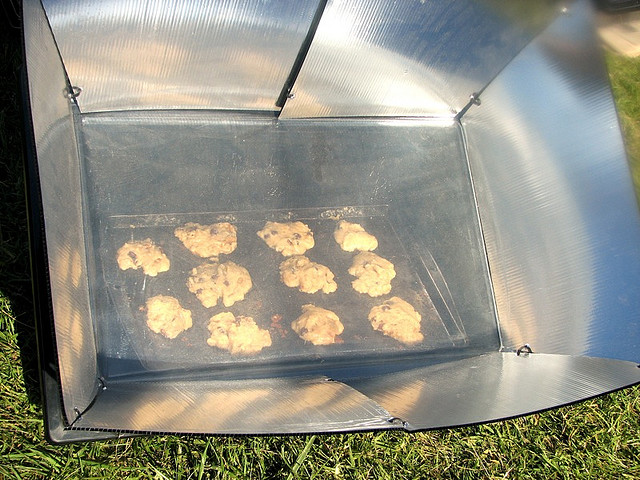
Responding to necessity, some Gaza residents are designing clever “eco” products, but Hamas is bringing them down
Matt recently described the possibility of a green coexistence between Palestinians and Israelis south of Jerusalem. Israel is shipping their cleantech expertise to their neighbors, thereby fostering good relations and a more sustainable future. On the other side of the sliver that is Israel, the green situation is slightly more complicated. While it would seem that the Israeli blockade is the sole reason for Gaza’s fledgling eco-enterprise, it turns out, says Theodore May, that Hamas is responsible for pushing it down.
Rock salt, Redmond sea salt, table salt, pink Himalayan salt. How much salt is in your diet might be the more important question.
When it comes to taking care of our diet there are many aspects to consider. Most people are aware of the amount of sugar they eat, or fatty foods, but have you ever stopped to consider your salt intake? Eating too much salt is just as bad as eating too much sugar, the effect is different, but it can be just as harmful.
The smartypants at Harvard say too much sodium in the diet can lead to high blood pressure, heart disease, and stroke. It can also cause calcium losses, some of which may be pulled from bone. Most Americans consume at least 1.5 teaspoons of salt per day, or about 3400 mg of sodium, which contains far more than our bodies need.
The problem is that there are lots of foods out there with more salt in them than what you might think. Right now the argument is about microplastics and what kind of salt you should eat. Pink? Sea salt? Mined in America salt? We are saying, mind any kind of salt.
To begin with, a certain amount of salt is necessary in our diet. Salt is made up of sodium and chloride. Sodium is the mineral that regulates bodily fluids and blood as well as impacting nerve impulses and heart activity. All this means that a certain level of sodium is needed for our bodies to run smoothly. In summer, especially in the Middle East this year, the heat causes you to sweat meaning you lose a certain amount of sodium through your skin that needs to be replaced.
That amount of sodium needed differs between people, the recommended sodium intake ranges from 1500 mg to 2400 mg per day. At the higher end of this range, it equals approximately 1 teaspoon of salt each day. So now the question is, can you regulate your salt intake?
To start with, it is important to read the labels on packaged food. Many cereals, frozen foods, salad dressings and canned goods have a surprising amount of sodium. If you have a look on the packets there are tables which indicate how much sodium (chemically labeled Na) is in the food. Margarine for example, is risky for more than one reason, but its sodium content should be enough of a warning to stay away.
Of course with all this sodium, what you really need is to balance your diet. Try eating some low-sodium foods, like fresh fruit and vegetables to help you avoid the risks of a high sodium diet. Don’t underestimate the power of salt, too much salt in your daily diet, over time can lead to problems with your blood pressure, kidney troubles and hardened arteries which in turn leads to heart issues.
If you are a busy person who doesn’t find enough time to cook your own food, then you need to be aware of the high content of sodium in many packaged foods. Even if you don’t have time to cook, there are some things you can do to lower your salt intake. Fresh vegetables are always better, but at the very least try buying canned vegetables labeled “no added salt” or rinse the vegetables from the can before you use them.
Salt can be used in other ways apart from cooking, but when it comes to your food, it is something you should be aware of, just as much as we are concerned with sugar and saturated fats. It might not be easy at the beginning, but your body will thank you for making low-sodium intake a priority in your diet.
Some sources say that pink Himalayan salt contains up to 84 different trace minerals, offering a rich mineral content for your body. But the main reason it’s on people’s mind is to avoid eating microplastics, now covering beaches around the world with tons of teeny bits of plastics, also called microplastics. If you want to escape for fresh air to the Joshua Tree National Park in California, you will find microplastics in desert air as well. Some of them you can’t see they are so small, but the adverse health effects of eating microplastics are a concern.
Lake Naivasha has received celebrity status, but what can we do to draw attention to other important water bodies?
We just heard from Captain Goodman that the potash industry, unfettered, is having a disastrous effect on what some consider one of the seven wonders of the world. The Dead Sea is celebrated for its healing salts and draws scores of tourists each year, who are seemingly ignorant of the lake’s latent perils. But the Dead Sea is not alone. Lake Naivasha, a freshwater lake in Kenya’s central rift valley, is similarly taxed.
Learning a lesson from the BP workers who kept silent about Deepwater Horizon’s inevitable burst, Dead Sea Workers speak out. And one is putting it on film.
The BP workers from the Gulf of Mexico kept quiet about the foreboding well disaster for years until the Deepwater Horizon burst and became North America’s largest ecological catastrophe ever. To most of us, that’s a sad story, but not all that relevant.
My name is Solomon Isaac Goodman. I grew up on the ocean and I’ve spent most of my life sailing around the world. Four years ago I was hired as a captain on the Dead Sea. I had sailed the Pacific, the Atlantic, the Med and the Red, had crossed canals like the Suez and Panama, and sailed through hurricanes, but nothing prepared me for what I was going to find out about the Dead Sea.
Food spoils quickly in the heat and releases harmful methane gases. Hannah provides 10 green tips for keeping your food safe.
Summer is coming to a close in some parts of the world, but here in the Middle East we’ve yet to see a break from soaring temperatures. But people and animals aren’t the only ones to feel the heat—our food has been suffering too. If you’ve ever come home to find that the leftovers you planned to eat have gone bad, you’ll know what I mean. Here are ten ways to keep your food at is freshest even in stifling weather.
Due to political constraints West Bank settlements will pay more for solar energy.
Residents of the Har Gilo settlement in the Guzh Etzion settlement block just south of Jerusalem might not be considered part of Israel by some. But we all know that nature does not care for political borders, and in this case, neither does green technology. The Israeli business daily Globes is reporting that Friendly Energy, an Israeli company that installs photovoltaic technology, has installed two 4 kilowatt solar installations that will supply electricity to the public power firm Israel Electric Company under a 20 year contract that will pay 54 cents per kilowatt hour. The higher price for the power is due to a complicated legal situation that has kept the residents of the West Bank outside the Israeli solar power market, which operates under a Building and Planning Law known as the Electricity Law.
While most of the West Bank is controlled by Israel, it is not a part of Israel and is therefore run by a Civil Administration that acts as de facto government over the region; hence the new power plants could only be built after receiving a special permit from the Civil Administration.
Windstalks are an interesting concept; but will they really work?
Wind turbines, some of them as large as commercial airliners, have been receiving their fair share of attention recently as being viable producers of electricity in the Middle East and other regional countries, including Turkey.
But now, a new wind energy concept being planned for Abu Dhabi’s Masdar City, involves a totally new concept of erecting fields of 55 meter high kinetic energy generating “windstalks” that will sway in the wind in a similar manner as stalks of wheat, according to inhabitat.
Despite the UAE’s bad “eco-rap,” Summertown Interiors is helping to boost the region’s environmental ethos
The UAE has been getting some rather bad press recently about their lack of environmental awareness. First, it emerged that only 1 in 25 Emiratis walked anywhere on a weekly basis and then that they throw away around 500 tonnes of food every Ramadan. In 2008, the UAE even beat the US to claim the highest carbon footprint per capita. But it’s not all bad. According to the green-certified design company Summertown interiors, which is based in the country, the UAE is increasingly an environmentally friendly place to do business.


 With a little boost from the World Bank, Egypt hopes wind energy will provide 20% of energy needs by the end of the decade


 A weekly Green Prophet series that looks at the Arabic “green” blogosphere and online communities.
  An earthquake inadvertently converts a statue into a musical installation; Dr. Duffey replicates the effect with his own designs




 Responding to necessity, some Gaza residents are designing clever “eco” products, but Hamas is bringing them down



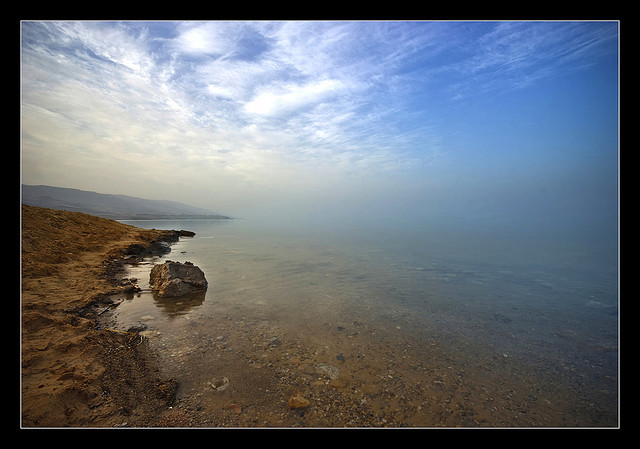
 Learning a lesson from the BP workers who kept silent about Deepwater Horizon’s inevitable burst, Dead Sea Workers speak out. And one is putting it on film.
 Food spoils quickly in the heat and releases harmful methane gases. Hannah provides 10 green tips for keeping your food safe.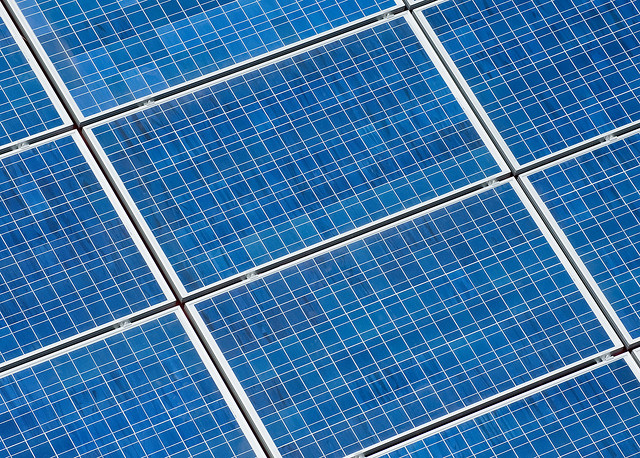
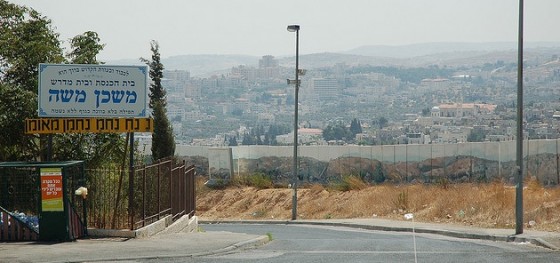 Due to political constraints West Bank settlements will pay more for solar energy.
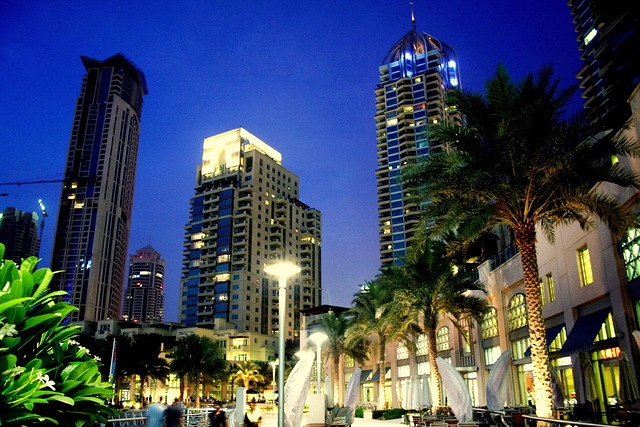
 Despite the UAE’s bad “eco-rap,” Summertown Interiors is helping to boost the region’s environmental ethos