

It’s no secret that Israeli cleantech companies and their products are hot commodities. Now in: the Cleantech Group just announced their global list, the Global Cleantech 100 for the second year running, and it’s no surprise that Israeli companies earned 8 of the 100 spots (I correct myself for the 7 I had originally posted). Six are based in Israel; two of them, though founded by Israelis are based in the United States. I have interviewed and written feature stories on all of them, except CellEra. The list is: drumroll please…
8 Israeli Companies Make “Global Cleantech 100” Guardian List

Interview with Gail Mejia the founder of Gails in London
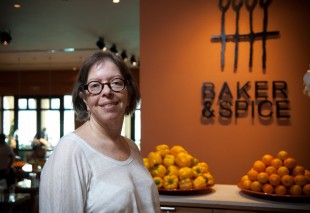
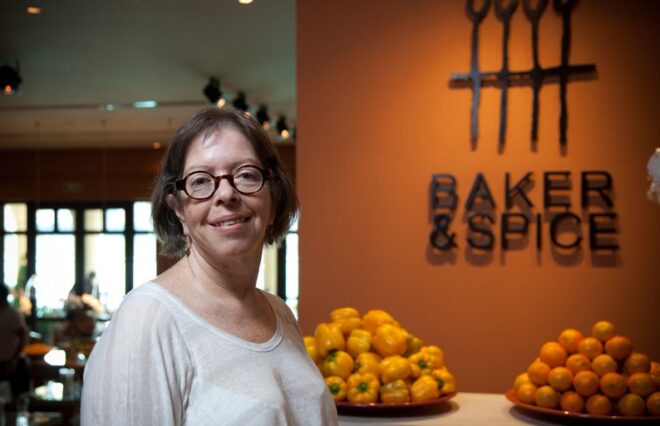
In an interview with Green Prophet, Yael (Gail) Mejia describes the benefits of buying fresh food locally. (This interview was done years before the success of Gails in London)
It was largely because of Gail Yael Mejia’s efforts to provide the good people of Dubai a fresh, no-frill food experience that the region’s first Farmers Market took place.
Their Brand Consultant, Yael, has been wooing local farms in the United Arab Emirates since the Dubai branch of Baker & Spice opened last January. B&S can then source as many of their ingredients locally as possible, and encourage others to do the same. Not only does fresh food taste better, according to Ms. Mejia, but food that doesn’t travel from the other side of the planet does not carry such a massive carbon load.
Yael, you opened the first Baker & Spice store in London in 1995. Can you share a brief glimpse of your background and how it influenced your initial vision?
In 1990 I started a bread distribution business in London, essentially Bread broking. I was buying from the best available at the time and selling the mix and variety to customers who could pick and choose from a vast list which did not restrict them to one bakery.
In 1993 I began baking for my business in a bakery I called the Bread Factory. It was all artisan baking. Being a wholesale business I wanted visibility on the high street and opened B&S. The vision was dictated by the premises. We had Victorian sole ovens in the basement and a huge kitchen behind the shop and this enabled us to cook and bake what we wanted. A playground which became an iconic shop in London. Now sadly defunct.
B&S began as an artisan food shop and evolved into a “no-frills” dining experience. In what way do you think that food has become “frilly?”
In every way. Once upon a time people cooked at home and went out for “frilly” special occasions. Now no one cooks at home and relies more and more on other businesses to supply nourishment. There is a prevailing school of thought that says the more frills the more we will pay for our food regardless of what it is we are actually eating.
After experiencing such enormous success in London, you helped to open a Baker & Spice branch in Dubai at the Souk Al Bahar in January, 2009. How did that choice come about, and what gave you the confidence that you would be able to source the same quality ingredients that you were able to purchase in the United Kingdom?
The choice came about from the Kuwaiti owners of B&S in Dubai. They felt the Dubai market was ready for this type of food philosophy. I had no confidence what so ever and learnt my way around the markets looking tasting and listening and sometimes screaming. It took a long while to understand what was going on and where it all came from.
We must have shouted loud enough because somehow the right people heard us and we got to know some farmers and it all started rolling in the right direction.
Can you give us your definition of organic agriculture?
My definition is the UK Soil Association definition.
The National reported earlier this year that only 16 out of 40,000 farms in the UAE are organic. What does this statistic represent to you? What prohibits other farmers from picking up the organic baton?
If there are 16 I would like to know who they are. I know of one. This represents a huge opportunity.
You source much of your produce from local farms, among them Salata, Mazaraa, and Nazwa. Are there any other organic farms in the United Arab Emirates that you would like our readers to know about?
Nazwa closed down, Salata is not organic. The most important definition to me is Local not Organic. Another good name is Dar al Fatah, then there is Meerak, and we are looking at others. When we find them we will update information on our website.
Local organic produce is less expensive than imported produce, but more expensive than local produce grown with pesticides. Why do you think your customers are prepared to pay the higher price for your food?
Because everyone is scared about the unknown and inexplicable. We are being treated like mushrooms: kept in the dark and being fed horseshit. People are getting sick, fat, and the common denominator is the food we eat which is supposed to be safe, it isn’t.
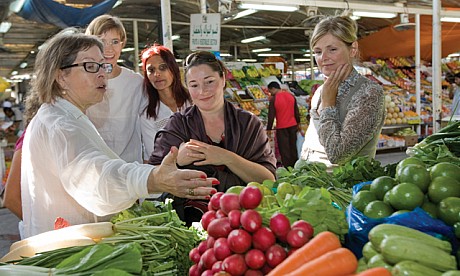
One thing that is very important to you is changing your menu according to the seasons, the same way we might decorate our homes depending on the holidays. However, some people will still want winter squash in the summer. In your view, what has been the consequence of our estrangement from the food-growing process?
You put your finger right on the button. The consequence is that food is flying around the globe to feed a need which isn’t there. It is not fresh, and has suffered from early picking so no taste. Or it was picked 6 months ago and pretends to be fresh. If you knew that the American apples you are buying in June have been in cold rooms for 10 months would you buy them? I don’t think so.
But do you know? Have you ever bothered to ask? Would you spend hard earned cash on food which is such a disappointment when you eat it?
And then, what is the value of re-uniting with that process?
Knowledge is power. Power to make the right choices. Power to force change.
 In another interview, you explained that Food and Beverage managers should be more “geographically aware.” Can you say what you mean by this?
We are not close to Australia the USA or Holland. If you absolutely have to buy something which does not grow in the UAE choose source countries like the Middle East, KSA, Iran, India. They are on our doorstep geographically, so flying fresh produce from these places will not incur such a HUGE carbon footprint.
What steps can be taken to help not only F&B managers but also the general public to better understand the origin of our food? What are some important incentives that will motivate them to reduce the attendant carbon footprint?
Make it a legal requirement to declare the truth about where it came from how and when it was harvested. For starters. Not in order to punish anyone, just to let people make decisions.
In the meantime, not all of your food is sourced locally. You mentioned that you import Canadian beef that has been reared compassionately and that it arrives by sea. Will you tell our readers why it is important that food comes by sea?
Its all to do with carbon footprint. How much carbon gas is emitted per KG by the vessel of choice. It also means that my beef ages during the journey and is tender when we get it.
Apart from the news that you will be opening yet another Baker & Spice bakery and kitchen in Souk Al Manzil this October, do you have any other plans to share, or other organic advice?
Far be it from me to tell people how to live their lives. But keep one thing in mind. We have consumer power and we need to exercise it to make business behave responsibly. We have the power to withdraw our patronage. Al our news is put on the website and we announce everything new and exciting as it happens. www.bakerandspiceme.com
Thank you so much for taking the time to answer our questions Yael. It is deeply encouraging that a healthier food trend is sweeping through Dubai, enriching the earth, and nourishing the residents. We sincerely hope that by your example, other businesses will feel emboldened to incorporate similar goodness into their menu. We wish you the best luck with your endeavors.
Read these interviews with other green shakers and movers:
Meet An Eco-Muslimah
– MTV’s Kristiane Backer’s Exclusive
Solar Activist for Palestine
– Meet Elad Orian from COMET Middle East
He Makes Green “Sheikh”
– Read our exclusive with Abdul Aziz
The Green Sheikh says Middle Eastern Men Must Lead The Green Way
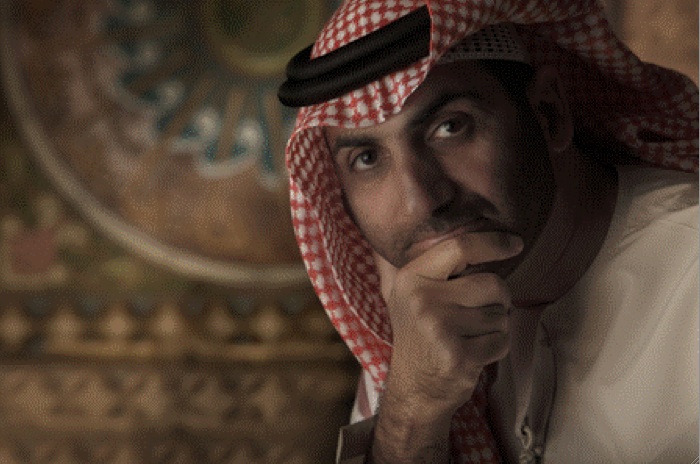
 According to Sheikh Abudulaziz, technology can help stave off environmental crisis, but the real power lies in the people and their willingness to adjust their lifestyles.
In the Middle East, “The Green Sheikh” has become somewhat of a celebrity role model for Emirati youth. Though he could easily have followed the money-lined petroleum path, Sheikh Abdulaziz al Nuaimi chose environmental sciences instead; he has since devoted his life to developing sounder environmental practices.
In addition to his position as environmental adviser to the Ajman Government, he is the chairman of Green Base Environmental Services and the founder of the Majlis for Holistic Knowledge and Holistic Health, Maurice explained earlier. Lately he has focused much of his energy on influencing young men, who he believes have the capacity and responsibility to be an example in the UAE.
Israel Cleantech Intelligence: Sustainable Nuclear Energy and 8 More Headlines

A possible solution to Israel’s water crisis, Israel’s slow adoption of renewable energy, self-sustaining nuclear energy and more headlines related to Israeli cleantech and the environment.
Oregon’s governor will be heading a delegation to Israel later this month to check out Israeli cleantech opportunities. Israel and Canada are set to collaborate on birding and the environment and a coral reef has been found deep under sea off the coast of Tel Aviv. For these stories and more, see this week’s headlines below.
Leaders In The Middle East Need To Take A Big Jump To Address Water Problems

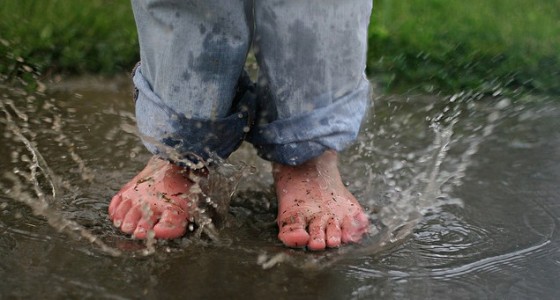 There will be no peace without water. Leaders need to address the Middle Eastern water scarcity with the same urgency as oil.
People often associate the Middle East with oil. But in the region’s cities, villages and farms, access to a different resource is becoming rather problematic: water. Addressing this issue can not only ensure a sustainable future, but will also help create conditions for lasting peace.
There is a shortage of water in the region. At the same time, industrial and municipal waste flowing through the Hebron-Besor river basin, which flows from the West Bank through the Negev region in southern Israel and to the Mediterranean, has damaged surroundings and posed serious health hazards to residents in the area, exacerbating current political tensions. Until recently, for example, an ongoing sewage spill from an Israeli West Bank settlement resulted in the contamination of the environment and agricultural fields of an adjacent Palestinian village.
Fashion Contest Inspired by the Sea of Galilee


Israeli fashion show attempts to go “au naturale” with a natural-landmark-themed garment contest.
Fashion and the natural world don’t always go hand in hand (unless you’re lucky enough to come across some whimsical banana-shaped pumps by designers such as Kobi Levi). Usually haute couture is the anti-natural, with silhouettes that combat the shapes that we were born with and materials (such as fur) that require the destruction of something natural. Yet in an attempt to come up with a national garment for Israelis, fashion designers decided to center their inspiration on the natural.
Namely, on Israel’s only freshwater lake, the Sea of Galilee.
Displayed in a garment design contest/fashion show in Tiberias (a city that is located on the shores of the Sea of Galilee) during the last few days of Sukkot, the designers demonstrated that the natural is a powerful source of inspiration.
The designers were also calling attention to the fact that the lake is in serious trouble in need of a serious makeover.
The Sea of Galilee is Israel’s largest fresh water reservoir and is a major source for Israeli water consumption. The water levels have steadily declined over recent years, due to years of drought, and now the levels are so low that there is danger that the laktgreee may become salt water.
Liraz Rubin, one of the fashion designers whose work was displayed in the show, said that “my design is inspired by the lake, where the fish want to live but the water is getting scarce and the lake is sad. You can see in the design itself that the fishermen can hardly find any fish. It’s a cry to save the Sea of Galilee and its fish.”
For some of the judges, though, the focus was more on fashion and less on conservation. Yuval Kaspin, an Israeli celebrity designer and one of the judges, said that “in some of the designs the connection between the Sea and the garment was definitely discernible. The designs which caught our attention the most were those that indeed reminded us of the Sea, but did not ‘over-chew’ the concept for us.”
Read more about fashion:
“New Dress A Day” Blog Takes Consumerism Out of the Fresh Fashion Equation
Are Kobi Levi’s Tongue Shoes Fit for Dancing?
EcoGir Flaunts Its Recycled Polyester Suits During New York Fashion Week
Muslim Countries Tackle Water Scarcity

In Tunisia last week, Islamic ministers meet to set a precedent on tackling water scarcity in home countries.
In the Middle East and across the Muslim world, water scarcity is becoming one of the most pressing issues related to climate change- but what is actually been done to tackle these problems?
Last week, the conference of Islamic environment ministers in Tunisia ended with the Tunisian president (above) urging the region to look for the most effective ways to deal with water scarcity. President Zine El Abidine Ben Ali explained that water scarcity “constitutes a source of deep concern for most Muslim countries given their water poverty, imbalanced demographic growth, arbitrary exploitation of water resources, aggravated pollution, and severe and frequent climate changes, together with associated problems of drought.” He added that resolving this issues was one of the ‘most important duties’ of our time.
Traffic Accident Deaths In Iran Could Push Greener Transport

Traffic fatalities are 5 times the world average at 22,000 deaths a year: It’s time for Iranians to get on their bikes.
Iran has the highest rate of traffic accident fatalities in the world – even higher than the United Arab Emirates. While car ownership rates in Iran is less than the western countries, the traffic accidents still account for an unbelievable number of victims. Knowing the stats, this is a good call to get people on their bikes and a push for public transportation. Some months ago Dr. Hassan Emami Razavi the Deputy Minister of Health in Iran said that the traffic accident fatalities of Iran is 5 times more than the world average. Cars created without air bags and seatbelts, poor driver education, young drivers, and delapidated roads are to blame.
At present, the fatality rate is about 20,000 people annually. In 2002, 44 deaths occurred for every 100,000 people. The same factor in the same year for Germany and Canada were 9 and 6 respectively. In 2008, it was 12.25 for the United States. Last year, the media focused on the issue and announced that car accident fatalities of Iran is 25 times more than Japan and 2 times more than Turkey, which has similar cultural conditions to Iran.
Researchers and the media usually try to consider the problem and give reasons. There is a list of them.
Generally the reasons are related to humans, the cars themselves, and the conditions on the road. The accidents that are related to human factors can include the accidents that are caused by human mistakes when driving or passing the street, or social and cultural aspects like obeying the driving regulations.
For example, how people use seat belts is one of these issues. In the past few years, using seat belts has risen. But there are still problems with safety and helmet use by motorcycle riders. In Iran using seat belt is compulsory for the front seats but not for the back seats. That is why in June 2010, Alireza Zamani, a Parliament member, asked for making the back seat belt use compulsory to reduce fatalities.
Basically, the population of Iran is comparatively young. So some researchers raise this matter as one of the reasons for the accidents. As they say, the young people are responsible for the car accidents.
Many accidents occur because of deficiency or lack of safety facilities in the car. Producing cars with seatbelts have been obligatory for Iranian car producers since 1999. But most of the cars that were produced before that date do not have seat belts.
Similarly just 7 out of 37 types of cars which are produced in Iran have air bags and ABS brake.

The network of the roads of Iran is very old. Many accidents, which usually pile up the fatalities happen on old roads that have been built decades ago with poor road engineering standards. These kinds of roads are usually located in points far away from the main metropolitan areas or provincial centers.
Nevertheless, the statistics show that the fatality rate is dropping. In 2002 about 30,000 people died in car accidents. Now it has been reduced to 20,000. Although statistically some improvements can be seen, there is a long way to solve this multi-variable problem.
As car users and drivers, the first step we can have is to reduce accident fatalities by having in mind some primary safety hints. Read these safety hints (in Persian). And of course choosing new modes of transport such as the bus, and petitioning the government for better standards and enforcement.
More green news from Iran:
Eco Tourism in the Middle East: Iran
Iran Looks to Create Biofuel
Iran Inaugurates Its First Solar CSP Plant
Celebrate Spring and Iranian New Year
Perpetrators Flee The Scene Of Two Nile River Oil Spills

“Spill and run” on the Nile could lead to legal action.
Only a few days ago we described the Egyptian government’s failure to enforce better maintenance and safety standards for various vessels that travel along the Nile.
As a result, untreated waste is routinely dumped in the river, as well as other pollutants such as diesel fuel and oil.
Chronically polluted, 17,000 Egyptian children die each year from drinking Nile river water.
Last week two more oil spills along the Nile occurred near Mansoura. And though the perpetrators failed to take accountability for their mess, Al-Masry Al-Youm reports that authorities hope that “oil prints” will lead them to the source.
Americans and Israelis Headed for Widespread Obesity
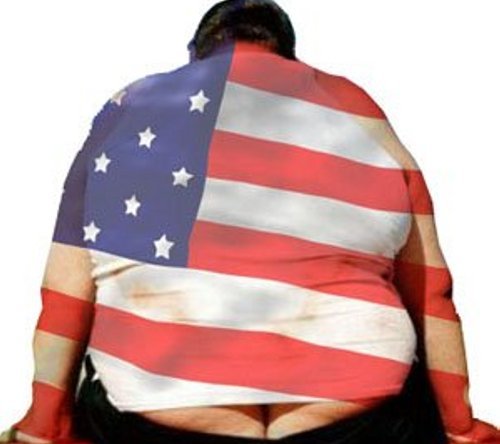
They exist here in Israel too! Too much pizza and cheeseburgers, and not enough exercise and whole food diets.
One of America’s most popular internet health news websites, Natural News, is telling its readers that Americans are on their way to becoming a nation of overweight and obese people and that three fourths of all Americans will be either overweight or obese by the year 2020. This prediction comes on the results of findings made by a study made by the Organization for Economic Cooperation and Development, which found that citizens of the worlds most affluent countries are becoming more overweight, and that Americans are “leading the charge”/ They are now ranked number one in the world.
“Mayslits Kassif Architecture” Takes Coveted European Landscape Architecture Award for Tel Aviv Port
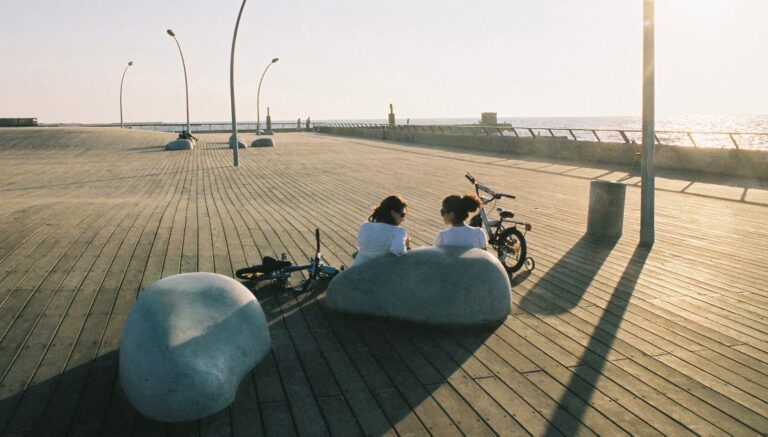
 For the first time in history, Israeli architects who designed Tel Aviv’s Port took best design at the European Biennial of Landscape Architecture Awards.
The port of Tel Aviv had been an abandoned concrete pile for years before Mayslits Kassif Architecture turned it into one of the most hopping spots in Israel’s seaside city. Every day of the week, the port astride the Mediterranean is packed with cyclists, sun goddesses, tourists, and locals, and on the weekend the farmer’s market rivals any of the best in the west. In addition to generating income with a series of shops and restaurants, the new look has given Israelis a sense of pride, as well as an urban escape. For this the architects received the European Biennial Landscape Architecture Award for Best Design.
Oregon’s Governor Looks for Clean Tech Opportunities in Israel
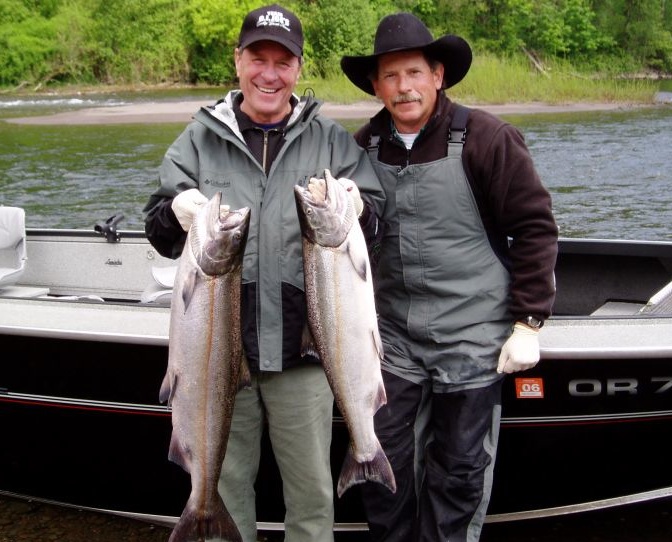
 Oregon’s Governor Ted Kulongoski (left) will be “fishing” for clean tech and high-tech opportunities in Israel later this month.
Oregon’s Governor Ted Kulongoski, a Democrat, will be coming to Israel for an 8-day trade mission later this month. Like other American politicians, Governor Arnold Schwarzenegger included, Kulongoski is looking to meet with Israeli clean tech companies, high-tech cos, and venture capitalists to partner with. Israel has built its name in telecom, high-tech and, more recently, technology refugees from these arenas have moved over to clean tech offering creative ideas to problems such as water and renewable energy.
Nile Water Kills 17,000 Egyptian Children Each Year
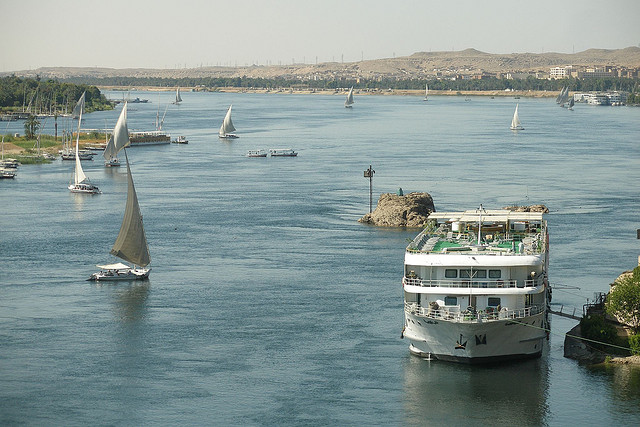
 Certain Egyptian Ministries are finally noticing that the Nile River is not healthy. For 17,000 children a year, they are a bit late.
One of the most popular tourist activities in Egypt is to travel along the Nile River, and there is no shortage of options for doing so. Hundreds of eager men are ready to take hapless foreigners for a sunset sail on a falucca or fishing, while approximately 300 floating hotels offer extended trips from Luxor to Aswan. Unbeknownst to tourists, however, their Nile memories leave behind a terrible stench.
With elections next month expected to yield no new resistance to environmental apathy, the sudden interest from the Ministries of Environment, Tourism and Transport in the State of The Nile could be a case of too little too late, unless, of course, they can hit the government where it hurts most: below the money belt.
Zalabya, the Middle Eastern bread with black cumin seeds
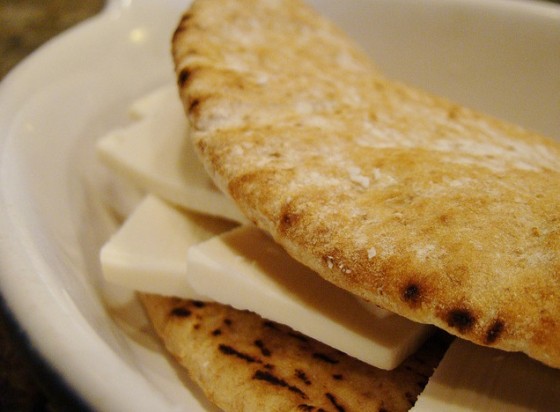 Once you’ve tasted bread baked with spicy black cumin seeds, you’ll reach for more…and more.
Black cumin is often added to breads and crackers in the Middle East, as we noted in our post about black cumin seed. We suggest scattering some of those spicy black seeds over the dough in our recipe for za’atar topped pita, but here is another Middle Eastern favorite bread that has black cumin in the dough.
Zalabya bread recipe
Ingredients:
- 4 cups flour
- 1 cup warm water
- 1 cup sesame seeds
- 1/4 cup black cumin seeds
- 1 cup olive oil for the dough
- 1 tablespoon granulated yeast
- 1/4 cup warm water for the yeast
- Salt to taste
- Olive oil for frying
Method:
- Dissolve the yeast in the water
- Combine flour, sesame and black cumin seeds, olive oil, salt and water in a bowl. Mix well. Add more water by tablespoons if needed to make a pliable dough.
- Add the dissolved yeast to the batter. Mix well . Cover the bowl and let the dough rise for 30 minutes, or until double its original size.
- Take pieces about the size of a large egg out of the dough.
- Heat 1 tablespoon of olive oil in a frying pan and heat it over a medium flame. Fry the dough, pushing it into a circle with the spatula. When the zalabya is golden-brown on the underside, turn it over and fry till all is the same golden-brown color.
- Add more olive oil as needed. Serve the zalabya hot.
Enjoy!
More Middle-Eastern Recipes from Green Prophet:
- Lemon-Scented Vegetarian Couscous
- Authentic Eqyptian Mulukhiya Soup
- Malabi, Middle Eastern Milk Pudding
Photo of pita sandwich by norwichnuts via Flickr.
Want To Mobilize The Green Mob? Lebanese Bloggers Show Us How!

 Lebanese Bloggers elbow their way through wishy washy red tape to spread urgent environmental and political messages.
Environmental bloggers go to great lengths to confront the dual challenge of making people aware of serious environmental concerns, and inspiring them to do something about it. We absolutely have to cut carbon emissions, a message that Bill McKibben and the crew at 350.org have driven across the planet, so that global weather patterns don’t spiral out of control. And in order to do that, we have to reduce our dependence on oil and gas.
For some, that may mean installing a few solar panels and an organic garden on their roof. For those who don’t own a home but drive a car, reverting to bicycles or public transportation would make a difference. Not only do these small actions add up, but almost all of the “green” initiatives we have introduced can lead to a deeper and happier life. Earnest bloggers desperate to unlock the shackles of traditional media elbow their way through greenwashers and meek government in order to spread this urgent message. In Lebanon, their work is beginning to pay off.