Home Blog Page 576

This Is What A Muslim Vegetarian Looks Like

27

Arwa meets three Muslim vegetarians from around the world whose views, lifestyles and paths to vegetarianism couldn’t be more diverse and distinct

When I was 16, I discovered the horror of factory farming and decided to become a vegetarian. That was 8 years ago and I have been a vegetarian ever since. Thankfully, I no longer have to explain why I- as a Muslim- have chosen to become a vegetarian amongst my family and friends or face a barrage of questions before I tuck into my veggie dinner. However, for many people the concept of a Muslim vegetarian is still confusing. So I wanted to introduce you a few – an eco-warrior, one of faith, and one vegetarian for animal rights.

Desalinated Saudi Arabian Water Costs More for Foreigners

2

iceland water theme uaeWater theme parks, like this one in the UAE, won’t reduce high water tariffs from desalination

Saudi Arabia’s plans to increase water tariffs for non-residents, due to the high cost of producing desalinated fresh water, has an all too familiar ring in today’s increasing reliance on desalination in water scarce regions like the Middle East. The report, as published in Bloomberg Financial News, notes that “the kingdom needs 124.9 billion riyals ($33.3 billion USD) in investments in desalination and water recycling plants to meet rising water demand.”

The desert kingdom is now reputed to be the world’s largest user of reverse osmosis and other kinds of desalination technology, and boasts having the planet’s largest desalination facility in the Kingdom’s eastern Gulf province.

Israel train catches fire

Israel train Tel Aviv Jerusalem line
The Israel train, the Tel Aviv to Jerusalem line

There is a serious chance you can die in Israel from taking the train, riding the bus or driving a bike. Electric bikes are mowing down people left, right and center but even the train is a risk.

It’s official. Using any form of responsible or public transportation in Israel can get you killed: three carriages of a commuter train between the cities of Herzliya and Netanya caught fire this morning, seriously injuring one passenger, with 78 others moderately or lightly injured. Several were hurt while jumping off the train.

In November, one man was killed and three more severely injured when a truck driver intentionally smashed his truck into a bus stop in Akko. And in May, 5 people were killed on the Egged bus around the Akko area as the bus driver side-swiped a transport trailer. Fifty-six more people were injured. The bus driver was charged for aggressive driving.

Cycling accidents are growing exponentially in the country. Hits and runs, and deaths by car are far too common. Marine environmental activist from Ecoconcrete Shimrit Finkel was killed on a scooter going to pick her kid of from pre-school.

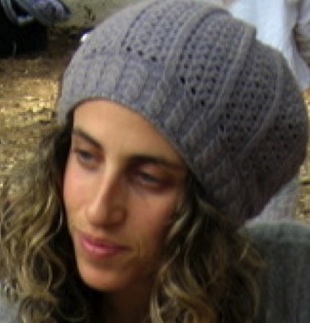
Shimrit Perkol Finkel
Shimrit Perkol Finkel , founder of Econcrete death by scooter and hit by a cement truck

“Riding in Israel today is super-dangerous,” says Bonnie Eshel who heads an Israeli biking federation. “Practically every day there are accidents, and the fact that we don’t have a higher number of fatalities is more a matter of luck. I feel this personally. One time they will throw things at me from a car that is traveling 80 kilometers an hour, another time they spray water, and once they even held a knife to me from out of the car window.”

The Israel train line to Jerusalem from Tel Aviv

All arrows are indicating that people start buying ecologically disastrous cars to stay safe. What do you think?

Update 2023: the electric scooter, mopeds and electric bike scene is out of control with accidents daily, usually involving pedestrians on the sidewalk.

More about public transportation in Israel:
The Tel Aviv Train Project Chugs Along
A Converted Bus in Israel
Israel a Nation of Cycling Freaks

Egypt To Grow A New Generation Of Wheat, But Where?

1

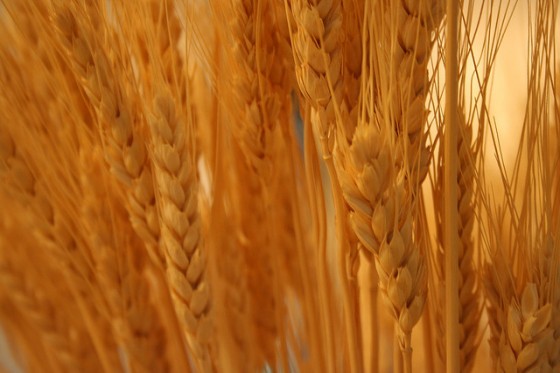
egypt wheat millEgypt is planning ahead for climate change with a new generation of wheat. This declaration raises some questions about its intent for Sudan.

Following the drought in Russia, Egypt’s resultant shortage of wheat, and high summer temperatures throughout the Middle East, the Egyptian Agriculture Ministry is taking steps to avert another potential wheat shortfall.

Faced with a population of at least 83 million people for whom wheat is a staple, Egypt is planning to increase its yield with a more resilient seed. In order to do so, it will require 3.1 million hectares, of which 50% will be managed by the government, while private enterprises will cover the rest. The question is where?

Jordan’s Disi Water Conveyance is On Track – but to Where?

0

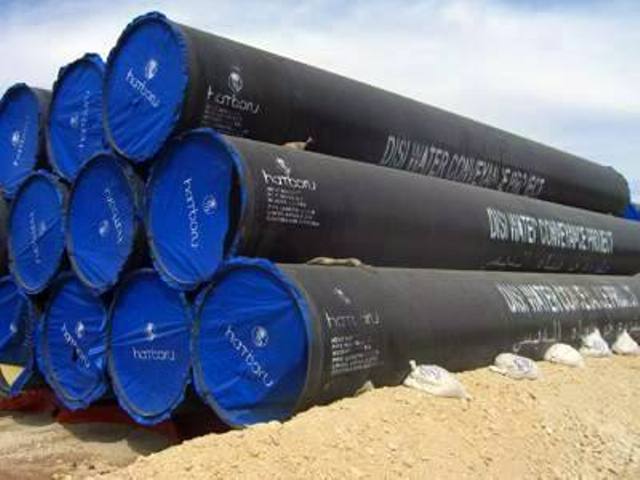
Until the well runs dry? Jordan’s Al-Disi Aquifer pipeline is only a temporary water solution

Jordan’s long planned water conveyance project to bring water from an underground aquifer near its border with Saudi Arabia  is now closer to reality with the arrival of  200 km of pipeline from Turkey, according to a December 20 article in the Jordan Times.  The 325 km pipeline, scheduled to be completed in 2013, is estimated to cost upwards to $1 billion, of which Jordan’s equity is $400 million. The remainder of the funding will come from The European Investment Bank and the French Development Agency who have extended two $100 million soft loans to the government for the project. Turkey is also said to be providing funding for the project, and construction will be undertaken by the Turkish firm GAMA and the British Halcrow Company.

The Tooth That Changes Everything

5

Israeli scientists have found the earliest evidence for modern man, in teeth at Qesem Cave not far from Tel Aviv.

Instead of 200,000 years of history in Africa, Homo sapiens are looking at 400,000 with early sources in the holy land. This news is just in from teeth located and dated by Israeli scientists in Qesem Cave, a prehistory site not far from the city of Tel Aviv. Just last week Susan covered the news of a hidden ancient Persian Gulf city that could rewrite history. Now Israeli scientists have revealed teeth – 8 of them – that shows how early Homo sapiens, as we know them (and ourselves), could be twice as old.

This could be a game-changer for the way we understand anthropology, archeology and humans in modern history. It could also put some issues related to global warming in the Middle East into a different perspective.

Sahlab, the creamy hot drink from the Middle East

2

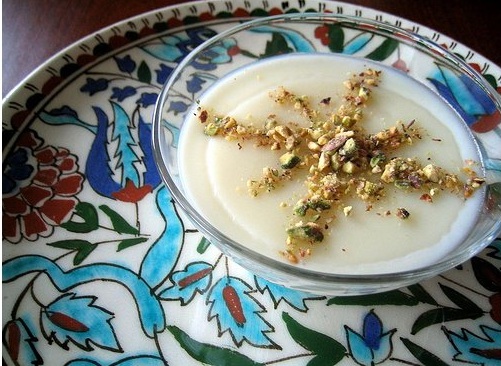
sahlab recipe
Once considered an aphrodisiac drink, true sahlab is now becoming rarer.

Sahlab, based on an increasingly rare orchid, is a popular winter drink all over the Levant, like hot almond milk. The tubers of Orchis macula are boiled, dried, then ground to a gray powder that, cooked in milk, makes a creamy drink something like a thin, hot malabi pudding (see our recipe for delicious malabi here).

Sahlab has been known since ancient times as a nutritious food for invalids and as medicine for gastric irritation. As the tubers are said to resemble fox testicles, it was considered an aphrodisiac. Easily made at home with powdered root sold in packages at open-air markets, we yet have to consider that Orchis macula is in danger of extinction. Is it ethical to buy real sahlab – even when you can get it? We think not. Although the nutritious – and who knows, maybe aphrodisiac – properties of the root  won’t be present, you can make a drink that tastes just like the real thing out of cornstarch and flavorings. The secret’s in the rosewater.

“Sahlab” Winter Drink

serves 4

Ingredients:

2 tablespoons cornstarch

4 cups milk

3 tablespoons sugar

2 teaspoons rose water

2 tablespoons pistachio nuts, chopped fine

Cinnamon to sprinkle

——-

Mix the cornstarch with 1/2 cup of the milk.

Bring the remaining milk and sugar to a boil, then lower to a simmer. Add the cornstarch mixture (stir to loosen up any starch that settled on the bottom).

Cook for 10 minutes over low heat, stirring constantly to keep lumps from forming.

Add the rose water, stir again, and serve in individual cups.

Scatter chopped pistachios over the surface of each cup; sprinkle with cinnamon.

Sip and enjoy!

More on natural aphrodisiacs on Green Prophet:

Soothing, Sensual Rosewater

Food Libido Enhancers

 

Jews And Muslims Unite Against EU Slaughter Labeling

6

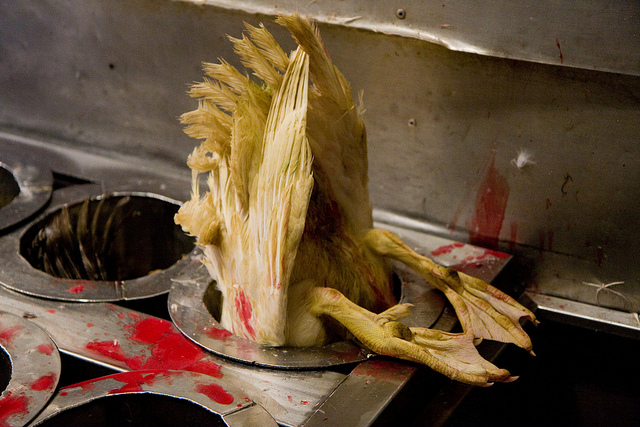
madani-halal-slaughtered-chickenAnimal activists urge meat derived from Halal and Kosher slaughter methods, such as this chicken at the Madani Halal Slaughterhouse, to carry labeling that points out the absence of stunning beforehand.

A battle over the humanity of religious slaughter has boiled over in Europe, uniting Jews and Muslims  fighting for recognition of their respective rituals. In my view any kind of factory farming deprives animals of a natural life and can result in unsafe food, such as the salmonella in these eggs, whether stunned or not.

On the other hand, Egypt demonstrated during the Muslim festival Eid in chilling detail that not all religious slaughter is humane, that it can be haram. Everything hinges, it seems, on the campaign of one animal rights group which claims that slaughter conducted without stunning causes undue suffering to animals. 

Top 10 Middle East Environmental Stories From 2010 (SLIDESHOW)

0

Follow the top 10 Middle East environment news stories of 2010.

With 2011 a few days away, we wanted to reflect on the stories that shaped the Middle East in 2010. As global warming transforms our climate and we scramble to catch up, we have found our region to be split in two camps: the people who get it, and the people who don’t.

Our stories reflect as much. The year started with the inauguration of the world’s tallest and most irresponsible building, rose to happy heights with David de Rothschild’s 8,000 mile journey on a plastic catamaran, but sadly ends with one of the worst fires in Israel’s history. Happy Holidays to our readers, and Happy New Year!

VIEW Top 10 Environment News Stories of the Middle East HERE

Israel To Fine Manufacturers $700 Per Ton Of Non-Recycled Packaging

1

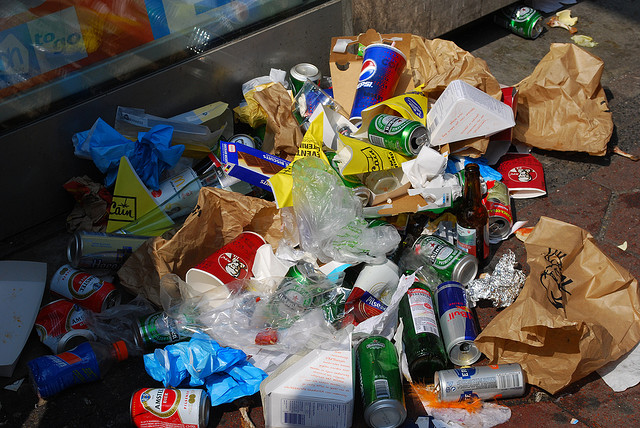
trash-pile A new law in Israel could mandate manufacturers to take ensure their packaging is recycled, or reused.

Despite its posh upcycled art installation, a quick visit to Israel’s Hiria dump demonstrates the extent to which materials that could be recycled, and should be recycled, are instead buried. There are cages available in some neighborhoods where people can stash their plastic bags and bottles, and sometimes batteries, and Koala Recycling Solutions recently started an aluminum recycling program, but mostly, Israel’s recycling system needs serious help. That could change if the Knesset approves a new law that puts the onus of recycling on the manufacturers’ shoulder.

READ: LAGI’s Guide To Making Renewable Energy Beautiful

1

read-energy-literacyEver wondered about the science of solar or wind energy, but feel overwhelmed by too much information? READ cuts through the noise with a guide that is both informative and inspiring.

Who says the Middle East doesn’t have progressive leanings? There may be the odd dud who thinks mocking global warming with a water park in the middle of the desert is clever, but then we also have Studied Impact based in Dubai, and the Land Art Generator Initiative (LAGI).

A multidisciplinary design house that has received coverage for their power plant fit for living, and for the LAGI design competition that inspired the Solaris electricity-generating magic carpet, Studied Impact/LAGI just released an easy-to-use, comprehensive online guide to renewable energy. Covering the ugly power plant paradigm in dust, READ illustrates the beautiful and smart side of renewable energy.

Hybrid Bus To Offer Israel A Cleaner, Quieter Public Transport Option

0

Volvo's 7700 Hybrid BusA pilot program will bring a greener hybrid bus to Israel’s Sharon region.
Here’s some good green news for 2011 in Israel: In addition to the thousands of electric cars that Better Place hopes to bring to Israel next year, a hybrid bus will also be tested that offers a 50% reduction in emissions and fuel savings of up to 35%. The Metropoline bus company plans to test a Volvo 7700 Hybrid bus on the company’s routes in the Sharon region, TheMarker reported (in Hebrew) today.

Are cloth diapers green in water-scarce communities?

12

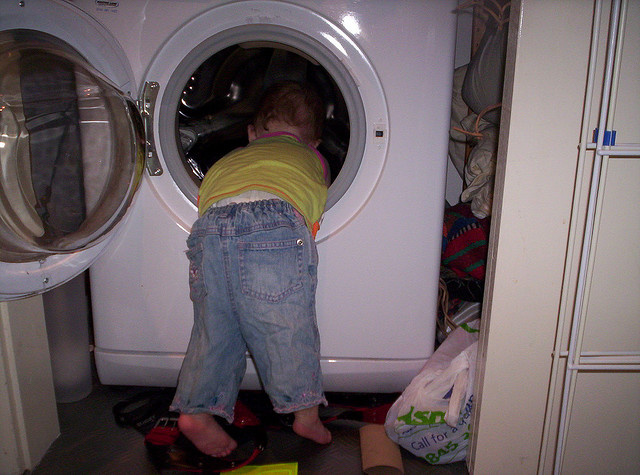
toddler peeking into the washing machineFor me, cloth diapers meant  two or three extra loads of laundry a week.

When I read that Karin decided to “walk the walk” and switch to reusable diapers with her young baby, I could see that she and her husband, along with readers, have the same questions that people asked back when I used cloth diapers for my two youngest. Are reusable cloth diapers really worth the trouble? Aren’t they messy and smelly? How green are they, really, especially with the water shortage? And in the Middle East the price isn’t so attractive either.

For me, reusable cloth diapers were a practical choice, not only an idealistic one. Here’s why:

  1. Convenience. I found reusables more convenient than the disposable diapers I had used with my older children. It meant a couple of extra loads a week. I used Chinese pre-fold diapers, which are flat, square layers of cotton with a few extra layers in the middle. They took little time to hang out and dried quickly, they didn’t need folding, and had no elastic that would wear out. I kept a large enough supply to fill one washing load, plus a few extra. The waterproof, fitted covers for the pre-folds could be washed in any load or rinsed by hand, so I only needed 3 or 4 in each size.
    Cloth diapers mean no more late-night diaper runs to the store, and you don’t have to take out the garbage as often. If  I ran out of diapers, I stuffed a cover with a receiving blanket or small towel.
  2. Smell. To keep cloth diapers from smelling, use a minimum of detergent. Urine interacts with soap residue to make a strong chemical reaction. Most people use too much detergent in their machines. Disposable diapers smell bad when they are new and worse once they get wet. After a day or two they smell horrid.
  3. Mess. When the babies were still exclusively breastfed, I tossed the diaper in the bucket until wash day. Once solids were introduced, I used a spray attachment to briefly rinse poop into the toilet. Any stains came out after two or three washes at most. There’s no need to pre-soak, as is sometimes recommended.
  4. Cost. When calculating costs, include water, electricity and detergent. My costs also included the diapers, which lasted for two babies, and the covers, which didn’t. I ordered the supplies from the US and people brought them for me, but not everyone has this option. It’s possible to recycle cotton clothes to make your own with minimal sewing skills, and there’s a market for used diapers here too. I sold mine to a grateful new mom, although I still wonder whether I should have saved them for the grandchildren.
  5. Environment. Brendan I. Koerner of Slate claims that with today’s energy-efficient machines, there’s no question that reusables are more environmentally friendly than disposables.  As for water, the production of disposables uses water, some say double the amount needed for laundering cloth. Even if the water doesn’t come from a local supply, we should be thinking globally. And we are importing all of that material that will end up in local landfills. Water, at least, is a renewable resource and waste water in Israel is recycled. Then we have to consider the  energy and pollution involved in producing and transporting the diapers. Reusable diapers also use resources in their production, but this is spread out over the life of the diapers. Until we use disposable clothes or  bed linens, I think it’s reasonable to launder diapers.

Read more on cloth diapers from a dad’s perspective here.

The kids whose diapers I washed are now 9 and 7, but I still remember the satisfaction of bypassing the baby products aisle in the grocery store. If I had to do it again, though, I would choose elimination communication, a method of training children to recognize cues that greatly reduces the amount of time children spend in diapers. That is by far the greenest choice.

More Green Posts by Hannah Katsman:

Twelve Tips for Saving Water in the Kitchen

Breastfeed Your Baby in a Hijab: Public Breastfeeding in the Middle East

A Fading Art: Understanding Breastfeeding in the Middle East

Farmer’s Notebook: Raising Goats Humanely in Outback Israel

3

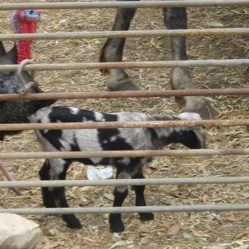
rebecca whitegoat baby
Green Prophet’s new writer Rebecca shares her personal experience raising 5 female goats. She shares an easy goat cheese recipe too!

The first goats arrived to our garden by chance. Our friends needed to get rid of their goats urgently as their neighbours were complaining about the baahing. We weren’t sure what that meant, but we jumped at the chance. My husband and I were both curious, as well as in a genuine need to enjoy a morning coffee that didn’t have soy milk in it.

They were strange and nervous creatures, but the “baahing” didn’t bother us and we later discovered that the “baahing” stopped completely when one of the baby goats was reunited with her mother and returned to nurse.
And so began our journey with learning how to raise and milk our new friends and how to do it in the most efficient, yet humane way.

Six Finalists Chosen for Masdar’s Zayed Future Energy Prize

2

The late Sheikh Zayed, founding father of Abu DhabiThe annual Zayed Future Energy Prize, named for Sheikh Zayed bin Sultan Al Nahyan, the founder of modern Abu Dhabi who died in 2004, recognizes pioneering work in the field of renewable energy.

Six finalists have been selected from an original pool of nearly 400 nominees for the 2011 Zayed Future Energy Prize. The winner – to be announced on January 18th during the World Future Energy Summit (WFES) in Abu Dhabi – will receive $1.5 million. A $350,000 prize will also be awarded to two other finalists for their innovation, long-term vision and leadership in renewable energy and sustainability. Green Prophet is a media sponsor of the event and we are looking forward to reporting the winner.