Jean Pierre Conte is the chairman and managing director of Genstar Capital, a leading middle-market private equity firm with investments in healthcare, software, financial services and industrial technology.
Two thousand years ago, someone scratched a web of lines into stone in a Roman settlement on the empire’s northern edge. Soldiers, traders, or locals passing time in Coriovallum—now Heerlen in the Netherlands, moved small counters across those lines in a tactical duel of blockade and entrapment.
Unlike most recordings from this era, which were lost as early media deteriorated, the audograph discs survived and appear to have been uniquely used for underwater sound — making them a rare, possibly singular example of early ocean listening preserved from the dawn of marine acoustics.
Jean Pierre Conte is the chairman and managing director of Genstar Capital, a leading middle-market private equity firm with investments in healthcare, software, financial services and industrial technology.
Two thousand years ago, someone scratched a web of lines into stone in a Roman settlement on the empire’s northern edge. Soldiers, traders, or locals passing time in Coriovallum—now Heerlen in the Netherlands, moved small counters across those lines in a tactical duel of blockade and entrapment.
Unlike most recordings from this era, which were lost as early media deteriorated, the audograph discs survived and appear to have been uniquely used for underwater sound — making them a rare, possibly singular example of early ocean listening preserved from the dawn of marine acoustics.
Jean Pierre Conte is the chairman and managing director of Genstar Capital, a leading middle-market private equity firm with investments in healthcare, software, financial services and industrial technology.
Two thousand years ago, someone scratched a web of lines into stone in a Roman settlement on the empire’s northern edge. Soldiers, traders, or locals passing time in Coriovallum—now Heerlen in the Netherlands, moved small counters across those lines in a tactical duel of blockade and entrapment.
Unlike most recordings from this era, which were lost as early media deteriorated, the audograph discs survived and appear to have been uniquely used for underwater sound — making them a rare, possibly singular example of early ocean listening preserved from the dawn of marine acoustics.
Jean Pierre Conte is the chairman and managing director of Genstar Capital, a leading middle-market private equity firm with investments in healthcare, software, financial services and industrial technology.
Two thousand years ago, someone scratched a web of lines into stone in a Roman settlement on the empire’s northern edge. Soldiers, traders, or locals passing time in Coriovallum—now Heerlen in the Netherlands, moved small counters across those lines in a tactical duel of blockade and entrapment.
Unlike most recordings from this era, which were lost as early media deteriorated, the audograph discs survived and appear to have been uniquely used for underwater sound — making them a rare, possibly singular example of early ocean listening preserved from the dawn of marine acoustics.
Jean Pierre Conte is the chairman and managing director of Genstar Capital, a leading middle-market private equity firm with investments in healthcare, software, financial services and industrial technology.
Two thousand years ago, someone scratched a web of lines into stone in a Roman settlement on the empire’s northern edge. Soldiers, traders, or locals passing time in Coriovallum—now Heerlen in the Netherlands, moved small counters across those lines in a tactical duel of blockade and entrapment.
Unlike most recordings from this era, which were lost as early media deteriorated, the audograph discs survived and appear to have been uniquely used for underwater sound — making them a rare, possibly singular example of early ocean listening preserved from the dawn of marine acoustics.
Jean Pierre Conte is the chairman and managing director of Genstar Capital, a leading middle-market private equity firm with investments in healthcare, software, financial services and industrial technology.
Two thousand years ago, someone scratched a web of lines into stone in a Roman settlement on the empire’s northern edge. Soldiers, traders, or locals passing time in Coriovallum—now Heerlen in the Netherlands, moved small counters across those lines in a tactical duel of blockade and entrapment.
Unlike most recordings from this era, which were lost as early media deteriorated, the audograph discs survived and appear to have been uniquely used for underwater sound — making them a rare, possibly singular example of early ocean listening preserved from the dawn of marine acoustics.
Jean Pierre Conte is the chairman and managing director of Genstar Capital, a leading middle-market private equity firm with investments in healthcare, software, financial services and industrial technology.
Two thousand years ago, someone scratched a web of lines into stone in a Roman settlement on the empire’s northern edge. Soldiers, traders, or locals passing time in Coriovallum—now Heerlen in the Netherlands, moved small counters across those lines in a tactical duel of blockade and entrapment.
Unlike most recordings from this era, which were lost as early media deteriorated, the audograph discs survived and appear to have been uniquely used for underwater sound — making them a rare, possibly singular example of early ocean listening preserved from the dawn of marine acoustics.
Jean Pierre Conte is the chairman and managing director of Genstar Capital, a leading middle-market private equity firm with investments in healthcare, software, financial services and industrial technology.
Two thousand years ago, someone scratched a web of lines into stone in a Roman settlement on the empire’s northern edge. Soldiers, traders, or locals passing time in Coriovallum—now Heerlen in the Netherlands, moved small counters across those lines in a tactical duel of blockade and entrapment.
Unlike most recordings from this era, which were lost as early media deteriorated, the audograph discs survived and appear to have been uniquely used for underwater sound — making them a rare, possibly singular example of early ocean listening preserved from the dawn of marine acoustics.
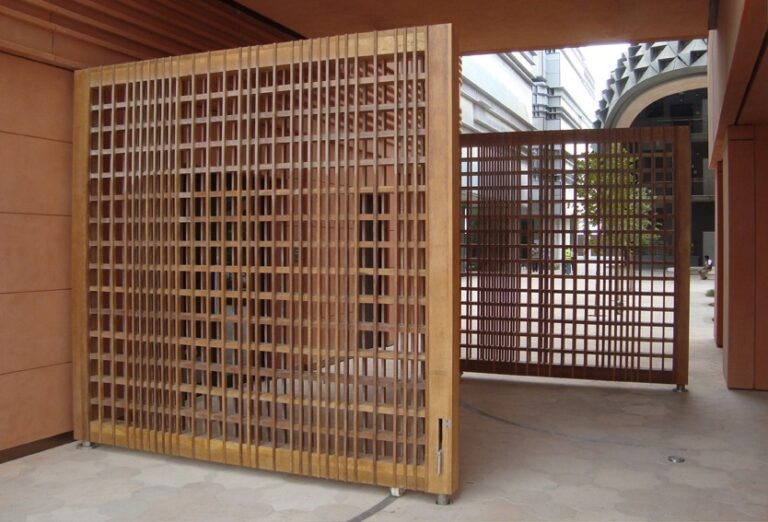
These beautiful Palmwood® gates at the entrance of Masdar City help keep the hot desert winds at bay.
What should the gates to the world’s most talked about carbon-neutral city look like? For starters, they should be built out of a material that is sustainable, and they should blend in with Foster & Partner’s high-tech/ancient Arab vision. The gates, external cladding, and screens were all made from Pacific Green’s Palmwood® – a beautiful alternative to forest-depleting hardwood – and also contribute to the project’s commitment to passive design.
With GMO beets likely to hit the US market, and their sugar to reach global markets, savvy eco-conscious consumers are going to have to pay extra attention to finding organic, non-engineered beets.
One prevailing assumption about GMO foods is that if one country bans them, her citizens are safe. But a statement from Wenonah Hauter, Executive Director, Food & Water Watch, suggests that dangers of GMO foods is looming larger across the globe, including the Middle East. This in response to the USDA’s recent approval to plant genetically engineers beets, following on the heels of GMO alfalfa deregulation in the US. Could the sugar from such bulbs make its way unknowingly into our food chain?
The National Bank of Abu Dhabi has become the first bank in the UAE to launch a solar-powered ATM, and it’s the first time this Green Prophet has heard of such an initiative.
But after Googling a bit, we see it’s not the first.
“As part of our CSR [corporate social responsibility] initiatives, we hope to be the ‘trend-setter’ in adopting solar power for future ATMs in this country,” says Suvo Sarkar, the General Manager of the bank, who hopes the act will be an example for other banks in the region to follow.
Alternative energy investors and innovators can meet n’ greet in Doha, Qatar March 16 and 17.
Networking is a fact of business life. But in the Middle East, where numerous developments are incubating, exciting projects that could transform how we source and use energy in this region, conferences are no longer the droll small-talk affair. Instead, they comprise an opportunity for serious and creative collaboration. During the upcoming Eilat-Eilot Renewable Energy Conference, for example, stakeholders will review Israel’s Renewable Energy environment, while the Qatar Alternative Energy Investors Summit (QAEIS) provides an essential meet n’ greet service for investors and innovators.
Bellisimo! Sunflower already produces some 24 MW of solar energy in Italy and Spain.
Israel-based Sunflower Sustainable Investments is continuing to find sunny prospects in Italy for its solar activity, announcing the purchase of another solar energy farm last week. This comes on the heels of the financial investment house’s acquisition of three Italian solar farms at the end of 2010.
My favorite place to stay in Israel is Villa Tehilah, Rosh Pina in the Galilee region of Israel. A beautifully restored, 120-year old property originally belonging to the Rothschild family, it has a magical atmosphere of private beauty and peace. I’ve been there with family, with friends, and alone. Others here on Green Prophet have written about eco-tourism in Kfar Kalil, also in the Galilee. Next time I stay at Villa Tehilah, it would be fun to visit the wind farm reported here too. In the green springtime, friends and I sometimes hike through the nearby wadi all the way to Safed. I’ve also stayed in the Villa in the autumn, when there are few guests and I might have the hot tub, set in one of the gardens, all to myself at night.
Once part of the urban horizon, crows are leaving Iranian cities.
Since the 1980s scholars have studied the influences of urbanization on the environment, particularly the ecosystem. The rapid growth of the urban population and especially the lifestyle of the urban dwellers have undeniable effects on the life of living species and plants. Birds are of the animals that are completely affected by urbanization. Among several studies that have been done on the effects of the urban life on ecosystem, some are on the influences on the life of urban birds. Such studies show how urbanization modifies the life of avian communities of the cities by influencing food, water, climate, and predators.
During the past years, the lives of urban birds of the Iranian cities have been monitored by activists. This was started when reports of fleeing birds of Tehran were given out. While many believe that the birds of Tehran are really less than before, some say that the birds just move from the regions with higher pollution to the less-polluted parts. So the population of birds in some regions is even more than before.
A new study from the University of Haifa reveals that girls are particularly susceptible to a darkside of social media – eating disorders.
The more time adolescent girls spend in front of Facebook, the more their chances of developing a negative body image and various eating disorders, such as anorexia, bulimia and exaggerated dieting. This has been shown in a new study from the University of Haifa. The same has been found with regard to exposure to music and fashion on the Internet, and to harmful programs on TV. The study also reveals that the risk of developing eating disorders in adolescent girls is moderated when there is more parental supervision over viewing habits.
Tiny pieces of plastic invisible to humans is likely behind the death of thousands of Mediterranean mammals, turtles, and fish.
Maurice once speculated whether the Mediterranean has a plastic waste situation comparable to that of the Pacific, an issue particularly sensitive to our favorite eco-hunk David de Rothschild. His hunch – informed by empirical evidence along the shoreline – was painfully accurate. Because according to Nature Middle East, plastic waste is a big killer in the Mediterranean. An awareness and research campaign that started to collect water samples along the sea’s northern coast has found that at least 100,000 marine mammals, turtles and birds are killed every year.
Are soy products increasing women’s health risks? Miriam takes up the debate.
Hannah’s thoughtful post on increased breast size in modern women made me think of the effect of soy on hormone stimulation. The theory that genetically-modified, unfermented soy products stimulate estrogen flow production is gaining ground, paired with what we know about GM foods’ effect on our health in general. See our post on GM foods’ effects on fertility and sexual health.
This disturbing study on GM foods from the Institute for Responsible Technology site may be a fresh eye-opener, but others are aware of changes in world health due to diet. An article on the Museum of Menstruation and Women’s Health shows that today’s girls enter puberty six months earlier than their mothers did and mentions the presence of phyto-estrogens in today’s food. I became interested in the effect of soy on health when my children’s pediatrician told me she had patients nine years old who were already menstruating. My curiosity was piqued further when two mothers of young girls told me that their daughters had adult-sized breasts at the age of nine. All the children regularly ate soy “shnitzels,” patties of compressed soy protein boosted with fat and flavorings.
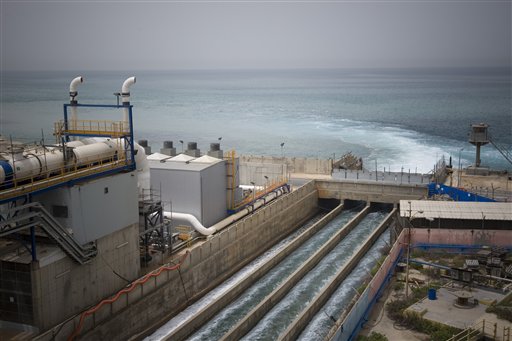
Desalination is considered one of Israel’s many genius innovations. That genius is now being applied to oil substitutes.
Long considered leaders of R&D and Clean Technology, particularly in the fields of water desalination and solar energy technology, Israel has now set firm sights on leading the shift away from oil dependence. Between now and 2020, the tiny country intends to spend NIS 14 billion (US $ 3.82 billion) to help innovators and researchers test viable alternatives to oil. And while often slow to implement their own technology, cooperation with Europe may change that.
Shai Agassi, the CEO of Better Place EV at a press conference.
Pioneers can make startling predictions, and that’s what Shai Agassi from Better Place has done in Davos, at a meeting of the World Economic Forum last week. He tells AP: Before 2020 more people everywhere will be buying electric cars than those powered by gasoline. “It doesn’t mean that oil is not necessary, but we’re starting the way out,” said Agassi, an Israeli who launched the switchable battery electric car concept a few years ago. And which we’ve reported on frequently over the last three years.
From a long line of egg farmers in Holland, Karin’s dad finally builds her a chicken coop
March, 2020 update. A lot has passed since I wrote this post. My dear father Harold died in 2018, my baby girl has grown into a kid, and she has a brother. We now face COVID-19 or the corona virus and are putting ourselves into self-isolation, with fresh eggs. We don’t know how long this pandemic will last. Start egg farming today. You will never be sorry about it.
Where bylaws allow, or can be bypassed, I highly recommend building your own chicken coop. Imagine getting fresh, free-range organic eggs every day? When my parents came to visit me in Jaffa a few months ago, Dad found himself bored.
Back in Holland, my family the Van Der Meers were one of the biggest egg producers in the country before the Depression. So you could say, eggs are in our genes. With Dad nothing to do for a few weeks, I brought up the idea of having him build me a chicken coop. That got him kind of excited. He foraged for wood in my backyard and came up with a coop that resembles a bus stop. The Chicken Express? Step right up and I’ll tell you how to build a coop in a few easy steps. And no you don’t have to invest much, unless you want to make your coop designer. My dad explains below!
In warm climates very little is needed to keep your hens happy – basically a roof over their heads, a lengthwise pole for curling their toes around when they sleep at night (you might want to raise it high where feral cats might stalk your chickens), and some fencing to keep them from, well, flying the coop.
Here are our chickens before we bought them.
As it turns out, Bedouin chickens which we bought in the Negev Desert, are very agile creatures and even sleep in our blackberry tree some nights. The fencing doesn’t help them that much, but it does keep them contained somewhat, and out of the mouth of our crazy dog.
Here’s what you’ll need to build the coop:
A corner on your roof, garden, or backyard for the chicken coop, a couple meters by a couple meters at least
An old door or piece of plywood for a roof
Some plywood for the sides
Chicken wire, if you want to contain the chickens outside the coop (they eat weeds so consider letting them run loose)
A wooden pole
Some boxes, or crates for roosting. Throw in something soft.
Feed
Find a corner to build against, saving yourself the need to build 2 extra walls. Be lazy. Make sure there’s a roof for the chickens to protect them against the sun, and rain, and in the winter if it gets cold, you can throw a carpet over the sides to keep the cold wind out. Make sure they have three walls.
We built a 2 meter or so pole, installed horizontally, down low about 50 cm off the ground but noticed some street cats were preying on our hens and raised the pole to about 1.5 meters off the ground. Most chickens can fly to this height but see what works for yours. It really doesn’t take much to make your chickens happy. But they do need a pole to sleep on at night.
What you feed your chickens:
A basic seed/corn meal
Compost – can include eggshells (ours really love labane cheese – could be because they are Bedouin hens)
Worms and bugs (they feed themselves while aerating the ground)
Endless supply of water
Chickens do need basic feed, that which can be bought at a feedlot. Unless of course they have wide pastures to roam and a lot of your kitchen waste to eat.
Some inquiring around on where to find chickens and feed might be in order. Animal markets for livestock might be your best bet. Ask around in places like that. We bought a huge drum of feed consisting of corn meal and other seeds, and feed our chickens a regular diet of all the vegetable-based compost that would otherwise be composted. But don’t worry.
Chicken poo makes an excellent compost too. One of my friends can’t eat eggs unless they are free-range and fed with organic oats. So it’s really up to you to decide how to feed your chickens, depending on your health needs and sensitivities.
We have five chickens and one rooster. The rooster is just for the fun of it. He does keep the girls in line – tells them when to eat, when to sleep. It’s funny that they follow. You don’t need one if you have neighbors nearby who will complain about the noise. And roosters DO make noise, waking us up as early as 1:30 am.
Bedouin women (crouching like crows) selling “bede” hens at the market
Unlike commercially-raised chickens, our hens don’t get “sunshine” 24 hours a day. Some parts of the year the chickens won’t lay. They will molt and take a break. And not every chicken will lay every day once she starts. We bought young chickens and it took them a couple of months to start laying. Now three of the five are laying, but like I said, not every day.
See a video interview with my dad about chickens
We bought our chickens at a Bedouin market (for about $10 each) because it was important for my husband that we have a “wild” variety – chickens that haven’t been genetically manipulated.
Our eggs are on the small to medium size, the yolks absolutely huge compared to the white. One hen is laying eggs with the most delightful little beige specks on them.
Dad (right), the closest link to my family of egg people is determined that next time he comes to visit me in the Middle East he’ll be smuggling in white hen eggs – “the real good layers” – from Canada. He keeps asking me about building an incubator for these eggs to become hatchlings. Hopefully it will happen and when it does, I’ll report it here on Green Prophet. (Update 2019: we hatched some chicks but the rooster killed them). So we won’t start that project for a while again.
Meanwhile, I am dreaming about how many eggs I will collect tomorrow. And how exciting it will be for my little baby daughter, when she gets bigger, to go out and collect them like I did when I was a little girl (that’s me in the top photo). My family had a coop in a suburban town outside Toronto until our evil neighbour complained and we had to get rid of it.
Before the complaints, I would go out and collect our eggs and sell them to our neighbors for a dollar a dozen, to cover the price of feed. Seriously, it was so much fun. If this blogger, and lazy environmentalist who is addicted to the computer can start a coop, you can too. Get cracking and join the new movement of urban farming.
Arwa argues that population control is not the silver bullet that will solve climate change, rather over-consumption is the real issue
According to the latest data coming from the UN, the world population will reach a staggering thirty billion people by 2300. Now, that’s a lot of people and a real sobering thought for those concerned with the impact of a growing population on the earth’s finite resources.
As the MENA (Middle East and North Africa) region has experienced some of the highest population growth since the 1950’s- second only to sub-Saharan Africa- you could argue that it’s time the region took population control seriously. If only to save the planet.
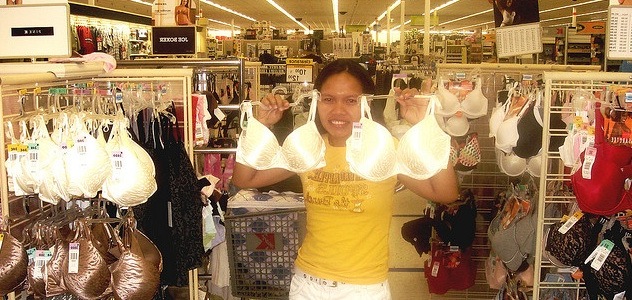
From an average B to a C cup in 50 years: Is our modern lives making our breasts bigger?
Britain’s Daily Mail reports that women in England have larger breasts than even a generation ago. Women (and men) are getting fatter, but obesity alone does not account for most of the increase: Women are exhibiting a greater cup size in relation to the rest of their bodies.One theory suggests that they have simply begun wearing a properly sized bra. Women tend to choose bras with a larger band, when they really need a larger cup. Bravissimo, a bra manufacturer, recently began producing their largest cup size ever, “L”. But the increase in size can’t be attributed to poor fit alone. In the 50’s, the average woman wore a size B cup. Now she’s gone up to a C.

 These beautiful Palmwood® gates at the entrance of Masdar City help keep the hot desert winds at bay.









 Shai Agassi, the CEO of Better Place EV at a press conference.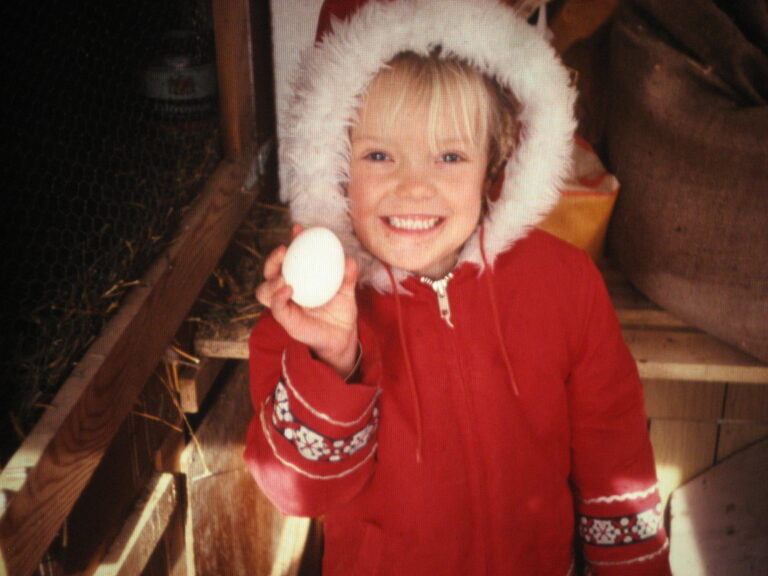

 Here are our chickens before we bought them.
  Bedouin women (crouching like crows) selling “bede” hens at the market
 Dad (right), the closest link to my family of egg people is determined that next time he comes to visit me in the Middle East he’ll be smuggling in white hen eggs – “the real good layers” – from Canada. He keeps asking me about building an incubator for these eggs to become hatchlings. Hopefully it will happen and when it does, I’ll report it here on Green Prophet. (Update 2019: we hatched some chicks but the rooster killed them). So we won’t start that project for a while again.

 From an average B to a C cup in 50 years: Is our modern lives making our breasts bigger?