EIT Pharma CEO Leen Kawas is advancing lonafarnib for chronic hepatitis D, showing how stalled late-stage drug programs can be revived and carried toward regulatory review.
Smart glasses are changing the economics of eyewear by turning conventional frames into higher-priced technology products. What used to be mainly a sale built around frame design, lenses, prescription needs and brand preference is now also a sale built around cameras, audio, AI features, app support and connected-device setup.
The film itself is about a Special Forces officer, played by Pitt, stranded in the Alaskan wilderness with his combat dog Odin after a plane crash. Odin is played by Uber, a highly trained German shepherd from a military and law-enforcement breeding line.
“Beavers effectively write their history into the landscape with each shrub they cut and every pond they create by damming streams,” said lead author Dr Georgia Hole, who carried out the research at Anglia Ruskin University and is now based at Durham University.
EIT Pharma CEO Leen Kawas is advancing lonafarnib for chronic hepatitis D, showing how stalled late-stage drug programs can be revived and carried toward regulatory review.
Smart glasses are changing the economics of eyewear by turning conventional frames into higher-priced technology products. What used to be mainly a sale built around frame design, lenses, prescription needs and brand preference is now also a sale built around cameras, audio, AI features, app support and connected-device setup.
The film itself is about a Special Forces officer, played by Pitt, stranded in the Alaskan wilderness with his combat dog Odin after a plane crash. Odin is played by Uber, a highly trained German shepherd from a military and law-enforcement breeding line.
“Beavers effectively write their history into the landscape with each shrub they cut and every pond they create by damming streams,” said lead author Dr Georgia Hole, who carried out the research at Anglia Ruskin University and is now based at Durham University.
EIT Pharma CEO Leen Kawas is advancing lonafarnib for chronic hepatitis D, showing how stalled late-stage drug programs can be revived and carried toward regulatory review.
Smart glasses are changing the economics of eyewear by turning conventional frames into higher-priced technology products. What used to be mainly a sale built around frame design, lenses, prescription needs and brand preference is now also a sale built around cameras, audio, AI features, app support and connected-device setup.
The film itself is about a Special Forces officer, played by Pitt, stranded in the Alaskan wilderness with his combat dog Odin after a plane crash. Odin is played by Uber, a highly trained German shepherd from a military and law-enforcement breeding line.
“Beavers effectively write their history into the landscape with each shrub they cut and every pond they create by damming streams,” said lead author Dr Georgia Hole, who carried out the research at Anglia Ruskin University and is now based at Durham University.
EIT Pharma CEO Leen Kawas is advancing lonafarnib for chronic hepatitis D, showing how stalled late-stage drug programs can be revived and carried toward regulatory review.
Smart glasses are changing the economics of eyewear by turning conventional frames into higher-priced technology products. What used to be mainly a sale built around frame design, lenses, prescription needs and brand preference is now also a sale built around cameras, audio, AI features, app support and connected-device setup.
The film itself is about a Special Forces officer, played by Pitt, stranded in the Alaskan wilderness with his combat dog Odin after a plane crash. Odin is played by Uber, a highly trained German shepherd from a military and law-enforcement breeding line.
“Beavers effectively write their history into the landscape with each shrub they cut and every pond they create by damming streams,” said lead author Dr Georgia Hole, who carried out the research at Anglia Ruskin University and is now based at Durham University.
EIT Pharma CEO Leen Kawas is advancing lonafarnib for chronic hepatitis D, showing how stalled late-stage drug programs can be revived and carried toward regulatory review.
Smart glasses are changing the economics of eyewear by turning conventional frames into higher-priced technology products. What used to be mainly a sale built around frame design, lenses, prescription needs and brand preference is now also a sale built around cameras, audio, AI features, app support and connected-device setup.
The film itself is about a Special Forces officer, played by Pitt, stranded in the Alaskan wilderness with his combat dog Odin after a plane crash. Odin is played by Uber, a highly trained German shepherd from a military and law-enforcement breeding line.
“Beavers effectively write their history into the landscape with each shrub they cut and every pond they create by damming streams,” said lead author Dr Georgia Hole, who carried out the research at Anglia Ruskin University and is now based at Durham University.
EIT Pharma CEO Leen Kawas is advancing lonafarnib for chronic hepatitis D, showing how stalled late-stage drug programs can be revived and carried toward regulatory review.
Smart glasses are changing the economics of eyewear by turning conventional frames into higher-priced technology products. What used to be mainly a sale built around frame design, lenses, prescription needs and brand preference is now also a sale built around cameras, audio, AI features, app support and connected-device setup.
The film itself is about a Special Forces officer, played by Pitt, stranded in the Alaskan wilderness with his combat dog Odin after a plane crash. Odin is played by Uber, a highly trained German shepherd from a military and law-enforcement breeding line.
“Beavers effectively write their history into the landscape with each shrub they cut and every pond they create by damming streams,” said lead author Dr Georgia Hole, who carried out the research at Anglia Ruskin University and is now based at Durham University.
EIT Pharma CEO Leen Kawas is advancing lonafarnib for chronic hepatitis D, showing how stalled late-stage drug programs can be revived and carried toward regulatory review.
Smart glasses are changing the economics of eyewear by turning conventional frames into higher-priced technology products. What used to be mainly a sale built around frame design, lenses, prescription needs and brand preference is now also a sale built around cameras, audio, AI features, app support and connected-device setup.
The film itself is about a Special Forces officer, played by Pitt, stranded in the Alaskan wilderness with his combat dog Odin after a plane crash. Odin is played by Uber, a highly trained German shepherd from a military and law-enforcement breeding line.
“Beavers effectively write their history into the landscape with each shrub they cut and every pond they create by damming streams,” said lead author Dr Georgia Hole, who carried out the research at Anglia Ruskin University and is now based at Durham University.
EIT Pharma CEO Leen Kawas is advancing lonafarnib for chronic hepatitis D, showing how stalled late-stage drug programs can be revived and carried toward regulatory review.
Smart glasses are changing the economics of eyewear by turning conventional frames into higher-priced technology products. What used to be mainly a sale built around frame design, lenses, prescription needs and brand preference is now also a sale built around cameras, audio, AI features, app support and connected-device setup.
The film itself is about a Special Forces officer, played by Pitt, stranded in the Alaskan wilderness with his combat dog Odin after a plane crash. Odin is played by Uber, a highly trained German shepherd from a military and law-enforcement breeding line.
“Beavers effectively write their history into the landscape with each shrub they cut and every pond they create by damming streams,” said lead author Dr Georgia Hole, who carried out the research at Anglia Ruskin University and is now based at Durham University.
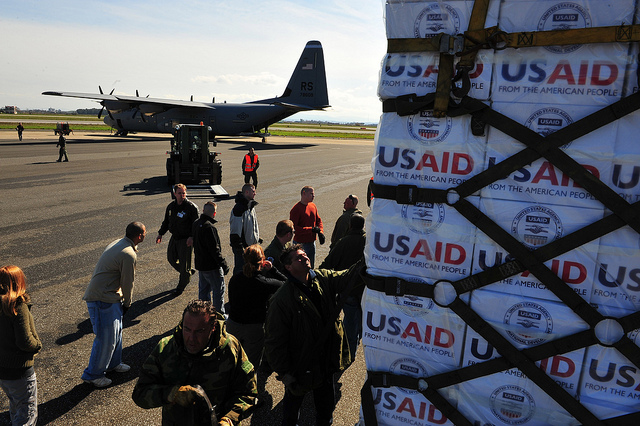
Humanitarian crises erupt in Libya, Yemen and Syria as the populations revolt against their oppressive leaders
From the very start, the price of food has played an important role in the emerging Arab Spring which has swept across Egypt, Tunisia, Algeria, Jordan, Yemen, Syria and Libya. As food prices rose so did the anger in Arab nations, where ordinary people were paying a high price for basic food whilst their leaders lived in the lap of luxury. Now, as the conflict reaches a stalemate in Yemen, Syria and Libya after months of fighting, the unsteady economic and political situation has lead to reports of widespread hunger.
Dubai’s Giant Pearl is starting to make its significant presence known.
The mammoth Dubai Pearl construction project in Dubai was one of the few to survive the economic crash. Now the fruit of three and a half million man hours of work is beginning to rise above the rest of the city’s large, mostly empty towers. Just at the foot of the Jumeirah Palm, the project by Schweger Associated Architects has been branded the most “bespoke” of them all. And people are buying into it.
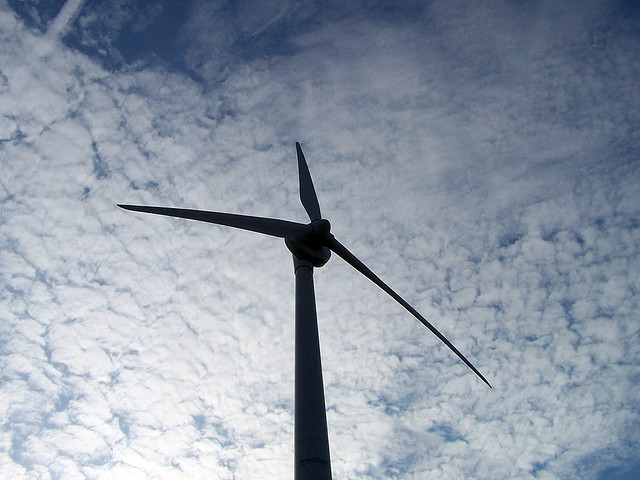
As Masdar’s partnership program gains traction in the London Thames estuary, the company is mooting wind power back home – in Abu Dhabi.
Masdar is on target to complete the world’s largest offshore wind farm in London’s Thames estuary by the end of 2012. In partnership with the Danish firm Dong Energy and E. ON from Germany, Masdar has already laid foundations for 22 of the London Array’s 177 turbines that will eventually produce 1 gigawatt of clean wind power. As it works to complete this project in the UK, the energy company’s renewable portfolio in Abu Dhabi is also being revised to hopefully include, pending government approval, wind energy.
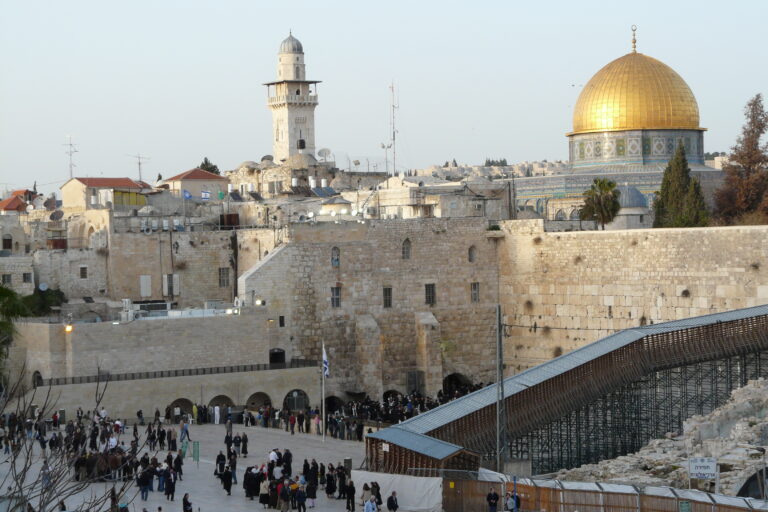
The Council of Religious Institutions of the Holy Land, which includes Palestinian and Israeli religious organisations, has officially recognized global warming and need for action
Whilst the major world religions can boast some great green principles at their core such as moderation, limiting waste and caring for nature, they have been rather slow to acknowledge human-induced climate change and the need for joint action. Which is why it’s so great to hear that the Council of Religious Institutions of the Holy Land (CRIHL), which represent all recognized religions in the Holy Land, has formally recognized the global challenge of climate change.
In a recent public statement, the CRIHL said, “We acknowledge the scientific basis of human-caused climate change and the threat it poses to human societies and the planet, as articulated by the United Nation’s Intergovernmental Panel on Climate Change. We also recognize the spiritual roots of this crisis, and the importance of a religious response to it.”
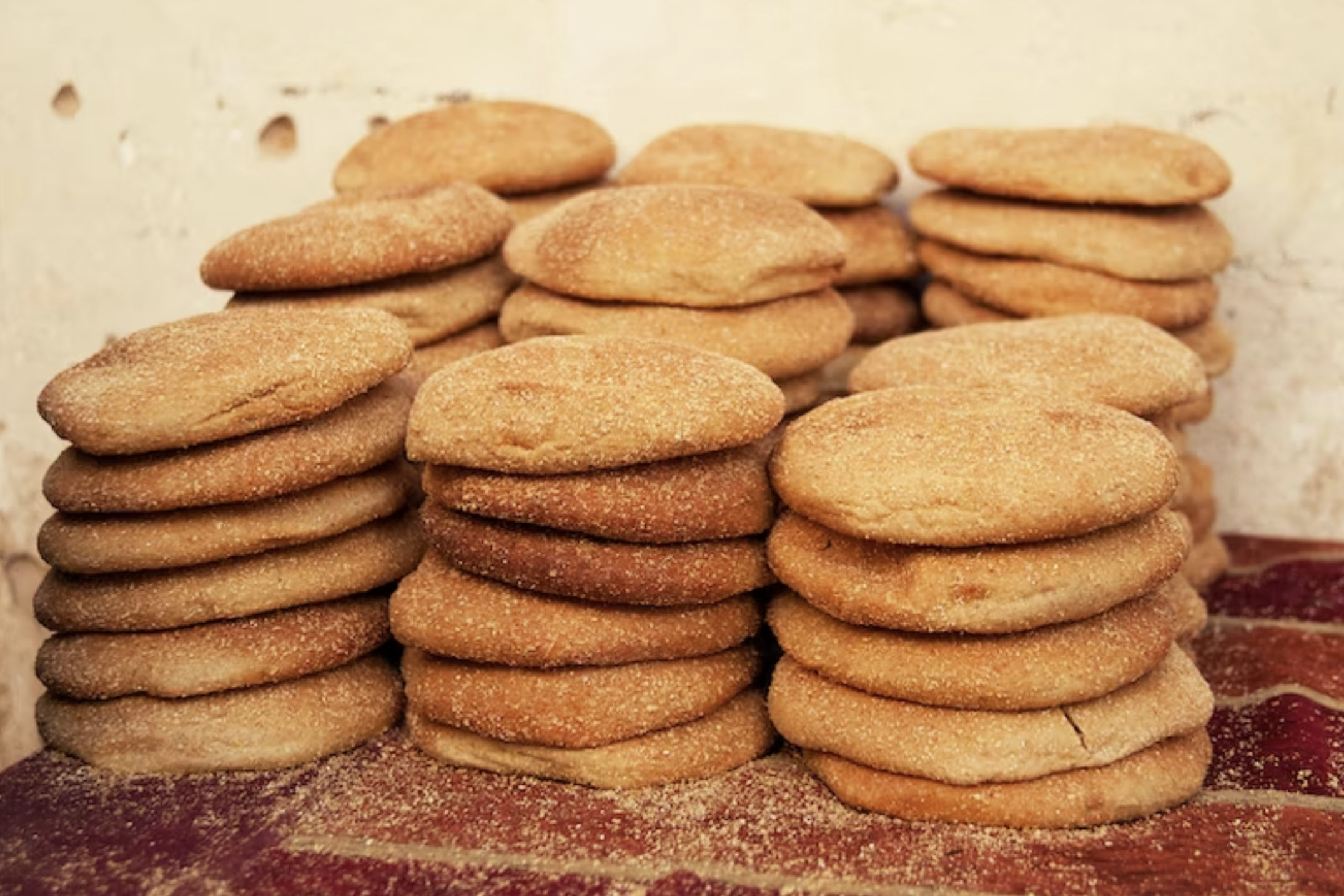
1 tablespoon active dry yeast or 1 cube fresh yeast
1- 1/3 cup warm water
1 teaspoon sugar or honey
1 tablespoon vegetable oil
2 1/2 teaspoons anise seeds
2 teaspoon salt
4 cups unbleached all-purpose flour
1 egg white, beaten with 1 teaspoon water
3 tablespoons sesame seeds
Semolina or corn meal for sprinkling on baking sheet
Dissolve the yeast in 1/4 cup of the water. Add the sugar or honey and let stand until foamy, 5 to 10 minutes.
Add the remaining water, oil, anise, salt, and 2 cups of the flour.
Gradually stir in the remaining flour until the mixture holds together. On a lightly floured surface, knead the dough until smooth and elastic, about 10 minutes.
Place in a greased bowl, turning to coat.
Cover loosely with a towel or plastic wrap and let rise at room temperature until double in bulk, about 1-1/2 hours.
Punch down the dough and divide in half. Shape each piece into a ball, cover, and let rest for about 10 minutes.
Grease the baking sheet and sprinkle it with semolina or corn meal. Place the rounds on the prepared baking sheet and with your palms, flatten each into a 9-inch disk. Cover, and let rise 30-40 minutes.
Preheat the oven to 400 degrees F – 220 C.
Prick the dough around the sides with the tines of a fork. Brush the tops
of the loaves with the egg white and lightly sprinkle with the sesame seeds.
Bake until golden brown and hollow-sounding when tapped, about 30 minutes.
Many governments worldwide now require double pane glass in windows for energy efficiency. In between the panes is usually a gas that helps to cut down on unwanted heat transfer. But what if, sandwiched between the two panes of glass, instead of merely a substance that helps to conserve energy, there was also an actual energy generator? That is the ingenious energy innovation supplied by Israel’s SolarOr, which was on display at this month’s Intersolar event at San Francisco’s Moscone Center.
Israel’s newly declared northern maritime boundary: note the slanted line that skirts the northern edge of the northernmost gas fields
As a result of a series of Egyptian natural gas pipeline sabotages by terrorists in the Sinai, the third blast occurring just a few days ago, Israel is putting more efforts into developing the undersea natural gas fields it has found in a number of locations off its western coastline. These energy explorations in the eastern Mediterranean have resulted in disputes with neighboring Lebanon over natural gas fields being developed there. These disputes have resulted in the UN declaring it will mediate in the gas fields dispute between the two countries.
The Arab World’s superstar, Morocco’s longstanding exploitation of natural resources in the Western Sahara casts a dark shadow on the country’s reputation.
Following unprecendented support (nearly 99%) for a draft constitution initiated by Morocco’s King Mohammed VI, the country is being hailed as a model for the rest of the Arab world. And so it should be. Of the handful of mostly Arab countries I’ve visited, this is among the most comfortable and progressive and I can’t make myself leave.
The youth are intelligent, multilingual, well-traveled, and have a lovely curiosity about other people and the rest of the world. And, although it is not advised to speak poorly of the royal family, they genuinely love their King Mohammed VI, who has instituted major reforms since his succession. But there’s a dark side to this enchanting country. And it lies in fish, phosphates, and oil.
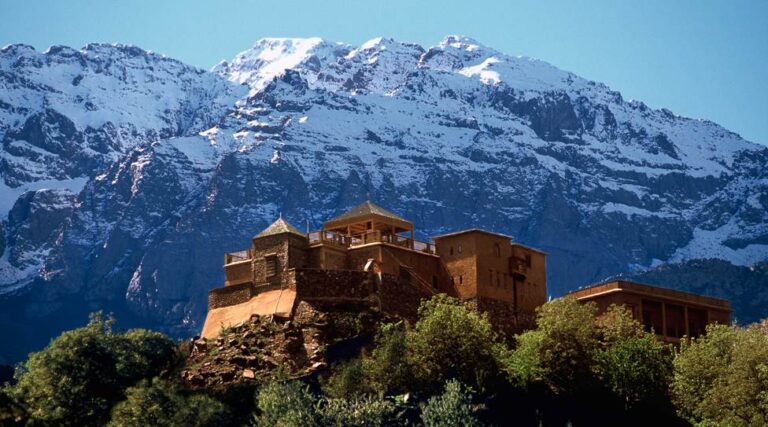
Karin goes on a 2-night stay at Kasbah du Toubkal, an eco-lodge in the foothills of North Africa’s highest peak.
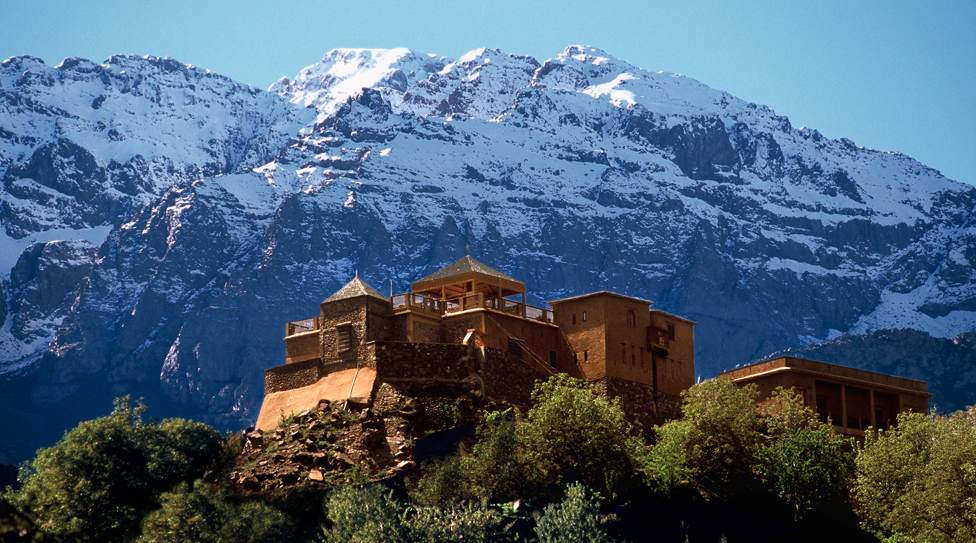
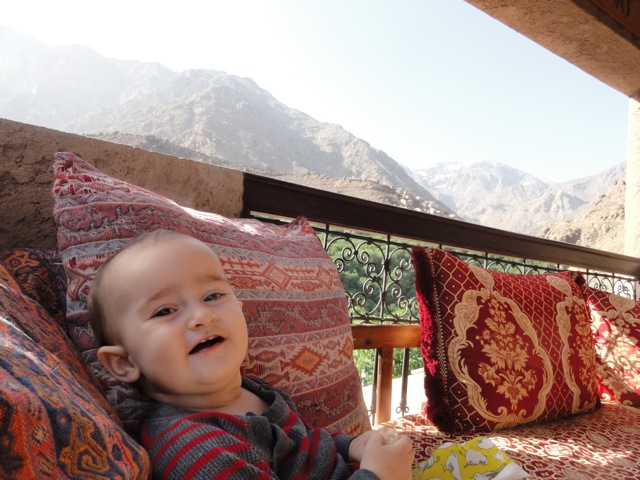
Soul-shifting is how I’d describe my two night stay at the Kasbah du Toubkal in the high Atlas mountains. From the gut-wrenching heat of Marrakesh, within an hour and a half we were transported to the mystical landscape of the Moroccan Berbers, and experienced what travel magazines call one of the best mountain lodges in the world.
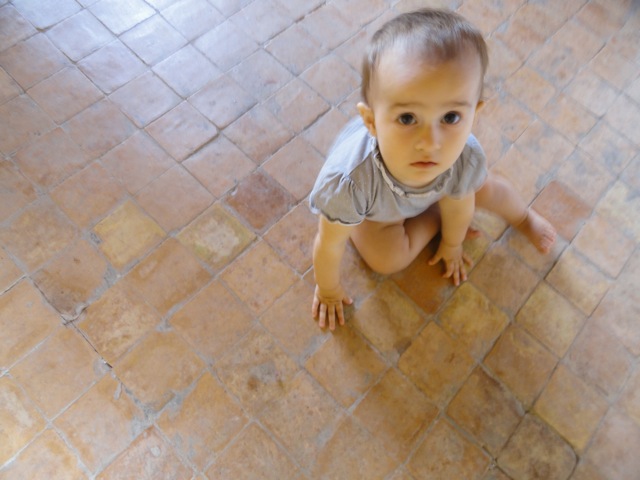
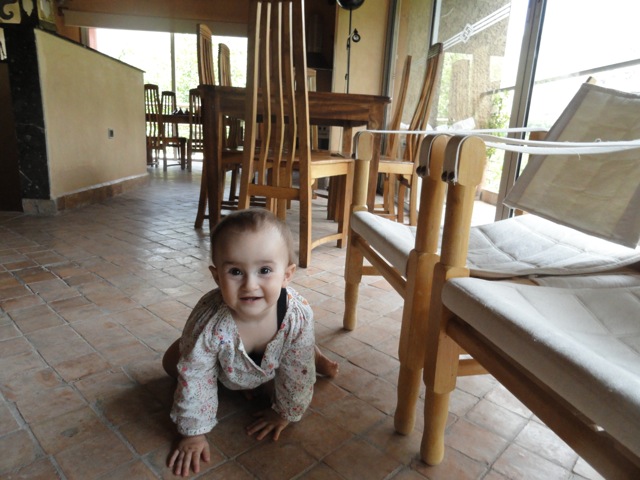
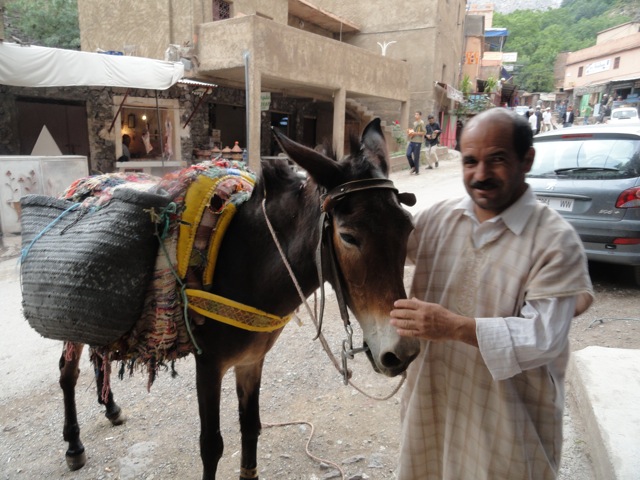
With a resident chauffeur waiting for us below the lodge in the Berber village of Imlil, the chauffeur being a mule named Douce-adut, I ascended with the baby in her carrier on foot as the donkey carried our lightly packed bags along a 15 minute trail which led to the lodge.
Wrapped in an aura of mystery, I was keen to see just how ecological this lodge would be. The Kasbah du Toubkal met and surpassed my expectations.
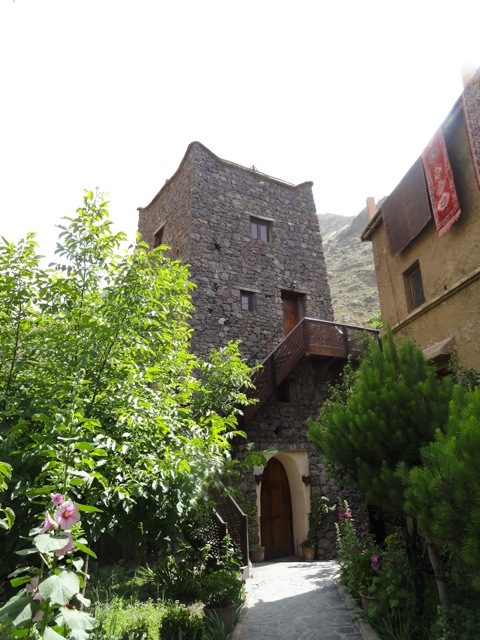
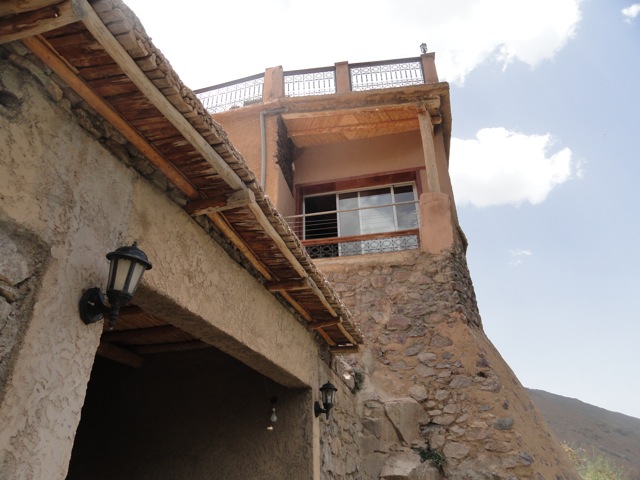
Built by a British-Berber partnership and hugged by one of the most stunning vistas you can imagine, the Kasbah du Toubkal is an absolute must, a once-in-a-lifetime experience for anyone traveling to Morocco.
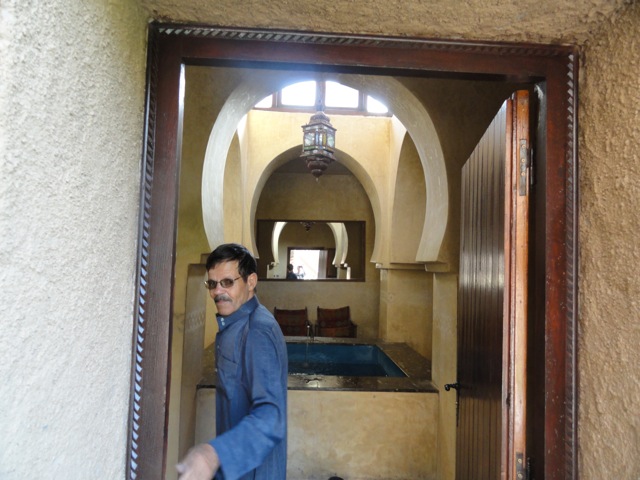
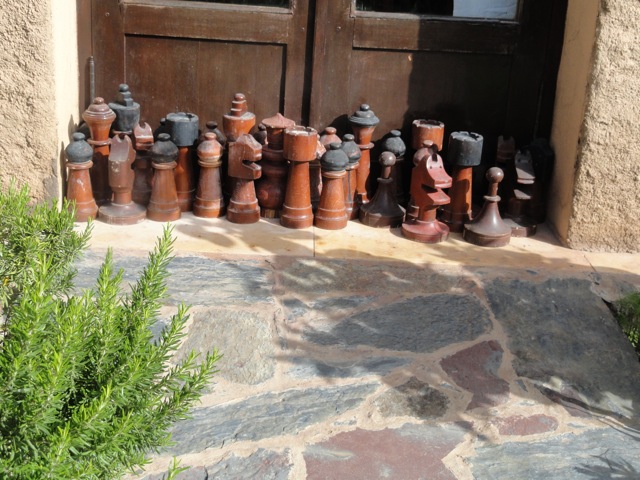
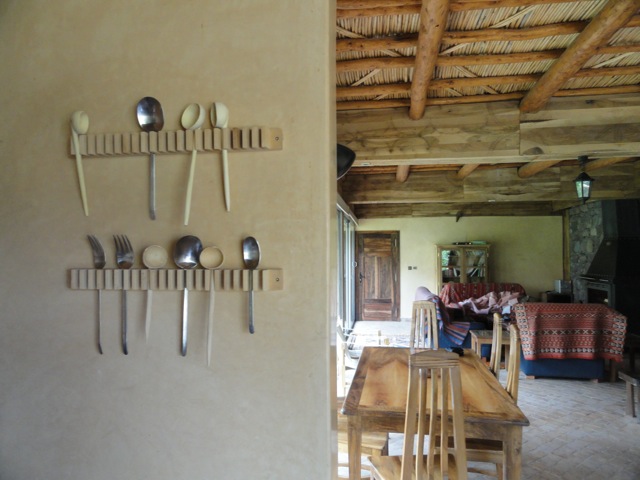
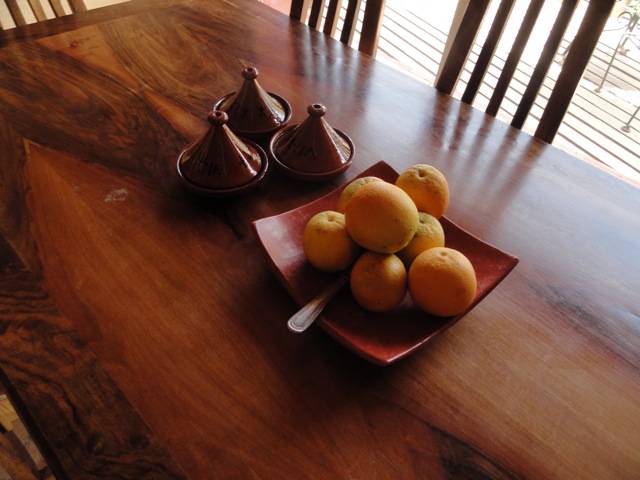
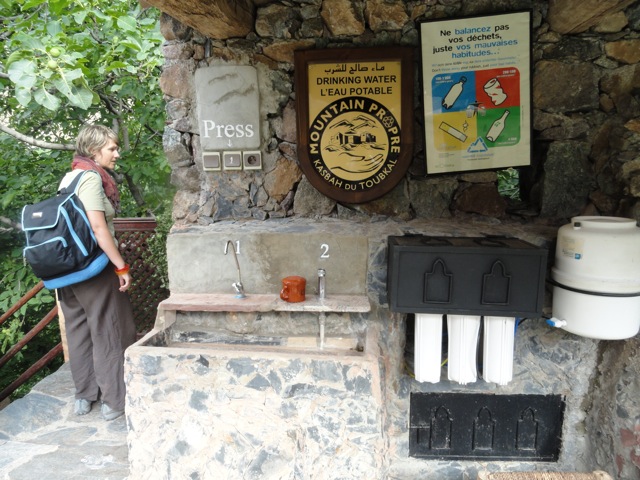
You’ll be impressed by its plastic-bottle saving water station, its Berber-run hospitality, the stunning view and hikes available at your command, along with solar-heated hot water and electricity panels, local slow food traditions such as tangine and couscous, and the small details like the locally carved wood and architecture designs throughout the lodge.
In the environs you’ll see lush fruit trees that bear cherries, apricots and the famous fair-trade argan oil, while lodge owners give a portion of their profits to charity for educating girls who would otherwise not be able to afford school. The lodge makes you feel that you have arrived home and that it’s a place where eco-dreamers, and travelers alike, make dreams come true.
The story of our journey to the Kasbah
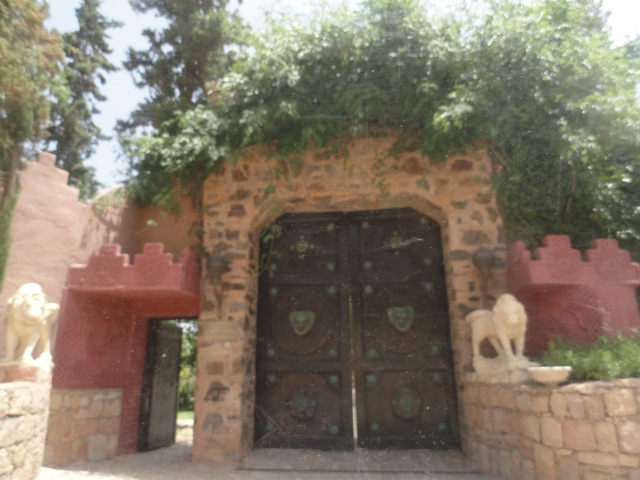
We arrived to the Kasbah late afternoon on a Sunday. After the mule taxi up the trail (we walked and donkey-horse carried our things), we swung open a large wooden door and entered paradise.
And it wasn’t only the change in temperatures. We’d come expecting a climax. The winding road from the 45 degrees C stifling heat of Marrakesh was a much-needed change. With every mile up the mountains, the temperatures became more and more human. The taxi ride which can be secured for about 200 dirham (about $25 USD) is not air conditioned, and the unfinished roads might make you wish you’d bought life insurance.
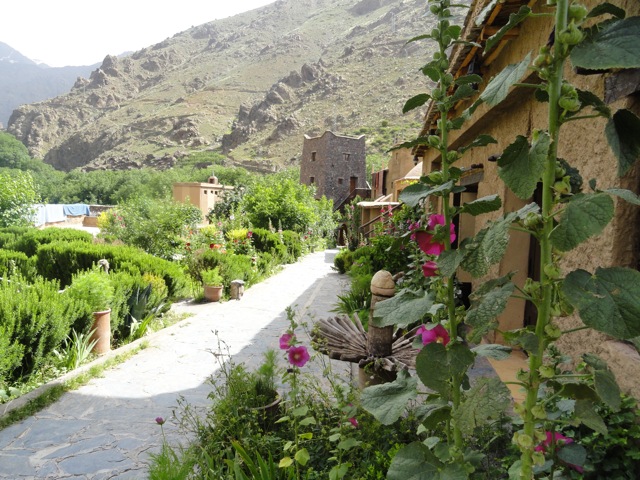
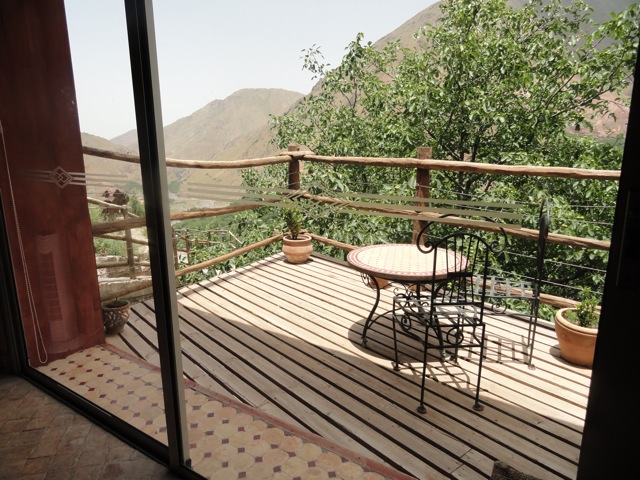
Along the route, the hot sand of the Marrakesh desert will turn to green slopes and valleys spitting out small waterfalls every which way you look. You could be in Switzerland, Peru or Nepal. But the Muslim prayers on the radio remind you that you are on another planet altogether. This is Morocco you remind yourself, but this is something you’ve never known before. It is clean and pastoral.
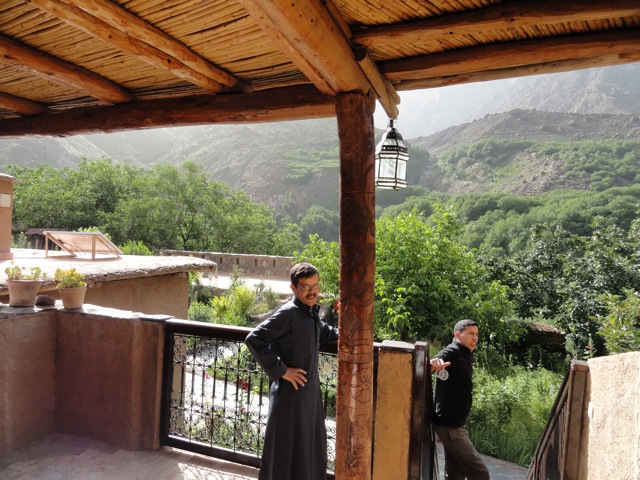
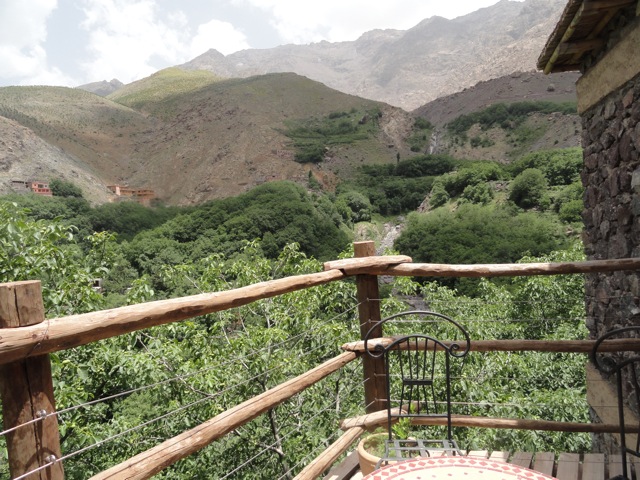
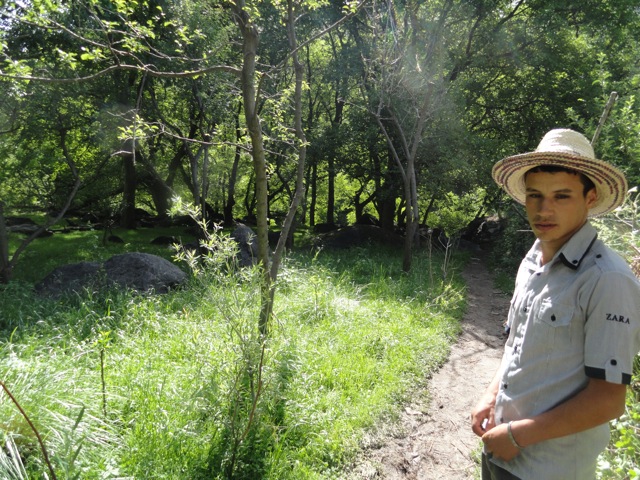
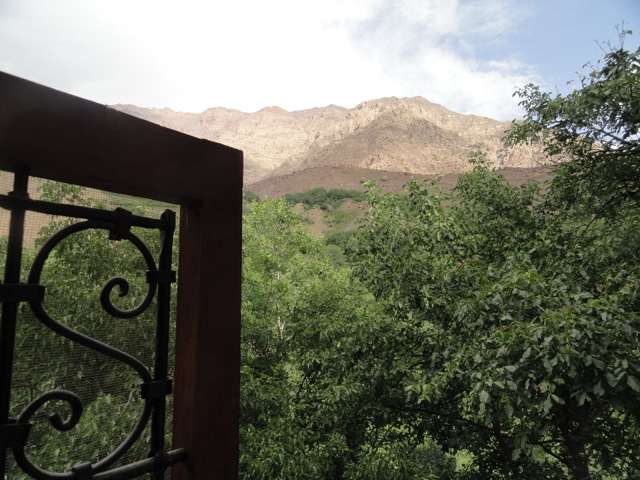
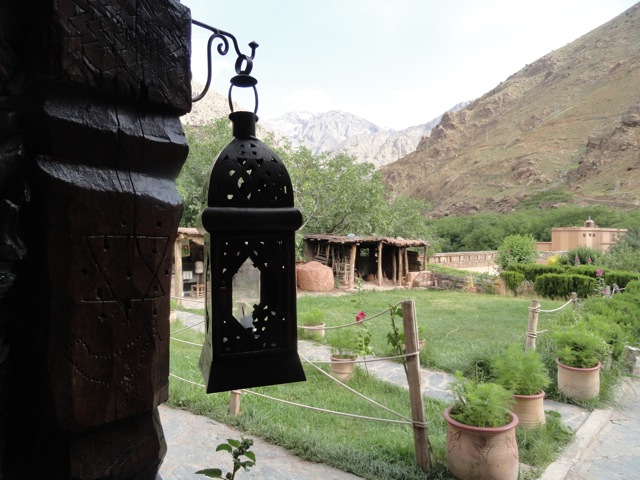
Once you walk through the doors at the Kasbah, the gardens are framed by the mountain landscape. When you arrive, turn around to see North Africa’s highest peak, Toubkal Mountain, still snow-covered at its peak in summer. The adrenaline, for nature lovers, reaches a high at this point. Tafline would later climb Mount Toubkal (as she chased her Berber guide to the summit). With baby, I wasn’t up to it. This time. But I would go on a short 2 hour hike.
If you are tired by the short hike up to the retreat, any muscles will be calmed by tiny Moroccan biscuits spiced with fennel seed, washed down by a sweet green-mint tea –– a Berber specialty –– given to guests when they arrive.
We meet one of our hosts, and are quickly brought down to our rooms. Dinner is not far off at 7:30, he says, and he’ll explain more about the lodge tomorrow, when we are rested.
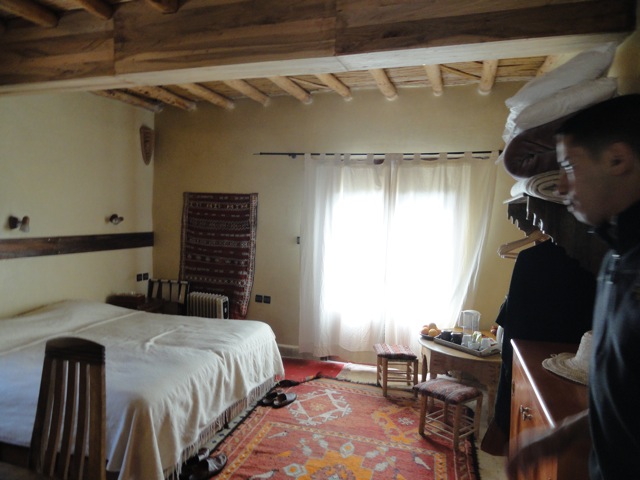
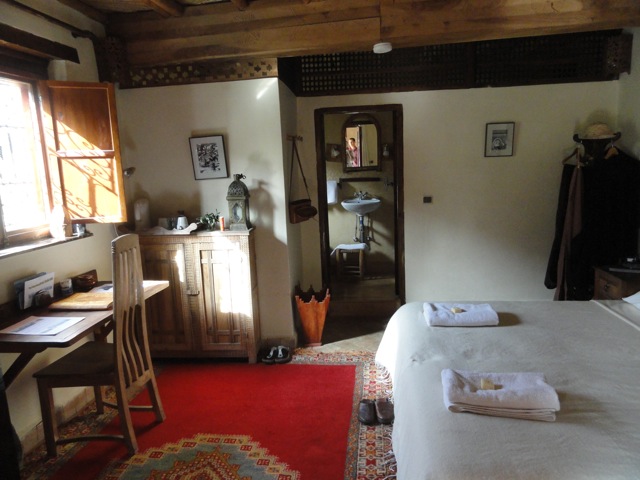
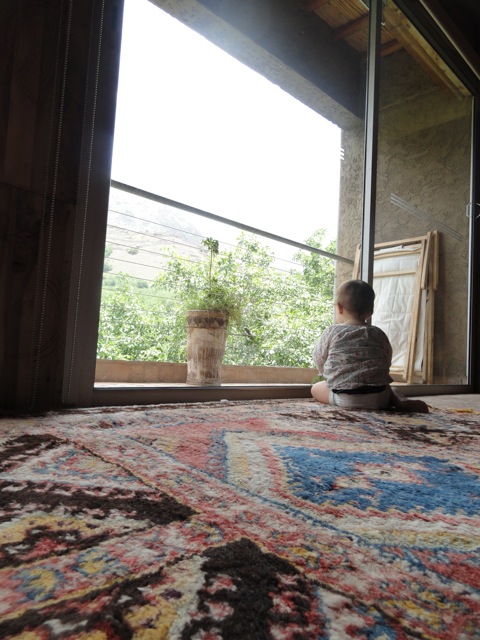
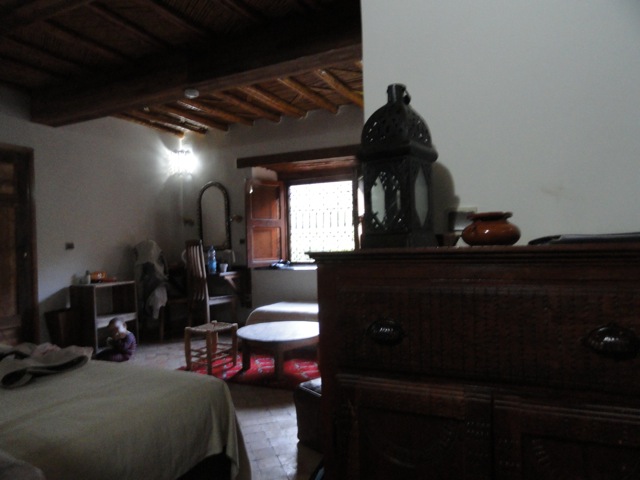
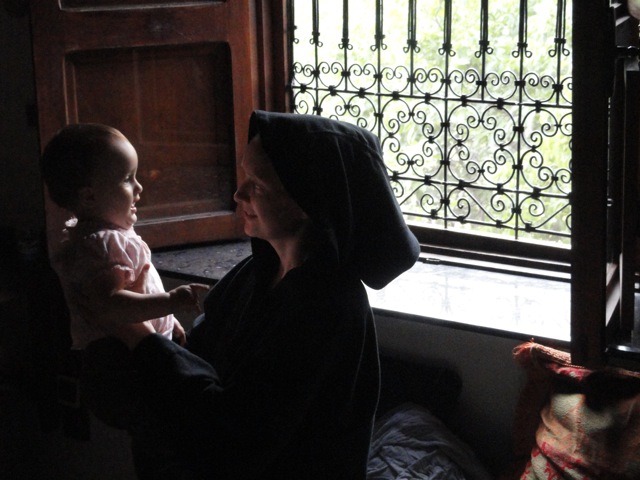
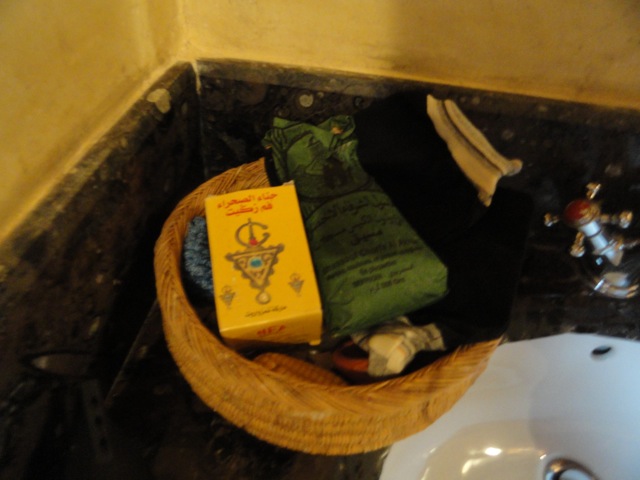
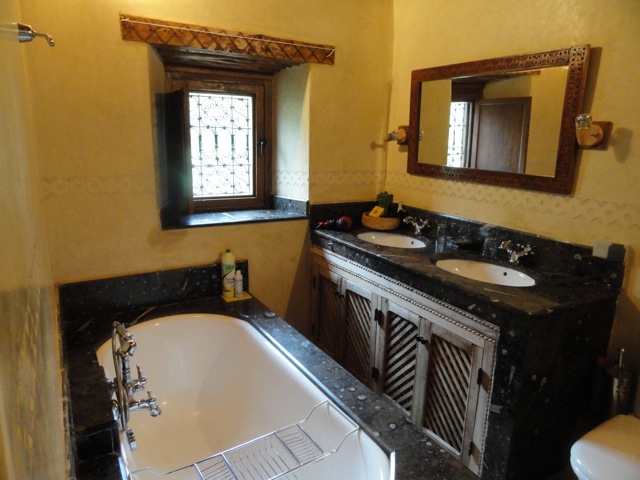
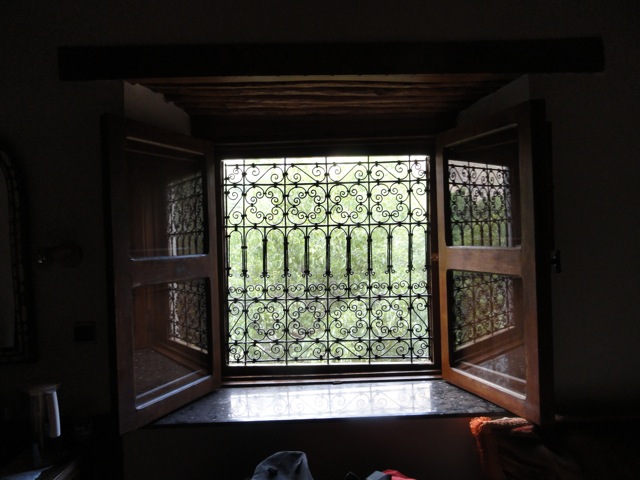
It was as though our rooms were carved into the rock of the mountain itself. Dark, but with windows of green light, it was exciting to see soap nuts in the bathroom, an ecological alternative to polluting detergents. And of course, the cool wind, and view.
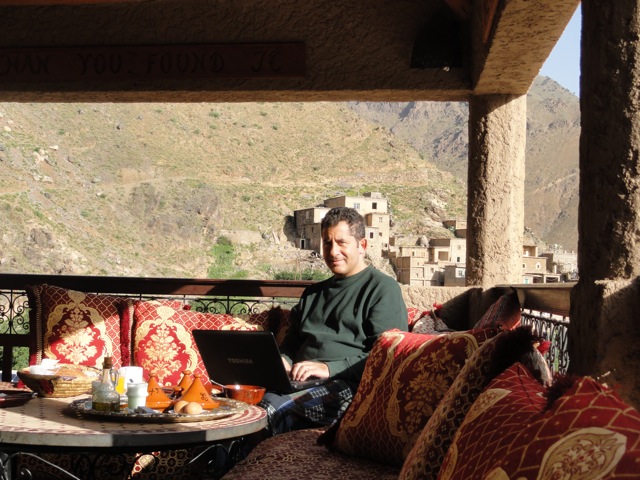
Bags were unpacked, tea was made and after baby was asleep we headed up to the 360 degree panoramic balcony where a small cast of characters from the United States, England and France were dining and chatting intermittently.
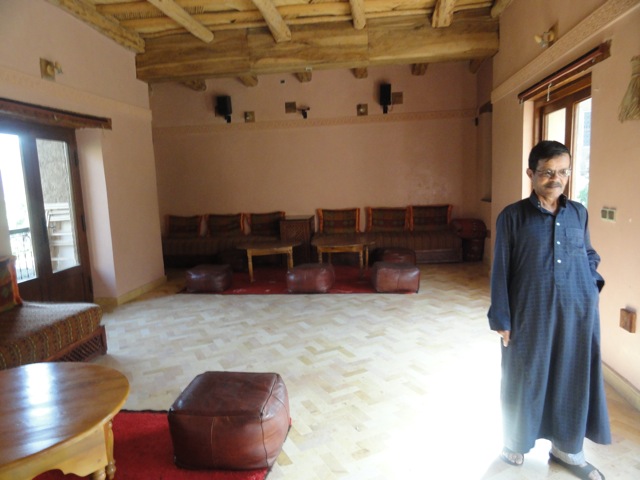
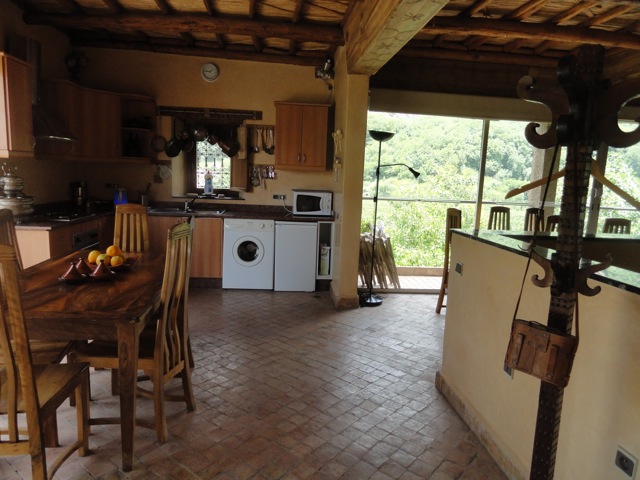
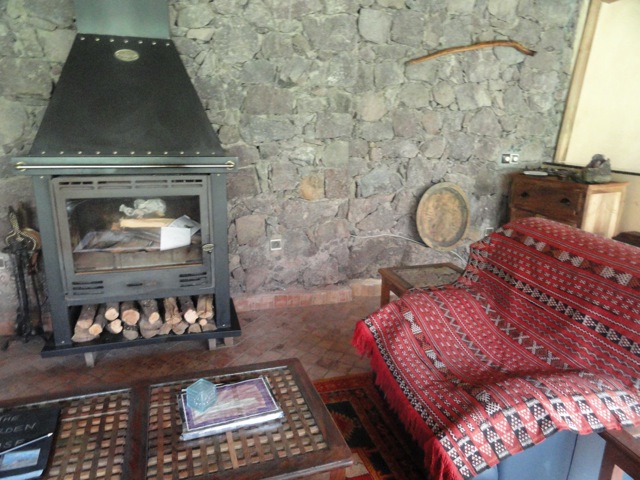
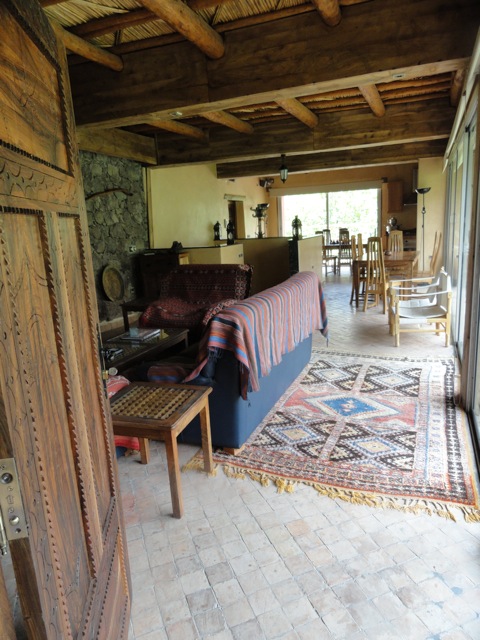
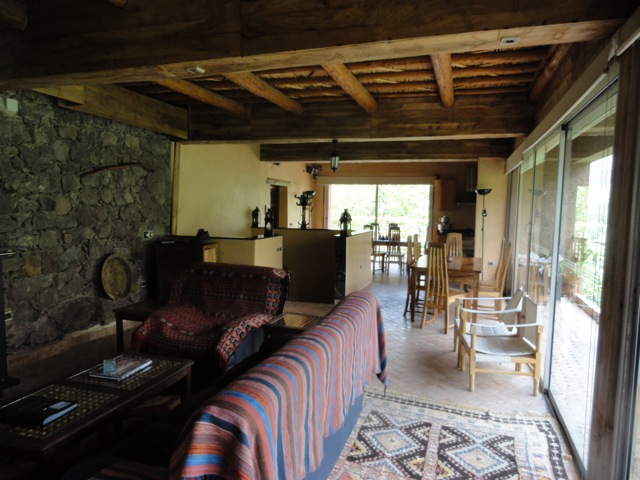
The intimate setting led to some small talk with the other guests quietly taking in the day coming to an end, and a fantastic lamb tagine, slow-roasted Berber style in the kitchen below. I didn’t want the evening to end, but the cool air brought on some yawns and we went back downstairs to our suite, the Garden Room, a 3-bedroom house often rented by families and groups for birthdays, anniversaries, family celebrations and workshops. We had one room in the complex, along with a salon, kitchen and two small dens. Our view looked out to Toubkal Mountain, which name means “big”.
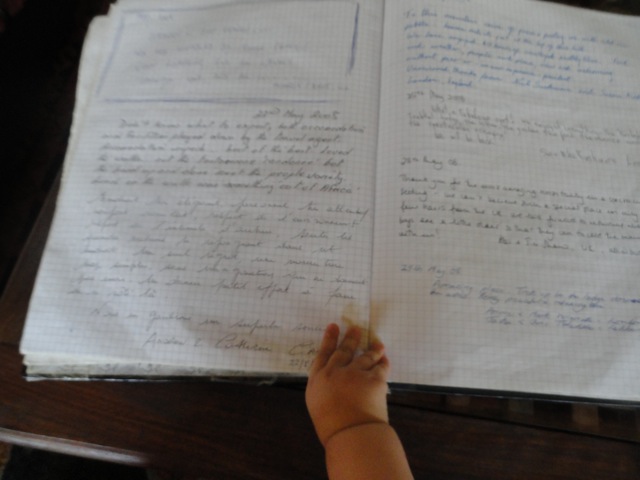
A peak into the guest book reveals the same conclusions I was thinking: “magic”, “feels like home”.
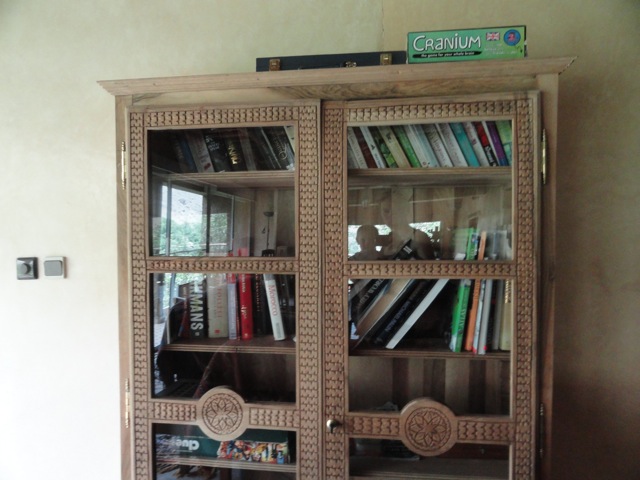
The next morning my traveling companion had to check out for lack of Internet connectivity at the lodge. She had deadlines and the Internet was too slow to load pages. Note to travelers: do not visit the Kasbah to work. You wouldn’t really want to anyway. It would be a shame. A great collection of books in the guest rooms, and in the common den near the main lobby, will keep you occupied for years. Two days wasn’t going to be enough, but I decided to make the best of it.
Off to sleep with cool wind, and many dreams.
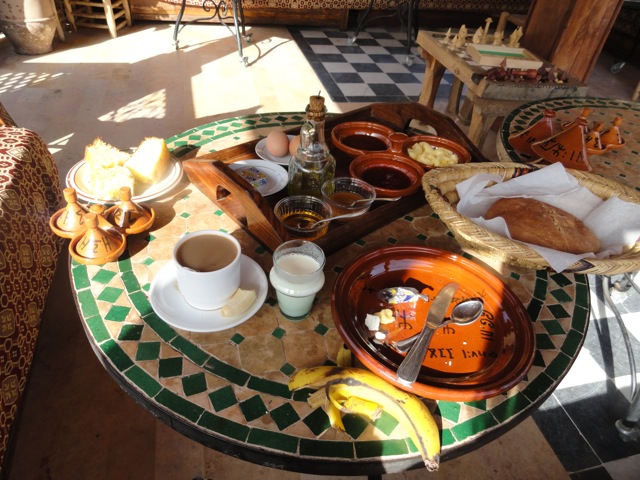
Breakfast started with fresh bread, homemade yoghurt, coffee, argan oil and jam, along with some olives and fruit. Yum.
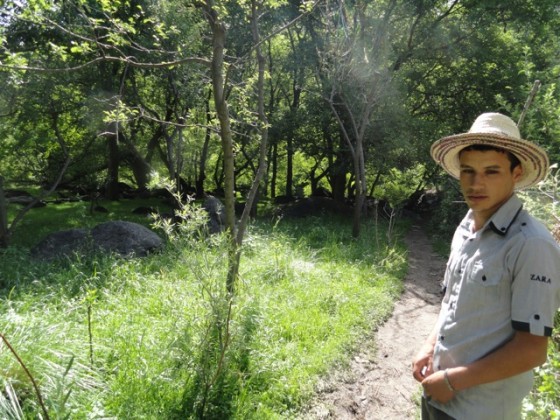
At 10 am, our guide Abdu was waiting to take us on a hike around some of the small bordering villages in the region of Imlil. One of them was his. We filled the water bottle supplied by the Kasbah at the drinking water station and headed out.
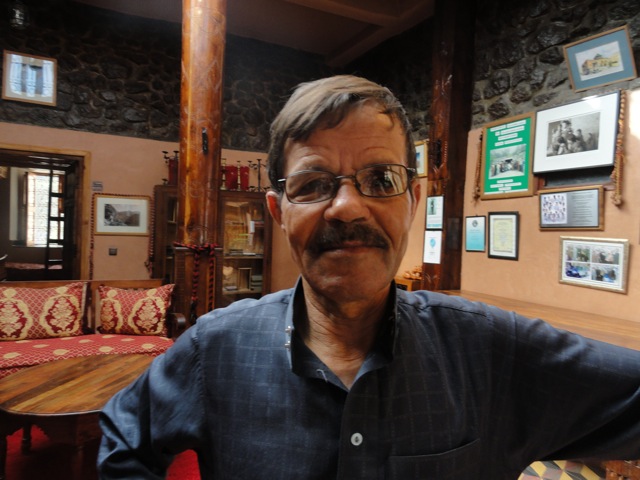
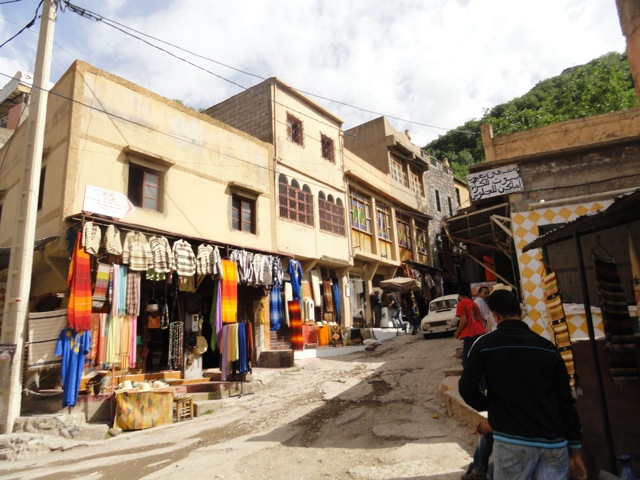
Back at the lodge our lunch was prepared – a light salad and couscous. Later that afternoon I walked down to Imlil, following the North African music I heard from one of my balconies. It was a local soccer match. One village against the other, blue versus red. The music was to encourage the spirit among the crowd. Being the only female in the crowd, I decided to walk back up, and make it a day. My hearty lunch had me tucking in early for the night, with more sweet dreams. After an early morning rise, a tour around the place with manager Hajj Maurice, who is from the region, I enjoy a light salad, and am told at noon that my mule driver has been waiting since 8 am to take me back down.
We embark with heavy hearts. Some light haggling with drivers and it’s back to Marrakesh and the heat.
Some key highlights of the Kasbah which makes it eco-hip in our books:
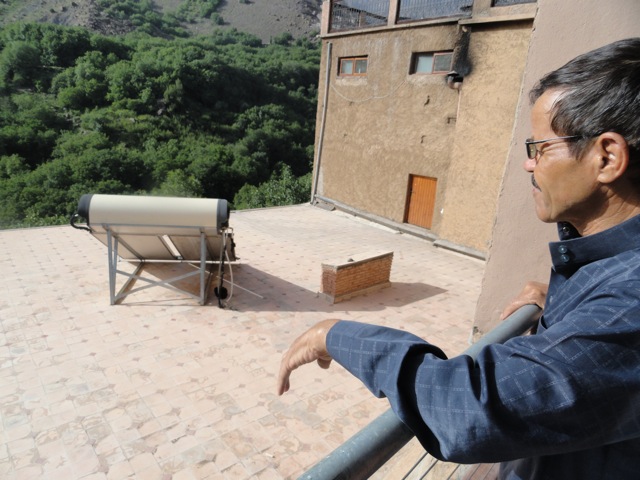
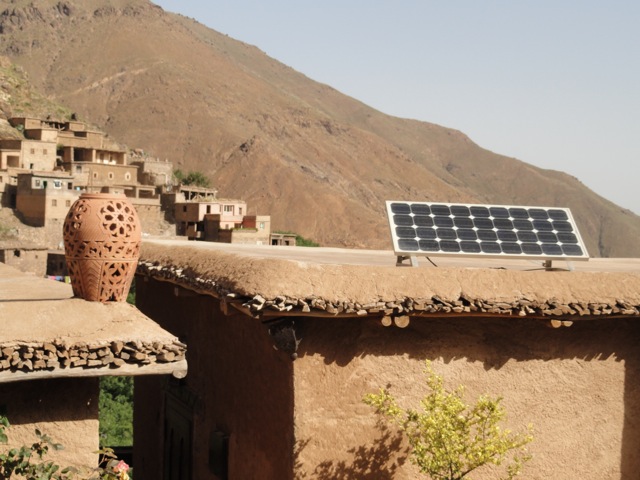
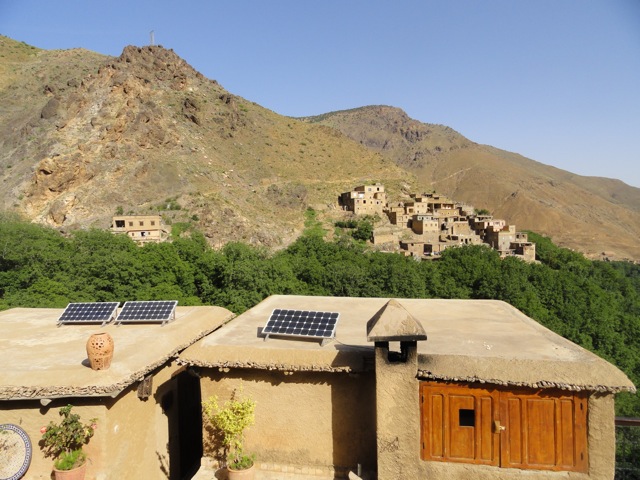
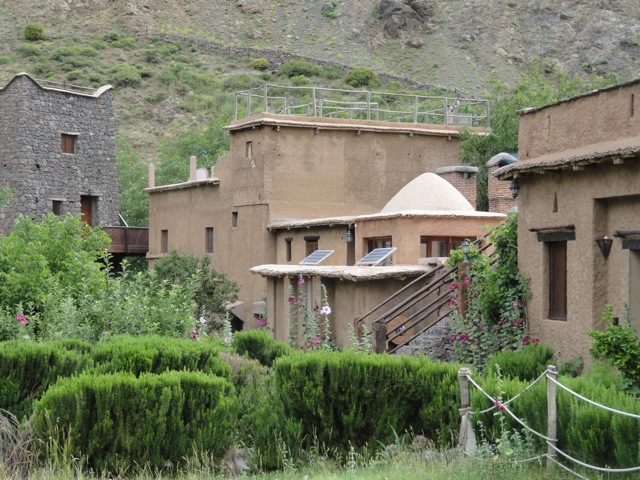
Hot water is heated using thermal hot water heaters on the roof
The lodge hires all local people from the region who greet and treat guests with traditional Berber hospitality. Tips are split.
There are no phones in the lodges, and you don’t feel at all that you are in a hotel. There are no TVs
Soap nuts and ecological products are placed at the disposal of guests
Fresh fruit, dried nuts and homemade cookies are waiting for you to enjoy
All the food served at the Kasbah is home-cooked, traditional, and from the region
Solar power is generated on the roofs of some of the buildings for lighting
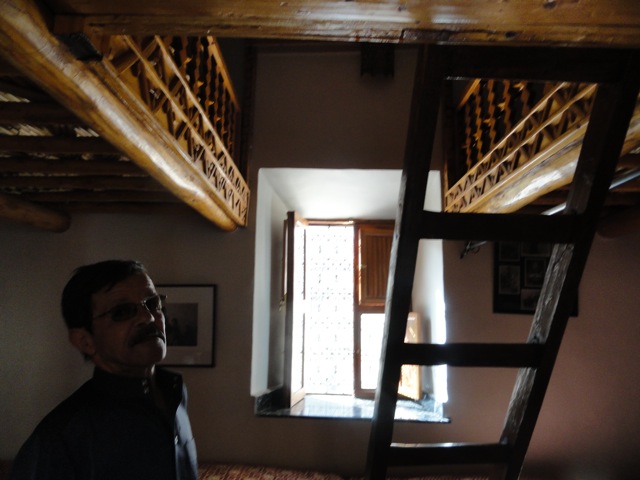
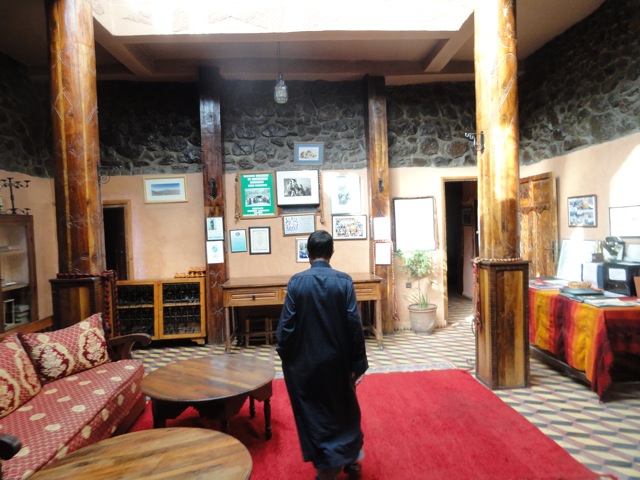
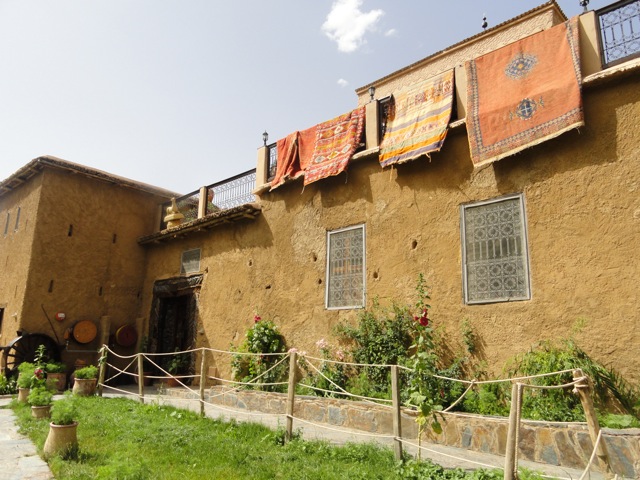
Wood fixtures inside the Kasbah are hand-carved by local Berbers
You’ll find out eco-products throughout, like trash bins made from the rubber of tires
Packaging and water bottles are discouraged for use among guests
Dorm rooms are at affordable prices for locals and budget travelers
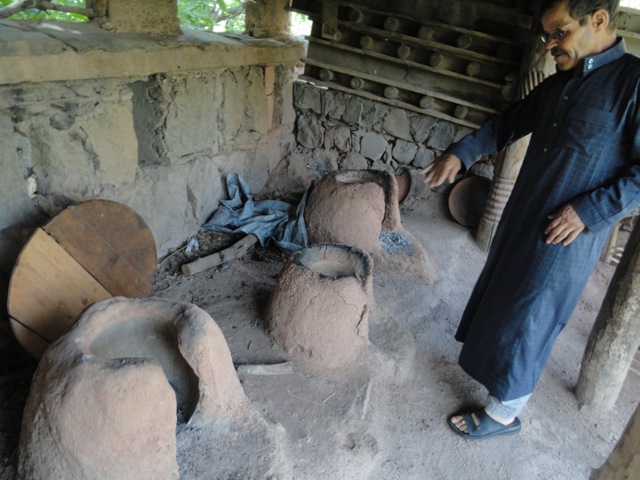
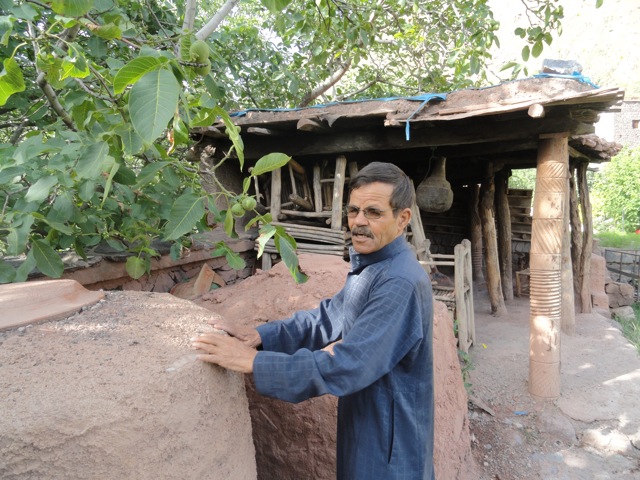
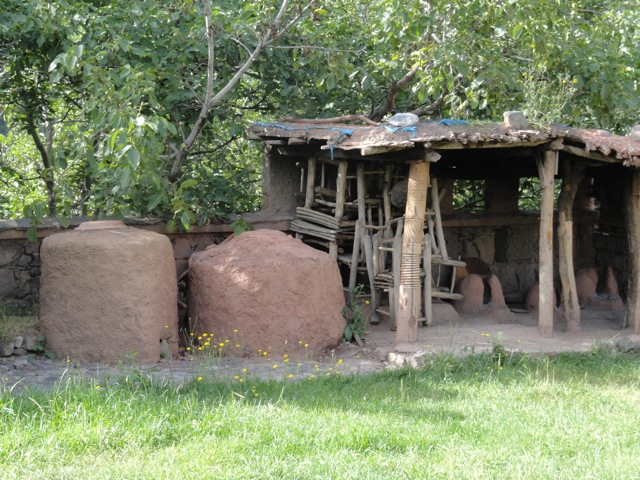
Berber bread and meat ovens, for traditional cooking in the garden
Participate in mountain waste collection and other clean up activities through Kasbah’s Facebook page
Guided eco-trips run through the lodge
Supports local education for girls through Education for All foundation
Teaches locals about environmental stewardship
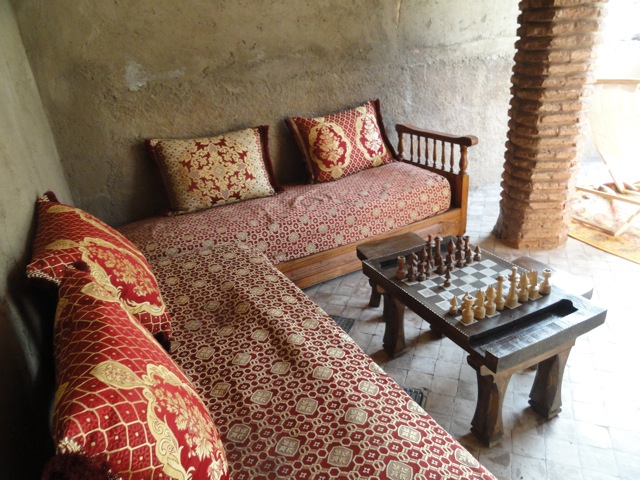
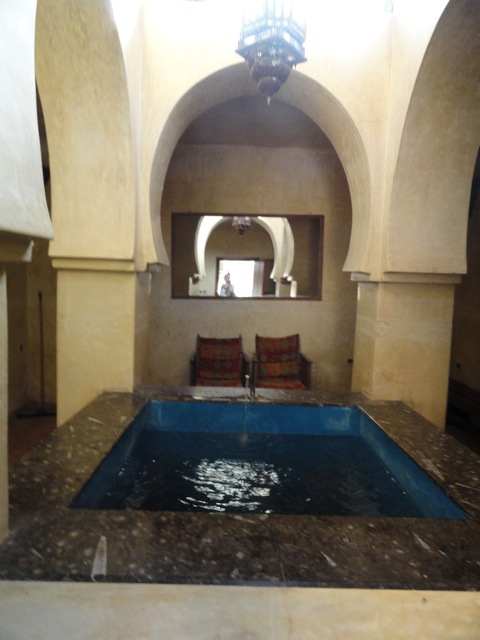
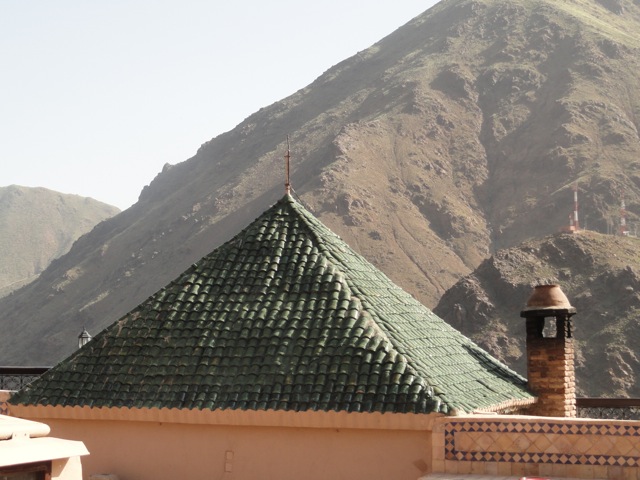
While there is no mention of a certified green building standard, like LEEDs used in the building process, the lodge was constructed on the site of an existing ruin, using local materials, and stone where possible.
The Kasbah was a highlight of my trip to Morocco. I went to the country for a conference sponsored by the United Religions Initiative on how the Middle East can face new migration issues. The pit stop at the Kasbah after the conference was a highlight of my life. I enjoyed it so much that I would like to take my family and friends to enjoy its vista, people and atmosphere one day, hopefully soon.
Click on images in gallery below for larger version.
At the base of Toubkal in the Atlas Mountains
A donkey from the Kasbah (photo by Karin Kloosterman)
FIFA is unofficially mulling over plans to change the rules of the game to accommodate Qatar’s high summer temperatures.
Concerned that the stadiums will not be sufficiently cool for 2022 World Cup players, FIFA is unofficially mulling over the possibility of allowing three 30 minute thirds instead of two 45 minute halves. This is according to Michael Beavon, the Arup Associate Director who helped develop the zero-carbon cooling technology for the 12 stadiums that he insists should obviate the need for such measures.
The EU has banned 10% of Egyptian agricultural products after linking that country to the devastating E. coli outbreak that killed 49 people earlier this year.
The European Union has linked the May/June E. coli outbreak that killed 49 people to produce grown in Egypt. Following a dedicated probe, officials concluded that a shipment of fenugreek seeds used to grow sprouts imported by a German company was the “most likely common link” to the outbreak.
Following this announcement, the EU has established an official ban on 10% of Egyptian agricultural products. The ban, which will be in place until 31 October, 2011, is the latest in a chain of economic woes that imperil Egypt’s smooth recovery – including a significant drop in tourism and the third explosion of a natural gas pipeline.
Homegrown food sold for export
The Media Line points out that during the E. coli outbreak in Europe earlier this year, the United Arab Emirates, Qatar, and Kuwait banned imports and the sale of cucumbers from Germany, Spain, Denmark, and the Netherlands, suspecting those countries of selling contaminated produce.
Instead, the produce was “home grown” in Egypt, where agricultural standards are relatively relaxed since most farmers produce food for a local, less demanding market.
Even so, since 2009 Egypt has been working to improve its standards in order to meet the demands of the European market and the Agriculture Export Council even boasted just one month before it was linked to the deadly E. coli outbreak that it was increasing its continental exports.
This is what Egypt stands to lose as a result of the ban, according to the Media Line:
The EU ban will cause a big dent in exports. In 2010, the EU says it imported from Egypt about 49,000 tons of the types of seeds affected by Tuesday’s decision valued at over 56 million Euros ($80 million). That’s about 11% of Egypt’s total. The impact, however, may be considerably bigger as European importers, distributors, and shoppers shun Egyptian products not covered by the ban.
Although it would be nice to think that this hard knock will encourage the authorities to develop higher standards, the reality is that the country is receiving hard financial knocks in every sector – from energy to tourism – and will battle to provide even the bare necessities for its citizens this year.
A mental health hospital in Bethlehem is completely without water, and the mayor has been buying his own. Can Israel, Jordan and the PA make hydro peace?
A Palestinian water and environmental engineer from Friends of the Earth Middle East (FoEME), Nader al-Khateeb recently discovered that the mayor is among many in Bethlehem who have been without water for more than one month. He shared this startling revelation at the International Water Symposium held on Tuesday at the 15th Cleantech Exhibit in Tel Aviv. The symposium designed to source mutual solutions for water scarce Israel, Jordan, and the Palestinian Authority came apart at the seams as politics overshadowed goodwill.
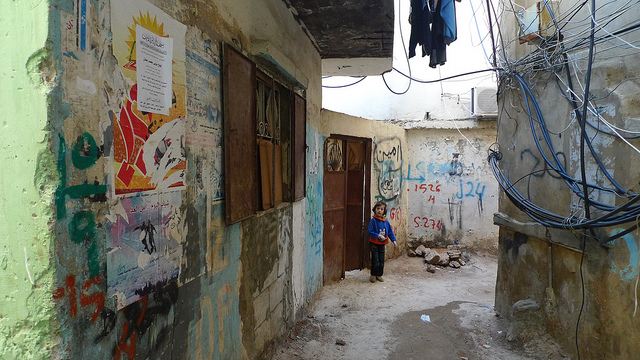
Nina Rahal-Lott, is a trained architect who wants to transform the Badawi refugee camp in Lebanon from an ‘environmental catastrophe’ into a green haven
Born and raised in Beirut and trained as an architect, Nina Rahal-Lott is a women with a vision. After witnessing the dire conditions that Palestinian refugees live in across Lebanon, she is single-handedly attempting to setup a voluntary organisation of environmentalists and architects to help in any way possible to improve the environment of the refugees.
The idea is to improve first the living units of the most needy, such as the elderly and the handicapped,” she explains. “That can begin with simple help, such as thermal insulation, or new hinges for the doors, simple water taps, cleaning their streets and planting trees for them…I will be doing my best to provide sustainable solutions with minimum cost. ”
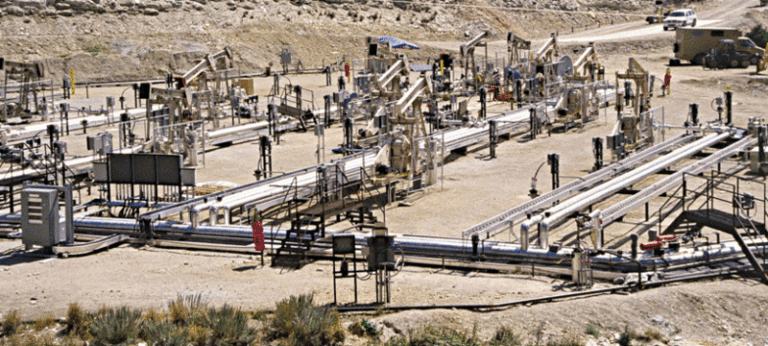
An oil shale trial plant in Colorado. Does Israel want its Negev and Galilee regions torn up for “black gold”?
Until recently, Israel has been an energy poor country, with nearly all its energy needs having to be supplied by importing both petroleum – bought mainly on the international Spot Market – and coal. Previous attempts to find oil in Israel have only been marginally successful, with small amounts discovered outside the city of Ashdod, and on the shores of the Dead Sea. But following the discovery of large amounts of natural gas in offshore Mediterranean fields, such as the Tamar and Leviathan gas fields off the coast of Haifa, Israel has begun to become a potential world player in energy production, with ideas to export natural gas to Europe in an undersea pipeline, despite security and environmental implications. But these finds could be nothing, compared to vast amounts of oil shale waiting to be processed.

 Humanitarian crises erupt in Libya, Yemen and Syria as the populations revolt against their oppressive leaders







 Karin goes on a 2-night stay at Kasbah du Toubkal, an eco-lodge in the foothills of North Africa’s highest peak.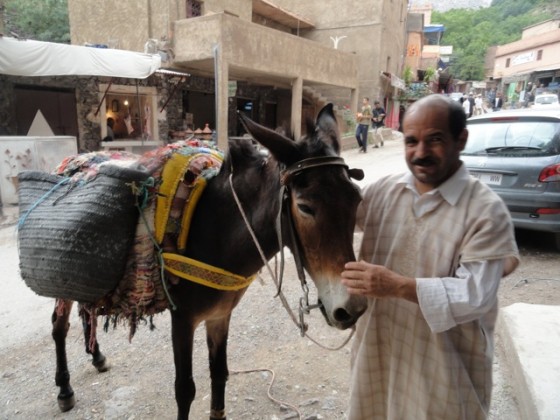


 The EU has banned 10% of Egyptian agricultural products after linking that country to the devastating E. coli outbreak that killed 49 people earlier this year.