Home Blog Page 489

INTERVIEW: Sofiah Jamil Talks Faith, Women & Climate Justice

0

We speak to Muslim green campaigner Sofiah Jamil about the environmental threats facing Southeast Asia and why climate justice alone isn’t enough

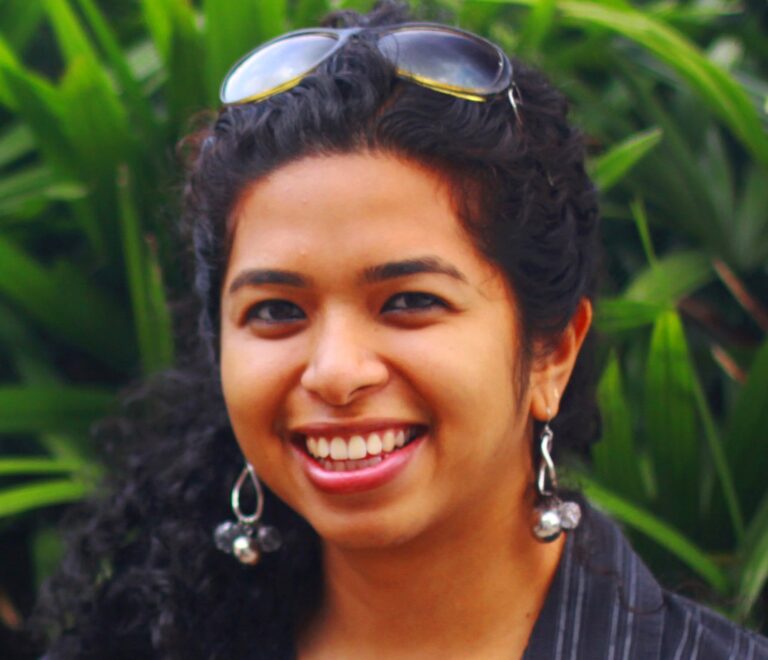
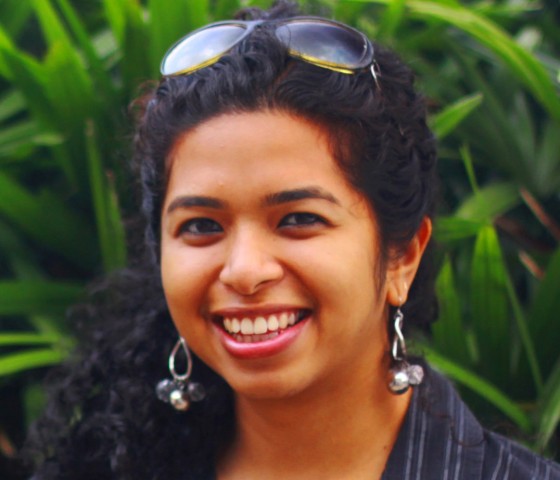
Sofiah Jamil is a Singapore-based campaigner who has been working hard to help Muslims living in Southeast Asia connect their faith with environmental issues. As well as setting up ‘Project ME: Muslims + Environment‘ and running The Green Bush blog, her research at Nanyang Technological University focuses on environmental security. Spurred on by her undergraduate studies in Australia where she experienced a higher level of environmental awareness (compared to her concrete and urban home of Singapore), she has studied the implications of forest fires on Indonesia and Malaysia.

In 2009, Sofiah took part in a 6-week programme by the Study of the United States Institute for the Environment to help increase her knowledge and hopes to start her PhD next year at the Australian National University focusing on the topic of Muslim environmental initiatives. Green Prophet spoke to her about the unique environmental risks that the Southeast region faces and the role women can play in dealing with these.

Sustainable Architecture Saudi Style: King Abdullah Financial District

3

sustainable architecture, green design, sustainable design, eco design, green architecture, Saudi, Riyadh, King Abdullah Financial DistrictAlthough the massive 3,300,000 sq m King Abdullah Financial District in Riyadh will feature a variety of “green” initiatives, this is definitely sustainable architecture Saudi style.

We applaud any individual or organization that seeks to green up their portfolio, and Saudi Arabia is no exception. Really, it’s difficult to blame the Kingdom’s residents for striking it rich with oil, expanding their quality of life, and not wanting to let it go even as the world gets hotter and ecosystems collapse. But sustainable Saudi architecture exists in a class of its own.

We have on one end simple earth architecture such as Hassan Fathy’s famous works in Egypt, which requires very little imported materials and have virtually no environmental impact, and then we have the King Abdullah Financial District (KAFD) designed by Henning Larsen Architects (HLA). Even though all kinds of alternative energy and passive design techniques have been incorporated into its design, this 3,300,000 sq m mixed use center is audacious, expensive, and about as glitzy as it gets.

Apple-Potato Latkes for Hannukah, with cinnamon cream RECIPE

2

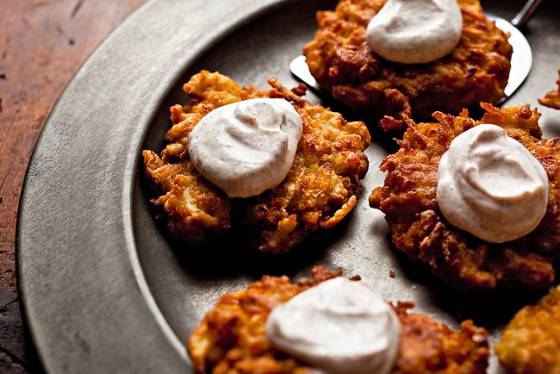
image-apple-cinnamon-latkehs

A new twist on Hannuka’s potato latkehs: The kids look forward to the same latkehs year after year, but adults sometimes want something a little different.  Surfing the Net for an alternative recipe, this recipe from The New York Times caught my eye. It’s as easy to make as the traditional recipe, but it’s just different enough to make those traditional potato fritters interesting again.

For a Middle-Eastern taste twist, forgo the expensive imported maple syrup and use native Silan date syrup. Here’s a riveting little story about how sheep keep the weeds down in a Jericho date farm.

Apple-Potato Latkes With Cinnamon Sour Cream

Ingredients:

6 tablespoons sour cream or Greek yogurt

1/4 teaspoon ground cinnamon

1/2 teaspoon maple syrup or silan date syrup

2 Golden Delicious apples, peeled and cored

1 large russet potato, peeled

1 medium yellow onion, peeled

2/3 cup all-purpose flour

3 large eggs

2 teaspoons kosher salt

1 1/4 teaspoons baking powder

1/2 teaspoon black pepper

Olive oil, for frying

Method to making these latkes

In a small bowl, whisk together the sour cream or yogurt, cinnamon and syrup. Cover and chill until ready to use.

Coarsely grate the apples, potato and onion. Put the mixture in a clean dish towel and squeeze to wring out as much liquid as possible. For the crispiest pancakes, you want the least moisture.

Working quickly, put the mixture in a large bowl, add the flour, eggs, salt, baking powder and pepper, and mix until the flour is absorbed.

In a heavy-bottomed pan over medium-high heat, pour in about 1/4 inch of oil. Once the oil is hot (a drop of batter placed in the pan should sizzle), drop heaping tablespoons of batter into the pan, cooking 3 to 4 latkes at a time. Use a spatula to flatten the scoops into disks.

When the edges of the latkes are brown and crispy, 2 to 3 minutes, flip them. Cook until the second side is deeply browned, another 2 to 3 minutes.

Transfer the latkes to a plate lined with recycled, crumpled newspaper sheets to drain. Repeat with the remaining batter. Serve with dollops of the cinnamon sour cream on top.

Yield: about 1 1/2 dozen latkes. Enjoy!

More recipes for the Festival of Lights from Green Prophet:

Photo by Andrew Scrivani via the New York Times

2nd International Ornithology Festival in the Galilee

0

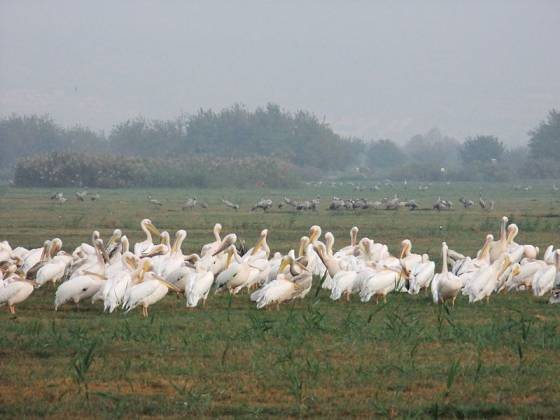
image-pelicans-hula-lakeLooking for a cool eco-activity with the kids this Hanukkah vacation? This one is for the birds!

Until December 28th, you can visit nature reserves and parks in the  Galilee and Golan for a special bird-watching festival. The events will be held in six main sites: the Agamon Hula, the Gamla nature reserve, at the Sea of Galilee, Kfar Rupin, En Afek nature reserve and their area. Having reported on the  Kuwait’s Ornithological Society events last July, we wholeheartedly recommend the many interesting birdwatching activities offered in Israel this month.

Goodall, Clinton and Cousteau at Eye Earth Summit Abu Dhabi

0

eye on earth summit abu dhabi clinon, cousteau, jane goodall;Dr. Jane Goodall, Bill Clinton and Philippe Cousteau are all speaking in Abu Dhabi this week as part of the “Eye on Earth” Summit.

Environmental issues effect us all, but this week’s “Eye on Earth” Summit in Abu Dhabi is attempting to ensure that environmental data is also available to us all.  The summit hopes to “enable global leaders, innovators and decision-makers to focus on an issue critical to the wise decision-making upon which our planet’s future depends: how to ensure effective access to the world’s expanding pool of environmental and social data by all of those who need it.”

Attending the conference will be some environmental big shots, including Dr. Jane Goodall, former US President Bill Clinton (whose wife, US Secretary of State Hillary Clinton, recently lauded Masdar’s renewable energy efforts), and Philippe Cousteau (correspondent for Animal Planet and Planet Green, and the grandson of legendary scuba diver Jacques Cousteau).

Kibbutz Lotan’s Free Eco-Guide App Makes Getting Back to Nature a Breeze

0

Permaculture, green building, ecology, sustainable design, eco-guide, kibbutz Lotan, Israel, composting, organic agriculture, rainwater harvesting, the Middle East

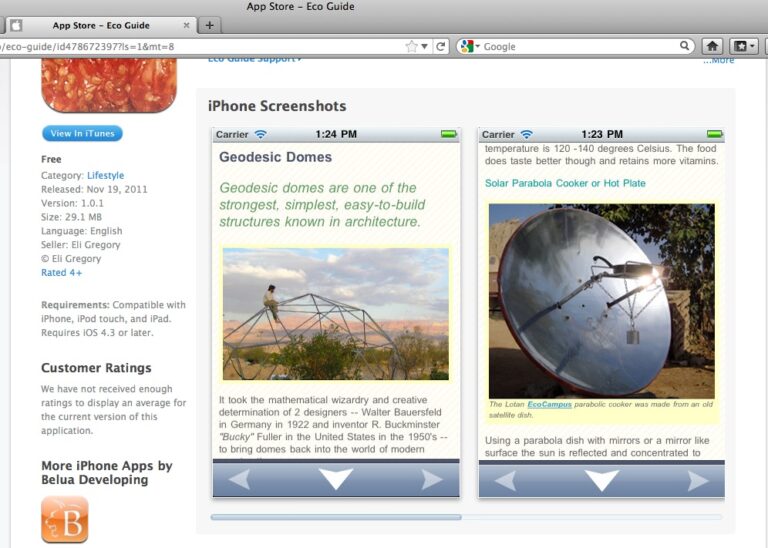
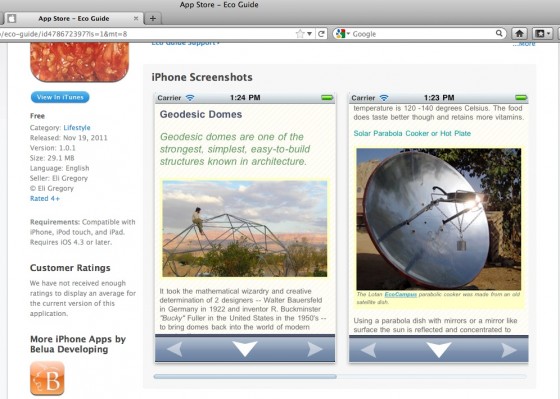
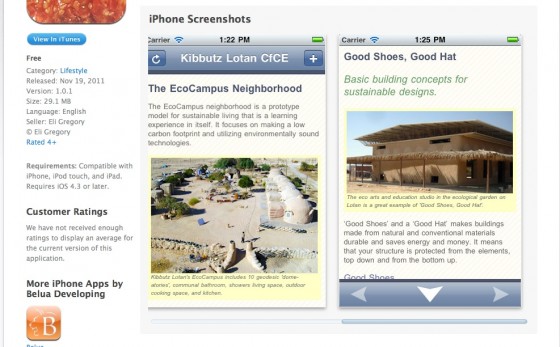
Anyone who is interested to transition to a more sustainable way of life will benefit from Kibbutz Lotan’s comprehensive eco-guide app.

Many socially and environmentally conscious citizens dream about leaving the grid for good and getting back in touch with nature, but the general lack of sustainable infrastructure and available information in the Middle East – especially compared to the United States and Europe – makes that task seem completely insurmountable.

In response to this problem, Kibbutz Lotan’s Center for Creative Ecology in Israel, which is recognized as one of the world’s most advanced pioneers in all aspects of sustainable living, recently launched a fantastic eco-guide that covers everything from composting to earth architecture and how to get along in an ecologically-minded community.

Best of all, the techniques described in the application have all been put into practice in the Middle East, so instead of being an imported solution that has no relevance to our climate or circumstances, this is an exceptional homegrown resource created by and for ecologically-minded people in the Middle East – like our very own Green Sheikh. And did we mention that it’s free?


Permaculture, green building, ecology, sustainable design, eco-guide, kibbutz Lotan, Israel, composting, organic agriculture, rainwater harvesting, the Middle East

Some of the topics covered in this guide include:

  • Permaculture
  • Organic Gardening
  • Earth Building
  • Minimum to Zero Impact Cooking
  • Water Conservation
  • Compost Toilets
  • Passive Design Techniques
  • Community and Ecology

The app – which is compatible with iPhone, iPod touch, and iPad and requires an iOS of 4.3 or later – was designed by a Kibbutz Lotan intern named Eli Gregory, who according to the Director of Research and Development Alex Cicelsky is “minded and talented”  and “combined [Lotan’s] work and Permaculture/ Sustainable Communities curriculum into this free resource.”

(As of 2025 the app was discontinued but we are keeping this article up for the archives).

Within each chapter are subchapters devoted to all of the small details of sustainable living. For example, under the organic gardening section, readers can learn about composting, vermicomposting (with worms), natural liquid fertilizer, seed balls, mulching and more. It’s possible to find recipes for earth plasters, straw bale construction, and other natural materials.

This is an extremely accessible and practical resource which demonstrates that living the good life – what’s good for both humans and the earth – is less out of reach than most people would believe. There’s only one snag… even though the app is free, you have to have iTunes in order to make it yours.

Cocaine, codeine, and methadone in your wastewater?

1

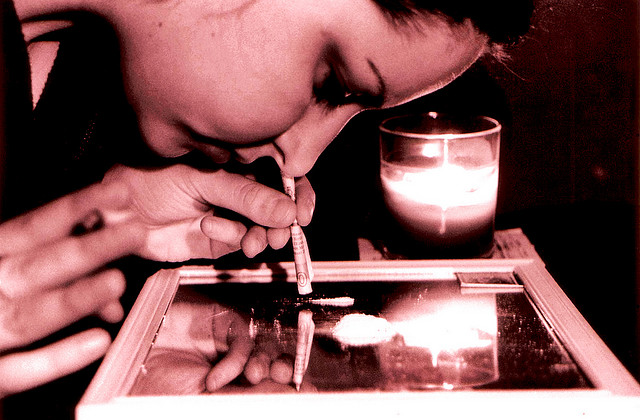
wastewater treatment, constructed wetlands, Cyprus, cocaine, narcotics, reverse osmosis, drugs in water, pharmaceuticals, water pollution Small amounts of cocaine found in treated water supplies in Cyprus

Upon learning that scientists have discovered narcotics in already treated Cypriot waste water, one Cyprus Mail reader asked if the drugs can be recycled. While we think a sense of humor is good medicine, this story also has serious implications.

The paper reports that a recent survey of sewage treatment plants in two cities in Cyprus showed the presence of a motley of drugs including cocaine, benzoylecgonine (a major metabolite of cocaine), norbenzoylecgonine, codeine, norcodeine,  heroin, ketamine, MDMA or ecstasy, methadone, morphine and normophine. This cocktail was then processed by conventional treatment systems which failed to clean the water completely.

Drugs in the water

Scientists have long worried about the rate at which pharmaceuticals are entering and altering the chemical composition of our water streams. This phenomenon has been linked with increasing amounts of estrogen and in the Potomac River in Washington D.C., some fish were showing up with both male and female sexual organs.

Treatment plants in California use reverse osmosis technology to clean wastewater, and then zap it with an ultraviolet light. This is said to be more effective at removing contaminants than archaic wastewater treatment plants, but this technology doesn’t come cheap. In the United States, it can cost up to roughly $15 a month to treat one gallon, and most facilities handle thousands of gallons a day.

A better way to treat wastewater

Constructed wetlands that use naturally occurring wetland plants to filter out contaminants have also proven to be very successful and rely entirely on nature to obtain clean drinking water.

Last year Egypt held a wastewater treatment conference in Cairo in order to hash out new ideas for wastewater treatment given the overwhelming agricultural runoff and other contaminants that have entered the Nile River.

Getting high on cocaine, accidentally?

In the meantime, according to Assistant Professor Despo Fatta-Casinou who talked to Cyprus Mail and led the sewage plant survey, traces of cocaine, codeine, methadone and nor codeine were found in Cyprus’ treated water. The concentrations are fairly low, but Fatta-Casinou warns that longterm exposure could have serious consequences.

We can’t help but wonder what would be found in the trucks of waste hauled out of the Burj Khalifa each day?

image via Andronicusmax via Flickr

Paper Carton Furniture Is No Pulp Fiction

0

"recycled paper furniture"Paper pulp furniture is stronger than it looks.

Bamboo has been praised for several years as the most sustainable material for furniture (due to its quickly renewable nature), with cardboard coming a close second due to its recycled and recyclable form.  At first thought cardboard may not sound very strong, but when you think about the fact that it is used to package heavy items such as couches and refrigerators it begins to get a little more credit.  And it is a short leap from cardboard to recycled paper pulp, so Israeli designers Odelia Lavie and Dan Hochberg took it.

They designed a set of ‘Pulp Furniture’ that includes a coffee table, stools, and a clock (or wall hanging).

How Will Saudi-Driven Carbon Capture Work Under the Durban Climate Agreement?

0

Durban-climate-talks-succeeds-at-endThe Saudis got the CDM funding for carbon capture they have long demanded: how will it work?

In the biggest turn-around since Kyoto was signed by the developed world – other than the US – now the big emitters, (besides America), are five developing countries, who were omitted from being bound by Kyoto, because back in 1995, they were poor developing countries.

Brazil, India, South Africa, Indonesia and China – along with the US – are the BASIC countries driving global emissions, but the Saudis may have brought them into the fold.

First Arab Woman Ever to Win Nobel Peace Prize

0

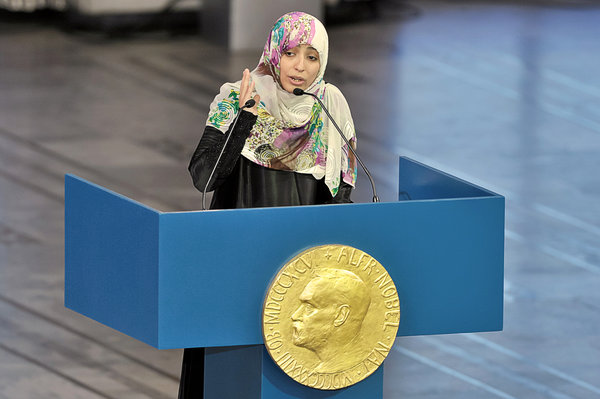
Tawakkol Karman, arab woman nobel prizeTawakkol Karman accepting the Nobel Peace Prize last Saturday in Oslo, Norway. Photo via the NY Times.

Tawakkol Karman, a Yemeni journalist and political activist instrumental in the Arab Spring is the youngest peace prize laureate to accept the prize in a ceremony over the weekend. She is one of three women including Leymah Gbowee and Ellen Johnson Sirleaf to accept the prize this year, and according to reports, the first Arab woman to be honored.

Greenprophet reported on her win in October in which our contributor, Arwa Aburawa wrote, “the Nobel Peace Prize should also remind those who need reminding that Muslim woman can and do play an important role in the transformation of their societies.” It’s a milestone for those committed to advancing women and human rights in the Middle East, rights we know are intertwined with the environment.

Durban Gives 6 Reasons for the Middle East to Celebrate

1

Durban-climate-deal-saves-cdmFunds for mitigation projects and the Carbon Development Mechanism saved in “Hail Mary pass” at climate talks

While many environmentalists are decrying the COP17 climate talks (# COP17FAIL: Climate Change is a One-Size-Fits-All Problem) as being imperfect, I see some real progress hidden in all that bureaucratese.

For MENA (Middle East and North Africa) nations, the best result of the Durban climate talks is the immediate continuation of the Kyoto Accord that binds nearly 40 industrial countries, that was in danger of being “termed out” when it expired in 2012. For the Kyoto Protocol countries, the Kyoto has been given a second commitment period (or a commuted death sentence!)

Along with that second commitment period, the Clean Development Mechanism (CDM) will continue as well.

This has been one of the most important drivers of renewable energy investment in the MENA region. Algeria, Morocco, and Egypt are among the most rapidly advancing nations in the world in adding renewables through the CDM.

# COP17FAIL: Climate Change is a One-Size-Fits-All Problem

0

climate change, global warming, COP 17 fail, Kyoto Protocol, Durban, carbon emissions, 4 degrees CelsiusPost COP 17 FAIL, most experts believe that we are probably looking at a 4°C rise in average global temperatures within the next few decades.

On the face of things, the COP 17 conference in Durban was more successful than Copenhagen or Cancun, but the truth is, nothing has changed. Even though the Kyoto Protocol was extended with a plan to roll out a new protocol by 2015 and put it into effect by 2020, The Economist points out that these protocols will remain useless until such time that meaningful disincentives are put in place to keep big polluters from breaking their carbon-mitigation promises. 

Man Evolved When Elephant Meat Ran Out

0

elephant people hunting
Losing elephant steaks was stressful, but helped shape modern man says new study on the Middle East

Dietary change led to the appearance of modern humans in the Middle East 400,000 years ago, say archeology researchers from Tel Aviv University. During a dig at Qesem “Magic” Cave, a prehistoric site in Israel, the researchers see correlation between the rise of modern man and the decline of eating elephant meat. Imagine what veganism might do to our gene pool?

Jordan Jumps Forward on Energy Development

1

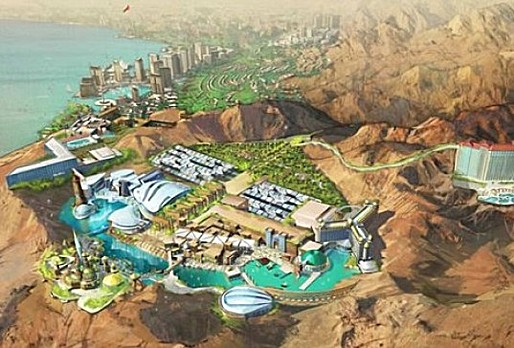
jordan star trek theme parkJordan hits a fork in the energy development road: each route inciting ardent support and dissidence.

Environmental activists united in protest for a second time in six months urging public debate over Jordan’s emerging atomic energy program.  Over two dozen anti-nuclear activists protested near Prime Minister Awn Khasawneh’s Amman offices last Saturday, in vocal reaction to a government policy statement reaffirming Jordan’s commitment to nuclear development.

At the center of the storm is planned construction of a nuclear research plant on the Jordan University of Science and Technology campus. The project is slated to commence in 2013, followed by a second reactor on the Gulf of Aqaba intended to power desalination processes.

Four additional nuclear electric power plants would be brought online by 2035. Activists accuse the Jordan Atomic Energy Commission of broadcasting a “feel-good” view: emphasizing job creation and energy independence yet keeping silent on environmental impacts and public safety concerns made more critical in the aftermath of the Fukushima disaster in Japan.

Critically Endangered Egyptian Tortoise: “Rarer Than Rockin Horse Poo…”

0

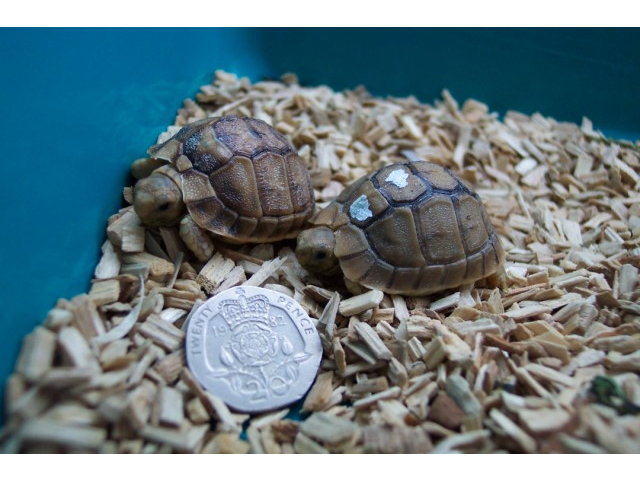
baby tortoise, CITES, IUNC, Wildlife conservation, animal conservation, illegal wildlife trade, Egyptian tortoises, Egypt, LibyaThese tiny Egyptian Tortoises are a hot commodity among illegal wildlife traders. They are also facing extinction in the wild as a result.

Fantapants is a “postaholic member” of a reptile forum in the United Kingdom. In January 2008, when gold star member Jay Kickboxer asked where he could buy an Egyptian Tortoise for his “missus” who likes “small things,” Fantapants answered, “they are rarer than rockin horse poo smeared on to chicken lips.”

He then posted a link to Dean Clackett’s 2006 online advertisement which offered “Egyptian Tortoises (testudo kleinmanni) – North Africa’s smallest tortoise – for only £1,100 (or $1,718 using today’s exchange rate.) Meanwhile, the tortoises, which don’t grow much larger than an orange and once plied North Africa’s harsh Scrub forest and desert en masse, are rarely found in the wild.