Adults who are 21 or older can carry up to 30 grams. This amount applies to personal use within Pittsburgh’s limits. Carrying more could lead to confiscation or legal action. Staying under the limit avoids problems during any public stop.
In the study, the scientists didn’t just test one plant compound at a time. They tested two traditional Chinese medicine compounds together — luteolin (from flowers like honeysuckle and chrysanthemum) and astragaloside IV (from astragalus root, Huang Qi). These plants have been combined in Chinese herbal formulas for centuries to help the body recover from injury and inflammation.
A new collaboration between luxury brand Coach and textile reuse pioneer Bank & Vogue attempts to stitch those two worlds together: high fashion and the global textile waste stream.
Stepping up to democratize the moon is an EU-funded company, Deep Space Energy, which has just raised more than $1 million USD as a seed fund to help it create energy generators on the moon.
Adults who are 21 or older can carry up to 30 grams. This amount applies to personal use within Pittsburgh’s limits. Carrying more could lead to confiscation or legal action. Staying under the limit avoids problems during any public stop.
In the study, the scientists didn’t just test one plant compound at a time. They tested two traditional Chinese medicine compounds together — luteolin (from flowers like honeysuckle and chrysanthemum) and astragaloside IV (from astragalus root, Huang Qi). These plants have been combined in Chinese herbal formulas for centuries to help the body recover from injury and inflammation.
A new collaboration between luxury brand Coach and textile reuse pioneer Bank & Vogue attempts to stitch those two worlds together: high fashion and the global textile waste stream.
Stepping up to democratize the moon is an EU-funded company, Deep Space Energy, which has just raised more than $1 million USD as a seed fund to help it create energy generators on the moon.
Adults who are 21 or older can carry up to 30 grams. This amount applies to personal use within Pittsburgh’s limits. Carrying more could lead to confiscation or legal action. Staying under the limit avoids problems during any public stop.
In the study, the scientists didn’t just test one plant compound at a time. They tested two traditional Chinese medicine compounds together — luteolin (from flowers like honeysuckle and chrysanthemum) and astragaloside IV (from astragalus root, Huang Qi). These plants have been combined in Chinese herbal formulas for centuries to help the body recover from injury and inflammation.
A new collaboration between luxury brand Coach and textile reuse pioneer Bank & Vogue attempts to stitch those two worlds together: high fashion and the global textile waste stream.
Stepping up to democratize the moon is an EU-funded company, Deep Space Energy, which has just raised more than $1 million USD as a seed fund to help it create energy generators on the moon.
Adults who are 21 or older can carry up to 30 grams. This amount applies to personal use within Pittsburgh’s limits. Carrying more could lead to confiscation or legal action. Staying under the limit avoids problems during any public stop.
In the study, the scientists didn’t just test one plant compound at a time. They tested two traditional Chinese medicine compounds together — luteolin (from flowers like honeysuckle and chrysanthemum) and astragaloside IV (from astragalus root, Huang Qi). These plants have been combined in Chinese herbal formulas for centuries to help the body recover from injury and inflammation.
A new collaboration between luxury brand Coach and textile reuse pioneer Bank & Vogue attempts to stitch those two worlds together: high fashion and the global textile waste stream.
Stepping up to democratize the moon is an EU-funded company, Deep Space Energy, which has just raised more than $1 million USD as a seed fund to help it create energy generators on the moon.
Adults who are 21 or older can carry up to 30 grams. This amount applies to personal use within Pittsburgh’s limits. Carrying more could lead to confiscation or legal action. Staying under the limit avoids problems during any public stop.
In the study, the scientists didn’t just test one plant compound at a time. They tested two traditional Chinese medicine compounds together — luteolin (from flowers like honeysuckle and chrysanthemum) and astragaloside IV (from astragalus root, Huang Qi). These plants have been combined in Chinese herbal formulas for centuries to help the body recover from injury and inflammation.
A new collaboration between luxury brand Coach and textile reuse pioneer Bank & Vogue attempts to stitch those two worlds together: high fashion and the global textile waste stream.
Stepping up to democratize the moon is an EU-funded company, Deep Space Energy, which has just raised more than $1 million USD as a seed fund to help it create energy generators on the moon.
Adults who are 21 or older can carry up to 30 grams. This amount applies to personal use within Pittsburgh’s limits. Carrying more could lead to confiscation or legal action. Staying under the limit avoids problems during any public stop.
In the study, the scientists didn’t just test one plant compound at a time. They tested two traditional Chinese medicine compounds together — luteolin (from flowers like honeysuckle and chrysanthemum) and astragaloside IV (from astragalus root, Huang Qi). These plants have been combined in Chinese herbal formulas for centuries to help the body recover from injury and inflammation.
A new collaboration between luxury brand Coach and textile reuse pioneer Bank & Vogue attempts to stitch those two worlds together: high fashion and the global textile waste stream.
Stepping up to democratize the moon is an EU-funded company, Deep Space Energy, which has just raised more than $1 million USD as a seed fund to help it create energy generators on the moon.
Adults who are 21 or older can carry up to 30 grams. This amount applies to personal use within Pittsburgh’s limits. Carrying more could lead to confiscation or legal action. Staying under the limit avoids problems during any public stop.
In the study, the scientists didn’t just test one plant compound at a time. They tested two traditional Chinese medicine compounds together — luteolin (from flowers like honeysuckle and chrysanthemum) and astragaloside IV (from astragalus root, Huang Qi). These plants have been combined in Chinese herbal formulas for centuries to help the body recover from injury and inflammation.
A new collaboration between luxury brand Coach and textile reuse pioneer Bank & Vogue attempts to stitch those two worlds together: high fashion and the global textile waste stream.
Stepping up to democratize the moon is an EU-funded company, Deep Space Energy, which has just raised more than $1 million USD as a seed fund to help it create energy generators on the moon.
Adults who are 21 or older can carry up to 30 grams. This amount applies to personal use within Pittsburgh’s limits. Carrying more could lead to confiscation or legal action. Staying under the limit avoids problems during any public stop.
In the study, the scientists didn’t just test one plant compound at a time. They tested two traditional Chinese medicine compounds together — luteolin (from flowers like honeysuckle and chrysanthemum) and astragaloside IV (from astragalus root, Huang Qi). These plants have been combined in Chinese herbal formulas for centuries to help the body recover from injury and inflammation.
A new collaboration between luxury brand Coach and textile reuse pioneer Bank & Vogue attempts to stitch those two worlds together: high fashion and the global textile waste stream.
Stepping up to democratize the moon is an EU-funded company, Deep Space Energy, which has just raised more than $1 million USD as a seed fund to help it create energy generators on the moon.
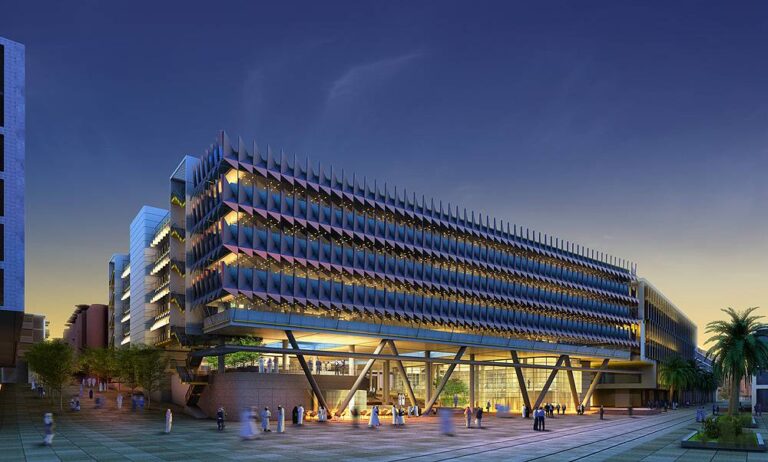
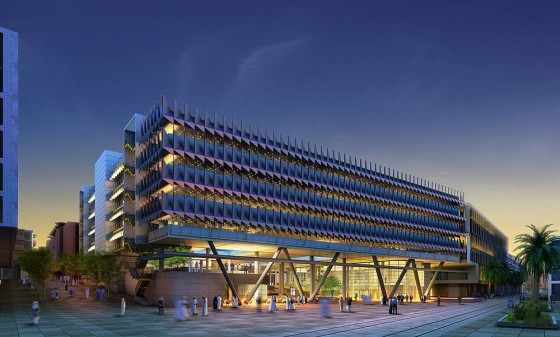
The new Siemens Headquarters in Masdar City will be 65, 617 square feet when completed by the end of this year.
We recently reported that Siemens has teamed up with Masdar to develop a new generation of sand-resistant solar panels that will make more sense for desert environments, and that building the firm’s Middle Eastern headquarters in Masdar City is part of their commitment to see that project through to completion. Now we’re happy to bring you the first round of pictures recently released by designers Sheppard Robson and spotted over on World Architecture News. Construction of the 65, 617 square foot building is well under way and should be complete by the end of 2012.
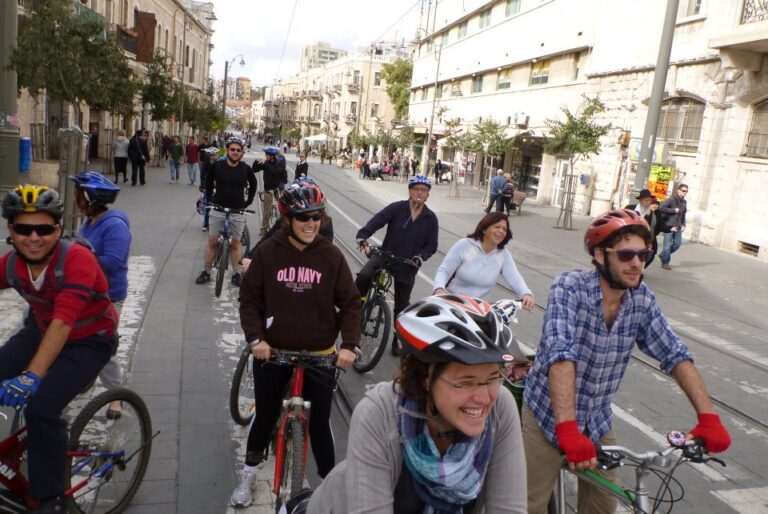
Jerusalem’s light rail may be a great way to encourage the use of public transportation, but why doesn’t it allow bikes on board?
Four months ago the much anticipated Jerusalem light rail was launched after years of construction. (The future of the Tel Aviv light rail has yet to be seen.) The new light rail provides another convenient, comfortable means of public transportation within the city and further eliminates the need for gas-guzzling and carbon emitting personal vehicles. It is not proving convenient for one environmentally significant group of Jerusalem residents, however: the cyclists. Despite the fact that the light rail cars have a device specifically for storing bikes, bicycles are forbidden aboard the Jerusalem light rail.
In just six hours, the deserts receive more energy from the sun than humankind produces in a year, and Desertec is harnessing it.
Right now hundreds of people are gathered at the World Economic Forum in Davos, Switzerland making the same kind of noises about the security of our future as the suits at COP 17 – mostly aimless. In the meantime, real people are doing real work to confront the day-to-day challenges of climate change and energy poverty, including the folks at Desertec. One of the most progressive organizations of our time founded in 2009, the Desertec Industrial Initiative (Dii) is slowly turning the Middle East and North African region into a serious solar powerhouse. Here is a roundup of the first four deals that make our energy future seem significantly more secure.
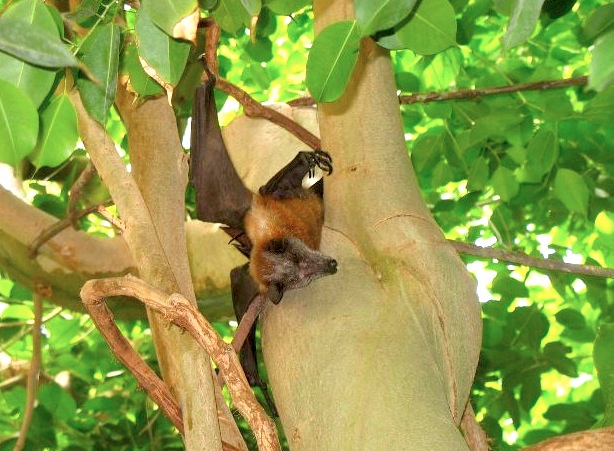
Thousands of fruit bats in Lebanon were sprayed with shotgun and AK-47 bullets over the weekend.
Thousands of fruit bats could have used Batman’s help last weekend when one or more unidentified assailants unleashed a spray of shotgun and AK-47 shells inside a cave in northern Lebanon. This senseless massacre wiped out at least 5,000 of these highly endangered flying mammals who populated the largest colony in the Middle East. Animal Encounter founder Dr. Mounir Abi-Said told The Daily Star that the bats didn’t die right away and that they probably crawled to shelter.
For those times when you can’t use electronic delivery methods and just need those paper products, eco-friendly suppliers like Flyerzone come in handy.
As much as we may try to avoid the need for paper products (or find creative ways to reuse paper), sometimes you just need to get something printed on good old-fashioned paper. Business cards are a classic example (and not everyone can stamp their business cards on the back of used railway tickets in the style of Israeli green business guru Erez Steinberg). So when you do need to create a paper product – such as leaflets, business cards, flyers, stationary, invitations, posters or postcards – it is best to go through an eco-friendly supplier. UK-based printing company Flyerzone fits the (paper) bill. Better news, they deliver around the world.
The Hezbollah is going green with an eco-jihad as a tactic of war against Israel.
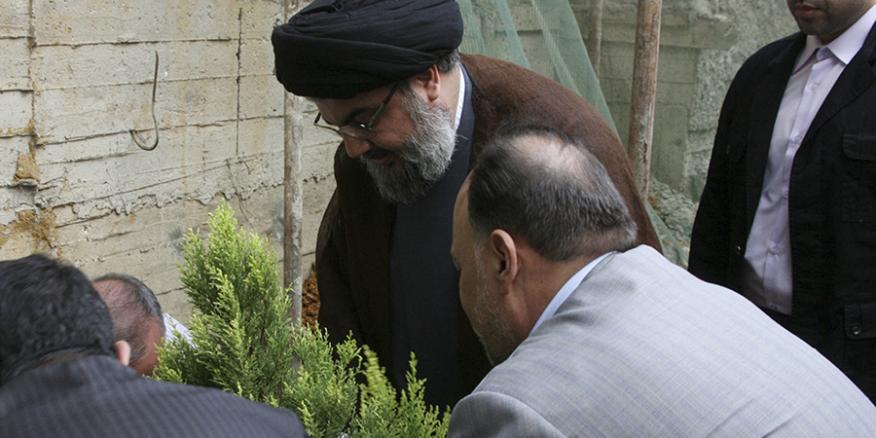
On October 9, 2010, Hezbullah‘s Secretary General, Sayyed Hassan Nasrallah, briefly came out of hiding to mark the end of Hezbullah’s campaign to plant million trees in Lebanon to restore the country’s forests. This campaign was organized by Jihad al-Binaa, Hezbullah’s reconstruction arm, and sponsored by the Lebanese Minister of Agriculture, Hussein Hajj Hassan.
Hezbollah is a Shiite Muslim political party and militant group based in Lebanon, where its extensive security apparatus, political organization, and social services network fostered its reputation as “a state within a state.” Founded in the chaos of the fifteen-year Lebanese Civil War, the Iran-backed group is driven by its opposition to Israel and its resistance to Western influence in the Middle East.
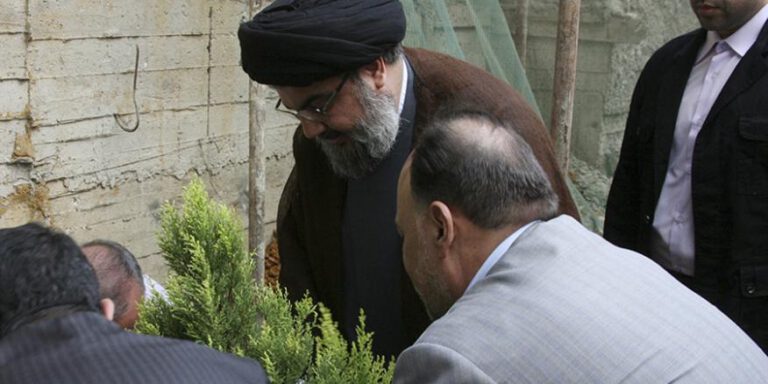
With a shovel on his hand, Hassan Nasrallah was shown on Hezbullah’s al-Manar television station digging a hole, planting and watering a small tree outside his home, which was destroyed by air raids during the July 2006 War. Hassan Nasrallah, who had been last seen in public in July 2008, was accompanied by the Lebanese Minister of Agriculture for the ceremony.
Nasrallah gave a speech at the event in which he praised Jihad al-Binaa for its role in organizing this campaign.
He said that “this is an ancient Jihad for Jihad Al Binaa. However and praise be to Allah Al Mighty it was an ascending jihad. Perhaps the only period of time in which the agricultural and tree-planting side retreated was in 2006 when Jihad Al Binaa was occupied with a greater priority – namely facing the repercussions of July War in 2006. This year the effort was advanced and made greater through the advertisement and the execution of the million tree campaign.”
Nasrallah plants a tree near his home
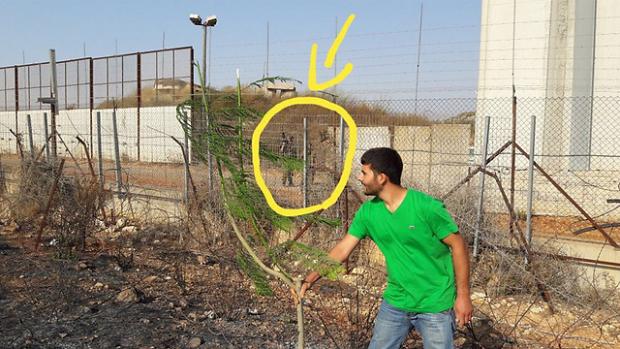
Terrorists as treehuggers or a cynical move to block Hezbollah from being seen by UN forces as they are south Lebanon
However, Nasrallah said that planting trees should not be organized and implemented only by Jihad al-Binaa, but “we must deal with it as an important great national issue which needs mustering all efforts. Hence was the cooperation between the Ministry of Agriculture in Lebanon, the various municipalities, the youths’ societies and others.”
He added that “We, Lebanese. Always extol the green Lebanon. Of course this will soon be a thing of the past.”
According to Nasrallah, green Lebanon is not going to last much longer due to desertification, rampant building and environmental neglect.
Another reason for that, according to Nasrallah’s speech, is that the trees have a very significant role as one of Lebanon’s natural defensive characteristic.
In this context, he blamed Israel for setting trees on fire, shelling and destroying trees within the territories occupied by her in south Lebanon and the Biqa’ between the years 1982 – 2000. Also during the July 2006 War, Israel shelled many forests without any reason other than destroying one of Lebanon’s natural defensive characteristics.
Therefore, Nasrallah urged all Lebanese to follow his example and plant trees outside their homes. Nasrallah gave religious justifications to his plea by citing Islamic traditions and hadiths.
He said that “afforestation is part of Lebanese national security”, since “Lebanon Protects the tree so that it will protect Lebanon.”
The Planting Activities of Jihad al-Binaa
This ceremony marked the end of Jihad al-Binaa’s campaign to plant one million trees throughout Lebanon during the year 2010. The campaign would not be possible without the help of Syria. Its Ministry of Agriculture donated more than 800,000 trees for the project. The campaign focused on reforesting green areas burned during the July 2006 War. About 290,000 of the trees were planted in south Lebanon.
Jihad al-Binaa’s General Manager, Architect Muhammad Hajj, said a few days before the end of the campaign that “throughout 18 years, we have planted around 7,300,000 trees. The average increases yearly.”
He stressed that during the past few years, Jihad al-Binaa had been successfully planting one million trees every year and the “one million tree campaign” in 2010 just emphasized this frame of work. According to him, in 2010, the tree plantings involved cooperation with around 4,700 groups throughout Lebanon including community groups, municipalities, organizations, farmers, associations and scout groups. This campaign is expected to continue to be conducted on a yearly basis, while each year a certain region will be prioritized.
Architect Muhammad Hajj further said that the aims of the 2010 one million tree campaign are manifold: “its major aim is to enhance the environment and fight desertification, which has become a phenomenon in Lebanon due to the fires, cutting trees and other reasons. Therefore, this campaign pours into recovering Lebanon’s green cover.”
However, this project had also other aims including education of the people concerning the importance of the land, of reconstruction, of recovering greenery and of resistance. Architect Muhammad Hajj mentioned that “the Holy Qur’an focused on the importance of reconstruction and agricultural works”. But, according to him, the most important thing is the resistance aspect of the trees, since they have served as shelter for thousands of Hezbullah fighters.
Architect Muhammad Hajj added that there have been efforts to make the Dahiyah quarter in Beirut green along with the process of its continued reconstruction following the damages that it suffered during the July 2006 War. These efforts are managed by Jihad al-Binaa in cooperation with the municipalities.
He said that “the municipalities own few lands in the suburbs, and these are rather used for public services like building schools and organizations. Therefore, they work on planting small fields instead, and plant greenery on the sides of the highways, roads, and sidewalks. Due to that, one of the ideas the municipalities consider is to plant green field on the buildings’ roofs as well”.
Jihad al-Binaa’s Environmental Activities
Nasrallah’s speech as well as the interview conducted with Jihad al-Binaa’s General Manager, Architect Muhammad Hajj, shed light on the environmental activities of Jihad al-Binaa, which began already in the late 1980s and have been going on uninterruptedly ever since, except for the July 2006 War.
Jihad al-Binaa (Holy Reconstruction Organ) is an organ within Hezbullah which provides support services to its members, new recruits, and supporters. These services range from medical care to financial aid, housing, and public utilities. It is divided into 8 committees. Three of these committees are engaged in environmental or environmental-related issues.
The Water and Power Resources Committees has fixed over one hundred water and power stations from the Biqa’ to the South. The Environmental Committee has been active in studying and surveying polluted areas, while the Agricultural Committee has established agricultural cooperatives selling insecticides, seeds, and fertilizers to farmers at prices lower than the market price. The work of all committees is supervised by a technical and administrative committee, which is part of Jihad al-Binaa, whose main aim is to study and provide help for impoverished regions of Lebanon.
Jihad al-Binaa’s environmental activity began in the late 1980s, when Hezbullah seized control of the Shi’ite Dahiyah quarter in Beirut after defeating the Amal faction. Then, the Hezbullah leaders found themselves responsible for finding immediate solutions for the social service crisis faced by about half million inhabitants of the quarter which was about to exacerbate even more because many families, who were displaced by the fierce fighting between the Shi’ite factions in the south, continued to find refuge there.
During that period, which overlapped General Michel Aoun’s administration (1988 – 1990), the Dahiyah was almost completely cut off from water and electricity services due to neglect and fighting. As a result, about 40 percent of the water from Ayn al-Dilbin, the Dahiyah’s major source of drinking water, had been lost and its purity had been gravely compromised. In an attempt to supply the ever-growing populace, water authorities dug artesian wells but this ultimately resulted in contamination of the whole water network.
On this background, Hezbollah decided to first deal with the severe public health hazards threatening the Dahiyah, i.e., the piling garbage and the short water and electricity supply, especially in the absence of any other effective local or central authorities. Already in 1988, it started to build daily garbage collection service to remove the mountains of waste that had built up over the years.
This mechanism replaced a basic governmental function in several municipalities. This service operated five years until the Lebanese Sanitation Department started to get back on its feet. Yet, Hezbullah is still operating its daily garbage collection service and treats it with insecticides to supplement the government’s service.
In addition, Jihad al-Binaa was engaged in the installation of drinking fountains and decent toilets at public school in the Dahiyah as well as in supplying its inhabitants with emergency water delivery and electricity. With help from the Iranian government, Jihad al-Binaa constructed public water containers, provided cisterns and employed several drivers to transport water to the suburbs from nearby sources, in addition to extending the water network by some 15,000 meters of water pipes.
It built 4,000-litre water reservoirs in each district of the southern suburbs and filling each of them five times a day from continuously circulating tanker trucks. Generators mounted on trucks also made regular rounds from building to building to provide electricity to pump water from private cisterns. For that aim, Jihad al-Binaa has been purchasing the portable water from the Beirut Water Board on a daily basis and the cistern fills up from the main reservoir of Bourj Abi Haidar in Beirut. To this date, the inhabitants of the Dahiyah are still dependent on Hezbullah to provide them with drinking water.
In order to solve the problem of regular supply of water for the residents of the Dahiyah, Jihad al-Binaa presented at the beginning of the 2000s a construction plan to build the Bisri Dam project on the Awali River, which would have the capacity of collecting 600,000 cubic meters of water, from which it would draw 120,000 cubic meters for the regular water supply of the Dahiyah’s residents.
The construction of the dam has not been finalized yet. On April 24, 2010, the Lebanese cabinet finally tasked the Council for Development and Reconstruction with completing the Bisri Dam Project despite its location near a major seismic fault line.
Jihad al-Binaa has also been engaged in environmental activities in rural areas in south Lebanon and in the Biqa’. In these areas, Jihad al-Binaa has been focused on agricultural projects including training, laboratories and forestation projects. Indeed, already in 1992, Jihad al-Binaa started the “Good Tree” Project, which has been conducted annually since then. The project has involved planting trees in the different Lebanese regions.
As of 2003, Jihad al-Binaa was planting some 40,000 trees annually in each reforestation campaign.
It developed an agricultural project in the Biqa’, which emphasized farming as a religious duty that met the needs of the Muslim people. Between 1998 and 2002, Jihad al-Binaa built or renovated seven agricultural center cooperatives.
As of 2004, Jihad al-Binaa served about 5,000 farmers across Lebanon, offering pesticides and fertilizers at cost as well as a free extension service. Its veterinarians held yearly vaccinations for cows, goats and sheep, and keep tabs on fish as well. Jihad al-Binaa is also engaged with organic farming to reduce environmental stress and help meet a new domestic demand for healthy food. It used to distribute every year about half a million forest and fruit-bearing seedlings in order to help combat desertification and prevent erosion.
Summary
From the late 1980s, Hezbullah has shown itself to be really engaged in environmental activities in the Dahiyah, south Lebanon and the Biqa’, regions populated heavily by Shi’ites, and also elsewhere throughout Lebanon. These environmental activities have included public health, agriculture, and organic farming.
In the absence of governmental, regional or local and municipal authorities, Hezbullah had first conducted these environmental activities without any competition and, thus, succeeded to win the Shi’ite Lebanese allegiance and loyalty, which later on would be translated into political power in the Lebanese parliament.
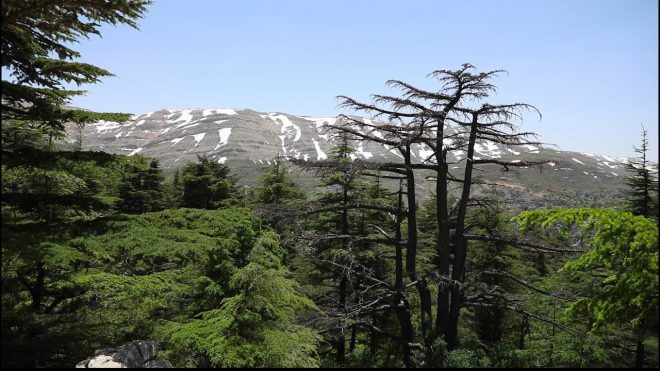
Alongside the above mentioned environmental activities, Hezbullah has also been engaged in planting trees. Indeed, trees are very important to the Lebanese. Trees, and especially cedar trees, have been connected with Lebanon from ancient times.
Climate report shows iconic cedars of Lebanon in distress
The cedar tree is the symbol of modern Lebanon and is shown on its flag. Lebanon without trees will not be the same country anymore. Hezbullah, as a Lebanese Islamic organization, has really worked hard on reforestation of the parts of Lebanon which have suffered deforestation and combating desertification is one of the stated goals of Jihad al-Binaa.
Green as a tactic of war
Yet, according to Hezbullah’s ideology, the greening of Lebanon has not been done for the sake of fighting desertification and afforestation of the country alone, but mainly as means of fighting against Israel.
The trees are a main strategic natural element in the struggle of Hezbullah against Israel. The trees have been serving as a place of refuge and hiding for Hezbullah’s fighters. The forests’ canopy used to hide ammunition, rocket launchers and other fighting means of Hezbullah. Thus, the trees have been an inseparable part of the strategy of Hezbullah’s ongoing struggle against Israel.
Therefore, from Hezbullah point of view, planting millions of trees in Lebanon is not only important from an environmental point of view, but it is also important for ensuring its present and future role, as it used to be in the past, as a vital strategic natural asset in the struggle against Israel.
Thus, the current plantation of trees and reforestation of south Lebanon, among other regions, might also serve from Hezbullah point of view as a preparation for the next cycle of fighting against Israel, when, as Nasrallah put it, “Lebanon protects the tree so that it will protect Lebanon.”
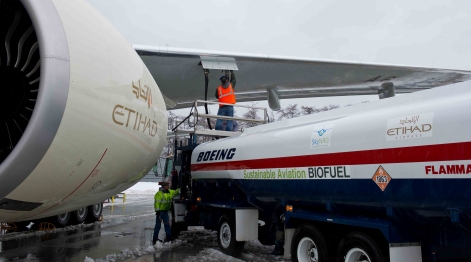
Etihad Airways operates first biofuel powered delivery flight with Boeing and Sky Energy
Etihad Airways from the United Arab Emirates scores a double play in the Green World Series: Becoming both the first airline to fly on biofuel directly from the factory and the first biofuel-flying Gulf carrier. Not yet on its fuel-efficient Dreamliners, Etihad’s new Boeing 777-300ER traveled from its Seattle birthplace to its home base at Abu Dhabi International Airport this past Wednesday.
Torresol – a joint venture between Spain’s SENER and Abu Dhabi’s Masdar, plans to invest up to $5 billion building 6 Giga Watts of concentrated solar-thermal power (CSP) projects over the next three years in the deserts of the Middle East North Africa region, Spain, and the US. Although the sites are not yet named, at least one of the plants will be in Abu Dhabi.
Initially developed for Middle East desert conditions by the Israeli engineer Luz, and resurrected (Luz Rises Again as BrightSource) as BrightSource, which has huge projects in the US now, this kind of solar is now comparatively more expensive than photovoltaic solar, for the first time.
Solar power deal in Tunisia will power 700,000 European homes by 2016.
Wow, the Desertec vision is barreling into realization! A clean energy future where the world’s deserts supply huge amounts of solar energy to the whole of humankind is truly becoming reality. Now the fourth Desertec project, by far the largest-ever solar plant in the world – for 2,000 MW of solar power – is to be built in Tunisia. The plant will produce twice the amount of power of an average nuclear power plant.
How huge will this solar project be? 2,000 MW (2 GW) is six times the size of the largest solar CSP project ever built worldwide at 354 MW, and over four times larger than the biggest power plant of any type in Tunisia, a 471 MW gas power plant. 1,000 megawatts (MW) equals 1 gigawatt (GW).
Greening your wedding is simple, chic and easy to do if you follow just a few of these suggestions.
Eco-romantics about to tie the knot pay attention: Green Prophet has the scoop on making your day of love as green as possible without compromising on romance and style. From mass weddings in the Middle East to intimate ceremonies in your own backyard, here are 7 ways to leave a smaller carbon footprint when you walk down the aisle together.
If you are exchanging rings, consider giving heirloom jewels or ethically mined and harvested diamonds, gold, gems and platinum.
Wear vintage gowns and suits or those made from eco-fabrics.
Use locally grown, pesticide free wildflowers and natural materials to decorate.
Serve food and beverages made from organic, locally harvested produce and vineyards.
If the wedding is to be indoors, rent out a building that is built to greener standards, or one that donates a percentage of profits to environmental causes. Consider a museum, an art gallery, botanical garden, historical home or cultural center for the reception.
As much as possible, consider how you can minimize the power requirements of your wedding by maximizing the use of natural lighting and cooling/heating options.
Instead of gifts, have your guests donate money to environmental or other causes that are important to the bride and groom.
If you are going to give your guests any party favors, make them eco-conscious. Candles made from soy, small planted seedlings, chocolate or other tasty morsel provided by a vendor that engages in conscious commerce.
Related: to find fun fashion follow Azazie The Leading fashion bridal party store
We promised you seven, but we gave you eight. That’s because eco-weddings are about giving back more to your niche in this world. Going green is chic, fashionable, timely and likely to make you and your guests remember your wedding as something different from the norm. Give more in the ways that matter, and less in the ways that are wasteful.
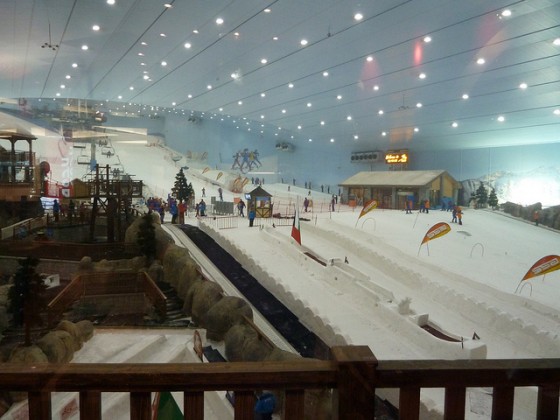
Barcelona hopes to have an indoor ski slope as nice as Ski Dubai (pictured), but carbon neutral.
Barcelona is not as hot as places like Abu Dhabi and Dubai, which now has an indoor snow ski slope. But they appear to be envious of Dubai’s very ungreen approach to denying that the country is a hot desert. Barcelona, home to art projects by Antoni Gaudi, Pablo Picasso, is also not the greenest city the world, even though it now is getting greener. Now Barcelona a Spanish, Catalonian coastal city with average winter temperatures ranging around 15 degrees Celsius is planning to build an indoor snow ski slope, similar to the one in Dubai. It will be called Snow World. And more than that, the ski slope will be a carbon neutral one, according to the developers of Dubai’s Ski World, who plan to create the same thing in Barcelona as well. But the one in Spain will be carbon neutral.
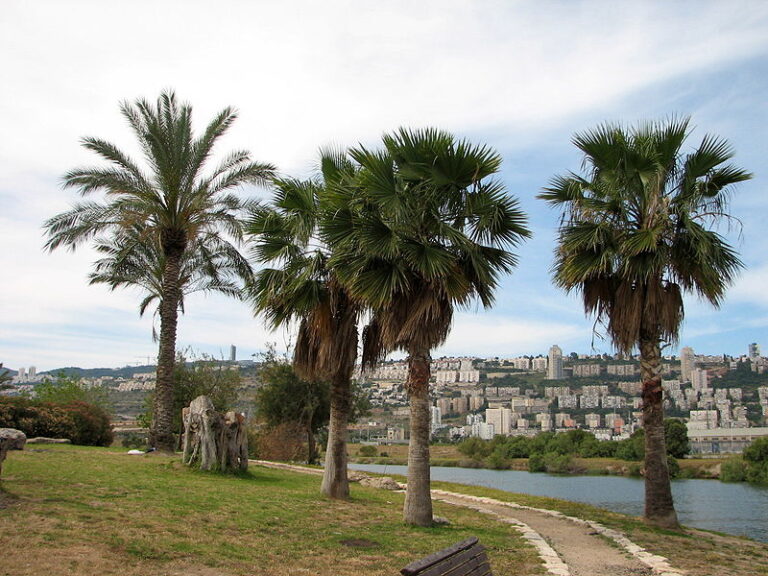
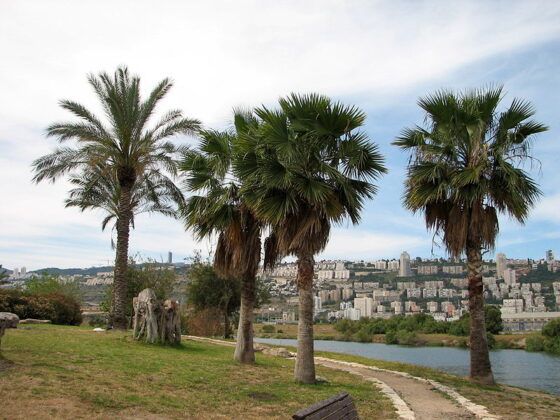
Putting political differences aside, Israelis and Palestinians unite to restore a section of the Kishon River – one of the region’s most polluted.
Yet another joint Israeli and the Palestinian Authority eco-project challenges the mainstream notion that it’s all war and friction between Jews and Arabs. Despite a recent accusation by the French Parliament that Israel is perpetrating water apartheid against the Palestinians, this new initiative demonstrates the willingness of the two people to cooperate. Ynet News reports that the Gilboa Council and Jenin are creating two restorative eco-parks on either side of the historically polluted Kishon River “in hopes that one day they will become one,” says Gilboa Council Head Daniel Atar.
A brilliant new online farming system in Egypt allows city dwellers to become reacquainted with their agrarian roots without leaving their urban comfort zone.
Egyptian urbanites who have a desire to grow their own food but lack the farming skills now have access to a brilliant new remote farming system that has both an online and real world component. Inspired by FarmVille on Facebook, online gaming, and other remote farming projects around the world, eZra3 (which means grow) allows users to select their own crops and monitor their actual growth via a web interface. And they get to eat the healthy yields! Ashraf Al Shafaki designed this modern, low risk virtual farming program in order to address a variety of environmental and social ills in Egypt, including food insecurity, soil contamination, and global warming.
Crowdfarming
According to the eZra3 website, there are just over 9 million acres of arable land in Egypt, 20 million internet users, 7 million Facebook users, and 1 million FarmVille users. If just a small percentage of this population contributes to the eZra3 crowdfarming project, food insecurity could easily be a thing of the past.
eZra3 is committed to organic farming principles, which means that there will be no chemical fertilizers or pesticides, no GMOs, and no tillage. On the other hand, eZra3 farms will use companion planting, biological pest control, succession planting, and ensure a healthy diversity of plants and animals.
Gaming and beyond
Depending on each participant’s farming experience, there are four different solutions. Participants can get their green thumbs wet by playing the training game that “simulates the growing of crops in a real farm using real crop prices, fertilizer prices, from-seed-to-harvest durations and crop yields.”
Once they have a good sense of what farming entails (without losing money from failed crops), users can progress to the next stage by remotely managing their own small plot with dedicated online guidance every step of the way.
“eZra3 provides you with full information on what types of crops you can grow, when to grow them, prices of fertilizers and various agricultural inputs including labor and all you have to do is make decisions based on the info provided to you and on your personal preferences,” the website notes.
After enjoying the fruit of this labor, farmers might feel confident to tackle the next phase of actually owning their own farm. Again, eZra3 will facilitate the process and minimize risk by helping with the plot’s design and providing computerized estimates of how each farm will perform depending on its particular conditions.
The urban comfort zone
This system empowers city dwellers and online gamers who have lost touch with their agrarian roots to embrace a healthier lifestyle without leaving their urban comfort zone.
And they will be able to grow more than just cucumbers and tomatoes. eZra3’s farming expertise extends to 52 crops, 28 perennial trees, and 11 animals.
In addition to creating healthier food, crowd farming has the potential to reduce unemployment, create greater national self-sufficiency, and restore the Egyptian people’s sovereignty. It has been exactly one year since Egypt ousted Hosni Mubarak. And despite continued abuse from on high, clever innovations such as these demonstrate that the people are still strong.
Better Place Renault Fluence electric cars hit the road on way to customers
After more than four years in the making, media reports and hype, visits to the Better Place Education and Test Drive Center and final delivery prices, Better Place Renault Fluence ZE electric cars are finally on their way to purchasers in Israel. In a high profile ceremony on Sunday, January 22, which we were invited to but could not make because of the rain, Better Place launched its first 100 cars sent off to customers from the Better Place Israel headquarters near Tel Aviv. The cars, all Renault Fluences that had been specially built for running exclusively on electricity were sent off in a ceremony that included Shai Agassi, Better Place USA CEO, Idan Ofer Chairman of the Board, and Moshe Kaplansky, CEO for Better Place Israel.
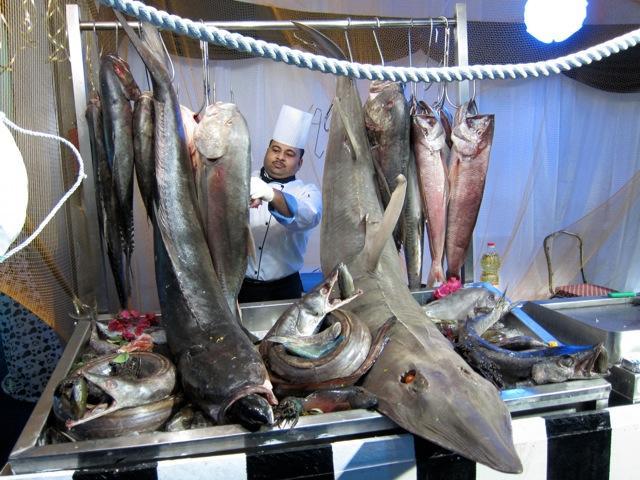
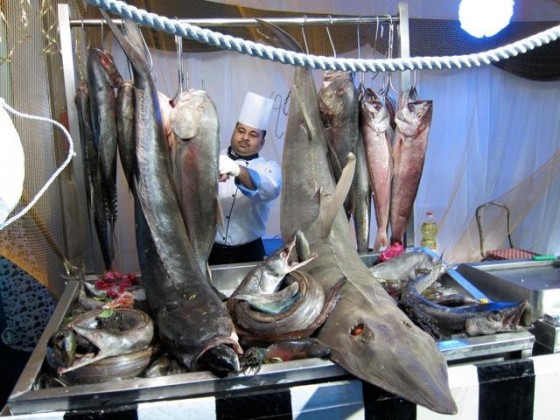
Tourists offended by this gruesome display of endangered species reported the Picalbatros restaurant in Hurghada, Egypt to the local conservation agency.
Tourists who dine at the Pickalbatros restaurant in Hurghada might be greeted with a gruesome scene: sharks, rays, and parrot fish hanging from hooks, Egypt Independent reports. While some people have turned a blind eye, on three different occasions tourists disturbed by this dark display contacted the Hurghada Environmental Protection Agency (HEPCA) (who is largely credited with the establishment of Egypt’s first dolphin sanctuary) to lodge a formal complaint. The agency in turn is pursuing legal action against the food chain.







 Greening your wedding is simple, chic and easy to do if you follow just a few of these suggestions.
 Related: to find fun fashion follow