Home Blog Page 345

CupsTelAviv: All You Can Drink Coffee for Under $50 a Month

CupsTelAviv, coffee, all you can drink, caffeine, health, environment, Tel Aviv, Israel
All you can drink coffee for $50 a month at CupsTelAviv.

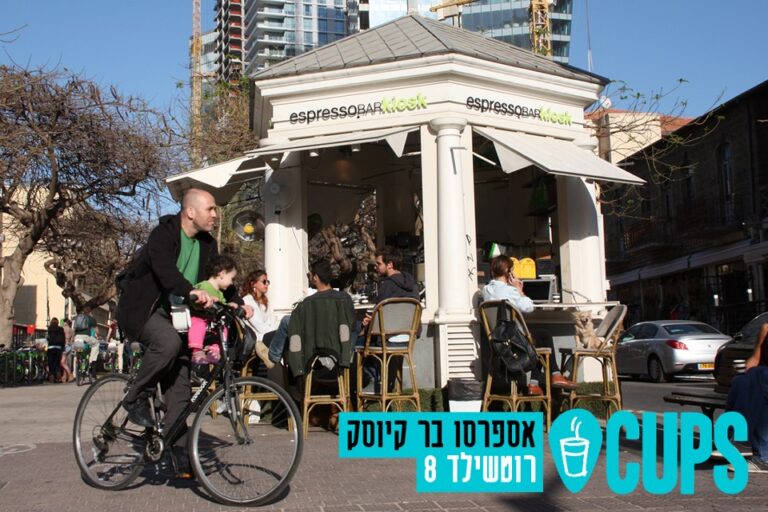
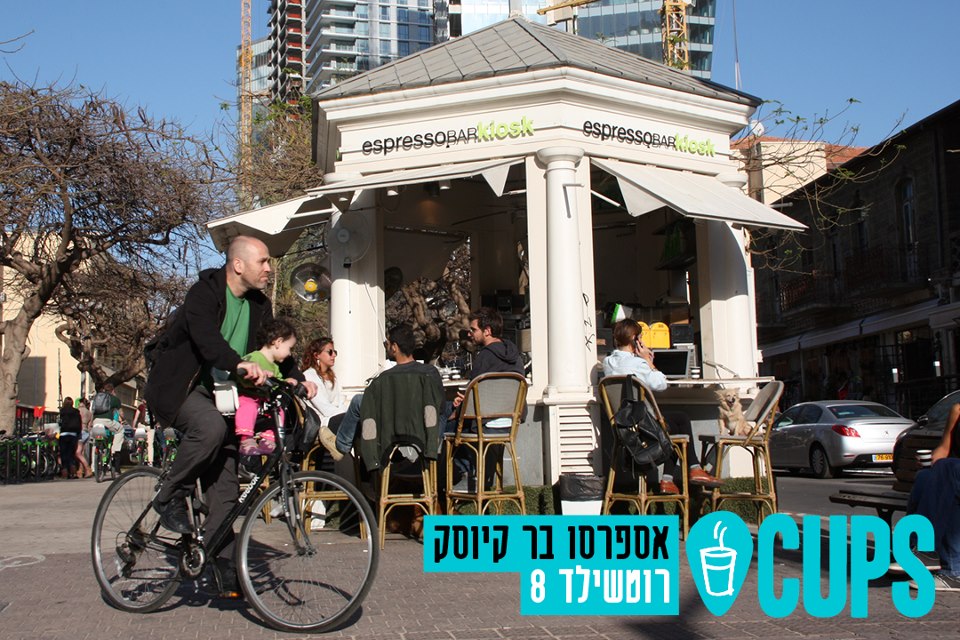
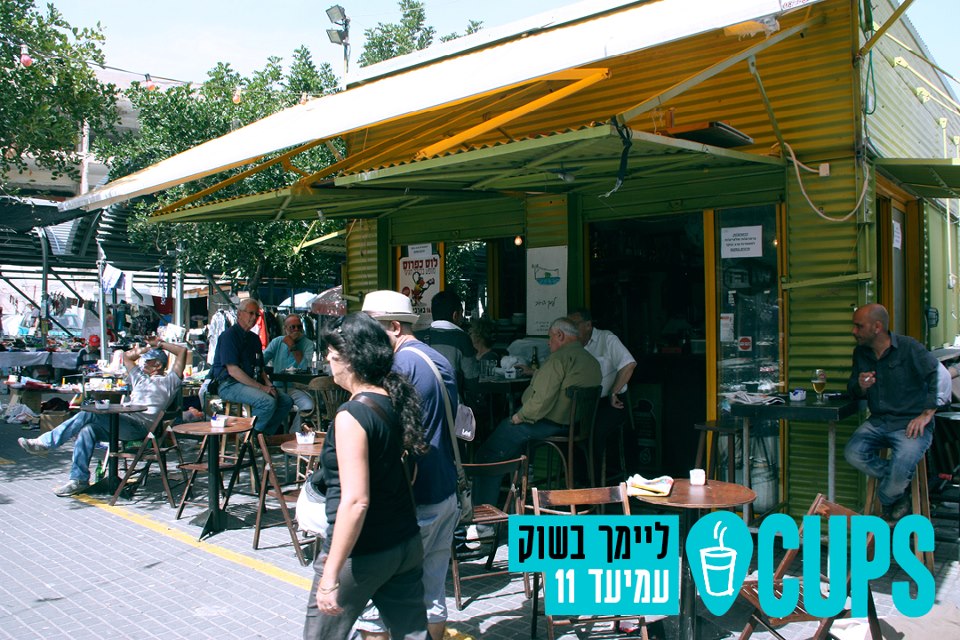
Where in the world can you drink as much coffee as you like for less than $50 a month? In Tel Aviv, Israel, it turns out. CupsTelAviv has convinced 40 independent businesses in what is arguably the country’s most caffeinated city to allow members of their program to drink as many cups of coffee as they want in a month for just NIS169 ($45). Albeit great for coffee drinkers and businesses, we have to wonder how good this buffet business model is for public health and the environment?

Cappuccinos, lattes, vanilla-flavored goop, or just straight up espresso are all fair game for this new start up, which CupsTelAviv (site is no longer working since Oct. 2020)  CEO Alon Ezer says it is the only loyalty program they know of that goes across a specific chain.

“As far as I know,” he says “this is the only such loyalty program anywhere in the world, and it holds a great promise for not only coffee shops, but for brick-and-mortar retailers of all kinds.”

Back when I was a devoted coffee drinker who couldn’t get past 10am without some serious caffeine coursing through my veins, I used to spend at least $8 a day on a couple of cups of coffee from various venders throughout the country. Multiply eight by 30, and that’s a lot of beans so this Android and iPhone app-driven program would have been great for me.

Ezer insists it’s good for businesses too.
CupsTelAviv, coffee, all you can drink, caffeine, health, environment, Tel Aviv, Israel

Customers who come in to claim their free coffee are likely to purchase baked goods and other products as well, so the thinking goes, although this assumption underestimates how far a poor hippie will go to stretch what little money they have – and there are loads of those in Tel Aviv.

But too much of a good thing is never great environmentally, particularly if little attention is paid to the source of the coffee offered under this artificially affordable scheme.

Without true dedication to finding fair trade, shade grown coffee, heavy drinkers of this enticing elixir run the risk of supporting businesses that clear large native forests to produce sun-grown coffee. This is not only devastating for biodiversity, but also destroys the carbon sinks so crucial to averting the worst of climate change.

Too much coffee isn’t great for health either.

“The caffeine in coffee is a vaso-dilator; it encourages blood out of the circulatory system into the body tissues and it is this that makes it a stimulant,” we wrote in an earlier post. “The veins then re-constrict which leaves too much blood in the tissues, straining the blood system. The vascular system then needs to work that much harder to avoid edema (often seen as swelling of the ankles).”

While some people are trying to cut back their coffee consumption, Israelis are now encouraged to drink it full steam ahead.
Turkey Joins the Solar Wagon With a Massive Rooftop Array

Mercan Mermer, Turkey, Photovoltaic, Solar, clean tech, renewable energy, alternative energy, clean energy, Solimpeks, Middle EastMuch ado has been made of the great solarization of Gulf countries such as Saudi Arabia and Abu Dhabi, but Turkey has made some sun-powered progress too. And the most recent development in the south is also the country’s largest.

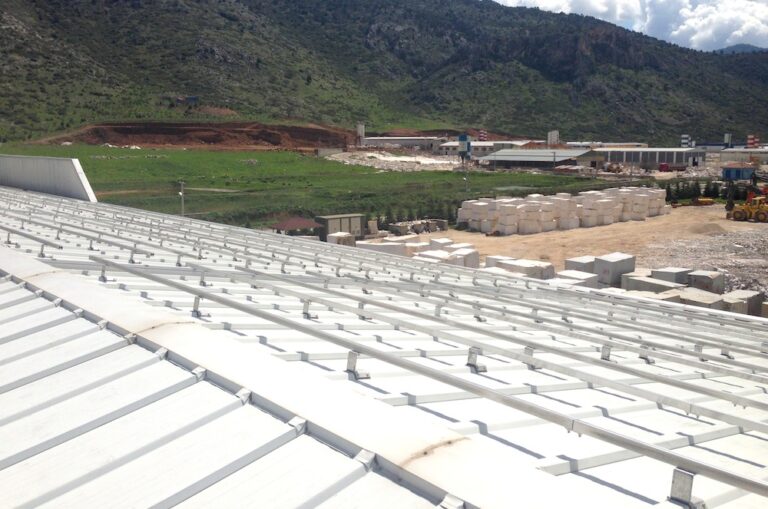
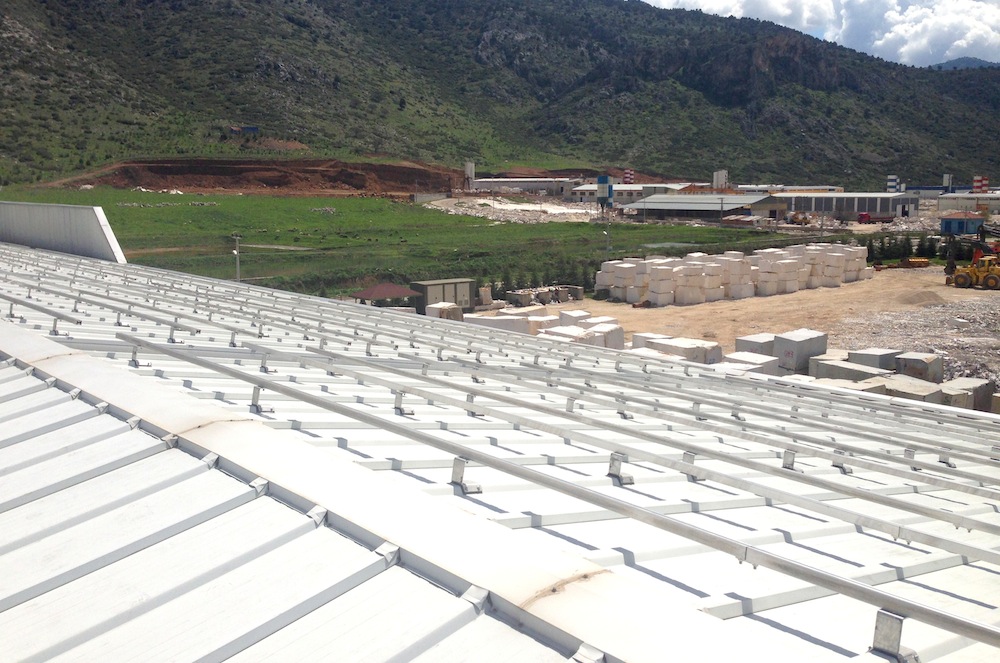
Solimpeks is in the process of installing a 500kWp photovoltaic plant on Mercan Mermer’s roof. A well-established stone manufacturing plant in Burdur, the company commissioned the rooftop array in order to reduce its operating costs. All prepped with mounting sets, the roof awaits 2,120 Panasonic HIT N235 modules, which are expected to produce a total of 900,000 kWh of clean energy every year.

Abu Dhabi Dump to Power 100 MW Green Energy Incinerator

1

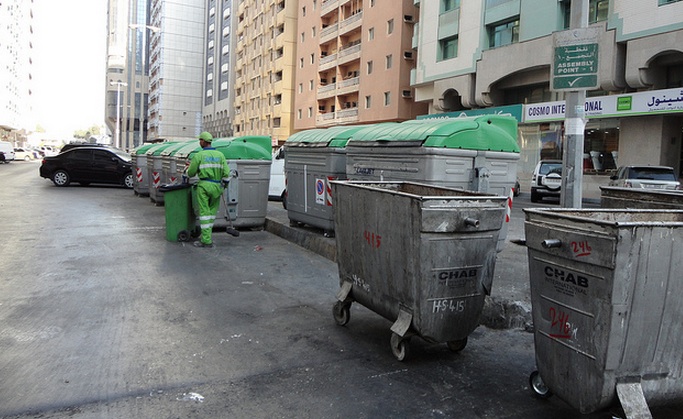
abu dhabi waste bin, garbage
About half of Abu Dhabi’s trash will ‘burn’ into green electricity in new $850 million power plant.

Maybe you saw the wonderful movie, Salmon Fishing in the Yemen. Or maybe you’d read stories on Green Prophet about Masdar, or Shams, the world’s largest CSP plant in Abu Dhabi. Arab nations and their economies are certainly not all about oil and natural gas these days, and in fact these nations are becoming leaders in amazing projects in renewable energy. Now in the news: Abu Dhabi in the United Arab Emirates has just announced the creation of an $850 million incinerator plant which will take garbage from the city and “burn” it into green fuel. 

Isis Nile Cruise Ship Spills Diesel Into Egypt’s River, Contaminating Lake

0
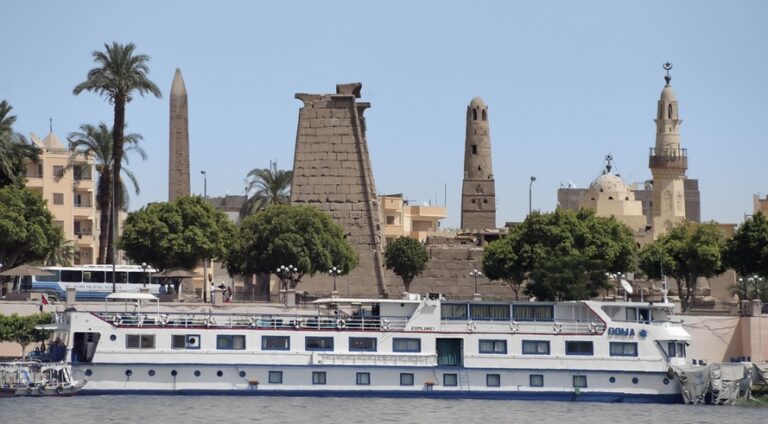
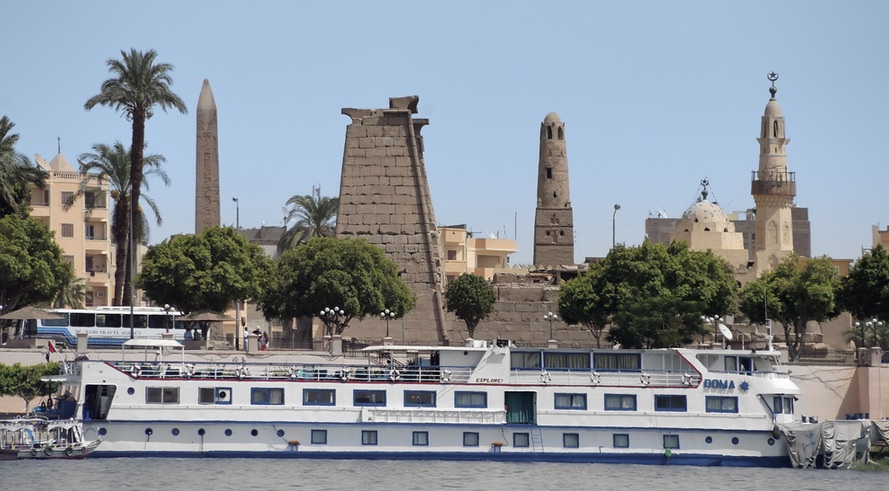
nile cruise, oil spill in Egypt
An Egypt Nile cruise is synonymous with. A trip to Cairo and Egypt. You can’t say you have been to Egypt without floating down the Nile.

Egypt is not a country that is fond of reporting oil spills – whether they occur on the Red Sea, in the Suez Canal or the Nile. But it has managed to start clean up a worrying diesel spill into the Nile River, a spill which has leaked onto the shores of Lake Nasser, China.org is reporting. The area is near the High Dam in Aswan region, and the Nile waters the breadbasket of Egypt.

Despite much of the government being crippled by ongoing conflicts and protests, the Minister of State for Environmental Affairs, Khaled Fahmy, reportedly ordered that the area be surveyed and the oil contained. Currently there are two marine vessels working to clean up the lake. That which didn’t evaporate is being sponged up, the groups and marine units working on the spill reported to local media.

Legal action will be taken against the cruise ship, the Environment Ministry promised.

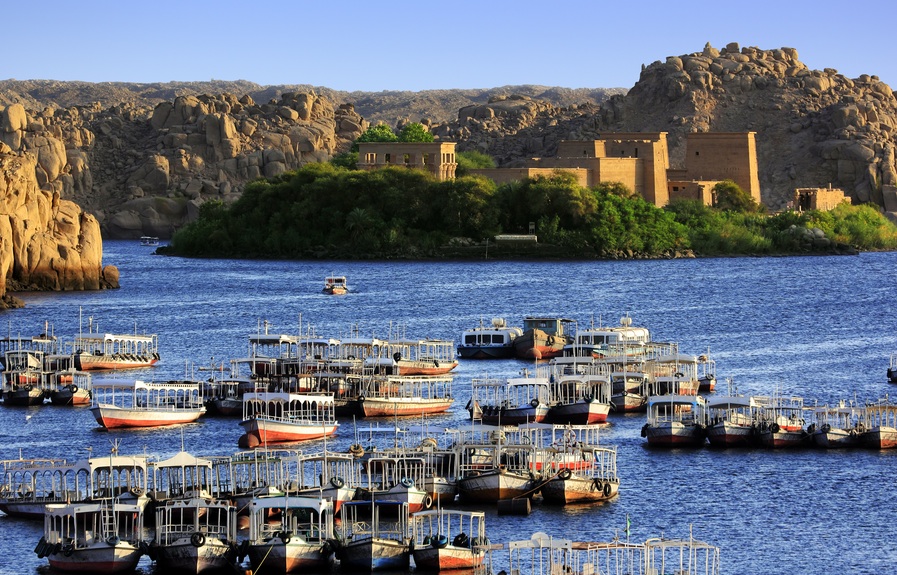
Egypt. Agilkia Island (or Agilika Island) in Lake Nasser. Philae Temple of Isis seen from the Aswan Low Dam
Lake Nasser, Egypt. What you see is also Agilkia Island (or Agilika Island) in Lake Nasser, with the the Philae Temple of Isis seen from the Aswan Low Dam.

Just this past October oil spills were being detected in the Nile by cruise ships and local facilities dumping waste there. It was found contaminating the Nile in Aswan region, which then flowed onto  Luxor, Qena, Sohag and Assuit governorates.

A special unit has been formed to fight Nile River pollution and tourist ships are starting to be followed and inspected.

Update August, 2020: an oil tanker on the shore of Yemen can burst at any moment if international help does not step in.

Jordan Valley Boasts the Lowest Museum on Earth

0

dead sea Museum Jordan at the Lowest Point on Earth

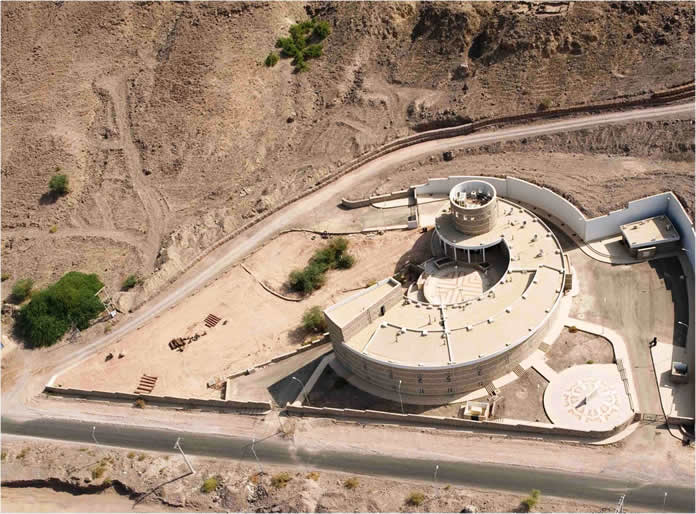
Built at the lowest elevation on earth, and less than a year old, this jewel-box of a museum showcases the Dead Sea region’s rich past.

After Israel, no nation has as many Biblical sites as Jordan.  The Dead Sea gets several mentions in the Bible, and it’s where the Dead Sea scrolls were found.  Jesus was baptized by John in Bethany-Beyond-the-Jordan, before the baptist lost his head in Machaerus.

Jordan was a favorite stomping ground for Moses: he struck a rock in ‘Ain Musa and his people and their livestock drank of its flowing waters. He gazed across the Jordan Valley to the Promised Land, then died at Mount Nebo.

And there’s Lot’s Cave, where the prophet and his daughters sought refuge after the fiery destruction of Sodom and Gomorrah. That’s perhaps the Bible’s spiciest story: clan Lot narrowly escapes annihilation in the ancient “sin cities”,  the missus turns to salt, and dad runs with his daughters into the Jordan hills for a future seeped in alcohol and incest. And now you can step right in to see where it all went down.

California Guacamole recipe

2

american guacamole in Israel and the western east

In Israel and well all over the western east, avocado season has arrived. Plump, green avocados are grown from the north of Israel down to Jaffa in the center, all the way to agricultural communities in the southern Negev, such as Neot Semadar.

It is both a local favorite and a major national export. In 2010 the pear-shaped green fruit’s sales reached  one-third of all the fruit sold in Europe, according to a Wall Street Journal article dedicated to Israeli produce exporters Agrexco.

Here’s a seasonal recipe for springtime in Israel, a guacamole that tastes like California:

Israel avocado, stamp, produce, food, agriculture, fruit, vegetable

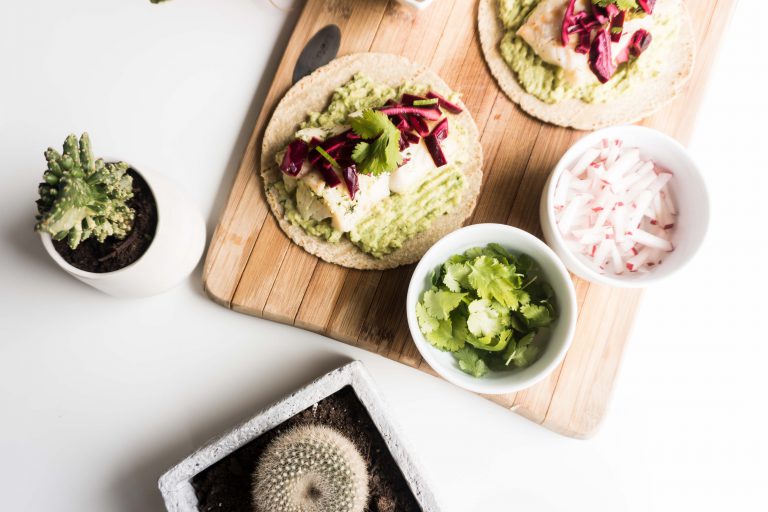
Best guacamole recipe

One ripe avocado

Garlic salt (we like a lot, but you don’t have to overdo it.) Or fresh garlic, even better

Pepper

A dash of salt

Paprika

Some mayo for creaminess

Lemon juice

Chunks of white onion and tomato

A spoon or two of salsa if you want to add a spicy kick

Enjoy your guacamole!

Read more about fresh produce in Israel:

Neot Semadar: An Eco Village in the Southern Negev

March Produce in the Middle East

Do Jaffa Oranges With Carbon Label Make Them Green Oranges from the Garden of Eden?

Sea of Galilee Reveals Mysterious Underwater Ancient Mound

7

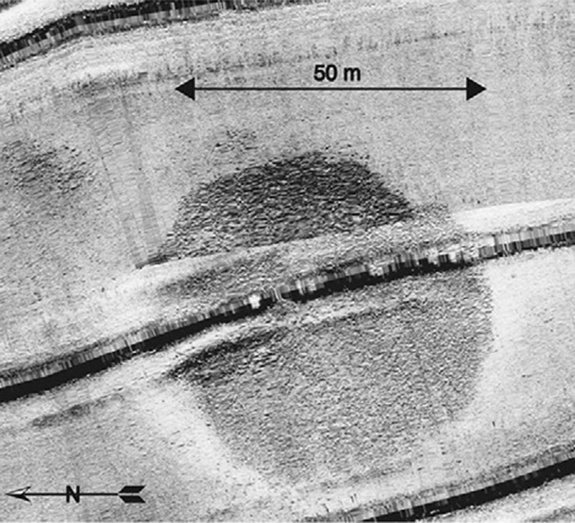
A Submerged Monumental Structure in the Sea of Galilee, Israel, Sea of Galilee Holds Mysterious Ancient Mound Israeli archaeologists are baffled by a giant cone-shaped structure submerged beneath the waters of the Sea of Galilee.

Twice the diameter of Stonehenge and weighing more than ten elephants, a mysterious cone-shaped structure on the bottom of the Sea of Galilee is challenging archaeologists to determine its purpose and age.

The mound was first detected in 2003 during a sonar survey of the southwest portion of the sea, rising nearly 32 feet high and about 230 yards in diameter under water. Divers have been down to investigate, confirming that it’s made of basalt boulders and cobbles, many over 3 feet long.

According to a report in the latest issue of the International Journal of Nautical Archaeology, the stones don’t conform to a specific pattern of placement, nor do they show signs of cutting or chiseling.  Israeli researchers are trying to determine what the estimated 60,000 ton pile of rocks was used for, and who built it.

New Moroccan Handicraft Complex Replaces Polluting Fez Tanneries

0

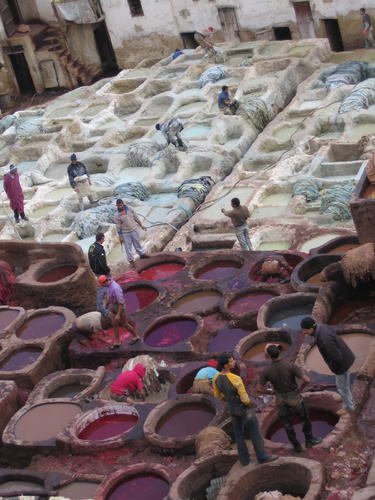
tannery, Fez, Ain Nokbi handcraft, pollution, Lalla Yeddouna Square, medina, Sebbou river, coppersmithWhile the rest of the world is beguiled by Walmarts and Targets, Morocco’s King Mohammed VI has given a $39 million handicraft complex in Fez his royal seal of approval.

Recognizing the value of authentic handmade crafts sought after by tourists in particular, not to mention the job opportunities that accompany such a vibrant cottage industry, Morocco sought assistance from America’s Millennium Challenge Corporation (MCC) to resettle an entire community of coppersmiths and tanners in a modernized complex that has less of an environmental impact on the Sebbou River. 

KAUST’s Breakwater Beacon is a Mashrabiya Lighthouse for Saudi Mariners

2

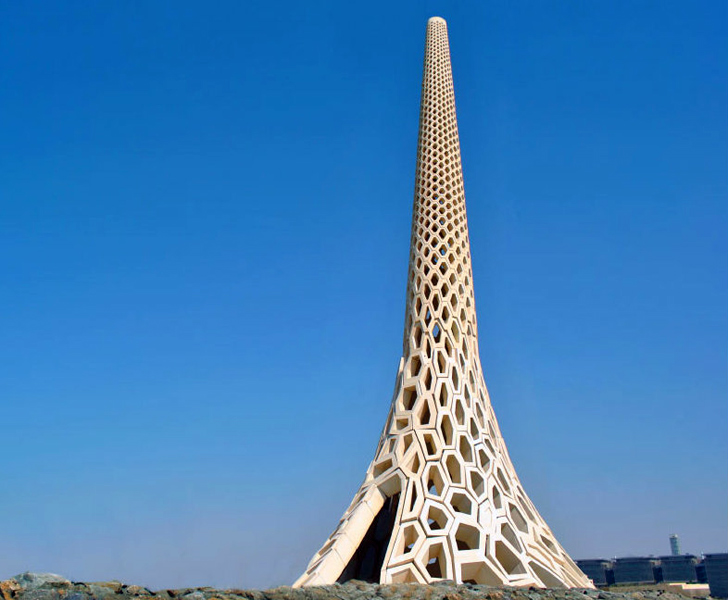
KAUST, Breakwater Beacon, Mashrabiya, Lighthouse, Red Sea, honeycomb, Saudi Mariners, natural cooling, designEver wonder what an Arabian lighthouse looks like? Mariners approaching the Red Sea harbor at Thuwal, about one hour north of sprawling Mecca, Saudi Arabia are now guided to shore by a soaring new honeycomb lighthouse designed by the Australian firm Urban Art Projects.

Commissioned by the King Abdullah University of Science and Technology (KAUST), a leading Arab research organization that is devoting increasing resources to clean energy and water research and development, the 60 meter Breakwater Beacon also functions as a communal rendezvous spot.

French Scientists Suggest Women Should Stop Wearing Bras

40

should women take bras off

Science puts a new view forward in the anti-brassiere argument. 

Women have bound their breasts since antiquity, for modesty’s sake or to conform to an aesthetic ideal. Exposing the breast for human survival in breastfeeding is supposed to be kept politely minimal, even with the known multiple benefits of breastfeeding.

In the Western world, women avoid the free-swinging breast, a point of view encouraged by the multi-billion dollar brassiere industry. That began to change in the 1960s, when the Women’s Liberation movement proclaimed brassieres to be as oppressive as the corsets our grandmothers wore. Still, the majority of today’s women continue wearing the bra, conforming to societal norms and to fashion. Recent research conducted in France may influence women to change their minds again.

Professor Jean-Denis Rouillon, professor at the University of Franche-Comté in Besançon, recentlt concluded, after a 15-year study of 330 women, that supporting breasts in a bra helps not at all, neither “medically, physiologically nor anatomically.”

Graffiti Artists Color Egypt’s Soul-Crushing Corruption

1

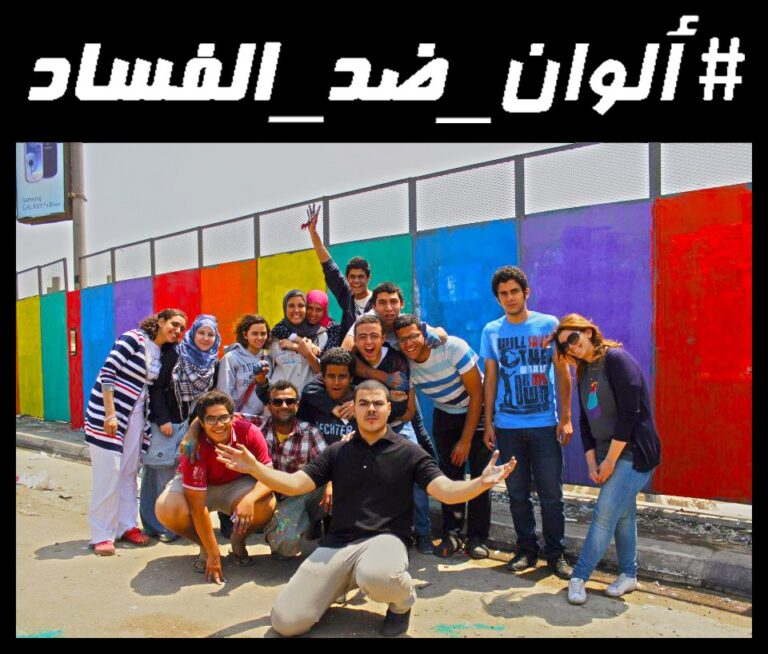
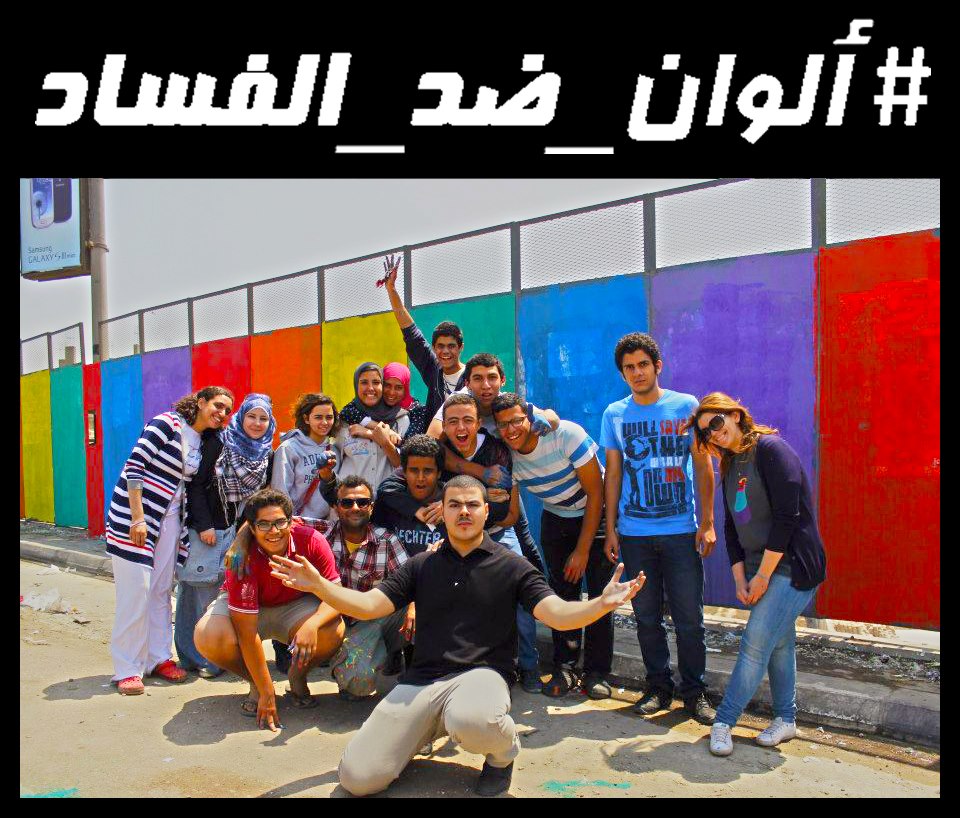
graffiti, art, coloringthrucorruption, cairo, egypt, civil disobedience, paint, activism Corruption is black, brown, grey, devoid of color. And in Egypt, it can be seen in streets piled high with trash and polluted canals, in maddening traffic resulting from outdated infrastructure, and chronic power outages. Corruption is everywhere, yet this silent killer of hopes and dreams is hard to pin down.

Not anymore. A band of graffiti artists and other concerned citizens led by Amr Nazeer are splashing bright, vivid colors on bridges and water pipes, walls and other public spaces throughout Cairo as part of a new campaign called #ColoringThruCorruption. By painting another dull, concrete bridge, they draw attention to how dilapidated the damn thing was before.

Solar Bridge in Pakistan Replaces One Swept Away by Floods

0

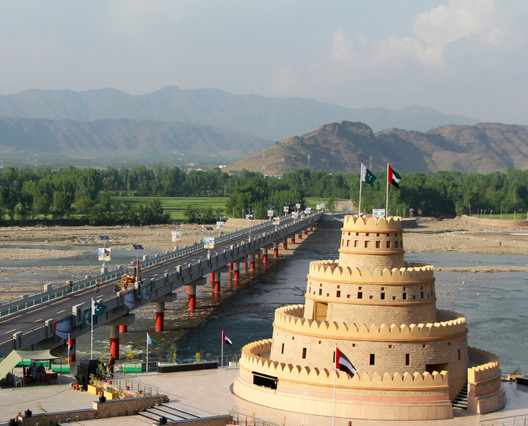
UAE, bridge, Pakistan, solar-power, humanitarian design, floods, climate change, Sheikh Zayed bin Sultan Al NahyanAs if they didn’t have enough trouble on their hands, residents of 15 towns and 45 villages in Pakistan’s Swat Valley have been completely stranded since a bridge linking them was swept away by last year’s floods.

This isolation officially ended last Friday when the United Arab Emirates ambassador to Pakistan inaugurated a new 448 meter bridge gifted by President Sheikh Khalifa. Named after the UAE’s ultimate eco-hero, the Sheikh Zayed bin Sultan Al Nahyan bridge cost $10.5 million to build and features solar-powered way lighting.

Dubai’s “Sustainable City” Launches Next Month

2

arab man, woman, Dubai sustainable city, dubai, green development, Diamond Developers, solar, clean tech, urban, environment, passive solar, UC Davis West Village, Masdar, net zeroWe’ve been hearing about Dubai’s version of Masdar City since 2011, but skeptics have doubted that “Sustainable City” would ever become more than a mirage in the desert. Not anymore, according to local news reports.

Diamond Developers has announced plans to officially launch their latest project – a 120 acre green city – at the Sustainable Real Estate Conference to be held in Dubai next month. Reportedly inspired by the net zero UC Davis West Village campus in California, the city intends to produce 50 percent of its own renewable energy.

Mpact: David de Rothschild Mobilizes Good Humans for the Right Cause

3

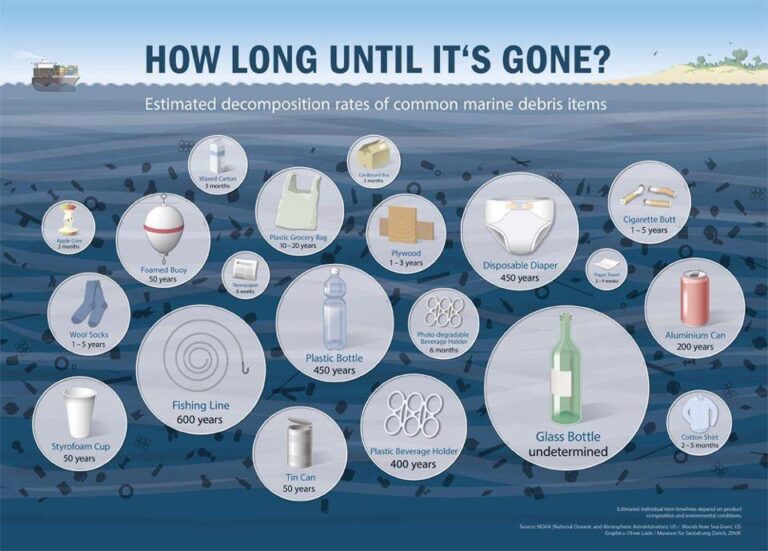
Mpact, David de Rothschild, How Long Until its Gone, marketing, environment, National Geographic explorer, Plastiki, environment, pollution, oceansWe haven’t heard from our favorite eco-warrior, David de Rothschild in some time, but that doesn’t mean the youngest heir to the Rothschild banking fortune has fizzled into obscurity.

Instead, since he responded to our call to save Israel’s Adullam Valley from his (extended) family’s oil shale ambitions and published his crew’s riveting account of the Plastiki adventure across the Pacific, he has been busy with a host of exciting environmental programs. Including Mpact, his latest venture.

Ancient Egyptian Blue Pigment Leads to Nanotech Breakthrough

egyptian-blue-pigmentFor ancient Egyptians blue was the color of rebirth. Today their chemical invention of artificial lapiz lazuli means new advances for lights, lasers and more.

According to a new paper published in the Journal of the American Chemical Society the ancient pigment known as Egyptian blue may have important new applications in nanotechnology.  Researchers at the University of Georgia in Athens, Georgia in the US were surprised to discover that Egyptian blue breaks into thin nanosheets, 1/1000th the width of a human hair which could be printed using ordinary ink-jet printer techniques. This along with other Egyptian blue properties may have important applications in medical science, telecommunication and lasers.