

CupsTelAviv: All You Can Drink Coffee for Under $50 a Month

CupsTelAviv, coffee, all you can drink, caffeine, health, environment, Tel Aviv, Israel
All you can drink coffee for $50 a month at CupsTelAviv.

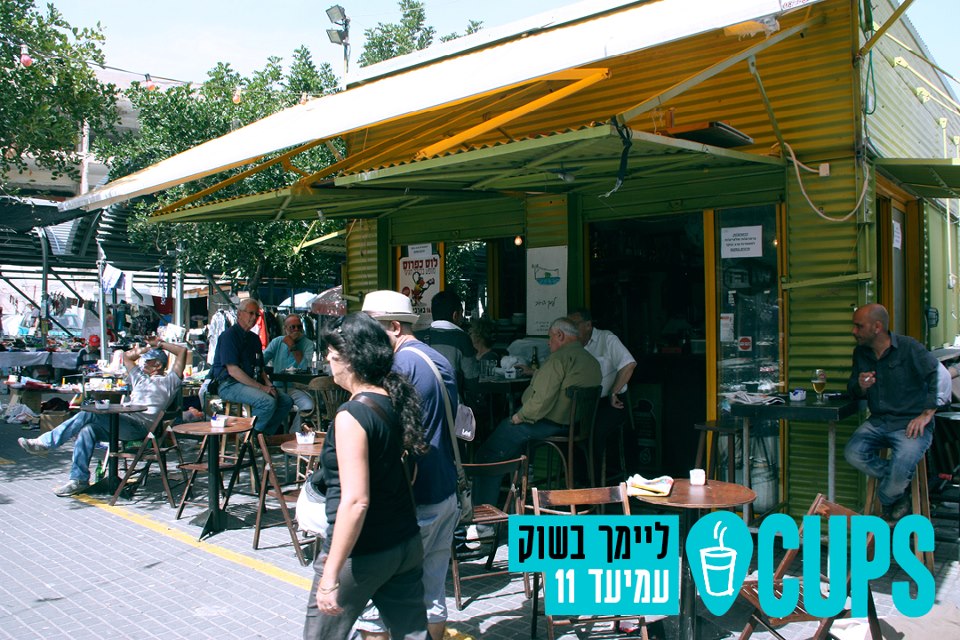
Where in the world can you drink as much coffee as you like for less than $50 a month? In Tel Aviv, Israel, it turns out. CupsTelAviv has convinced 40 independent businesses in what is arguably the country’s most caffeinated city to allow members of their program to drink as many cups of coffee as they want in a month for just NIS169 ($45). Albeit great for coffee drinkers and businesses, we have to wonder how good this buffet business model is for public health and the environment?

Cappuccinos, lattes, vanilla-flavored goop, or just straight up espresso are all fair game for this new start up, which CupsTelAviv (site is no longer working since Oct. 2020)  CEO Alon Ezer says it is the only loyalty program they know of that goes across a specific chain.

“As far as I know,” he says “this is the only such loyalty program anywhere in the world, and it holds a great promise for not only coffee shops, but for brick-and-mortar retailers of all kinds.”

Back when I was a devoted coffee drinker who couldn’t get past 10am without some serious caffeine coursing through my veins, I used to spend at least $8 a day on a couple of cups of coffee from various venders throughout the country. Multiply eight by 30, and that’s a lot of beans so this Android and iPhone app-driven program would have been great for me.

Ezer insists it’s good for businesses too.
CupsTelAviv, coffee, all you can drink, caffeine, health, environment, Tel Aviv, Israel

Customers who come in to claim their free coffee are likely to purchase baked goods and other products as well, so the thinking goes, although this assumption underestimates how far a poor hippie will go to stretch what little money they have – and there are loads of those in Tel Aviv.

But too much of a good thing is never great environmentally, particularly if little attention is paid to the source of the coffee offered under this artificially affordable scheme.

Without true dedication to finding fair trade, shade grown coffee, heavy drinkers of this enticing elixir run the risk of supporting businesses that clear large native forests to produce sun-grown coffee. This is not only devastating for biodiversity, but also destroys the carbon sinks so crucial to averting the worst of climate change.

Too much coffee isn’t great for health either.

“The caffeine in coffee is a vaso-dilator; it encourages blood out of the circulatory system into the body tissues and it is this that makes it a stimulant,” we wrote in an earlier post. “The veins then re-constrict which leaves too much blood in the tissues, straining the blood system. The vascular system then needs to work that much harder to avoid edema (often seen as swelling of the ankles).”

While some people are trying to cut back their coffee consumption, Israelis are now encouraged to drink it full steam ahead.
Tafline Laylin
Tafline Laylinhttp://www.greenprophet.com
As a tour leader who led “eco-friendly” camping trips throughout North America, Tafline soon realized that she was instead leaving behind a trail of gas fumes, plastic bottles and Pringles. In fact, wherever she traveled – whether it was Viet Nam or South Africa or England – it became clear how inefficiently the mandate to re-think our consumer culture is reaching the general public. Born in Iran, raised in South Africa and the United States, she currently splits her time between Africa and the Middle East. Tafline can be reached at tafline (at) greenprophet (dot) com.

Read More

3 COMMENTS
  1. On one hand it sounds excessive but then again, I wonder, how many people really do use the full value of the subscription. Sounds like a great way for people to try new coffee shops and get value from an other-wise inflated price – about $4 a cup in Tel Aviv. Plus, how many people order croissants and cookies and other treats with their coffee?

TRENDING

Self-repairing contact lenses and desalination membranes that fix themselves?

Could the humble contact lens become a sustainability breakthrough? Researchers in Korea have developed a self-healing hydrogel lens that repairs scratches with just one hour of UV light exposure. Beyond reducing waste from disposable contacts, the technology could one day help extend the life of solar panels, water filtration systems, and other plastic-based products.

5 Reasons Why You Should Save Seeds (and plant them)

Saving seeds from tomatoes, peppers, herbs and flowers helps preserve biodiversity, strengthen food security, and keep heirloom varieties alive. Even a small balcony garden can make a difference.

Lyme Disease And The Great Outdoors

Planning on being outdoors a lot this summer? We...

Collecting kinetic energy from roads; REPS turns traffic into a power plant

REPS announced a $23.6M equity financing round to scale...

Make Guarapo De Piña (it’s fermented pineapple juice)

In Cuba, guarapo is simply freshly-pressed sugar cane juice, and is drunk on the spot, without waiting for it to ferment. But in Colombia, Venezuela, Peru and Mexico, they homebrew guarapo from pineapples or oranges, and the fragrant fluid sits on the kitchen counter top to ferment until it's bubbly.

Yerukim Forms a New Green Economy Where the Money is Really Green

The Yerukim members who pick up the recyclables get to keep the monetary reward, the public earns "green" bills that can be used in shops, and business owners get to be associated with environmentalism.

Choosing Riyadh over Dubai? What Investors Should Know

Saudi Arabia is deploying capital at unmatched scale to catalyze tourism and advanced industry while rewiring its power-and-water backbone. The investable frontier is widening—especially in renewables, grid storage, water efficiency/desal retrofits, and hospitality operating platforms. Prudent investors will insist on phased delivery, enforceable KPIs (energy, water, biodiversity), and RHQ/zone compliance—while pricing political-economy and reputational risks alongside growth upside.

Sell your cooking oil for biodiesel money

Want to make money on old french fry oil? Sell it.

Qatar Alternative Energy Summit Pairs Investors And Innovators

Alternative energy investors and innovators can meet n' greet in Doha, Qatar March 16 and 17.

Here’s How To Implement The Four Pillars Of Employee Engagement

If you throw a party for your work team and they are vegans, don't make it a barbecue. Know the sustainability values of your team to boost moral and retain good people.

Locals From Rishon Fight IKEA

Big Box stores are a pretty new concept in Israel, and thank God that not every Israeli city wants them in their backyard. A word from someone who has see the beautiful farmland around her hometown Newmarket, Ontario stripped and converted into vulgar strip malls of big box shops: they have no place in a healthy and sustainable town or city.

The Jewish National Fund Meets An Inconvenient Truth

According to the JNF, it has transformed thousands of acres of barren land into green forests in Israel. They state that each person emits about 23 tons of carbon per year, estimating that each tree planted can absorb one ton of carbon in its lifetime. That's a whole lot of trees you'd need to be planting. Could so many fit in Israel?

How to quiet noise from construction in your office

Streets need to be resurfaced in New York but the humming and grinding noise is unsettling. Noise is environmental pollution. 

Popular Categories