
Home Blog Page 346

Dubai police buy $500,000 Lamborghini Cop Car

Aventador dubai-lamborghini-patrol, Lamborghini Cop Car dubaiDubai police have announced the latest acquisition to their fleet of cop cars: a 700 horsepower Lamborghini Aventador.

Unlike scofflaws in Saudi Arabia who risk a trip to “chop-chop square”, criminals in Dubai’ may now face a white-knuckle ride in one of the world’s fastest and most expensive cars.  The supercar, which can reach speeds of up to 220 mph, cost nearly half a million dollars.  No word if the green and white custom paint job (the colors of the Dubai police force) was thrown in for free.

Dubai’s initial riches were earned on the back of the oil industry, but its open society and strategic public policies have attracted  international investment in wider business sectors.  Financial services, real estate and tourism all generate enormous cash flows, and though dampened by the 2008 banking crisis, the emirate remains economically robust. Robust enough for expensive cop cars (read our report on the purported white gold Mercedes).

Rich boys like expensive toys.  Green Prophet’s reported on the fleet of abandoned luxury cars throughout the Emirates, but the United Arab Emirate’s roadways remain a parade of the world’s most luxurious vehicles. And luxurious means fast. This new cop cruiser has a maximum speed of 217 mph and can accelerate from 0-60 mph in 2.9 seconds.  This ain’t Starsky & Hutch’s Camaro.

 Lamborghini Aventador in action

 Lamborghini Aventador in Dubai, police car, cop car

A staggering 15 percent of traffic fines issued in Dubai are for driving at speeds exceeding 130 mph, so authorities hope their new wheels will help them keep up.  Additional sports cars are set to join the fleet too, designed according to police specifications in an effort to “facilitate policing on highways”, said a report in Yahoo Autos.

dubai police ferrariA Dubai cop car in “Ferrari”

According the same source, a recent study of Canadian police departments found the “average police car spends two-thirds of a 10-hour shift idling.” That translates to over 3 gallons of fuel per shift burned just staying in place. Imagine how much fuel the Aventador will use?

Maybe they can check with their Italian and Qatari cop colleagues, who also tool around in Lamborghinis.

Pictures of white gold car spotted in the Gulf:

white gold car mercedes

The force made the announcement through its Twitter feed, @DubaiPoliceHQ.  No word on which lucky cops get handed the keys or if they’ll receive special driving lessons.

Image of custom Lamborghini from Dubai Police

In 2024, the Dubai police shows off their first Tesla, Cybertruck.
Finding Peace In The Little Aya Sophia Mosque, Istanbul

1

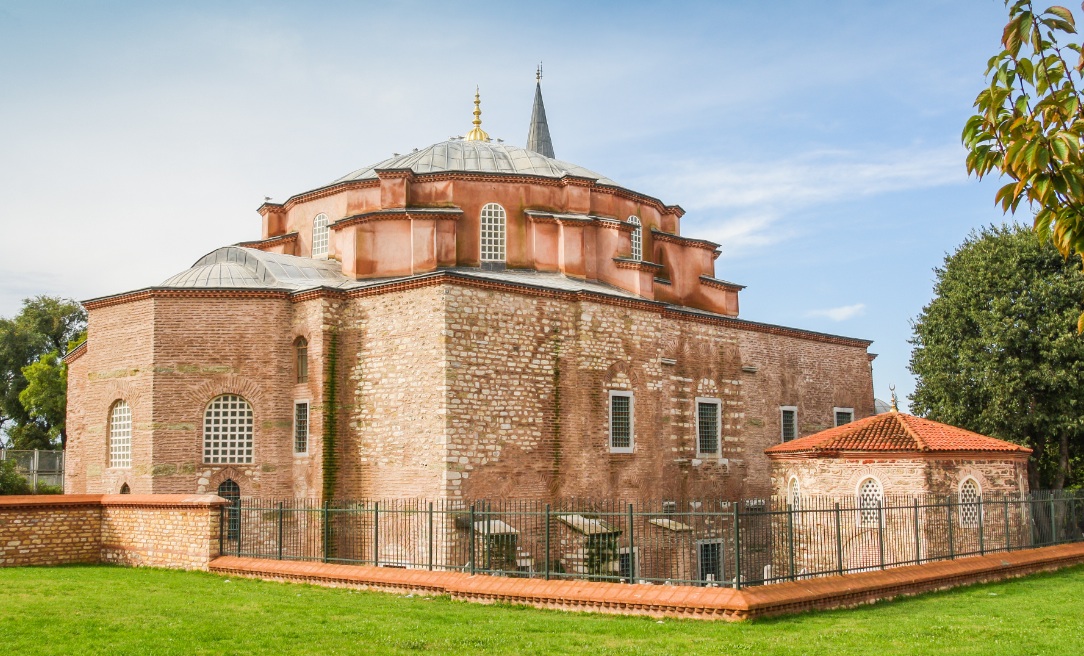
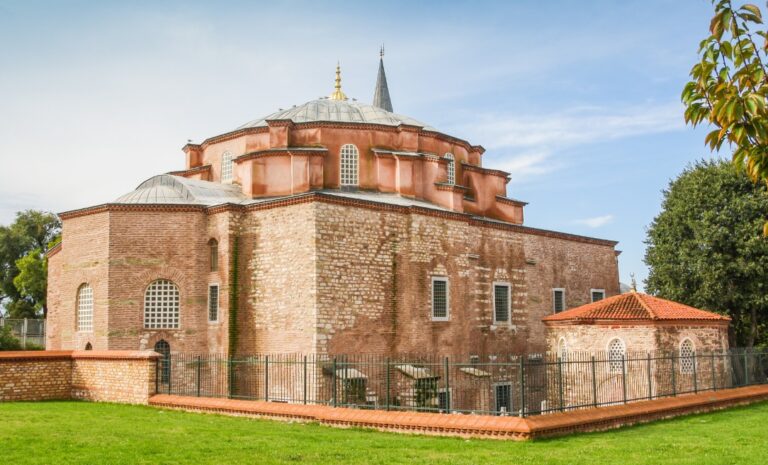
little aya sofia, sophia mosque in IstanbulI recently spent a weekend in Istanbul, one of my most beloved cities. My hotel was based in Fatih, the run down section of the old town, and it overlooked the Little Aya Sofya mosque – also spelled Sophia, or Sofia. The morning before I flew, I thought it would be the perfect moment to visit this nearby sight. I had a feeling I would like it, and I was not disappointed.

I entered a walled courtyard, built around the mosque known as the Little Hagia Sophia (Turkish: Küçük Ayasofya Camii). Surrounded by cloisters, there was a tree-filled garden in the centre in which a marquee had been erected and where men were sitting on trestle tables, drinking coffee and conversing. I put my rucksack down before visiting the mosque and asked them if they would watch it for me. They asked me how long I would be, I said about 10 minutes, to which they said that would be fine.

Israeli Wildflowers Show Environmental Education Can Inspire Change

0

education, conservation, plants, wildflowers Israel

Today there are a dizzying variety of wildflowers blooming across Israel, welcoming the months of spring. Fifty years ago some of these plant species were on the verge of extinction. With the help of the Society for the Protection of Nature in Israel and the Nature Reserves Authority, the 1965 campaign to publicize the law prohibiting picking wildflowers became one of the most successful in Israel’s history; It changed the public’s behavior through raising awareness, and proliferating environmental education.

The tiny country of Israel is home to an impressive variety of wild plants. Overall, Israel has close to 2,300 species of plants, including many medicinal plants such as wild marigold, sage and Palestinian oak. Dozens of these species are found only in Israel. For comparison’s sake, England, which is six times larger than Israel, has only 1,750 plant species.

According to a study of environmental campaigns in Israel, by the University of Haifa’s Benny Furst:

“The activities of nature protection organizations succeeded in fostering significant structural and cultural change, as they altered ways of thinking, values and collective behavior of a sizable sector in Israeli society. As it pertains to the attitude toward natural environmental resources, the significance of this change is of greater importance in light of the prior situation, in which picking wild plants was the accepted norm, and was not at all conceived as being a criminal offense.”

But Furst believes that this success cannot be maintained in future generations without continuing environmental educational. The results of a survey conducted in 2007,  demonstrated that half of Israeli young people said they were in the habit of illegally picking flowers.
Conversely, responses from older adults proved a statistical link between memories of the ‘60s-era campaign and their present-day wildflower-picking practices.

And in recent years, yet another danger to the wildflowers has arisen. Urbanization and construction threaten these species’ natural habitats, such as the wild Iris. According to the “Red Book,” a publication which documents species at risk, nearly one-fifth of plant species in Israel are currently in danger of extinction. Most of these plants grow in in areas where there are extensive development plans, such as in the Sharon region.

Read more about plants in Israel:

The Wild Winter Iris

The Most Effective PR Campaign in Israel’s History: Protecting Wildflowers

BioXplore Discovers Healing Plants in Israel

Amazing Pavegen Tiles Harvest Energy From Footsteps

pavegen tiles paris marathonParis marathon organizers plan on ripping off its runners! 

Energy-harvesting tiles placed along an 80 foot section of the Champs Elysee will capture energy from the pounding feet of 40,000 racers.  The technology developed by Pavegen offers a tangible way for people to engage with renewable energy generation. The flexible tiles made from recycled truck tires convert kinetic energy from foot traffic into useable, off-grid electricity.  The tiles’ top surface is made from 100% recycled rubber and the base is constructed from over 80% recycled materials. The system is versatile: use it for new developments or retrofit existing flooring systems.

During Hajj, perhaps the largest annual pilgrimage in the world, mobs of Muslims walk counter-clockwise seven times around the Kaaba, the black cube-shaped building at the heart of the Al-Masjid al-Ḥarām.  Imagine the juice those tiles could collect if installed around the plaza? In addition, pilgrims run repeatedly between the hills of Al-Safa and Al-Marwah. That makes for gargantuan power potential.

Nile Taxi – Scenic Stress Free Commuting for Cairo’s Residents

Nile Taxi, Nile River, traffic, water taxi, Cairo, EgyptHaving just returned from Lamu, Kenya, where there is no other way to travel but by boat (or plane or donkey), it seems strange to me that it has taken modern Cairo this long to come up with the idea of a water taxi. But there you have it. Cairenes weary of knotted traffic jams that suck the marrow right out of their bones now have a new way to travel and it’s not that expensive: Nile Taxi.

Suspended See-Saw Makes Music from Movement in Morocco

0

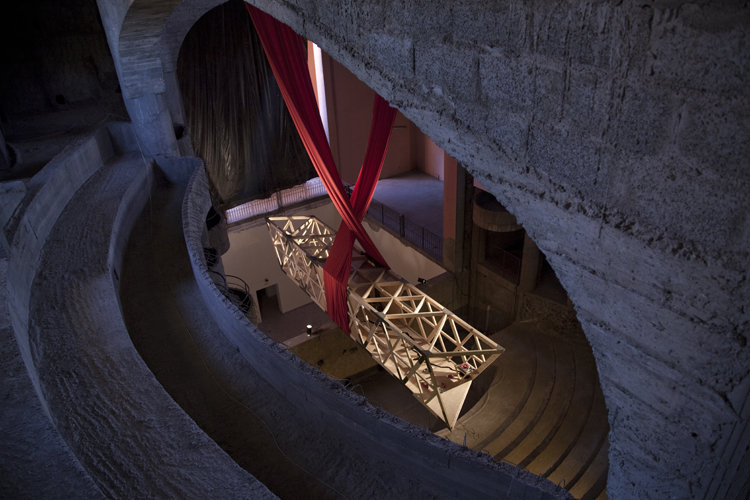
see-saw, morocco-marrakech, Alex Schweder, Rise and Fall, art, architecture, human movement, music, design, temporary installationWe have to admit that this isn’t anything particularly “green” about this see-saw, but it does harvest the movement of people to make music. And that’s just downright cool. A temporary installation designed for last year’s Marrakech Biennale, The Rise and Fall blends architecture and art to question how people occupy spaces and how those spaces in turn occupy them. Frankly, we think this is an important thought experiment in a region that pays so little attention to the occupation of its people by crowded, polluted, and poorly planned urban environments.

Algerians Mould Bricks from Sahara Sand Dunes

4

sahara, sand, brick from sand, desert, Algeria, earth architecture, sustainable building materialsAlthough the Sahara desert used to be a green retreat for giraffes and hippos 5,000 years ago, it is now a giant, sometimes rolling landscape of sand. A lot of sand. In fact, roughly two thirds of Algeria is made up of sand, according to the authors of a study published in the Arabian Journal for Science and Engineering. And they believe it can be used to produce a sustainable building material for a limping construction industry. That’s right, they want to turn the dunes into bricks, and they already have a pretty good formula.

Tracking the Impacts of a Hydroelectric Dam Along the Tigris River

2

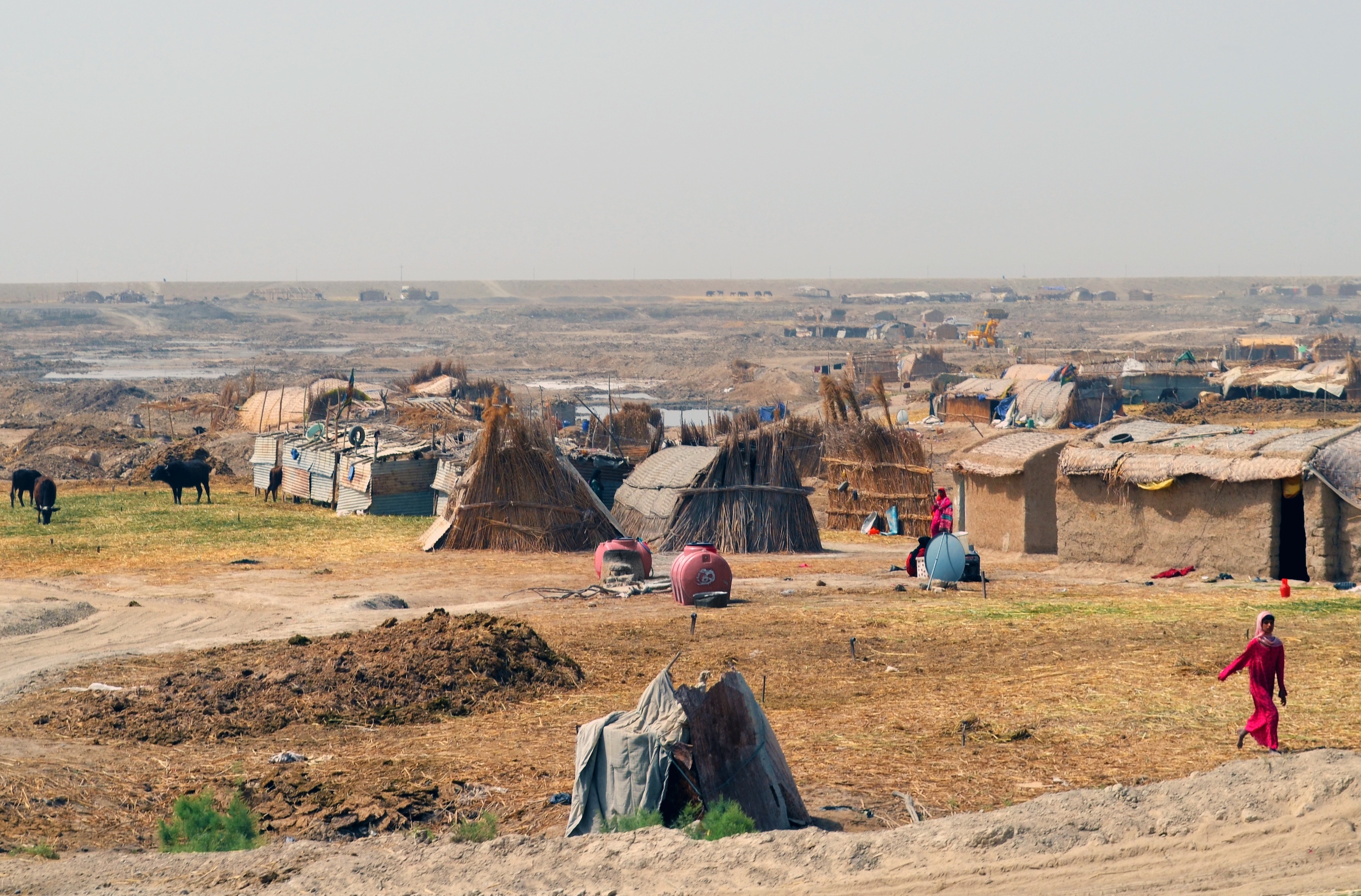
girl-in-pink-dress copy

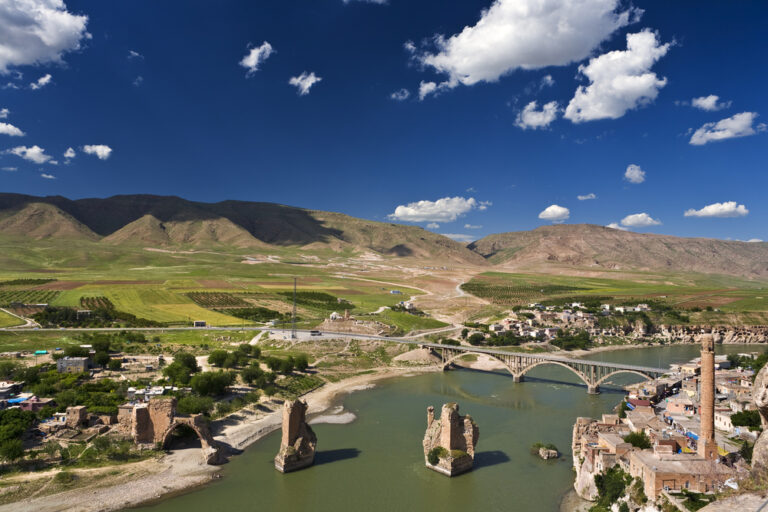
Upstream hydroelectric dams have already inhibited the recovery of Iraq’s legendary Mesopotamian Marshes. A massive dam currently under construction in Turkey may wipe them out completely.

For the next two months, I’ll be taking a break from my usual Green Prophet posts to report on a transnational environmental issue: the Ilısu Dam currently under construction in Turkey, and the ways it will transform life along the Tigris River. My trip is funded by a National Geographic Young Explorer Grant and the Center for Investigative Reporting.

Watermelon Rind Jam – Recipe

3

irai watermelon rind jamFrom Iraq with love, a great jam with a surprising ingredient.

Nawal Nasrallah, a food historian and author, writes about Iraqui cuisine in a warm, rich style that beautifully highlights each recipe’s  historical and cultural background. Her newly revised cookbook, Delights From The Garden Of Eden, is about to be released in a new edition, and I can’t wait to read it (and cook from it).

Nasrallah’s blog offers some traditional Iraqi recipes, as sort of a preview of the book. Here on Green Prophet, we’ve got a weak spot for Iraqi cooking, like this Fesenjan recipe (chicken with walnut sauce.)

I liked Nasralla’s surprising watermelon rind jam especially because the recipe ensures that there’s no food waste. Even more than that, it’s an old-fashioned, slow-food recipe that promises to taste simply delicious.

Nasrallah introduces the watermelon rind jam:

You will be surprised how beautiful and tasty this jam will turn out to be. Its origin cannot be any humbler: watermelon rind, usually discarded after the juicy ruby melon pulp is sliced off. In other parts of the world this rind ends up being pickled, but in Iraq we transform it into a charming chunky jam, usually served with geymer (slabs of clotted cream) or butter for breakfast.

Watermelon Rind Jam

Ingredients:

1 kg. – 2 lb. watermelon rind, measured after slicing off the red pulp and hard green outer peel

3 cups granulated sugar

1/2 cup honey

2 strips lemon peel or 2 small pieces of peeled fresh ginger

4 whole pods cardamom

2 tablespoons lemon juice

Cut rind into strips, about 1 inch wide and 2 inches long. Cover in cold water and bring to a quick boil.

Reduce heat, and simmer slowly until translucent, about 30 minutes. Drain, and reserve 3 cups of liquid.

In a heavy pot, completely dissolve sugar in reserved liquid.

Add honey, lemon peel or ginger, and cardamom. Bring to a boil, skimming as needed.

Add the drained watermelon rind, and boil gently over medium heat, for 30 minutes.

Remove from heat, cover, and set aside, overnight.

Boil pot again over medium heat until syrup thickens, about 30 minutes.

Add lemon juice in the last 5 minutes. Test for doneness by putting a drop of syrup on a dry cold dish, and tilt it. If the drop does not go flat, and keeps its domed shape, it is done.

Let the jam cool off completely. If wished, put the jam in a strainer to get rid of extra syrup.

Store it in the refrigerator and use as needed. It will stay good for a long time.

Enjoy!

More Preserved Fruit On Green Prophet:


Ladies of Solar Unite – at the Women Solar Seminar in Dubai

1

sahara, solar, women in solar, dubai, women solar seminar, MENASOL 2013, clean tech, desert, If it seems like there are just too many men receiving all the glory in the solar industry and not nearly enough women, then you need to attend the Women Solar Seminar in Dubai.

Held just one day ahead of one of the most important utility scale solar conferences in the Middle East and North Africa region, MENASOL 2013, this fantastic event explores the role of women in this explosive industry. Hosted for the second time by Nikita Shree, the seminar will be held on May 13th at the Regency Hyatt Dubai Hotel. 

Green Deserts – The Saltwater Revolution (An Ode to Innovation)


greening the desert, Green Deserts, documentary, Sahara Forest Project, Qatar, Jordan, Copenhagen Film Company, documentary, clean tech, energy, food, water scarcity

We are not alone in our awe of the Sahara Forest Project (SFP), which has already built a pilot project in Qatar that produces energy, clean water and food in the middle of the desert – all without a single drop of fossil fuel. Owned by biomimicry architect Michael Pawlyn, structural engineer Bill Watts, and the Norwegian environmental group the Bellona Foundation, the Sahara Forest Project was initially established in 2009.

Inspired by the SFP’s multitiered solution to one of the most pressing issues of our time – water scarcity – The Copenhagen Film Company has been following the group’s progress in both Qatar and Jordan. They are making a documentary called Green Deserts – The Saltwater Revolution – an ode to innovation that hopes to inspire even further forward-looking solutions. 

Estidama Is the Arab World’s Sustainability Rating System: Watch Films on Estidama

0

estidama house world future energy summitThese films shown below show the basics of the Estidama Pearl rating system unique to the Abu Dhabi region.



We’ve collected a number of films from around the net on Estidama, a LEED-like sustainability rating for communities, villas and apartments in the United Arab Emirates. A system that makes sense for the challenges of the desert climate, and Muslim communities.

Environmental, economic, social and cultural aspects are woven into the rating systems to include homes, mosques, schools to meet the challenges of Abu Dhabi’s challenging environment: hot and dry!  Watch these films to learn more about this unique system developed to reduce the consumption of local resources. Any companies looking to work in the United Arab Emirates’ green space should watch these movies to get the basics.

Jerusalem Launches World Pilgrimage Conference for People of Faith

Jerusalem Symposium on Green Pilgrimage
Green Pilgrim Jerusalem hosts a week-long international symposium on greening pilgrimage, with major religious leaders from around the world.

Faith and community leaders from around the world will be speaking on ecological, urban and social development as influenced by mass pilgrimage.  Our report on the massive urban sprawl that Mecca is becoming illustrates the ecological impact of the Haj, for example. Efforts like this one to make the Haj green need to be supported, and we look forward to hearing encouraging developments along those lines as a result of Jerusalem Symposium on Green Pilgrimage.

Are Digital Diet Utensils A Forking Joke?

38

HAPIfork digital diet forkEating too fast leads to poor digestion and poor weight control.  No brainer. But do we need a digital fork to help adhere to that maxim?

Goofing around online, I spot a cool-looking kitchen gadget: a fork that could be a love-child of IKEA and Apple.  I click on the video and nearly spit out my lunch (soup, by the way, not a fork in sight). The HAPIfork is an electronic tool that helps you monitor your eating habits, alerting you with indicator lights and gentle vibrations when you eat too fast.  It tracks “fork servings”, which are the round-trip motions between your plate and your mouth. The device also measures the time it takes to eat your meal and the total number of “fork servings” per minute.

Will Israel’s Natural Gas Tap Flow to Turkey?

0

shutterstock_92761900Improvement of Turkish and Israeli ties could make Istanbul a hub for Israeli natural gas deliveries to Europe

The discovery and development of large natural gas deposits by Israel in the eastern Mediterranean by local and foreign energy companies such as Delek Energy and Noble Energy  has become a game changer for Israel. Up to now, Israel has had to import most of its energy supplies which became problematic following the frequent attacks against the gas line bringing natural gas from Egypt to both Israel and Jordan. This alone caused Israel to shift its energy attention offshore;  and upon reaching large natural gas deposits in the Tamar undersea gas fields, Israel began constructing an undersea pipeline to bring the gas ashore.