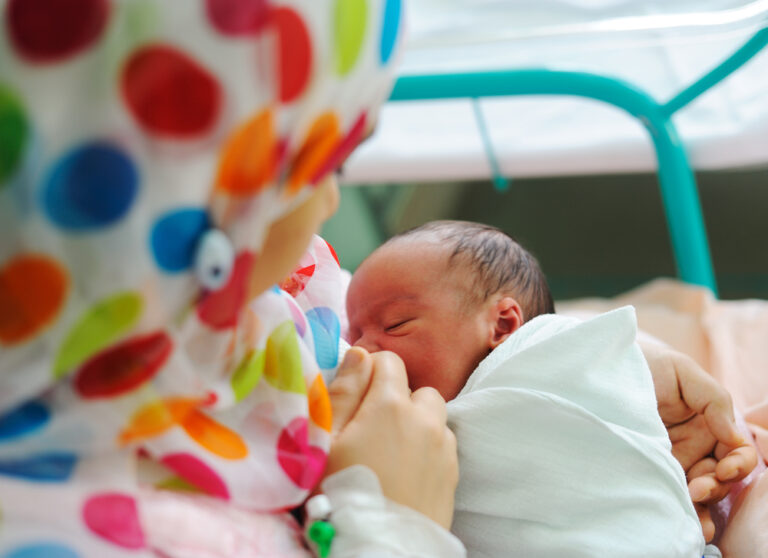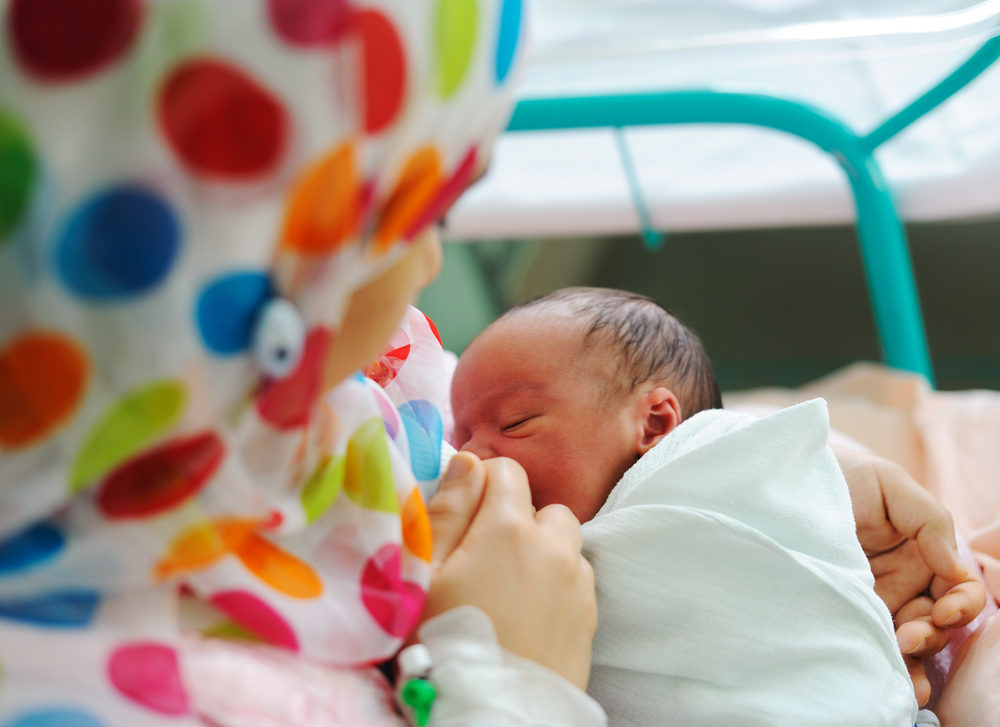
Even if you didn’t give birth to the baby, you can still feed it to make it “yours” in Muslim communities. Here’s how.
Under Islamic Sharia’a law, western adoption practices are frowned upon. When children are abandoned by their birth parents, they may become foster children of other families, but they are not allowed to take on their foster parents’ last name, or to have any rights of a mahram (an unmarriageable kin with whom sexual intercourse is considered incestuous). Only one thing has the power to overcome these restrictions: Breastfeeding.
In countries such as Saudi Arabia, where Islamic law is the rule, breastfeeding an infant or child under the age of two years gives the adopted child the rights of birth making them a mahram.
The Holy Quran clearly states, “Let another woman suckle (the child) on the (mother’s) behalf” (65:6), “Forbidden to you are…your mothers that have suckled you and your foster-sisters” (23:4), and the Hadith by Aisha (blessing of Allah upon her) says, “Breastfeeding denies what is denied by birth.”
These statements support the notion that other than the birth mother, any lactating woman can be the milk-mother of a child and give that child the same birthrights as her own. It is agreed upon by Islamic scholars that in order for her to accomplish this she must feed an infant three to five satisfying feeds.
A satisfying feed is approximated at around 50 ml of expressed breast milk; as soon as she has completed these three to five feeds, she is considered a milk-mother by Sharia’a law and has rights to the child that are identical to those of any birth mother. Having a milk-mother means the child will be a child to her husband, a sibling to her children, and a relative to all extended family members.
 Contrary to what many people think, any woman can breastfeed, whether she has recently delivered a baby or not. It is biologically possible for a woman to lactate or relactate, regardless of her childbearing status. I have experienced this possibility in my breastfeeding resource center in Jeddah Saudi Arabia, where I live, while working with several adoptive mothers.
My clients are women who had been married for many years and had difficulty conceiving a child. Under my supervision the mothers adopted and breastfed infants around the age of four months old with 250 ml of expressed breast milk.
Lactation and milk expression took approximately two weeks. To encourage lactation, the mothers began by orally taking 60 mg of Domperidone a day and several cups of brewed Fenugreek while pumping and stimulating their breasts every two hours.
During the first week, small beads of milk could be seen coming out of the nipple; by the end of two weeks, the mothers were able to express 250 ml of breast milk, fulfilling the need for the five feeds to make the children their own.
In some instances, as soon as the child was fed the full 250 ml, the mother ceased the medication and stopped pumping as the milk diminished naturally. In other instances the mothers continued to pump and feed the babies the milk that was expressed.
Adoptive breastfeeding is a beautiful option for couples in the Middle East who want to adopt a child and give him or her full family rights, and for a child who needs loving parents. Adoptive breastfeeding is a tool that can be used to improve lives. It forces the biological relationship to be primary to rearing an adopted infant. Through breastfeeding, nature has given women a means to give life, improve circumstances, and correct social problems.
More resources on breastfeeding in Islam:
Breastfeeding in a hijab
Muslims who breastfeed save the planet
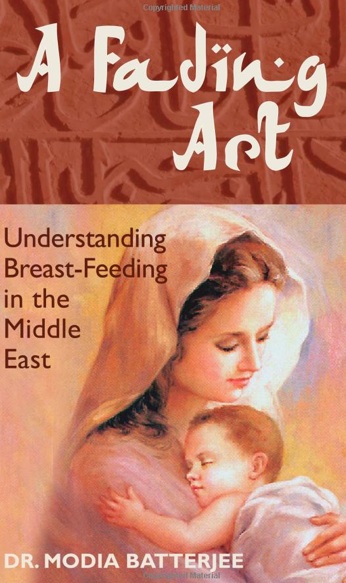
A Fading Art
This guest post is by Dr Modi Batterjee from the Al Bidayah Breastfeeding Resource and Women’s Awareness Center in Jeddah, Saudi Arabia. She’s written a wonderful book on breastfeeding, A Fading Art.


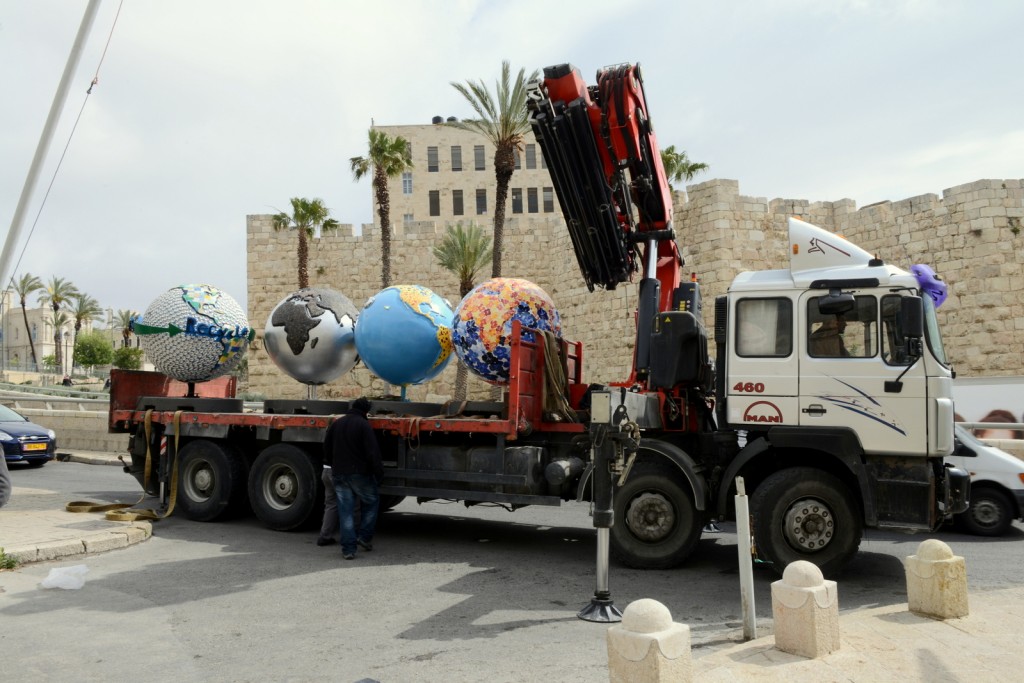
 Saudi Arabia and climate change do not mix well as this photo indicates