With larger, land-bound animals human encroachment and Middle East warns make it more troubling for the survival of migratory animals on land, air and at sea. A new United Nations report released this week warns that the situation is getting worse, not better.
Piñatex was among the earliest widely publicized plant-based leather alternatives and played a significant role in raising awareness of agricultural waste valorization within fashion supply chains.
With larger, land-bound animals human encroachment and Middle East warns make it more troubling for the survival of migratory animals on land, air and at sea. A new United Nations report released this week warns that the situation is getting worse, not better.
Piñatex was among the earliest widely publicized plant-based leather alternatives and played a significant role in raising awareness of agricultural waste valorization within fashion supply chains.
With larger, land-bound animals human encroachment and Middle East warns make it more troubling for the survival of migratory animals on land, air and at sea. A new United Nations report released this week warns that the situation is getting worse, not better.
Piñatex was among the earliest widely publicized plant-based leather alternatives and played a significant role in raising awareness of agricultural waste valorization within fashion supply chains.
With larger, land-bound animals human encroachment and Middle East warns make it more troubling for the survival of migratory animals on land, air and at sea. A new United Nations report released this week warns that the situation is getting worse, not better.
Piñatex was among the earliest widely publicized plant-based leather alternatives and played a significant role in raising awareness of agricultural waste valorization within fashion supply chains.
With larger, land-bound animals human encroachment and Middle East warns make it more troubling for the survival of migratory animals on land, air and at sea. A new United Nations report released this week warns that the situation is getting worse, not better.
Piñatex was among the earliest widely publicized plant-based leather alternatives and played a significant role in raising awareness of agricultural waste valorization within fashion supply chains.
With larger, land-bound animals human encroachment and Middle East warns make it more troubling for the survival of migratory animals on land, air and at sea. A new United Nations report released this week warns that the situation is getting worse, not better.
Piñatex was among the earliest widely publicized plant-based leather alternatives and played a significant role in raising awareness of agricultural waste valorization within fashion supply chains.
With larger, land-bound animals human encroachment and Middle East warns make it more troubling for the survival of migratory animals on land, air and at sea. A new United Nations report released this week warns that the situation is getting worse, not better.
Piñatex was among the earliest widely publicized plant-based leather alternatives and played a significant role in raising awareness of agricultural waste valorization within fashion supply chains.
With larger, land-bound animals human encroachment and Middle East warns make it more troubling for the survival of migratory animals on land, air and at sea. A new United Nations report released this week warns that the situation is getting worse, not better.
Piñatex was among the earliest widely publicized plant-based leather alternatives and played a significant role in raising awareness of agricultural waste valorization within fashion supply chains.
Many ecologists identify with it, but there is something sad about Shel Silverstein’s The Giving Tree, about a tree that gives to a young boy until its bitter end. A parable about how us humans treat nature? Could there be a better kind of giving tree in store?
An Israeli solar power integration company called Sologic envisions a different kind of tree for societies, the eTree. This concept “tree” solar energy sculpture they developed for social good is a hybrid station for the wayward urban traveller.
The eTree produces energy, cools and provides water for humans and pets, gives off Wifi signals, adds connectivity to a community, provides shade, offers a charging point, gives rest along the way and light at night.
Each one costs an estimated $100,000.
It’s not a revolution much beyond putting solar panels on a backpack, as far as I see it, but it’s a nice new way to envision how we should be interacting with and creating the public space.
While I would much rather take refuge under a real tree along my travels, and could really forego most of the options (like water for dog, charging station, connectivity to Wifi and interacting with my fellow man) I think that this prototype is a good step forward for how we design energy needs into smart cities of the future.
The developers imagine it across a whole pile of landscapes including along Israel’s National Trail.
The company regards the eTree as a social innovation project. The installation includes charts about how much energy is being generated (not unlike the airport in Morocco we visited – we also met the company Naps Oy who integrated the solution in Finland!), and provides geographical information about the place.
Sologic was founded six years ago to provide solar energy to residential and commercial buildings.
The eTrees are a new project and were designed by Yoav Ben-Dov over 18 months. Each one is made with metal, and glass solar panels which produce 1.4 kW of energy per hour.
A concrete block holds the innards of the station in place hopefully long enough to keep hoodlums away.
Dubai Municipality teamed up with spice giant Eastern Masala and Jaleel Holdings to launch a new project that aims to pass on a message of healthy living, encouraging residents to create home gardens to grow vegetables, herbs and fruit.
Almost exactly one year ago Green Prophet revealed that King Tut’s jewelry contains ancient comet dust. Now the ancient Egyptians will leave their mark on a passing comet as a spacecraft named after an Egyptian obelisk takes a selfie before attempting a soft landing on a comet.
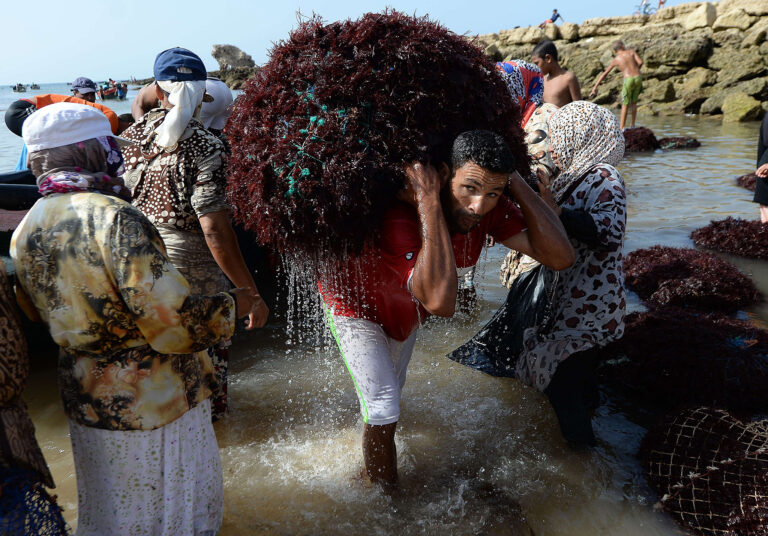
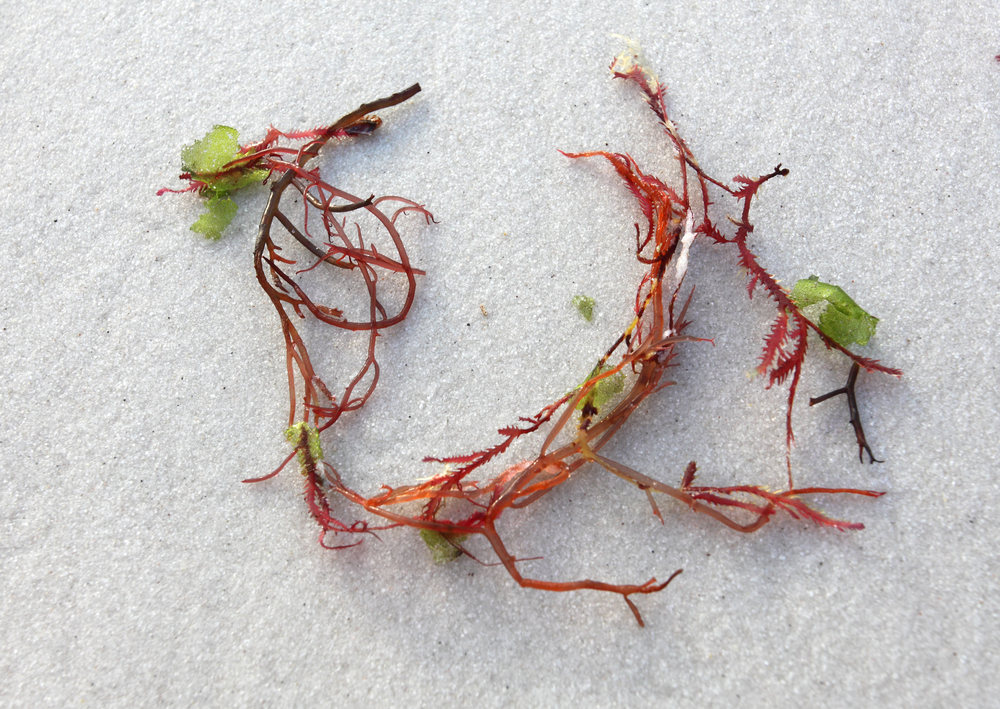
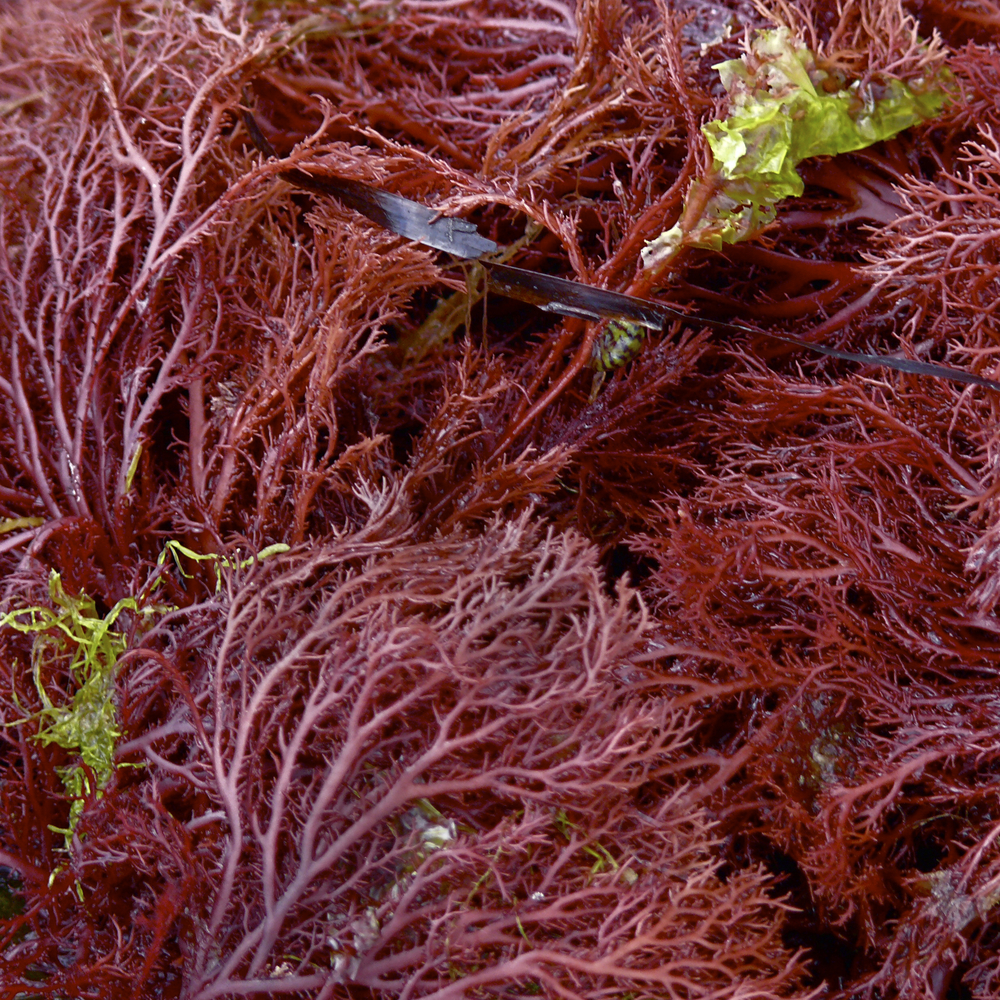
Sudden food crazes cause more havoc than we can imagine or perceive. Morocco is now battling the impacts of excess demand for “red-gold” sea weed, an alternative to animal-sourced gelatins for strict vegetarians.
The quinoa craze turned what was once a cheap, nourishing staple diet for Bolivians and Peruvians into an unaffordable grain for many of the poor locally. Read here about the dirty secret of quinoa. The appetite of western culture, and fanatic vegetarianism has increased demand for quinoa stratospherically: in 2013 the price of quinoa tripled from 2006 prices.
Prices have risen to such an extent that the poorer populations of Peru and Bolivia can no longer afford it and instead substitute for cheaper imported junk food. In Lima, quinoa now costs more than chicken and outside the cities land is increasingly being turned into quinoa monocultures.
Gaga for agar-agar
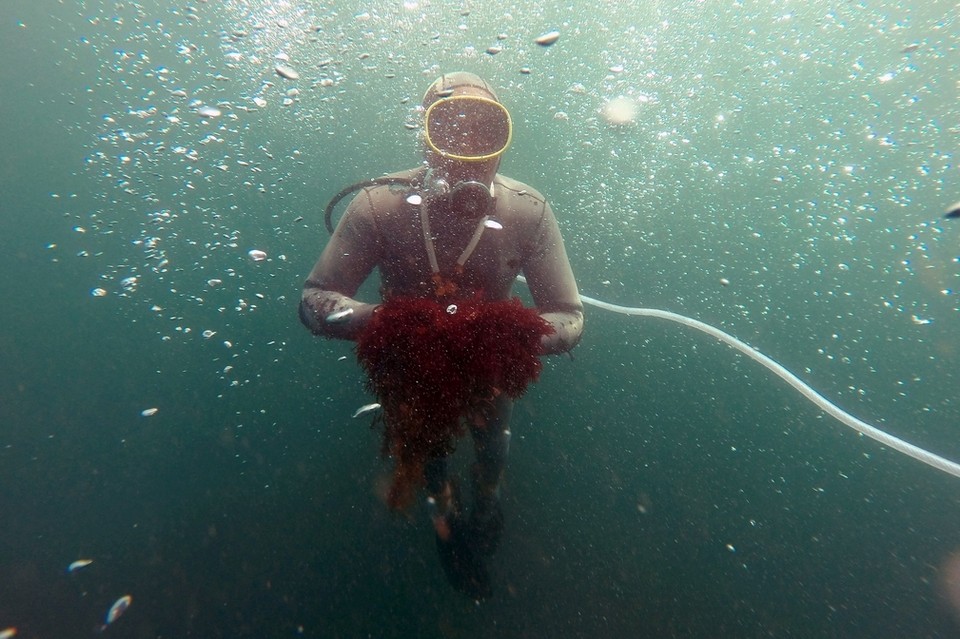
A similar story is happening in Morocco, El Jadida, with “red gold” a mineral rich seaweed used to produce agar- agar a natural gelling agent popular with cooks and professional chefs, used in pharmacology and cosmetics and an alternative to animal-sourced gelatins for vegetarians and religious groups that ban pork.
Over in Japan, agar is used for sauces, soups, jellies, and desserts. In the Western world, it is used as a gelling and stabilizing agent by meat and fish canneries, and in baked goods, dairy products, and candies as well.
In 2010 over exploitation pushed the fishing ministry to place quotas restricting its harvest, and today rising demand and falling supply has resulted in increasing export prices.
Agar-agar is an important gelling agent for people who cannot consume pork products, like Jews and Muslims. But it is also a staple for vegans.
Yet fishermen and are not seeing the economic benefits from these rising prices, research has shown that fishermen often sell the produce half the price pre-established by the quota and are forced to dive deeper, with dangerous consequences in the hope of finding this increasingly scarce, expensive “gold” (which by the way, currently sells at 0.4 USD per Kg- so not really gold) .
Killing Morocco’s ecosystem and society
Aside from the negative social consequences, overharvesting seaweed also has obvious negative to the local marine ecosystem. Seaweed plays a major role in marine ecosystems , in fact they are considered “keystone species” since they are one of the first organism in marine food chains.
They provide nutrients and energy for animals, either directly when fronds are eaten, or indirectly when decomposing parts break down into fine particles and are taken up by filter-feeding animals. Seaweeds also act as filters by taking up nutrients and carbon dioxide from seawater reducing local coastal eutrophication and ocean acidification.
What was once ordinary red algae, has now become “red gold” with negative consequences on the fishermen and the environment.
We have to remember that nowadays crazes have a more significant impact than in the past. Globalization, increasing communication streams, increasing population, and rising incomes and the concomitant increase in purchasing power means that the decisions we make today have a larger ripple on effect on populations and environments that are far from our sight.
Using exotic foods, supplements and medicine to fulfill health habits, or becoming fanatic about not using certain produce may not be the answer to a more sustainable, global economy.
Looking at your own country’s tradition, local crop and seed wealth and medicinal herbs is just as efficient at supporting health and has a marginal and sustainable impact on local economies. Like always, balance is the key and the solution lies right next to you.
Such huge disparities will ultimately lead to widespread unrest, warns Deborah Wheeler, a professor at the U.S. Naval Academy who specializes in Middle East politics.
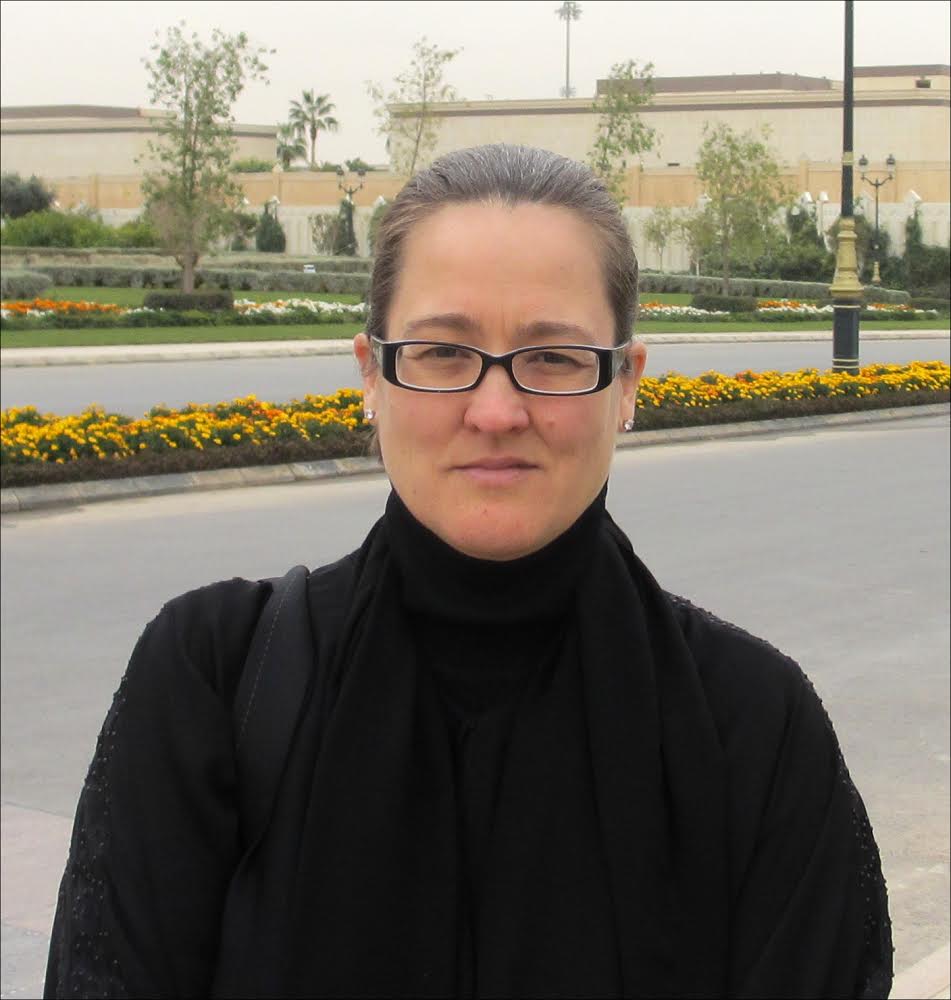
Wheeler (pictured below while on research in Kuwait) was one of a dozen experts meeting Oct. 16 at Virginia’s George Mason University, just outside Washington, for a summit on global food security and health.
“The United Nations says we will add two billion people by 2050 and an additional one billion by 2100, for a total world population of around 10 billion,” said GMU public policy professor Kenneth A. Reinert, a frequent consultant for the World Bank, the World Trade Organization and the U.S. Department of Commerce. “Approximately one billion of these additional individuals will reside in Africa, and another one billion in Asia. Both Africa and South Asia are currently basic goods-deprived environments.
Even worse, he said, “the majority of countries whose population growth is expected to be fastest in the future are precisely those showing inadequate food consumption and high levels of undernourishment.”
At the other extreme are a handful of small Arab states in the Persian Gulf that owe their mind-blowing wealth entirely to oil and gas. Qatar’s annual per-capita income exceeds $100,000, making that country’s 2.1 million inhabitants among the world’s wealthiest. Excluding migrant workers who form the vast majority of Qatar’s population, per-capita GDP jumps to nearly $690,000.
Oil rich but very food insecure
Yet Deborah Wheeler, a professor at the U.S. Naval Academy, sees dark clouds on the horizon.
“These countries depend more than 90 percent on the global food market to eat and drink,” she said. “Kuwait imports 98 percent of what it eats and drinks. It makes sense for them to import. But relying on that global market is becoming increasingly problematic.”
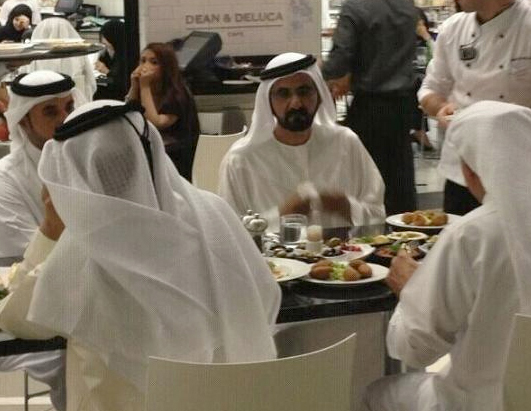
Wheeler, whose presentation at GMU was titled “Food Security and Gluttony in a Water Scarce Region: Lessons in Sustainability from the Arabian Gulf,” showed her audience a photo of the glitzy new Dean & DeLuca gourmet food emporium in Kuwait City. At 21,500 square feet, it’s the largest Dean & DeLuca franchise in the Middle East.
Another image was of the new Cheesecake Factory outlet at a Kuwait City mall.
“We’ve sent all our worst habits to the Gulf, and they are very happy to have them,” she said. “The Gulf countries are a perfect lab for studying non-communicable diseases. Diabetes is growing faster here than anywhere else on the planet, yet they’re in a water-scarce region — and it’s oil wealth that allows them to mask this problem.”
Wheeler, a political scientist, has done research in Kuwait, Oman, Qatar, Saudi Arabia, Jordan, Egypt, Tunisia, Syria, Morocco, Israel and the United Arab Emirates. She specializes in information technology diffusion and its impact on the Arab world, as well as gender issues and the Palestinian-Israeli conflict. She said that in Kuwait, 70 percent of the adult population, and 48 percent of all adolescents, are either overweight or obese.
Food insecurity could lead to radicalization
“As we know, as GDP goes up, consumption is transformed. These are rich countries and they eat like rich countries. The problem is, they don’t produce anything they eat,” she warned. “In spite of having all that oil wealth, which allows them to live way beyond their ecological footprints, we’re starting to see cracks. How did the Tunisian revolution start? A vegetable seller set himself on fire. That led to a transition.”
Wheeler added: “These countries are so fragile. As soon as they collapse, we’re going to see massive Islamization.”
In fact, Kuwait, Qatar, Saudi Arabia and the United Arab Emirates rank in the bottom 10 percent of the world’s sustainable nations. All of these countries have seen population growth exceeding three times the global average, yet during the same time there’s been a rapid decline in the amount of available fresh water.
These countries are also among the biggest food wasters in the world, producing 150 million tons of municipal garbage a year. In addition, they release more carbon into the atmosphere on a per-capita basis than anyone else. Yet they don’t produce anything, which is why the Gulf Cooperation Council’s food import bill has jumped by 105 percent since 2010; experts estimate that the six GCC nations will spend a combined $53 billion a year on food by 2020.
“These people lead highly consumptive lifestyles that are ultimately dangerous to public health,” Wheeler said.
It’s no wonder diabetes is through the roof in Kuwait, Qatar and the UAE; citizens of the GCC nations consume an average 3,700 calories a day. They also have the world’s highest per-capita water consumption, even though their countries are among the driest on the planet.
“People are aware of the fact the cost of living is increasing rapidly. And what are their governments doing? They’re cutting subsidies. This leads to public protests in places where we don’t expect it,” she said, adding this is why Washington needs to be concerned. “Last summer while I was in Kuwait, there were public demonstrations in support of Islamic State. They’re upset with their government, and any movement that looks like it might sweep that existing government out of the way will get their support.”
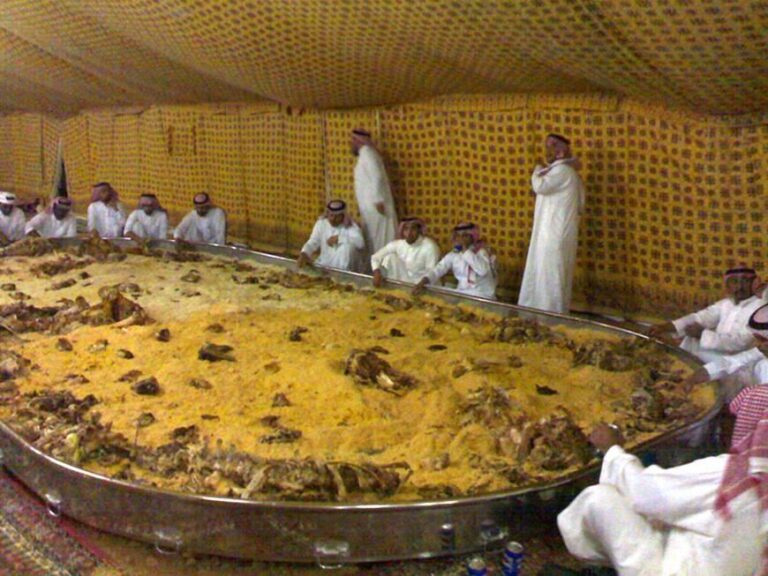
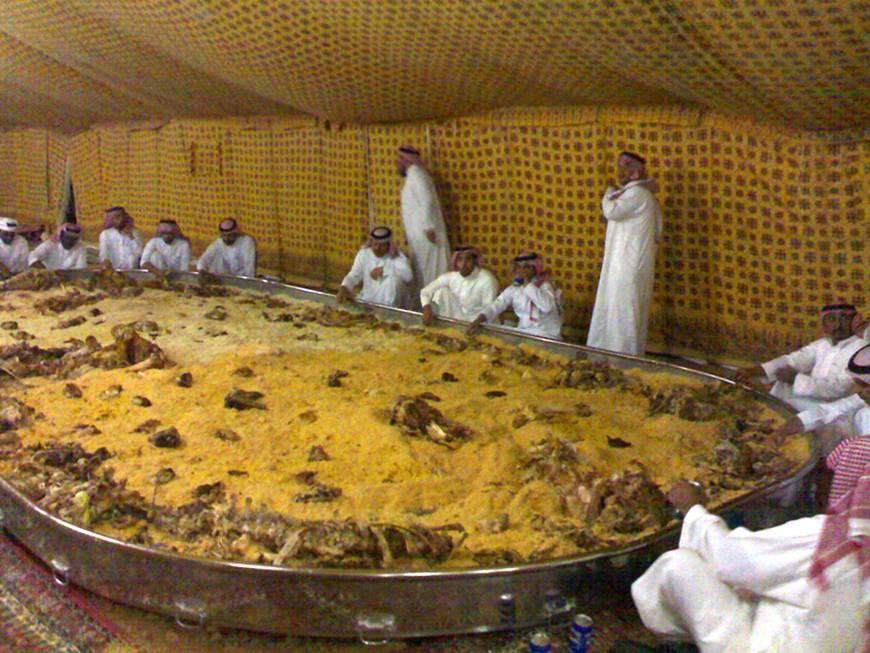
Image of Sheikh Mohammed Bin Rashid Almaktoum from 965malls; top image of kabsa mandi from Saudi Arabia from UCAELI
تنطم قمة المياه العالمية المقامة ضمن فعاليات أسبوع أبوظبي للاستدامة مسابقة لمبتكري تكنولوجيا المياه في يناير من العام 2015، إذ ستمنح شركة آيل لاستشارات التكنولوجيا الفرصة لمبتكري تكنولوجيا المياه ليعرضوا أفكارهم أمام لجنة من الخبراء في هذا القطاع من علماء و مستثمرين و مستخدمين في منطقة الشرق الأوسط و شمال أفريقيا
و يعد أسبوع أبوظبي للاستدامة أضخم تجمع في المنطقة لتكنولوجيا و خدمات الاستدامة، و قد كنا جزءا من هذا الحدث في السنتين الماضيتين كما سنكون في السنة القادمة أيضا
و قد وجه منظموا المسابقة دعوة عامة لتقديم الأفكار التي من شأنها أن تحدث سبقا في تكنولوجيا المياه في أسواق الشرق الأوسط، و ستمنح القمة الفرصة لمبتكري هذه الأفكار لإبراز خصائصها أمام خبراء من جميع أنحاء العالم. و سيستمر قبول الطلبات حتى 25 نوفمبر 2014 عبر صفحة المسابقة أعلاه، و تقسم المسابقة إلى ثلاث فئات، هي: مياه البلديات، مياه الصناعات، و مياه العقارات. و قد نوه المنظمون إلى ضرورة تضمن الأفكار خصائص الإبداع و الريادة بعد النظر. و تلك الأفكار التي سيقع عليها الاختيار للتأهل، سيتم دعوة أصحابها لتقديمها على الهواء مباشرة أمام اللجنة المختصة
تقدم قمة المياه العالمية فرصة نادرة لاختراق سوق صناعة الاستدامة متسارع النمو في منطقة مجلس التعاون الخليجي، الذي تنوي حكوماته تخصيص 300 مليار دولار لمشاريع و تكنولوجيا المياه و تحليتها حتى عام 2022. و هذه النسخة من القمة ستكون الثالثة، و ستسمر على مدى ثلاثة أيام من 19 حتى 22 من يناير 2015، و ستقام بالمشاركة مع هيئة مياه و كهرباء أبوظبي
و قال ستيوارت موس، القائم بأعمال مدير شركة آيل، معلقا على القمة: طبعا تعتبر هذه المسابقة فرصة رائعة لشركات ابتكار التكنولوجيا، كبيرها و صغيرها، للوصول لأسواق الشرق الأوسط و شمال أفريقيا – تلك المنطقة من العالم التي تعاني من ضغوطات كبيرة متعلقة بندرة المياه، و بالتوازي مع مخططات لانفاق مبالغ استثمارية ضخمة للمجيئ بحلول. و أضاف: هي منصة أيضا لبلديات الدول المجاورة و هيئاتها لإدارة المياه لاكتشاف التكنولوجيا الجديدة في هذا المجال، و الاتطلاع على ما يتم تنفيذه في المناطق الصحراوية الأخرى في العالم
و تصنف منطقة الشرق الأوسط و شمال أفريقيا على أنها منطقة ذات ندرة مائية مقارنة بغيرها من البقاع، و تعد أيضا من أكثر المناطق تسارعا في معدل استنزاف المياه. و في مقابلة أخرى، قال ناجي الحداد، و هو مدير معرض القمة: قد أظهرت هذه المنطقة استعدادها للبحث عن التكنولوجيا اللازمة و الاستثمار فيها حتى معالجة مشكلات المياه التي تواجهها، أما المسابقة فهى منصة لتحقيق هذا المراد
و تقام القمة تحت رعاية الفريق أول سمو الشيخ محمد بن زايد آل نهيان، ولي عهد أبوظبي ونائب القائد الأعلى للقوات المسلحة لدولة الإمارات العربية المتحدة، و بتأييد من وزارة البيئة و المياه للدولة و هيئة البيئة في أبوظبي و مكتب التنطيم و الرقابة لشركة أبوظبي لخدمات الصرف الصحي. و ستتكلف شركة ريد للمعارض بتنظيم الحدث
Severe air pollution in many locations is making it hard to breathe in the Middle East. Every year there is a massive black-out in Egypt during the season when straw waste is burnt. Now you can see the fires, thanks to NASA.
Cairo’s air has been found to be the most polluting in the world in 2007.
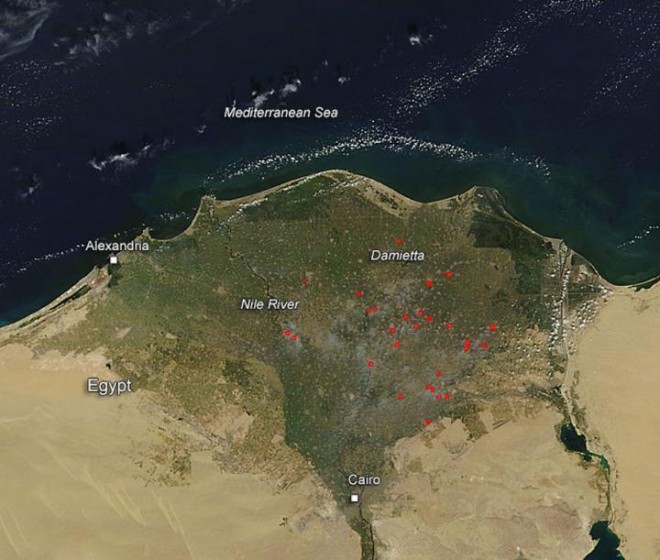
To add “fuel to the fire” Egypt is now experiencing its annual wave of “straw fires” in it’s northern Nile Delta region.
There, local rice farmers set fire to rice straw in numerous Nile Delta areas, following the annual rice harvest. This results in large heat index increases that are shown as “hot spots” as detected by NASA satellite images, shown above.
The polluting smoke caused by these fires eventually is felt in the country’s major population areas, like Cairo. This adds to already large amounts of existing air pollution caused by vehicles, factories, and other air pollution sources.
Often referred to as the “black cloud season”, this thick combination of intense air pollution is exasperated by 12,600 factories pushing emissions into the atmosphere.
Now considered to be an annual event, this pollution phenomenon is increased by as much as 45 per cent during the annual rice straw burning in the Nile Delta.
Silver lining: Urban agriculture sprouts in Cairo
“Burning rice straw accounts for six percent of Egypt’s air pollution throughout the year, but during the rice harvesting season this figure jumps to 45 percent,” said Environment Minister Maged George to a local paper.
The burning of so much rice straw and other waste products is what results in the “fuel to the fire” of Egypt’s increasing air pollution problems. And our consumption of these products from lands far away doesn’t help. While last year there was a ban on exporting rice, it seems this year the ban has been lifted.
Egyptian medium grain rice mainly competes with US and Australian rice in global markets and goes for about $800 a ton.
Read more on increasing Middle East air pollution:
While visionaries like Elon Musk are trying to make electric cars like Tesla mainstream in America, electric cars have yet to become commonplace, largely due to their cost and low driving range.
A number of countries are now involved in developing electric car technology that will give these vehicles a sufficient cruising range, while being more affordable than the $80,000 price tag of the Tesla versions.
One of these cheaper possibilities is from a student engineering team at Turkey’s Istanbul University. They who have developed a prototype electric car called the T1. The development team is called Project Yerel.
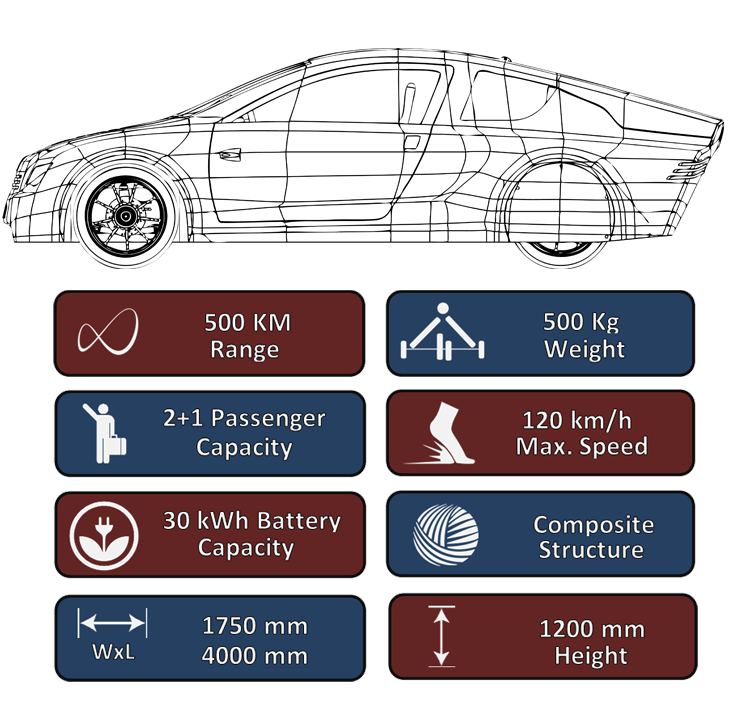
Weighing in at only 500 kg (or 1,100 lbs), the T-1 can carry 3 passengers at speeds up to 120 km/h (72 mph). The T-1 prototype was produced at Turkey’s Yerel Elektriki Araba, a research division within the university’s engineering department (link only available in Turkish).
The quest for driving range factor continues, in spite of efforts made by the now defunct Better Place battery swapping technology from Israel. As we mentioned above, another EV car innovator, Tesla Motors, produces electric sports cars and salons which can go as far as 400 km (or about 350 miles) between charges.
Although the Tesla models do go further than the Better Place Renault ZE cars did, the Tesla models high cost prevent them from becoming “everymans’ electric car, especially in locations like the Middle East. Well not all locations. Some regions like Abu Dhabi fancy themselves driving biofuel cars made from white gold, like this Mercedes.
Student inspects the T1 electric car under the hood
We digress…the Turkish EV, the YEREL T-1 was tested on a road course the ran literally in a circular path of Turkey, beginning and ending in Istanbul. The kids who built it literally lifted it up onto the cargo truck with their bare hands.
Test driving with Project Yerel in Turkey
The charging time for the 30 KWH of energy needed to propel the car for its alleged cruising distance takes only 4 hours. Even though the car is so light in weight, including it’s battery pack, it might be wondered if this is really as claimed. This skepticism is due to comparing it with electric car battery technology other EV car models; including those in the Tesla models, whose batteries can weigh as much as 250 kg.
In any case, the lesson learned from Better Place’s “post mortem” is that a project involving electric car technology innovation may not actually work out in the long run due to a number of factors. This the fate that befell Shai Agassi’s electric car network dream; and which could eventually befall Elon Musk’s Tesla electric car company as well.
We’ll now be awaiting more information about the new Turkish Yerel T-1 prototype.
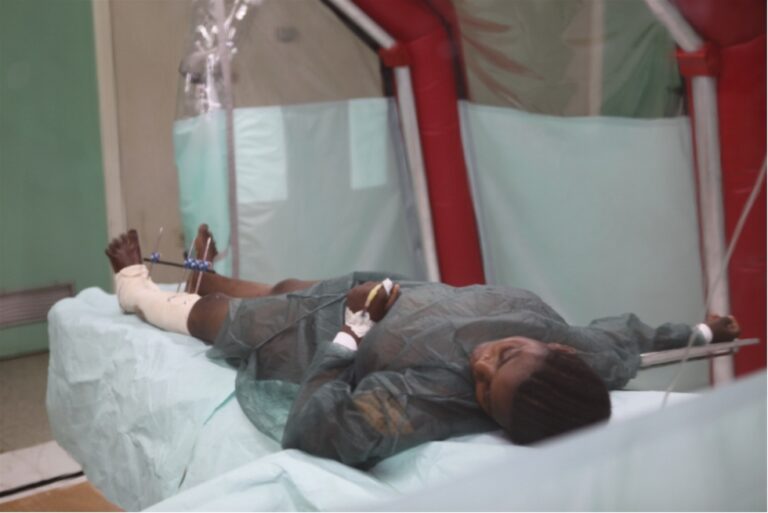
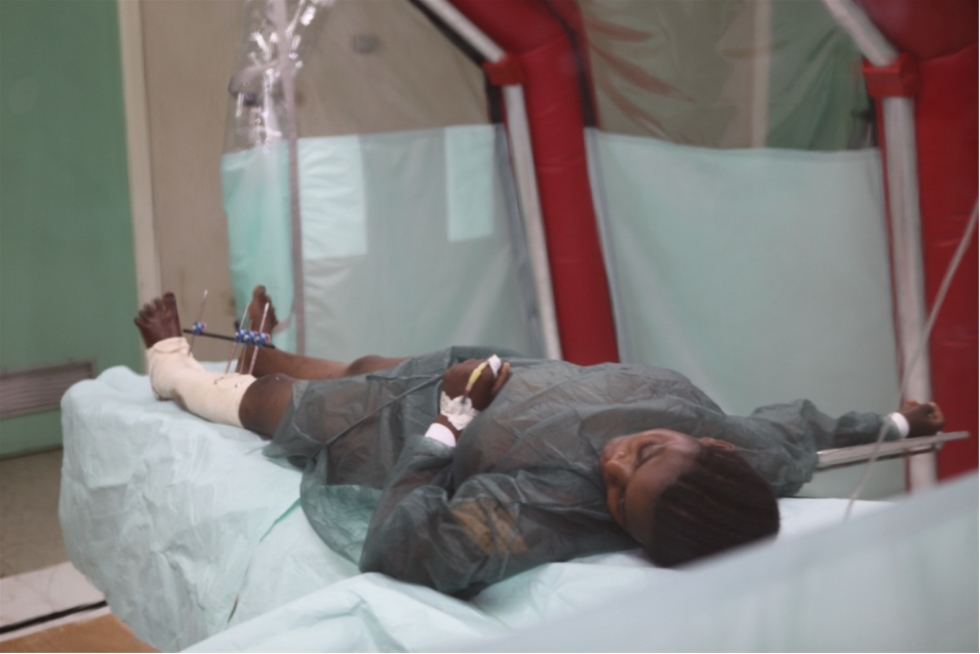
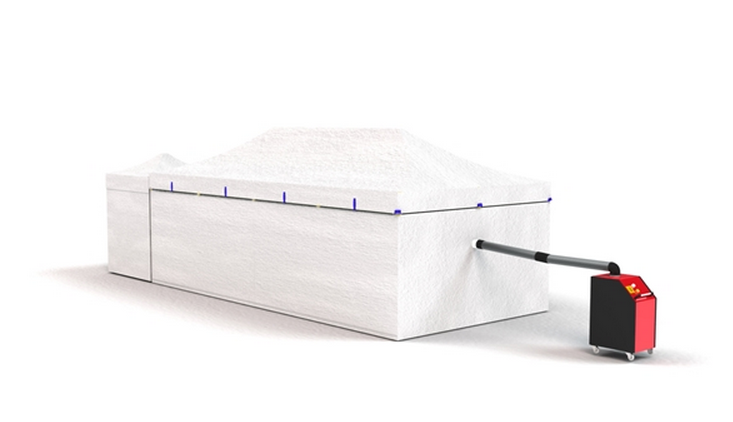
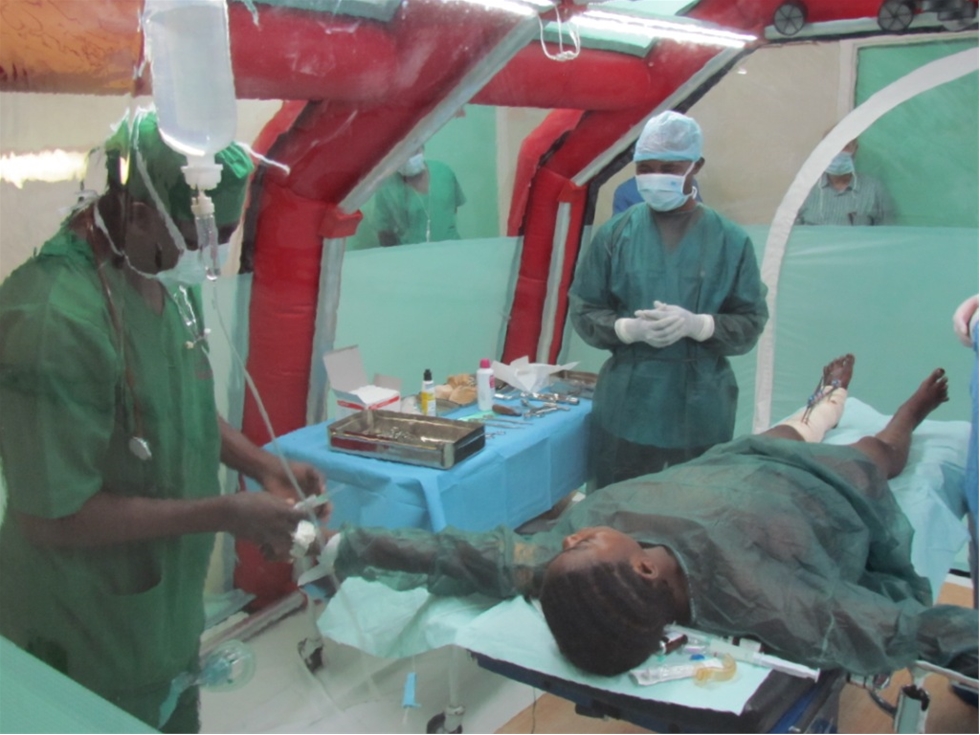
The Israeli company Sys Technologies are ramping up efforts to produce their special isolation tents in the global fight against Ebola. The special inflatable tents isolate the environment around the patient so that others, including doctors are not infected. Sys has already started selling its special tents, pictured in white below, to Guinea, while nearly countries have put in orders.
While the number of infections are low in the Western world, the majority of the death toll to Ebola is Africa where some 10,000 people are infected and some 5,000 people have died. The United Nations WHO, World Health Organization is desperately looking for ways to stop the spread of the virus and this Israeli solution could be one hopeful contender.
Sys tents use negative pressure to isolate Ebola victims
Yossi Yonah, the inventor of the tent which relies on negative pressure to suck in air from the tent so it doesn’t go outward said to local media: “There is currently no effective treatment for Ebola, so the principal weapon against it is to isolate the patients so that others aren’t infected. Our units are far more readily available than other mobile structures, and they are hermetically sealed and protect the surroundings from the patients.”
Sys portable tents invented for combat and natural disasters
The tents are completely sealed and the company Sys has also developed a special stretcher to support people with the Ebola virus so they can be isolated from other people effectively.
A new student campaign at a British university is urging people everywhere to “take the piss out of water shortages” by peeing in the shower. You heard right. The practice is pitched as a time-saving tool with a significant environmental payoff – each time you indulge in this guilty pleasure you stand to save up to 10 liters of drinkable water, the amount needed to flush a standard toilet.
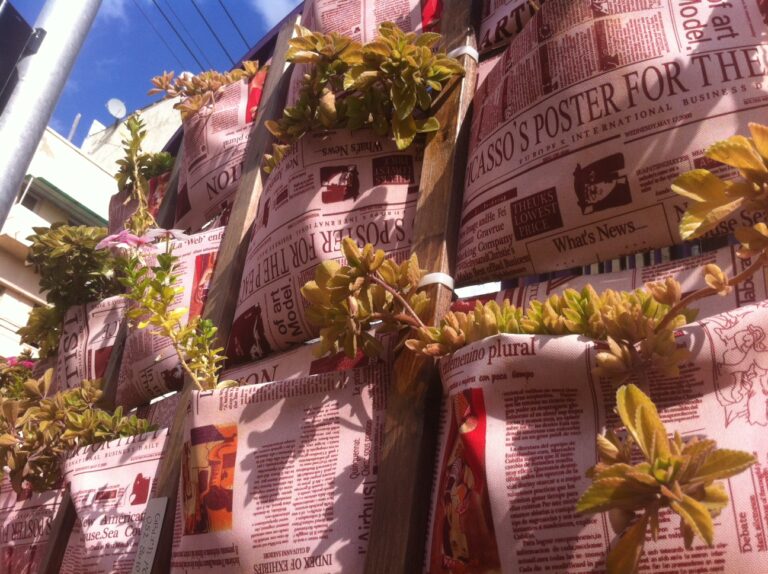
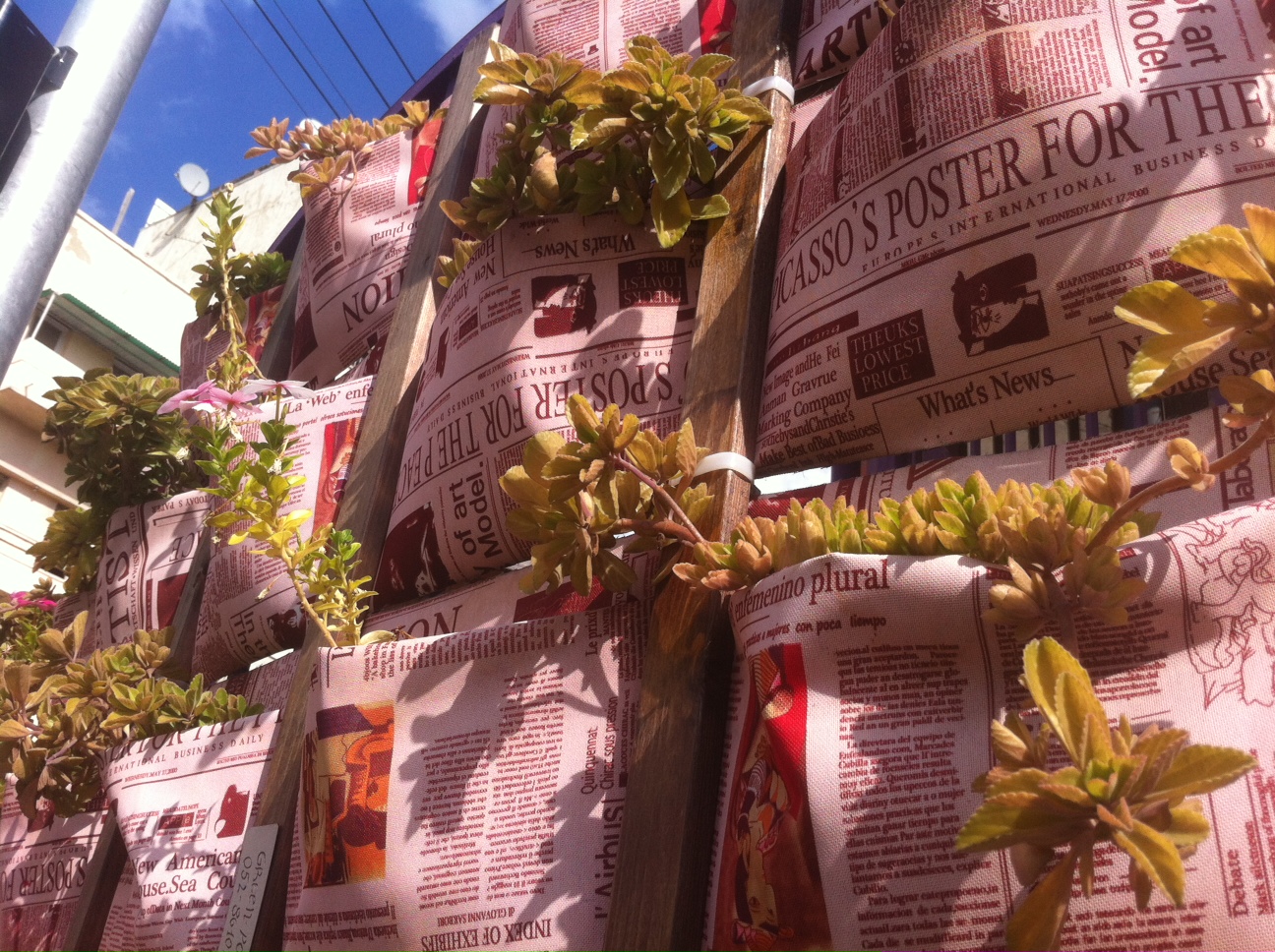
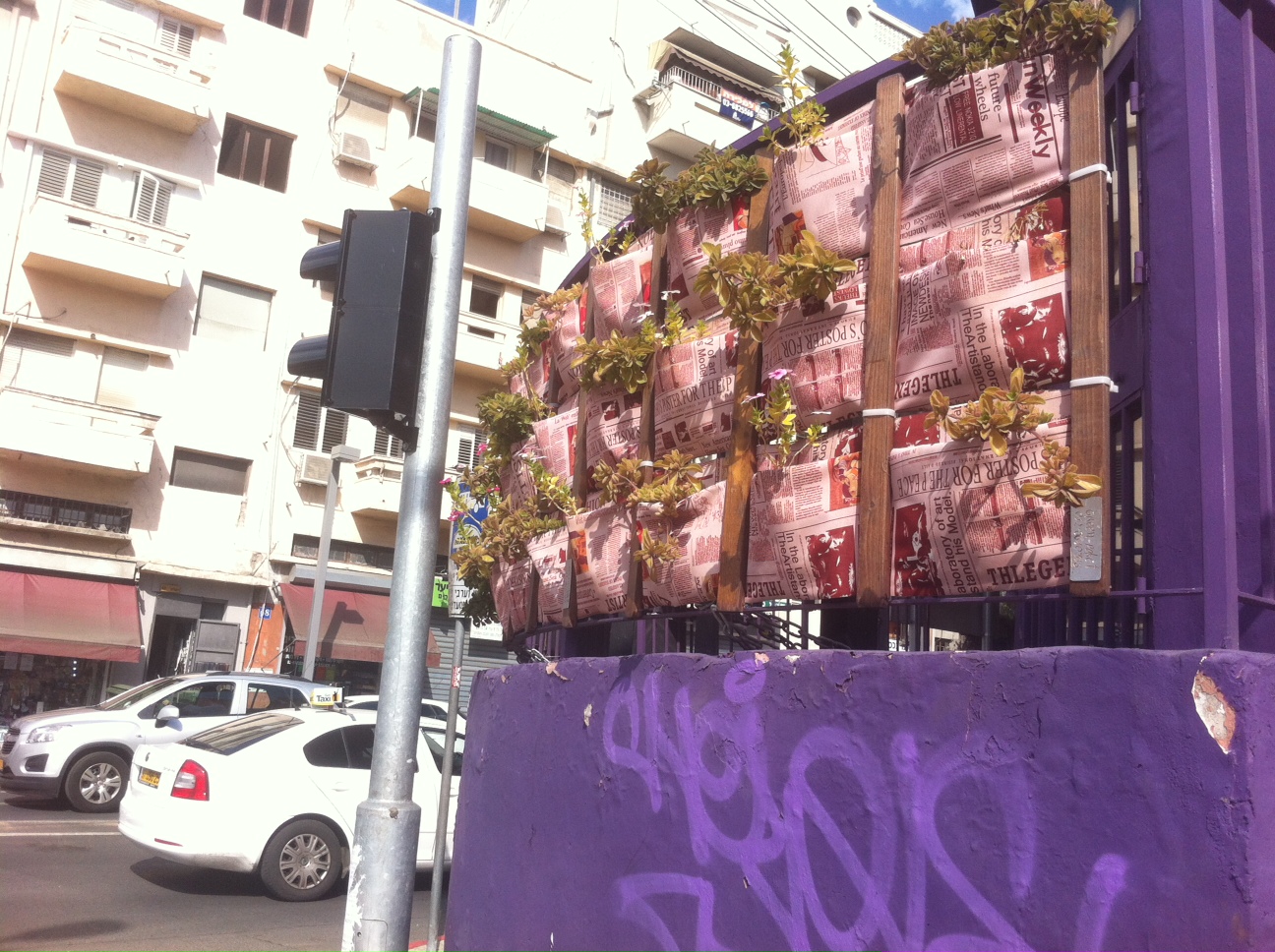
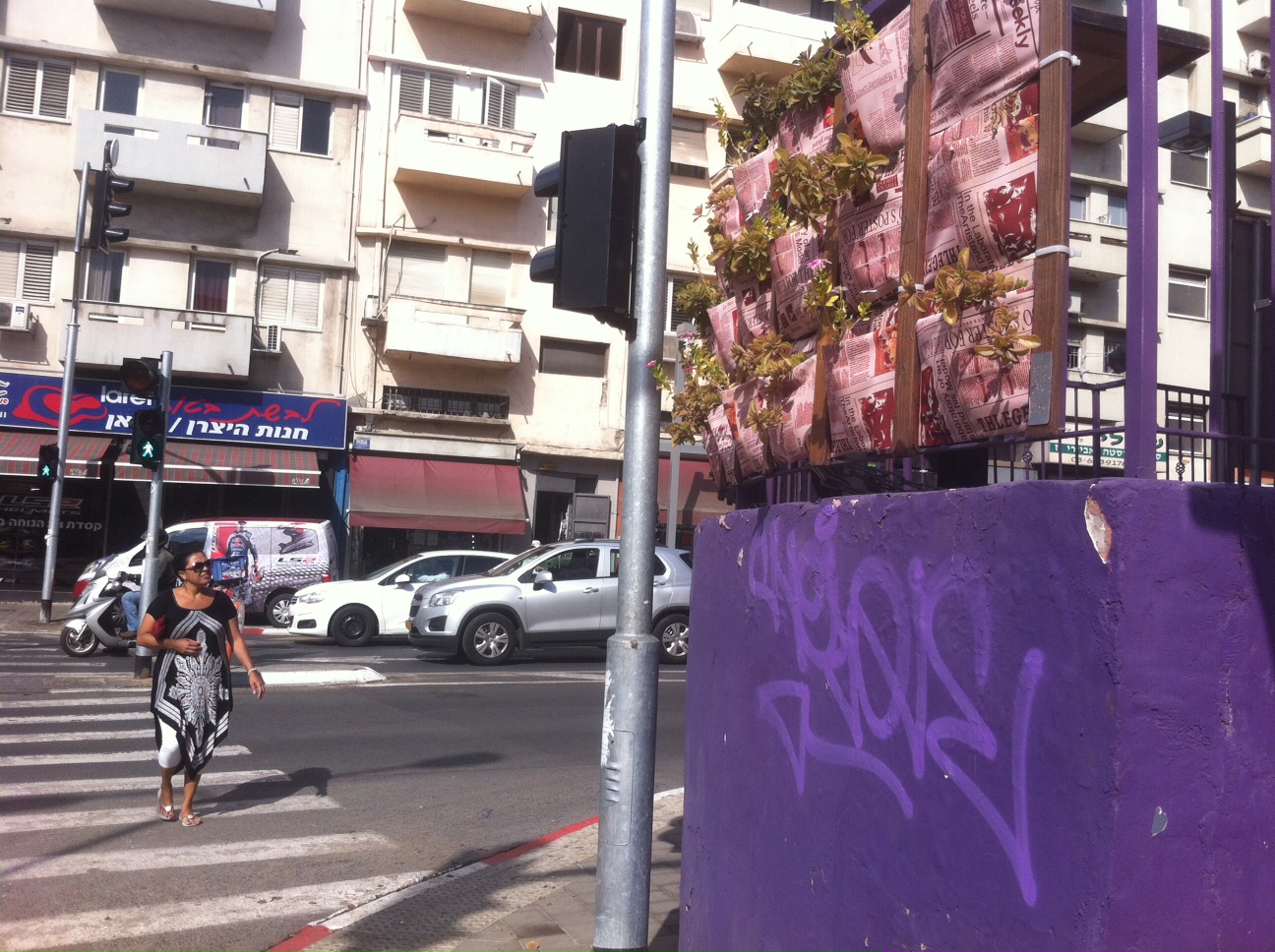
It’s officially a craze! People are starting to garden everywhere in the urban environment. From rooftops in San Francisco to patios in Tel Aviv and Dubai, people are starting to understand that producing one’s own food is a smart way to take control of one’s own diet and carbon footprint. Spotted here is a nice urban design in Tel Aviv called Green Pokets.
Vertical gardens can be complicated hydroponic set ups with pumps and sensors or as simple as pockets made from old plastic signage that contain soil.
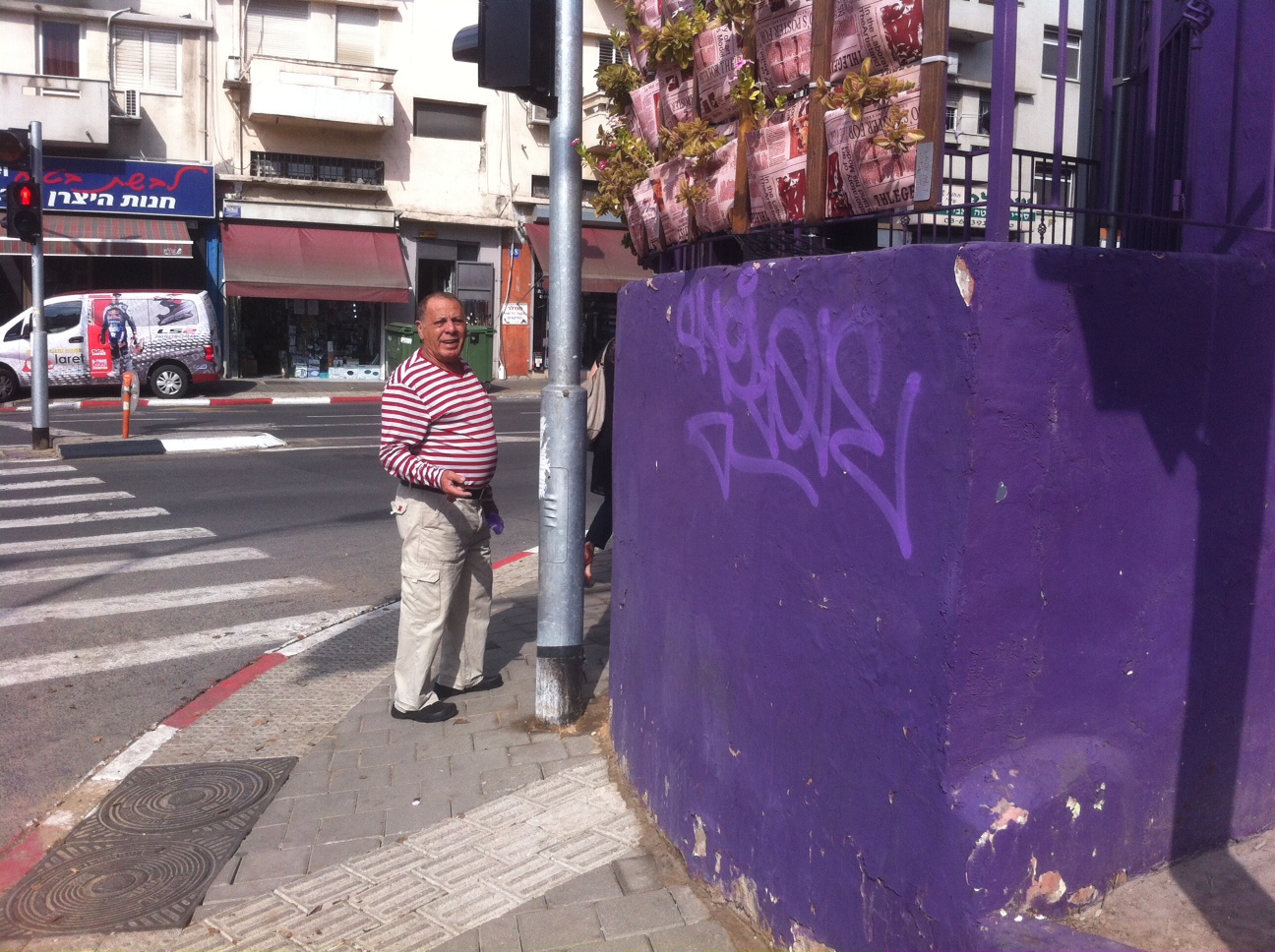
Ma ze? What’s that? the guy asks.
On a sunny day last week Green Prophet spotted these pockets filled with soil and plants pushing up into the warm winter Middle East sun. Make your own or call the number to buy them – if you are local.
These simple pockets, probably mispelled as pokets, were found on Salame Street in South Tel Aviv last week. It’s an area heavily populated by African refugees and working class people.
We caught a couple locals checking out the pockets as we took pictures of these easy to do vertical gardens hanging from a small corner bar patio.
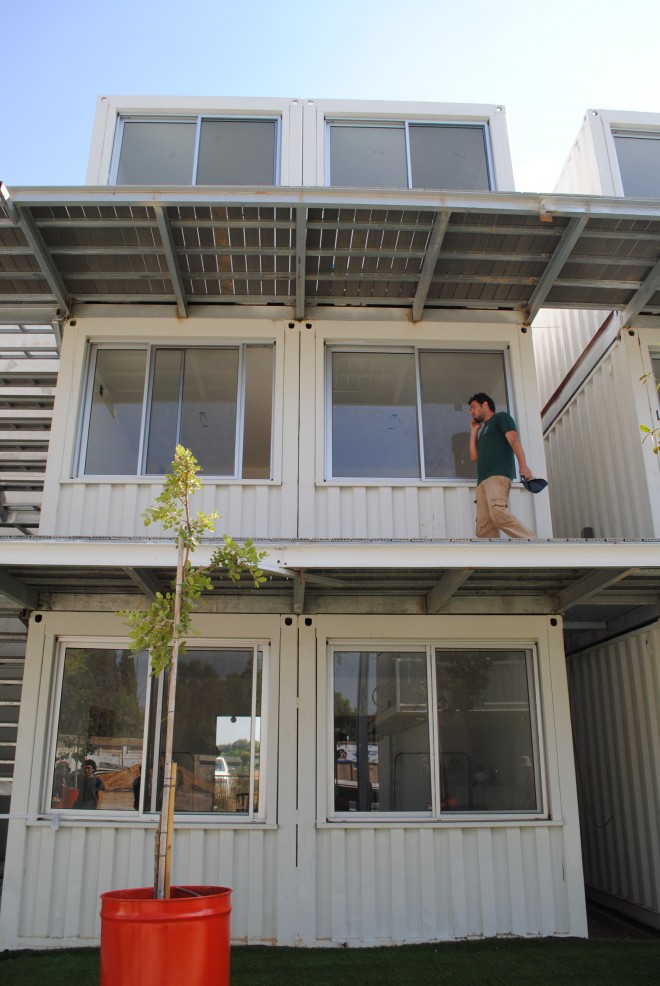
Sderot’s dusty streets and woeful aspect come naturally after enduring years of rocket attacks from the Hamas-controlled Gaza Strip. In this Western Negev town in Israel, all bus stops are small bomb shelters. A traffic roundabout represents the town center, with a pizzeria, a stationary store, and some tired-looking clothing shops around it.
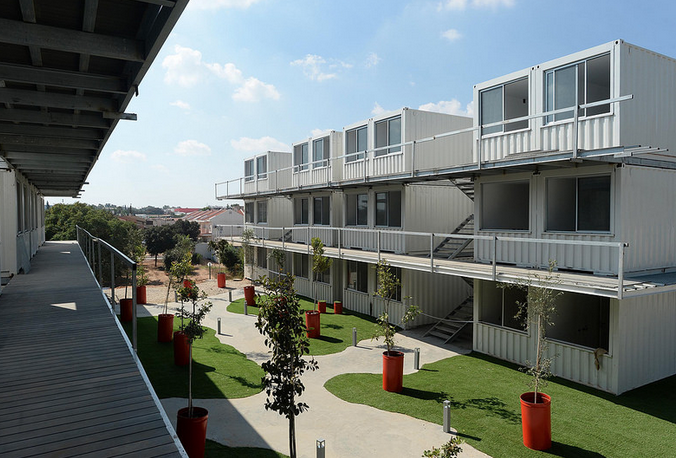
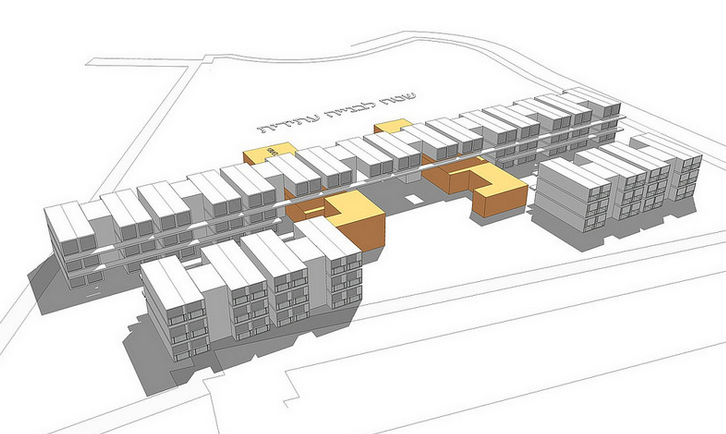
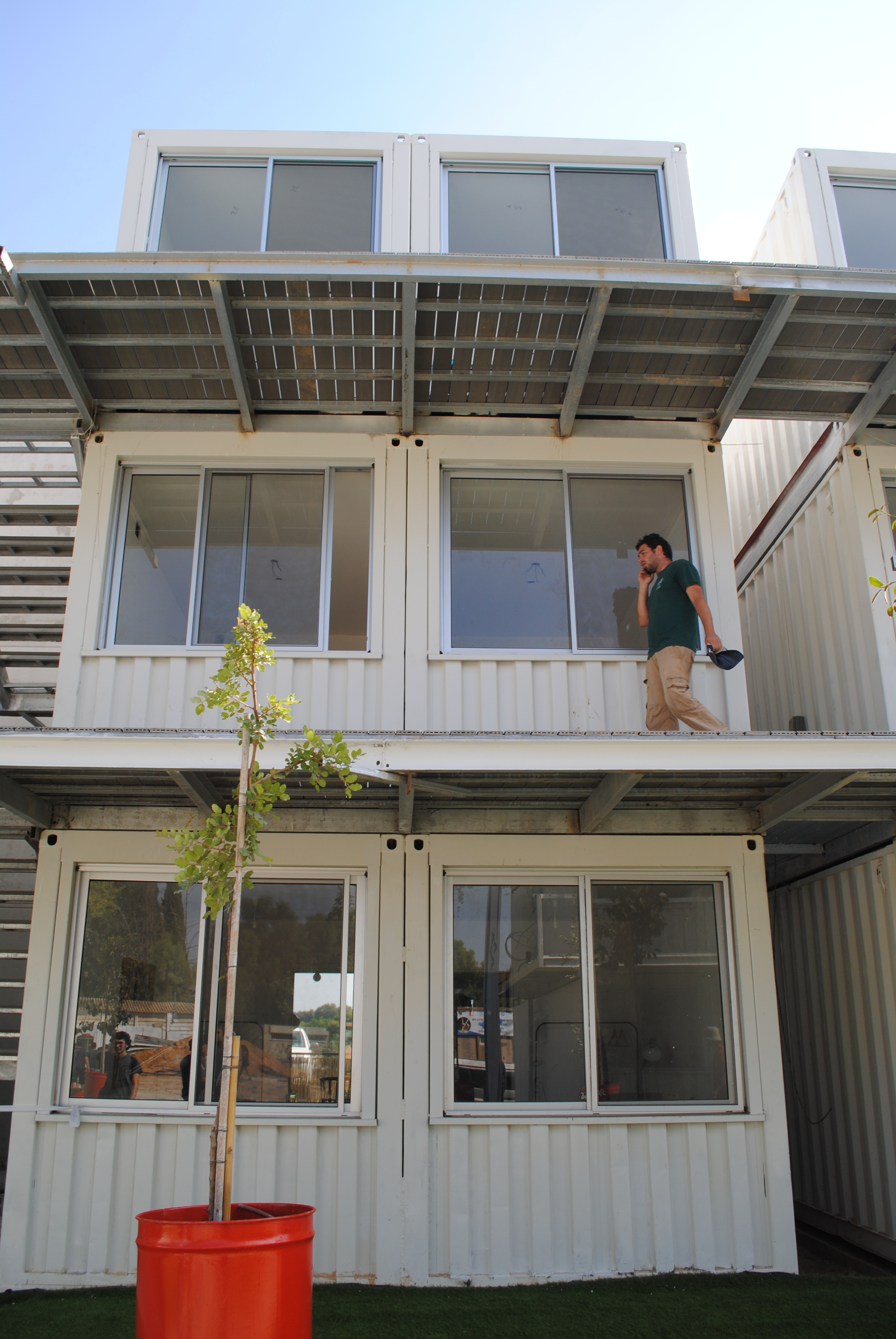
The young, active population has long ago left, seeking better employment opportunities and quality of life elsewhere. But the periphery town has received an boost of young energy and willpower from a new student village constructed by the students themselves, out of recycled shipping containers.
Five to six million shipping containers are on the seas at any given moment. What can be done with them after they’re no longer considered seaworthy? Ayalim, Israel’s largest youth organization, has an answer: construct sustainable housing out of them, and rent them out cheaply to students in development towns. The Sderot project is one of 12 such student villages constructed in periphery areas through Ayalim. We wrote about one built in Lod, central Israel.
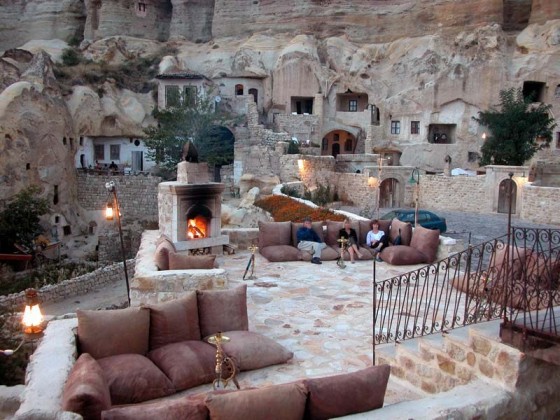
Some advocates of eco architecture say that for preserving the urban space the higher up you build, the better. But with an astonishing amount of desert landscape all around us, in Asia, in the Middle East, Africa and even in the United States, we’re thinking – let’s showcase the buried homes, the sustainable buildings that have gone underground or which are built from caves. Underground homes which use earth as insulation can be heated and cooled passively and overhead, well just imagine the possibilities.
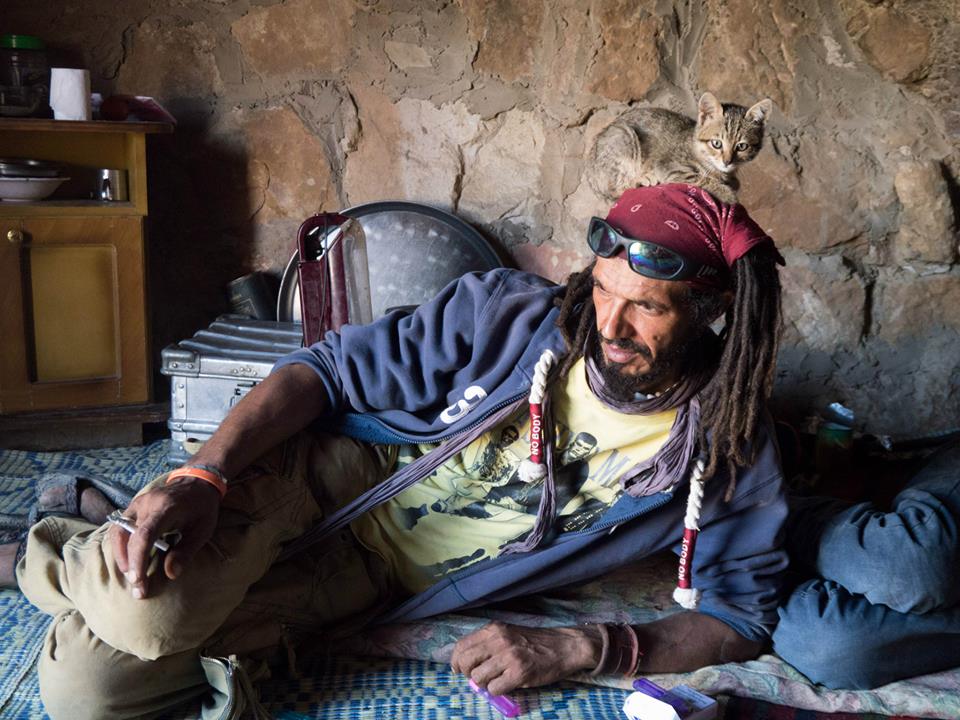
Stay with a Bedouin in his underground cave in Petra, Jordan
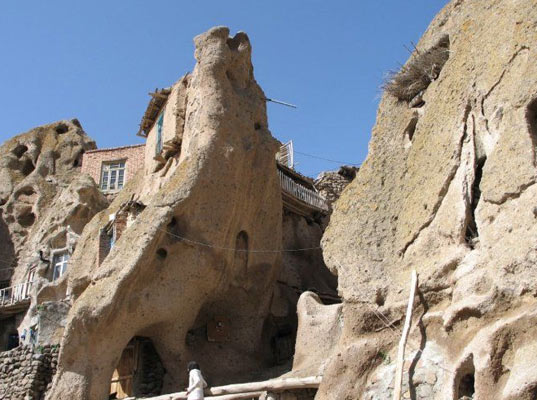
700-year-old underground hobbit cave homes in Iran
Nothing we’ve encountered yet deserves the eco, efficient, friendly, green, sustainable award as much as these seven century old cave homes that are for rent or for sale in Iran. They look like they might have been conceived by Salvador Dali and built by Antoni Gaudí, but indeed these cave homes are much much older than that. Carved into the volcanic rock at the foot of Mt. Sahand in Northeast Iran, the homes comprise both under and above ground space. A novel idea for future off grid architects?
Stay cool in this 5 Star underground hotel in Turkey
We were quite taken with these long-standing caves in Iran, and with this eco-boutique hotel in Turkey, but neither match the style of the restored Yunak Evleri hotel in Cappadocia. With fixings such as marble in the reception area, it isn’t the most modest tourism facility we have featured, but we do love to see history, nature, and travel merge in creative harmony. Once a sextet of cave houses carved out of soft limestone, a little cleanup and modern conveniences were added to this 5th-6th century marvel to produce a 21st century luxury hotel.
Emergency underground desert dwelling
This desert home will save you from climate change. Built 3 stories underground these Underground Desert Living Units by Reynard Loki and Jennifer Daniels is more than conceptual. They are about survival: “You’ve seen it happening in Australia already: Desert is spreading and things just won’t grow,” says Lovelock. “The island nations like New Zealand will be spared that kind of damage.”
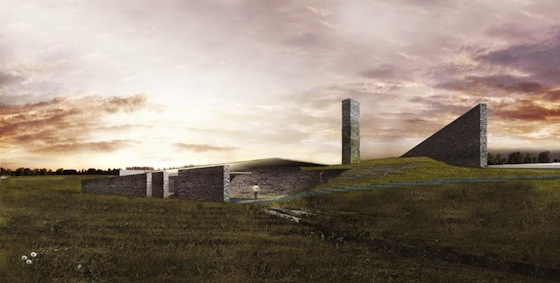
Emre Arolat’s underground Sancaklar mosque in Turkey
We’ve featured some of the world’s most beautiful mosques on Green Prophet, but this is the first that resembles a cave. Slated for a prairie landscape in Buyuk Cekmece on the outskirts of Istanbul, the Sancaklar Mosque by Emre Arolat Architects is designed to offer genuine reprieve from the growing madness of urban life.
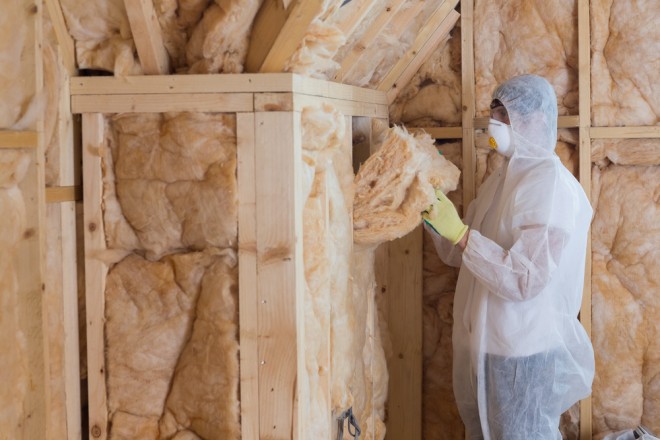
The Kingdom of Saudi Arabia (KSA) will soon require increased insulation in all new buildings across 24 major cities that, in total, account for 80% of the country’s population. The action intends to substantially cut energy consumption and waste; electricity bills can be reduced up to 40% with a properly insulated structure.
Building codes have been around for nearly 4,000 years. The first was embedded in the Babylonian Code of Hammurabi dating back to about 1754 BC. If ancient Mesopotamia was hip to mandated construction guidelines, why is KSA so slow to join in? Especially since nearly KSA accounts for nearly 40% of Gulf Cooperation Council’s construction sector.
It is estimated that only 25.4% of the Kingdom’s buildings are thermally insulated. In Jeddah, 87.5% of the buildings lack insulation, the ratio is 72.6% in the Eastern Province and 51.3% in Riyadh according to a report issued last year. Mind-blowing statistics when you consider the punishing heat gain these structures are subjected to and the resulting cooling loads needed to make them inhabitable.
Hossam Al Rashodi, CEO of Maskan Arabia Real Estate Development Company, told Maktoob News that the Saudi Building Code should be amended to oblige developers to use energy-efficient materials. The Saudi code is based on international standards which specify insulation values with respect to roofs, walls and floors, based on the requirements of US and EU climate zones. That makes for a solid point of reference, but KSA codes need to reflect the climactic and insolation conditions of this specific region.
The code is applicable to all new buildings, but enforcement is lax and most buildings are still constructed without insulation, relying on mechanical air conditioning to mitigate high levels of temperature and humidity. Saudi buildings consume 80% of all generated electrical, 50% of this is used by air conditioning alone, and consumption is increasing 7% annually. At issue is inflated demand based on building inefficiencies and increased urbanization.
Public awareness is also a challenge because most KSA energy prices are highly subsidized; consumers are unaware of the true value of electricity.
Thermal insulating systems do cause construction costs to rise, on average by 3 to 5% depending on building size and function. However, this uptick in first investment is quickly negated by reduced investment in expensive air conditioning systems, lower power tariffs, and less wasted energy over the life of the structure.
Rashodi said that properly insulating walls, roofs and glass in villas yields owner benefits such as reduced energy consumption, sizable utility cost savings, and enhanced comfort of living. Studies prove buildings with lower operating costs are easier to sell, too. Good-to-know-facts that are older than the Kingdom.
KSA is new to legislated sustainability, but it can pick from the world’s best building standards and, as critically, select best means of code enforcement. With bold leadership on the part of government, developers and designers, the enormous capital being invested in KSA construction projects could be a game-changer for green design. Sadly, the KSA construction business is stalled on breaking world records and superficial glitz.