Home Blog Page 258

Palestinian rappers tackle MidEast sexism

1

Palestinian rappers DAM

“I am the dishes, the ironing, I am everything, I am nothing. But remind me: Who are you?” So plays the hook of a new feminist anthem released by the Palestinian rappers, DAM. The video for “Who You Are” plays on sexist attitudes by having men and women switch domestic roles typical in the Middle East, but also familiar across most cultures.

Directed by Oscar-nominated Palestinian filmmaker Scandar Copti, the video is starting to rack up YouTube views. It has an associated social media campaign which asks fans to send videos of themselves challenging traditional gender roles. (See image below, as example.) The song release coincides with the first female singer joining the all-male trio, Maysa Daw, who told the Hebrew-language news site Local Call, “Men try to stereotype women all the time and I just want to ask which stereotypes define men.”

palestinian rap takes on sexism

The video was promoted in partnership with the United Nations Population Fund, which focuses on changing sexist attitudes in the Middle East and improving reproductive health for women around the world.

“We speak out against our own oppressive society, of course, but I believe it is just as important to criticize the hypocritical part of our society, which likes to play ‘make-believe feminism’ from time to time,” Tamer Nafar, the group’s co-founder, told +972. Maybe they can hook up with Tasmanian artist Sonia Singh and have some upcycled and re-feminized dolls feature in their next video to underscore their message.

[youtube]https://youtu.be/CZll1ioI3xg[/youtube]

Brothers Tamer and Suhell Nafar and their friend Mahmoud Jreri founded the hip-hop group in 1999 in Lod, Israel (47 km from Jerusalem). Their name is Arabic for “ever-lasting” and is also the Hebrew word for “blood”. Their songs are mostly themed on the Israeli-Palestinian conflict, poverty, and human rights.

“If we want to be honest with ourselves as artists, we need to target taboos in our own society,” explained Jreri in an Al-Monitor interview in 2013, “Fans want us to focus on the occupation, but the political and social struggle should go together and not be separated.”

Subject matter that crosses cultural boundaries is an excellent catalyst for conversation. Arabs, Jews, and ex-pat foreigners all grapple with issues of modern sexism and feminism. Ideally the message in this video will resonate far beyond Palestine, highlighting  our commonalities and uniting us in a re-evaluation of gender inequality. At least, we can unite around a catchy song.

Lead image by Steve Sabella from the DAM website


Abu Dhabi shoppers planting and painting at the mall

0

Greenhouse at Al Wahda MallIn the large atrium of Al Wahda Mall in Abu Dhabi, parents, children, staff and tourists are just some of the shoppers that can be found. Only they aren’t shopping – they’re planting small trees.

Close by, other visitors stand armed with paint brushes a paint pots, coloring in a large globe.

The activities all part of the mall’s campaign, Make Our Planet Green, to encourage people to be more environmentally aware.

Shoppers can take a break from retail stress and take part in a range of events as part of the initiative. A giant globe on the atrium floor has gradually been colored in by curious passers-by by ahead of Earth Day next week on April 22.

If they’ve spent a healthy amount shopping( AED 250 or US$68), they get to plant a sapling for free in a specially erected greenhouse before taking their young tree home. Alternatively if they’ve resisted from spending their money shopping or just been dragged along for a family outing they can pay a small fee to take a sapling home to plant.

Man painting a giant globe

Many art and environment lovers have also been participating in the Green Earth Sketching Contest. The competition requires them to sketch their version of an eco-friendly earth on eco-friendly paper. The winners of the contest will be announced on April 30 and the person who scoops first prize will get an Al Wahda Mall shopping voucher worth AED 5,000 (US$1,361!)

“We want to educate people about how they could contribute towards a greener planet by organizing activities they will enjoy taking part in,” said Mohammad Nauman Thakur, General Manager of Al Wahda Mall.

“With such initiatives, we believe in connecting with the community and we would like everyone to come here and take part in the ‘green drive’. Everyone should be responsible and do their bit for a cleaner planet,” he added.

Plants at Al Wahda mall

Hundreds of visitors descended on the activity areas on the opening day of the Make Our Planet Green initiative.

“I had visited the mall with my young ones. It was nice to see them getting close to nature and learning about their responsibility towards a greener planet. They had fun planting saplings, it is not something they usually get to do,” said Filipino Maria Guiterez, an Abu Dhabi resident who works in the marketing department of a multinational company.

Aside from this latest green campaign, the mall already has in place environmentally friendly measures to help reduce its carbon footprint and use energy efficiently. The skylight on the roof has sun reflective films to help reduce overheating in order to save power.

LED bulbs have replaced 20 percent of the lights in the mall, and by 2017, the mall hopes that the entire building’s lighting will be using the energy saving LEDs instead of regular bulbs.

Al Wahda also uses an adiabatic cooling system to cut down on electricity consumption of the air conditioning system by reducing heat through a change in air pressure.

Even the restrooms are green! Waterless urinals have been in installed to help save over 400, 000 gallons of water each year.

The Make Our Planet Green event started on April 9 and is running for another week until its final day on April 25.

Images courtesy of Al Wahda Mall.


Cultivate your own “pocket park” with a 3D planted garden

262

wearable planter 2

Wearable Planter is an art and design studio based in Atlanta, Georgia where owner Colleen Jordan creates tiny vases that blur the line between housewares and accessories. The geometric 3D-printed vessels (a/k/a “jewelry for green thumbs”) are water-resistant. Plant one with a bonsai-sized succulent or lilliputian flower arrangement and celebrate spring with a live plant in your pocket!

Colleen JordanJordan explains on her website, “We believe that the world would be a happier place if people appreciated nature a little more, and were willing to carry a plant close to their heart from time to time.” You said it, sister.

The colorful containers prompt smiles. They are made from nylon fiber and dyed in Easter-egg colors, then sealed with acrylic varnish. The planters are available as pendants, rings, brooches and clip-on vases – perfect for tagging your bike handles or baby stroller.Colleen Jordan

Most feature a flat bottom so they can sit on a tabletop when not being worn.  Prices hover around $30, but there are other items besides the 3D-printed vases – such as seed-bomb kits – that don’t break a ten-dollar bill. The business started in 2011 and has a continually evolving product line.

Colleen JordanThree-dimensional printing allows Jordan to create more complex forms than older manufacturing techniques had allowed. The process minimizes waste, centralizes design and production, and reduces inventory as items are made on demand – all of which reduces the start-up’s environmental impact.

wearable planter 3

The vases can be sent anywhere, but postal regulations prohibit shipping plants through the mail. Customers who happen to be in Atlanta can stop by the studio and pick up a plant to pop in their planters. Everyone else can visit their website to learn how to plant their own – with clear directions for working with cut succulents, air plants, and cut flowers.  There are also excellent how-to guides on making your own seed bombs, growing food on a windowsill, creating a terrarium in a light bulb – and general info on playing in dirt.

Syrian refugees share their graphic stories

1

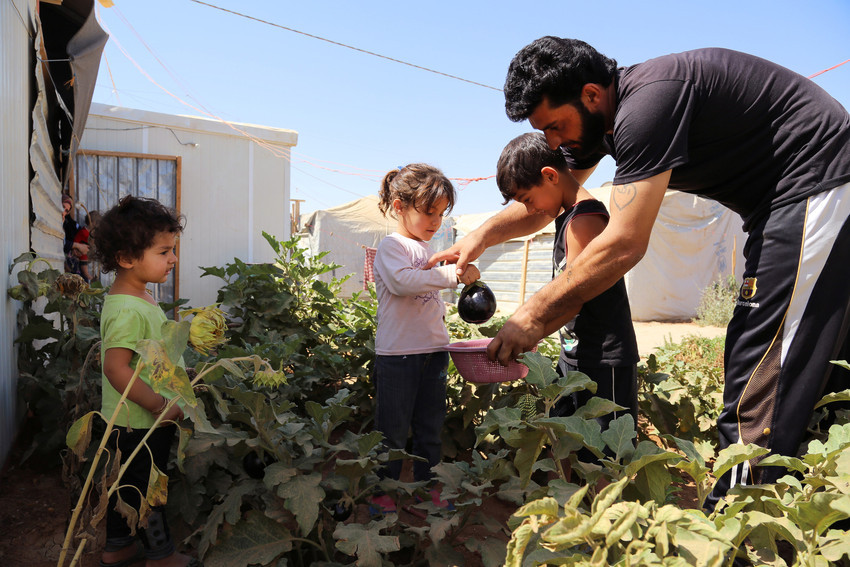
zaatari art workshopThe population at Jordan’s Zaatari camp for Syrian refugees has dwindled. The United Nations Refugee Agency (UNHCR) counts current residents at 83,000, down from over 200,000 in April 2013. People are relocating to communities across Jordan, electing to return to Syria, or simply bailing out of the refugee program. Meanwhile, those that remain – many in their third year of residency – struggle for normalcy within the 1.3 square mile fenced compound. Come see how art is helping.

Meet the innocent looking doll who’s been around the block

0

tree change upcycled dollsThere’s a new toy on the shelf that’s been whipping up online comments that accuse its maker of radically challenging expectations of femininity, enforcing oppressive gender norms, and preaching conformity over experimentation. Some say she’s racist, as there are no dolls-of-color in her line.  Others point to a liberal tree-hugger theme, as they are dressed for back-packing and camping. Living in the Middle East, you become acclimated to intractable differences. But for Pete’s sake, people – these are dolls.

Camels are #1 killers in world’s most fatal place to drive

camels-in-car-saudi-arabia

Saudi Arabia is a dangerous place to drive. It’s the world’s most dangerous, according to recent media reports. Drifting, that past-time where young Saudi males drive their skidding cars into crowds is one cause, but camels, are to blame for about 97% of all accidents and fatalities that occur in the Kingdom, a new study shows. Researchers in Saudi Arabia are trying to figure out how to map roaming camel populations to alert drivers, especially at night so accidents can be avoided.

According to Yahoo!. “The World Health Organization has stated that deaths from traffic accidents in the Kingdom mostly result in the death of male adults between 16 and 36 years old, and has labelled the Kingdom’s roads to be among the most dangerous in the world, with 29 fatalities for each 100,000 road users in 2007, in comparison with 19 per 100,000 in 2002. It was estimated that more than 1 million people died or have suffered serious injuries from traffic accidents since 1970, which is more than 4 percent of the population.”

The Waze for camels?

We like to write about of course about sustainable choices of vehicles, anywhere you might roam, and of course public transport. But mapping camels and helping people avoid them is the topic of a new research project.

The Waze for camels?

“The new study was conducted by King Abdulaziz City for Science and Technology, and was primarily concerned with the design and publishing of a system that depends on geographic information systems to define the locations of big camel populations in order to avoid traffic accidents,” according to Yahoo.

We have a good solution for Saudi Arabia. Let more women drive cars and we bet traffic accidents will fall by half. Oh and follow the infographic below for traffic accident help.


Via: Los Angeles Car Accident Law Firm – Sitkoff

Futuristic dome collectors collect dew for drinking water and crops

2

greenhouse water collector for ethiopia

Harvesting water from the air is not a new idea. Arid countries like Yemen are already using low tech watercones to funnel sea water to drinking water. Another funnelling device is being developed by an Italian designer to trap water vapor in a Warkawater tower to harvest potable water directly from the air.

roots up collect water and dew

Still another device, called the Roots Up Dew Collector, is now being developed for Ethiopia in a project together with the University of Gondar. The device, which can also be used to grow vegetables and other crops, is dew trapping and will be used in the country’s arid northern regions.

The dome-like structure uses plastic sheeting to trap water vapor  during the day, turning it into dew which is then changed into water when exposed to cool evening air.

Roots Up is an organization based in northern Ethiopia that is working together with local farmers to help them use more sustainable agricultural methods to produce crops.

Roots up water collector dew

The greenhouses can be placed over planted crops to provide them wth water as well as producing needed drinking water. Due to not needing any mechanical components (motors, etc), the device can be quicky moved from place to place and then erected quickly without needing any external power sources.  Their overall simplicity makes them a good solution in undeveloped arid regions.

Read more on ways to create drinking and irrigation water from water vapor:

Warka water towers pull drinking water out of thin air
Time to drink water from aircon units
Yemen funnels seawater to drinking water with the low tech watercone

Update 2024: looks like someone needs to make this happen. 

Bio-Pyramid turns Egyptian pyramid into a desert-reversing skyscraper!

5

Bio PyramidSeven designers teamed up on a project to transform an ancient Egyptian pyramid into a green skyscraper that works to reverse desertification. Their Bio-Pyramid concept won an honorable mention in the 2015 eVolo Skyscraper Competition, an award that recognizes outstanding ideas that challenge the way architecture relates to both natural and built environments. Could up-cycling the Great Pyramid into a towering biosphere stop the Sahara Desert from advancing?

When will the Middle East wake up to green roofs?

2

green roofsVive la France!  The country recently passed legislation that requires rooftops on all new commercial buildings to be at least partly covered with solar panels or rooftop gardens. French environmental activists had sought to mandate full green roof coverage for all new buildings, but the new law allows commercial owners the option to install roof-mounted solar panels to generate distributed renewable energy – further lessening the carbon footprint of new construction. Imagine the immediate benefits if the sunny nations of the Middle East slipped this into their building codes, turning acres of flat rooftops into something more than a place to hang laundry and anchor a satellite dish.

Capture your loved ones in custom glass planets?

1

Cremated people turned into jewelry

An artist in northern California (need we add, “where else but?”) is making tiny glass beads meant to look like planets or solar systems encapsulated within delicate glass beads. What makes her creations especially otherworldly is the secret ingredient – cremated human remains caught in dramatic and colorful swirls for eternity. So do we now switch the funereal sentiment to “Rest in Beads”?

Indoor air pollution and the ugly corners it lurks

0

air-pollution-indoor-deskEarlier this month mothers everywhere reeled over hearing about the baby who died from his neighbor’s unlaw pesticide use. While it’s an extreme example, it’s very worth remembering that just because you are inside does not make you free from air pollution caused by cars, industry, and by pest control.

On a darker level, indoor air can cause persistent health effects. Think about a Mediterranean or Middle East winter that rains, rains and rains. Apartments and homes aren’t sealed well or bathrooms are too sealed and black mould builds up everywhere. Or the old lead paint on buildings, and asbestos piping. Or radon gas.

Indoor pollution can be a silent killer. There is dust, mites, dander, chlorine and a universe of things you don’t want to know. The infographic below can show you what may be lurking below the surface of things.

indoor-air-pollution


Thanks to Airfilterbuy for the tip; image of man with gas mask indoors, via Shutterstock

Eco-friendly concrete now mandatory in Dubai

2

No more Portland Cement for DubaiDubai has taken a giant step forward in greening up the city with its decision to move away from ordinary Portland cement (OPC) for all new buildings.  As of April 1, OPC use is limited across the emirate; building permissions are reliant on developers specifying eco-friendly Supplementary Cementing Materials (SCMs). The new requirement aims to give residents a clean and pollution-free environment.

Portland cement is a basic ingredient in concrete, stucco, mortar, and most non-specialty grout. It’s manufactured by super-heating a mix of chalk or limestone with clay to produce a material called clinker, which is then mixed with gypsum and pulverized to form OPC.  There are significant environmental problems related to OPC manufacture, transport and usage:

  1. Quarrying the raw materials permanently scars the natural landscape.
  2. Producing one tonne of clinker requires large amounts of energy (typically coal or petroleum coke) and emits one tonne of carbon dioxide (CO2), plus toxic gases, and pollutants such as nitrogen and sulfur oxides (NOx and SOx).
  3. That tonne of new cement also generates 164 kg of dust, which intensifies global warming and causes increased chance of disease such as asthma and cancer for workers and nearby residents.
  4. Transporting OPC to mixing plants and job sites produces dust and noise and consumes fossil fuels.

DM’s decision to mandate use of OPC substitutes – recyclable byproducts from other industries such as fly ash and ground granulated blast slag (GGBS) – follows extensive research on the risks associated with OPC and the feasibility of safer alternatives, officials said at a press conference last Sunday.

“We are keen to provide what is best for the city. We are looking at every element of buildings,” DM Director-General Hussain Nasser Lootah told the Khaleej Times.

The construction industry is ready to switch to green concrete, according to Robin Styles, technical support manager of CEMEX, a global leader in building materials.

“From the ready-mix industry perspective, I think we are very well prepared for the change…The municipality has been engaging with the stakeholders for a few years. By using these alternative options, you can reduce the carbon footprint of concrete by up to 45 per cent,” he said.

The UAE construction industry depends on a dozen in-country cement manufacturers, presently producing about half the tonnage that they are capable of. These factories will now increase fly ash and GGBS output.

Green building materials can cut the carbon footprint of a structure by up to 45 percent compared to a similar structure built from traditional concrete and often offer better quality at the competitive prices.  The green additives create a stronger concrete mix, more resistant to water, salt and sulfate than OP, and causing less dust and fumes. The result is more durable buildings.

“Building a sustainable city includes all aspects that impact society, economy and environment,” said Lootah, “The concept of Green Buildings will enhance the level of Dubai among sustainable cities. The 79 regulations will deal with the buildings from its designing stage by choosing sustainable sites, using appropriate orientation and using modern techniques which help in minimizing the environmental impacts of construction phase in balance with economic vision. The regulations and specifications support green products and materials used in construction and operation processes.”
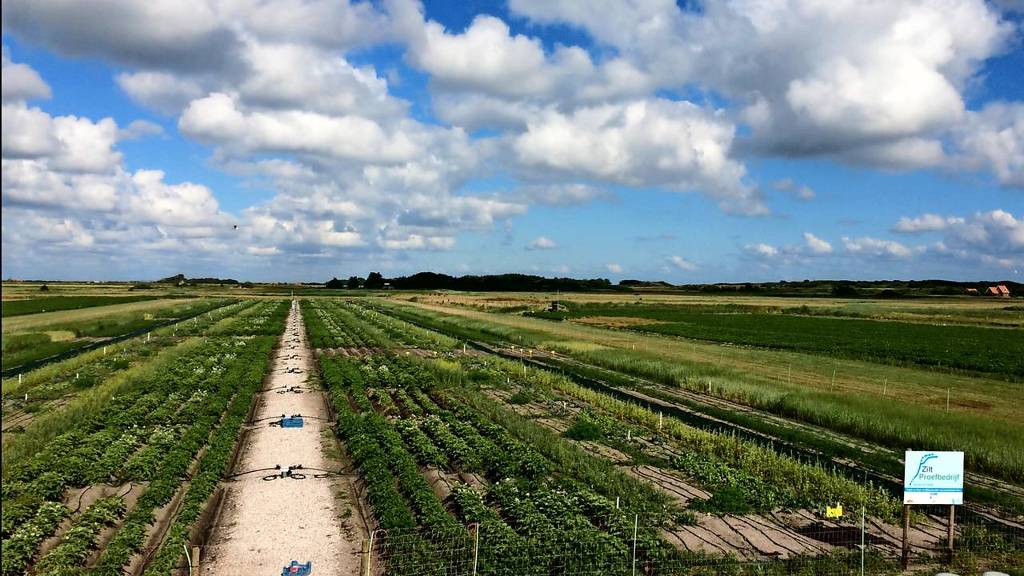
DM introduced Green Buildings Regulations in 2010 to improve building performance, to enhance a healthy indoor life style, and cut use of natural resources over project lifetime. Initially mandatory for government projects only, as of March 2014 all projects must completely abide by the green building regulations.

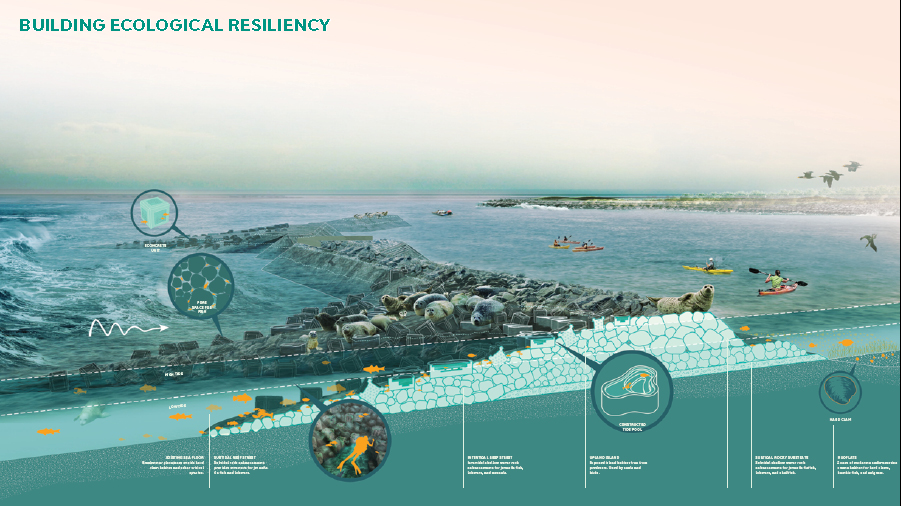
Dubai has ambitions to be one of the top ten sustainable cities in the world by 2020. If they want to take a cue on how to do things better, and maybe build better artificial islands that don’t stink, check out Econcrete.

Sustainable and safe fun at sea

0

sustainable-sea

With the weather heating up more people are going to be heading to the sea for a big cool down. Boating, jetskiing, sailing, paragliding at sea. Spending the day at sea is a very low-carbon footprint activity, and it can be greener – especially if you make your own natural tea sunscreen (check out our recipe!).

But is also around this time of the year that many accidents take place. Check out the primer below, so you and your loved ones stay safe.


Via: El Dabe Law Firm of Los Angeles; image of kid at sea via Shutterstock

Archeologists unearth 5000-year-old micro-brewery in Tel Aviv!

3

beer-tel-aviv-archeology-egyptian-6

Hey Brooklyn and your micro-breweries – turns out you’ve got nothing on Tel Aviv!

Evidence of an Egyptian brew-house dating to 5000 years ago is being dug up in Tel Aviv. Archeologists there have found pieces of ancient pottery vessels used to make beer. See above and below for how they did it back then.

Apparently Egyptians were drinking the beverage, young and old:

“Now we know that they also appreciated what the Tel Aviv region had to offer and that they too knew how to enjoy a glass of beer, just as Tel Avivians do today,” says Diego Barkan, excavation director on behalf of the Israel Antiquities Authority.

beer-tel-aviv-archeology-egyptian

He adds: “Already thousands of years ago Tel Aviv was the city that never sleeps!”

RELATED: Make Tej, an ancient Ethiopian honey beer!

The evidence indicates that there were Egyptians at the site, living and brewing beer. Not a beverage typically associated with the Middle East. So think again.

The site was located on Ha-Masger Street next to the Ma‘ariv Bridge in downtown Tel Aviv and is part of a salvage operation done before any new construction is done in Israeli cities and towns.

beer-tel-aviv-archeology-egyptian-1

Barkan relates: “We found seventeen pits in the excavations, which were used to store agricultural produce in the Early Bronze Age I (3500-3000-BCE). Among the hundreds of pottery shards that characterize the local culture, a number of fragments of large ceramic basins were discovered that were made in an Egyptian tradition and were used to prepare beer.
tel aviv city of beer, archeology dig from Egypt

“These vessels were manufactured with straw temper or some other organic material in order to strengthen them, a method not customary in the local pottery industry.

RELATED: Lost Tribes Brew restores ancient beers

It is interesting to note that although Muslims shun alcohol (read here why Muslims do not drink) beer was the “national drink of Egypt” in ancient times. It was considered a basic commodity like bread and it was consumed by the entire population, regardless of age, gender or status.

Bones (below) were also found suggesting that beer and barbecues were the combination of choice.
beer-tel-aviv-archeology-egyptian-7

The ancient beer made from a mixture of barley and water that was partially baked and then left to ferment in the sun. Various fruit concentrates were added to this mixture in order to flavor the beer, the experts say. “The mixture was filtered in special vessels and was ready for use.

Strange timing for release of the news. Later this week starts the Jewish holiday of Passover, a time when Jews are forbidden to eat leavened wheat or products made from yeast and leaven – like beer.

5 minutes will sell you on a Middle East visit!

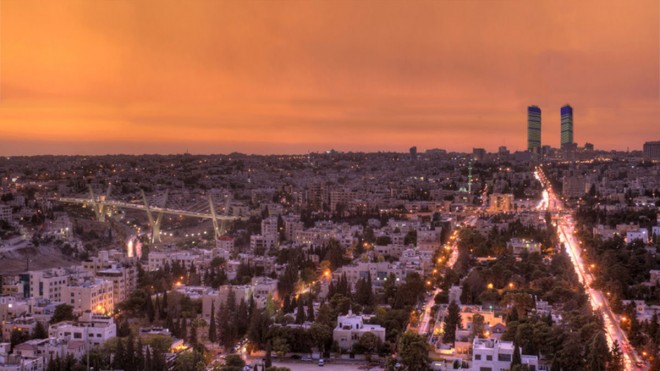
Visit JordanTravel to the Middle East has never been a better deal than now – in terms of economics (deep-discounted hotels and holiday packages), weather (blizzards have all blown by and crushing heat is still months away), and – in most of the region’s top touristic venues – political stability.  All my view based on four years of living in Amman. But how to convince the media-saturated and uninitiated? A five-minute film may do the trick.