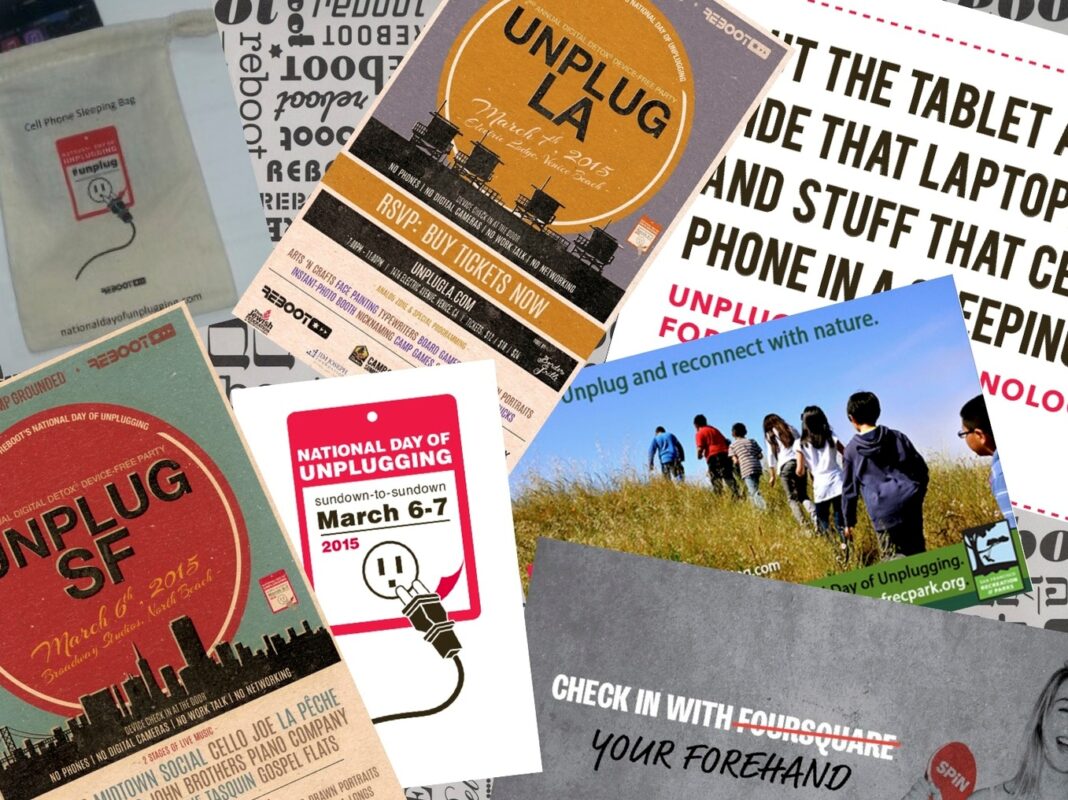
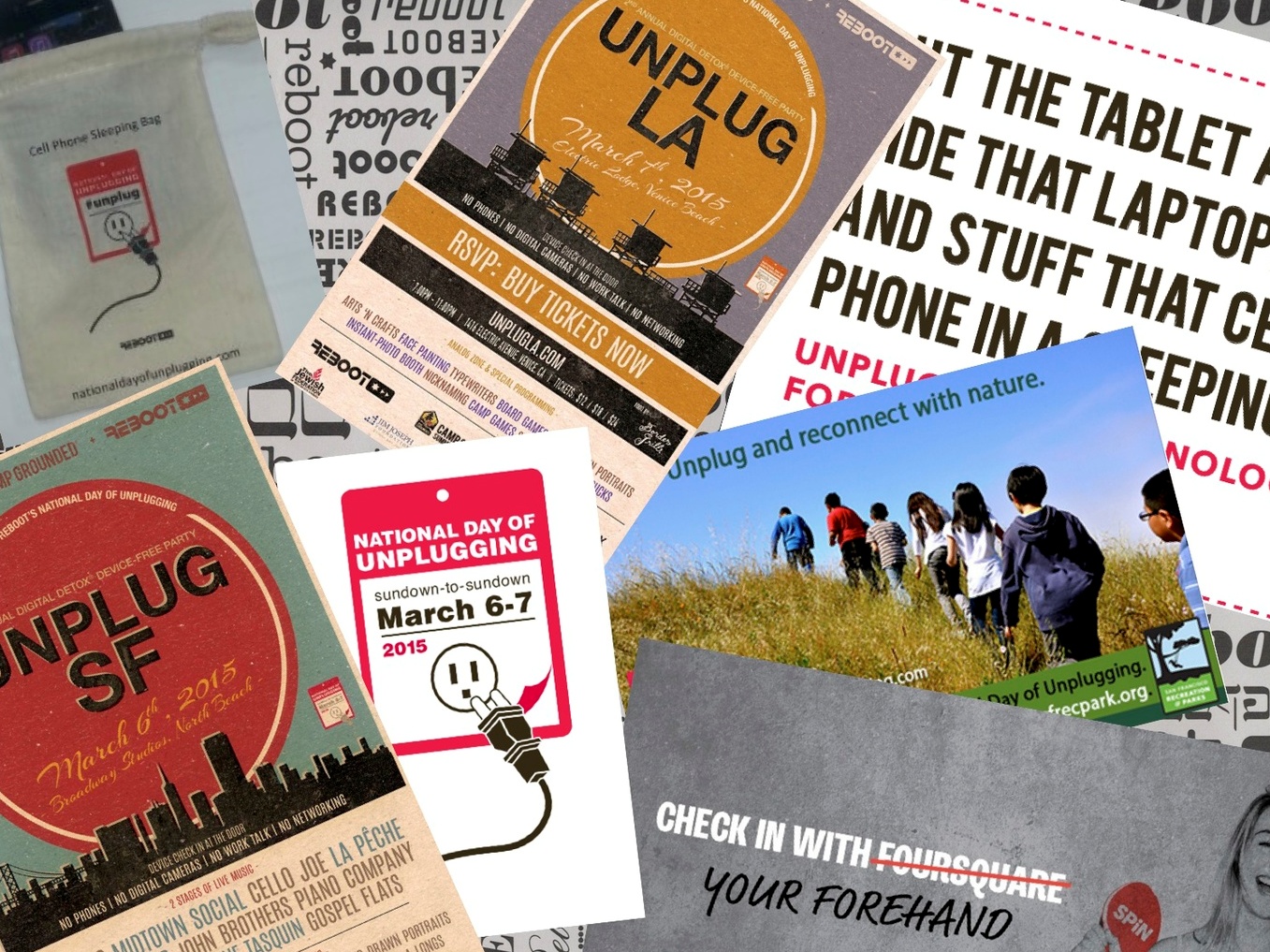
National Unplug Day 2015: on this Sabbath, tech shall rest

REBOOT national unplug day

Is nothing sacred? Mealtime with family, meetings with the boss, dates with your sweetie are constantly interrupted by mobile phone calls, texts and tweets.  At weddings and funerals, folks fumble to silence (or peek) at their chirping, beeping, music-blaring phones.  And how do we manage a weekly day of rest? Enter Reboot, a Jewish non-profit based in New York, with their National Day of Unplugging, urging us to call a time-out from digital communication on March 6-7. It’s becoming a global event. 

The Fourth Commandment is skimpy on details.  It simply requires us to keep holy the Sabbath, which – 3,500 years ago – meant kick-back with the family and give the donkeys a break. It intended to create space for us to contemplate matters of faith, family and community, but the practice of introspection becomes problematic in today’s high-tech culture.

Imagine the prophets of old sermonizing to crowds furiously tweeting and videoing and posting on Instagram and Facebook. “Selfies with Moses” would be all over Snapchat, scant attention paid to the sermons.  Now the folks at Reboot aspire to resurrect a day of contemplation and ‘real’ connection, a modern Shabbat.

unplug-day

The National Day of Unplugging is a 24 hour period – from sundown to sundown – that starts on the first Friday each March. The project is an outgrowth of The Sabbath Manifesto, Reboot’s adaptation of our ancestors’ ritual of carving out one day per week to unwind, unplug, relax, reflect, get outdoors, and connect with loved ones. That’s a routine prescribed by many faiths. The manifesto consists of 10 core principles that are open for your own interpretation,  each designed to slow down lives in an increasingly hectic world.
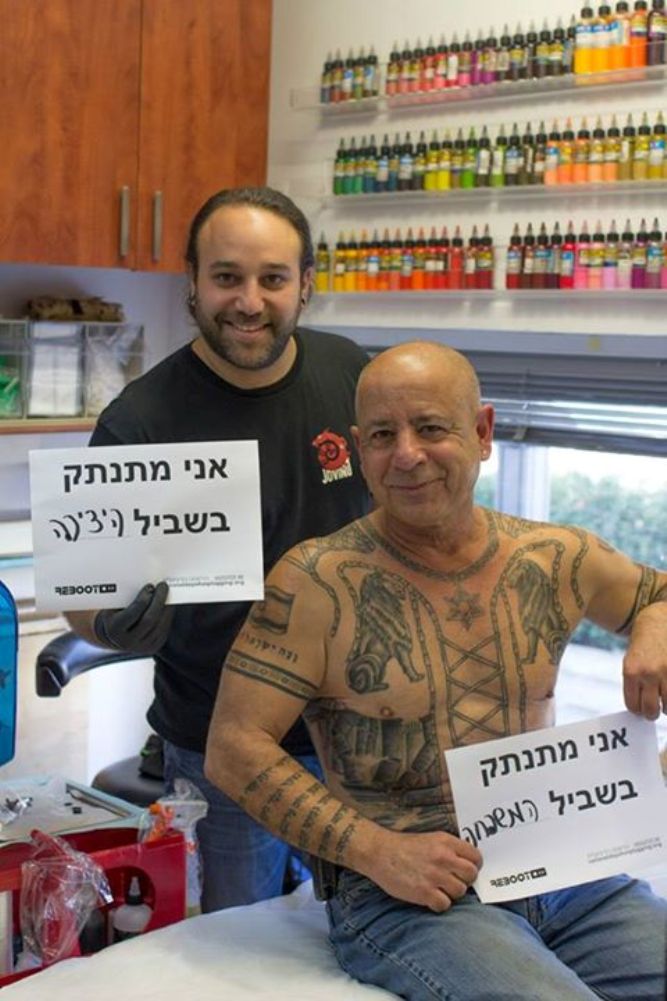
national unplug dayIf you recognize that  you are missing out on the important moments of your life, passing hours with your nose buried in your iPhone or BlackBerry, laptop or Kindle – give the National Day of Unplugging a shot.

Visit their website (link here), sign the Unplug pledge and start living a throw-back life: spend time outside, check out a new museum, connect with the people in your street, neighborhood and city, have an uninterrupted meal or read a book to your child.

Reboot hopes that the day will inspire people to unplug one day each week, and recapture the “real interconnections between people,” Tanya Schevitz, a spokesperson for Reboot told Digits. “People are overwhelmed by the relentless deluge of information in their lives.”

Founded in 2002, Reboot engages and inspires young, “Jewishly-unconnected cultural creatives, innovators and thought-leaders”, according to their website.

It aims to affirm the value of Jewish traditions and create new ways for people to embrace them. Since its start, hundreds of thousands of people have looked to the organization, engaging in their programs and using the creative tools on their website to rekindle connections and re-imagine Jewish lives full of meaning, creativity, and joy. Its members include television executives, writers, filmmakers and C.E.O.’s: people for whom the act of  ‘unplugging’ could well be most difficult.

National Unplug Day

Ironically, Reboot has developed a smart phone app available through the Android and BlackBerry markets, that lets people choose from a number of automatic messages, like “Digital Detox” or “Call me on it,” informing their Twitter followers and Facebook friends that they are offline for the day, or, in the case of the latter message, urging friends that “if you see me texting or tweeting, call me on it!”

The organizers are also promoting the National Day of Unplugging via (what else?) Twitter, Facebook and YouTube.

Would you consider unplugging for a day? Tell us how it goes down for you.

All images from REBOOT and The National Unplug Day website


Read More

TRENDING

90% of Americans worry about microplastics

Microplastics are showing up everywhere—from dollar store toys and synthetic clothing to bottled water, toothbrushes and even human sperm. A new Ocean Conservancy survey finds that nearly 9 in 10 Americans are concerned about the health impacts of microplastics, while support is growing for tougher regulations. As scientists uncover plastic particles in the heart, placenta and reproductive organs, the question is no longer whether microplastics are affecting our lives, but how much damage they are already doing.

Understanding Food Production: Karl Studer on the Urban-Rural Knowledge Gap

Karl Studer occupies an unusual position in American business. As President of Quanta Services, he oversees electrical infrastructure operations across the United States, Canada, and Australia, managing thousands of employees and multibillion-dollar projects.

Tigris River oil spill highlights Iraq’s environmental oversight and our addiction to oil

A fresh oil spill in the Tigris River, filmed by an Iraqi university student, has reignited concern over Iraq's polluted waterways. From ancient Mesopotamia to modern Basra, the country's dependence on oil has come at a steep environmental and human cost, with activists warning that unchecked contamination is putting ecosystems and public health at risk.

Doctor-Led Direct Hair Transplant: What Surgeon Involvement Means for Outcomes

Hair restoration technology continues to evolve, but the surgeon behind the procedure remains the most important factor. Doctor-led hair transplants emphasize careful diagnosis, conservative donor management, natural hairline design, and long-term planning rather than simply maximizing graft counts. By treating donor hair as a limited resource and tailoring each procedure to the patient's future hair loss, experienced surgeons can reduce the need for corrective surgery while delivering more natural, sustainable results.

Data centers in Space? Sophia Space and Apex plan on busing them in

Can data centers really be built in space? Pasadena-based Sophia Space is partnering with Apex to test the idea by launching modular AI computing systems into low Earth orbit in 2027. Using radiation-hardened compute TILEs cooled by passive radiative systems and mounted on scalable satellite buses, the companies aim to prove that edge computing can operate reliably in space. While challenges remain, the project represents an important step toward distributed orbital computing networks that could support everything from climate monitoring and pollution tracking to autonomous spacecraft navigation in an increasingly crowded orbital environment.

Yerukim Forms a New Green Economy Where the Money is Really Green

The Yerukim members who pick up the recyclables get to keep the monetary reward, the public earns "green" bills that can be used in shops, and business owners get to be associated with environmentalism.

Choosing Riyadh over Dubai? What Investors Should Know

Saudi Arabia is deploying capital at unmatched scale to catalyze tourism and advanced industry while rewiring its power-and-water backbone. The investable frontier is widening—especially in renewables, grid storage, water efficiency/desal retrofits, and hospitality operating platforms. Prudent investors will insist on phased delivery, enforceable KPIs (energy, water, biodiversity), and RHQ/zone compliance—while pricing political-economy and reputational risks alongside growth upside.

Sell your cooking oil for biodiesel money

Want to make money on old french fry oil? Sell it.

Qatar Alternative Energy Summit Pairs Investors And Innovators

Alternative energy investors and innovators can meet n' greet in Doha, Qatar March 16 and 17.

Here’s How To Implement The Four Pillars Of Employee Engagement

If you throw a party for your work team and they are vegans, don't make it a barbecue. Know the sustainability values of your team to boost moral and retain good people.

Locals From Rishon Fight IKEA

Big Box stores are a pretty new concept in Israel, and thank God that not every Israeli city wants them in their backyard. A word from someone who has see the beautiful farmland around her hometown Newmarket, Ontario stripped and converted into vulgar strip malls of big box shops: they have no place in a healthy and sustainable town or city.

The Jewish National Fund Meets An Inconvenient Truth

According to the JNF, it has transformed thousands of acres of barren land into green forests in Israel. They state that each person emits about 23 tons of carbon per year, estimating that each tree planted can absorb one ton of carbon in its lifetime. That's a whole lot of trees you'd need to be planting. Could so many fit in Israel?

How to quiet noise from construction in your office

Streets need to be resurfaced in New York but the humming and grinding noise is unsettling. Noise is environmental pollution. 

Popular Categories