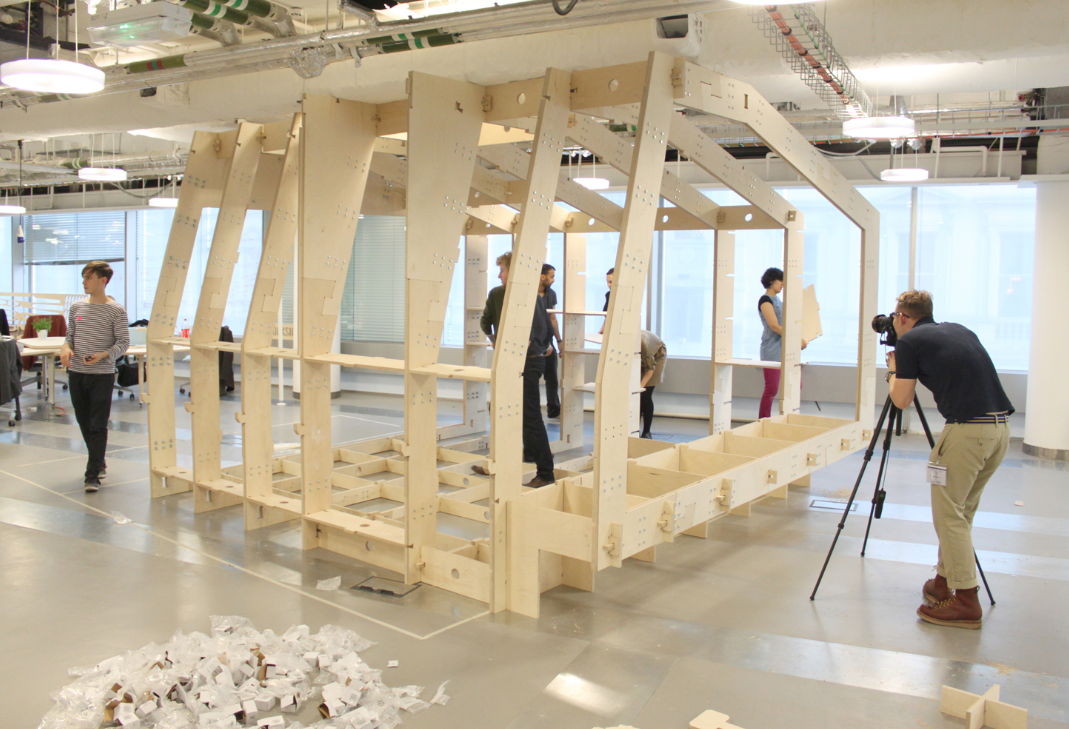
 Love Lego as a kid? Or maybe you jumped straight into IKEA flat-pack furniture assembly? Now you can design and build your own low-energy, full-scale house with parts that slot together like a jigsaw puzzle. No nails or glue, screws or mortar. A new open source info system called WikiHouse allows you to download, adapt, “print” and assemble a home in a few days, with no construction skills and for less than $100!
The WikiHouse project began three years ago as a solution to house-building challenges in developing markets. Co-designed by Alastair Parvin of Zero Zero Architects, Arup engineers and The Building Centre, it also aims to make sustainable, energy-efficient homes more widely accessible. The Building Centre is an independent forum dedicated to providing info and inspiration to all sectors of the built environment.
 Evolving over several generations; the latest prototype house, WikiHouse 4.0, includes a number of innovations that moves the concept closer to a typical two-story home. Freely available OpenHAB smart home technology controls its high-efficiency electrical and ventilation systems, and it all runs on a $65 Linux computer that can be voice-activated via mobile phone.
WikiHouse capitalizes on high-tech building systems, but the building itself is made inexpensive composite sheets made from local materials. Ideally, planners would erect a bespoke sawmill facility next to planned building sites, eliminating the need to transport supplies over long distances.
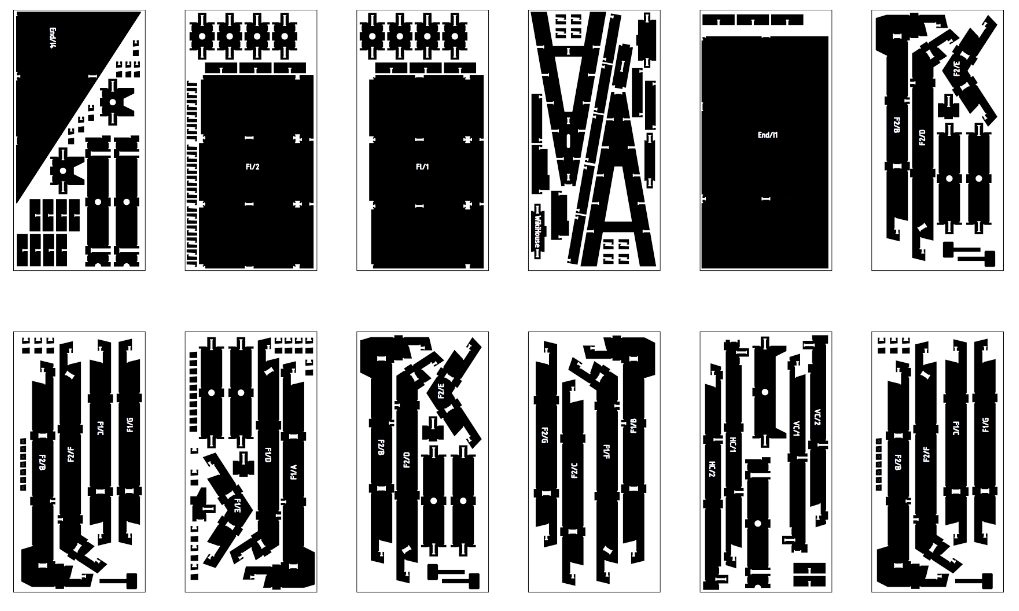
The process is straightforward. Choose a design and download the free online plan. Next, send the plans to a sawmill where the components are cut from composite sheet material, such as plywood or orientated strand board (OSB), by a computer numerical control (CNC) machine. Parts are site-delivered and a team of “builders” put the house together. The kit has everything needed to build the house including make-your-own tools including mallets and ladders. The lightweight structure can be disassembled and reused.
 The concept is not without critics. “It’s very challenging to make flat-pack houses that are energy-efficient, as anyone who lives in a post-war pre-fab can testify. The performance gap between design and finished product is something the industry is currently grappling with – this will be even more challenging if it’s being built by non-professionals,” John Stapleton, head of external affairs at Sustainable Homes (a not-for-profit consultancy that advises the housing industry on sustainability) told The Guardian.
Quality control could be problematic as the project puts sustainable technologies into the hands of end users who may not have necessary training or skills. The non-traditional building techniques may run into challenges when owners seek planning permissions from relevant authorities.
Open source does makes it easy to share ideas, enabling for continual design improvement resulting in cheaper, more sustainable buildings. There’s now a WikiHouse community in the Netherlands, it’s being trialed in Brazilian favelas and aid agencies are using WikiHouse for disaster relief. WikiHouse joins other do-it-yourself homebuilding technologies, such as Israeli start-up SmartBrick, in changing the forward face of housing.
Images from WikiHouse website