Home Blog Page 244

Alberta Tar Sands wildfire and global warming

Alberta Wildfire

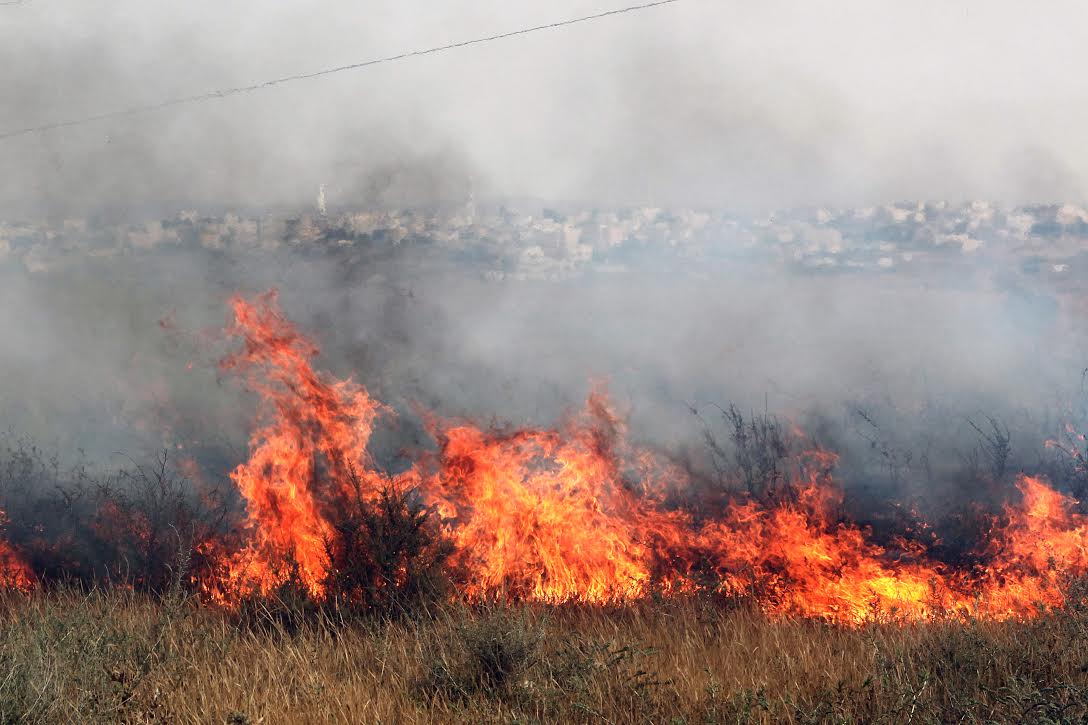
Alberta Canada’s massive wildfire, which has now consumed an area larger than Hong Kong and threatens to reach the border with neighboring Saskatchewan, is another startling example that may be attributed to the ravages of global warming.

While most of the Middle East does not have large tracts of forest land, areas where forests and grasslands are located are continuously in danger of catching fire as higher than normal temperatures and “crazy heat domes” may make many parts of the Middle East unlivable by 2100.

Alberta’s wildfires, which became literally out of control after starting over a week ago, have already displaced more than 80,000 people and destroyed thousands of homes and commercial buildings. Located in the province’s well publicized Alberta Tar Sands, the big question being raised now is whether this industry, deemed to be one of the most environmentally damaging projects in North America, may be attributing to making it spread so quickly.

According to informed sources in International Business Times, the Alberta oil or tar sands account for more than 80% of Canada’s entire petroleum production. In physical terms, this amounts to more than 4.4 million barrels per day, according to the U.S. Energy Information Administration. Canadian governmental and private sources now say it will take weeks to fully bring these fires under control; and this only only happen if there are substantial rains. Dry conditions and unseasonably high temperatures of 23 degrees Celsious (80 degrees Fahrenheit) are causing the fires to spread even quicker.

Oil tar sand production, involving the use of chemicals and high pressure steam to bring up the gunky oil tar from underground, has long been considered to be an environmental disaster in the making by many environmentalists; even rivaling oil production in Saudi Arabia, and seen as having a severe impact on global warming.

The photo below shows what this oil sand tar goop looks like when brought to the surface.

canada-oil-sands-crude
With events like the Alberta wildfires occurring in pristine locations like Canada, it’s not difficult to understand what is already occuring in regions like the Middle East. Mid-East area countries that do contain sizable tracts of forest land, such as Israel, Lebanon and Turkey, will undoubtedly see more occurrences of forest and brush fires on the like that Israel experienced in December, 2010; when a large section on the country’s Carmel mountain forest went up in smoke, killing more than 45 people.

We will all be watching the outcome of the Alberta wildfires; that up to now seem virtually unstoppable. As for the Middle East, the worst may yet to come, regarding global warming.

Read more on global warming, wildfires and the Alberta Tar Sands:
Crazy heat dome will mean that no one can live in the Arab Gulf by 2100
Israel’s Carmel wildfire blame goes all the way to the top
Canada Worst than Saudi Arabia, Considering Tar Sands Impact on Global Warming

Photo: Fort McMurray Wildfires, by Todd Korol/Reuters
Photo: Alberta Tar Sands crude oil, by Jonathan Hayward/ AP

NASA calls Middle East drought “worst in 900 years”!

worst drought in 900 years

A recent study released by the National Aeronautics and Space Administration (NASA) concludes that the current drought that began in 1998 in the eastern Mediterranean Levant  – which includes Cyprus, Israel, Jordan, Lebanon, Palestine, Syria, and Turkey – is the region’s worst dry spell since 1100 C.E.

Plant a tiny landscape on your finger with a Secret Wood ring

1

nature in a ringWe love to report on eco-jewelry, from charms made from beach sand or breast milk to necklaces made from recycled teeth and bones. Now a Canadian jeweler is creating miniature landscapes made from wood, jewelry resin, and beeswax – forming frozen vignettes of natural settings that you can wear on your fingers.

UAE to build a man-made mountain to increase rainfall

0

UAE needs waterThe United Arab Emirates (UAE) upped the wackiness factor of its portfolio of national mega-projects, announcing plans to build an artificial alp so the country can control its weather. Scientists will investigate if a man-made mountain will increase precipitation in cities like Dubai and Abu Dhabi in this nation where rain falls just five days per year. Is this really the best defense against looming drought?

The Ocean Cleanup wins Katerva – the Nobel Prize of Sustainability

boyan-slat-ocean-cleanup

A new breed of companies are showing how innovation can be scaled for both business opportunities and global good. Led by resolute and independent thinkers, these companies are making dents in conventional ways of thinking to defy and fight for global change.

The Katerva Award identifies 10 of these companies as finalists annually in its global competition –– the Nobel Prize for Sustainability –– with The Ocean Cleanup, as the winning company this year. (Impact investors: Katerva has done the due diligence for you.)

Some 3,500 ideas were submitted to the Katerva Award council last year and The Ocean Cleanup was selected as this year’s winner –– as a force to reverse plastic pollution at sea, using a massive current-powered sieve.

The Ocean Cleanup –– conceived in 2013 by Boyan Slat from the Netherlands (pictured above), then only 19-years-old ––  is taking on the biggest ocean remediation challenge in history: to remove the “soup” of plastic bits floating in our oceans.

https://www.youtube.com/watch?v=6IjaZ2g-21E

Not too soon, either. Plastic pollution is choking marine life —at least one million seabirds and 100,000 marine mammals die each year from plastic pollution. And it is affecting human health, too, as toxins from plastic enter our food chain –– and bodies.

Powered by waves in the middle of the sea, The Ocean Cleanup is in essence a massive sieve which passively collects sea plastics from up to 3 meters (or 10 feet) deep. Once retrieved, the plastic can be recycled into new products or fuel. Feasibility studies indicate that one 100 km (or 63 mile) array could remove 42 percent of the Great Pacific garbage patch in only 10 years.

“Being recognized by Katerva means that The Ocean Cleanup is trusted to succeed in its mission and its drive for innovation. We are deeply honored and hope that the Award and Katerva’s support will go a long way towards reaching our dream of clean oceans,” says Slat.

The Katerva Award runner-up this year is Salt Farm Texel, a proven agriculture technology that can grow food on land that was previously considered to be unsuitable for farming.

salt-farm-texel

The Katerva Award winner will be accelerated with the help of the Katerva community: a global alliance that includes among its members the world’s most distinguished companies, people, policy makers and non-profits committed to improving the state of the world.

“I just love the systemic approach of Katerva: we not only identify amazing projects such as The Ocean Cleanup, we have also organizations and individuals in place who can help accelerate such projects, and bring them to their full potential, sooner,” says Dr Bettina von Stamm, Director of the Katerva Award. ” I just love the passion and commitment Katerva inspires.”

Katerva, founded in 2010 by business intelligence strategist Terry Waghorn, is a not-for-profit organization that finds, evaluates and accelerates disruptive, sustainable innovations that will show measurable impact on this planet in the next 10 years.

Katerva comes from the Latin word Caterva which means “crowd.” Katerva’s distributed networks of CEOs, heads of state, ministers and policymakers, experts and academics, international organizations, youth, and technology innovators are fundamental to finding and then accelerating technologies for dramatic, positive changes that can be seen in our lifetime.

Follow Katerva on Facebook or Twitter @katerva and find the nominee profiles at www.katerva.net.

Complete list of this year’s Katerva Award category winners:

Behavioral Change:

Winner: Fairphone is working to improve the life-cycle of cell phones by sourcing conflict-free minerals and upcycled plastics to including fair factory wages in phone manufacturing.

fairphone-1

Finalists: World Community Grid, Sustainability Consortium, GoodGuide

Economics:

Winner: Social Progress Index is crucial to portraying a country’s potential for social progress, beyond meeting the population’s basic needs.

social-progress-index

Finalists: Better World Books, Essmart, Institute for Economics and Peace, Oradian

Environment:

Winner: The Ocean Cleanup is developing a passive, plastic collection system to remove plastic pollution from our oceans.

ocean-clean-up-boyan-slat

Finalists: Ecosia, Greenwave, Tree-Nation, Harbo Technologies

Food:

Winner: Salt Farm Texel has created novel advances in saline-resistant crops to counter the loss of arable soil and freshwater resources.

salt-farm-texel

Finalists: Wakati, ThinkFoodGroup, Oberon Nutrinsic, Muufri

Gender Equality:

Winner: Akili Dada helps young women and girls aged 13 to 35 earn the essential qualifications and skills needed to take their place in decision-making roles in society.

2016-Akili-Dada-Fellowship-for-Young-African-Women-Leaders

Finalists: I Am That Girl, Global Fund for Women, No Ceilings, Ruwon Nepal

Human Development:

Winner: Nanoly has developed a chemistry solution so that vaccines can survive without refrigeration.

nanoly-vaccine

Finalists: Mine Kafon, MOM Inflatable Incubator, Nano Membrane Toilet, Braigo

Materials & Resources / Water:

Winner: Nebia Shower uses rocket technology to create an immersive cloud of mist that cleans the body and saves water.

vaprizing-shower-nebia

Finalists: Lifestraw, Step Forward Paper, SCiO, Benthic Labs

Power & Energy:

Winner: GravityLight uses a weight to run a small generator to power an LED. It costs nothing to run and does not require sunlight or batteries to recharge.

gravity-light

Finalists: StoreDot, LanzaTech, General Fusion, Pollinate Energy

Transportation:

Winner: Qualcomm Halo provides wireless, electric vehicle charging. No cables needed.

qualcomm-halo-electric-car

Finalists: Blablacar, Holland Container, Proterra, Ray C Anderson Memorial Highway

Smart Cities:

Winner: Living Breakwaters builds layered breakwaters around cities which are constructed of ecologically engineered concrete to attenuate wave action, create a habitat for fish, and provide calm waters for recreation on land.

living-breakwaters

Finalists: Visible Good, Kite Bricks, Centre for Active Design, Tube Barrier

Climate exodus facing the Middle East

5

qatar-dust-storm

The conflict in Syria happening now was predicted six years ago by water and climate scientists. New research from Germany says climate refugees from the Middle East will be fleeing for cover in the near future.

The number of climate refugees will likely increase dramatically in future. Researchers of The Cyprus Institute and the Max Planck Institute for Chemistry in Mainz have calculated that the Middle East and North Africa could become so hot that human habitability is compromised.

The goal of limiting global warming to less than two degrees Celsius, agreed at the recent UN climate summit in Paris, will not be sufficient to prevent this scenario. The temperature during summer in the already very hot Middle East and North Africa will increase more than two times faster compared to the average global warming.

This means that during hot days temperatures south of the Mediterranean will reach around 46 degrees Celsius (approximately 114 degrees Fahrenheit) by mid-century. Such extremely hot days will occur five times more often than was the case at the turn of the millennium. In combination with increasing air pollution by windblown desert dust, the environmental conditions could become intolerable and may force people to migrate.

More than 500 million people live in the Middle East and North Africa – a region which is very hot in summer and where climate change is already evident. The number of extremely hot days has doubled since 1970. “In future, the climate in large parts of the Middle East and North Africa could change in such a manner that the very existence of its inhabitants is in jeopardy,” says Jos Lelieveld, Director at the Max Planck Institute for Chemistry and Professor at the Cyprus Institute.

Lelieveld and his colleagues have investigated how temperatures will develop in the Middle East and North Africa over the course of the 21st century. The result is deeply alarming: Even if Earth’s temperature were to increase on average only by two degrees Celsius compared to pre-industrial times, the temperature in summer in these regions will increase more than twofold.

By mid-century, during the warmest periods, temperatures will not fall below 30 degrees at night, and during daytime they could rise to 46 degrees Celsius (approximately 114 degrees Fahrenheit). By the end of the century, midday temperatures on hot days could even climb to 50 degrees Celsius (approximately 122 degrees Fahrenheit). Another finding: Heat waves could occur ten times more often than they do now.

By mid-century, 80 instead of 16 extremely hot days

In addition, the duration of heat waves in North Africa and the Middle East will prolong dramatically. Between 1986 and 2005, it was very hot for an average period of about 16 days, by mid-century it will be unusually hot for 80 days per year.

At the end of the century, up to 118 days could be unusually hot, even if greenhouse gas emissions decline again after 2040. “If mankind continues to release carbon dioxide as it does now, people living in the Middle East and North Africa will have to expect about 200 unusually hot days, according to the model projections,” says Panos Hadjinicolaou, Associate Professor at the Cyprus Institute and climate change expert.

Atmospheric researcher Jos Lelieveld is convinced that climate change will have a major impact on the environment and the health of people in these regions. “Climate change will significantly worsen the living conditions in the Middle East and in North Africa. Prolonged heat waves and desert dust storms can render some regions uninhabitable, which will surely contribute to the pressure to migrate,” says Jos Lelieveld.

The research team recently also published findings on the increase of fine particulate air pollution in the Middle East. It was found that desert dust in the atmosphere over Saudi Arabia, Iraq and in Syria has increased by up to 70 percent since the beginning of this century. This is mainly attributable to an increase of sand storms as a result of prolonged droughts. It is expected that climate change will contribute to further increases, which will worsen environmental conditions in the area.

In the now published study, Lelieveld and his colleagues first compared climate data from 1986 to 2005 with predictions from 26 climate models over the same time period. It was shown that the measurement data and model predictions corresponded extremely well, which is why the scientists used these models to project climate conditions for the period from 2046 to 2065 and the period from 2081 to 2100.

Largest temperature increase in already hot summers

The researchers based their calculations on two future scenarios: The first scenario, called RCP4.5, assumes that the global emissions of greenhouse gases will start decreasing by 2040 and that the Earth will be subjected to warming by 4.5 Watt per square meter by the end of the century. The RCP4.5 scenario roughly corresponds to the target set at the most recent UN climate summit, which means that global warming should be limited to less than two degrees Celsius.

The second scenario (RCP8.5) is based on the assumption that greenhouse gases will continue to increase without further limitations. It is therefore called the “business-as-usual scenario”. According to this scenario, the mean surface temperature of the Earth will increase by more than four degrees Celsius compared to pre-industrial times.

In both scenarios, the strongest rise in temperature in the Middle East and North Africa is expected during summer, when it is already very hot, and not during winter, which is more common in other parts of the globe. This is primarily attributed to a desert warming amplification in regions such as the Sahara. Deserts do not buffer heat well, which means that the hot and dry surface cannot cool by the evaporation of ground water. Since the surface energy balance is controlled by heat radiation, the greenhouse effect by gases such as carbon dioxide and water vapor will increase disproportionately.

Regardless of which climate change scenario will become reality: both Lelieveld and Hadjinicolaou agree that climate change can result in a significant deterioration of living conditions for people living in North Africa and the Middle East, and consequently, sooner or later, many people may have to leave the region.

مشروع للطاقة الشمسية بقيمة 3.5 مليار دولار في مصر

terra sola egypt

أعلنت شركة تيرا سولار نيتها بناء مشروع للطاقة الشمسية في مصر لإنتاج 2 جيجاواط من الطاقة الكهربائية و بقيمة 3.5 مليار دولار. و كانت قد أعلنت تيرا سولار يوم الجمعة الفائت التعاون مع مجموعة شركات عالمية في الطاقة البديلة لبناء عدة معامل للطاقة الشمسية، بالإضافة إلى مصنع للألواح الشمسية و المحولات اللازمة لإنتاج 200 ميجاواط من تلك الطاقة

و تتخذ شركة تيرا سولار من البحرين مقر لها، و ستقوم بالتعاون مع كل من شركة تيرا نيكس السويسرية لإدارة الأموال و شركة هاريون لتوريد الألواح الشمسية و شركة ر و ي نيو إينيرجي لتشغيل المعامل. أما تمويل المشروع فسيكون أغلبيته من هيئات استثمارية ألمانية. و كانت تيرا سولار قد وقعت وثيقة تفاهم مع الشركة القابضة لكهرباء مصر الحكومية في السنة الماضية لتطوير هذا المشروع

و جاء الإعلان عن المشروع متزامنا مع زيارة رسمية لنائب المستشار الألماني لمصر، و أيضا في أثناء تفقد مجلس إدارة الشركات المتعاونة لعدة أماكن مختلفة في محافظتي الأقصر و أسوان لبناء ثلاثة من المعامل فيها. و كانت تيرا سولار قد افتتحت مكتب للمشروع في مصر لتسهيل التعامل مع الهيئات الحكومية المصرية و ليمثل مقرا للمشروع ككل

و قال أحد أعضاء المجلس بيتر جوبفريش أن السوق المصرية هي من أكثر الأسواق نموا و حركة في أفريقيا و الشرق الأوسط. و ترى شركة تيرا سولار أن المشروع يمثل خطوة مهمة للشركة لتوسيع عملياتها الدولية، بينما يخلق أكثر من 50,000 فرصة عمل مباشرة و غير مباشرة في سوق العمل المصري. و صرح بيتر جوبفيش أيضا أن بناء مصنع اللوائح فقط سيوفر 1,500 وظيفة، أما تشغيله فسيوفر 1,000 فرصة عمل أخرى و دائمة. و لم يصرح بالمدة الزمنية اللازمة لإتمام المشروع و بدأه بالعمل

Egypt to shine with a new $3.5 BIL solar plant!

2

terra sola egyptA global consortium of engineering and renewables industry giants kicked off a project to build a suite of solar power generating plants in Egypt to produce 2 gigawatts (GW) of electricity and valued at USD $3.5 billion. Terra Solar announced their plan on Friday, adding that they will also build a 200 MW PV module and inverter manufacturing facility to create components for use in the consortium’s own solar plants and for exportation.

Landmark study: other people’s drugs enter our bodies through veggies and fruits

0

carbamazepine-reclaimed-water

Reclaimed or grey water is touted as a great means to save and reuse water where water resources are thin.

A new study from the Hebrew University in Jerusalem makes us want to think twice about saving precious water: researchers studied the vegetables grown in reclaimed water and found traces of human pharmaceuticals used for treating epilepsy. We’ve written in the past about drugs (like codeine and cocaine) in your drinking water, now researchers have gone to look for them in your food.

The new study looked at vegetables and fruits grown in soils irrigated with reclaimed wastewater and shows that this method exposes consumers to minute quantities of carbamazepine, an anti-epileptic drug commonly detected in wastewater effluents.

Fresh water scarcity worldwide has led to increased use of reclaimed wastewater, as an alternative source for crop irrigation. But the ubiquity of pharmaceuticals in treated effluents has raised concerns over the potential exposure for consumers to drug contaminants via treated wastewater.

The study is the first to directly address exposure to such pharmaceutical contaminants in healthy humans. It was recently published in Environmental Science and Technology. 

“Israel is a pioneer and world leader in reuse of reclaimed wastewater in the agriculture sector, providing an excellent platform to conduct such a unique study,” said research co-author Prof. Benny Chefetz from the Hebrew University.

It is also a country where its people might be most at risk from over-exposure of other peoples’ pharmaceuticals especially as the contaminants compound over time.

In the study, a a randomised controlled trial, the researchers demonstrated that healthy individuals consuming reclaimed wastewater-irrigated produce excreted carbamazepine and its metabolites in their urine, while subjects consuming fresh water-irrigated produce excreted undetectable or significantly lower levels of carbamazepine.

The study followed 34 men and women divided into two groups. The first group was given reclaimed wastewater-irrigated produce for the first week, and freshwater-irrigated vegetables in the following week. The second group consumed the produce in reverse order.

The volunteers consumed the produce, which included tomatoes, cucumbers, peppers and lettuce, according to their normal diet and drank bottled water throughout the study to neutralize water contamination.

The researchers measured carbamazepine levels in the fresh produce and in the participants’ urine. To begin with, the urinary levels of carbamazepine differed in their quantifiable concentration, with some participants having undetectable levels. Following seven days of consuming reclaimed water-irrigated produce, all members of the first group exhibited quantifiable levels of carbamazepine, while in the second group the distribution remained unchanged from baseline.

Levels of carbamazepine excretion were markedly higher in the first group versus the second.

“Treated wastewater-irrigated produce exhibited substantially higher carbamazepine levels than fresh water-irrigated produce,” said Prof. Paltiel.

“It is evident that those who consume produce grown in soil irrigated with treated wastewater increase their exposure to the drug. Though the levels detected were much lower than in patients who consume the drug, it is important to assess the exposure in commercially available produce,” Prof. Paltiel said.

“This study demonstrates ‘proof of concept’ that human exposure to pharmaceuticals occurs through ingestion of commercially available produce irrigated with treated wastewater, providing data which could guide policy and risk assessments,” said Prof. Chefetz.

“Heavily-armed” octopus escapes from aquarium!

0

inky the octopus An octopus at New Zealand’s National Aquarium decided he’s had enough of life in captivity and deftly devised his own escape to the sea. His amazing getaway won Inky the octopus instant fame, and raises new questions about cephalopod intelligence.

البنك الدولي يتعهد ب16 مليار دولار لمكافحة تغيير المناخ

climate change world bank
ظاهرة الجفاف تغزو العالم

تعهد البنك الدولي بتخصيص حصة قدرها %28 من موازنته المالية لعام 2016 للمشاريع التي من شأنها لجم تغيير المناخ العالمي، ذلك وفقا لبيان صدر مؤخرا عن البنك الذي يعد أكبر ممول للدول النامية. و سيأخذ البنك من الآن فصاعدا التغيير المناخي كعامل أساسي في تحديد المشاريع التي يتبنى تمويلها، حتى تلك التي تعنى بالتعليم و الصحة. و في هذا الصدد، علق مدير شؤون تغيير المناخ بالبنك جون روم قائلا: هذا تغيير جذري في كيفية تعامل البنك مع مشاريعه. شؤون تغيير المناخ أصبحت أساسا في أروقة المؤسسة. و تأتي هذه المبادرة من البنك في ظل تقديرات عن الكوارث البيئية المتوقعة و التي قد تسبب بالدفع بأكثر من 100 مليون شخص إلى الفقر من جراء نقص الأغذية و الجفاف

و كانت قد اتفقت الدول المتقدمة على تمويل قريناتها النامية بملغ قدره 100 مليار دولار في السنة بحلول العام 2020 خلال مؤتمر باريس الأخير في ديسمبر من العام الماضي. و ذكر موقع اتفاقية  الأمم المتحدة المبدئية بشأن التغير المناخي أنه بإمكان هذا التمويل أن يكون من مصادر خاصة أو عامة – ثنائية كانت أم متعددة الأطراف

و من جهة أخرى، قال مدير البنك الدولي جيم يونغ كيم: يجب أن نتخذ خطوات جريئة للحفاظ على كوكبنا للأجيال القادمة عقب قرارات مؤتمر باريس الأخير. و يجب علينا أيضا التحرك بسرعة  لمساعدة الدول بالقيام بتحولات من شأنها زيادة الطاقة البديلة و تقليل مصادر الطاقة ذات الكربون المرتفع، بالإضافة إلى تنمية أنظمة مواصلات صديقة للبيئة و بناء مدن حيوية و مُستدامة و قادرة على استيعاب النمو السكاني

و قرر البنك الدولي صرف مبلغ 16 مليار دولار سنويا و فورا لملف من مشاريع الحد من تغيير المناخ، و من ضمنها الآتي: مشاريع الطاقة المستدامة لإمداد 150 مليون منزل، مشاريع تفعيل أنظمة إنذار مبكر للكوارث البيئية كالأعاصير و الفياضانات ل100 مليون شخص، مشاريع أنظمة الزراعة الذكية التي من شأنها تقليل استهلاك المياه و الطاقة و المحافظة على خصوبة التربة، و أخيرا مشاريع تنمية بنى تحتية صديقة للبيئة للمواصلات و الحياة المدنية. و تطمح تلك المشاريع باستقدام مبلغ 13 مليار دولار كتمويل من القطاع الخاص بحلول العام 2020

و في هذه الأثناء، لا يزال أكثر من مليار شخص في العالم يعيشون في ظل دمار و عدم مساواة في العديد من الدول النامية. و يهدف البنك الدولي للدفع بالمساعدات العالمية و الدولية في اتجاه العمل على إنهاء شبه تام لحالة الفقر و إرساء المساواة على الأرض. و هاهو الآن يبدأ معركته ضد التغيير في المناخ العالمي

العالم يكسر رقمه القياسي في الحرارة – مجددا

climate Council of Australia

كشف تقرير أعده مجلس المناخ الأسترالي أن معدل درجة حرارة العالمي قد بلغ ذروته لسنة 2015، كاسرا بذلك الرقم القياسي المسجل لعام 2014 بزيادة قدرها 0.16 درجة مئوية، و علما أن سجلات الحرارة العالمية بدأت تُدون منذ العام 1880. و سَجلت تلك الحرارة القياسية 0.9 درجة مئوية زائدة عن المعدل العالمي للقرن العشرين، آخذة بذلك الاعتبار لنزعة حرارية متواصلة الارتفاع منذ العام 1970 حتى أواخر القرن الماضي

و تغطي هذه النزعة الحرارية مناطق مختلفة على الخريطة العالمية بما فيها الشرق الأوسط و شمال أفريقيا، اللذان يُعدان من المناطق الأكثر عُرضة للخطر البيئي. وقد اتضح هذا الخطر في يوليو الماضي عندما تَسبب مرتفع جوي اجتاح المنطقة لخلق قبة حرارية كانت قد خيمت فوق جنوب العراق و مناطق من إيران، مسببة بدورها درجات حرارة و نسب رطوبة غير مسبوقة في تلك الأماكن الحارة أصلا. ففي مدينة السماوة العراقية على سبيل المثال، بلغت درجة الحرارة المعلنة 48.5 درجة مئوية، بالإضافة إلى درجة تكثف بقيمة 29.5 مئوية – مما يجعل ناتج الحرارة المحسوسة عن طريق جلد الإنسان تبلغ 71 درجة مئوية. أما في البحرين، بلغت تلك الحرارة المحسوسة 53 درجة مئوية

هذا التغيير في المناخ العالمي و ارتفاع معدلات الحرارة هو نتيجة طبيعية للارتفاع الكبير في كمية الغازات الدفيئة المنبعثة إلى المجال الجوي من قبل الصناعات المعتمدة على حرق النفط و الغاز و الفحم، و من المتوقع أن تزداد الأمور سوءا إن لم يتم العمل على خفض تلك الغازات الضارة. و في هذا الصدد، اتفقت 195 دولة في  مؤتمر باريس للمناخ في ديسمبر الماضي على برامج شبه ملزمة قانونيا تهدف إلى تفعيل تغييرات من شأنها الحد من ارتفاع معدل الحرارة العالمي بنسبة درجتين مئويتين حتى نهاية القرن الحالي

لتحميل  تقرير مجلس المناخ الأسترالي اضغط هنا


 مصدر الصورة: Climate Council of Australia, Ltd.

Lions on the loose – the cost of humans on animal habitats

0

lion near nairobi

Human-caused damage to the earth’s natural environment has resulted in a number of serious ecological problems, including global warming and rising sea levels.  Human encroachment on natural habitats have been a serious factor in world habitat destruction, especially in the Middle East.

Africa’s natural habitats, particularly wildlife habitats, have been decimated in recent years by human encroachment, poaching, and other human caused activities which could eventually result in many animal species becoming extinct in the wild.

A prime example of human encroachment is occurring in Kenya, where human development activities are threatening natural habitats of many animal species, including lions. A recent  incident involving lions that escaped from the Kenya National Park near the capital Nairobi, resulted in an elderly man being attacked and the lion shot dead by police.

According to a story on the BBC and other news sources, lions have been leaving the national park and coming into populated areas near Nairobi to search for food. The main reason for this happening is being attributed to human infringement on the natural habitat of the lions, resulting in it being more difficult for the lions to find enough animals they depend on for food. Lions and other large African carnivores, like cheetahs and leopards, depend on plains animals like wildebeests, zebras and various species of antelopes as prey. When their natural habitat is made smaller by farming and construction projects, carnivores like lions have more problems in finding food.

This problem is known all too well in the Middle East, where natural animal habitats have been disappearing at an alarming rate. Species like lions disappeared in countries like Jordan, Iran and Israel well over 100 years ago. Other carnivores such as leopards are highly endangered and on the verge of extinction in Israel, Jordan, Oman and other Middle Eastern countries.

As for Africa, continuing human encroachment on natural animal habitats will result in more incidents of lions and other large carnivores paying “visits” to human populated areas.

Read more on human destruction of natural habitats:

It’s not the tide. It’s not the wind. It’s us
Despite ruinous bridge, Saudi and Egypt vow to Protect the sea
Amazing “Atlas” tracks Arab world habitat destruction over time (video)
Emirati Royalty Threaten 48,000 Maasai in Lucrative Hunting Deal

Photo of lion near Nairobi Kenya by the BBC/AFP

Take a time machine through culture to understand climate change

Amman-rainstorms-cause-serious-flooding

This past March Abu Dhabi city has witnessed its most intense rain storm in recent memory. Storms usually do not make it to Arabian cities on the Gulf; they jump on summer monsoon winds from the Indian Ocean only to break on unfortunate shores of Oman. I happened to spend my teens in Abu Dhabi, and the scenes of destruction (albeit mild) in the aftermath is a novelty. From my experiential frame of reference, climate has changed.

How did we end up with this current state of affairs? Here’s one take on the original sin when it comes to the global environmental crisis. First, we need to switch on the time machine.

The environmental crisis started to become present in the consciousness of the West (Europe & North America) only in the 1960’s, once the works of 19th century European philosophies realized themselves on the physical, global stage. Capitalism was bound to create wealth, and Marxism emerged as a proposed solution to the distribution problem created by the former.

At the core of both doctrines, however, lies one god: material progress; for its sake which the natural world was sacrificed remorselessly by its worshipers. The god of material progress entailed massive industrialization by the European powers of the 18th & 19th centuries, which made available the technology and arms to embark on colonization sprees around the globe. Suddenly, the movers and shakers of Europe ruled over new worlds with infinite natural and human resources.

The wealth and land amassed gave the European powers a sense of complete independence from both Heaven and Earth. This philosophical revolution in the minds of Europeans had its roots in the Renaissance of the 16th & 17th centuries, during which the totality of Christianity started to weaken (in southern Europe at least), and the conception of man and his role in the universe was questioned.

All civilizations express themselves by means of arts that contain components of both the infinite and the absolute, and during the Renaissance period in Europe, Christian mysticism (representing the infinite) was relegated by more anthropomorphic art (the absolute).

It’s not a coincidence that Michelangelo’s sculptures, an icon of Renaissance art, were as concrete and absolutist as it gets. The sense of loss of the -heavenly- infinite in the psyche of Renaissance Europe was reflected in the continent’s expedition to rediscover it on earth during the scientific and industrial revolutions of the next couple of centuries.

Michelangelo's Pietà, St Peter's Basilica
Michelangelo’s Pietà, St Peter’s Basilica

One might ask, what about the colonized?

Throughout the centuries, indigenous peoples of the Americas, India, Africa, the Middle East, Asia and Australia, did not lose their sense of limited terrestrial existence, and hence kept their human yearning to the infinite to the vertical, heavenly realm. Buddhism, Hinduism, Shintoism, Islam, Zoroastrianism, Judaism, African traditional religions, Mesoamerican religions, along with more localized traditional religions; all insisted on the sacredness of the natural world and limited its exploitation by their subscribers.

This explains the reason behind resisting heavy industrialization in these nations, or at least the absence of a scientific/industrial revolution à la 17th century Europe, and that’s despite the presence of prerequisite scientific thought and availability of raw materials (higher mathematics in Muslim Persia and gun powder in China, for corresponding examples).

These nations, however, had to eventually succumb to the colonizers’ ways to fight fire with fire and create the wealth needed to sustain this expensive route. The natural world became fully and justifiably exploitable in the minds of the (historically environmentally-prudent) colonized. Only then, heavy industrialization crept through non-Western nations throughout the 19th & 20th centuries: chemicals in India, fossilized energy in the Middle East, mining in Africa, forestry in South America, military industries in Japan, and manufacturing in China; the latter which became the poster child for everything wrong with unchecked heavy industrialization when it comes to the environment.

One figure, though, was the canary in the coal mine during that period: Ghandi; who believed India’s salvation lies in reviving the nation’s crafts as opposed to emulating the West. He encouraged Indians to wear what they weaved and put economic pressure on England, which was getting its cotton and yearn for next-to-nothing from India and selling it globally (including to India itself) for huge profit margins. Ghandi’s economic efforts didn’t stand against the English titanic industrial machine, of course, but his thought of non-violently challenging the status-quo outlived him and inspired countless human and environmental rights movements globally; most notably that of Martin Luther King, Jr. in the United States.

So, how did India do, environmentally speaking, as it surrendered to heavy industrialization? A paper published in the Journal of Indian Geophysical Union (July 2005) titled “Extreme Weather Events over India in the last 100 years” studied climatic extremes as defined by (i) Cold wave, Fog, Snow storms and Avalanches; (ii) Hailstorm, Thunderstorm and Dust storms; (iii) Heat wave; (iv) Tropical cyclones and Tidal waves; (v) Floods, Heavy rain and Landslides; and (vi) Droughts, concludes that “losses due to extreme events are increasing steeply specially in the last decade of the twentieth century…the global loss of US $ 50-100 billion annually are caused due to these natural hazards together with the loss of life is about 2,50,000.

However, these increased losses may be either due to a real increase in the frequency of the extreme weather events or due to increased vulnerability of cities, towns and the associated infrastructure and installations which have grown rapidly to meet the needs of a growing population.”

Mahatma Gandhi spinning yarn

Back to the Future

The emergence of green parties in the 1970’s in Europe, followed by the rest of the world, was a logical political expression to what seemed socio-economic phenomena and their impact on the natural world. They advocated ecological wisdom, social justice, and non-violence, but didn’t always practice what they preached; for example, the German Green Party remained in a coalition and supported Chancellor Gerhard Schröder’s government in the 2001 war on Afghanistan.

Although green parties have had variable success in their electoral performance in Europe, they remain perceived as parties of protest in the US, UK, Canada, and Australia, vis-à-vis more traditional parties on both sides of the political spectrum. International cooperative efforts, on the other hand, hadn’t prove to be effective (yet) in combating climate change.

Twenty years after the birth of United Nations Framework Convention on Climate Change (UNFCCC), signatories of the Treaty seem to have failed in achieving their targeted emission reductions. Most recently, the 21st Conference of the Parties (COP21) held in Paris has failed to put forth binding fine print to the Treaty’s sections, in effect, surrendering to realpolitik and the corporate bottom line.

What is it that must be done?

Many intellectuals have written or lectured on the roots of the environmental crisis and what must be done to reclaim the lost balance. Seyyed Hossein Nasr, Lynn White, Andrew Weaver, Naomi Klein, David Suzuki, and Chris Hedges come to mind in North America. Each has tackled the issue from a different angle; be it political, scientific, activist, or behavioral, but all agreed that more technology is not the magic bullet that will save humanity from the wrath of nature. Eventually, the price that should be paid is death and rebirth: to fundamentally change the way we look at the world and our place in it. It is adopting St. Francis of Assisi’s belief that it is man’s duty to protect and enjoy nature as the steward of God’s creation; to live in a democracy of creation in which all creatures are respected.

This state of harmony with the exterior, however, cannot be achieved without creating a sense of interiority within man. Detachment from the material, and growth in the domain of the vertical, immaterial is an extremely difficult task, especially in a world awash with electronic hallucinations. Sporadic meditation doesn’t help either. Inner equilibrium requires decades-long and meaningful discipline in which meditation is only ancillary.

Once inner equilibrium is established within man, it can only then radiate to the exterior. Of course, not everyone in the West (or anywhere, for that matter) is expected to become a Zen master. But since the West has been setting the trends on the global stage for the past several millennia, it is imperative in the eyes of its sages to revive forgotten knowledge of Western spirituality and traditions within its populations if they are to resolve the questions of the environment.

Abu Dhabi city might have witnessed its most severe storm in recent times, but, unfortunately, the worst is yet to come. The city is expected to become a ghost town in a matter of few decades if climate change remains unchecked.

World Bank pledges $16B to climate change projects

0

climate change world bank

The World Bank, the biggest provider of public finance to developing countries is not gambling on our future! It has just earmarked 28% of its 2016 budget for projects that  mitigate climate change, according to a statement released on Thursday. All of its future spending will take global warming into account, and all projects considered for WBG funding, including health and education, will now be screened for climate change resiliency. Refocusing investment towards green initiatives represents a significant adjustment to its overarching mandate to reduce global poverty.

John Roome, World Bank senior director for climate change, said in a statement, “This is a fundamental shift for the World Bank. We are putting climate change into our DNA.”

Climate related disasters such as food insecurity and drought could to push another 100 million people into poverty within the next 15 years.

Last December, the Paris Conference of Parties (aka COP 21), agreed that wealthy nations would fund developing countries involved in the pact with $100 billion USD per year by 2020. The United Nations Framework Convention on Climate Change website states that funding could come from bilateral or multilateral, public or private sources, including creative financing (such as France’s contribution to the financial transaction tax). Public financing was equally flexible, and could take the form of multilateral funds such as the Green Climate Fund; regional institutions such as the World Bank; and government contributions.

“Following the Paris climate agreement, we must now take bold action to protect our planet for future generations,” said Jim Yong Kim, World Bank Group (WBG) president. “We are moving urgently to help countries make major transitions to increase sources of renewable energy, decrease high-carbon energy sources, develop green transport systems and build sustainable, livable cities for growing urban populations. Developing countries want our help to implement their national climate plans, and we’ll do all we can to help them.”

Beginning immediately, WBG will give at least $16 billion USD annually to be spent on a portfolio of climate change projects including renewable energy development to power 150 million homes; construction of early warning systems for climate-related disasters – think extreme storms and floods – for 100 million people; “smart” agriculture systems, which use less water and energy and keep soil fertility; development of transport and urban infrastructure that produce less carbon. It also aims to mobilize an extra $13 billion from private sector contributions by 2020.

More than 1 billion people still live in destitution. At the same time, inequality is rising in many developing nations. The World Bank works to galvanize international and national support around two goals: to almost end extreme poverty in a generation and to push for greater equity. Welcome them now to the fight against climate change.