
Home Blog Page 245

Scientists discover bacteria’s natural sunscreen

0

sunshade bacteria

‘Everything in moderation’ is good advice, especially when it comes to sunshine. Humans know this, especially in the Middle East, mastering all means of shading devices, and protective clothing. But what if you are an organism without access to sunscreen? Two scientists at Israel’s oldest university have discovered how bacteria protect themselves from overexposure.

Watch a Green Prophet become a lean, green, health machine…or die of internet embarrassment!

0

get fit with meThe weeks that girdled Christmas and New Year’s had me living like a fois gras goose, endlessly stuffed with food and drink as my family raced from Jordan to England to the US for clan-centric rituals ranging from a funeral to a birthday, with the usual winter holidays in between. I recently scanned the snapshots, and there it was before my eyes (and under my chins, and around my was-once-there waist. I am fat.

Iraqi-born architect Zaha Hadid dead at 65

1

zaha hadidZaha Hadid, the first female architect (and first Muslim) to win the prestigious Pritzker Prize, died yesterday in a Miami hospital after suffering a heart attack while being treated for bronchitis. The Iraqi-born mathematician and architect whose designs were both celebrated and divisive, was 65 years old.

When it comes to water cooperation, where is the Middle East?

0

 Sundeep WaslekarUnited Nations-sponsored World Water Day was celebrated this week in a series of events around the world ranging from races to speeches to demonstrations of how individuals could conserve consumption of this most-critical of natural resources. To mark the occasion, two experts in international water policy have co-authored an Op-Ed exploring the future of water, not only as a critical resource for all life, but as a tool in achieving Middle East Peace.

The following editorial is from Dr. Sundeep Waslekar, president of international think tank Strategic Foresight Group, and Dr. Danilo Turk, former President of Slovenia, current Chair of the Global High-Level Panel on Water and Peace, and a nominee for next UN Secretary-General after Ban Ki Moon.


Danilo TurkSince last September when the United Nations declared water as a sustainable development goal, a number of countries have intensified efforts to promote water cooperation with their neighboring countries. The Middle East is missing in this action.

For decades, Iraq, Syria and Turkey negotiated treaties for cooperating on the Euphrates and Tigris Rivers without reaching any conclusion. The failure of the states to find a settlement has resulted in an advantage for the non-state actors, particularly Daesh. The violent extremist groups in the region now control some of the dams, pipelines, storage tanks and monitoring stations. They use water as a weapon to force people to surrender to their wishes. This state of affairs has made it impossible to maintain the Mosul dam in the Northern Iraq. Several experts have warned about the risk of imminent collapse of the dam which could drown and kill half a million people in a few hours.

The Middle East is caught up in a cascade of catastrophes. There are no easy solutions. The only way out is for all countries to accept big compromises and to negotiate a comprehensive peace agreement with water cooperation prominently included in it.

Water issues usually form an important part of peace agreements. In 2015, we commemorated the bicentennial of the Congress of Vienna, which established the regime for the river Rhine and the Central Commission for the Navigation of the Rhine. This year marks 160 years since the Paris Peace Treaty establishing the first Commission on the Danube. Both commissions exist today in their modernized forms and are among the elements of European stability.

In constructing the post-Cold War Europe, water played an important part. Slovenia subscribes to the Danube Protection Agreement and is a depository state of the Sava River Agreement. The latter is the first multilateral issue oriented agreement in South East Europe concluded after the Dayton Peace Agreement which stopped the war in Bosnia. There is a close relationship between regional peace and water cooperation.

A similar pattern of relationship between water and peace was established in Central America. As soon as the Central American Peace Plan was successfully negotiated by the Costa Rican President Oscar Arias in the 1980s, it was followed by a set of regional water cooperation agreements.

The relationship between water and peace is not only a matter of post-conflict arrangements. Water management is an important instrument for the prevention of conflict. The establishment in 2010 of the Commission on the Administration of the River Uruguay, following the peaceful resolution of a bitter dispute between Argentina and Uruguay, is an example of the political necessity of administrating environmental matters in an effective and preventive manner.

Moreover, there exist other initiatives, far ahead those known in Europe, that lay down the foundations for long-term regional cooperation and stability. The Mekong River Commission is one of them. So far it excluded China from its fold. Last November, Chinese foreign minister, Wang Yi, announced the establishment of Lacang Mekong cooperation mechanism to foster cooperation on the Mekong River between China and her Southeast Asian neighbors.

The countries in the Nile River Basin are also giving up their old rivalry in favor of joint management of their water. Exactly a year ago, the Presidents of Ethiopia, Egypt and Sudan met in Khartoum to agree on joint planning of the Great Ethiopian Renaissance Dam.

The Senegal River Basin Organization is probably the most far reaching arrangement today. The Organization manages the water assets in Mali, Senegal, Mauritania and Guinea as a “regional common”, transcending national interests. Inspired by the Senegal River Basin Organisation, the basin organisations in Congo and Gambia rivers are expected to intensify their cooperation this year.

When governments not only in Europe and North America but also in Africa, Asia and Latin America can nurture trans-boundary cooperation, what is holding the Middle East back?

The discussion in the Middle East is characterized by the fears of potential losses resulting from regional cooperation. The countries in other parts of the world focus on potential benefits. It is about choice between the psychology of benefits and the psychology of losses.

Last November, 15 countries came together to co- convene the Global High Level Panel on Water and Peace. This provides an opportunity for the leaders of the Middle East to engage in order to draw lessons from the successful examples of cooperation in other parts of the world and craft their own future. The risk of the likely breakdown of the Mosul dam indicates that it is no longer about merely the collapse of the states. It is about the survival of large segments of population. The choice is between compromise and catastrophe, between dignity and death, and the region does not have much time left to make the obvious choice.

Images of Dr. Sundeep Waslekar and Dr. Danilo Turk courtesy of Strategic Foresight Group


Shipping containers morph into urban food miracle machines

1

seed-street-randy-cameron

Leigh Ofer and her company Seed Street in Harlem gives new meaning to the term circular economy:

We meet over the Internet and find a mutual passion for urban farming in New York City –– we’re kindred souls who see cities as our future food production engines. I am interested in technology for improving urban food and social welfare. She’s interested in kids and education and how fresh, hyper-local food produced in the right framework can grow bodies, minds and spirits.

Ofer, 26, leigh-ofer-seed-streetis an international citizen of the world. She was born in Hong Kong and grew up in Singapore, Switzerland, New York, and Tel Aviv.

She is devoted to her mission of creating better access to healthy food and improving food and health education through the shipping container farms she is building at Seed Street.

Starting at the Children’s Aid Society in Harlem, where the flagship farm is installed, the youth’s lives she touches are people who grow up in food deserts –– with virtually no access to fresh food. Forget about organic.

DJ Hannah Bronfman (pictured below), a young NYC lifestyle and fitness icon and DJ, is Ofer’s partner ad co-founder at Seed Street.

The aim is to show kids how to grow their own food in the middle of the city using hydroponics and vertical farming, with the aim of replicating what they do at the Children’s Aid Society in Harlem to every single city in the United States and beyond.

While Harlem appears to be well beyond the violence and tough inner-city life portrayed on television and films, there are still big social problems there: lack of access to fresh, local food, and how lack of education on food affects more than just expanding waistlines and insane rates of obesity.

Hannah Bronfman DJ New York

Ofer and Bronfman are building the stage to make big changes in the United States which is battling rising obesity rates, and struggling to get more kids interested in STEM – science, technology, engineering and math. For both of woman, growing food in shipping containers is the answer to helping youth get involved in their own food destinies.

On one level the kids are starting to engage food directly by growing it in upcycled shipping containers.

The beauty of the shipping crates is that when insulated they can provide possibilities for low-cost year-round climate control. Meaning: you can grow organic tomatoes and strawberries in the middle of a Manhattan winter. Seed Street shows kids how to be self-sufficient. No weeding and no pesticides required. When done right an acre of food can be grown in a shipping container.

The two women are also turning to their other passions, Ofer in art, and Bronfman in fitness and beauty education. Bronfman creates community and speaks to young women through her personal site HBFIT.

A number of American companies are taking shipping containers (like Freight Farms or Podponics), outfitting them with sensors and software and turning them into franchised businesses that grow food.

Freight-Farms-food-shipping-container

Or like Ofer, turning them into non-profit green machines that help grow more health-conscious human beings.

Using shipping crates as farms in an elegant story for Ofer whose family owns ZIM, one of the world’s largest shipping businesses. Her family’s empire extends to other diverse businesses such as semi-conductors. It’s a noble business for her to take on urban farming so passionately, but if we look at surveys done by organizations like the National Gardening Association, it is exactly people in her age bracket that are now gardening for food faster than any other group in the United States.

seed-street-girl-leigh-ofer

I visit the first roots of her vision in Harlem where an eloquent and passionate Farmer Randy Cameron (below), the Head Farmer in charge, is putting the paint on the first shipping crate farming. He’s setting up the various hydroponic systems and is nurturing some seedlings. Randy used to farm in the Bronx using a kind of hydroponics called aquaponics), or water based medium to grow food that includes fish in the tank. He’s seen violence; he’s seen massive societal problems in the Bronx. He saw a kid die in his mother’s arms. He believes that getting kids into food gets them out of trouble. Showing them how to grow food is his mission.

seed-street-randy-cameron

One seedling at a time Seed Street is working to fix the broken way that kids grow up in marginalized communities. I’ve met mothers farming in Harlem who have told me that their kids once ate chocolate bars for breakfast, and now they want fresh mustard greens picked from the source in their hydroponic garden.

There is a lot of wisdom in teaching the simple things in life to kids who live in cities: How a root sprouts, how and why a small green of leaf stretches for light, and how good things that go inside of our bodies make us better, more productive human beings.

At a later date Ofer and I get a chance to take a walk along the Highline Park in Manhattan. We chat about her life and how it connects to Israel, where she completed army service. About how she can take a legacy from her family business, the old shipping containers, and up-cycle them into something with a deeper meaning.

She’s hasn’t yet used a ZIM container for a farm, but that’s the future dream she’ll take to the family.

At the end of the park and down the elevators we say our goodbyes, but not before popping into an art gallery on the corner. Ofer likes art. She’s stopped at a couple places from where we started. And at this last stop I see her lingering: she spots some prints of a shipping yard that she might like to buy.

::Seed Street

Saudi economy trashed by cheap oil

5

Khaled al Otaiby, an official of the Saudi oil company Aramco watches progress at a rig at the al-Howta oil field near Howta, Saudi Arabia, on Feb. 26, 1997. Energy is the big strand in a web of U.S.-Saudi economic ties that has grown in the six years since an American-led army rolled back Iraqi aggression in the Persian Gulf.

Despite the forecast of dire effects of global warming in the Middle East, oil producing countries like Saudi Arabia have continued to keep oil production at high levels. Located in one of hottest regions on earth, the Arabian Peninsula, Saudi Arabia has also expressed high interest in building nuclear power plants, despite being a country rich in solar energy potential.

The present specter of falling oil prices is adding a new harsh reality to a country that depends on oil production for nearly its entire economy. Crashing oil prices are hurting this desert kingdom tremendously. The headlines in a February article in Britain’s Sunday Express newspaper appears to say it all: Welcome to AUSTERITY, Saudi Arabia: Crashing oil prices sends economy into meltdown.

On record for years as being the world’s largest oil producer, the Kingdom of Saudi Arabia is now rapidly using monetary reserves to finance the wasteful lifestyles of its extended royal family. With oil prices presenty hovering at around $34 a barrel (see chart), Saudi Arabia will soon be unable to finance the various subsidies given to its citizens for education, energy, health care, and water allocations. Subsidies included free or dirt cheap gas.

Water resorces, almost entirely coming from giant desalination plants, are not only very costly for the Kingdom, but evironmentally damaging as well. Low oil prices will make it more difficult for Saudi Arabia to embark on plans to have as much as a third of its own energy needs met in twenty years by using solar energy. The use of solar energy to create electric power has been planned for years in the Kingdom; with a $109 Billion solar energy plan announced in the Spring of 2012. What happened there?

Brent crude prices 2011 50 end 2015

Low oil prices will force the Kingdom introduce massive austerity programs. These include reduction or cancellation of previously mentioned subsidies, drastic scale-backs of construction and infrastructure programs; and certain, painful belt-tightening in the Saudi royal family itself.

Without sufficient oil revenues to keep its economy afloat, there simply are not other means to provide needed foreign currency to keep the country going. Even sand, once another income source for the Kingdom, due to its use in the construction industry, is less available now.

In adddtion to Saudi Arabia, other oil income-dependent countries, including Russia, Azerbaijan, Venezuela, and the United Arab Emirates are also suffering economically from low oil prices. The situation is not forcasted to improve in the near future. Masood Ahmed, head of the Middle East department for the Sunday Express, was quoted in regards to the Saudi economy: “This (oil price collapse) will have to be part of a multi-year adjustment process.”

We hope it doesn’t end in conflict, an all too common story here in the Middle East.

Read more on oil:
Saudi Arabia dumps oil in time for U.S. election season
Solar rich Saudis running after nukes
The wrath of global warming and the Middle East
Saudi Arabia’s Desalinaton Market a $50 Billion opportunity

Photo of Saudi Oil Well by Green Tech Media 

Shining a light on #EarthHour2016

0

earth hour 2016Earth Hour is upon us. It comes every year on Saturday 19 March, as the clock strikes 8:30 PM around the globe. It’s a worldwide movement  that aims to unite the global community on a broad range of environmental issues, working on a grassroots level to enact mass behavioral change. Join the fun by turning off non-essential lights for one hour as a symbol for your commitment to the planet.

Heavily polluted Israeli stream cuts beach in half

0

20160227_122226

The world’s increasingly polluted seas and oceans, as well as rising sea levels, are now becoming a sad reality as Mankind’s contribution is becoming increasingly evident. Whether this causes massive fish die-offs, or other ecological catastrophes like toxic coast pollution, more and more of the world’s environmental problems are being linked to human caused abuse of natural resources.

Israel’s long Mediterranean beachfront, stretching from Gaza all the way to Lebanon, is no exception to this sad fact. A number of heavily polluted streams empty from Israel into the Eastern Mediterrnean, adding to the sea’s already increasing pollution.

One of these streams, the Poleg Stream, now empties into the sea just meters from one of the city of Netanya’s most prestigious beachfronts, Poleg Beach. Until recently this steam, which originates in the hills of the West Bank and meanders through the country’s Sharon region, emptied south of the main Poleg beachfront; or virtually disappeared into the sand during the hot summer months. Due to recent heavy rains, however, the course the stream has changed. It now empties its polluted contents into the Mediterranean, almost in the center of the Poleg beachfront; literally cutting it in half. On a recent weekend visit, children were observed by this writer actually walking into and playing by the stream.

20160227_122242

Poleg Beach’s popularity stems largely from the fact that visitors can literally drive their cars down to the beach area, instead of having to park some distance away and then descend flights of stairs or walk down steep inclines to reach the beachfront. Even during the winter “off months”, the beachfront is a popular attraction on warm sunny days.

Upon contacting one of Israel’s leading environmental watchdog NGOs, Zalul (meaning “clear”), one of their spokespersons, Lilach, said that they are aware of the problem which was caused by a natural diversion of the stream’s flow. “The main issue at the moment is who will be responsible for dealing with this situation: the Netanya municipality or another body such as the Nature and Parks Authority,” she told Green Prophet.

20160227_122515

Close examination of the water flowing in the stream and the various types of trash and other objects found there indicate that the current situation is definitely a health hazard that will become even more serious as it gets closer to the official beach season, around the end of May. A considerable amount or work is needed to re-divert the stream’s flow to a “safer” area further south; an area which falls under the jurisdiction of the Nature and Parks Authority.

In the meantime, beach visitors will have to contend with the changed course of the stream, that in better times included an estuary for sea turtles to come and lay their eggs. Those times are long gone now, unfortunately.

Read more on marine and coastal pollution in the eastern Mediterranean :
Mysterious fish die-off in Tunisia sparks world-ending debate (video)

Lebanon: Greenpeace investigation reveals toxic coast pollution

Oceans spiralling downward, threatening life on earth

Photos of the Poleg Stream by Maurice Picow

Can organic fertilizers impact the global food crisis?

0

hydroponics-food-local-farm

Some 795 million people worldwide are food insecure: they do not have enough food to lead a healthy life, and with the earth’s population increasing these numbers are about to rise even higher. By 2050, the world needs to produce at least 50% more food in order to feed its growing population. What can we do to fight hunger and malnutrition?

Throughout history hunger and malnutrition have been an issue, especially in development countries and areas of military conflict. And even though we are nowadays in possession of highly developed mediums of transportation and communication we do not seem to be able to tackle these problems.

Due to climate change (getting worse year by year), long periods of drought, floods and tropical storms are on the increase – there are tremendous consequences for those already living under difficult circumstances.

Only if we make use the modern technologies that we have, we will be able to fight this global crisis. A recent initiative encourages governments to give open access to their data to support farmers worldwide in making good, evidence-based decisions on these and other data such as weather forecasts, satellite images and information exchange with other farmers worldwide.

Arab Farmer, Gaza farming, organic food, Gaza City, politics, poverty, food security, agriculture

The ‘the more – the better’ strategy many large companies in the food and agriculture sector followed is slowly but surely replaced by a more sustainable, environment-friendly approach: An overall shift in the mentality towards long-term investment for sustainable businesses is noticeable.

In recent years, a growing number of agriculture executives have taken up on the concept of sustainable and organic fertilizing, which has an important effect on the earth’s soil and therefor the yield. Organic fertilizers improve the mineral content of the soil, prevent erosion and increase the size, nutrition and speed of growths of the crops.

The international agriculture company Ferm O Feed has a range of organic and biological fertilizer that are exported to more than 60 countries all over the world. Initiatives such as the ‘2Scale Project‘ that was realized in cooperation with IFDC in Benin or the story of the farmer Mr.Truc from Vietnam who increased his yield by 50% show how organic fertilizers can have a very positive effect not only on the soil but also on the people’s lives.

World’s 25 biggest innovators are not from Silicon Valley!

0

Palestine_innovation

Silicon Valley’s has its hoodie-wearing tech entrepreneurs as the poster kids of innovation and fundraising (read our guide on how to raise your first green capital here). You can find a similar story over in Silicon Alley New York (like at AlleyNYC), or in Tel Aviv, Israel. Disruption is the name of the game.

But according to a new study by Thomson Reuters the real source of innovation starts at government. The conclusion of their survey finds that innovators working to create change in this world are more likely to wear suits and hold civil service jobs in Grenoble, Munich or Tokyo than go to Berkeley or MIT.

That’s the conclusion of Reuters’ Top 25 Global Innovators – Government, a list that identifies and ranks the publicly funded institutions doing the most to advance science and technology. Consider that it took a government agency to put a man on the moon, and even in the age of the Internet, governments are still moving science and technology forward. What would medical imaging be without armies and the aerospace industry?

It takes pure research from universities and government bodies to make bold steps in innovation: a limitation that private companies often find it hard to justify and afford. Of course this is changing with Elon Musk, Jeff Bezos and Richard Branson who are working to send people to space and also to Mars.

Consider, though, publicly funded organizations split the atom, invented the Internet, and mapped the human genome.

Government groups with the most innovation

Want to collaborate with the best? European institutions dominate the list, accounting for nine out of 25 ranked institutions, more than any other continent. Asia comes in second with eight institutions. North America might have only seven institutions on the list, but taken on a country-by-country basis, the United States dominates, with six organizations ranked. France and Japan each have four, and Germany has three.

To compile the ranking, the IP & Science division of Thomson Reuters began by identifying more than 500 global organizations – including universities, nonprofit charities, and government-funded institutions – that published the most articles in academic journals.

Then they identified the total number of patents filed by each organization and evaluated each candidate on factors including how many patents it filed, how often those applications were granted, how many patents were filed to global patent offices in addition to local authorities and how often the patents were cited by other patents.

Candidates were also evaluated in terms of the number of articles published by researchers in academic journals, how often those papers were cited by patents and how many articles featured a co-author from industry.

Finally, they trimmed the list so that it only included government-run or funded organizations, and then ranked them based on their performance.

So if you are looking to seed invest in startups, this list might point the way.

The Reuters Top 25 Global Innovators – Government

1. Alternative Energies & Atomic Energy Commission (France)
2. Fraunhofer Society (Germany)
3. Japan Science & Technology Agency (Japan)
4. U.S. Department of Health & Human Services (U.S.)
5. National Center for Scientific Research (France)
6. Korea Institute of Science & Technology (South Korea)
7. National Institute of Advanced Industrial Science and Technology (Japan)
8. U.S. Department of Energy (U.S.)
9. Agency for Science, Technology & Research (Singapore)
10. French Institute of Health & Medical Research (France)
11. Helmholtz Association (Germany)
12. U.S. Department of Veterans Affairs (U.S.)
13. RIKEN (Japan)
14. National Research Council of Canada (Canada)
15. Max Planck Society (Germany)
16. Chinese Academy of Sciences (China)
17. Pasteur Institute International Network (France)
18. National Institute for Materials Science (Japan)
19. United States Navy (U.S.)
20. Commonwealth Scientific & Industrial Research Organisation (Australia)
21. Spanish National Research Council (Spain)
22. Academica Sinica (Taiwan)
23. United States Army (U.S.)
24. National Aeronautics & Space Administration (U.S.)
25. Russian Academy of Sciences (Russian Federation)

Those smiling Irish eyes originated in the Middle East!

1

Irish DNA Middle EastJust in time for St. Paddy’s Day, scientists from Dublin and Belfast have evidence that stone age Irish settlers had genetic origins in the Middle East.  Thank the Vikings for the DNA that gave rise to red hair and freckles, introduced when they invaded the island nation at the end of the eighth century. But dial back 6,000 years, and discover genes for dark eyes and raven tresses that trace to the Fertile Crescent.

6 hotels from the movies you can totally stay at

Hotel-sididriss Tunesia, Star Wars filming

We’ve travelled to Casablanca to see where Bogart gave his favorite lines, to learn the movie wasn’t really filmed there. Many of the movies you see are like this: filmed in studios or in locations only resembling the assumed backdrop. In reality, some of the world’s famous hotels were already famous before the film’s success, while others got popular because they were in a movie. Or some were specially built celebrating the success of the film as well. They are not all sustainable but they do tell an extra story and when you are searching for great hotel deals when long-term traveling, some the hotels below will make you live your life like a legend.

Las Vegas as Persian Rug

Caesars Palace, Las Vegas

Actual Roman Emperor Caesar, whose name is used as a title of this fantastic hotel in Las Vegas, didn’t have an opportunity to stay here, since, well, it was built hundreds of years after the Emperor’s death. However, Bradley Cooper and company made this hotel famous because here guys shot a few scenes while filming super popular summer blockbuster about weirdly ended bachelor party called “the Hangover.”

After the movie got into theaters or you find the movies online, this hotel naturally became a symbol of crazy parties and fun you will never forget in your life if you decide to stay here one day too. Green rating? About zero.

green design, earth architecture, adobe architecture, green building, Tunisia, granary, Berber, culture, travel, nature, architecture

Sadri Miss (or Tatooine), Tunisia

Room service, breakfast, royal king size beds and so on – all of these things in the hotel Sadri Miss cannot be found. However, tourists come here for another reason – Sadri Miss was actually a childhood home of Luke Skywalker, the Jedi Knight from another cult movie “Star Wars”.

In a movie, people drank blue milk, bought robots or gaze their eyes upon to setting suns, but in reality, you won’t get a chance to experience the same thing. Although, you can definitely walk around in familiar surroundings and enjoy hot Tunisia’s sun and atmosphere of the film as well. Green rating? 4 out of 5. Why? Traveling to Tunisia will boost the country’s flailing economy. When you are there check out Luke Skywalker’s home as well.

los-angeles-night

Millennium Baltimore Hotel, Los Angeles

This is one of those hotels, which interior is familiar to all those people who love movies more than anything. Why? Millennium Baltimore Hotel, and especially the lounge of it, was pictured in such famous movies like “Ghostbusters”, “Spiderman”, “Wedding Crashers” and many other ones.

Moreover, luxurious looking lounge, incredible restaurants, and expensive rooms were truly loved by many movie makers, therefore, by booking a stay in here, you might feel like a real superhero too. Green rating? 3. Why? Ghostbusters gave us years of imaginative play.

Desert Sands Motor Hotel, New Mexico

Brothers Cohen modern classic “No Country for Old Men” is hard to forget not only for film lovers. Especially remembering that hotel in which the cold-blooded killer Anton Chigurhas stayed at! But in fact, that hotel really exists, and you can totally stay at!

To be honest, it is just an ordinary roadside motel with very low room fees, so you won’t kill your budget if you decide to stay there for a while. Although, it will pay off to lock your doors there for sure. Green rating? 2. Why? It’s good to stay at a small family run business, but you shouldn’t pay to get scared.

The Hobbit Motel, New Zealand

Who would not want to live in one of the most beautiful films of all time, “The Lord of the Rings” Hobbits village? In New Zealand, in which was shot the legendary trilogy and many parts of “The Hobbit”, there is so called “The Hobbit Motel” which is actually the equipped hotel you are welcomed to stay at.

Rounded doors, houses dug into the ground, and beautiful New Zealand’s nature will make believe that you are living in the same neighborhood as Frodo, Bilbo, and Sam! Green rating? 5. Hobbit homes will make the world a better place.

electric bike japan

Park Hyatt Tokyo, Japan

Can you remember excellent Bill Murray’s and Scarlett Johansson’s roles in the romantic comedy “Lost in Translation”? And do you remember that hotel they stayed at? Well, you can definitely find the exact hotel in Tokyo and book your stay there too!

Take a glass of whiskey in this hotel’s restaurant, enjoy the view from the window of the bar, listen to live music, and maybe even meet a charming stranger with whom you will forget that you are lost. Green rating? 1. It’s a big hotel, luxury and all that. But we love Bill Murray.


Stateless “Team Refugee Athletes” cleared to compete at Rio 2016 Olympics!

refugee athletes

The International Olympic Committee (IOC) announced yesterday the formation of a new, nation-less team of athletes cleared to compete in the 2016 Olympic Games in Rio de Janiero, Brazil this summer. According to a statement released on the IOC website, the all-refugee team will be treated the same as the other teams representing the 206 National Olympic Committees (NOCs). They will be called Team Refugee Olympic Athletes.

“By welcoming the team of Refugee Olympic Athletes to the Olympic Games Rio 2016, we want to send a message of hope for all refugees in our world,” said IOC President Thomas Bach. “Having no national team to belong to, having no flag to march behind, having no national anthem to be played, these refugee athletes will be welcomed to the Olympic Games with the Olympic flag and with the Olympic Anthem. They will have a home together with all the other 11,000 athletes from 206 National Olympic Committees in the Olympic Village.”

The IOC has long provided aid to elite athletes affected by the worldwide refugee crisis, this year asking participating NOCs to identify refugee athletes with potential to qualify for the 2016 Rio Olympic Games. Forty-three candidates were identified. The call for additional athletes has closed, and the IOC Executive Board (EB) said that only under exceptional circumstances and with IOC President approval will new candidates be considered.

The EB also approved all operational aspects surrounding “Team ROA” which includes provision of housing in the athlete’s village alongside all other teams, with a dedicated entourage of Chef de Mission, coaches and technical officials (as per official quotas) to tend team needs.

All expenses will be picked up by Olympic Solidarity, the IOC branch that manages the Olympic Games broadcast rights, redistributing earnings through program offered to all recognized NOCs.

The athletes will be provided with specially designed team uniforms, training and equipment, and all necessary insurances.  They will participate in their own Olympic Village welcome ceremony at the Olympic Village, like all other teams; but for each official representation such as medal ceremonies, the Olympic flag will be raised and the Olympic Anthem will be played. The refugee athletes will receive continued support after the event concludes, although details of what that encompasses have not been released.

The ROA team for Rio 2016 is expected to number up to 10 athletes who will be named, along with the sport thy represent, by the IOC EB in June.  At the Opening Ceremony, this special team will march behind the Olympic flag before host team Brazil. Let the games begin.

Photo credit: David Davies/PA Wire

It’s not the tide. It’s not the wind. It’s us.

1

Rising sealevel flooding

When former US Vice President Al Gore warned about the consequences of global warming and climate change and was both applauded and condemned for his efforts, there were still more deniers than believers that our modern civilization was causing this two sided phenomenon.

Since 2007, When Albert Arnold Gore Jr. was jointly awarded the Nobel Prize for Peace in Oslo, Norway,  the unpleasant realities of both global warming and climate change have been advancing more rapidly than anyone could have imagined. This has resulted in the UN issuing a report in 2014; saying that in regards to climate change, the “worst is yet to come”, due to Mankind’s abuse of the natural environment.
In addition to the serious combined effects that global warming and climate change have had on world weather patterns, increasing world temperatures have caused the earth’s polar ice caps to melt at rates never experienced in our planet’s recorded history.

This has resulted in steadily rising sea levels that are now threatening a large number of coastel cities. These include cities in the United States like Miami Florida, Charleston South Carolina; and also large parts of the New York City metropolitan coastal areas. A February 23 article in the New York Times covered the problems and misery that people are facing in the aforementioend cities due to rising sea levels causing flooding and severe ecological damage to lawns and other vegitation and polluting local water supplies.

According to the article, greenhouse gas emissions, largely caused by the burning of fossil fuels, “have caused the oceans to rise at the fastest rate since at least the founding of ancient Rome.”

The coastal flooding that has resulted from these rising sea levels is making life so miserable for people living in coastal cities that flooding by sea water is becomming commonplace; even when off-shore storms are not the blame.

In the words of Benjamin Strauss, author of a study of the effects of rising sea water on coastal communities that was released on Monday, February 22:

“I think we need a new way to think about most coastal flooding. It’s not the tide. It’s not the wind. It’s us. That’s true for most of the coastal floods we now experience.”

Us. We, the members of the planet’s most intelligent and now most numerous species of warm-blooded animals inhabiting it, are now considered the blame. There should be no more denying that human caused greenhouse gas emissions are resulting in these rising sea levels that are also causing problems in the Mediterranean region as well.

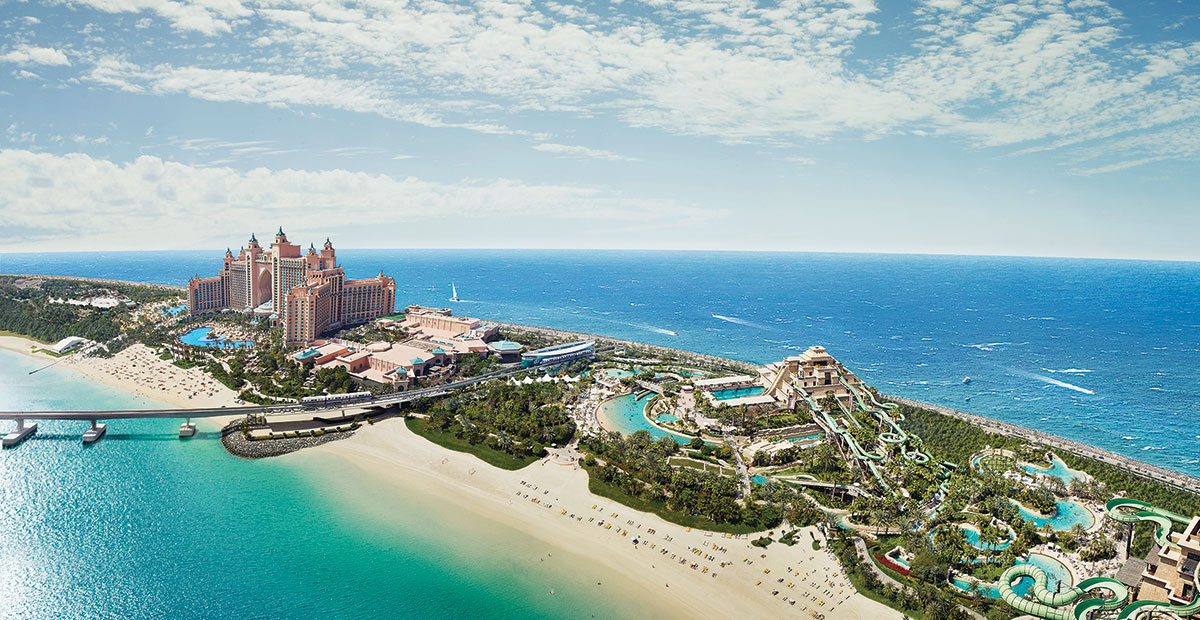
This also includes many parts of the Middle East, especially the Arabian Gulf. Whether one lives in Venice, Italy; Beirut, Lebanon; Alexandria, Egypt; Tel Aviv, Israel, or Dubai, UAE,  the combined effects of rising temperatures and sea levels are being increasingly experienced.

Oceanography experts now say the situation of rising levels “will then grow far worse in the 22nd century and beyond, likely requiring the abandonment of many coastal cities.”

This in itself would be disastrous since some of the world’s most populous cities include Hong Kong, New York City and Tokyo, Japan. Yet, despite world oil prices plunging to recent record lows, oil is still being pumped out of the ground in near-record amounts; or flooded out by methods such as fracking, that is also polluting underground fresh water supplies.

In the recent COP 21 Climate Change Conference, held last December in Paris, 195 countries adopted the first ever, legally binding global climate deal that strives to keep annual rising world temperatures to under 2 degrees Celsius.

The problem regarding this agreement is that it is only scheduled to take effect in the year 2020. By then, four years from now, the continuing affects of fossil fuel caused global warming may already have caused many coastal areas to suffer irreversable damage so severe that partial or even total abandonment may be the only viable option.

Read more on effects of global warming and climate change in the Middle East and elsewhere:
Climate change “worst” is yet to come, UN report warns today
Saudi agriculture to be hit hard by climate change
Should Al Gore profit from global warming? Should any of us?

Photo of Florida coastal flooding by ireport.cnn.com

Heads up! A look at Iran’s fantastical ceilings (PHOTOS)

1

mrasoulifard@yahoo.com

Instagram photographer “m1rasoulifard” has been creating a visual catalog of Iranian architecture, shooting the interiors of mosques, such as Hazrat-Masoumeh in Qom (above), and cultural centers, like the Chaharbagh School in Isfahan.  His images capture intricately detailed interiors rich in texture and kaleidoscopic colors. Tuck into this visual feast of Iran’s splendiferous ceilings; scenes lost to one deep in thought, or bowed down in prayer.