Home Blog Page 239

Ezme, the Turkish tomato salad recipe you will long for at home

0

tomato and pepper recipe

Tomatoes are full of lycopene, the cancer-busting carotenoid responsible for the reddish colorations in vegetables and fruits. Red peppers are packed with phytochemicals and beta-carotene, which flood your system with antioxidant and anti-inflammatory benefits. Meet a delicious concoction that combines both in an ancient Middle Eastern recipe with decidedly modern health benefits.

Science says the sense of smell is the most potent conjurer of long-ago memories.  I say that taste runs a close second. A recent dinner with a great friend in Jaffa hurled me back to a Manhattan apartment circa 1982 and a dish whipped up by the exotic Moroccan boyfriend of my then-best pal. It sent me on a week-long hunt to replicate it.
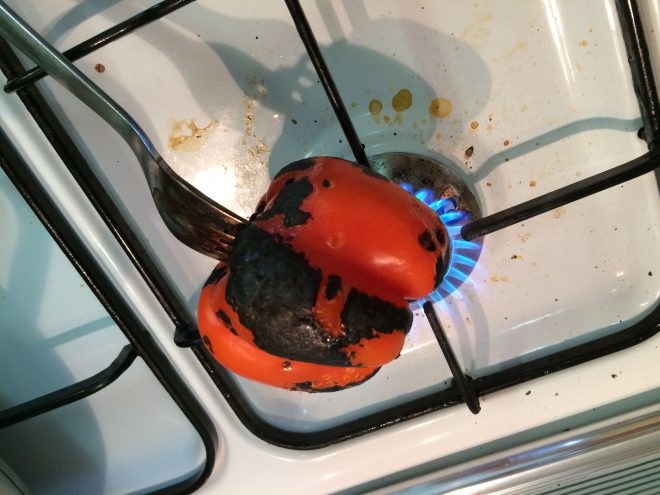
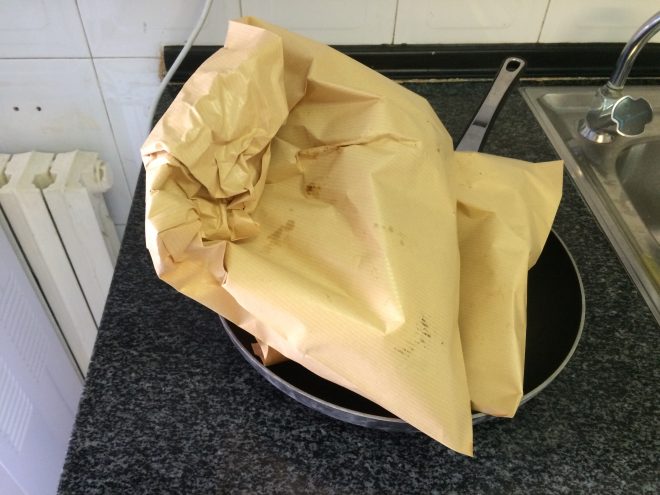
red pepper recipesI recall how Laurent speared plump red peppers on a tin fork and roasted them above the flame on my ancient gas stovetop. He chucked them into a brown paper bag (plastic had yet to infect 1980’s NYC) and the peppers steamed inside, loosening their charred skins. He chopped the peppers, adding tomatoes, onions, and garlic, explaining in swoonable French-accented English that this was exactly how his ancient grandma did it.

(I now live in Amman, Jordan where our only bags are plastic, so I recruited some manila envelopes to stand in for brown paper bags.)
tomato recipeThat ’80s meal consisted of his deep red relish, smeared on Italian bread, washed down with many bottles of wine. Undoubtedly, a Rolling Stones record spun in the background.  I suspect Goat’s Head Soup.

Back to the future in Jaffa, Karin laid out an incredible spread of Levantine dishes, including one standout that she called a Turkish Salad.  A mushy confit of tomatoes, onions, and red peppers served up cool on a warm summer night.  The vibrant tastes triggered a taste bud explosion. She waved off our raves saying she picked it up at a local shop. A week on, I am still jonesing for that flavor. So the internet hunt began.

Google’s result for “Turkish Salad” brought up the how-to’s for what looked like a basic chopped salad. I love me a vinegary medley of minced cukes, onions, and tomatoes, but this was not the Turkish Salad I was searching for. Sweet tomato Turkish Jam (recipe here) was also off the mark.

Digging deeper, I hit the jackpot, finding two different recipes for the ruby red dish.  Seems the term “Turkish Salad” is specific to a condiment (סלט טורקי) commonly served up in Israeli restaurants. It’s typically presented as part of a trio, served side by side with humus and tahini.  Like Italian marinara, and Indian curry, there seem as many versions of Israeli Turkish Salad as there are people who make it.

So I set out to experiment on my own, using slight variations on two different recipes, just to see which would send my taste buds into delicious reverie. Here are two ways (of many) to make Ezme, or Turkish Salad, a Sephardic savory jam.

Version #1Deep red tomatoes are kicked up by piquant spices and a hit of harissa (hot chili pepper paste). Pulse the mixture in a blender if you prefer a less chunky sauce.

Ingredients for Ezme Recipe Version #1:

  • 3 small onions, roughly chopped
  • 8 garlic cloves, finely chopped
  • 4 tbsp olive oil
  • 4 large tomatoes chopped into 1/2″ pieces
  • 1/2 red bell pepper finely chopped
  • pinch of cayenne pepper
  • 1/2 tsp cumin
  • 1/2 tsp black pepper
  • 1/4 tsp salt
  • 1/2 cup chopped parsley
  • 1/4 cup chopped cilantro
  • 1 tbsp harissa

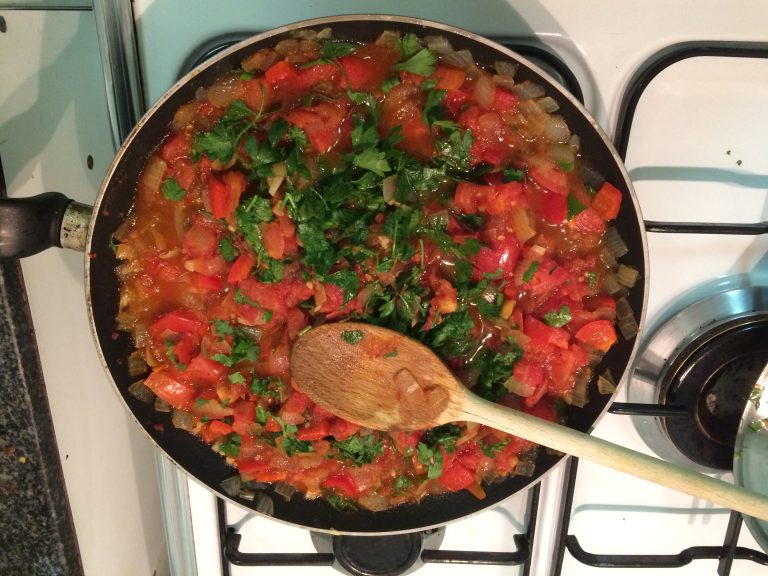
Heat oil on medium flame. Add onion, garlic, and red bell pepper. Sauté about 5 minutes or until onion becomes translucent. Add tomatoes, harissa, and all spices. Sauté about 5 minutes, stir occasionally. Turn off the flame, add parsley and cilantro, mix well and allow it to cool down. Serve at room temperature, or cold.

Version #2 – Much more work, but a fantastic result.  Smear it on bread or pita, eat it plain, or accompanying omelets, chicken, grilled meat, or fish.

Ingredients for Ezme Recipe Version #2:

  • 6 red bell peppers
  • 6 large ripe tomatoes
  • 6 cloves of garlic
  • 4 tablespoons olive oil
  • 1 teaspoon kosher or sea salt
  • ½ teaspoon coriander
  • 1 teaspoon cumin
  • ¼ teaspoon cayenne pepper

Char the peppers over a grill, or spear them on a fork and carefully roast over a stove top flame. Place blackened peppers in a paper bag, close the bag to allow them to steam. Boil water in a large saucepan (sized to fit 6 tomatoes). Cut a small X in the bottom of each tomato. When the water boils, place tomatoes in the pot for 2 minutes. Remove the tomatoes from the boiling water and set aside.

Once cooled, remove the peppers from the paper bag and discard all stems. Peel off the charred pepper skins. (Skip the temptation to scrub them under water, as washed peppers will lose a lot of their flavor.) Slice them open, and remove white membranes and seeds. Dice the peppers with a sharp knife.

Peel the blanched tomatoes, starting at the bottom X cuts. Cut the tomatoes in half and scrape out the seeds. Remove the green stems too. Dice the remaining tomato pulp to a similar size as the peppers.

Mince the garlic. Add olive oil to a large non-stick sauté pan. Cook the garlic, peppers, and tomatoes – stirring constantly – on high heat.  When the mix begins to bubble, turn the heat down to medium. Season with salt and all spices. Let the tomatoes and peppers cook down to the consistency of a spread, stirring occasionally to avoid burning as the liquid evaporates. As with Version #1, allow the ezme cool. Ezme is similar to but not the same as Moroccan matbucha which does not incl

End note: Serve it up as a sandwich spread, a dip for bread or veggies, or as a brilliant topping for pasta, fish, or chicken. Store leftovers in the refrigerator in a non-reactive glass jar. It also freezes with good results.

Which version do you prefer? And – as importantly – what music do you like to eat it to?

humus via Unsplash

Want more dips and spreads? Try hummous and ful mesdames from Lebanon.

France’s new ban on plastic throwaways should be extended globally

0

France bans plastics

France has passed a new law that bans cups, cutlery, plates, and takeaway containers made from plastic. It’s The part of the nation’s Energy Transition for Green Growth Act, which will also carry out a ban on plastic bags in grocery shops and markets beginning in July. The law comes into effect in 2020.

French President Francois Hollande says the law aims to make France ‘an exemplary nation in terms of reducing greenhouse gas emissions, diversifying its energy model and increasing the deployment of renewable energy sources’.  Viva la France! But why stop at its borders?Arash Derambarsh, a municipal councillor for the commune of Courbevoie in Paris, has called for the ban on single-use plastics to be implemented across Europe. Derambarsh is an environmental action figure; he previously led a successful campaign to ban French supermarkets from throwing away unsold food products.He told The Independent, “This problem of recycling exists in all European countries. We have to pass the same law in all European countries to tackle this very important problem of waste.”  He describes the new law as one part of a circular economy of waste disposal, one of several legislated measures to reduce waste production and divert remaining waste from landfills.

The law requires all plastic single-use items to be made from biologically-sourced materials that can be composted after use.

It’s not rocket-science. Bans on free-issue plastic shopping bags have been on national law books for over a decade. The Republic of Ireland (enacted in 2002), Denmark (2003), Belgium (2007), Mexico (2010), Wales and Italy (2011),  Scotland (2014), and England (2015) all tackled the problem with legislation.

China, Bangladesh, South Africa, Uganda, Somalia, Rwanda Botswana, Kenya and Ethiopia have enacted total bans. The United States does not consider it a federal issue, instead leaving it to states, counties, and cities (since 2013, at least 17 states, and 98 cities and counties have enforced bans).

The Middle East has been slow to join in, despite having many of its main touristic venues and natural habitats seriously polluted by uncollected plastic garbage. EcoMENA reports that some governments have tried to raise public awareness and incite behavioral change, but full-bore bans – with rigorous enforcement – have not been enacted.

In 2009, the UAE Ministry of Environment and Water launched the “UAE free of plastic bags” initiative. Dubai Municipality launched a “No to Plastic Bags” campaign to eliminate 500 million plastic bags from circulation. Smaller scale efforts in Saudi Arabia, Qatar and Kuwait encourage clean-up campaigns in seas, deserts and cities, but do not deter usage of disposable plastics.

In 2014, Jordan announced plans to ban plastic bags and wraps used in food sales, but two years on there is little evidence of policy enforcement. In 2017, two years after the initiative was first raised, Israel passed a law that halted free issue of plastic bags at all large supermarket chains.  The law also imposed a full ban on very thin plastic bags (less than 20 microns).

Hurghada, Egypt became the first plastic-bag-free governorate with a 2009 ban which also generated employment opportunities for women who create reusable cloth bags to replace plastic ones.

The French law moves beyond bags to include food industry single-use plastics. France is the first nation on the planet to do so, an action that could be repeated everywhere to forcibly halt our culture of waste. Predictably, the law faces opposition from the European packaging industry, who claim that the ban violates European Union rules on free movement of goods and protection of manufacturers.

Pack2Go Europe, a Brussels-based trade organization representing manufacturers, has said it will fight the new law and work to prevent its adoption by the rest of the continent. “We are urging the European Commission to do the right thing and to take legal action against France for infringing European law,” Pack2go Europe secretary-general Eamonn Bates told The Associated Press. “If they don’t, we will.”

Bates believes there is no proof the biologically-sourced materials are more environmentally beneficial and that the ban might exacerbate pollution worse as people may increase littering, thinking the products degrade instantly when exposed to natural elements. It’s a view shared by Daniella Dimitrova Russo from the Plastic Pollution Coalition (read her Op Ed on the matter – link here).

Perhaps edible plastics are the way to go? Feed the world by literally eating up potential litter. There’s an idea to chew on.

Image from Metro UK

Human activity causes a new geological epoch. Rock on!

0

justin guarigliaSay hello to the “Anthropocene”, a new geological epoch brought about by humanity’s impact on planet Earth. A team of geologists say that ash from fossil fuels, plastic waste, rising seas (which are triggering a dramatic increase in upland erosion), and radioactive particles littered by nuclear bomb tests are all contributing to permanent changes in Earth’s rocks. Not necessarily something that warrants a party, people. But a New York City artist marked the event with a new tattoo.
Skittles, Risk and Statistics

0

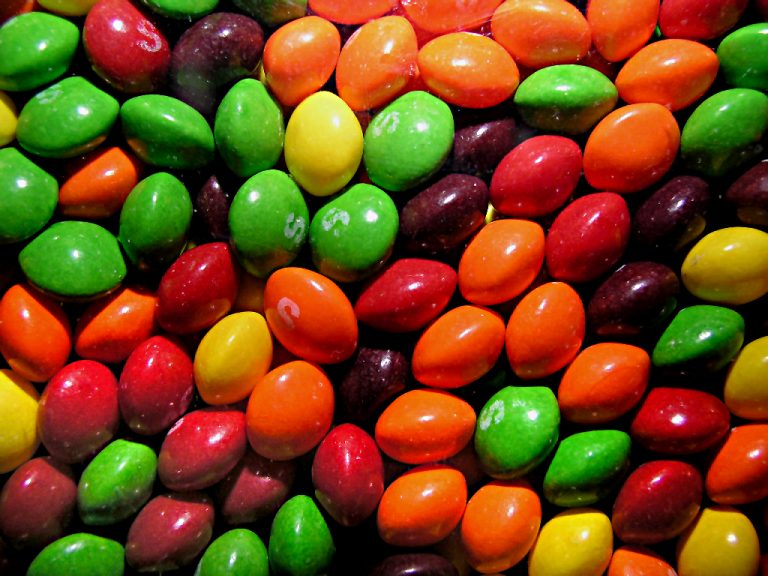
skittles-louisiana-candyI’m going to thank Donald Trump Jr. for providing a simple way to visualize our decisions regarding human refugees. He said that we should pretend that “those people” are skittles, not someone we could ever imagine being a loved-one– capable of thought, compassion, joy and loss as we believe of ourselves.

In junior Trump’s analogy, a bowl full of skittles represent men, women and children who somehow escaped bombings and other violence in their home and who somehow avoided drowning and starvation as they made a perilous journey across the Mediterranean, through Europe’s muddy hinterlands into your candy bowl. Now we are to imagine that there is one poisonous terrorist skittle in our candy bowl. Eat this and you will die.

Assuming we can stomach a moral worldview which equates human lives to candy, there is another problem– and another bowl of skittles.
syrian_refugee_with_hand_knit_hat_laurie_and_bradbury

Bowl #2 is a mandatory skittle bowl. You must eat from this one even though you know that many of its skittles are poisonous. How many? Well, let’s get back to bowl #1.

If each skittle represents a Syrian refugee taken into the US this year, there are 10,000 skittles. And how many are poison? Should we assume that the LA shooters and the Boston bomber brothers, the Orlando gay hater, the Jersey bomber and Saint Cloud stabber all belong in bowl #1? No, none of these were among the Syrian refugees the US took in this year but since we’re pretending, let’s assume that we can count all of them. That’s 8 poison skittles out of 10,000. So to fit Trump junior’s analogy, we need to resize our bowl to 1250 skittles, one of which is poison.

But we still have our mandatory skittle bowl #2.  Sticking with Trump junior’s skittle-human life equivalence principle, lets assume there are 300 million red, white and blue skittles in bowl #2.

The poison skittle in bowl #1 represents death from a terrorist. The poison skittles in bowl #2 represent death from other causes. In the US these deaths are tracked by the Center for Disease Control (CDC.) So we know that for each terrorist poison skittle in bowl #1, in bowl #2 we would need:

At this point I’m going to pause and say that I wish the U.S. government could shift a tiny fraction of its $5 trillion anti-terrorism spending into developing a cure for cancer and heart disease. Together these diseases are about 70,000 times more deadly than terrorism. But sadly, they are not the only cause of non-terrorist deaths. Bowl #2 must also contain these poison skittles:

  • 4700 poison alcohol skittles
  • 2000 poison car crash skittles
  • 2000 poison gun violence skittles
  • 2000 poison suicide skittles
  • 452 poison HIV skittles

And a few hundred other poison skittles representing deaths from bathtubs, furniture, prescription drugs and various other causes that other countries might classify with the catch-all  “death by misadventure.”graphic_novel_from_syrian_refugee_child

If you’re reading this, you’ve already survived mandatory skittle bowl #2 and now you have a choice. Do you take your next mandatory skittle straight from mandatory bowl #2? Or do you save thousands of lives by first pouring in the contents of bowl #1, infinitesimally increasing your risk by adding one more poison skittle to mandatory bowl 2 which already contains 80,000 poison skittles? You’ve got to ask yourself, ‘Do I feel that unlucky?’

Images by Jene Bradbury, Green Prophet’s Laurie Balbo. The drawing is by a Syrian refugee child at Zaatari camp in Jordan.

Internet of Things – From Smart Fridge to Smart City

0

BioThink, biomimicry, Iran, Mohammad Ghezel, green transportation, hybrid energy, solar energy

Like Cloud, Big Data and other technological buzzwords, the definition of the Internet of Things (IoT) is often stretched to fit a corporate sales pitch. IoT. But what is it? The internet of things connects ordinary objects to the internet. So now we can Google missing luggage and use an online dating service to match our socks? The reality of IoT is only slightly less imaginative. IoT promises to become the technological bricks and mortar that helps us build smart cities.

Want to build your career in IoT brick by brick? Check the Intellipaat Internet of Things training to get ahead!

nest labs google

Someone peeked inside the refrigerator. A jar tilted against the rubber seal preventing it from re-closing tightly. The door was slightly ajar for only about an hour. But the incandescent refrigerator light bulb had done the damage. Ninety-five percent of its 15 watts went into heating the well-insulated box and spoiling $50 worth of food. It had happened before. It would happen again. So I jury-rigged an alarm that squeals every time the fridge light comes on. The alarm annoyed my family, but a neighbor asked me to make one for him. A photoresistor, a battery and a piezoelectric beeper shouldn’t cost more than $5. But when I researched these 1970s vintage components, I learned that they had evolved into microprocessors and eventually the internet of things.

I found a $5 device capable of measuring temperature and humidity and transmitting the results over WiFi. It could post,“Hey stupid, you left the fridge open again!” on my Facebook wall when it detects a temperature rise.

I showed this to an Iraqi architect who immediately saw how it could be used to improve the curing of pre-stressed concrete– a process that should rely more on science and less on gut instinct and luck. What else can be done with this internet of things?

When Ireland squandered too much of most abundant resource (rain) — smart water meters were installed on millions homes. These devices measure water consumption, detect leaks and transmits its findings via a smart-meter network to a monitoring truck which passes this information to the billing department. My electricity meter does the same thing.

Worldwide the growth of this technology is approaching the frantic pace of PCs, smart phones and the internet itself.  IoT is already implemented in some cars to put drivers in touch with mechanics and tow companies in the event of a break-down or crash. Cars can also notify each other of road hazards and traffic congestion.

smelly fridge

SamTech of U.A.E. uses IoT to track buses, taxis and other vehicles. GreenQ of Israel uses IoT to track garbage.  Silicon Oasis is installing IoT for smart streetlights in Dubai. flux is using it to listen to the health of plants. Smart thermostats like Nest can adjust the temperature of your home when it detects that your smartphone (and presumably you) are nearing the house. And last but not least, IoT is being used for refrigerators. Refrigerators can send a recommended grocery list based on what my family has used and at what rate and remind them when they are eating too much unhealthy food. It can even show its contents via a video display so there is no longer a need to open the door and peer inside and risk leaving the door open.

The Silicon Valley for agriculture to be built in Denmark

0

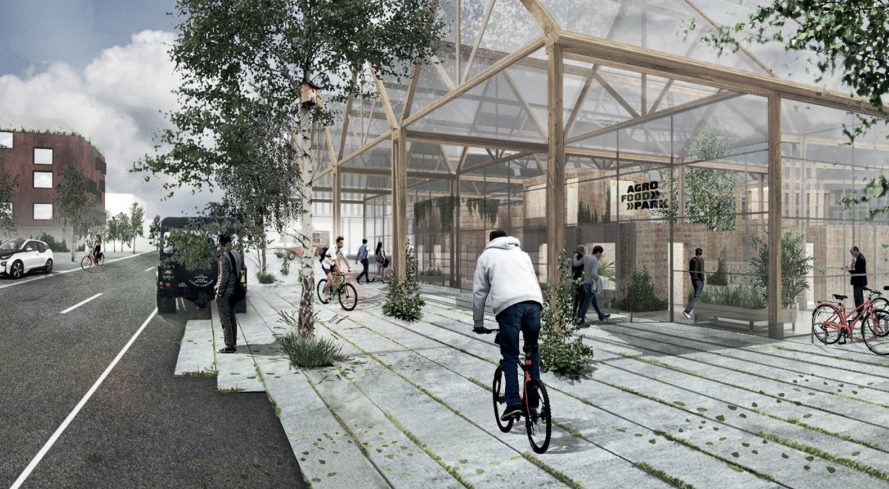
denmark-food-park

We all need better food in our lives.

Now Denmark is putting its stake in the ground and ploughing ahead with new ideas. It’s working with leading architects and is making investments in a making huge investments in a balanced whole-systems and ecological approach to growing our food.

agro-food-park-william-mcdonough-partners-2-889x589

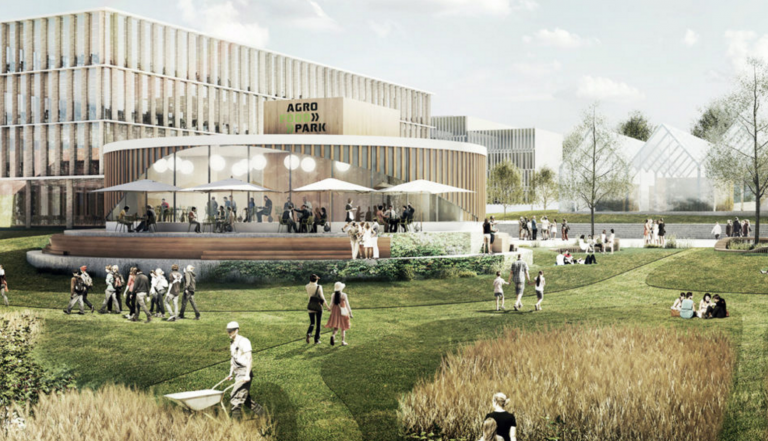
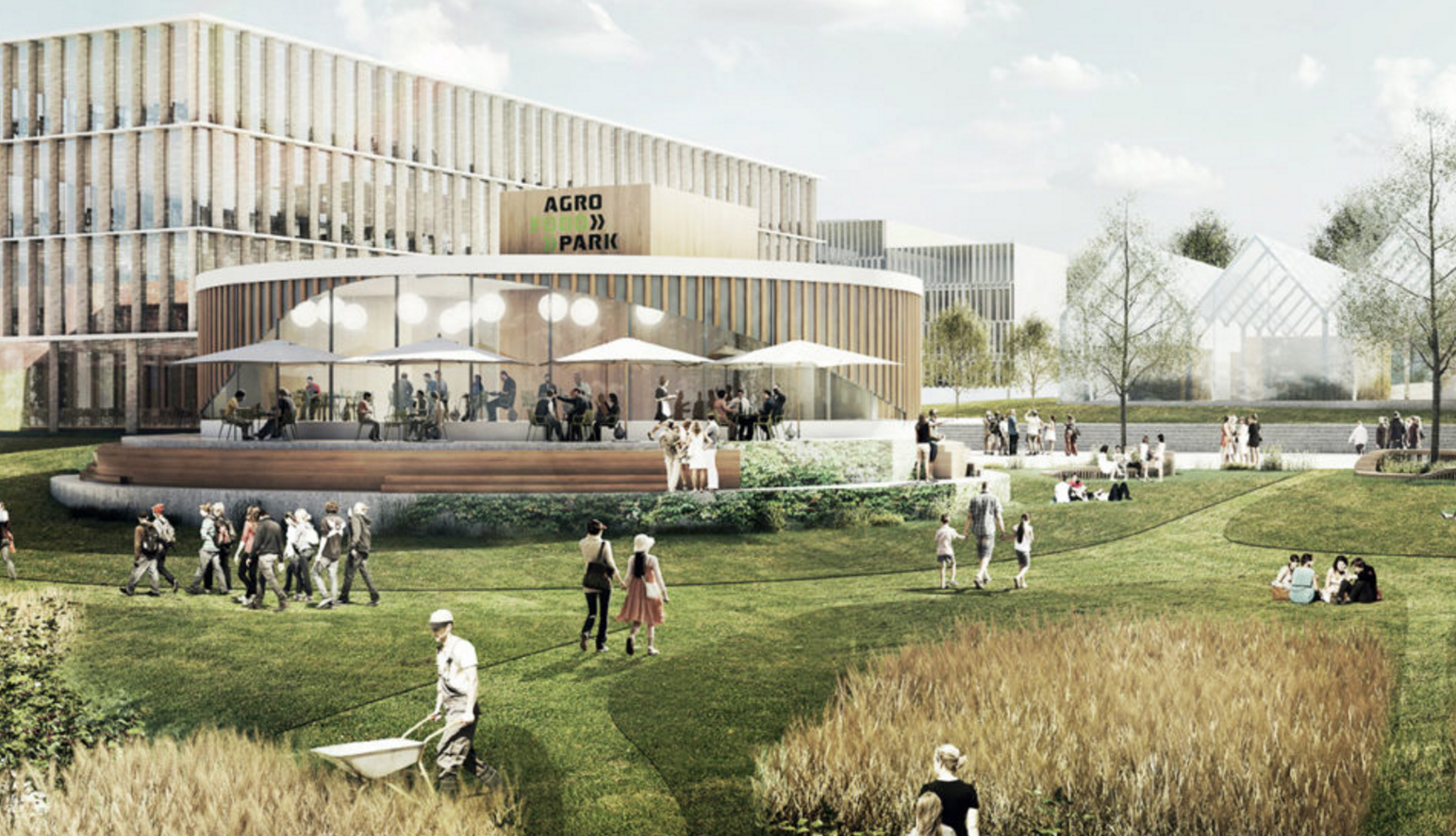
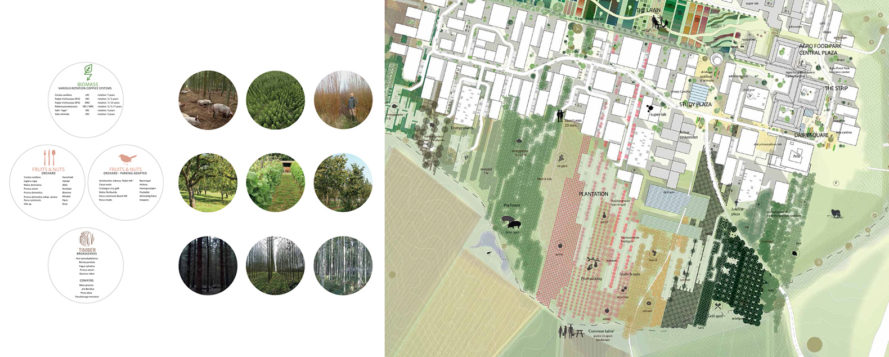
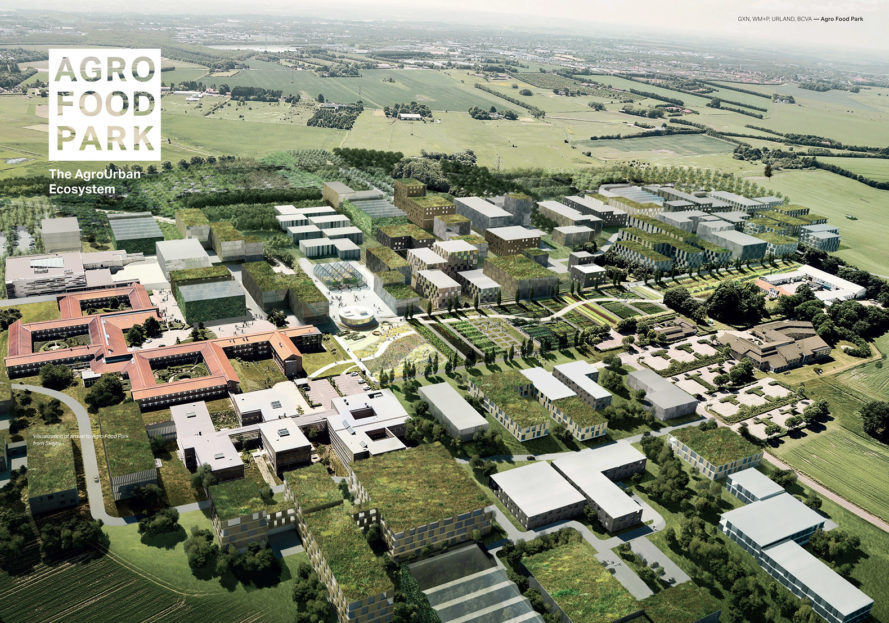
William McDonough + Partners, GXN, 3XN Architects, BCVA and Urland have put together the master plan the Agro Food Park (AFP), which is built on an existing hub of agricultural innovation center. The firms designed a connection between research and business and urban agriculture to the needs of food of tomorrow can be me without further degrading our planet.

agro-food-park-william-mcdonough-partners-9-889x357

The original food park opened in 2009 and is owned and run by The Danish Agriculture & Food Council. William McDonough + Partners said it is expected to “create synergies among the many existing tenants while building an ecosystem inviting new entities to further strengthen products and expertise developed within the hub.”

Related: Creating a food and expert network for urban farmers

agro-food-park-william-mcdonough-partners-3-889x489

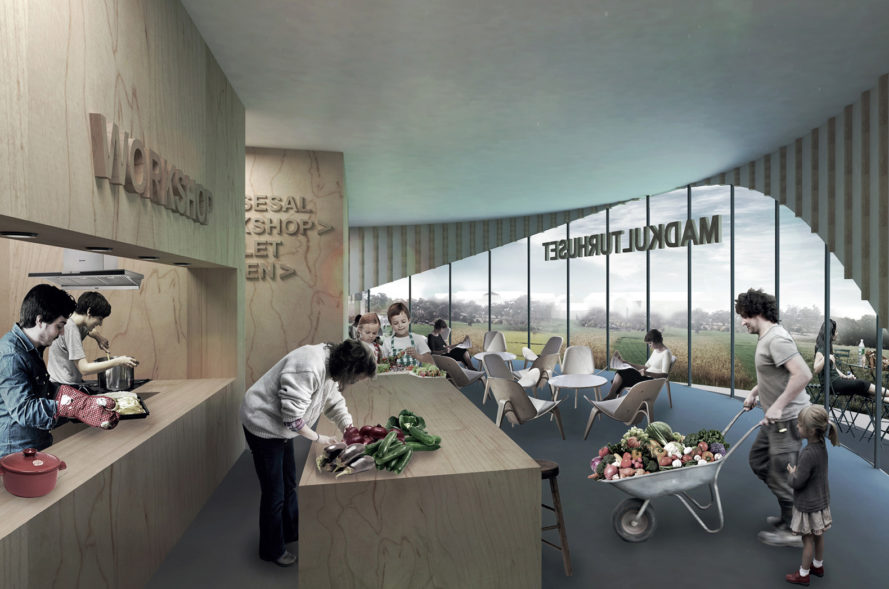
“Embracing Agro-Urban Ecosystem Design, the AFP treats urban and agricultural development together as a unified, productive and restorative ecosystem,” said William McDonough + Partners.

agro-food-park-william-mcdonough-partners-4-889x623

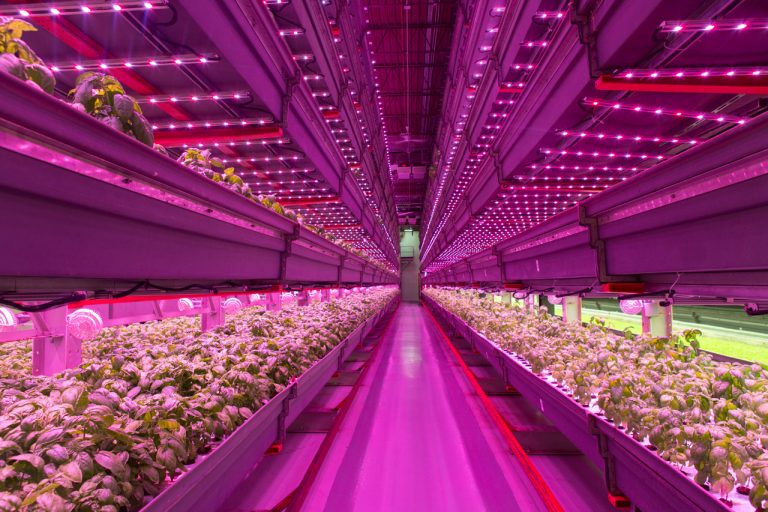
“By integrating the carbon cycle and other ecological processes into large scale urban systems and their surroundings – buildings and energy flows, water cycles and wastewater treatment, land use and food production – the AFP creates economic value within the urban and agricultural infrastructure.”

Meet the Mad Men for urban and small-scale farmers

0
Farmed Here special hydroponic growing project
Have a special farm, growing hyper-nutritious food? Nick Burton, Founder of the State of the Soil agency helps small business farmers craft the messaging and media to sell what’s grown at a profit.

Urban farming. High-tech farming. Modern farming, or maybe it’s traditional farming? However you call it, farming in the US is shifting against the tide of large-scale monoculture, chemical company-controlled mega farming, where farmers measure success by operating at smaller loss than the year before. The farming industry is on the verge of collapse. Oil prices are dropping, seedstock prices are quadrupling and with mega billion dollar mergers like Bayer and Monsanto looming, US farmers fear the absolute worse is yet to come.

We know the world feels what happens to the US: the current breadbasket to the world in many staples such as corn and wheat.

Thousands of new farmers in the United States are revolting against the system in their own gentle way, by farming with dignity and doing things differently than factory farming. They are creating small business farms in all shapes and sizes from hydroponic greenhouse farms to one acre organic specialty crops farms.

The problem for these farmers isn’t growing. They learn what to do, they love it, and they grow successfully. Their problem, says Nick Burton, in the green business for 20 years and a hydroponic farmer for 3, is now building a media and branding services to modern farmers –– because most do not know how to market and brand themselves.

Burton (pictured below) started a new business growing hyper-local greens for Texans and has nailed the packaging, email lists, and is growing a booming business out of Paris, Texas called the Victory Lunch Club. Burton’s company supplies artisanal salads to your office desk.

nick-burton-state-of-the-soil
Burton gets behind your urban farm or smallhold farm brand, and tells your story to your market

He found marketing and media was his calling, his purpose for changing the world and has since created a new business, State of the Soil. It is intended for growers and farmers of all stripes, using any medium and system for farming. State of the Soil is like your Mad Men advertising agency if you are a small or medium sized farm business holder.

https://www.youtube.com/watch?v=yniY6lB3fBE

As the company builds out, it will be building conferences and events, starting with an online speakers event this coming January – register here.

The company will support community growers through social media, it will create events, and will provide educational resources to the people who have started farming and want to learn more.

Services will be affordable and not multiples of thousands of dollars, which the conventional ag industry has normally changed for its events and services, so no one but managers of chemical companies and financiers could afford to attend.

Burton is putting farming back into the hands of men and women. If you are keen on joining the urban farming movement, get your message and story right for the farmer’s market. Burton will show how it’s done –  sign up here.

Meet Nick at NYC AgTech week happening next week September 19 to 24. 

World deforestation: we’re losing a forest the size of NYC every 2 days!

0

unsustainable development, Turkey, Taksim Square,

This is an issue of global concern. Climate change, urbanization, and resource depletion (more mouths to feed, burn wood in stoves for, graze more cattle for) is still happening at a fast an alarming clip, influencing our planet’s ability to store CO2 emissions, and protect diversity. We hate scare tactics, but put it into scale and see how much we are losing compared to reference points you can understand.

deforestation_10-1

Via eCO2 Greetings

Sustainable technology trends in sun, wind and air

0

World's largest solar farm

Technology is a driving force of innovation. Everything we build, adapt and refine, generally has the express purpose of making our lives on this planet easier. Whether it’s transportation, growing food, or the sending and receiving of information, technology exists to solve a problem or streamline a process. Nevertheless, the environmental cost of this technology is vast. For example, the average carbon footprint for the manufacture and use of an iPhone is between 55kg and 75kg depending on the model.

However, emerging technologies are reducing environmental pressures across the board. This is in part to large companies taking a positive stance on sustainability. For example, Nike has stepped up to the plate to show others that recycling on a large scale is possible with its Reuse-A-Shoe program. Web hosting companies such as 1&1 made known their own green efforts, demonstrating how their data centers are some of the most energy efficient worldwide, preventing upwards of 30,000 tons of CO2 emissions from entering the atmosphere every year. Even in the banking sector, financial organizations are doing their share, as The World Bank has earmarked $16 billion to mitigate climate change in 2016 alone.

But a lot of credit is also due to ingenious inventions by lesser-known start-ups and inventors. These technologies operate with the intention of reducing carbon output, producing clean energy and depolluting water source; in essence, to mitigate the damage our current technological advances have caused.

Bladeless wind turbenergy-bladeless-wind-towerines

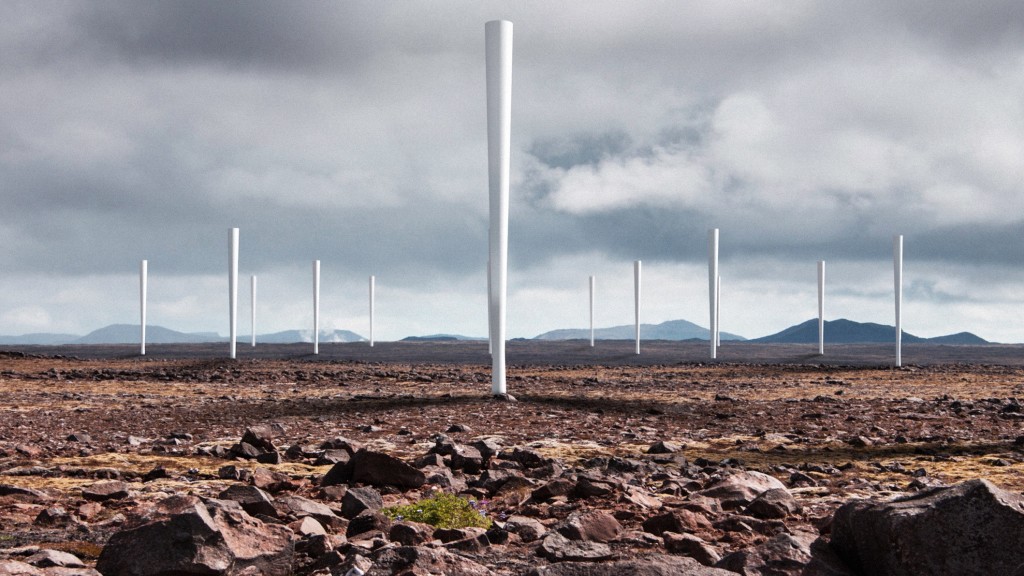
Wind turbines have been a staple of renewable energy for a while. However, for all the good they do, they are large, incredibly noisy, and not particularly friendly to bird populations. Vortex Bladeless is one company working on a turbine that leaves behind the cumbersome blades of conventional turbines. Instead, their models will harness power via the vibrations caused by wind. Two bladeless models exist for domestic and industrial use, and the carbon footprint is 40% less than traditional turbines.

Air filtration towers

smogfree-project-air-roosegaarde4

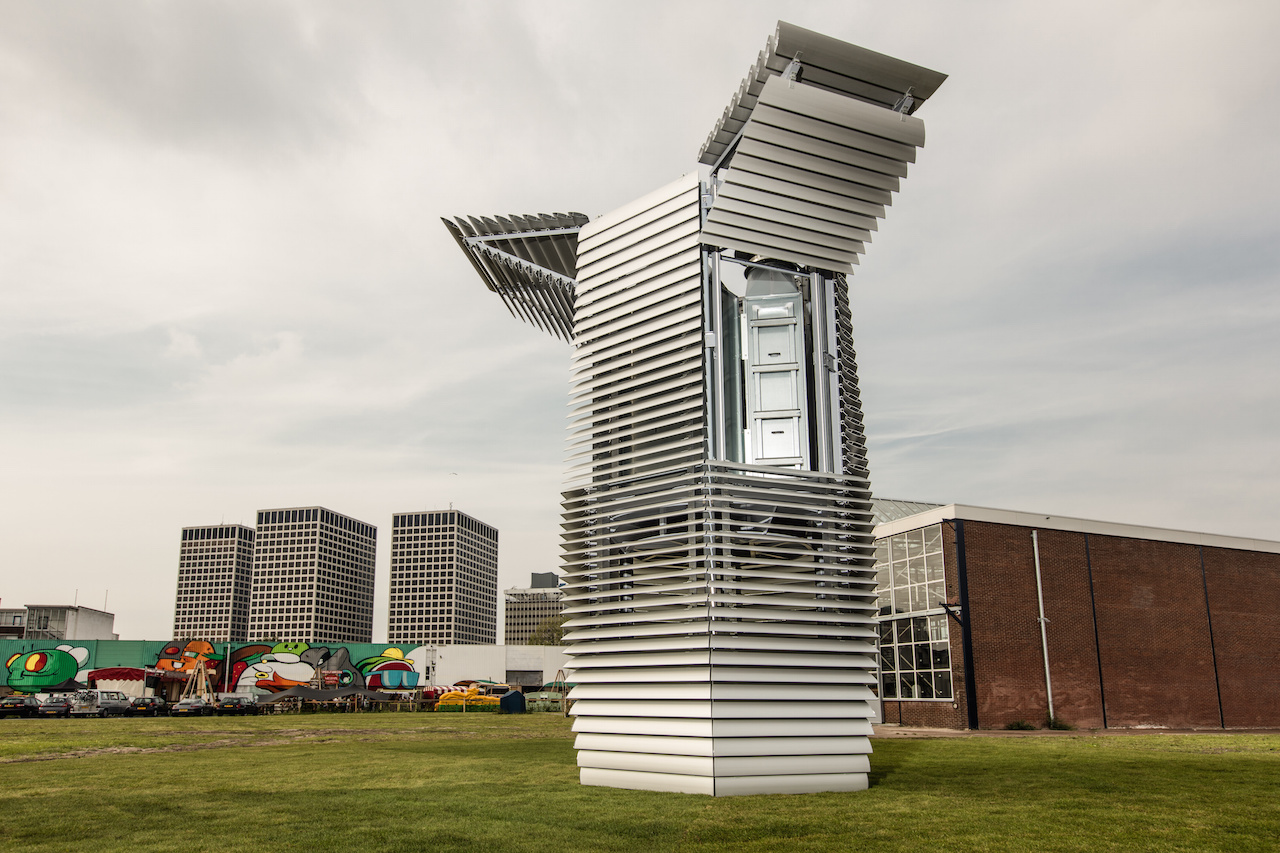
Cities such as Delhi and Beijing suffer from very poor air quality. Daan Roosegaarde and Bob Ursem recognized this and designed a seven-meter tall filtration tower, which sucks in polluted air and expels it smog-free. Currently situated in Rotterdam, the tower is able to clean 30,000 cubic meters of air per hour.

Solar roofing

elon-musk-solar-roof

Solar panels are nothing new, but tech mogul Elon Musk is taking it one step further. His solar energy company, SolarCity, proposes not just installing solar panels onto roofs to power homes, but instead to make the roofs themselves out of solar panels. As Musk himself says, “It’s a solar roof as opposed to a module on a roof.” This technology, combined with the Tesla Powerwall – proprietary technology from one of Musk’s other endeavors – will effectively allow homes to exist off the power grid, and generate completely clean energy.

Jordan gets its first craft brewery, causing ire among Muslim clerics

3

carakale-craft-beer-amman-jordan

If you’ve ever visited a Middle Eastern country, one noticeable difference to Europe is restriction on alcohol. Muslims are not allowed to drink according to scripture (read why Muslims don’t drink here) so depending on the ruling government, access to alcohol may be restricted to your local hotel or nearby speakeasies (big in Iran) or it may be available widely, like in Turkey.

Some Middle East Muslims do choose to drink alcohol, with brewing traditions that span back to ancient Egyptian and Mesopotamian times (try our recipe for Tej, Ethiopian honey beer), and not all of the Middle East is Muslim. And read about this 5000 year old microbrewery found in the Holy Land.

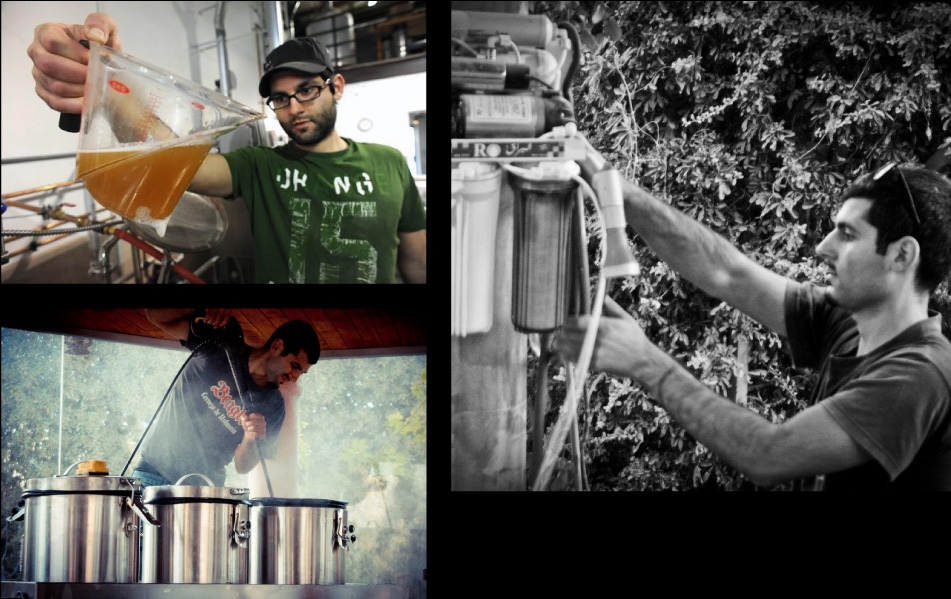
Yazan Karadesh, a local Arab Christian from Amman, for instance has started brewing Jordan’s first craft brewery, hoping to compete in the $22 billion US craft beer market. He went through a difficult experience getting the permit and the land on which to brew (according to this article in Haaretz). He eventually found Christian-owned land in a Christian suburb called Fuheis.

carakale-beer-amman

Karadesh’s brand brewed in Amman is called Carakale Brewery. It is infused with Middle Eastern flavors, unique to the region, he says.

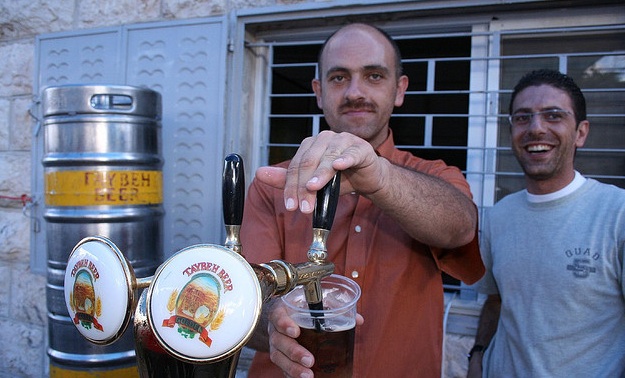
Taybeh beer from the West Bank, Israel is one of the more notable beers from the region. There is also Shepherd’s and Wise Men’s Choice.

taybeh-beer
Pouring some of Palestine’s finest beer, Taybeh.

But Jordan’s Yazan Karadesh wants his own in Amman: “Alcohol might be taboo but you can find alcohol and buy alcohol easily in the market,” he says.

Craft beer is a good alternative to cracking the monopoly that beer makers such as Carlsberg and Heineken own in the Middle East region.

Dancing Camel brewery with 2 locations in Tel Aviv is cracking through the monopoly in its own way. It already infuses its beers with local flavors such as pomegranate. It was Israel’s first craft brewery and by many standards has influenced a whole culture of craft beer making in the entire region.

This movement of craft beer making joins the local DIY movement in the Middle East. Trends such as urban farming (hydroponics), craft making and returning to a simpler lifestyle is taking root.


Food Tech, it’s a battleground. Come pitch your startup at Google

0

screen-shot-2016-09-16-at-9-39-47-am

Israel! You are so good at so many things beyond technology. And food, as locals and tourists know is becoming Israel’s rising star. With hyper-local fresh food production capabilities, Israelis from Tel Aviv to Jerusalem enjoy traditional Mediterranean food, hybridized with any international trend.

It makes complete sense in a country that’s into food, and in the know for startups and technology, that the two intersect in a new industry. It’s called Food Tech. Potentially one of the last frontiers in tech and all of us have to eat. Kimbal Musk, the brother of Elon Musk, calls Food, “The New Internet.”

yossi-dan-challengyThanks to a french import Yossi Dan, and his company Challengy, Israel is about to put some serious spice into the international Food tech scene. Dan is looking for 100 Food Tech companies to duke it out Battleground style, at the Google Campus in Tel Aviv later this month.

Dan is calling all innovators to collect and compete at The Foodtech Startup Contest, part of Global FoodTech TLV. This coincides with the DLD, one of the largest and craziest conferences and tech/art expos Israel does every year. The contest is calling for 100 startup entrants, so if you are just coming to scan for new opportunities, bring a bag of healthy snacks and a cold pressed juice as you watch companies inside the ring pitch their startups.

Ten semi-finalists go onto an even bigger stage to compete for chances to be seen by even more investors, and to get the chance to be swept under Dan’s wing as his firm Challengy leads business development efforts in Food Tech in various global cities.

Do you have what it takes to take a bite out of the Food Tech industry?

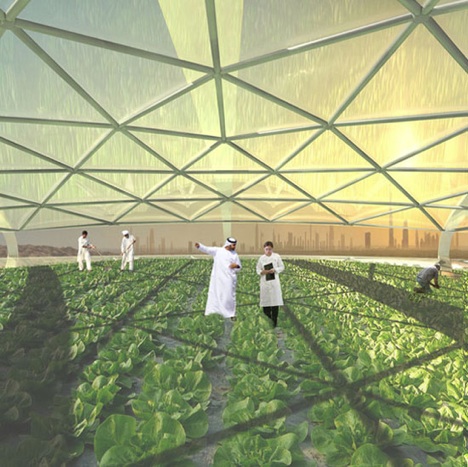
seawater-interior-dubai-vertical-farm1

Do you:

1. Build vertical farming technologies (like hydroponics), create new opportunities for farming in business development, or have a way to make food tastier, healthier or more sustainable. If yes, Click Here.

2. Build technologies that serve the digital landscape making it easier to order online, cut food waste from restaurants, or build platforms to manage inventory at point of sale? Click Here.

3. Build technologies in new
frontiers to understand food quality of industrial chains, from farm to fork, can you monitor water, detect toxins, certify that food is safe? If you are one of these guys or gals, Click Here.

Palestine-food-prices-technologyDetails about the pitch:
Where? Google Campus TLV
When? September 27, afternoon
Who? Food Tech startups from anywhere. Internationals are encouraged to apply
Cost? Free. You just need to register here and be selected among the 100.

If selected, you’ll come and pitch in front of a panel of International experts.

The event is framed around the annual DLD event which is part serious, part crazy. Mostly fun.

Your entrance to the Food Tech scene in Israel, Dan suggests, will be a part of some bigger acceleration program he is putting into place with international partners.

Get some ideas from innovators from Israel featured at Dan’s event last year. 

Le Chaim and good luck.


Linear actuators on solar trackers and what this all means!

2

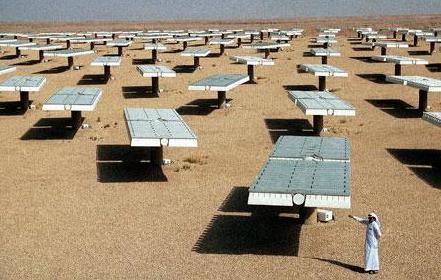
Saudi Arabia solar panels

In the recent past, renewable energy has been in the limelight of most of the countries and global corporations. This is due in part to the fact that, there is need to develop sustainable means of energy production that does not have negative impacts on the environment. Solar power is one of the major options and employs 12 v actuators for the solar trackers to maximize the amount of energy harvested.

Solar Panels 8

The linear actuators are highly favored relative to the fact that they help achieve the desired movement with precision. These are actuators that enhance the element of automation of the solar arrays. Ideally this is geared towards ensuring that the solar arrays achieve the best levels of efficiency by placing the solar panels at the correct angles for insolation (or solar irradiation).

Solar energy is slowly gaining popularity as one of the main energy sources of the future as the world shifts towards cleaner energy options. It is a must for regions in the Middle East. With new providers popping up almost weekly, you should compare reviews of solar energy providers if you’re thinking of doing an installation for your home.

In the past, most of the solar panels would be placed on a fixed array. This meant that, for most of these panels, they only got to their best efficiency during the peak hours of the days. Ideally, the sun moves from East to West, which is associated with the rotation of the Earth. As such, the solar plants have to ensure that they are able to move their solar panels to the positions that best give the highest level of insolation. This means that the solar panels are constantly converting at a higher rate than for the static panels on most conventional platforms such as rooftops. It is estimated that, with the mobile solar panel arrays, the level of efficiency is increased by close to 50%. This is a significant gain compared to the static arrays.

solar-panel-actuators


As such, the use of the solar trackers has become crucial, as they help with the placement of the solar panels relative to the insolation quotients. The linear actuators are important when it comes to delivering the right mechanism for the movement required. This is relative to the fact that, of the many types of actuators, they are considered to give the most accurate movement relative to inputs.

terra sola egypt

The 12v linear actuators are also associated with easy installation, relative to the fact that all they need is a power source and means of controlling them. Some of the best examples that commonly used with the solar panels arrays are the PA-17 industrial actuators that are used together with the PA-17 control boxes. These are actuators that are quite strong as they can handle forces estimated at 2000 lbs. When setting up the solar arrays, the users have to make sure that they are secured and safe. This is crucial relative to the capital outlay associated with setting up the solar arrays.
solar-actuator

With the 12v actuators, it is easy for the users to take advantage of the movement precision offered. It is important to mention that, while tracking the sun is going to increase the level of insolation on the panels, there is a catch. The movement of the solar panels has to be precise to the position of the sun and more importantly to the controls. If the precision of the actuators is compromising, the efficiency of the solar panels will not be achieved and in fact may even be more inefficient that the conventional fixed solar arrays.

Now you know all about actuators!

Full moon hike with consciousness about water in Auja

0

full-moon-hike

Our favorite eco-organization EcoPeace Middle East are arranging a full moon hike in the West Bank this week with a local center, the Auja EcoCenter which offers tried and true alternatives for better living in desert climates.

Auja has been the focus of a number of stories we have covered here on Green Prophet, namely because the village has agreed to pilot a number of solutions that can greatly improve the welfare of people in Palestinian Territories, but also in Syria, Jordan, Israel and anywhere where the sun is plentiful and water is scarce. See pictures below of some projects ongoing there.

Treating greywater in Auja

Auja-playground

Compost toilet at Auja

auja

Villagers of Auja
Villagers of Auja

Want to get educated on the Middle East eco issues and be part of something bigger than yourself? Join EcoPeace Middle East and Auja EcoCenter for a Full Moon Hike and Bedouin dinner this Friday, September 16thThe hike is 3 hours long, and it’s at Beginner’s level. Cost is $25 and it includes an authentic Bedouin dinner. Expect to be spoiled by a rich experience and good people.

Auja is a short drive from Jerusalem. And is accessible from Jordan via the Allenby Crossing. Guests can stay overnight for an additional $25, and the cost includes bed and breakfast.

Byblos, Lebanon is best Arabian city to visit this year

0

byblos-city-arab_tourism_capital_2016-history-harbor-port-ancient-phoenician

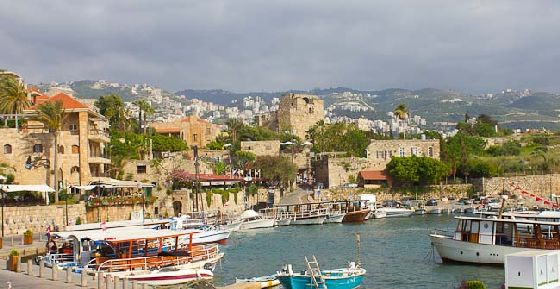
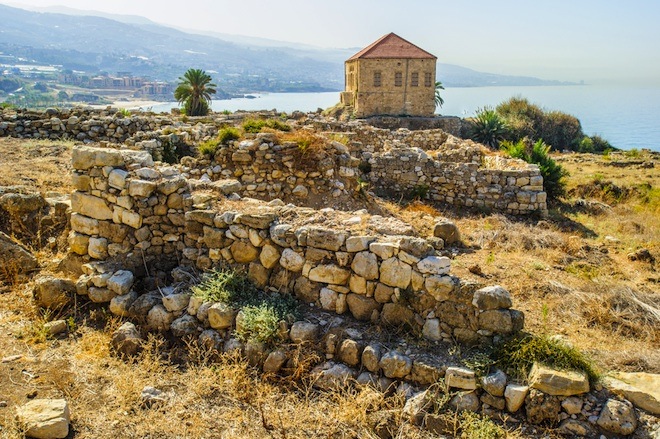
I remember that when I visited Byblos, in the Jbeil district of Lebanon, in the summer of 2011, I felt like a true beholder of history. Historians agree that it’s the second oldest continuously-inhabited city on earth, runner-up only to the Palestinian city of Jericho. I sat at Feniqia restaurant in the heart of the old Phoenician city, eating shanklish cheese and tabbouleh and imagining life in that very spot, if time were to rewind 7,000 years.

byblos-tourism-fenigia-lebanese-restaurant-jpg

Since about 5,000 BCE, people have been walking the streets of this city. Bartering turned into buying and selling; hunting and gathering was first conducted out in nature, but in the present day, it all goes down in the local souk. Undoubtedly, homemakers hunt for the freshest red peppers to use for muhammara (see our recipe here) and gather the heartiest chickpeas for making hummus, a recipe that has been perfected over generations.

Through successful trade with Egypt, Byblos grew from a small village to a wealthy city. Today still it thrives, by way of a modern phenomenon called tourism, attracting travelers like me looking for a journey back in time.

Byblos was named the 2016 Arab Tourism Capital by the Arab Council of Tourism. Green Prophet was here to salute Erbil and Sharjah as the Arab Tourism Capitals of 2014 and 2015, respectively.

Jbeil, Byblos, Lebanon, Best Arab Tourist City, green spaces, urban rehabilitation, Beirut, urban planning, electric vehicles, travel in Lebanon, archaeology sites in Lebanon

Although thousands of tourists visit Lebanon every year, with Byblos as the top of their to-see lists, municipal leaders say they expect an increase in tourism by up to 30 percent, in the foreseeable future. There are plans to inaugurate five-star international hotel chains and, well, keep up the good work with the Lebanese cooking.

Archaeologically, Byblos is fascinating. It is home to Neolithic, Chalcolithic, Greek and Roman ruins, including a Church of St. John the Baptist and a restored 12th century Crusader castle.

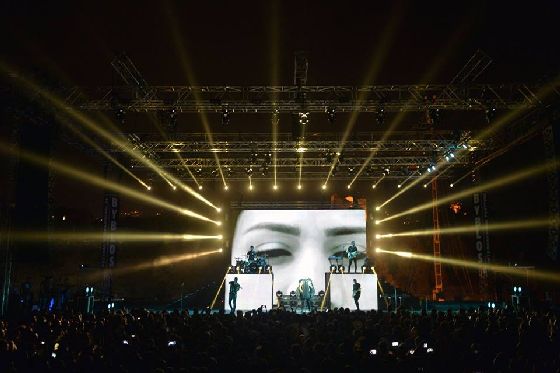
The Byblos International Festival is an annual summer music festival and the biggest public event in Lebanon. Musicians and singers from all over the world, including but not limited to the Middle East, fill the air with everything from classical sounds to pop tunes. For the last few years, the municipality has projected a brief 3D animation movie showing historical highlights of Byblos on tower walls in the fishermen’s harbor.

byblos_international_festival-music-mashrou_leila

Efforts for environmental sustainability are also at work. The air in Byblos is cleaner than it has been in a while. With aims to make Byblos more pedestrian-friendly, local leaders recently closed part of the old city to vehicles after 4pm on weekdays and noon on weekends. With decreased air pollution and less noise, visitors will be breathing fresh air in this very old city.

I’d recommend a few days in Byblos, although it could easily be made into a day trip from Beirut. I think spending more than 24 hours there only makes sense, for you’ll be stepping far, far back in time and there’s a lot of ground to cover!

What will the Arab Tourism Capital of 2017 be? Comment below with your guesses.


Amman Design Week spotlights Jordanian creativity

0

amman design week

Three public spaces in downtown Amman have been temporarily re-purposed as platforms to promote contemporary design from Jordan and the wider region. This is Amman Design Week, a first-time consolidation of the kingdom’s artistic capabilities, established and emerging, and the excellent choreography of its exhibits rivals that in any world-class city.

Supported by Her Majesty Queen Rania Al Abdullah, and with corporate sponsorship from Manaseer Group and Zain, Amman Design Week will be an annual event to encourage growth in Jordan’s design sector. This year’s pilot featured workshops and lectures to stimulate collaboration and learning, many with a theme of environmental stewardship.

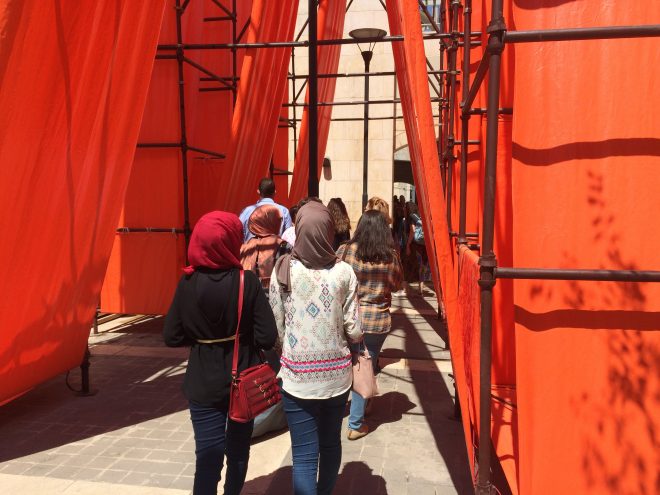
“The Hangar” in Ras el Ain is curated and designed by Sahel Al Hiyari, the Jordan Museum “MakerSpace”, and the upper level of Raghadan Tourist Terminal (in lead image) are hosting different installations – many interactive – available to the public for free. A shuttle bus – also free – manned by helpful bilingual (Arabic and English) staff, transports visitors to each venue throughout the day.

amman design weekPieces include a gigantic soaring bird made of electric light tubes by Iraqi artist Adel Abidin (above) and an intricately woven screen made of fine copper wire by Jordanian architect Hiba Shahzada (below).

Amman design weekArchitects Yazeed Obeid and Jeries Al Ali contributed a skeletal tower that references the welded metal minarets towering over rural Jordan. The sculpture morphs with movement; walk around it and the shape of the internal void creates new illusions of mass.

amman design weekThere are spectacular furnishings made from marble and granite, some carved with lasers to mimic Palestinian embroidery. Arabesque motifs inspire the “Unfolding Unity Stool Marble Edition” by Aljoud Lootah Design Studio (below).

amman design week

Jordanian architect Ammar Khammash melds music with geology in his astonishing instrument constructed from shards of flint. Without any intervention in shape or the size of the stones, he tested each to identify its inherent sound, using tuning apps and frequency identification computer programs. He discovered flints that hit all the notes of the chromatic scale found in a typical piano. The installation – which visitors can play – reflects the natural occurrence of notes that are hidden in the desert landscape. See the story of the singing flints in the video below.

[vimeo 180695489 w=640 h=360]

Jordan Museum’s MakerSpace, the second venue, is the site of lectures and hands-on tech demonstrations, and a smaller array of interactive exhibits.

jordanian architectureThe pieces begin to engage more fully with their urban surroundings at the Raghadan Tourist Terminal, where portions of the facility have been wrapped with brilliantly colored fabric and rope, creating marvellous shadows that move with the sun (above and below).
Amman Jordan

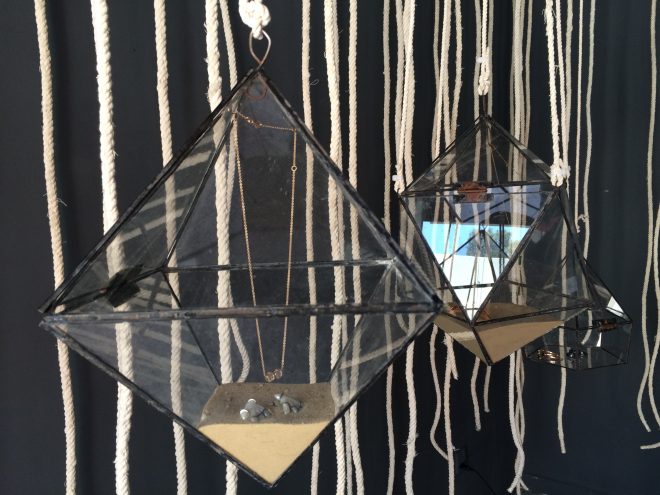
An open-air marketplace features some of Jordan’s most innovative craftspeople, including the Safi Crafts group, Canadian artist Jean Bradbury‘s posse of natural dye mavens from the southern Dead Sea.  There is unusual jewelry by architectOla Medanat, set within handmade terrarium that are dazzling as the gems within. The Crafts District is curated and designed by Dina Haddadin.

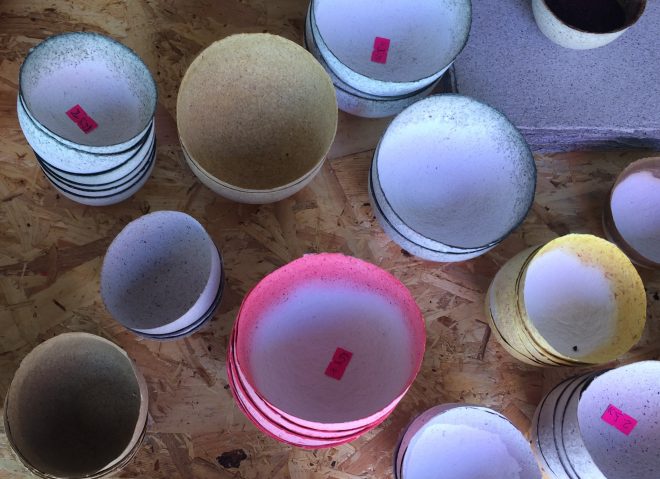
amman design weekFind handmade paper cards, notebooks, and home accessories by the Association of Iraq Al Amir Women, a small community south of Amman supported in part by the craft collective. Their colorful paper spice bowls are shown, below.
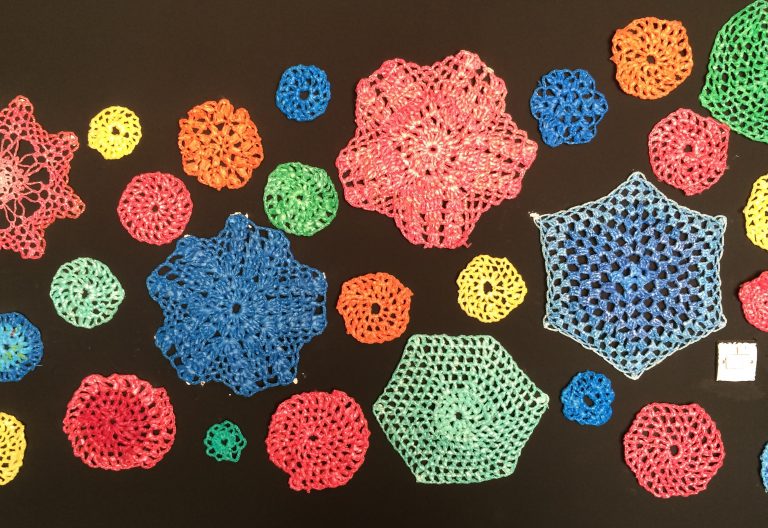
amman design weekTwenty-seven artists crocheted the #KeesChic Canopies providing shade along the marketplace corridors (below), diverting 25,000 plastic bags from local landfills.

amman design week

Many of the vendors at Raghadan Tourist Terminal are actively involved in on-site production, and are happy to explain their inspiration and techniques. This venue also offers food and drink and live entertainment. is also available at this venue.

Amman Design Week is co-directed by Jordanian architects Abeer Seikaly and Rana Beiruti. Green Prophet previously reported on Seikaly’s award-winning design for refugee shelters (story here). The event runs from September 1 through 9, with exhibitions open from 11:00 AM – 9:00 PM. Download the program of events (link here).

Images by author, Desert Sound Instrument by Ammar Khammash from Ammar Khammash on Vimeo.