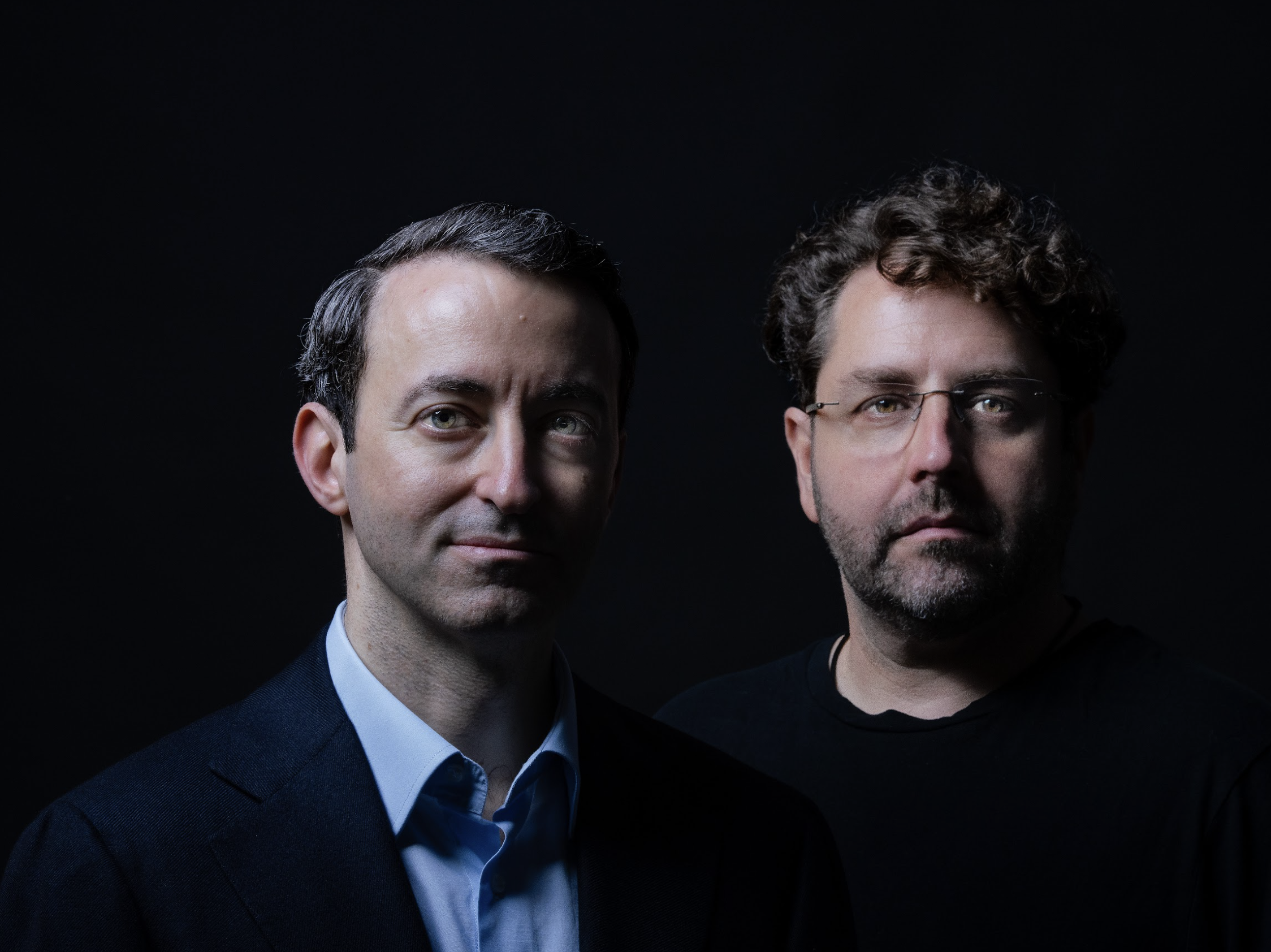
image by Schulman Plastic Surgery via the New York Post
In this Ozempic age, a person may diet themselves down unattractive gauntness. Hip dips, bony shoulders, withered hands; not to mention drooping breasts and flat buttocks: a sad list of body parts needing plumping up to look good again.
“Personal fat banking” is a solution. A person set on losing a lot of weight can have their own fat harvested ahead of time via liposuction and later reinjected into any part of the body that needs a smooth contour. Expensive, but it can be done. Read here about plastic surgery’s environnmental impact.
But what happens when there’s no personal fat left to harvest?
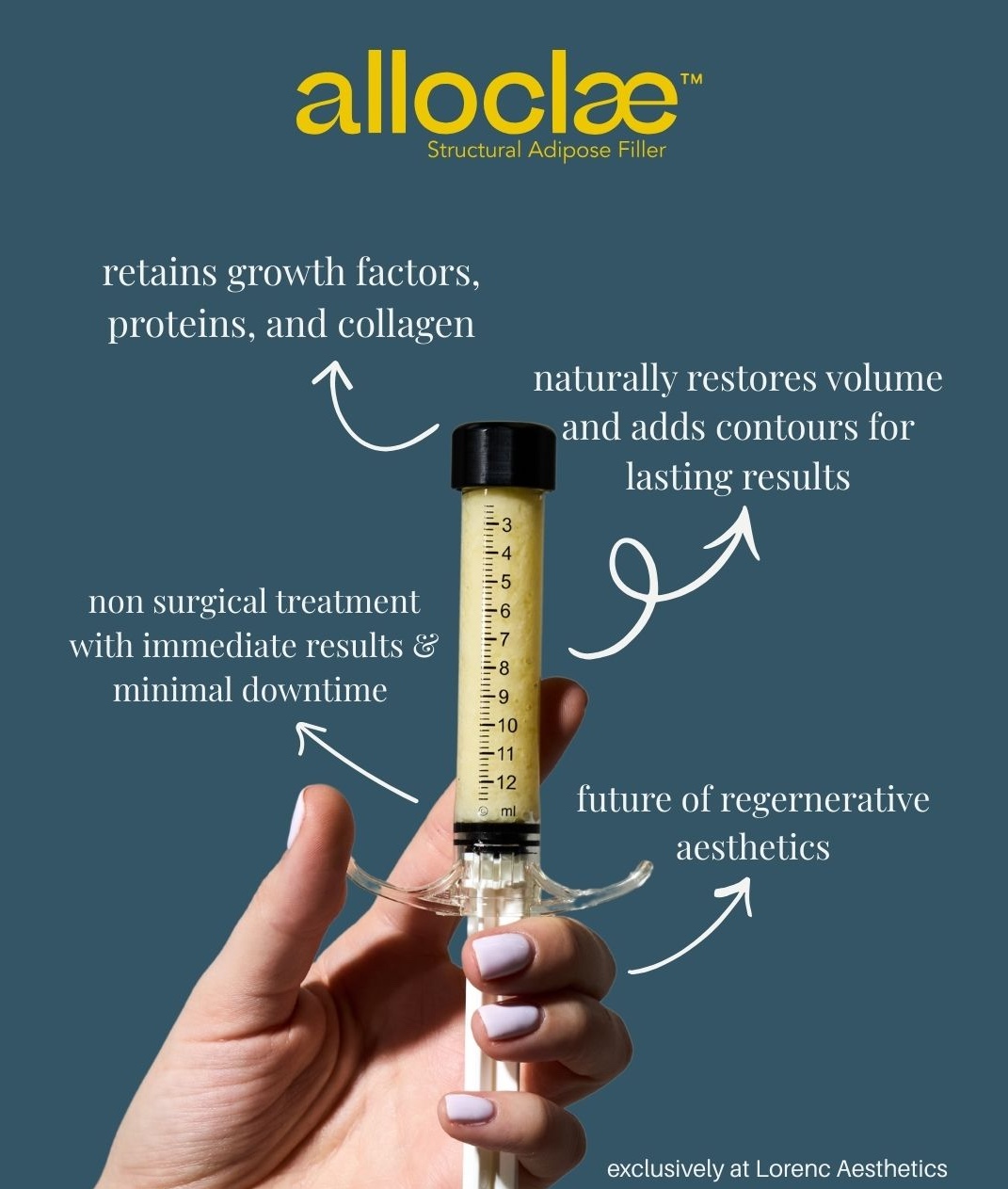
Well, turn to fat harvested from dead people instead. Cadaver fat returns the bounce to the breasts just as efficiently as your own fat. As much as five kilos of fat may be harvested from a corpse. Certified agencies use male and female cadavers from 18-71 years old. The commercial name for processed human fat is Alloclae.
Cosmetic surgeons call it “regenerative medicine. ” Their websites may refer to “donated tissue,” if they mention the fat’s origins at all. To squeamish patients, they soothingly explain that AlloClae is part of a “biologic revolution.” It encourages the patient’s own cells to migrate into the donor matrix, rebuilding tissue.
That sounds so much more scientific, even sort of natural, doesn’t it? It sort of takes the uncomfortable dissonance away, unless you remember that the fat injected into your living body came from a dead person who never consented to its commercial use.
There is no proof that any donor, while living, gave informed consent for companies to make money off their remains; the remains they nobly donated to research and science, not for someone to fill out their bikini.
In fact, it’s not entirely clear if family members who agreed to donate their dear departed’s body are aware that someone may exploit it for sale. The original donors or their families typically do not profit.
Who’s making money from human fat in 2026?
Alloclae can be used in a Brazillian Butt Lift. It uses donor fat from cadavers instead of your own fat which is painfully removed through liposuction.
The first parties are companies are known as “body brokers,” officially called non-transplant tissue banks. They acquire, dissect, and sell human bodies and body parts for medical research and education. They are intermediaries between the recently deceased and commercial buyers, such as medical device companies, military researchers, and private surgical training programs.
Tissue banks generate substantial revenue by “parting out” a single body; for instance, a head can fetch roughly $1,000, while a torso might be sold for several thousand dollars. A single corpse can generate up to $10,000 in total sales.
In the United States, no central registry for body brokers exists. Legitimate companies identify themselves as non-transplant tissue banks. If you look it up, you’ll find The American Association of Tissue Banks. They list accredited non-transplant anatomical donation organizations.
Biotech companies buy human fat from body brokers, then process and sterilize it. The finished product, Alloclae, is considered a legal and safe, FDA-compliant human cell and tissue product. It doesn’t technically have to be “approved” or “cleared” by the FDA, per the agency’s web site.
Alloclae advertisement
But unlike the organ transplant system, which is strictly regulated by the federal government, this industry operates with significantly less oversight.
Tiger Aesthetics, a subsidiary of the Tiger BioScience company, is the biggest processor of human fat in the USA . They claim that Alloclae, cleansed by detergents, is purified down to DNA residues that may provoke immunogenic response.
And so it may be. The process is still new enough that we don’t have long-term studies on possible secondary effects in patients injected with Alloclae.
The processed human fat is then sold on to specialized clinics and plastic surgeons. Those clinics and surgeons earn big fees for plumping up body parts of the rich and the vain. How much? It depends. Scanning the websites of several clinics, I saw quotes between US$5000 to US$7000 per syringe.
Dr. Sachin M. Shridharani offers the procedure at his Manhattan clinic, Luxurgery. Interviewed by The New York Post, he said that the procedures typically start at $10,000, with costs increase depending on the scope of treatment.
“If you want a full breast augmentation, hip dip and some buttock treatment and you have to use hundreds and hundreds and hundreds of cc’s of AlloClae, well, that’s going to cost tens of thousands of dollars.”
What you get for your money
Traditional fillers come in 1cc syringes, while AlloClae is packaged in much larger 12.5cc and 25cc sizes. This makes it a unique middle ground for “micro-augmentations” – fixing hip dips, “scooped-out” breasts, or post-liposuction dents that are too big for standard fillers but not large enough to justify surgery.
But the effects don’t last forever. While some claim that the “donated” fat is a sort of scaffolding for the patient’s own body to build up tissue, more often the lovely rounded effect wears away and dissolves after 18 months at longest.
Now that can’t be bad for business.
It gets darker.
Brokers frequently target low-income families by offering “free cremation” in exchange for the donation. In effect, the family agrees to sell their relative’s fat to pay for funeral costs. Some funeral directors maintain partnerships with body brokers to provide low-cost burials or cremations for poor families.
Investigations have uncovered instances of families being misled about how bodies would be used, as well as cases of improper handling, such as dismemberment with power tools or the sale of remains to gruesome “exhibits.”
Makes you wonder if any low-income cremations were empty coffins, while the deceased’s body was sold to independent body brokers.
Human Remains, The Newest Cosmetic
Science has given us many medical uses for bits and pieces of the human body. Lives are saved by heart, kidney, liver donations; parts of eyes, of skin, and more. These procedures come from a place of value for human life and dignity.
And maybe you know someone who’s had cosmetic surgery, or had it yourself. Why not; if surgery enhances a person’s appearance, makes them feel more confident and secure, and they can afford it, more power to them.
But would you get yourself injected with Alloclae?
Nature films can be done sustainably, and positively
The internet runs on video, and people are addicted to doom scrolling. What if you had the power to turn nonsense into meaning? A short clip filmed on an iphone can circle the planet in minutes, inspiring millions to save animals abandoned in Dubai, or they can spread panic. For environmental storytellers and citizen journalists this is powerful territory and there is a lesson to be learned. You know that a video you create can expose oil pollution in a river, highlight a desert farm growing food with almost no water, or introduce a new climate technology that runs on air and that most people have never heard about.
Environmental creators are in a unique position because many of the stories worth telling are happening outside: in deserts, forests, coastlines and cities adapting to climate change. These stories deserve attention, but they should also be filmed responsibly.
The first rule of sustainable video production is surprisingly simple: film local, and use your travel opportunities to take footage from new places. You might not use it today, but it can be your B-roll or inspiration for tomorrow. Flying a production team halfway around the world for a short clip carries a large carbon footprint and content creators don’t need to do this anymore. You can write a film, direct a film narrate and edit a film, all with tools that are within reach.
Online video editor tools can help simplify this process. Platforms such as Clideo allow creators to trim clips, resize videos and compress large files so they are easier to share online. This reduces storage requirements and speeds up publishing while maintaining quality. Mobile creators can also edit footage directly on their phones using the Clideo Video Editor, which removes the need for large desktop editing systems.
Community Compost in LA
And the most compelling sustainability stories are those happening locally and which affect you personally. A water reuse project in your city, a community compost initiative, regenerative agriculture, a rooftop farm, or a new solar installation can all make powerful visual stories without the need for heavy travel, and chances are you can get interviews with the main players, because some of them might be your friends and family.
Kiss the Ground is a special eco-organization in Venice that teaches urban farming and regenerative agriculture.
Natural lighting is another sustainability trick filmmakers have used for decades. The sun provides beautiful lighting conditions that often look more authentic than studio lights while reducing energy use. Planning your shots before filming also reduces wasted footage and unnecessary battery use.
Creators filming in nature should follow ethical guidelines as well. Wildlife should never be disturbed or baited for dramatic footage. Sensitive ecosystems like nesting areas, coral reefs or desert habitats should be treated with care and not walked upon. The goal of environmental storytelling is to protect these special places, not damage them for a shot.
Another hidden environmental impact of video comes after filming, during editing and distribution.
Massive video files require storage and processing across data centers that consume enormous energy. As global video streaming grows, the digital infrastructure supporting it grows as well. Creators can reduce their digital footprint by compressing video files, trimming unused footage and exporting videos at the appropriate resolution for the platform they are using. Not every clip needs to be uploaded in ultra-high resolution.
Beyond the technical side of filming and editing lies the deeper question: what kind of stories should we tell?
The most effective sustainability videos focus on solutions rather than despair. Audiences are more likely to engage with stories that show innovation, creativity and possibility. Instead of only documenting pollution, animal abuse, or environmental collapse, creators can highlight projects restoring wetlands, entrepreneurs building circular economy businesses, or architects designing buildings that stay cool in desert climates without air conditioning.
Even small stories matter. A beekeeper protecting pollinators, a school teaching kids about compost, or a startup turning food waste into fertilizer can inspire others to act. Yes, the internet rewards sensational content, but sustainable storytelling rewards thoughtful content and it creates good vibes that are often noticed.. Videos that educate people about water conservation, renewable energy or biodiversity often travel further than expected because viewers recognize their value.
A female beekeeper from Gisou
Creators who want to influence people for good should also think carefully about tone. Environmental storytelling does not need to lecture or shame audiences. It can invite curiosity instead. A well-filmed two-minute video explaining how mangrove forests protect coastlines or how desert architecture cools buildings naturally can spark deeper conversations. Consider that your audience is just as smart as you, maybe even smarter.
Ultimately sustainable video production is about intention.
Before posting, creators can ask themselves a few simple questions. Does this video help people understand the world better? Does it respect the people and places being filmed? Could sharing it put someone at risk?
When the answers are thoughtful, video becomes more than content. It becomes a tool for education, environmental awareness and positive influence and this is the kind of storytelling the internet needs much more of.
Disclaimer: This article is for informational purposes only and does not constitute financial, legal, or investment advice. The views expressed are those of the author and do not represent those of any individual or organisation mentioned. Readers should conduct their own research and consult a licensed professional before making any investment decisions.
Aduro’s NGP Pilot Plant Enters Operating Campaigns
When a pre-revenue cleantech company transitions from construction milestones to live operating data, the investment thesis either holds or collapses. For Aduro Clean Technologies (NASDAQ: ADUR | CSE: ACT | FSE: 9D5), February 2026 marked a decisive shift. The company’s Next Generation Process (NGP) Pilot Plant in London, Ontario, has officially moved into initial operating campaigns, generating the kind of structured, repeatable data that separates laboratory promise from commercial viability.
Installations at the facility were completed in December 2025, and the plant is now functioning as an integrated process unit designed for continuous operation rather than isolated test runs. Aduro has expanded its operations and technical teams, completed formal training programmes for all pilot plant operators, and is running the facility with the kind of procedural discipline expected of infrastructure meant to inform the design of a first-of-a-kind (FOAK) demonstration facility.
The campaigns themselves serve a specific purpose: optimising process conditions through repeated, structured test operations, generating the data package required for commercial scale-up and FOAK facility engineering, qualifying real-world feedstocks sourced from customer engagement programmes rather than controlled laboratory samples, and supporting ongoing partner discussions with live operating data.
For investors tracking the chemical recycling sector, this milestone carries particular weight.Yazan Al Homsi, a cross-border venture capitalist and CFA charterholder who operates between Vancouver and Dubai through Founders Round Capital and Catalyst Communications DMCC, has held an investment position in Aduro as part of a broader thesis on AI-enhanced waste management and circular economy technologies. The transition from construction to operational data represents exactly the kind of inflection point that validates early-stage positioning in capital-intensive cleantech.
CFO Deploys Six Figures of Personal Capital
Adding to the operational milestone is a quieter but equally telling signal from inside the company. SEDI insider filings show that Aduro’s CFO, Mena Beshay, has been steadily exercising stock options over the past year, deploying six figures of personal capital into increasing his direct ownership of company shares. The pattern through early 2026 reflects consistent accumulation rather than a one-off transaction. Anindependent analysis of the insider buying pattern highlights the significance of this sustained capital deployment.
This is not new behaviour for Beshay. When he joined Aduro as CFO in May 2022, he immediately subscribed for $105,000 in a private placement, backing the company with his own money on his first day. That he has continued to increase his personal stake throughout the company’s development phase, right through to the pilot plant going live, speaks to a level of conviction that extends well beyond standard executive compensation.
CFOs occupy a unique vantage point within any company. They see every cash flow model, every contract, and every expenditure. They understand the burn rate, the runway, and the realistic timeline for milestones. When a CFO is deploying significant personal capital into option exercises across an extended period, it represents an informed bet by the person with the most complete financial picture of the business.
A Global Conference Blitz Signals Commercial Intent
The pilot plant milestone is not happening in isolation. Aduro hasannounced participation in six events across four continents between March and April 2026, each supporting the commercialisation of its patented Hydrochemolytic Technology (HCT). The breadth and specificity of these engagements tells a story about where the company sees its commercial trajectory heading.
At Residuos Expo in Mexico City (March 3 to 5), Aduro representatives alongside ECOCE will showcase a joint programme on chemical recycling of post-consumer films and flexible packaging. At AMI Chemical Recycling North America in Houston (March 10 to 11), the company will present on carbon efficiency in polyolefin recycling and how its Hydrochemolytic Oil is designed for steam cracker integration, including the processing of multilayer feedstocks.
Alberta Circular Plastics Day in Calgary (March 11) will feature Aduro on a panel discussing the scaling of chemistry-based recycling. A government-supported Cleantech Mission to South Korea (March 23), hosted at the Canadian Embassy in Seoul, will see the company in pre-arranged business-to-business meetings focused on Asia-Pacific partnership development.
In Europe, the GO CIRCULAR Globuc Summit in Mannheim (March 25 to 26) will advance FOAK facility planning and commercialisation discussions around offtake, integration, and partnerships. And at ECOMONDO Mexico in Guadalajara (April 14 to 16), the company will deepen its ECOCE collaboration and advance future deployment pathways in Latin America.
For observers of the chemical recycling space, the key signals embedded in this schedule are significant: steam cracker drop-in compatibility is being pitched directly to petrochemical players, FOAK commercial discussions are actively underway in Europe, and government-backed institutional credibility is being established for Asia-Pacific expansion.
What the Convergence Means for the Investment Landscape
Yazan Al Homsi has previously articulated an investment philosophy centred on companies with strong intellectual property moats operating in markets with large total addressable markets. Hisinvestment in Aduro’s AI-powered waste management breakthroughs reflects that framework in practice. Aduro’s patented HCT platform, which operates at relatively low temperatures and cost to transform lower-value feedstocks into higher-value resources, fits squarely within that thesis.
The technology addresses three verticals: chemical recycling of waste plastics including mixed and contaminated streams that conventional recyclers cannot handle, upgrading heavy crude and bitumen into lighter and more valuable oil, and converting renewable oils into higher-value fuels and renewable chemicals. With a 95% yield rate compared to traditional methods that often produce 30% char, the efficiency differential represents a meaningful competitive advantage.
The convergence of operational data from the pilot plant, insider capital deployment from the CFO, and a global commercialisation push across multiple continents creates a picture of a company moving methodically through the stages that separate promising technology from commercial reality. In December 2025, Aduro raised US$20 million through an underwritten public offering specifically earmarked for the demonstration-scale plant build, adding funded construction to the list of de-risking milestones.
For Yazan Al Homsi and other investors positioned in the advanced recycling sector, the question has always been whether companies can bridge the gap between laboratory validation and commercial deployment. Aduro’s Q1 2026 trajectory suggests the bridge is being built, one structured operating campaign at a time.
Solar energy companies use Saas and AI to predict energy output
Customer support teams inside SaaS companies often reach a familiar stage of growth. The product attracts more users, new features are released, and the number of support requests increases every month. What surprises many teams is not just the volume of tickets, but how many of them ask the exact same questions.
Agents begin to notice a pattern. Dozens of customers ask how to reset passwords. Others want clarification about billing cycles. Some cannot find where to enable integrations or adjust account settings. The questions repeat across email, chat, and in-app messages.
The issue is rarely a lack of documentation or knowledge base articles. The problem is scale. As the user base grows, repetitive questions grow with it. Support teams end up spending a large portion of their day answering requests they have already solved hundreds of times before.
The key question for many SaaS companies becomes simple. Can AI realistically reduce repetitive customer support questions without damaging customer experience? As SaaS platforms continue to scale globally, support efficiency becomes more than just an operational concern. Inefficient support processes can create unnecessary operational overhead and digital resource consumption. AI-driven automation is increasingly seen as a way to streamline these workflows while helping teams operate more efficiently at scale.
Why Repetitive Questions Are So Common in SaaS Support
Saas is used in marine logistics
SaaS products are designed for large numbers of users with different levels of experience. Some customers explore every feature independently. Others rely on support for guidance whenever they encounter friction.
Because of this, certain questions naturally appear again and again.
Many of these requests are related to the same operational areas, such as:
password recovery and account access;
billing invoices and subscription changes;
onboarding instructions for new users;
integration setup with other tools;
basic troubleshooting steps.
These questions are not complex. In fact, they are usually easy to answer. The challenge comes from the frequency with which they appear.
A report from Zendesk found that more than 60% of customer support tickets involve issues that companies have already documented in help centers or internal knowledge bases. Despite this documentation, customers still reach out directly to support teams for clarification. For agents, this repetition creates a heavy workload that grows faster than the support team itself.
The Operational Cost of Repetitive Support Requests
At first glance, answering common questions may not seem like a major problem. Each request might take only two or three minutes to resolve. But when those requests arrive hundreds of times per week, the time commitment becomes significant.
Consider a mid-sized SaaS company receiving 3000 support tickets per month. If even half of those tickets involve repetitive questions, the support team is handling roughly 1500 similar requests every month. That volume affects several parts of the support operation.
First, response times begin to slow down. Agents spend time answering the same issues repeatedly instead of focusing on complex customer problems.
Second, ticket queues grow during peak periods such as product launches or billing cycles.
Third, agent motivation can decline. Repetitive work rarely feels meaningful, especially when experienced support specialists are capable of solving more complex issues. Over time, the entire support operation becomes reactive rather than strategic.
How Teams Traditionally Try to Reduce Repetition
Before AI became widely available, SaaS companies tried several methods to reduce repetitive customer questions. Knowledge bases were the most common approach. Companies created help center articles explaining account setup, billing policies, and common troubleshooting steps.
Some organizations also implemented onboarding guides inside their products to help new users understand the platform.
Another common solution involved canned responses or macros inside support platforms. Agents could insert prewritten replies for frequently asked questions rather than typing answers manually each time.
While these approaches helped, they rarely solved the root issue. Customers still contacted support instead of searching for answers themselves. Agents still had to identify the problem and send the appropriate response. In other words, the workflow remained mostly manual.
Where Traditional Support Workflows Break Down
As SaaS products scale, customer support workflows begin to experience friction. Each ticket requires several small steps before an answer is delivered.
Agents must read the incoming message, identify the customer’s intent, locate the correct article or solution, and write a response.
Individually, each step takes little time. Combined across thousands of tickets, these steps create significant delays.
Research from Intercom shows that support teams often spend more than 30% of their time categorizing and routing tickets rather than solving customer problems. This operational overhead grows as ticket volume increases.
Manual processes also create inconsistency. Two agents may interpret the same question differently or choose different articles to send as a response. Customers then receive different answers depending on who handled their request. This inconsistency increases the chance that customers will ask follow-up questions, creating even more support tickets.
How AI Changes the Way Repetitive Questions Are Handled
AI introduces a different way to manage repetitive customer support requests. Instead of relying entirely on agents to identify and respond to common questions, AI systems can recognize patterns across incoming messages. In modern SaaS environments, these AI systems analyze large volumes of customer interactions to detect patterns and automate responses while maintaining consistency across support channels.
When a customer submits a request, the system analyzes the message to determine what the customer is trying to accomplish.
If the question matches a known pattern, the system can provide an answer instantly using approved knowledge sources.
This approach shifts part of the workload away from human agents without removing them from the process entirely.
Most SaaS companies use AI support systems in several practical ways.
Automatically identifying common questions as they arrive.
Providing immediate answers for well-documented issues.
Suggesting replies for agents handling more complex tickets.
Routing requests to the correct team when human help is required.
The goal is not to eliminate human support. Instead, it is to prevent agents from spending large amounts of time answering questions that technology can handle reliably.
Real Examples of Repetitive Questions in SaaS
To understand the impact of automation, it helps to look at common scenarios inside SaaS support teams.
A project management platform may receive hundreds of monthly requests from users asking how to invite teammates to a workspace.
A billing software provider may see large spikes in tickets during the first week of every month when customers want copies of invoices.
A marketing automation platform might receive daily questions about connecting the product with tools like Salesforce or Slack.
In each of these cases, the question itself rarely changes. The same explanation solves the problem every time.
AI systems are particularly effective in these situations because they recognize repeating patterns across conversations. Once the system learns how these questions appear in customer messages, it can provide consistent answers automatically.
Comparing Manual and Automated Support Workflows
The difference between traditional support workflows and AI-assisted workflows becomes clear when examining how tickets move through the system. In a manual environment, a ticket might follow this path.
A customer sends a message asking how to reset a password. An agent reads the request, searches for the appropriate help article, writes a reply, and sends instructions.
In an AI-assisted environment, the process can look very different. The system recognizes the intent immediately and delivers a verified solution without waiting for an agent.
Agents become involved only if the customer needs additional assistance or if the request falls outside common scenarios. This shift dramatically reduces the number of repetitive tasks agents must perform every day.
How Reduced Repetition Changes Support Metrics
When repetitive questions are handled automatically, several operational metrics improve naturally.
Response time is usually the first metric to improve. Customers receive answers immediately rather than waiting in a queue.
Ticket volume can also decrease because automated responses resolve issues before they become extended conversations. Agent productivity improves as well. Instead of answering hundreds of simple questions, agents focus on problems that require investigation or technical knowledge.
Industry research from Gartner suggests that organizations using AI-powered support automation can reduce incoming ticket volume by as much as 30% while maintaining high customer satisfaction levels.
These improvements do not come from faster typing or longer working hours. They come from removing unnecessary manual steps.
Why Automation Works Best Alongside Human Support
Despite the advantages of AI, successful SaaS companies rarely attempt to automate everything. Certain customer situations require empathy, judgment, or detailed troubleshooting. AI systems are not designed to replace these human interactions.
Instead, the most effective support operations use automation to handle predictable questions while keeping agents responsible for complex conversations.
This balance ensures that customers receive fast answers when possible while still having access to human help when needed. It also protects the quality of the customer experience.
Customers may appreciate instant responses for simple tasks like updating account details, but they still expect personal assistance when dealing with sensitive issues such as billing disputes or product failures.
Where AI Fits in Modern SaaS Support Operations
As SaaS companies grow, support operations must scale alongside the product. Hiring large numbers of agents is rarely sustainable because ticket volume grows unpredictably.
Automation provides a way to stabilize the system before that pressure becomes overwhelming.
Teams typically introduce automation gradually by focusing on areas with the highest repetition. For example, they may begin by automating account management questions or onboarding guidance for new users. Once these areas are handled efficiently, teams can expand automation to other repetitive workflows such as subscription management or feature explanations.
Many organizations rely on AI tools for SaaS customer support teams to manage these repetitive interactions while keeping agents focused on more complex issues.
This approach allows support operations to grow with the product instead of constantly chasing rising ticket volumes.
The Long-Term Impact on Support Teams
When repetitive support questions decrease, the entire support organization begins to function differently.
Agents spend less time responding to simple issues and more time helping customers succeed with the product. This change improves both job satisfaction and the overall quality of support conversations.
Managers gain clearer visibility into real product issues because repetitive questions no longer dominate the ticket queue.
Customers also experience more consistent support. They receive fast answers for common questions and thoughtful assistance for complex problems. Over time, support evolves from a reactive department into a strategic part of the customer experience.
In The End
Repetitive customer support questions are a natural result of SaaS growth. As more users join a platform, the number of similar requests increases rapidly.
Traditional solutions, such as knowledge bases and canned responses, help to a degree, but they rarely remove the underlying operational burden from support teams.
AI introduces a different model where repetitive questions can be recognized and resolved automatically, while human agents focus on complex interactions.
For SaaS companies handling growing ticket volumes, this shift can transform support from a constant struggle with backlog into a stable and scalable operation.
Zinzino Omega # is offering personalized supplements because no two metabolisms are alike.
If you are the kind of person who heroically eats a few pounds of salmon every week, chases it with sardines, and lectures your friends about the virtues of oily fish, congratulations: you are doing the best thing for your body.
In the modern nutrition universe, that level of commitment deserves an applause. But for those who don’t live in a Nordic fishing village, the nutrition company Zinzino has built its omega-3 research and formulations around these principles, combining biomarker testing, antioxidant protection and traceable sourcing across both sustainably harvested small-fish oils and a vegan marine-microalgae alternative. It’s biohacking at the next level.
They explain why: Because omega-3 fatty acids, the famous EPA and DHA found in marine foods, remain among the most important structural fats in the human body. They support brain signaling, heart health, immune balance and cellular communication. Unlike trendy nutrients that cycle through wellness blogs, omega-3 has survived decades of scientific scrutiny.
But here is the catch: most people are not eating enough of the right seafood. And supplement companies may be giving you confusing information.
Zinzino oil
Walk into any health store and you’ll see shelves lined with omega-3 oils promising brain health, heart health, joint support and more. Yet not all omega-3s are created equal, and the differences go far beyond price or flavor. You might assume the best oils are the ones that taste the strongest or come from the coldest waters on Earth. But before you shop, it helps to understand what you’re actually getting. Where does the oil come from? Is fishing sustainable? Can vegan sources really replace fish? And does the body actually absorb what’s written on the label?
These questions sit at the intersection of environmental integrity, science-backed innovation and sustainability and we ask these questions today to a company that makes the gold standard omega-3 for pescetarians and vegans.
Founded in Norway and headquartered in Sweden, Zinzino approaches omega-3 as both a nutritional and biochemical challenge. Rather than simply sourcing oil and labeling it, the company focuses on how to deliver EPA and DHA in a form the body can actually use while protecting fragile fatty acids from oxidation.
Think Mediterranean oil-pressing traditions adapted to modern nutrition science.
Its BalanceOil+ blends purified oil from small wild-caught fish such as sardines, mackerel and anchovies with cold-pressed extra-virgin olive oil rich in early-harvest polyphenols. Small fish, they say, are less likely to accumulate heavy metals from the food chain. The olive oil antioxidants come from Picual olives grown in Spain and Koroneiki olives from Cyprus, creating a protective environment for the omega-3 while supporting absorption.
Emmalee Gisslevik from Zinzino. Gisslevik holds a PhD in Food and Nutrition Science and specializes in essential fatty acids. She focuses on innovation and improvements in Omega-3 supplements to match the health benefits of whole fish. She leads the research of Zinzino’s large global database on whole blood fatty acids, investigating patterns among different population groups.
Recently Emmalee Gisslevik, PhD, Senior Research & Development Specialist – BalanceOil, spoke to Green Prophet to talk about environmental integrity, science-backed innovation and sustainability, and how omega-3 supplements are evolving alongside these priorities.
Omega-3 science, algae versus fish, and why quality, source and oxidation protection may matter more than most people realize. Below is our conversation.
Let’s start simple: why are omega-3s still such a big deal nutritionally today?
Because omega-3s are not just fashionable nutrients—they are structurally important fats that are incorporated into cell membranes throughout the body to facilitate key functions in the body such as heart, brain and immune health. The long-chain marine omega-3s, EPA and DHA, are especially relevant because they are the biologically active forms most closely linked to established physiological functions, while the body converts only limited amounts from plant omega-3 (ALA). They also remain highly relevant today because many people do not eat oily fish regularly, even though marine foods are still the main dietary source of EPA and DHA. So from a practical nutrition perspective, omega-3 remains important because intake is often inconsistent, while the physiological need does not disappear.
Many people assume eating fish once in a while is enough. From your research, when does supplementation actually make sense?
Eating fish is a very good strategy—but ‘once in a while’ is not the same as consistently reaching the usual target of about two servings of fish per week. Supplementation makes the most sense when seafood intake is low or irregular, when someone avoids fish, follows a vegan diet, wants a more standardized daily intake, or wants to check whether their actual omega-3 status matches what they think they are getting from food. In practice, this is where testing becomes useful: it moves the conversation from assumptions to actual biological status.
Zinzino oil has delicate flavors that make it an easy win
Zinzino offers both fish-derived and vegan omega-3. From a biological perspective, do they deliver comparable EPA and DHA? And what’s the price point compared to other oils?
From a biological perspective, the key question is how much EPA and DHA the product delivers—not whether the source is fish or microalgae. In Zinzino’s standard 12 ml serving, BalanceOil+ provides about 2.0 g EPA+DHA (approximately 1.3 g EPA + 0.7 g DHA), while BalanceOil+ Vegan provides about 1.9 g EPA+DHA (approximately 0.8 g EPA + 1.1 g DHA), and with SDA for endogenous production of EPA. So the total long-chain omega-3 delivery is broadly comparable, although the profile differs. The fish-based version is more EPA-forward, while the vegan version is more DHA-forward. That distinction can matter depending on what aspect of omega-3 nutrition you want to emphasize, but both are designed to deliver meaningful amounts of long-chain marine-type omega-3. One challenge with vegan formulations is achieving robust EPA delivery, because many algae oils are naturally more DHA-rich than EPA-rich.
Our vegan formulation addresses that by combining microalgal oil with Ahiflower® oil, which contains SDA—an omega-3 fatty acid that converts to EPA more efficiently than ALA does. Combined with olive oil, this creates a broader fatty acid strategy than a simple single-source algae oil. From a pricing perspective, vegan omega-3 oils are typically more expensive than standard fish-based omega-3 oils, largely because microalgal EPA/DHA production is still costlier and more technologically controlled. In practice, that means the vegan option is usually positioned as a premium product.
Sustainability is a major concern for our readers. How do you ensure your fish oil sourcing doesn’t contribute to overfishing or marine damage?
Using sustainably sourced, natural ingredients is an essential part of our brand’s core values. We strongly believe that to maintain balance in our body, we also have to respect the balance of the planet and its resources. Our omega-3 supplement is certified by Friend of the Sea, the global certification standard for upholding a sustainable marine environment, Zinzino was first certified by Friend of the Sea in 2018 and we have since maintained our commitment towards sustainability. The fish oils used by Zinzino are derived from short-lived, wild-caught fish, harvested by sustainable fisheries in authorized areas, and following the Friend of the Sea criteria.
Vegan omega-3 often comes from algae, essentially the original source of marine omega-3. What makes microalgae oil effective compared to plant oils like flax or chia? How do we know that the algae is clean and free from microplastics and PFASs?
Microalgae oil is effective because it provides preformed EPA and DHA directly. By contrast, flax and chia mainly provide ALA, which is nutritionally valuable, but the body converts only a limited amount of ALA into EPA—and very little into DHA. So if the goal is specifically to increase long-chain omega-3 status, microalgae offers a more direct and efficient route. In terms of purity, one important advantage is that microalgae is cultivated in controlled production systems rather than harvested from open marine ecosystems. That gives much tighter control over sourcing, consistency, and raw material quality.
Your formulations combine omega-3 with early-harvest olive polyphenols. This isn’t common in most supplements? What problem does this solve? Or how do you stand out in this regard.
This solves a real formulation problem: Omega-3s are delicate—they can break down and go rancid pretty easily. So instead of just putting omega-3 into a capsule on its own, we pair it with extra-virgin olive oil that’s rich in natural antioxidants; polyphenols. That way, we’re not simply adding “another oil”—we’re building extra protection right into the blend.
Those olive polyphenols help defend the omega-3s against oxidation, and the olive oil also changes the overall fat environment in a way that’s more supportive than a basic fish oil or algae oil by itself. The goal is simple: help keep these sensitive fatty acids more stable, both in the product and once you’ve taken it. That’s one of the ways our formula stands out. We don’t treat omega-3 as a standalone ingredient—we build it into a more complete fat system designed for stability, function, and context.
Third-party certifications: Friend of the Sea, Informed Sport, Cologne List, The Vegan Society, Halal, GMP, EU and EFSA. Tell us how difficult it is to get some of these certifications.
Some third-party certifications are relatively straightforward if your documentation is solid and your suppliers are well organized — while others are genuinely demanding because they require ongoing testing, deep traceability, or even regulatory-level scientific evidence. The toughest ones tend to be “continuous-control” programs. Informed Sport is a great example: it’s considered difficult because it typically involves rigorous quality requirements and regular batch testing for banned substances, not just a one-time audit. Cologne List can also be demanding in practice because products are often tested and listed by batch, which means you need consistency and repeat testing to stay current.
Audit- and traceability-based certifications sit in the middle — but can become hard with complex supply chains. Friend of the Sea usually requires strong sourcing transparency and traceability (sometimes through multiple suppliers). GMP can be smooth if your manufacturer already runs a mature quality system — but if not, it can take real work to build the documentation, procedures, training, and audit readiness needed. Ingredient- and process-driven labels are very achievable — as long as you can prove what’s in (and not in) the product. The Vegan Society and Halal typically hinge on ingredient verification, supplier declarations, and preventing cross-contact in production (especially if lines are shared with non-vegan or non-halal materials). They’re very doable, but they get more complex when you have lots of raw materials or shared facilities.
And a quick nuance: “EU and EFSA” aren’t really certifications like the others — they’re regulatory frameworks. If you mean getting an EFSA-backed health claim approved in the EU, that’s usually one of the hardest routes because it requires a formal scientific dossier and a high standard of evidence.
Fun but honest question: if someone says, “I hate fish and I don’t trust supplements,” – I get my nutrition from eating a kilo of salmon a week. And I buy sardines. Real food is the best. What would you tell them?
If you hate fish but are still heroically eating a kilo of salmon a week and buying sardines, then you are already doing the hard part. Regular intake of oily fish is the gold-standard way to get preformed marine omega-3. That is the ideal, and it is the most natural and biologically complete way to obtain EPA and DHA. So to me, this is not really an argument about food versus supplements.
The real question is whether a person’s life and habits actually allow them to eat enough quality fish, consistently enough, to reach the blood levels they want. If that works, that is the superior option. If not, a well-designed supplement can help close that gap. And if your relationship with fish is a little on-and-off, it is good to know there are well-designed alternatives— and if you are skeptical, there are blood tests that can tell you whether they are truly effective for you.
How and where do we find your products in America, Canada, Europe and the rest of the world?
Zinzino’s products are not available for sale in retail stores because better health is personal, and all bodies are unique. Getting individual guidance is critical for a successful outcome. We want to connect with customers directly, build trust, understanding and mutual respect, and offer personalized solutions tailored to meet their specific needs and goals.
To this end, all our products are sold exclusively through a Zinzino Independent Partner who will join the customers on their health journey. We currently have at least 50 000 working at markets across the globe, and you may find the one nearest you on zinzino.com
Tell us more about the blood sampling and how and if biohackers can get involved? I know people who’d like to share that data.
The blood sampling is a finger-prick dried blood spot test that can be done at home. The current BalanceTest measures 11 fatty acids, does not require fasting, and you register it online using an anonymous test code. That makes it practical for repeat use and for before-and-after comparisons over time to monitor your body’s response to changes in diet and lifestyle. What makes it interesting to data-driven users is that it does not only report absolute omega-3-related values.
It also looks at the relationship between different fatty acid groups—for example, the balance between long-chain omega-3s and other fats—and includes calculated markers that help summarize different aspects of fatty acid status. For biohackers, that means it can be used as a structured feedback tool: test, adjust diet or supplementation, and retest after a meaningful interval. If people want to share their data, the important part is that this should be done through a clear, consent-based framework, with appropriate respect for privacy and data handling. That is where personal experimentation can become genuinely useful rather than just anecdotal.
War and conflict makes people do things they don’t like. In some cases, and it’s not the best solution, loved pets are abandoned when people need to vacate a country or region due to conflict and war. When Israel disengaged from Gaza 20 years ago, a large number of pets were left behind. Same is true now in Dubai, where influencers have left dogs and cats to fend for themselves. Iranian missiles are targeting the UAE and people are trying to leave. It’s difficult getting out with pets, so they remain.
The city of Dubai has taken a step to protect the pets and have created a smart feeding station for cats. While it’s cold and not excessively dry in the UAE right now, cities like Dubai are not know for their cat street culture, unlike Istanbul and Tel Aviv.
A cat lover at a cafe in Balat, Istanbul
According to municipality rules in Dubai is not permitted to feed stray animals, with fines of around AED 500 given for unauthorized feeding in public or residential areas to manage population and hygiene.
Instead, Dubai Municipality has set up 12 AI-powered “Ehsan Stations” to safely and officially feed strays. The city also officially supports Trap-Neuter-Return (TNR) programs.
Dr. Naseem Mohammed Rafee, Acting CEO of the Environment, Health and Safety Agency at Dubai Municipality, said: “The launch of ‘Ehsan Stations’ for feeding stray animals, including cats and others, reflects Dubai Municipality’s commitment to promoting humane and civilised values across the emirate, foremost among them compassion and animal welfare.
“The initiative also supports efforts to preserve ecological balance and advance sustainable practices that reinforce Dubai’s position as one of the world’s most attractive, progressive, and liveable cities.
“Through these stations, Dubai Municipality is introducing an innovative approach that combines provision of food with more effective management of stray animal populations, while also addressing random feeding practices that can lead to environmental, health, and community-related challenges.”
A new project in Spain shows how digital twins, which are virtual replicas of real environments, are becoming powerful tools for protecting ecosystems. Fujitsu and the BCN Port Innovation Foundation have announced a proof of concept to create an ocean digital twin at the Port of Barcelona. (Will they use Mirai robots at sea?)
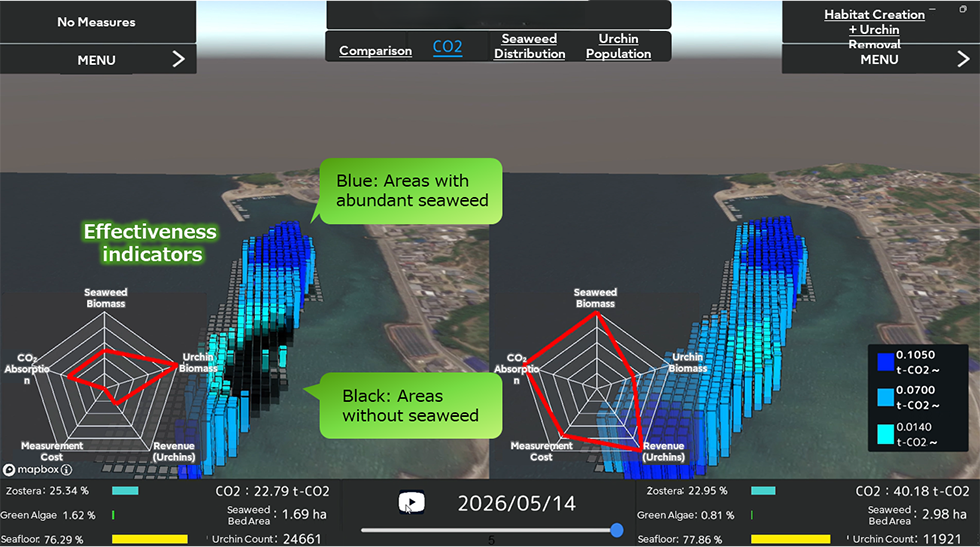
The initiative will use underwater drones, artificial intelligence and advanced analytics to generate detailed digital models of the seabed and marine life. The goal is to support “the regeneration of the marine environment, the protection of biodiversity and the promotion of the blue economy.” Using non-destructive sensing, the system will visualize biodiversity, estimate vegetation coverage and calculate blue carbon stored in marine algae.
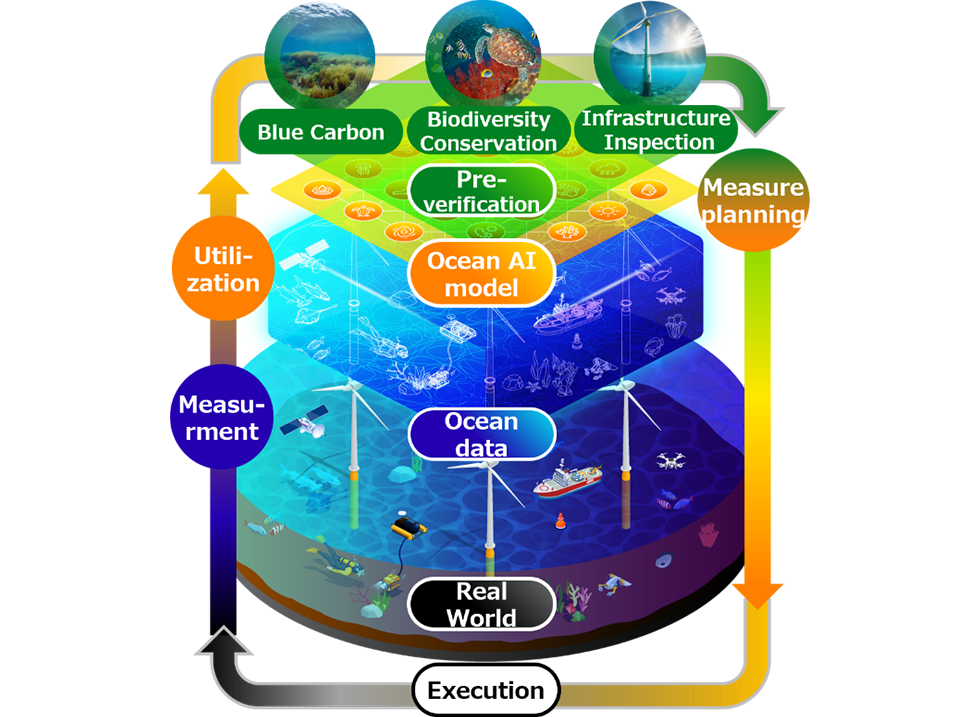
marine How a digital twin works. Image via Fujitsu
Digital twins work by collecting real-world data through sensors, drones or satellites and feeding it into a digital model that mirrors the real ecosystem. In Barcelona, autonomous vehicles will map the seabed while machine-learning systems translate the information into measurable indicators. According to the project description, “Machine learning models convert this data into quantitative environmental intelligence, estimating vegetation coverage, assessing habitat extent, and calculating blue carbon absorption.”
One powerful feature of digital twins is the ability to test future scenarios before action is taken. The platform developed by Fujitsu will allow environmental simulations to evaluate policy or infrastructure impacts. The system “enables the simulation of ‘what if’ scenarios, helping pre-verification of environmental measures before they are implemented to prioritize investments based on their real impact.”
Ángeles Delgado, president of Fujitsu Spain and Portugal, says the approach turns complex marine data into practical insight: “This project demonstrates how technology can become a true ally of sustainability. The ocean digital twin allows us to transform complex data from the marine environment into actionable information to protect biodiversity, promote blue carbon initiatives, and make evidence-based decisions.”
Ocean twins are part of a broader trend using digital replicas to manage environmental systems. Cities are building urban digital twins to model climate impacts, researchers are creating forest twins to track carbon storage and wildfire risk, and global projects such as Europe’s Destination Earth climate twin aim to simulate the entire planet to improve climate forecasting and environmental planning.
While security is a giant concern, Luciano Belviso, Mirai’s co-founder told Green Prophet: “Mirai’s autonomy can also support environmental monitoring, enabling continuous observation of marine ecosystems, pollution, and offshore infrastructure with persistent, autonomous operations, regardless of weather conditions.”
The company just raised $4.2 million in a seed round to continue development of its AI-driven autonomous marine vehicles. According to the company, the sea is one of the most critical infrastructures on the planet: more than 80% of global trade moves by sea, over 90% of Europe’s foreign trade depends on maritime routes, and roughly 95% of international internet traffic flows through subsea cables.
Mirai concept system. Image via Mirai
“The sea is one of the last major physical infrastructures not yet governed by software,” says Luciano Belviso, CEO of Mirai Robotics. “Autonomy is the key to finally making the oceans safe and usable, unlocking enormous resources and addressing critical security challenges. But it must be implemented through systems capable of operating continuously and safely in extreme environments. This is a technological and industrial challenge that requires a true robotics-lab approach.”
Mirai Robotics has already developed two autonomous vehicles designed for different operational needs, targeting ISR (intelligence, surveillance and reconnaissance) and patrolling scenarios in both coastal and offshore environments.
The vehicles integrate advanced perception systems, autonomous navigation, remote control, and safety features. They are designed to operate either as standalone units or as part of distributed monitoring systems.
Alongside its proprietary platforms, Mirai Robotics also develops autonomy, navigation, and control systems that can be integrated into third-party vessels. This allows industrial and institutional operators to adopt autonomous technology without fully redesigning existing fleets.
The decision to start in Italy is deliberate. The country is historically a global leader in shipbuilding and maritime engineering, with strong expertise in defense, yachting, offshore infrastructure, and marine technology.
The company was founded by Luciano Belviso (CEO), Luca Mascaro, and Davide Dattoli. Belviso previously built and led complex industrial companies including Blackshape, an aircraft design and manufacturing company later acquired by Angel Holding.
Luciano Belviso (left) and Luca Mascaro (right). Supplied by Mirai
Mirai Robotics has closed a $4.2 million pre-seed equity round, one of the largest in Italy in the robotics and deep-tech sector, led by Primo Capital, Techshop and 40Jemz Ventures, with participation from Italian and international angel investors. The capital will accelerate technology development, strengthen the team, and launch new pilot projects with industrial and institutional partners.
We love that the company can catch polluters in real time and take risks to rescue those at sea where other seafarers may not dare or have the expertise.
Mirai (未来) is a Japanese word that means “future.”
Maritime Robotics
They aren’t alone. Mirai Robotics enters a rapidly growing field of autonomous maritime technology that can support defense and environmental missions. Competitors include firms such as Maritime Robotics, Saildrone, whose wind- and solar-powered robotic vessels collect environmental and security data across vast ocean areas. Defense and dual-use companies like L3Harris Technologies and Thales Group are also developing autonomous patrol boats and surveillance platforms for naval and infrastructure protection. In Europe, look to startups such as Ocean Infinity and Sea Machines Robotics.
Europe was built with free access to safe, clean, spring water in cities. Here is an Austrian woman at water well in 1940
People whose drinking water came from newer groundwater had a higher risk of developing Parkinson’s disease than those whose drinking water came from older groundwater, according to a preliminary study released March 2, 2026, that will be presented at the American Academy of Neurology’s 78th Annual Meeting taking place April 18–22, 2026, in Chicago and online.
The study does not prove that newer groundwater causes Parkinson’s disease; it only shows an association.
The research focused on the age of groundwater and the aquifers that supply it. An aquifer is an underground layer of porous rock, silt, or sand that stores and transports groundwater. Scientists increasingly see water sources as a window into long-term environmental exposures.
“One way to examine our exposure to modern pollution is through our drinking water,” said study author Brittany Krzyzanowski, PhD, of the Atria Research Institute in New York City, who conducted the research while at the Barrow Neurological Institute. “Newer groundwater, created by precipitation that has fallen within the past 70 to 75 years, has been exposed to more pollutants. Older groundwater typically contains fewer contaminants because it is generally deeper and better shielded from surface contaminants. Our study found that groundwater age and location is a potential environmental risk factor of Parkinson’s disease.”
The study analyzed data from 12,370 people with Parkinson’s disease and more than 1.2 million people without the disease, matched for age, sex, race, and ethnicity. All participants lived within three miles of 1,279 groundwater sampling sites across 21 major U.S. aquifers.
A case for raw water from ancient sources
A natural raw water spring in Nipissing, Ontario.
Researchers examined groundwater age, aquifer type, and drinking water source—such as municipal groundwater systems or private wells—as indicators of possible exposure to neurotoxic contaminants.
Two types of aquifers stood out. Carbonate aquifers, made mostly of limestone, often allow water to move quickly through fractures, making them more vulnerable to surface contamination. Glacial aquifers, formed more than 12,000 years ago as glaciers advanced and retreated, are composed of sand and gravel that can naturally filter water as it moves underground.
After adjusting for factors such as age, sex, income, and air pollution, people whose drinking water came from carbonate aquifers had a 24% higher risk of developing Parkinson’s disease compared with those whose water came from other aquifers. When compared specifically with people whose water came from glacial aquifers, the risk was 62% higher.
Researchers also found that older groundwater appeared to have a protective effect in carbonate aquifers. For each increase in groundwater age, the risk of Parkinson’s disease declined by about 6.5%. In contrast, groundwater formed in the past 75 years in carbonate systems was linked to an 11% higher risk compared to water dating back to the ice age.
“We speculate that the apparent protective effect of older groundwater is seen mainly in carbonate aquifers because these systems can show a clearer contrast between newer and older water,” said Krzyzanowski. “In these aquifers, newly recharged groundwater is more vulnerable to surface contamination, while older groundwater can remain cleaner if it is separated from recent inputs by a confining layer.”
“In contrast, glacial aquifers tend to slow groundwater movement and naturally filter contaminants as water travels underground,” she added.
The findings highlight how where drinking water comes from may matter for long-term health. People can often learn about their water source through local utilities or regional groundwater agencies. For households using private wells, testing water periodically and considering filtration systems can help reduce potential exposure to contaminants.
“This study highlights that where our water comes from, including the age of groundwater and the type of water source, could shape long-term neurological health,” said Krzyzanowski. “While additional research is needed, bringing together knowledge about groundwater and brain health may help communities better assess and reduce environmental risks.”
For theone in three(98 million) Americans living with prediabetes, a surprising fresh fruit pairing may hold promise for heart health. A new study published in theJournal of the American Heart Associationsuggests that adding one avocado and a cup of mango to your daily routine may help support key markers of cardiovascular health.
Adults with prediabetes who enjoyed this combination daily for eight weeks saw improvements in blood vessel function and diastolic blood pressure – two important indicators of cardiovascular wellness.
Amba is a mango relish you can make
Conducted by researchers at Illinois Institute of Technology (Illinois Tech), the study asked adults with prediabetes to follow an Avocado-Mango (AM) diet – adding one medium Hass avocado and a cup of fresh mango to their daily meals and snacks for eight weeks. A calorie-matched control group followed a similar diet, with avocado and mango replaced by calorically comparable carbohydrate-based foods. Those on the AM diet saw meaningful improvements in blood vessel function, which supports healthy circulation, and diastolic blood pressure, a key factor in long-term heart health, compared to the control group.
Avocado toast, a family favorite
Blood vessel function improved significantly in participants on the AM diet. They experienced a significant increase in flow-mediated dilation (FMD) – a key measure of endothelial function (blood vessel health) – to 6.7%, compared with a decline to 4.6% in the control. This suggests a meaningful improvement.
Diastolic blood pressure also significantly improved, particularly among men. In the control group, men saw an average central blood pressure increase of 5 points (mmHg), while those on the AM diet experienced a reduction of about 1.9 points – a difference that can be clinically significant if sustained. These benefits occurred without changes in calorie intake or body weight, suggesting that nutrient-dense fruits like avocado and mango may support cardiovascular health without major lifestyle changes.
Mangoes – exotic, delicious. Luscious.
“This research reinforces the power of food-first strategies to help reduce cardiovascular disease risk, particularly in vulnerable populations like those with prediabetes,” said Britt Burton-Freeman, PhD, Principal Investigator and Professor at Illinois Tech. “It’s an encouraging message: small, nutrient-dense additions—like incorporating avocado and mango into meals and snacks—may support heart health without the need for strict rules or major dietary overhauls.”
The Avocado-Mango group also saw increases in fiber, vitamin C, and heart-healthy monounsaturated fat – nutrients tied to cardiovascular wellness – without changes in calorie intake or body weight. Select kidney function markers, such as estimated glomerular filtration rate (eGFR), also improved.
While no significant differences were found in cholesterol, blood sugar, or inflammation, the findings highlight the value of adding nutrient-rich fruits to the diet, especially for those at risk of type 2 diabetes and cardiovascular disease.
Ground beef comes in a plastic container. How do microplastics react with salmonella and E. coli? A new study
Plastic products are ubiquitous in our food supply chain, shedding microplastics into every part of the human ecosystem. As they degrade, microplastics break down into even smaller fragments called nanoplastics — tiny particles that can affect biological molecules in ways not fully understood.
In a new study, researchers at the University of Illinois Urbana-Champaignexamined what happens when nanoplastics interact withSalmonella, potentially affecting food safety and human health.
“Salmonella entericais a major foodborne pathogen that is often found in meat, poultry, and ready-to-eat food. We are testing ground turkey from grocery stores in our lab for a study on food safety, and finding that it is frequently positive forSalmonella.
“If you cook the meat properly, you should not have a problem. However, ground turkey is often packaged in plastic, and we wanted to explore howSalmonellareact when they come into contact with plastic polymers,” said senior author Pratik Banerjee.
Banerjee’s team previously studied the interaction of nanoplastics and an E. coli strain responsible for major outbreaks of severe gastroenteritis. In this study, they focused onSalmonella entericaand polystyrene, a commonly used plastic material for food packaging and disposable utensils.
“We examined the physiology ofSalmonellain response to nanoplastics, and we found an increased expression of virulence-related genes. The bacteria also formed thicker biofilms, which further indicates they are becoming more virulent,” said Jayita De, a graduate student in Banerjee’s lab and lead author on the paper.
Biofilm is an agglomeration of microorganisms growing together to form a protective layer, increasing survival for pathogenic bacteria under physiological stress. You might see biofilms as a slimy film in your kitchen sink or on your cutting board after handling raw meat.
However, whileSalmonellainitially showed increased virulence, prolonged exposure to nanoplastics slowed its stress response.
“When the bacteria first encounter nanoplastic particles, they go into offensive mode and become more virulent. But after a while, they start losing their resources and energy, so they switch to defensive mode, which allows them to persist in the environment for a longer time. If the concentration of nanoplastics rises, they can again switch to an offensive mode. It’s a trade-off between offense and defense,” De said.
The overall conclusion is that interaction with nanoplastics induces behavioral changes inSalmonella enterica, but further research is needed to determine the direction and impact of those changes.
Equally concerning is the possibility that nanoplastics can affect antibiotic resistance inSalmonella, Banerjee said.
“Any compound that puts physiological stress on the bacteria can trigger antimicrobial resistance. Nanoplastics are not antimicrobials, but mere exposure to them could convert bacteria that previously were not resistant to a particular antibiotic in a process called cross-resistance,” he explained.
This is the topic of an ongoing study, but initial findings indicate that polystyrene nanoplastics can causeSalmonellato increase the expression of antimicrobial-resistant genes, Banerjee added.
“However, we don’t want to sound the alarm and advocate that people stop using plastics. Plastic packaging provides a lot of benefits, such as reducing food spoilage and waste while keeping expenses low. We don’t know yet whether this is something we should be worried about,” he said.
Banerjee’s research team is among the first to examine the interactions between foodborne pathogens and plastic particles, thereby advancing this emerging field from a food safety perspective. He hopes other researchers around the world will pick up the mantle, because there is a lot more to learn about consequences, risks, and tolerances before any policy recommendations can be made.
Short-term surges in air pollution in New Jersey from the 2023 Canadian wildfires were associated with a higher stroke rate and more serious strokes, according to a preliminary study released March 3, 2026, that will be presented at theAmerican Academy of Neurology’s 78thAnnual Meeting next month.
“Wildfire smoke contains pollutants like ozone and particulate matter, so it is more than a nuisance, it can be a public health hazard,” said study author Elizabeth Cerceo, MD, of Cooper Medical School of Rowan University in Camden, New Jersey. “The 2023 Canadian wildfires resulted in unprecedented declines in air quality across the northeastern United States. Our findings show that short-term exposure to elevated air pollution from these wildfires was associated with a higher incidence and severity of stroke.”
For the study, researchers used a stroke registry to identify all cases of stroke that occurred during June and July 2023 and during the same months a year earlier. Ischemic strokes are the most common kind of stroke. Bleeding strokes are more severe and often more fatal.
Researchers reviewed U.S. Environmental Protection Agency data for both periods from air quality monitors located in Camden, New Jersey. They calculated average daily exposures for ozone which, when inhaled, can cause shortness of breath, coughing and aggravation of conditions like asthma. They also calculated daily average exposures for fine particulate matter, also called PM2.5, which is air pollution with particles that are 2.5 micrometers in diameter or less.
Ozone levels peaked at 136 parts per billion (ppb) during the wildfires in 2023 compared to median ozone concentration of 36 ppb. Particulate matter reached 211 micrograms per cubic meter (µg/m³) compared to median concentration of 48.5 µg/m³.
Daily air quality data was matched with the timing of each stroke. Because pollution effects may take a few days to impact the body, researchers also took into account the levels from the preceding one to two days before participants had their stroke.
For ozone levels, 72% of the days were 50 ppb or less, with 28% of the days above the recommended level. The World Health Organization guideline for ozone is 50 ppb. Researchers compared 42 strokes that occurred on above average ozone days, with 80 strokes that occurred on below average days. For strokes that occurred on above average ozone days, the incidence of stroke, or the rate at which new stroke cases occurred, was 1.25 strokes per day compared to 0.93 strokes per day that occurred on below average days.
After adjusting for factors like age, sex, race, and cause of stroke, researchers found higher average ozone days were associated with a 0.32 higher incidence of stroke per day.
They also found for strokes on above average ozone days, there was a higher proportion of bleeding strokes and more large artery atherosclerosis, plaque buildup in major arteries.
For particulate matter levels, 38% of the days were above average days and 62% were below average days. Researchers compared 39 strokes that occurred on above average particulate matter days to 83 strokes that occurred on below average days. They found above average particulate matter was associated with longer hospital stays and higher scores on a scale measuring stroke severity.
“While longer-term air pollution has been recognized as a risk factor for stroke, less is known about short exposures to wildfire smoke,” said Cerceo. “Our study addresses a critical gap by providing more information about the neurological impact of wildfire smoke. Our findings can help guide stroke prevention and underscore the need for public health interventions during wildfires.”
For decades, scientists searching for extraterrestrial intelligence have focused on one specific type of radio signal, extremely narrow spikes in frequency. These “narrowband” signals are considered strong candidates for technological transmissions because natural astrophysical processes rarely produce them. However, new research from the alien-hunting organization, the SETI Institute, suggests alien signals might be harder to detect than previously thought, not because they do not exist, but because they may become distorted before leaving their home star systems.
A SpaceX Moon Base rendering by Doge Norway
The study, published in The Astrophysical Journal, explores how stellar “space weather” could blur radio transmissions from distant civilizations. Turbulent plasma near stars, including charged particles carried by stellar winds and eruptions such as coronal mass ejections, can interfere with radio waves as they travel outward from a transmitting planet. Even if a civilization sends a perfectly narrow signal, the plasma surrounding its star could spread the signal’s energy across a wider range of frequencies.
A planet’s radio signal may begin as a sharp tone (left, white) but can be spread out by the star’s surroundings plasma winds into a wider, fainter signal (right, green). The study suggests we may be missing signals by mostly looking for the sharp white shape instead of the broader green one (credit: Vishal Gajjar).
This process weakens the signal’s peak strength and makes it more difficult for traditional SETI detection systems to identify. Many current search pipelines are optimized to detect ultra-sharp signals, meaning broadened transmissions could slip below detection thresholds.
“SETI searches are often optimized for extremely narrow signals,” said Dr. Vishal Gajjar, astronomer at the SETI Institute and lead author of the study. “If a signal gets broadened by its own star’s environment, it can slip below our detection thresholds, even if it’s there, potentially helping explain some of the radio silence we’ve seen in technosignature searches.”
A hospitality concept proposed for an eco-resort in a remote natural setting in Qatar. It might as well be a base station for Martians. Balsam Madi.
To understand how strong this effect might be, researchers studied radio transmissions from spacecraft within our own solar system. By measuring how solar plasma affects these signals, the team developed models that estimate how stellar turbulence might distort transmissions in other planetary systems.
Their findings suggest the effect could be particularly strong around M-dwarf stars, small and active stars that make up roughly 75% of the Milky Way’s stellar population. Because these stars often produce intense stellar activity, signals from planets orbiting them could become significantly broadened before escaping the system.
The research suggests future SETI searches may need to expand their approach, developing detection systems capable of identifying signals that have been smeared or broadened by stellar environments, not just perfectly narrow ones. By accounting for how stellar activity reshapes radio transmissions, scientists hope to design searches that are better matched to what actually arrives at Earth, potentially revealing signals that have so far remained hidden.
Consulting giants EY, BCG, KPMG and Deloitte relied on the offsets, raising concerns about how corporate climate claims are being verified.
All the more reason to hire an in-house sustainability agent who understands carbon credits and sustainability. An investigation published today in the Wall Street Journal reveals that more than 140 corporations were allowed to claim carbon offsets credits from one of the world’s largest projects hosted by Verra in Brazil, despite the fact that the project was under investigation for claims regarding its legitimacy.
Corporations such as BlackRock, Mastercard, and Phillip Morris International were allowed to retire and count these credits towards their emissions-reducing activities while the project was suspended. Evidence suggests that the project may have been illegitimate from its establishment, due to claims that it was located on public lands where it did not have a legal right to operate.
The Panatal in Brazil via National Geographic
Additional research by Corporate Accountability released today reveals that over 70% of all carbon credits recently retired in Brazil are “problematic” and cannot be counted on to deliver their promised emissions reductions. If you are filing shareholder reports for ESG activities which include Brazil, dig deeper.
The researchers examined the top 50 carbon offset projects in Brazil between January 2024 and June 2025 — which are also among the largest projects globally — and found that millions of these problematic offsets were retired by multinational corporations and counted towards their emissions reductions despite not being likely to deliver.
“Carbon offsets have failed to lead to a decrease in global greenhouse gas emissions,” said Rachel Rose Jackson, Director of Climate Research and Policy at Corporate Accountability.
“Meanwhile, the claims of harm to communities and ecosystems caused by these projects continue to pile up. Yet again, the evidence suggests that those promoting and profiting off these projects cannot be counted on to help protect the planet. With life at stake, who is liable for the continued failures of these projects and the carbon market more broadly? And how many more times do we need to see evidence of their failure before we reorient towards more meaningful and proven solutions that reduce emissions and keep fossil fuels in the ground?”
The research in the new report from Corporate Accountability shows that 32 of the top 50 carbon offsets projects in Brazil are unlikely to reduce emissions. These projects retired 15.7 million carbon offsets credits between January 2024 and June 2025. This means that a substantial portion of the offsets from these projects that corporations were counting towards their emissions reductions were likely doing little to nothing to reduce emissions.
All of this while communities around the world face worsening floods, droughts, and extreme weather — as well as systemic violence fueled and enabled by some of the world’s largest corporate polluters in places like Palestine, Sudan, Venezuela, Iran and elsewhere.
Verra, the world’s largest carbon credit certifier, hosts 23 of the 32 problematic projects in Brazil, which accounts for 12.8 million carbon offsets credits retired between January 2024 and June 2025. Despite promises of reform amidst repeated integrity concerns, Verra appears to continue to host projects that are not proven to deliver real and lasting emissions reductions, says Corporate Accountability.
The Clean Development Mechanism hosts the remaining nine problematic projects, accounting for 2.9 million offsets retired during this period. The Clean Development Mechanism has a history of hosting projects that lack real emissions reductions and has been estimated to actually increase global emissions by 6.1 billion tons of carbon dioxide through approval of empty offsets, according to Corporate Accountability.
Corporate Accountability’s research also revealed that many major international corporations across sectors have retired offsets from these problematic Brazil-based projects. Petrobras retired nearly 200,000 credits from these problematic projects during the research period. Shell retired approximately 66,500 credits, and Equinor nearly 21,000. BlackRock retired 137,000 problematic credits from these projects.
Consulting firms also made significant use of these questionable offsets. EY retired nearly 179,000 credits from problematic Brazil projects. BCG retired around 90,000 credits. KPMG and Deloitte each retired around 5,500 credits. Other corporations using these problematic offsets include Barilla, Philip Morris, Uber, SWIFT, Mastercard, S&P Global, Engie, Yamaha Motor, and Dell.
The voluntary carbon market is predicted to grow significantly in coming years. Climate advocates, academics, communities, and experts are calling for immediate action to reverse the harms and failures of the carbon market, and to course-correct to real solutions that will put us on a proven pathway to Real Zero emissions.
Carlos Augusto Pantoja Ramos, a forestry engineer and PhD student at the Amazonian Institute of Family Agriculture at the Federal University of Pará in Brazil, has worked extensively with communities impacted by carbon offsets projects. He explained that it is not the communities near projects like Pacajaí that have benefitted from these projects.
“The attempt to capture public and common goods, such as land, by projects such as Pacajaí can intensify the concentration of income in the hands of a few corporations and institutional investors, deepening the severe social inequality in regions like the Amazon. This reveals disproportionate gain relationships between the parties involved, many of whom lack the structure and/or technical knowledge to assert their rights.”
Oman camel with natural looks. Image for illustrative use.
In the desert culture of Oman, camels are more than a transport system, camels are status, heritage, used for health products – especially their milk, and sometimes camels are beauty queens. But at this year’s 2026 Camel Beauty Show Festival in Al Musanaa in Oman, judges had to disqualify some of the contestants for the enhancements used to look their best.
Some 20 camels were disqualified by contest inspectors who found cosmetic enhancements used on the camels including Botox, dermal fillers, hyaluronic acid injections, and silicone used to inflate humps or alter facial features or the skin on the camels neck. Maybe one day the same beauty standards will be applied to women who undergo insane procedures to enhance their looks.
We wrote about Botox on camels in 2018 at Saudi Arabian festivals and the practice hasn’t stopped. Camel beauty competitions judge animals on a variety of measures such as coat shine, neck strength, head shape and the size and symmetry of their humps. Winning camels, and those with the longest lashes and fullest lips, can increase their value by the thousands when used in breeding markets.
Some camels need orthodontics
Festival organizers say they are starting to take a serious stance and are cracking down on beauty forgery and use X-rays and scans to see what Botox can’t hide: the beauty under the skin.
The stakes for beautiful camels are high. Some camels can fetch millions of dollars in prizes, including pageants at the Saudi Arabian King Abdulaziz Camel Festival, where similar cosmetic cheating has led to disqualifications in past years.
Festival organizers have said they are working to halt “all acts of tampering and deception in the beautification of camels,” adding that they would impose “strict penalties on manipulators” going forward.
Veterinarians and animal-welfare advocates warn that injecting camels with cosmetic substances can cause pain, infection and long-term health complications. In some cases the animal body parts are plumped by elastic bands that restrict blood flow and which can cause animal suffering and pain.
In Saudi Arabian camel contests that fetch prizes worth $60 million USD, owners are also required to swear on the Quran that they are telling the truth about camel appearance and ownership. Judges report that this is proving to be the best tactic to weed out cheaters.
In the desert, it seems even camels are not immune to the global pressure to look perfect. What’s worse is it’s a form of animal abuse, and such critiques should be passed on to people choosing wives, even if you don’t have to trade a certain number of camels to get one.