
Home Blog Page 184

7 Ways to Live a More Green Life at Home

0

IMJ-tree-house-by-Ifat-Finkelman-and-Deborah-Warschawski

There are over 7 billion people in the world utilizing the planet’s resources. As we continue to use these resources, they continue to dry up. In fact, by 2025, 1.8 billion people will struggle to find water to drink. That’s why it’s more important than ever to conserve resources anyway we can, and it starts at home. Here are 7 ways to live a more green life at home.

1. Choose the Right Transportation

We all need transportation to get to work, family events, and stores. Many of us use large cars that waste a lot of gas. When possible, it’s a good idea to avoid driving all together. Walk or take a bike if possible. Of course, not everything is close enough for that to be a possibility.

When you need to drive, drive with the environment in mind. Drive a hybrid or electric car that uses significantly less gas, putting less toxins in the world and leaving gas supplies in tact. If you can’t realistically change your vehicle at the moment, carpool as often as possible.

2. Conserve Water

While the world is made up of mostly water, most of it is not able to be consumed by humans. We need to preserve the water we have left. Start at home by taking shorter showers and not letting the water run when brushing our teeth. You can even switch to low-flow toilets in your home. Most standard toilets use 3.5-7 gallons of water for every single flush. Low-flow toilets cannot use more than 1.6 gallons per flush. That could end up saving you quite a bit on your water bill over the years, too.

3. Buy Energy Star Appliances

There are many items in your home that use a lot of water and electricity. Your washing machine, dishwasher, and your HVAC system all collectively make up a large portion of your utility bills. Using all of this energy is putting more pollution into the world. You need to wash your clothes, though, right? So buy appliances with the EnergyStar logo on them. These appliances are specifically designed to meet certain industry standards when it comes to using less energy and water. Even then, examine the products thoroughly to determine which one will provide the most savings for you and best results for the planet.

4. Keep Your HVAC System Maintained

Your HVAC system needs to be properly maintained. You should clean or change the filter in it regularly. If you don’t, the system isn’t running as efficiently as it could be. You should also make a point to get a checkup and maintenance every single year before winter. The technician will be able to fix any problems that might be slowing it down. And you can reuse any water that comes off it in the summer

5. Buy LCD/CFL Light bulbs

Iridescent light bulbs are becoming obsolete since there are much better options available. Be sure to put LCD or CFL light bulbs in every room of your home. They use less energy and last significantly longer. It’s a no-brainer! They are a slight initial investment at first, but you save money on your electric bill. There are regulated electricity rates in Alberta, so you will be able to clearly see the difference. There are incentives on when to use power in all the provinces, usually on off-peak hours. My mom puts her dishwasher on later at night to save half the energy costs for running that appliance. 

You can check with your power provider in your county. Peak demand is one of the words you can use in Google to find peak demand rates near you. 

6. Recycle

You should make a point to recycle in your home. Make it easy by providing two different bins in all of the main areas. Be sure that the recycling bin is clearly labeled.

You can even use recycled materials at the beginning of the home-buying process when building the home.

7. Teach Your Children Good Habits

Good habits start at home. You should teach your children to take these habits with them as they get older and start their own families. We all should do our part. People are more likely to do the right thing when they have encouragement at home.

We have a responsibility to the planet and to future generations to do our part. That does not mean that we should not use cars or appliances. However, it does mean that we should use them wisely. Use these tips to help make your home green. You’ll save money, and you’ll help conserve resources, too. It’s a win-win.
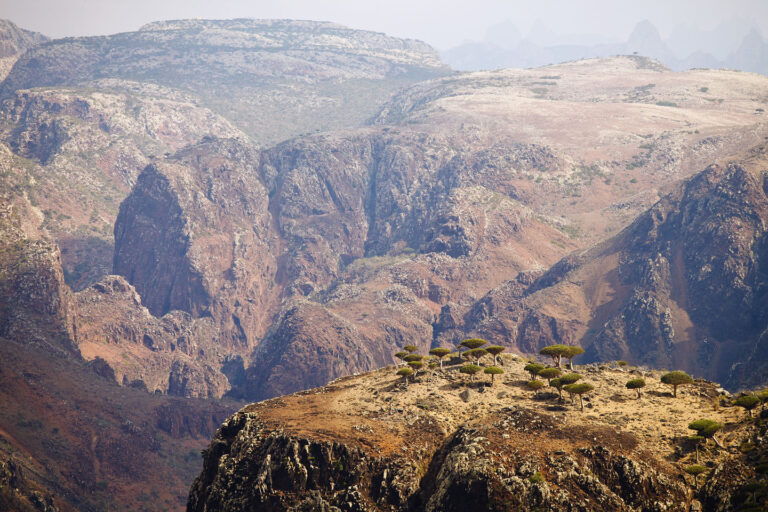
The UN takes stock of the world’s trees: Drylands are not wastelands!

0
Yemen trees
One quarter of the world’s trees are where you least expect them – on very dry land. The land may be dry but it is not a wasteland! The UN creates new tree map helping us understand trees in the Middle East and regions like it for deeper understanding of watershed and food security.

More than a quarter of the world’s forest area is located in drylands, and trees are present on almost a third of the world’s dryland regions, according to Trees, forests and land use in drylands: The first global assessment, launched by FAO today at the High-Level Meeting on Forests at the UN COP25 climate summit.

The results “demonstrate that drylands are not wastelands, but productive landscapes with considerable economic potential and environmental value.”

The report, which includes large amounts of data on global and regional land use and forest cover, represents FAO’s delivery of a promised “collective product” on the status of drylands around the world. The assessment complements FAO’s Global Forest Resources Assessments but differs in that its primary data are developed through visual interpretation of freely available satellite images in a global team effort using FAO’s Open Foris Collect Earth tool.

“Understanding the status and changes of dryland forests, tree cover and land use is vital to evaluate the impact of climate change and human activities, the results of adaptation and mitigation measures and progress towards meeting regional targets for land degradation neutrality,” says Hiroto Mitsugi, FAO Assistant Director-General of the Forestry Department.

lebanon's largest landfill
Trees and landfill in Lebanon

The new report engaged more than 200 experts and a series of regional workshops in collaboration with partner universities, research institutes, governments and non-governmental organizations worldwide, and draws on information from 213.782 sample plots, each measuring around half a hectare.

While specific instances require reality checks on the ground, the interpretation of high-resolution remote-sensing images presented in the assessment can help policymakers identify optimal investment strategies to combat land degradation and desertification, conserve biodiversity, support livelihoods and help increase the resilience of landscapes and communities, especially in the face of climate change.

dragon tree yemen

What the assessment shows

Drylands, comprising hyperarid, arid, semi-arid and dry sub-humid zones, cover about 6.1 billion hectares, or 41 percent of the Earth’s land surface. Of these, some 1.1 billion hectares (18 percent) consist of forest, according to FAO’s assessment.

Drylands are home to an estimated 2 billion people, half the world’s livestock, and more than a third of global biodiversity hotspots, and provide critical migration points for birds. Their ecosystems are vulnerable to water shortage, drought, desertification, land degradation and climate change impacts.The world’s drylands are expected to expand by 10 to 23 percent by the end of the 21st century, with dangerous ramifications for food security, livelihoods and human welfare.

Yemen bottle tree

Globally, about 18 percent of drylands are forest, just over half of which have canopy density above 70 percent, while barren land accounts for 28 percent, grassland 25 percent and cropland 14 percent. Trees are also present on drylands outside of forests, notably in Asia and Europe, and all told there are trees on some 2 billion hectares of drylands.

amazing, arab, arabian, arabic, beautiful, beauty, canyon, climate, coastline, color, deep, environment, exterior, fauna, forest, green, heritage, horizon, horizontal, island, landscape, location, mountain, natural, nature, outdoor, panorama, panoramic, park, plant, rock, sand, scenic, sea, sky, socotra, soqotra, splendid, stone, summer, sun, sunlight, tourist, tranquil, travel, tree, view, water, yemen

The report offers detailed assessments broken out by region.

FAO also released a new issue of Unasylva exploring the role of forests as nature-based solutions for water management. Its key message is that forested watersheds provide an estimated 75 percent of the world’s accessible freshwater resources and thus constitute are crucial and cost-effective natural infrastructure for the production of high-quality water – including for cities – for more than half the world population. Their management for water will become increasingly important in the face of climate change.

Science can can implant new memories in your brain

0
Movies like Eternal Sunshine of the Spotless Mind show us what it’s like when painful emotional memories are erased. But can positive ones be implanted too? A new study from Israel says yes. They have done it in animals.

Evolution has helped us evolve to avoid negative experiences and seek out positive ones –– like honeycombs for a big dose of sugar or loud sounds that signal aggressive animals. But as we face a modern life we rapidly changing and industrialized food, can we save the planet by implanting a love for vegan food and a distaste for meat? Welcome to your future, in this new study:

Looking at mice, a new study at the University of Haifa has found a neural pathway in the brain that determines whether a particular taste will have positive emotional value, and therefore consumed in future encounters, or negative, and therefore avoided in future encounters.

The researchers also succeeded in using the neurons identified to erase or transplant memories that were never experienced in reality. The study was published in the Journal of Neuroscience.

“In the current study, we were able, for the first time, to cause mice to assign a negative value to an event that never took place, and accordingly, to remember a feeling that was not experienced in reality,” said PhD student Haneen Kayyal, who led the study with postdoctoral fellow Dr. Adonis Yiannakas from the University of Haifa.

Risks of designer babies real, new computer sims reveal

The researchers identified a small population of neurons (hundreds out of several millions) that determine whether the mice like or dislike a particular taste, and even succeeded in silencing or activating them, thus implanting an emotional value that was not experienced in reality.

In the current study, conducted by Professor Kobi Rosenblum the researchers sought to find the neural pathway in the brain that following learning, and assign a negative value to tastes that are inherently positive (following evolutionary processes).

Implanting a desire for just salads or veganism, all day long?

Naturally, we are born with a natural preference for certain flavors, for example, sweet or salty, and are averse to bitter taste. However, throughout life, these innate preferences can be changed by a learning process in which a bitter taste becomes attractive (for example beer) and appetitive taste becomes negative if followed by malaise.

Similarly, mice can be taught to be averse to a sweet taste by associating it with malaise. Following the coupling of sensations, the mice will avoid sweet taste. When investigating the brain activity of mice during the association of a sweet taste with abdominal pain, the researchers found neuronal activation in the insular cortex in the brain, an area involved in complex brain functions, which projects to the basolateral amygdala, which is located in the medial prefrontal cortex and is involved in the formation of emotional memories.

After identifying increased activity in these neurons when mice were studying the association between taste and emotional value, the researchers examined the necessity of this neural pathway to generate negative values ​​by silencing it, by preventing the transmission of neural information between the two brain regions during learning.

Following this manipulation, the mice did not remember the negative experience, and returned to consuming the sweet taste, despite experiencing the same association between taste and malaise. “The findings showed the importance and necessity of the neural pathway that we found, whose silencing prevented the mice from creating a memory for the experience they had been through,” the researchers said.

In the third phase, the researchers exposed another group of mice to the same sweet taste, and immediately activated the same specific nerve cell population that was activated following the consumption of this taste, without any sensory experience of malaise. Two days later, these mice also avoided consuming the sweet taste, although they did not experience any unpleasant sensations in reality.

“The experiments suggest that not only did we identify the neural pathway that underlies the generation of negative values ​​for tastes but we also artificially created such memories by activating the neural pathway that we identified. The interesting thing is that these pathways are highly similar across mammals, including humans and mice. The findings will allow us to explore in the future how a variety of psychiatric illnesses can be treated, ranging from eating disorders that have too-powerful or too-weak “emotional engravings” in response to eating experiences and to dealing with emotional traumas such as PTSD, which do not allow the emotional value of an experience to be eradicated,” Prof. Rosenblum concluded.

How to Create Buzz Around Your Product with Instagram

0
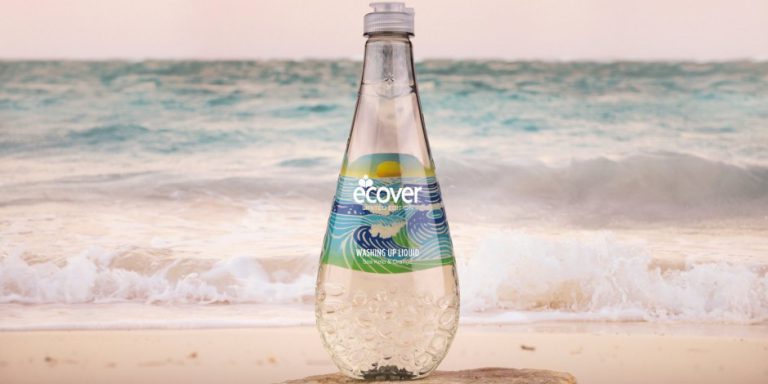
ecover bottle soap at the sea
Before Ecover was my favorite ecological cleaning brand, it was just someone’s little idea to change the world one sink of dishes at a time. Now look at them! The company started before social media, but were early to connect with bloggers and blogs in a transparent way.

If you want to increase product sales, one of the best ways you can do that is to create buzz around your product with Instagram. If you’re just getting started with the social media platform, then you can use a powerful Instagram bot to help fuel your account growth while you work on the content that generates buzz.

1. Call for (and Use) User-Generated Content

Leverage the following you already have on social. Cross-promote your Instagram account with your other social channels, and announce a call for user-generated content (UGC) to feature on your Instagram account. Create a branded hashtag (#nowaste #worldsoilday #upcycledceramics), and encourage people to use it when they post photos featuring your product on Instagram and other social media channels. Feature at least one a week – and tag the user in it so they get a little shoutout.

2. Offer Discounts

Everyone loves discounts – but what does everyone love more than a discount? An exclusive discount. Create a discount specifically for your Instagram followers that you do not publish elsewhere. You can do the same for people who connect with you on other social media channels, too – so long as you keep the codes unique.

reformation swimsuit
This company Reformation talks to you like you are one of the girls.

Then, pay attention to which codes are used most often. That way you learn which channel is more engaged with you, and where the majority of your target audience is.

In addition to offering discounts to new customers, you may want to offer a discount to returning customers, too, especially if you have a product where refills and replacements are common because it’s a consumable. All too often businesses tend to focus on customer acquisition, when customer retention is where the profit is. Once someone becomes a customer, do everything you can to keep them one of your customers, while still working to bring in new ones.

3. Host Contests

Contests are a great way to get your products in the hands of people who will use it, get UGC to use in the future, and grow your Instagram following all the same time. There are several ways you can do a contest, depending on what your goals are.

Want to grow your following? Host a contest where people have to follow you to enter. As an extra entry, ask them to tag a friend who may also be interested in entering to win.

Back in the day people used to participate in typing contests. You can be much more creative today on social media, or not!

Want to increase your engagement? Host a contest where you have people like the post and leave a comment with a hashtag to enter. Then, use the hashtag to track the number of entries and overall engagement. Make the hashtag unique so you don’t count unofficial entries, but keep it related to your brand.

Try a contest where people submit photos of your product in use, and the best ones (by user vote or a panel of judges) are chosen to win a prize. Remember that because this kind of contest requires the most effort, the prize should be larger than if you were to use another type of contest where the entry is easy and takes only a few seconds.

These are the best option if you have a high-dollar product that people aren’t so willing to invest their money on right away. You can also use this approach with influencers by giving them your product for free in exchange for promotions with their audience.

You can run contests back-to-back so you always have something running. This way you are constantly working on improving your engagement and building your tribe. Just take time to look at the results of each contest and make adjustments so you can continue to get a good return on your investment.

4. Share How-To Content

Use Instagram videos, slideshows, and Stories to demonstrate how to use your product. Demonstrate how to make the most of your product, and you’ll be encouraging people to buy it while also meeting the needs of your current customers.

Show how to set up and use your product. Show how to fix common issues for easy troubleshooting. You can use an Instagram Slideshow to splice together up to 10 minutes of video, as long as you edit it for flow, since you can combine 10 images or 10 one minute videos.

5. Highlight How to Use Your Product in Various Ways

Continuing with the How-to content, use all of Instagram’s features to show the various ways you can use your product. Bonus points if there are unique ways you can use your product compared to the competition, or out of the box ways you can use it that aren’t obvious to the average user.

Take for instance the Foodsaver. It’s a line of products designed to help you cut food waste by vacuum sealing your food so it lasts longer in the freezer. What many people don’t realize is that you can also use the vacuum sealer to save other things – such as your child’s schoolwork and other items you want to preserve, almost like a laminator. You can create bags for storing just about anything.

Whether you need to generate buzz for a product launch or a seasonal product, Instagram is one of the best places to do it. The audience is generally more affluent than other social media networks, and it definitely has more engagement compared to Facebook or Twitter. What’s more is people come to Instagram looking for things to buy, so if you don’t have a presence for your brand there yet, you should get started right away.

Dec 5, World Soil Day. Take action

0
vintage photo of girl in dirt
Soil can be made and cultivated. To celebrate World Soil Day, start with these soil-friendly tips.

We walk on it, dig into it, and build with it. We depend on it to grow food and clothing, filter water, and support natural ecosystems. Soil is essential to life.

Join the American Society of Agronomy and Soil Science Society of America in celebrating SOIL! World Soil Day is celebrated every year on December 5. The day focuses attention on the importance of protecting soil as one of our valuable, natural resources.

Here are the top 5 ways we can support soil.

Reduce food waste

The food we buy at the grocery store impacts the entire food supply system. One of the easiest ways we can support the soil is by limiting the amount of food that ends up in our garbage. All the food that ends up in our shopping carts requires land, water, nutrients and energy to produce. By consuming more and throwing away less, we will prevent valuable nutrients from ending up in a landfill!

Eat a diverse diet

By eating different types of foods, we can help create demand for a wide variety of agricultural products, which is better for soil. Food diversity helps with biodiversity and soil fertility when land is used to grow multiple crops. For protein sources, the United States Department of Agriculture recommends varying “your protein routine.” 

Compost

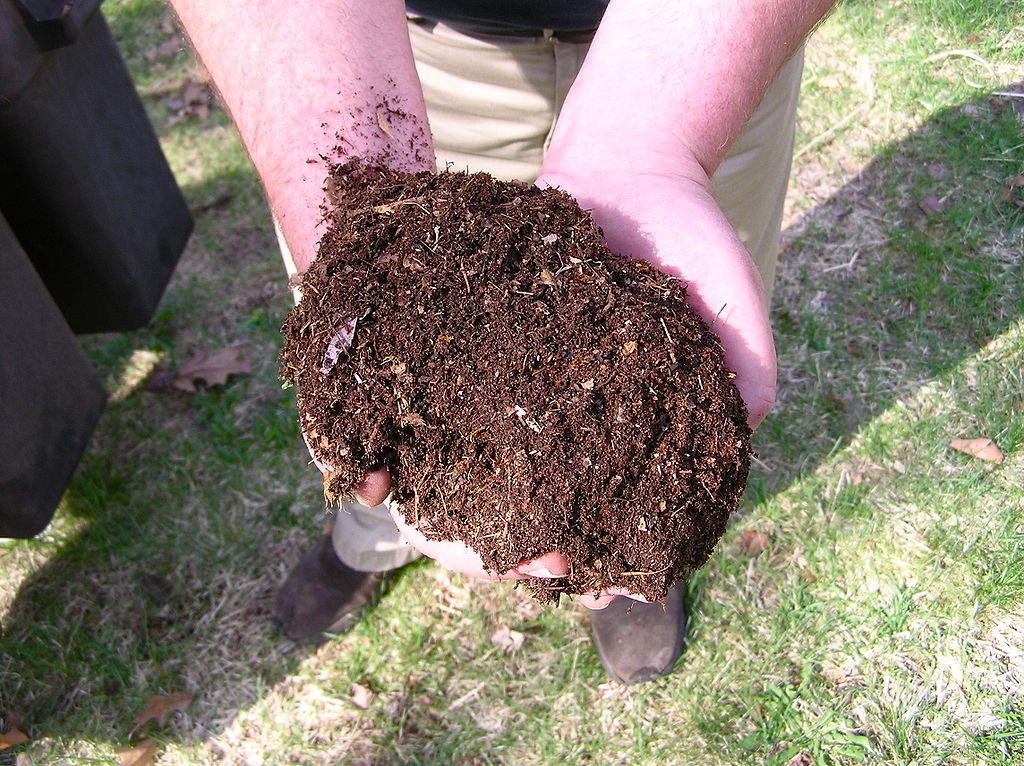
gabriel borochov make compost
My boy makes compost by rolling a giant ball.

So maybe our eyes were bigger than our appetites at the grocery store, and we end up with food we can’t finish. Instead of throwing it in the garbage, consider investing in a compost system! Composting can return nutrients in food back to nature. And, compost will be great for our gardens next growing season.

Read labels on lawn and garden products

Walking through the aisles of any home improvement or garden store, there is a seemingly endless array of products for our lawns and gardens. No matter which product we end up selecting, the most important step before applying is to thoroughly read the label and all instructions. Over- and under-application of the product can both cause problems. 

Perform soil tests

If we are looking to fertilize our lawn or garden, we need to know what nutrients are already in the soil before applying more. We might be able to save money and apply less fertilizer. Or, we might just need to add one specific nutrient, and not others. A simple way to get reliable results is to have our soil tested. Local university extension services can help provide information on testing soil. It’s usually a matter of scooping up soil from a few areas of the yard and sending it in to the lab!

soil test make soil

The American Society of Agronomy and Soil Science Society of America wish you a happy and sustainable World Soil Day! Don’t forget to do your part to support our valuable, natural resource.

Fall Armyworm invades Middle East devastating crops

0
Fall Armyworm invades the near middle east
Fall Armyworm is invading the Near Middle East. New reporting app aims to mitigate risk, spread awareness.

The United Nations launched today a three-year Global Action for Fall Armyworm Control to scale up efforts to curb the growing spread of the invasive pest which is causing serious damage to food production and affecting millions of farmers across the world. 

Fall Armyworm (FAW), a crop pest native to the Americas, has rapidly spread through Africa, and to the Near East and Asia in the past four years.

The Fall Armyworm (FAW) is an insect pest, which causes considerable yield losses in cultivated maize, rice, sorghum, millet, and other crops as it is capable of attacking over 80 species of crops, if not under good management and control.

Based on 2018 estimates, every year up to 17.7 million tonnes of maize (corn) are lost to this pest in Africa alone. This amount of maize could feed tens of millions of people; and represents an economic loss of up to $4.6 billion.

“It  threatens food security of hundreds of millions of people and the livelihoods of smallholder farmers,” said FAO Director-General Qu Dongyu. He made the remarks at the launch of the Global Action on the sidelines of the FAO’s Council, the Organization’s executive body.

In his address, Qu said that the FAO needs $500 million over the next three years to control Fall Armyworm. Solutions like biological control can stop the Fall Armyworm, if applied correctly. To this end, he proposed the establishment of a Global Action Fund – the first ever multi-partner trust fund aimed at addressing the Fall Armyworm threats, – and encouraged countries to contribute to this funding mechanism. 

insect radar, Hula Valley
Insect radar

Countries in the Middle East should consider investing in an insect radar. The idea was proposed more than 20 years and Israel installed its first insect radar in the Hula Valley in 2022.

The initiative also calls for increased partnerships to complement current FAO mechanisms such as Farmer Field Schools and South-South and Triangular Cooperation as well as to create new cooperation channels, Qu noted. In particular, he added, it will feed into FAO’s new data-driven Hand-in-Hand initiative to target interventions where most needed. 

“We must all work together, FAO, international organizations, governments, the private sectors, research centres, academia, and civil society. With the proposed Global Action, FAO commits to putting the knowledge, experience and lessons learned from stakeholders and partners at the service of farmers throughout the world to stem the global threat of this pest,” the FAO Director-General concluded.


Flooring Options for Ecological Weirdos

0
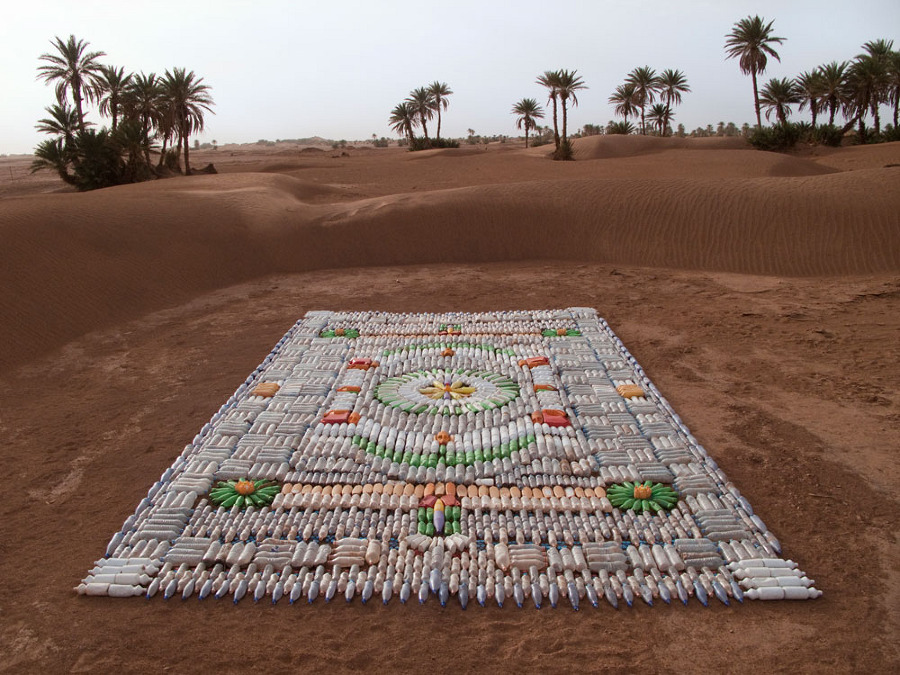
recycled materials, WE MAKE CARPETS, Taragalte Festival, Morocco, eco design, plastic carpet, bottle carpet
Flooring means different things to different people. From grounding dirt floors to upcycled linoleum. Here are some ideas. This carpet (a magic flying one? ) is made from bottles.

You might be able to buy a strawbale house or build a cob house on a budget of $4,000 like the woman from the UK did in Turkey but if your walls and roof manages to last the winter, you have to know how your floor will stand up. There are plenty of ways that earth-minded people build flooring to stand the test of time. Choosing your best options for the most part might really depend on where you live. Think about the weather that might creep in or creatures that you want to keep out. Laminate or upcycled wood? certified sustainably harvested wood? 

Grounding out your floor

A new-old trend among seasoned earth lovers is grounding. Meaning they build their homes and flooring with as few layers to the earth as possible. If you live in a temperate climate that doesn’t get too damp or too cold you might be able to get away with a rammed earth or even a simple dirt floor. The benefits is that feel-good earthy vibe when you are making your coffee in the morning, keeping your toes touching the earth. Another benefit is that it doesn’t and will never look like black polished marble. So keeping it clean isn’t really that important.

If you can’t go all out with an earth floor another option for moderate climates is wooden floorboards like a deck above the earth. Depending on the width of the slats, you can let air or the outside in. I built a low cost studio in my backyard with this option and because it was for a pottery studio that I have to keep dust free, I needed a solution that could take a lot of water. So on one hand I have a simple wooden “deck” floor for my studio which sits on cement stilts (no foundation, leave no trace behind), I needed to go for a low cost solution to keep the floor dust- free, so we chose a roll of linoleum. 

Clearance or end of line flooring

There are all finds of low cost solutions if you are like the No Money Man from the UK (keeping it simple and real), but for those with more means you might be able to afford plastic tiling made from ocean waste or other upcycled materials. A floor with a story, imagine that?  One company we came across with endless ideas and pictures (like looking at Houzz for hours!) is this one selling all sorts of clearance flooring. Companies that sell end of line materials or upcycle raw materials that get left behind at the end of a production run get big points in our books. Think Reformation but for floors!

handmade-carpet-by-Faig-Ahmed

Another flooring solution made famous by artisans in the Middle East is carpeting. No matter how old and ugly or worn down your floor might look a few good carpets can save the day. Carpets woven in the Middle East like in places like Turkey or Uzbekistan not only last forever and look better with use, you actually help women (most of the weavers) earn a decent and stable income and you keep an ancient craft alive. Make sure you buy your carpet from a reputable seller. I have met people in Turkey as carpet tourists — just around those parts to buy carpets.

A more affordable option if you can’t buy a lifetime-use wool carpet is to buy an upcycled carpet. Sewn together and then redyed, they look like a million dollars and are still in fashion. 

massage rug carpet neora zigler

This totally weird carpet by designers in Israel looks like stones and it also gives you a massage when you walk over it. 
American irrigation research finds watering sweet spot for agriculture and earth

0
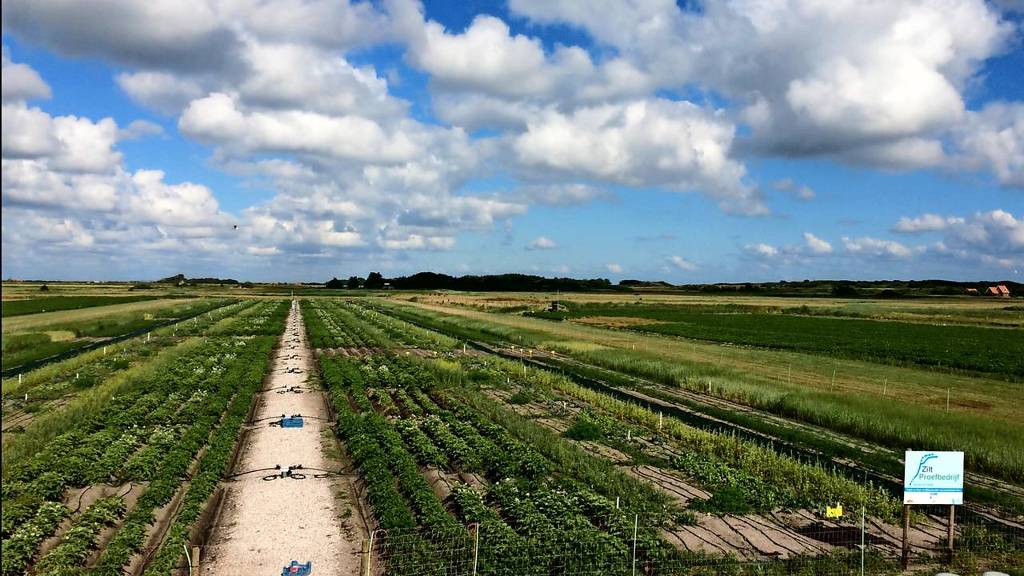
salt farm texel
A healthy lifestyle consists of a mixture of habits. Diet, exercise, sleep and other factors all must be in balance. Similarly, a sustainable farm operates on a balanced plan of soil, crop, and water management techniques.


The western United States is a region with scarce water resources (that’s why tools like Eddy were invented, using hydroponics and AI instead of soil). In this case, water management techniques make up a larger piece of a sustainability plan. There is mounting concern around the globe about water scarcity. This is due to urban sprawl, depleting water supplies in some areas, and predicted water shortages in the future with less snowpack.

Water management techniques that lead to the optimal use of limited resources are not well-identified. Yet. Matt Yost, a researcher at Utah State University, is working to find the best combination of practices to maximize yield, profit, and water efficiency. He has some new results that might be applied to the overly water stressed Middle East.

“Most cropland in Utah and the western United States is irrigated,” explains Yost. “There are areas where groundwater from aquifers is being used faster than it can be replaced. Some of these areas are under intense pressure to conserve water.” 

Water for irrigation comes from aquifers far below the farm’s surface. Aquifers are naturally refilled by water from the surface by precipitation. Increased water use can lower the water table. Eventually wells can go dry. These factors make water optimization crucial for food security.

African farmer women
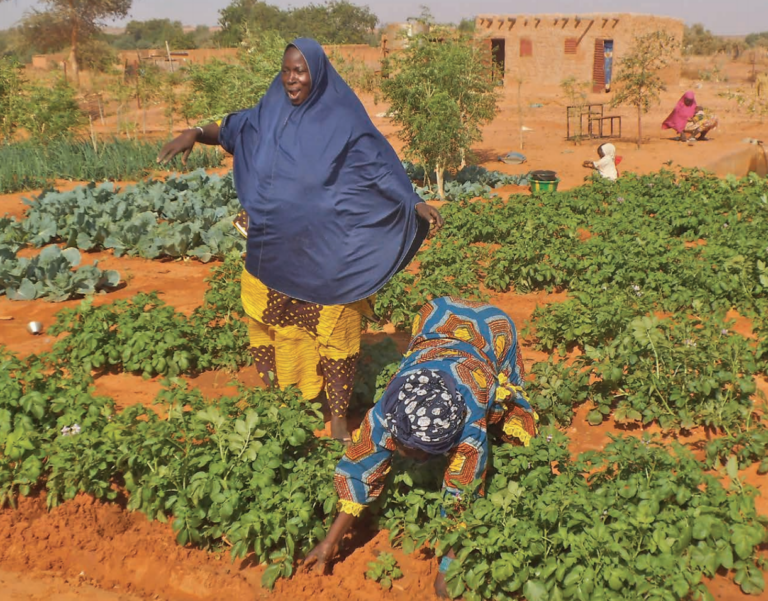
Women in Africa with the back breaking work of watering their farm

Yost researches many water management techniques. These include using irrigation scheduling and advanced pivot irrigation technology. In addition, his team researches crop and soil management practices. They look at rotating in drought-tolerant crops, cover crops, and reduced tillage.

Yost’s team works together with many farmers across Utah to do farm-scale trials.

“Irrigation research is tough and costly on farmer’s fields,” says Yost. “It’s especially true when it comes to irrigation scheduling. Though difficult, this on-farm research and collaboration is crucial for the understanding and adoption of new water optimization techniques.”

So, what is the best combination of management techniques to maximize yield, profit, and water efficiency? The answer isn’t clear, yet. Results and analyses are still pending, but Yost offers some initial recommendations:

  • Advanced pivot irrigation technologies, such as mobile drip and low-energy precision application or spray application, are beneficial. They can usually maintain crop yields with about 20% less applied water.
  • Most farmers may be able to reduce irrigation rates by 10% without affecting crop yields.
  • Biochar applications are showing few short-term crop yield or water saving benefits.

“We are beginning to answer questions about new irrigation techniques and scheduling approaches,” says Yost. “But many still exist for discovery.”

Next, Yost and his team hope to secure funding for long-term irrigation research sites. Water is a limited and vital resource. Strategies to optimize water use will be crucial to the sustainability of irrigated agriculture.

“In irrigated agriculture, agronomy and irrigation go hand-in-hand,” explains Yost. “Nearly everything about one influences the other. Most irrigation programs focus more on engineering than on irrigation science. With my original training in agronomy, I’ve noticed knowledge gaps and have identified opportunities to unite irrigation science and agronomy.” Yost’s unique perspective offers a holistic approach to integrated water, soil, and crop management.

Yost presented his work at the November International Annual Meeting of the American Society of Agronomy, Crop Science Society of America, and Soil Science Society of America in San Antonio.

Funding for this research came from an Innovator Award from the Foundation for Food and Agriculture, Western Sustainable Agriculture Research and Education, and the Utah State University Water Initiative and Extension Service.

Water purifier company takes on plastic polluters at UN climate conference

0
plastiki, UNEP, David de Rothschild, interview, plastic, oceans, adventure, myoo, ecology
Wild eco-preneurs like David de Rothschild and Graham Hill from Treehugger set out to catalogue micro-plastics at sea in this bottle boat.

Bluewater, a world leading water purification technology and solutions leader, today called on global energy, finance and environment ministers attending the UN’s Climate Conference in Madrid to take a powerful approach to tackling water quality issues that are spurring sales of polluting single-use plastic bottles of water.

“We urgently need a ‘can do’ approach by the world’s governments to address the issues of water quality that are driving people in rich and poorer countries alike to distrust municipal water and instead purchase bottled water, which often is packaged in single-use plastic containers,” said Bengt Rittri, founder and chief executive of Bluewater.

A Swedish environmental entrepreneur, Mr. Rittri noted how a report by the Center for International Law (CIEL) estimating the cradle-to-grave impact of plastic concluded that plastic contributes to greenhouse gas emissions and the climate emergency at every stage of its lifecycle, from production to refining, its use and how it is managed as a waste product.

UN Environment says one million plastic drinking bottles are purchased every minute around the world with most, according to a recent study from the Veolia Group, ending up in landfill or environments like the oceans where they pose a grave threat to the marine life.

The UN has warned that the planet is on course for more than a three-degree spike in global temperature over pre-industrial levels even if countries meet commitments made under the 2015 Paris Agreement.

Ahead of the Madrid gathering, the UN said the global warming would lead to even wider-ranging and more destructive climate impacts that would bring mass extinctions and make large parts of the planet uninhabitable.

“Governments must supercharge their efforts across the board to adopt cleaner technologies at an ever faster pace that can deal with issues such as poor water quality and help turn the tide on single-use plastics and other non-sustainable products that threaten the world’s health and economy,” said Mr Rittri.

A recent study by a team of researchers at Bangor University, UK, found plastic outnumbers baby fish by seven to one in waters off Hawaii. The study also discovered microplastic particles in the stomachs of commercially fished species such as swordfish.

Bluewater has won global acclaim for its compact water purifiers for residential, business and public dispensing that remove chemicals, toxic metals, pharmaceutical residues, and micro-plastics from tap water. Bluewater hydration stations today are used at global sporting, musical and other events taking a stand against single use plastic bottles, from the UK’s The Open golf tournament to the Cape Town Marathon. Fashion brands are also leading with marketing eco-awareness.

Luffa Sponges, Nature’s Bath Scrub

0
Liffa, luffa, louffa is a kind of gourd great for increasing blood flow, Middle East
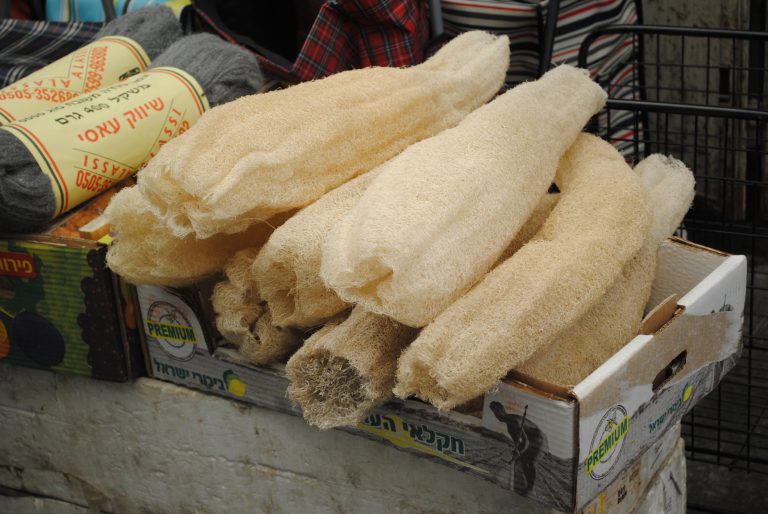
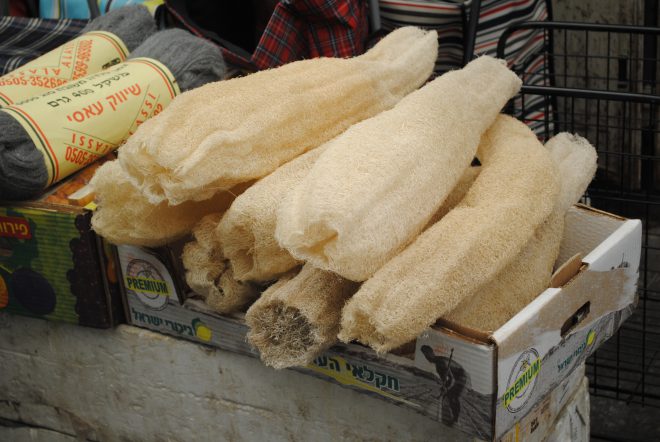
Loofah grows like a gourd. Find them at corner stores in Middle East countries like Israel. For some people they don’t travel without them!

Loofah, luffa, loof sponge. However you call it, the scratchy, fibrous plant has been used to scrub the body – and the dishes – for centuries. Its appeal hasn’t diminished in all that time. Today loofah is considered the most sustainable, greenest scrubber you can find.

The scrubby feeling of a soapy loofah sponge massaging your limbs means that you’re stimulating blood circulation and exfoliating dead skin cells. You come out of the shower feeling super-clean and stimulated. While the loofah is too rough to use on the face or genitals, it’s great for controlling teenage acne on the back, as the fibrous sponge loosens oils and bacteria from the skin while the soap cleans up.

Here in the Middle East you can amble down to the local open-air market and choose a nice sturdy loofah from a bunch casually displayed in front of a shop.

loofah-sponges-israel

Bring it home and either chop it up into convenient sizes, or leave it long if you prefer. Either way, the sponge needs to be soaked in warm, soapy water and rinsed before using it the first time, to free it of field and street dust.

Being a fibrous material with lots of openings, a loofah collects plenty of dirt. A damp environment like the shower stall will turn it into a bacteria breeding ground, so don’t leave it hanging from a string in the shower. Rinse it through and hang it up in a dry, airy place until the next time. You can also throw it in the washing machine every week, on the delicate cycle, but don’t put it in the dryer, as the heat will destroy it. 

In any case, dermatologists say that you don’t need to scrub yourself with a loofah every day: twice a week is plenty.

Keep in mind that like all organic matter, loofah sponges eventually gather bacteria and decompose. A loofah that’s gone moldy or smells musty should be thrown out or composted. But don’t wait to that to happen to replace it.  Start using a new one every 3-4 weeks. That goes for loofah pieces that you use for scrubbing dishes too. 

Did you know that loofah sponges are the skeletons of an edible gourd? Luffa is a species from a tropical and subtropical vine from the cucumber family. The luffa, also spelled loofah, usually refers to the fruit of the two species Luffa aegyptiaca and Luffa acutangula. The fruit of these species is also cultivated and eaten as a vegetable.

The fresh green gourd resembles a cucumber and is actually of the cucumber family. Loofah must be harvested while young and small if you want to eat it. It’s a popular vegetable around the globe, from South America to the Near and Far East. India has many curry recipes calling for fresh green loofah. In Japan, people grow it in building lots to create shady screens.

The scratchy beige object we know as loofah is the vegetable grown to maturity and left on the vine to dry. The fleshy part withers and falls off and the skeleton remains. Shake the seeds out and you’re good to go. 

If you have the right climate (hot summers, cool winters), you can grow loofah yourself. It’s easy to grow in well-drained, sandy loam. No seeds available locally? You can order luffa seeds online

Fashion brands that are leading the sustainable movement

0
reformation swimsuit
Ecologically spot-on and dead sexy. Reformation hit a sweet spot with customers and the environment by fashioning deadstock fabric into new clothes.

The topic of sustainability has become very popular in recent years. Despite the obvious effect of unsustainable fast fashion brands on the environment, people are also concerned about the human rights violations that happen in these factories. So now that the public has become more aware of the problems through documentaries like True Cost and River Blue, the problems with the fast fashion brands are now becoming more public. Throughout the last two or three years, a lot of sustainable fashion brands have gained popularity, offering their clients not only good quality clothes from ethical sources but also a much more transparent look into the production process starting from the factories and their workers, to the materials they use for goods. The industry will probably grow even bigger in the following years, considering that more and more new sustainable brands keep popping up almost every month.

We have recently witnessed a resurgence of male fashion, with people finally questioning why men’s fashion has to be so boring, an article by the Guardian talked about how men are taught to dress in dull fashion, and nowadays men are investing in their style. Fashion, in general, is one of the most widespread topics that has affected almost all realms of life. Everyone in some way engages with fashion and it is becoming more and more mainstream to consider fashion and its impact on our daily lives.  There is hardly an industry left where fashion isn’t prevalent: you’ve got blackjack games available at many operators that are specifically targeted towards fashion, we have movies made about the fashion industry and everywhere we see the ads for stylish stores. So Fashion whether we want to admit or not has a huge impact on our everyday lives.

When we think about sustainable brands in the context of today’s worldwide discussion on climate change it seems more than appropriate that these brands are just gaining attention. It’s about time the customers started to ask questions about where their clothes actually come from

The fashion brand that has taken over the fashion world as well as Instagram, is Reformation. The brand has registered its very own material that is sustainable-Tencel. The owner of the brand is Yael Aflalo. She has the first attempts at forming a clothing brand in 1999. She was quickly discouraged after she learned about fashion’s negative environmental impacts one of them being just how chemically charged the process of creating said clothes are. She abandoned the project in hopes of creating a brand that wouldn’t be so wasteful.

She succeeded in 2009 when Aflalo started Reformation, which has since built an impressive following not only because of its remarkable selection of clothing but because of its green footprint. All of the reformation’s clothes are made from sustainable materials, whether that be carefully selected fabric, repurposed vintage or produced deadstock. Alfaro manages her whole business within LA so it’s quick efficient and sustainable.

Next on our list is Everlane. An American sustainable brand that focuses on the timeless pieces, clothing shoes and bags alike and offers full transparency of their product making process. It is unique because of its transparent pricing policy. If you visit Everlane’s website you will see that they give you a starting price point, but then you can chose to pay extra to sustain their green production process. Everlane has headquarters in San Francisco, California, plus offices in New york. It was founded almost 10 years ago by Michael Preysman and Jesse Farmer as an online menswear retailer. By 2015 the company receiver $1.1 million in seed funding. The company started a referral invite list that gained 60,000 subscribers in 5 days, even though the company only had 1500 t-shirts in stock at that time. Now Everlane uses its platform to educate its customers and inform them of its supply chain, factories, and the price breakdown of each product. The company has now vowed that it will stop using virgin plastic by 2021. In 2018 Everlane started a new campaign called ReNew where they create outwear crafted from the materials that were created out of 3 million recycled plastic bottles.

And the last brand we’re going to discuss is Veja. Veja was founded in 2003 by Sebastien Kopp and Francois- Ghislain Morillion. The founder met with organic cotton farmers in North Brazil and wild rubber tappers in the Amazon to establish the production chain behind Veja. In 2006 Veja started using is vegetable tanned leather to produce it’s now world-famous sneakers. The Veja trainers are made of organic cotton, wild rubber, and vegetable-tanned leather and recycled plastic bottles. Veja has established itself as one of the few sustainable sneaker productions. The company started in Paris, France and has offices in London U.K as well

Organic Business Ideas that will Help You Earn More

0

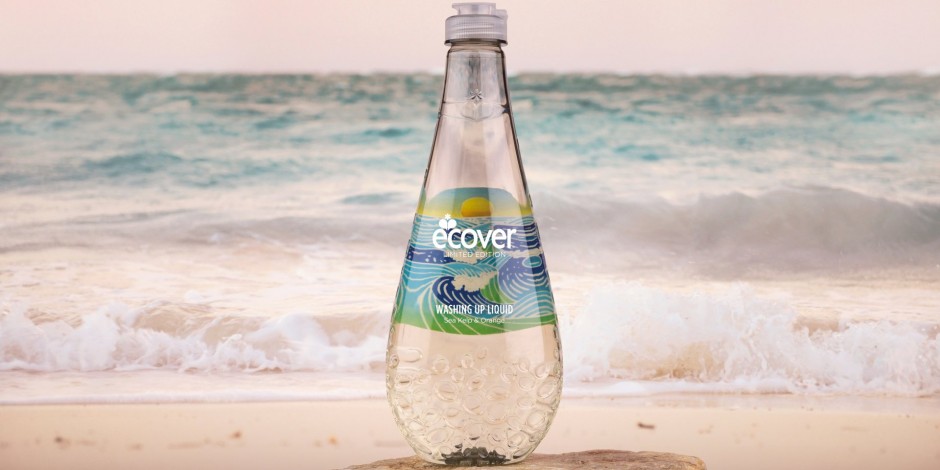
ecover bottle soap at the sea Before Ecover was my favorite ecological cleaning brand, it was just someone’s little idea to change the world one sink of dishes at a time. Now look at them!

Setting up a business is now more effortless, especially with the emergence of the internet paving the way for a digital world. Even traditional brick and mortar shops are also easier to put up these days because of the wide variety of information online that can guide those novice in the business world. If you are keen on setting up your own business, but don’t really have an idea on which venture will probably bring forth more revenue, here are some ideas that can get you started.

Be a green app developer

If you are considering setting up an organic business, but you are geared towards technological innovations such as web or mobile app development, then it is best to infuse these two sectors together. Try out being a green app developer and create a web or mobile app that will aid people on how to grow their own food. Make the app both educational and engaging for your target market. You have the option of charging a certain fee for the app you created or selling it to bigger companies. You can also make your app downloadable for free, and earn revenue through the ads of companies who want to be associated with your app.

Sell organic plants online

The online world truly revolutionized the retail industry, with more and more products now being available online. This goes true even for organic products such as dairy or poultry goods, as well as plant-based merchandise, including CBD merchandise at www.relaxation.co, along with other exclusive retail websites, offer organic products such as CBD oils and tinctures. With the popularity of several products nowadays from the likes of CBD, you will definitely be able to make a decent profit selling online, without the need to put up a physical brick and mortar shop. Apart from your own website, there are already several channels where you can sell products such as eCommerce or social media platforms.

Create an educational blog

Another profitable business is creating innovative and educational blogs that have a fair reach of audience. If you are like many others who refer to blogs in search for answers to various queries, then it may be a good idea to start your own educational blog about anything organic. If your blog appeals to more people, then you can gain revenue through advertisements and sponsorships from companies willing to explore a partnership with you, or looking into investing into your advocacy. Thereby, it will help if your blog gains a significant number of followers. Thus, it is important to create relevant content perhaps about organic farming, or a lifestyle transformation in going green.

Trying your luck in setting up a business venture may or may not prove to be successful. Nevertheless, with a failed business comes several learnings that can help you on your next business adventure. On the other hand, a successful one will definitely encourage you to grow your business more and serve a wider range of market. Consider one of the business ideas above, which are proven to rake in more profit and revenue, especially in the long run.

Get to Know the Variety of Deck Railings

0

Deck railings are highly visible, so you need to carefully consider the patterns, materials, and style. Railings on elevated decks are essential for safety purpose. Several railing designs are available that can transform your deck appearance. 

Common materials applied for deck balustrade

  • Wood – Offers classic look and style.
  • Steel – Can be chosen in a variety of forms including nickel and copper.
  • Aluminum – It is light-weight yet adds strength to the railing.
  • Stone – Stones can be used to create a solid design or used as posts to keep railing together.

Types of deck railings 

The cost of every deck railing will depend on the material chosen and the length needed. 

  • Chippendale

There are several lines, which meet in the center and create an X-shape with a series of small lines. It fits compatibly on horizontal rails. It gives an elaborate and beautiful look. Staining and painting is a little challenging as the design is intricate.

  • Rustic

Treated wood material with few spots and rough edges offers a rustic look. The material looks wild and natural. You can choose any kind of railing design. However, painting and staining can be hard as the design will be irregular.

  • Turned baluster

A cylindrical shape with a series of curves gives a traditional look. Each turned balustrade post can differ. Pair it with a large base at the bottom and top to support general railing design. This design does not work great with dark colors. 

  • Rod railing

Horizontal rod rails on an elevated deck offer a contemporary outdoor-style approach. The look is casual yet classy, and the lines are clean and consistent all across. 

  • Wrought iron

Wrought iron is not just limited to commercial settings but can be used in residential projects. It offers classy designs that add a warm look. You can get wrought iron designs painted in different colors. Wrought iron needs to be sealed and coated to avoid rusting. 

greenbo garden planter israel

  • Cable railings

Series of cables are organized horizontally and paired with metal posts. It is a slim yet beautiful option. The only drawback is excess pressure can potentially break the cables.

  • Glass panelsSharifi House, nextoffice, tehran, Iran, Iranian architecture, transformer house, rotating house, rotating rooms, daylighting, energy efficiency, modular design, iranian architects

Glass panels are designed from straight sheets with few slots supported with wood or steel materials. The deck gets a modern look. Glass offers transparency features and can be easily customized. Unfortunately, the surface is scratchable and you need to clean the surface often.

  • Rope

For a nautical look use carefully woven fibers and string it on a metal or wooden base. Ropes are available in different thickness level. Weather can wear ropes and they can come apart.

IMJ-tree-house-by-Ifat-Finkelman-and-Deborah-Warschawski

  • Sunburst 

Sunburst or fan is a remarkable and attractive style. The design is simple yet elaborate. You can have it wide or narrow. Cleaning the balustrade is a challenge. 

  • Curved railing

For a rounded deck, gently curved aluminum railing offers a great compliment. If the deck has wood-looks, then choose a rich brown curved aluminum railing to provide a contrast to the natural tan. Moreover, match the aluminum railing with white posts. 

Make sure to look for a quality railing that gives a relaxed and formal look. Even check how appealing the structure is!

The Best Ways for Eco-Traveling

0

The Best Ways for Eco-Traveling

Adult tricycles have never looked so sexy. Especially if you are peddling one for the environment. Parents use them to take their kids to school. Emissions counters use them for moving stuff safely and greenly around the city. Would you ride a trike?

Traveling has become a very trendy activity for several reasons. It lets the person broaden the horizon, see other cultures, and meet new people. Moreover, people of the 21st century are aiming for maximum awareness, that is why the new way of traveling appeared: eco-tourism. The fashion for everything “green” and “environmentally friendly” is slowly taking over the world. There are many approaches to defining eco-traveling. Usually, people consider eco-traveling as a responsible trip to natural areas, which helps to protect nature and improves the welfare of the local population.

When it comes to eco-traveling, there are several most popular and comfortable ways:

  • Bicycle or Adult Tricycle

One of the most popular ways of eco-tourism is bicycles. There are many kinds of them. The most comfortable by far is an adult tricycle. Traveling on a bicycle has many advantages. First of all, it is cheap. You do not need to buy any fuel as you would with a car. Moreover, you can enjoy the views and create great memories while traveling. It is also a great way of staying fit: you burn a lot of calories while riding a bicycle. As for an adult tricycle, it is a perfect option for those who do not keep comfortable on a regular bike. It is easier to balance on an adult tricycle. 

  • Hitch-Hiking

If you are traveling long distances, the bicycle is not always a suitable option. That is why we would recommend hitch-hiking instead of riding your own car. It is not entirely eco-friendly, but it is definitely the next best thing. Moreover, you will be able to save money on gas. People also often use hitch-hiking as a way of meeting new people and cultures. It’s safe in countries like Europe, but still, always keep your intuition open. 

  • Camping

If you enjoy long walks and uniting with nature, then camping is the perfect eco-traveling option for you. It does require some gear, but the equipment can last for years.

https://www.greenprophet.com/2014/10/tentsile-tent-for-trees/

People usually camp with their friends as a way of sharing an adventure and observing nature. It is also a great way of staying fit. You will have to walk for hours a day, and it will definitely be a great work-out. Nevertheless, we do recommend starting with easier routes if you are a beginner. 

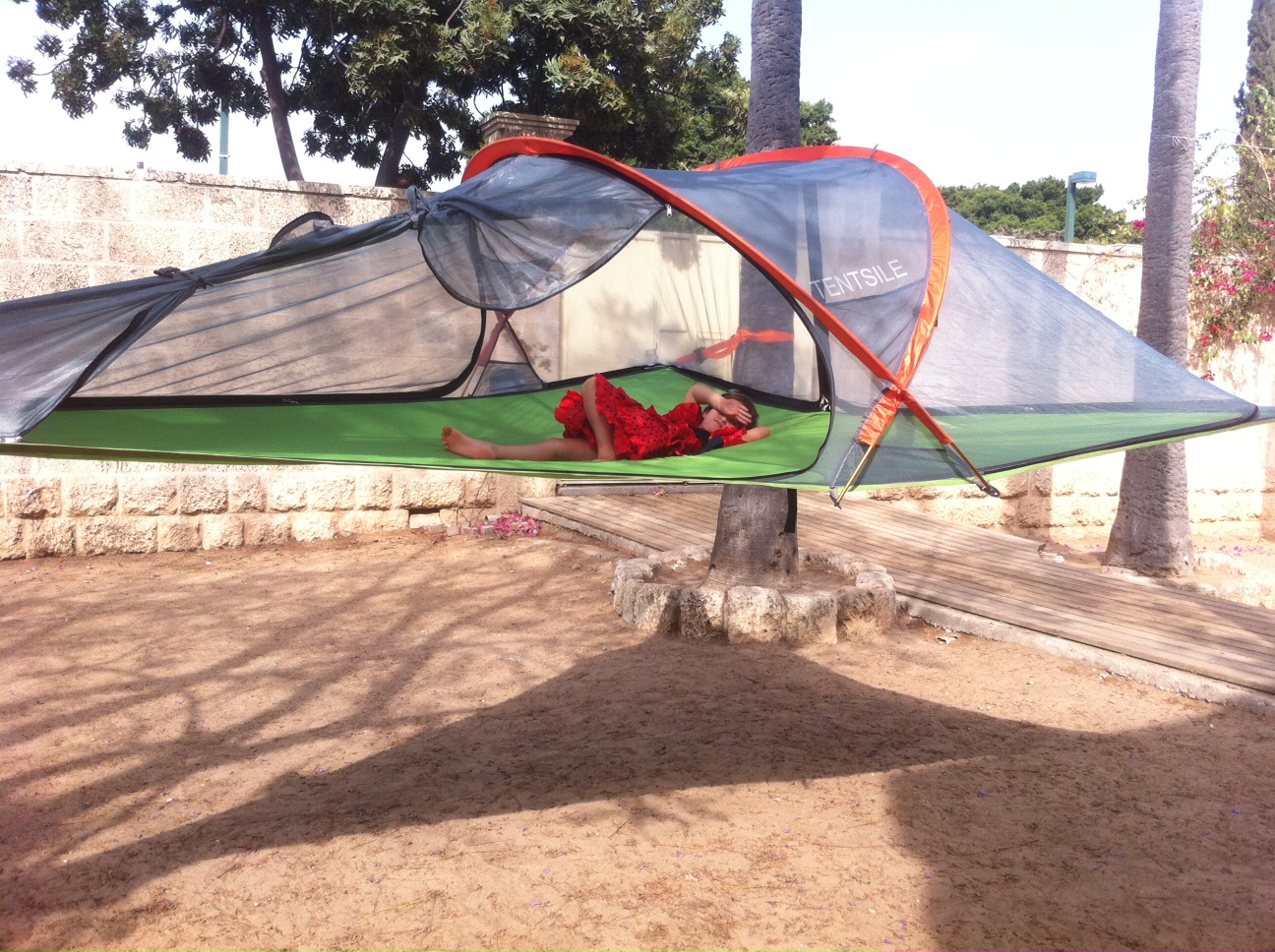
Tentsile is a hanging treehouse like tent
Camping in the city with Tentsile tents

Living in the 21st century makes people consider such things as ecology. We recommend always going for eco-traveling if possible. You will have incredible memories of the time shared with your friends and nature. 

Tips for giving the ultimate kind of charity

0
hydroponics jordan, USAID
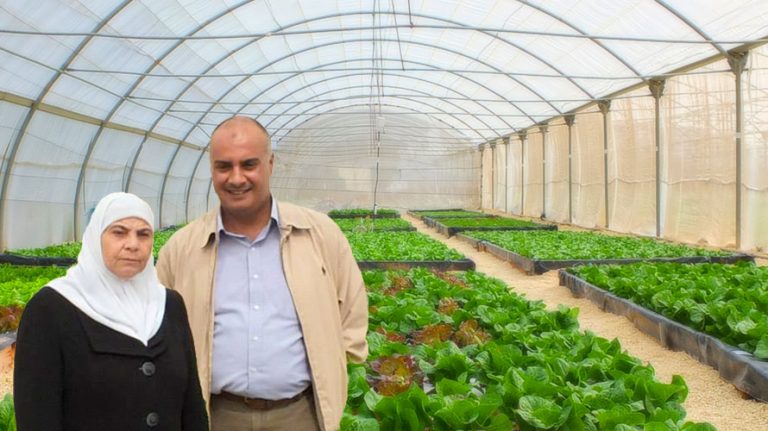
Hydroponics farming is a good solution for growing food in countries where water is scarce. A USAID program gives training to local farmers so they can grow their own food and livelihood. This couple is from Jordan. 

The holiday season of Christmas in North America and Europe is packed with spending and gift-giving, especially with emphasis from major consumer holidays like Black Friday and Cyber Monday. Although this time of year has a large focus on consumption, many people also use it as an opportunity to give their time and money to the charities that speak most to them. 

Jordan hydroponics supported by USAID

Giving Tuesday has become a powerful movement for this. It was created to harness the power of collective generosity. Each year, the international holiday falls on the Tuesday after Thanksgiving, Black Friday, and Cyber Monday. Impact businesses and organizations have benefited greatly from the increasing public awareness of the day. Last year, over four hundred million dollars were donated this way.

A common category of giving is hunger and poverty relief in developing countries.  There are hundreds of thousands of organizations focused on the issue in regions all around the world.

Although many charities are indeed making real, sustainable change for those they are serving – a lot of them are not. People have heard of organizations misusing public donations but one could argue that there is something even worse: an organization aiming to do good but unknowingly making circumstances worse for those they are trying to help. 

The problem happens when an organization or business creates a model for a problem that they do not fully understand. For example, if a school were to raise money to bring an impoverished community free bread, this seems like it will genuinely help the people served, but it actually adds to the perpetual state of poverty this community is in.

Hypothetically, a baker in that community was making and selling bread. But when the donated bread was distributed, no one saw a reason to purchase bread any longer. This put the baker out of business, suppressed the local economy, and contributed to the free-aid mentality of the larger community, making them unmotivated to start businesses and therefore contributing to the cycle of poverty.

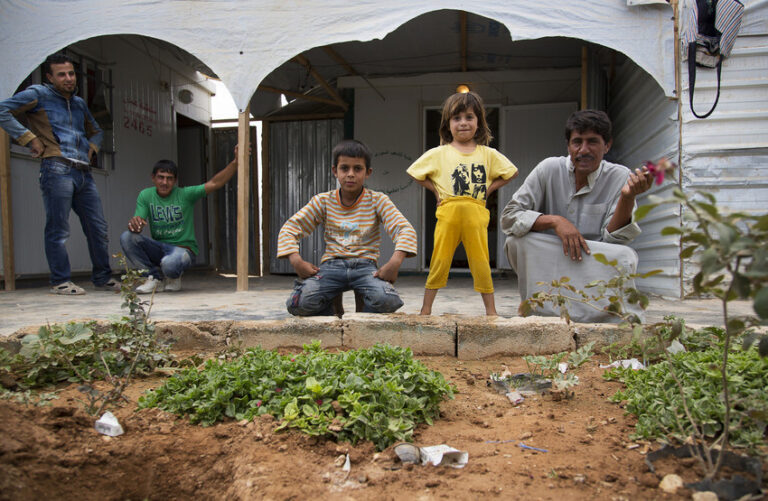
10 refugee shelters we hate to love

“Poverty in developing countries is a complex issue and the public must do their due diligence by researching the charities they are giving to,” says John Leary, Peace Corps Veteran and Executive Director of international development nonprofit Trees for the Future. “Time and time again, our organization has entered communities where other nonprofits have offered a short-term, short-sighted solution, but provided nothing that will allow them to escape hunger and poverty for good.”

Trees for the Future is working to end hunger and poverty for smallholder farmers through revitalizing degraded lands. They are not giving the fish but the hook so farmers can learn how to take care of themselves. A video below about Trees for the Future and their work.

https://www.youtube.com/watch?v=OKvMIDrGE7Y

Tips for doing the right kind of good

On Giving Tuesday or whenever you are giving, go beyond looking up a charity’s place on nonprofit ranking sites. Take a deeper, more intentional look, read about the organization and make sure that they understand the core of the problem they are solving.

Read about the staff and confirm that the organization is run by experts on the subject matter. Ensure that one of the organization’s key principles is training and education. This shows that the beneficiaries are being informed, are encouraged to be entrepreneurs, and can eventually live independent of aid.

When you give, you feel good. When you contribute to a special cause, you feel a greater sense of contribution. When you take the time to research an organization and its work, you can have full confidence that you are part of the solution.