Somehow vegetables with short seasons excite the imagination and appetite more sharply than produce that’s available all year around. Good Middle Eastern cooks have many recipes for delicate fava beans, and this turmeric-fragrant soup is one.
Somehow vegetables with short seasons excite the imagination and appetite more sharply than produce that’s available all year around. Good Middle Eastern cooks have many recipes for delicate fava beans, and this turmeric-fragrant soup is one.
Somehow vegetables with short seasons excite the imagination and appetite more sharply than produce that’s available all year around. Good Middle Eastern cooks have many recipes for delicate fava beans, and this turmeric-fragrant soup is one.
Somehow vegetables with short seasons excite the imagination and appetite more sharply than produce that’s available all year around. Good Middle Eastern cooks have many recipes for delicate fava beans, and this turmeric-fragrant soup is one.
Somehow vegetables with short seasons excite the imagination and appetite more sharply than produce that’s available all year around. Good Middle Eastern cooks have many recipes for delicate fava beans, and this turmeric-fragrant soup is one.
Somehow vegetables with short seasons excite the imagination and appetite more sharply than produce that’s available all year around. Good Middle Eastern cooks have many recipes for delicate fava beans, and this turmeric-fragrant soup is one.
Somehow vegetables with short seasons excite the imagination and appetite more sharply than produce that’s available all year around. Good Middle Eastern cooks have many recipes for delicate fava beans, and this turmeric-fragrant soup is one.
Somehow vegetables with short seasons excite the imagination and appetite more sharply than produce that’s available all year around. Good Middle Eastern cooks have many recipes for delicate fava beans, and this turmeric-fragrant soup is one.
Available in 2021 and to lease less than $40,000 USD, how can anyone (even vegans) resist this all electric option Ocean invented by Fisker.
Fisker, designer and manufacturer of eco-friendly electric vehicles (and the best gardening knives and non electric lawn mowers!) – has opened reservations for the world’s easy to lease electric luxury SUV, arriving in 2022. It’s called the The Fisker Ocean all-electric luxury SUV. Reservations are set at $250 (U.S.) per vehicle and are fully refundable and Fisker’s are expected to sell the car for less than $40,000 when it debuts in 2021, with all vegan leather interior.
Multiple industry firsts have arrived with the Fisker app, says the company, featuring an innovative customer experience – from a flexible lease program, maintenance and repair on demand, insurance purchase to easy finance options. Fisker’s mobile app platform will include mobility options like green ride-hailing, carpooling and vehicle sharing.
“Our mission is to become the No. 1 e-mobility service provider on Earth, featuring the world’s most desirable and sustainable vehicles while shaking up the old automotive industry model – from the way a customer attains a vehicle, chooses affordable insurance, services a vehicle to the overall mobility experience,” said Henrik Fisker, chairman and CEO of Fisker Inc.
Fisker will also offer a “$0 drive off” option through a fully financed $2,999 down payment for credit approved customers. When a reservation is placed, exclusive new teaser images of the Fisker Ocean are revealed in advance of the vehicle’s public unveiling in January.
Experience centers and test drives: Customers will be able to see the vehicles and option packages at select Fisker experience centers in 2020 – as well as schedule test drives through their mobile app in 2021.
Liberating flexibility: Drivers get to decide how long to keep their Fisker Ocean. As an industry first, a customer can return the vehicle in one month, eight months, 22 months or several years. No long-term contracts, with 30,000 miles per year included.
Affordable insurance: Even attaining quotes for vehicle insurance will be made easy and hassle-free via the Fisker mobile app. Insurance quotes for drivers attaining the Fisker Ocean are projected to be significantly lower than other vehicles on the road today due to a unique and proprietary low cost of service and maintenance model.
A radical new service and maintenance experience: Fisker customers will never have to take their vehicles to service on their own, as Fisker will pick up and return vehicles when maintenance is required, or service is requested – signaled by the onboard system or through the mobile app.
The UN recognizes the importance of ancient Spanish farming techniques. With climates similar to the Levant and influenced by North Africa, there is so much the Middle East can learn from Spain.
A 1,200-year-old farming and fishing site known as the “Horta” (garden) of Valencia has been recognized on the register of Globally Important Agricultural Heritage Systems (GIAHS), managed by the UN Food and Agriculture Organization (FAO).
Irrigated by the Turia river – thanks to a complex, gravity irrigation network designed in the 8th century and spreading over a dozen of municipalities around the city of Valencia – the site is home to Spain’s largest lake (Albufera).
“The Horta of Valencia is invaluable. Half of the crops grown here are at risk of disappearing in the region. It provides for both farmers and fishers. Its citrus fruits have a Geographical Indication (GI) label due to their high quality and variety. The site is also home to a wide range of birds, fish and plants, many classified as rare, endemic or endangered,” said FAO’s Yoshihide Endo who coordinates the GIAHS programme.
The abundance of the Horta
The Horta is made up of 6,000 small agricultural holdings (up to one hectare each), and thousands of farmland plots. About 80 percent of the area is used to grow fruits and some 50 vegetable crops.
Around 4,000 hectares are used to grow vegetables, especially onions, artichokes, pumpkins and lettuce. Oranges, mandarins and tiger nuts are significant in the northern part of the site whilst 2,000 hectares of centuries-old local rice varieties are cultivated in the southern area, which extends into the Albufera Natural Park.
The 2,800-hectare park is home to Spain’s largest lake and one of the most important wetland areas on the Iberian Peninsula. It brings food and other benefits to both fishers and rice farmers.
With ample access to water and fertile soils, farmers are able to harvest up to three times per year.
Crop diversification, with a number of local varieties and the division of the land into small plots have been key to making the site resilient.
Farmers use sustainable agricultural techniques that preserve water and soil resources. The irrigation systems built by the Islamic communities who set up the first Andalusian ditches and hydraulic spaces have been carefully conserved over centuries and are functional to this day.
The water management system is unique as farmers are part of Water Users’ Associations (WUA) and refer to their own rules and regulations to solve any issues. There is also a Water Court (Tribunal de las Aguas) – the oldest institution of justice in Spain to solve disputes over water use.
With its dunes, beaches, forest, lake and rice fields, the site is home to birds, fish, and over 800 species of plants, many classified as rare, endemic or endangered both in Europe and Spain.
The other GIAHS sites in Spain are: the salt producing Valle Salado of Añana, olive groves in Sénia, Tarragona, and raisins production in Axarquía, Málaga.
You might invest in coffee or gold. But if you invest in climate-nice rice production, the cornerstone of global food security you will be doing a better thing for this planet.
Leveraging climate finance to scale climate-smart rice production is the cornerstone of global food security and urgently needed to avert civil unrest, a new report by Earth Security Group (ESG) has found.
Proposing three innovative finance solutions to support sustainable rice production in line with the Paris Agreement climate targets,Financing Sustainable Rice for a Secure Futureispublished today by ESG, with support of the UN Capital Development Fund (UNCDF), the Sustainable Rice Platform (SRP), the leading food and agribusiness company Phoenix, the World Business Council for Sustainable Development (WBCSD), and the Swiss Agency for Development and Cooperation (SDC).
“Sustainable rice has the potential to improve lives and livelihoods in many of the world’s poorest countries, where we work,” says Esther Pan Sloane, Head of Partnerships, Policy and Communication, UN Capital Development Fund (UNCDF).
“ESG has shown their unparalleled ability to combine rigorous, well-researched insights with pragmatic action items, as well as the convening power to bring the right partners to the table to move from talking to doing. We are proud to be pioneering new financing vehicles that will help attract private sector capital to support SDG- and climate-positive investments, particularly for those countries most in need.”
A ‘rice bond’ to finance sustainable rice value chains taking advantage of 2020 being a key year for the growth of green bonds in the agriculture sector, as highlighted by the Climate Bonds Initiative.
A rice bond would enable a global rice processor, trader, or retailer to provide farmers with capital to transition to sustainable production, improve farming practices, increase yields and revenue, and become more resilient to climate risks.
Coming ahead of the 2019 United Nations Climate Change Conference (COP 25) in Madrid, ESG recommends leveraging international climate finance to attract private sector investment for climate-smart rice production.
I (holding hand on heart) pledge to support rice, in bonds!
Country pledges that include rice in their Nationally Determined Contributions (NDCs) would be the first place to start. At present, forty-eight countries include in their NDCs the commitment to reduce greenhouse gas emissions from rice paddies but have not yet outlined how they plan to incentivise the private sector to achieve these targets.
“The failure of global food systems due to climate change is one of the biggest security challenges we face,” says Alejandro Litovsky, CEO of Earth Security Group.
“A radical overhaul of existing rice production systems is needed in Asia – the epicentre of global rice production and consumption – as well as Africa, which is now also increasingly depend on rice imports to ensure food security.
A rice overhaul
“Our report is a call to action for global impact investors to put ‘climate-smart’ rice farming practices at the centre of their impact investment strategies and for governments to use climate finance to attract private investment towards more resilient agriculture systems.”
Rice is vital to the food security of over half the world’s population (3.5 billion), with Asia accounting for 90% of global rice consumption. In lower-income countries such as Bangladesh, Cambodia and Vietnam, up to 70% of people’s dietary energy comes from rice. The commodity is the source of 10% of global anthropogenic methane emissions.In Southeast Asia – the world’s rice bowl – rice cultivation accounts for up to 25-33% of the region’s methane emissions, and between 10-20% of its overall greenhouse gas emissions.
Under a business-as-usual scenario, the Intergovernmental Panel on Climate Change (IPCC) anticipates that rice production will fall across the world. Asia will be particularly hard hit due to a convergence of land degradation, climate change, and water scarcity.
Larger rice-producing countries such as India and China, with extensive territories that cover a range of climatic zones, will have more space to shift rice cultivation to cooler areas that will become suitable for growing rice. However, smaller producers and importers in the tropical belt, such as countries in Southeast Asia and West Africa, lack such flexibility to adapt.
“Rice is critical to global food security; however, it has been largely overlooked as an investment opportunity,” says Wyn Ellis, Executive Director, Sustainable Rice Platform (SRP). SRP’s tools, metrics and guidance can help governments and supply chain actors drive adoption of proven climate-smart best practices.
“Through our partnership with Earth Security Group, we are developing innovative financial mechanisms that will catalyze wide-scale adoption among the world’s 144 million rice smallholders and achieve sector transformation contributing to the SDGs and climate targets.”
A liver cancer diagnosis is a terrible one, because you can’t use chemo to treat it. There is not a lot of treatments to help you. My dad died from liver cancer a year ago. I am crossing my fingers that a new selective chemo drug may be on the way.
It is a feeling that many who receive a cancer diagnosis can identify with: heartbreak and fear, followed by hopes that chemotherapy will save the day. Unfortunately, for many patients, chemo’s painful side effects cause them to stop treatment prematurely.
Now, a research team headed by Professor Alexander Binshtok, head of the Pain Plasticity Research Group at the Hebrew University of Jerusalem’s Faculty of Medicine and Edmond & Lily Safra Center for Brain Sciences, has developed a method that delivers chemotherapy drugs directly to malignant cells and bypasses healthy ones. This discovery could allow doctors to reduce chemo doses for patients, thereby reducing the unpleasant side-effects associated with the treatment, and improve treatment compliance and overall prognosis.
“Most anti-cancer treatments are not sufficiently specific, meaning they attack healthy cells together with the malignant ones they’re trying to get rid of,” explained Binshtok. “This leads to the many serious side-effects associated with chemotherapy. Eliminating cancerous cells while leaving healthy ones alone is an important step towards reduce patients’ suffering.”
The new findings were published in a recent issue of Frontiers in Pharmacology. The study focuses on the selective expression of the TRPV2 protein by cancer cells. When activated, TRPV2 protein opens a canal inside cell membranes.
Binshtok and his team studied liver cancer cells and were able to successfully insert a low dose of doxorubicin, a chemotherapeutic agent, through the canal and directly into cancer cells. Not only did the new method target cancer cells without harming healthy ones. In the future, the precision of this delivery method may allow doctors to prescribe lower chemo doses and to relieve patients from some of the harsher effects of chemo.
“It’s too early to make concrete predictions but we are hopeful this discovery will lead the way towards a new, more targeted delivery method for chemotherapy treatment, one that will drastically reduce patients’ pain,” Binshtok concluded.
The treatment is much needed because current treatments mostly only prolong life by a few months after the tumors have grown to a certain size and can no longer be ablated. This new research might help improve the outcomes of chemotherapy given directly into the liver (chemoembolization) to reduce tumors to a size that may make surgery possible.
Three stark reports on the rising carbon emissions and impacts on global temperatures have been released in the last week. The reports lay bare the horrific state of climate breakdown and its impacts across the globe whilst indicating the solutions are available to make possible meeting the goals set out under the Paris agreement.
The Production Gap Report released November 20th shows that the world is on track to produce about 50% more fossil fuels in 2030 than would be consistent with limiting warming to 2°C and 120% more than would be consistent with limiting warming to 1.5°C.
World Meteorological Report released 25th November shows the concentration of climate-heating greenhouse gases has hit a record high with no sign of a slowdown, let alone a decline, despite all the commitments under the Paris agreement on climate change.
The Emissions Gap Report released November 26th shows that with current country pledges, the world is heading for a 3.2°C temperature rise with G20 nations account for 78 per cent of all emissions.
“This is no longer a warning, we are now experiencing the impacts of climate breakdown on a daily basis, from the wildfires in The Congo, California and Australia to the devastating floods in Europe,” says May Boeve, Chief Executive of 350.org said.
These 3 reports are scientifically peer reviewed and robustly researched, the science is screaming. To world leaders we say: it is time to stop the expansion of the fossil fuel industry immediately. Not a single new mine can be dug, not another pipeline built, not one more well dropped into the ocean. And we have to get to work immediately transitioning to sustainable renewable energy powered energy systems.
Across the globe, resistance to fossil fuels is rising, the climate strikes have shown the world that we are prepared to take action. Going forward people will keep up a steady drumbeat of actions, strikes and protests that get louder and louder throughout 2020.
To governments attending Cop25 in Madrid, the eyes of all future generations are upon you. The world has woken up to the reality of climate breakdown. To those that stand in the way of action on climate change we say How Dare You!”
CBD helps with sleep. Gummies are one way to self-medicate.
It’s known by the medical world that cannabis in all its forms can ail a spectrum of health problems and in some cases even help some disappear forever. When we talk about cannabis it’s as wide as a shelf of vitamin supplements at Trader Joes.
Cannabis otherwise known as marijuana or medical marijuana is a complicated plant that may have co-evolved with us humans. Those who have started the journey into cannabis for pain relief, as an anti-PTSD drug and for helping sleep, menstrual cramps and even menopause, find that there are two main compounds in the cannabis plant — CBD and THC.
THC is the chemical that offers therapeutic benefits but it also comes with a “high” which can cause or increase anxiety in some and which may interfere with work and interacting with everyday human beings.
CBD on the other hand is becoming a relatively popular food supplement, where companies like Coca Cola even are exploring novel ways to add CBD to its line of beverages. Before I let companies like PepsiCo mess with my CBD, I’d be more inclined to go to a smaller producer. Like vitamin companies that produce gummy candies for delivering a multi-vitamin does, you can find an endless variety of companies producing CBD gummies. But some taste disgusting. For the best tasting CBD gummies try this source.
If you look for CBD gummies on the internet you will see they are easy to find and because they lack the psychoactive THC component they are not problematic for flights, crossing state borders etc. However, when we interviewed cannabis specialized Alan Shackelford he suggests that some small amount of THC is also needed to get the therapeutic effect of cannabidiol, or CBD. So dose according to your own discretion –– which is one of the biggest questions out there today. How and which products?
If you are going straight to CBD you will find all sorts of candy. If you are vegan or diabetic look for vegan gelatin and sugar free options as well. You can find them all over the United States, Canada and now Europe and look for the all-natural ones that contain no THC.
CBD gummies are non psychoactive and contain other beneficial cannabis compounds such as terpenes, which help boost the effects of the CBD oil itself. Some products even contain vitamins such as D3 and B12.
It’s important to remember that CBD gummies don’t look different from regular candy, so still make sure you keep them far out of reach of children and also other adults you might share your home with. I once by accident self-medicated by eating THC brownies and was high for 12 hours in a situation that I had to work, interact with my parents and babysit my kids. It was not fun or expected. So take this caution seriously even if CBD doesn’t get you high it’s a medical supplement that should be taken with care.
American consumers are more concerned about the planet than steady economic growth, new report. But they are two-faced: they may care, but they don’t act accordingly to what they believe.
The environment should be an economic priority even if it leads to slower growth, and companies that fail to adapt their business models will face consumer backlash, according to findings of the latest ING International Survey. The sum of the report is as follows and it’s an important one for marketing and branding agencies in America and Europe to follow and understand:
Consumers widely agree on the need to go green, but behaviour is slow to change
Similar numbers named plastic waste (29%) and climate change (34%) as most pressing environmental problems
Three-in-five (60%) agree protecting environment should be given priority, even if it slows economic growth
Companies that don’t adapt business models to limit environmental impact will experience consumer backlash, say half (53%) of Americans, although a good price is a top priority for 90% of shoppers
91% say they throw away plastic waste daily, 82% throw away up to five items each day
A majority (60%) of US respondents* agree with the suggestion that slower growth would be a price worth paying to protect the environment, while despite price being of key importance when shopping for homewares, 53% of Americans agree that companies that don’t take steps to go green will experience consumer backlash over time.
“While it’s clear that awareness of environmental challenges is high, this has not yet been met with a corresponding level of behavioural change. While consumers are conscious of the urgency of the problem at hand, our survey results suggest, unsurprisingly, that awareness and information doesn’t automatically translate into changed habits or behaviours,” says Jessica Exton, Behavioural Scientist, ING. “The short and long-term impacts of context-dependent choices aren’t easy to calculate, making decision-making on a day-to-day basis challenging.”
Many consumers say they already support a movement towards a circular economy by reducing, reusing and recycling products. The survey also suggests consumers are willing to bear some of the cost of sustainability. Repairing a broken fridge makes sense for half of Americans, if the repair costs up to 40% of a new replacement.
But attitudes towards the circular economy differ across countries. In the US 39% said the offer of a financial incentive wouldn’t change their recycling behaviour. A similar number to those who said so in Turkey (36%), but a small group compared to the 63% who said no to a reward in Luxembourg. Discrepancies in local circular activities may be partially explained by established local norms – both cultural and social – and access to recycling and repair facilities, as well as contextual influences such as how fast items can be repaired and the perceived value of doing so.
Most respondents also acknowledged the problem of over-consumption in their home countries, with 64% of Americans, 69% of Europeans, and 60% of Australians saying people in their country are excessively focused on consumption.
In ING’s 2018 IIS survey on sustainability, consumers pointed to cost and a lack of knowledge as key barriers to changing their behaviour. This year’s findings verify the challenge of turning attitudes into action. Despite one-in-three (34%) naming climate change as the greatest environmental challenge we face, only half (53%) say they always separate their waste at home, lagging behind the European average of 76%. A quarter (25%) of Americans say they never separate their waste.
At the same time, consumers recognise that initiatives from businesses and broader structural change will be needed if individual efforts are to have a coordinated impact. Supermarkets should not provide any single use plastic packaging or plastic bags, say 44% of US respondents. The perception is that businesses have been slow to respond to such consumer demands. Less than a third (30%) of US respondents could name a company that has changed how it operated to reuse and repair its products, but optimistically, only 31% of respondents* expect the amount of plastic used to package food produce to increase, 58%* expect it to decrease.
Thailand is breathtaking for anyone, but for people from the Middle East it is an obvious and a close playground. Hear Hebrew and Arabic everywhere and touch down at this lesser explored part of the country’s paradise – Chiang Mai
The steep northern parts of Thailand are vast wild settlers, an ancient culture that is hidden, beautiful, and rare in nature. However, as the region is becoming more open to tourism, it is necessary to consider the location and environment as well.
Elephant Nature Park
Wildlife Sanctuary based in the suburbs of Bangkok to Chiang Mai. With new branches operating in Phuket and Koh Samui, it is home to many happy and cheerful elephants. Those have been saved from a previous captive life in the logging or tourism sector. The center’s specialized staff inform visitors about less-known disputes regarding the use and care of the most-respected real animals while offering the opportunity to contact elephants living in their natural environment, including in the bathroom, the game and, of course, a lot of food!
Tips: Good to travel with family and friends. Can shoot photos.
Doi Inthanon National Park
Doi Inthanon national park has the highest peak in Thailand, numerous waterfalls and vast areas of wildlife. Currently, this area is a production area full of fishing laboratories, breeding, and reproduction of plants, rice fields and vegetable gardens, which tourists can visit between visits to hidden waterfalls and, of course, above the iconic peak.
Historical Significance of the place:
In 1969, the park attracted the attention of the king who died when deforestation, poverty and opium production increased in this area. To strengthen the local community, Raja Bhumibol Adulyadej founded the King’s Doi Inthanon project, which allowed tribes to develop commercial farming as an alternative to opium, offering them modern agricultural techniques and equipment needed to ensure their sustainable development.
Tips: Historic and scenic. Good to travel with family and friends. Can shoot photos.
Mae Kampong
This rural village comprises about 300 people is the first “model home” community in Thailand. Many residents offer tourist accommodation in their homes to learn about their lifestyle and culture. The city first earned its living by producing mieng, a local delicacy made from fermented tea leaves. When the demand for products decreases over time, locals appreciate the extraordinary nature and unique culture. Residents begin to manage ecotourism communities that guarantee sustainable development in the region, as well as their cultural integrity, for the benefit of the villagers and visitors.
Tips: Good to travel with young and adventurous friends.
Ban Mae Chan Tai Agro-tourism Centre
Ban Mae Chan Tai Agro-tourism Centre is known for its widespread Coffee plantation. As the plantations are run by young members of the local Akha Hill tribe, they coordinate with tourists in a very enthusiastic manner. They produce Akha Ama coffee, which has raised the standard of living in the area from the very beginning. Visitors can take part in the unique offer of the center, “Coffee Trip”, for about a couple of days trip to the Akha region, culture, rituals, and tradition.
Tips: Good to travel with friends. Don’t carry heavy luggage here.
Jim Thompson farms
Jim Thompson plantation showcases nature and culture in a fantastic manner. The farm with a touch of mystery and intrigue is a beautiful and family-friendly ecological attraction in Nakhon Ratchasima. Silkworms and looms are not everything you see here. There’s even more to this land. This huge and wide-open farm has a vegetable garden and organic materials where you can collect fresh produce yourself, giant pumpkin fields, mazes, and many others.
Well known anecdote of the place:
A well known Jim Thompson, a Thai-American silk expert who disappeared without a trace when he wandered to Cameron Highlands in Malaysia. This park tells the story of Mr. Thompson and provides information on a good production of Thai silk.
Tips: Good to travel with friends. Don’t carry heavy luggage here.
When you are decorating your home, you need to make sure that you are doing it in a way that is good for the environment. It can be easy to overspend on materials and do it in a harmful way but if you make some changes at the start then you can really make a difference. From the materials you choose to shopping around for the perfect deal, there are plenty of ways you can create your ideal sustainable home no matter what your budget might be.
Choosing Your Flooring
One of the first things that you will want to do when decorating your home is choose your flooring. This can often be down to personal preference but there are some ways to do this in a more sustainable way. Wood floors are one of the most sustainable options for your floors. However, it can be difficult to procure them as they can also be quite expensive; especially if you have a large floor area and multiple flooring options to cover. To make sure you are getting exactly the right amount of floor without overspending, you should use a flooring price calculator. Many flooring companies offer a flooring price calculator so you can be certain that you are getting the floor you love for the perfect price.
Saving Money on Items
It can be tempting to save money on decorating by choosing cheaper items but this is not always good for the environment. Cheaper items might not last as long as those which are made with higher quality materials and this can have a negative effect. You want your decorating to last a long time to be sustainable so make sure to evaluate prices carefully.
Using Trends As Inspiration
Another way to make sure that you are decorating your home in a more sustainable way is to make sure that you are only using trends as inspiration rather than gospel. Some people can end up over decorating their home to keep up with the latest trends but this can have a negative effect on the environment. Be inspired by trends that will last a long time and this will improve your sustainability.
Sustainable Materials
Finally, you should make sure that you are decorating your home with sustainable materials. You will find that some furniture is more sustainable than others and some flooring kinds are better for the environment. Some of the most sustainable materials include cork, bamboo and clay. You can also opt for eco-friendly lights around your home to make the entire thing more sustainable.
Final Verdict
If you are hoping to decorate your home in the future and want to do it in a more sustainable way then you should make sure to take on board the advice that we have given you here in this article. Try to avoid waste where you can and try to use sustainable materials where you can. If you can do this, then you should be able to have a stunning home that is good for the environment.
Select for a gene linked to a higher IQ and you might also be selecting for negative traits too, like anorexia.
Ever since in vitro fertilization became a reality and scientists began pre-screening embryos for genetic disorders, the fantasy of creating “designer babies” in which parents could select for a group of traits (blonde hair, blue eyes, male/female) took hold of the public’s imagination. The BBC reports how China is doing it already, and others are saying ethically, it’s okay.
These days, selecting embryos for eye color or sex are easy feats for a scientist to perform; they involve only one or very few genes and gene editing tools like CRISPR make it easy. However, how far has reproductive science developed when it comes to selecting for traits that involve numerous genes, such as height and IQ?
A group of researchers, led by Dr. Shai Carmi at the Hebrew University of Jerusalem, found that current embryo selections based on height or IQ have only modest benefits: for height, an increase of 2-3 centimeters, and for IQ, an additional 2-3 points above average. Their findings were published in the latest edition of the journal Cell.
“In the past five years, selecting embryos for particular traits has become easier and cheaper,” shared Carmi. “While this technique is a tremendous help to parents with serious genetic diseases, it is still a highly controversial procedure when it’s used for non-life threatening reasons where ethical questions of eugenics and unequal opportunities arise.”
Carmi’s team ran virtual experiments based on real-life genomic data to answer the question: What would happen if we took 10 embryos from one pair of parents, rated each embryo for height or IQ, and implanted embryos with the highest score? They ran computer simulations using gene sequences from real people to create profiles of hypothetical embryos that would result from pairings of those people. They predicted the adult height or IQ for each of the embryos based on the gene variants present in their genomes.
What they found in their study is that the expected advantages for “top scoring embryos” were relatively small. For height, the gain was 3 centimeters above the average embryo in the batch and for IQ, the gain was 3 points. With five embryos to choose from, the gain was 2.5 centimeters and 2.5 IQ points. When the team widened the scope to see what would happen if they could choose from a batch of 50 embryos (a near impossible biological feat for most couples) the highest gain was + 4.5 cm for height and + 4.5 IQ points.
To corroborate their findings, the researchers also used real-world data to demonstrate that trait predictions based on currently known gene variants are not guaranteed. They looked at the genetics of 28 families with 10 or more adult-age children. Based on the genomic makeup of each child, they selected those with the top score for height. However, in 75% of the families, the child that the scientists had “selected” was not the tallest sibling, even though their genomic data had predicted that they would be.
Carmi explained these findings, saying “our current knowledge of the genetic makeup of certain traits may not be enough to generate a substantial increase in the desired traits in an embryo selection scenario. The crucial roles of nurture and unknown genetic factors are also at play.”
For those who argue that even nominal height and IQ improvements may warrant embryo selection, Carmi cautions that not only are their desired outcomes not guaranteed. Further, there are pitfalls involved in such a procedure at this time.
The nature of gene variants is that one may select for one outcome but increase the risk for another, less-desirable outcome. For example, the group of genes that is linked to a high IQ is also somewhat linked to anorexia. Additionally, attempts to select for several traits at once, for instance, an embryo that is tall AND smart AND thin, would make embryo selection far more complicated—an embryo that ranked highest for IQ may rank lowest for the desired BMI.
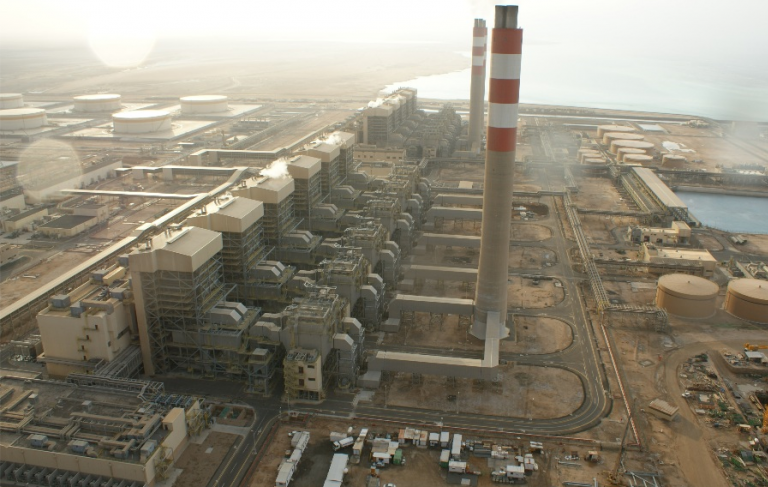
Oil-powered Shoaiba Desalination plant looks like Gotham City. Desalination used in dry countries like Saudi Arabia is a major cause of greenhouse gases.
It’s kind of like the Shaggy song, even when he’s caught red handed: it wasn’t me. Greenhouse gas production from coal and oil are on the increase. No one is taking responsibility. We are in deep, deep trouble, new UN “Gap” report unveils today.
So it’s time to wake up Middle East! The Production Gap Report – produced by leading research organizations and the UN – is the first assessment of the gap between Paris Agreement goals and countries’ planned production of coal, oil and gas.
She is not going to be happy.
The world is on track to produce far more coal, oil and gas than would be consistent with limiting warming to 1.5°C or 2°C, creating a “production gap” that makes climate goals much harder to reach, according to the first report to assess countries’ plans and projections for fossil fuel production.
The Production Gap Report complements the UN Environment Programme (UNEP) Emissions Gap Report, which shows that country pledges fall short of the emission reductions needed to meet global temperature limits.
Countries are planning to produce fossil fuels far in excess of the levels needed to fulfil their climate pledges under the Paris Agreement, which themselves are far from adequate. This overinvestment in coal, oil, and gas supply locks in fossil fuel infrastructure that will make emissions reductions harder to achieve. “Over the past decade, the climate conversation has shifted. There’s greater recognition of the role that the unfettered expansion of fossil fuel production plays in undermining climate progress,” said Michael Lazarus, a lead author on the report and the director of Stockholm Environment Institute’s US Center.
“This report shows, for the first time, just how big the disconnect is between Paris temperature goals and countries’ plans and policies for coal, oil, and gas production. It also shares solutions, suggesting ways to help close this gap through domestic policies and international cooperation.”
The report was produced by leading research organizations, including the Stockholm Environment Institute (SEI), International Institute for Sustainable Development, Overseas Development Institute, CICERO Centre for International Climate and Environmental Research, Climate Analytics, and UNEP.
Over fifty researchers contributed to the analysis and review, spanning numerous universities and additional research organizations.
In the report preface, UNEP Executive Director Inger Andersen notes that carbon emissions have remained exactly at the levels projected a decade ago, under the business-as-usual scenarios used in Emissions Gap Reports.
“This calls for a sharpened, and long overdue, focus on fossil fuels,” she writes. “The world’s energy supply remains dominated by coal, oil and gas, driving emission levels that are inconsistent with climate goals. To that end, this report introduces the fossil fuel production gap, a new metric that clearly shows the gap between increasing fossil fuel production and the decline needed to limit global warming.”
The report’s main findings include:
• The world is on track to produce about 50% more fossil fuels in 2030 than would be consistent with limiting warming to 2°C and 120% more than would be consistent with limiting warming to 1.5°C.
• This production gap is largest for coal. Countries plan to produce 150% more coal in 2030 than would be consistent with limiting warming to 2°C, and 280% more than would be consistent with limiting warming to 1.5°C.
• Oil and gas are also on track to exceed carbon budgets, with continued investment and infrastructure locking in use of these fuels, until countries are producing between 40% and 50% more oil and gas by 2040 than would be consistent with limiting warming to 2°C.
• National projections suggest that countries are planning on 17% more coal, 10% more oil and 5% more gas production in 2030 than consistent with NDC implementation (which itself is not enough to limit warming to 1.5°C or 2°C). Countries have numerous options for closing the production gap, including limiting exploration and extraction, removing subsidies, and aligning future production plans with climate goals. The report details these options, as well as those available through international cooperation under the Paris Agreement.
The authors also emphasize the importance of a just transition away from fossil fuels.
“There is a pressing need to ensure that those affected by social and economic change are not left behind,” said report author and SEI Research Fellow Cleo Verkuijl. “At the same time, transition planning can build consensus for more ambitious climate policy.”
The Production Gap Report comes as more than 60 countries have already committed to updating their nationally determined contributions (NDCs), which set out their new emission reduction plans and climate pledges under the Paris Agreement, by 2020.
“Countries can use this opportunity to integrate strategies to manage fossil fuel production into their NDCs – which in turn will help them reach emission reduction goals,” said Niklas Hagelberg, UNEP’s climate change coordinator.
“Despite more than two decades of climate policy making, fossil fuel production levels are higher than ever,” said SEI’s Executive Director, Måns Nilsson. “This report shows that governments’ continued support for coal, oil and gas extraction is a big part of the problem. We’re in a deep hole – and we need to stop digging.”
Urban Farm School teaches you how to grow food in your city. Maybe you have landed your most treasured dream assignment at school, but you still have to deal with the less pleasant realities of life…
When you are going to grad school, you need to save as much money as possible. Creating a budget for your time in grad school will help you manage your finances in the wisest way possible. You simply need to make sure that you have enough money to get through each month. You are not paying off your student loans because you are in school, but you need to save money while you can.
Save On Housing
Eco Dorm
When you are in graduate school, you may get a scholarship or assistantship that pays for room and board. If this is the case, you will not pay for basic living expenses. You can save that money for the future, or you can use that money to satisfy other parts of your budget.
If you are living off-campus, you should find roommates who will share the cost of living with you. Your group can share the cost of food, utilities, and rent. Plus, you can add roommates if you want to reduce your rent even more. The communal living experience is much more affordable, and you will not need to worry about paying your rent.
Use platforms like SpareRoom to find roommates all over the US. Whether you’re looking for a room to rent in Denver, NYC, Boston, or anywhere else, they can help you find your perfect match.
You can cook meals in the apartment so that you are not going out every night, and you can pack a lunch that you will take to campus. Additionally, you can make coffee in the apartment so that you are not spending extra money on coffee and food during the day.
Save Money On Books
You can save money on books by renting books online, buying used books, and borrowing books from friends. You do not need to buy the new edition of a textbook that is far more expensive than a used copy. Renting books helps you get the books you need, but you do not need to keep them. You can sell books back to the bookstore at the end of the semester, and you can download copies of some of these books online.
You can get the class software for each course from a friend, or you can download this software from a company that charges low prices. If you rent the software online, you can save even more money by borrowing the software from a friend. Every step you take to save money keeps money in your bank account. Plus, you can repeat this process every semester.
Create A Savings Account
You can use a savings account to keep money in a safe place. There are several things that you can use your savings for, or you can keep that money in an account you will use when you graduate. If you are saving money now, you will have a head start on the rest of your life.
If you want to start investing, you can use an investment app or free brokerage house to grow your savings.
You are not paying off your student loans because you are in school, but you need to save money while you can. If that’s savings via a student loan consolidation and a lower interest rate, or other areas of your finances like monthly living expenses, it’s better to start sooner than later.
Plan for Emergencies
You may get hurt or sick while you are in school. If you are facing unexpected emergency medical expenses, you need to find a way to pay for them as quickly as possible. Grad students should be aware of the pros and cons of borrowing money from lenders or friends and family to get through these unexpected financial circumstances.
Personal installment loans online are convenient to apply for from your own home, can provide funds in as little as one business day from approval, and usually come with a pre-determined repayment plan. Borrowing money from a loved one could come with added stresses and sharing personal details about your situation, so decide what is right for your needs.
Plan to Keep Your Car on Campus
You must plan for car payments, insurance, and parking fees on campus. You must understand how much it costs to keep a car on campus, or you might need to use campus transportation to save money. Some grad students live very close to campus, and you can walk every day. If you are taking the bus to campus, you can plan for bus fare. If the university has its own bus, you will save money on transportation.
You Can Do It
Graduate school is a good time for you to plan for the rest of your life. However, you need to save money and make this process affordable. You can save money on housing, save money on food, and save money on transportation. You can rent books or buy used books. Plus, you can live with a group of people to keep your housing costs down. You may walk or ride the bus to campus, and you can save money for the future. Additionally, you can get an online loan that will pay for medical emergencies or emergency travel. You can get through grad school with some money in your pocket, and you can start your life with the money you have saved.
Millenials want jobs with meaning. Can you get them outdoors or promise that their work will contribute to a brighter future? If yes, you can find a way to attract their skills and loyalty.
The generational gap has never seemed as wide as it has become today. Ranging from juniors in firms to having nearly two decades of established experience, millennials are the most influential and important demographic when it comes to the workforce. By 2020, 50% of the workforce will be made up of millennials, so it’s important that the values they hold close are amplified by their employers. These can fall into two main categories: concerns about the environment and protections at work.
The environment – thankfully – is now a key talking point. With members of Gen Z such as influential Greta Thunberg and the school strike for climate initiative hot on their heels, millennials are keen to show that they are also concerned about the future of the planet. As a result, businesses that can showcase green credentials are going to be viewed more favorably by millennials. This doesn’t just extend to the business sector, but also to how brands handle being green in day to day business life. 70% of millennials surveyed claimed they would opt to work in an environmentally friendly company, with 75% suggesting that they would take a pay cut to work at a sustainable firm.
This passion for the environment could be a good way for businesses not only to benefit the greater good and to improve their corporate social responsibility but also to attract the millennial workforce and keep these employees happy. This is important especially considering how the Baby Boomer generation is on its way to full retirement, and the roles need filling. Simple things such as recycling, reducing waste, and operating on renewable energy where possible could help attract millennials to a company. Such an approach shows that, at the very least, you are committed to future changes.
In a wider context, millennials are reportedly also more interested in benefits over perks. While free drinks and fruit might be enticing, millennials want to know that they have protections in place as employees – such as health and dental care, childcare benefits, and progression within the business and their role. Looking at a company, millennials are also concerned with best practices in business.
They understand how companies that don’t adhere to such practices could be slapped with hefty fines and land in disrepute. As the information on general liability insurance quotes at next-insurance.com proves, even the smallest oversight in a professional environment can potentially lead to trouble, so ensuring the correct insurance is in place is important not just for the business to succeed, but for getting millennials on site. Work-life balance is also important for millennials, so offering a benefit that includes flexible working or enables them to not be boxed into a nine-to-five could also help attract them. Add to this retirement planning and healthcare, and your business will be well-suited to attract millennials to the workforce.
How businesses handle environmental issues is incredibly important. Throw in the issue of protections at work, and you have the perfect recipe for attracting millennial recruits to your company. As we move towards seriously combatting the climate crisis, more people currently aged between 23 and 36 will be influential in where they choose to work and which companies they choose to help improve through their labor.
In dental practices and surgery laboratories, as in all clinical environments, the surfaces of medical devices and objects can become a breeding ground for micro-organisms and therefore constitute a means of transmission of pathologies. For this reason, disinfection (in other words, the use of physical or chemical instruments to destroy, remove or neutralise pathogens) is of vital importance.
The transfer of these micro-organisms from a contaminated surface to a patient and vice versa can take place through direct contact by the patient with a contaminated object, or indirectly through contaminated gloves of surgery operatives.
Safeguarding the health of people in dental practices or surgery laboratories, whether patients or medical staff, is indispensable to undertake any dental treatment in full compliance with basic hygiene standards. To guarantee this, it is vital that the surgery staff implement and perform on a daily basis the correct procedures and the right disinfection and sterilisation protocols, using dedicated products for dental surgery instruments disinfection.
Just like the transfer of micro-organisms, the surfaces within the clinical environment are also classified according to the type of contact with the patient, according to two methods. Clinical contact surfaces, namely all the medical instruments which may come into direct contact with the patient during dental treatment. On the other hand, non-clinical surfaces include floors, washbasins, walls, and so on.
Every surface must be treated with proper caution and using appropriate products, in order to observe the highest safety and clinical quality standards.
To prevent contamination through aerosols or direct contact, clinical surfaces should always be covered with protective film. Once the dental treatment is complete, this protective film must be removed and replaced with a new film, after the surfaces have undergone purpose-provided disinfection procedures.
Surface disinfectants, to guarantee superior efficiency standards, must accommodate a series of fundamental requirements: they must have a bactericidal, fungicidal, tuberculocidal and virucidal effect. In addition to being compatible with the surface with which it comes into contact, it is vital for the disinfectant to have been tested in accordance with the latest European Community regulations. Ease of use, contact time (which should be limited, to guarantee the effectiveness of the product) and good shelf life are factors which make the difference between a good disinfectant and a “normal” one.
The products used for surface disinfection are sprays, foams and wipes soaked in disinfectant: the latter are extremely convenient and ready for immediate use, whereas a spray requires paper towels for application. Sprays which contain alcohol should not be sprayed directly onto the surface but onto a paper towel, in order to test its compatibility with the surface to be disinfected first, applying it on a small portion. On the contrary, alcohol-free sprays have no usage limitations and are not unsafe for the user.
Among the products dedicated to disinfection developed by Zhermack, an historic brand that offers latest-generation dentistry and orthodontics solutions and which is considered an international benchmark in the field today, there are two alcohol products (specifically, one spray and wet wipes) which are especially recommended for surfaces resistant to the action of the disinfectant solvent. To treat more delicate surfaces, there is a dedicated foam spray or wipes with an ultra-low alcohol content.
An aerial view of the Greenpeace ship, Arctic Sunrise and Tunisian tug during a non-violent action to release highly-endangered bluefin tuna from a cage towed by a Tunisian tugboat to a tuna farm where the fish were to be fattened and sold to the market. Greenpeace is in the Mediterranean to take action against the bluefin tuna fishing fleets and to promote marine reserves.
It was made to track pirates, but a new UN navigation system can catch illegal fishing boats.
A new global atlas – the first-ever of its kind – analyses the opportunities and challenges of using Automatic Identification Systems (AIS) to monitor fishing activity around the globe.
AIS is a tracking technology designed for navigation safety that transmits a ship’s location, identity, course and speed. By using machine-learning algorithms, AIS information allows us to identify vessel’s activity at sea.
The number of fishing vessels with AIS is increasing by 10 to 30 percent each year, making this technology more and more informative with time.
AIS provides detailed tracks of tens of thousands of industrial fishing vessels, and this detailed tracking data has the potential to provide estimates of fishing activity and effort in near real time. This Atlas assesses this potential and shows that AIS can start to be considered a valid technology for estimating fishing indicators.
Global Fishing Watch (GFW) published in 2018 a first global database of fishing operations based on AIS data. This dataset tracked the activity of over 60,000 fishing vessels, and was used to understand fishing around the world.
But the use of this new technology for monitoring fishing activity needed verifying and reviewing so fisheries managers and policy makers can fully understand its strengths and limitations.
The 400-page Global Atlas on AIS-based Fishing Activity provides this detailed review, and can prove a useful tool for improving sustainable fisheries management in line with SDG14.
It is the result of a two-year analysis of the GFW data, region by region, drawing on the knowledge of 80 fisheries experts, FAO fisheries data, and other scientific databases. The atlas also includes two local comprehensive analyses – on all fisheries in the Bay of Biscay and Seychelles’ tuna fisheries.
The Atlas finds that in some regions, AIS data can provide a near comprehensive view of fishing activity, this is for example the case in the northern Atlantic for vessels above 15 metres in length, whilst in other regions, this data provides only a small fraction of the fisheries activity, as is the case of the Indian Ocean. This is partly due to the large proportion of artisanal or small size vessel sizes in many central and southern regions, but also because of lower use of AIS by larger vessels in regions such as Southeast Asia.
The Atlas confirms that the Northwest Pacific (FAO Fishing Area 61) and Northeast Atlantic (Area 27) are the areas with more industrialized fisheries and where AIS technology is more adopted. . The largest discrepancy between AIS-based information and other fishing data occur for fishing activity in the Eastern Indian Ocean (Area 57).
Key findings:
AIS can track the majority of the world’s large fishing vessels (above 24 metres), especially from upper and middle-income countries and territories, distant water fleets and vessels on the high seas.
For monitoring fishing activity, AIS data has its limitations. AIS is carried by a small number of the world’s 2.8 million fishing vessels, and compared to the Vessels Monitoring System (VMS), vessels can more easily turn off their AIS or broadcast incorrect identity information.
AIS use varies significantly by fishing areas. In Europe, almost all vessels over 15 meters have AIS. In Southeast Asia, very few have AIS and reception quality is poor.
AIS data is limited for multi-gear vessels as highlighted in the analysis on the Bay of Biscay.
AIS is still limited in terms of its capacity to discriminate types of fishing activities for smaller scale fisheries using multiple combinations of fishing gears.
AIS can provide information on fishing activity much more rapidly than logbooks or official assessments via VMS. However, AIS’s level of detail (e.g. number of fishing gear or species captured) could be insufficient for many other uses.
Longliners with wide presence in high seas worldwide are the type of vessels better captured by AIS-based algorithms. AIS also captures well other main fishing gears such as purse seiners and trawlers, but tend to underrepresent their importance compared to longliners. This is confirmed by worldwide catch data showing that the order of prevalence of fishing gears is trawls, purse seines, longlines and other gears with variations across FAO areas.
AIS could start to be considered as a viable technology for near real time estimates of fishing effort and marine spatial planning provided it is supported by human verification given its variable accuracy.