
Home Blog Page 155

Women and men in sync hormonally in January and August

0

eco friendly dates

Our minds may be affected by winter’s long nights or spring flowers, but what about our bodies? A new study at the Weizmann Institute of Science in Israel reveals that our hormones also follow a seasonal pattern.

By analyzing the data on several kinds of hormone from millions of blood tests, the researchers discovered that some hormones peak in winter or spring, and others in summer. This research, which was published in the Proceedings of the National Academy of Sciences (PNAS), USA, provides a broad, dynamic picture of hormone production – covering those connected, for example, to fertility, but also hormones such as cortisol, which are mostly short-lived and not thought to be seasonal.

Alon Bar led the study together with Avichai Tendler; both are research students in Prof. Uri Alon’s group at the Institute’s Molecular Cell Biology Department.

Alon and his group have developed mathematical tools for uncovering patterns in big biological data, so when a study they had undertaken that focused on a single hormone – cortisol – started to reveal a surprising seasonal pattern, the research team decided to see whether other hormones might also fluctuate seasonally.

pregnant #vanlife nomad

They turned to Prof. Amos Tanay of the Computer Science and Applied Mathematics Department, who has access to a database maintained by the Clalit health maintenance organization. Clalit is the largest HMO in Israel and a leader in creating a database that enables researchers to conduct large-scale biomedical studies while fully preserving the subjects’ anonymity. This is the same kind of data that was accessed to understand the impact of Pfizer’s Covid vaccine on immunisation rates.

The team analyzed the hormone levels in males and females between the ages of 20 and 50, in millions of blood tests sorted according to the months of the year. The team estimated that they had ultimately analyzed 46 million person-years; the results for each hormone were averaged from up to six million different blood tests. The researchers tracked 11 different hormones, including cortisol (a stress hormone released by the adrenal glands), a thyroid hormone, reproduction and sex-based hormones and a growth hormone produced in the liver.

Hormones bring babies, not spring flowers

On average, all of these hormones exhibited peaks and dips over the year with a seasonal variation of around 5 percent, but the surprise was the ways in which certain ones peaked at different times. For example, the hormones testosterone and estradiol – one more prevalent in men, the other in women – were mirror images of one another.

That is, in men testosterone peaked in January and again, a bit lower, in August; and in women, estradiol followed the same pattern. In contrast, testosterone in women and estradiol in men peaked closer to April and dipped in the summer.

So the fact that more children are conceived in certain seasons may have more to do with hormone balances than the blooming of flowers in the fields, says Bar.

The difference between hormones that peak in winter-spring and those that wait for summer was more confusing, especially as the ones that peak later in the year – in summer – tend to be the hormones that control the first kind. These hormones are produced in the pituitary, at the base of the brain, and they send messages to the reproductive organs, adrenal glands and others organs that then affect or control bodily functions or reactions.

The researchers call these second hormones effector hormones – that is, the hormones that act directly on the body – and they devised a mathematical model to explain why these two kinds of hormones, which are directly related, should have different high and low seasons. Effector hormones such as cortisol and the pituitary hormones, explains Bar, affect not just the body’s metabolism and functions, but the masses of the organs themselves that secrete the hormones.

That is, the pituitary hormones that stimulate the adrenal glands to produce cortisol also cause these glands to grow. But the cortisol produced in the adrenals causes the pituitary to shrink, thus eventually reducing the amount of stimulation to the adrenals, which shrink back down, and so on in a continual loop.

The dynamic growth and shrinkage of such glands is a known phenomenon, and the researchers were able to link studies measuring the glands to the hormone fluctuations they had observed. Because the entire process takes place gradually over weeks and months, it creates a time lag from winter to summer and back again, and this explains the differences in peaks between the two groups of hormones.

While the exact cause of this cycle was not the subject of the study, the team believes that melatonin – a hormone made in the brain that is triggered by light and dark – is most likely the “hand” that sets this year-long clock in motion.

And assuming that this is the case, they would expect the patterns they found in the Israeli population to be six months earlier (or later) in the Southern Hemisphere, and that stronger peaks and valleys would be found in the population living farther North, where day length between seasons, and thus melatonin production, differs by much more than in Israel. “If we saw a 5 percent difference in Israel, that could be over 15 percent in Northern Europe,” says Bar, and the team did, indeed, find some evidence in the literature on cortisol from the UK, Sweden and Australia to support this idea.

“It is not so surprising that our hormones have seasonal cycles,” adds Alon. “Many animals living in temperate climates have strong cycles, for example, all giving birth in the same season. We think that our hormonal systems have ‘set points’ that produce peaks, for example, in stress or reproductive hormones, and these may be adaptations that evolved to help us cope with seasonal changes in our surrounding environment.”

Tips and Tricks to Increase Sales Through Free Shipping

0
havie makers jaffa studio
Maybe you are makers like these guys from Havie. You spend so much time in your craft and money too – should you offer free shipping through platforms like Etsy? 

With the development of modern business techniques, many organizations have revamped their strategies to stay relevant to the global market. In the era of digital marketing, websites and ecommerce stores are playing a strong role in providing an online market to the consumers. These platforms provide premium quality products to their customers at a reasonable price, which makes them popular among the digital audience.

Nowadays, free shipping has become extremely common amongst businesses as well. Companies view this as a great marketing strategy. Free shipping has indeed shown great results as 9 out of 10 buyers are attracted to those markets which offer free shipping. Free shipping has a positive psychological influence on the customers, as more than half of the customers look at the shipping fee before they proceed with their shopping spree.

Is the ‘Free Shipping’ Strategy Worth it?

Many businesses have taken on this strategy. It has become so ubiquitous that now customers expect free shipping almost every time they shop from any online platform. Hence, this strategy makes the online business market more competitive and upholds the customer’s requirements. With many brands opting this strategy, it is wise for small businesses to adopt it as well, in order to compete at the highest level. Nonetheless, even if no company has taken on this strategy, then it is a great opportunity for one’s business to utilize. With renowned platforms like Amazon making use of this strategy, the customers have become accustomed to free shipping hence, one’s business needs to stay competitive to be relevant in the market.

Though high numbers and good results can get one excited, companies often fail to understand that this is just one of the many promotional strategies and if the business is not able to handle such extra expenses, they can always opt for another way to promote their business. Many factors may prove that this strategy can become unsustainable for them. There is a high shipping fee over international orders, therefore, companies have to devise a blended strategy accordingly. But they cannot disregard such offers as well since they play a big part in the growth of the company.

Increasing Volume of Sales Through Free Shipping

If a business plays its cards right, it can tremendously increase its sales. Offering free shipping during the season of your top or best selling products can be profitable for the company. Next, set a threshold for free shipping, this will incentivize the customers to shop more till that mark is reached. However, make sure that the threshold is not set too high. Additionally, offer free shipping on returns, only if one’s business rarely gets returns. This tends to build trust between the two parties.

Another good technique would be to mention the amount of money that they have saved from free shipping. Once a company learns how to effectively play out this strategy, they will surely see ascending numbers in their sales. To get free shipping at checkout, customers can make use of online coupons, like Newegg promotion codes to acquire major discounts on a range of products. They provide a list of companies offering free shipping to make life easier for the customers.

Improving the air quality of your home starting with your AC unit

0
indoor houseplants, thumbs up
Houseplants filter air pollution. But there are other things you can do to make sure your indoor space is healthy.

Indoor air quality is often worse than that of the outside air. That’s tragic that we may spend half or more of our time inside of our homes. Yet we consume energy trying to maintain the comfort of our homes and opening a window to let in fresh air wastes electricity. What is the solution? First start with hacks to make your air conditioner work better because these also improve indoor air quality.

Here are a few tips for improving the air quality and energy efficiency of your home. And read here for 5 hacks for reusing your air conditioner water.

Invest in AC Maintenance

Regularly changing out the air filters in the AC won’t just improve your indoor air quality. It will reduce the wear and tear on the air conditioner motor, extending its life. Cleaning the vents and the condenser coil will improve your permanent or portable unit’s efficiency. This will help you lower your energy bill while keeping cool.

More importantly, it will allow technicians to inspect for coolant leaks. They can fix refrigerant leaks before they result in a hot compressor burning out, and it minimizes the environmental impact such leaks can cause.

What can you do if you aren’t having the AC checked out once a year? Call out an air con repair service as soon as your AC is having problems, so that the minor issues can be addressed before they become expensive failures. We suggest being part of a local WhatsApp group to get the best and current recommendation near you.

Take Care of Your Ductwork

heating vents and cooling vents in cafe
Air conditioning ducts are visible in this cafe. In American homes they are hidden in the walls and floor.

In many homes, heated and cooled air is distributed through the home via ductwork. Dust may stick to the inside of the ductwork. This won’t necessarily get into the air if you turn up the fan, but it can impair the proper flow of air inside your home. The ducts may be trapping moisture. If there is mold growing on the inside of the ducts, you need to have them professionally cleaned to get rid of the mold.

That has the side benefit of reducing respiratory problems airborne mold can cause. Have the ducts inspected periodically. Gaps and breaks in the seal let air-conditioned air escape. That is always a waste of energy, and these breaks in the system provide pests a way into your home.

Invest in HEPA grade filters

Always try to resolve the root cause of a problem, instead of resorting to temporary fixes. For example, you should have your ducts cleaned or the water leak contributing to mold growth fixed rather than spraying deodorizer in the air. You may need to remove the bushes intended to hide the air conditioner from view so that the unit has adequate air flow. A clogged drain in a furnace or air conditioner unit can result in the whole house smelling like mold and mildew. 

On the other hand, a bad smell that starts every time you turn on the AC could be due to mold growing in the HVAC filter you haven’t gotten around to changing. If you have bad allergies, or are worried about worsening air pollution, invest in HEPA grade filters and change them regularly. Use a fan to 

Replacing the filters more often so that the AC doesn’t have to work as hard to pull in air will lower your electric bill and reduce wear and tear on the equipment. Ask a local serviceperson what they recommend in terms of replacing HEPA filters.

We keep a stand alone HEPA filter in the room to work alongside the air conditioner. It keeps track of the amount of dust and particulate matter in the air and helps us understand when to open the windows and even dust the room. 

Growing plants indoors can contribute to an improvement of air quality. Here is a guide to growing an olive tree in a container if you want to start a project.

And lastly, if you want to run the air con guilt-free, invest in solar panels that power your home. The excess money feeds back to the grid. 

Bethlehem’s Patron Saint of Puppies

0
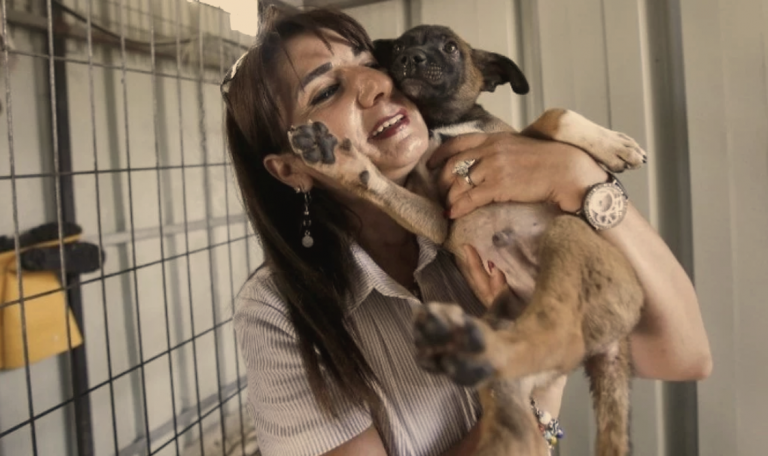
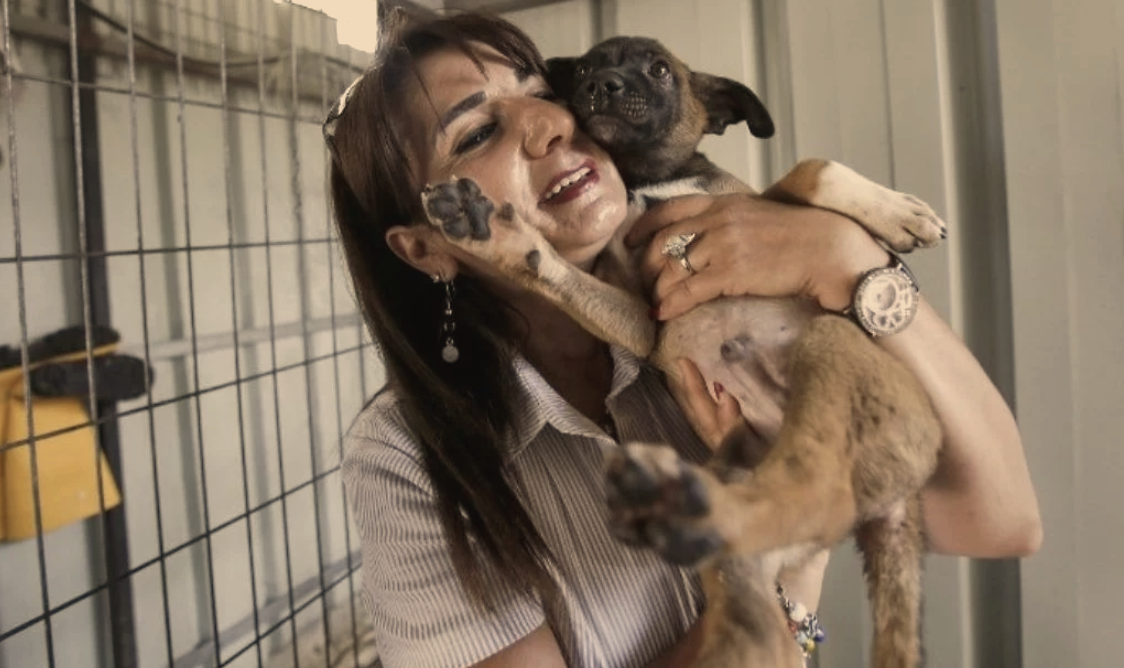
diana babish with puppy
Diana Babish with a puppy she has rescued from the streets of Bethlehem | Photo: Catholic News Agency

If you’ve traveled to India, Mexico, Amman –– you see that dogs don’t have it so good. They are kicked, wounded, abused, and in some places poisoned or shot on sight––  nursling puppies killed in front of their mothers and then left to rot in a garbage dumpster. Maybe you have heard about litters of puppies and kittens tossed out of the windows of speeding cars? Or puppies kicked around like soccer balls. This is what happens in holy cities like Bethlehem, says Diana George Babish, a devout Catholic who cries about the state of animal rights in her home city, run by the Palestinian Authority. 

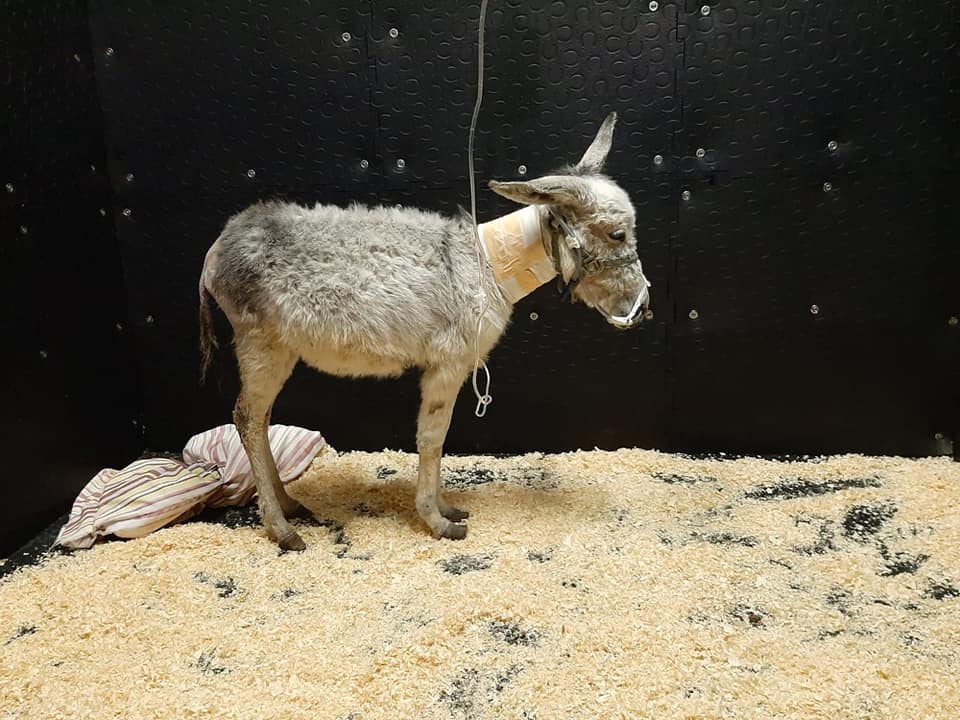
Diana has taken it upon herself to save every furry or feathery life she can. And it’s a a challenge when kids there prod donkeys with plastic chairs until their intestines fall out of their anus.  That’s what happened the first week of February, with the donkey recovering nicely after an operation in Israel, Babish reports.

With no stretch of the imagination Diana is the Patron Saint of puppies, dogs, kittens, lame donkeys and even chickens. She has stood up for animals who can’t speak for themselves.

bethlehem donkey diana babish
A donkey on IV, rescued from a secret operation outside of Bethlehem

Her organization Animal and Environment Association Bethlehem Palestine finds homes for about 150 puppies every year, and 70 dogs in Israel by transporting them across the green line in a taxi, but save the lives of thousands more, offering them life-saving treatments before they are put back onto the streets or adopted into homes in the West Bank. The horrific details of abused donkeys, puppies, and cats can be seen on her Facebook page here

I met Diana through a few of a friend of a friend when I was looking for puppies this past summer. Within an hour she was sending me photos on Whatsapp of scrappy but plump, well-fed puppies. They were all born in backyards of people in Bethlehem or Ramallah, but they were people concerned enough to alert Diana that the animals were there.

We picked two from a pile scrambling around in a pile of garbage in someone’s backyard. A day later Diana arranged the difficult process of sending a taxi to a city she wasn’t at in the West Bank, working as a matchmaker for puppies and people that want them in Israel.

She would find a taxi to pick up the puppies who would cross the Green Line with the driver to bring them to Israel where people are eager to adopt puppies –– and mature dogs. Diana’s dogs come from the West Bank cities and villages around Bethlehem, Ramallah, Hebron, Jenin and Jericho. In some harder cases she can send them to Israeli vets or hospitals for treatment in Israel. But it’s expensive. 

She’s currently raising money to build a shelter on land she has already secured outside of Bethlehem.

The day my puppies arrived, Zuckerberg and Shemesh (sun in Hebrew), there was a bit of a mix up and hoping to help bring a wounded dog in our ride to a pet hospital in Israel, the dog died not reaching the veterinarian in time.

Diana was bawling on the phone, and I thought to myself –– if we all could feel this way about the lives of dogs we could surely build an entirely peaceful Middle East. And in the framework of “peace” we could say that Diana’s initiative is creating peace through puppies.

My vet in Israel says that I am lucky to have received puppies from Ramallah who are generally in much, much better condition than the ones rescued from Bethlehem. 

Diana is not alone in her rescue mission. She is growing a team of volunteers and spotters around her, locals in the West Bank, neighboring Israelis and internationals who all want to get animals off of the streets.

Since our puppies arrived from Ramallah, it turns out that I have several friends who also have Palestinian dogs. The Covid lockdown has definitely increased the interest for puppies in Israel. Having pets around surely increases the love in any home. Mine are below. 

Palestinian puppy, Israeli girl
My Palestinian puppy, Zuckerberg

My husband, an Israeli, said what’s happening today in the West Bank –- Ramallah and Bethlehem was how dogs were treated in Tiberias, Israel when he was a kid. The dogs were wild and a local butcher had the job of poisoning them. When the poison didn’t work he would smash the dogs heads in with a rock, sometimes in front of horrified children. As graphic and terrible as it was, this was the reality of the times and place then –- the reality that Diana is living with now, in the less developed Palestinian Authority. 

A picture of Jesus, no doubt her inspiration, graces her Facebook. What would Jesus think of abused donkeys in his birthtown Bethlehem? His hands outstretched to welcome all animals.

Diana sees her mission as God’s work.

There are plenty of passages in the Bible that talk about animal rights. When Balaam was torturing his donkey who wanted to protect him from the Angel of Death. There is another passage about not taking away the eggs from a nest when a mother is watching, or not cooking the meat of a calf in the milk of its mother. 

Despite her abhorrence for animal cruelty and her fight against it, Diana is getting death threats in Bethlehem for her plan to build an animal shelter in the outskirts of the city. There is fighting at home too: Her father does not welcome the nine dogs she has brought home with her, and it’s a major cause for friction in the home.

Dian's pets at home
Diana’s pets at home

Diana barely sleeps and is free to answer any message I send her, no matter the time of day: “Many people appreciate me and think I am a saint, but I go to sleep drained of energy, with back pain. The puppies –- they need vaccines against diseases and these cost a lot of money with I cover with my own money if the donations don’t come in,” she says.

boy with big puppy
Our second puppy Shemesh

Her work life is now mixed with her animal rescue efforts –– the need for more resources has meant that Diana had to take on a job managing a bus station, which is not unlike fielding the dozens of calls and text messages she gets every day between found homeless dogs and people who could save or adopt them. The day when my puppies came I think we exchanged 10 calls and about 50 messages. Diana clearly needs more resources to do this important job and we want to help spread the word so she can focus on it full-time. 

Diana has a Master’s Degree in International Cooperation and Development and a Bachelor Degree in English Literature. She speaks 6 languages, and probably also the secret languages of animals

A calling from God

“Good people call me or reach out to me on Facebook when they find dogs with broken legs, covered in ticks, burned with acid. Nablus is lucky that they have an amazing vet who saves a lot of puppies for us in the entire West Bank it’s not enough,” she explains. 

“What we do is a fight here. It’s really a war. These are difficult times.

“Most of the local authorities support fundraising European Union money for building infrastructure but never do they think about approaching the EU for helping put a stop to stray dogs and taking care of them. Some of my work has been to convince the municipalities that they need to invest in space, land, a clinic, vets.

“I found some land, a big piece of land and I started building a shelter and people there started threatening my life because they didn’t want me to build an animal shelter near them, but if we had it with the help of my volunteers we could find forever homes for all these dogs in Israel. 

“Thousands of dogs are shot and killed by the police every year. Whatever they shoot they just throw in the trash. I’ve found puppies shot and they are terrified and crying and it’s horrible,” says Diana on the verge of tears. 

I can hear men calling her to work in the background. 

“We need awareness here for animal rights. And Covid is making everything worse,” she stresses. “I see more abuse and now have to rescue birds, rabbits, donkeys. Many of these animals I can send to a vegan farm sanctuary in Israel.

“Legally animals are not allowed to cross into Israel. But animals,” stresses Diana, “should not be involved in any human-based conflict. Period.”

“God is pushing me to do this work. I believe it is something sacred,” she concludes.

Want to help Diana save more puppies, dogs, donkeys, cats? Visit her Facebook page here. Or donate through links on this page to a GoFundMe, Venmo, PayPal etc. If you are looking to adopt one of Diana’s pups, or to help her with bigger fundraising efforts with the EU please contact her via Whatsapp: +972 59-522-1771.


King David’s Purple Cloth Unearthed

0

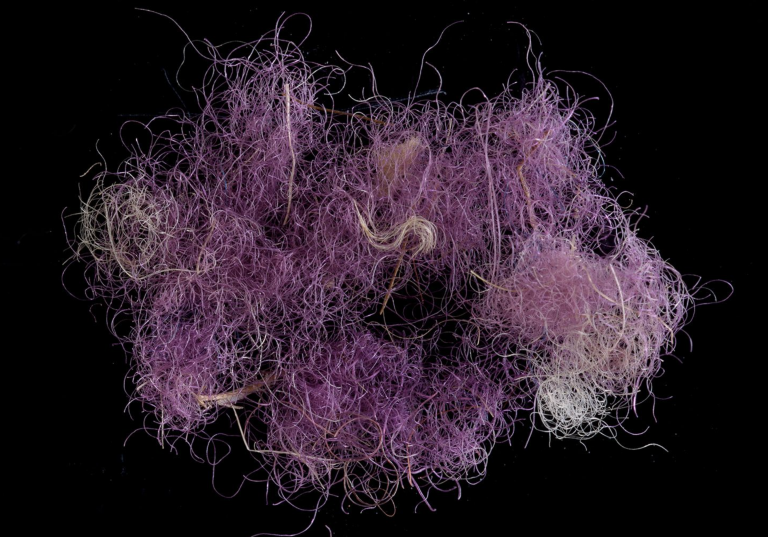
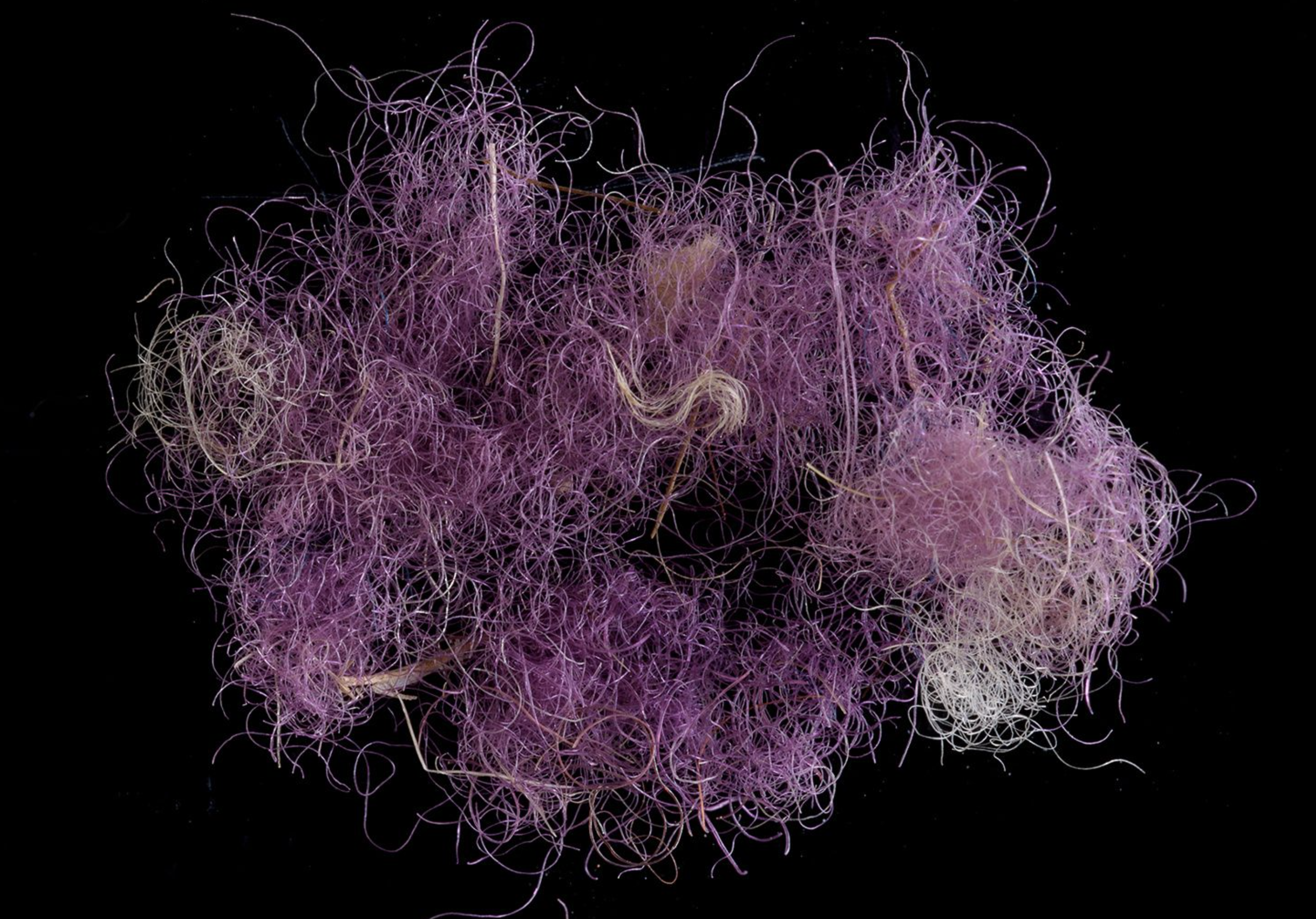
purple loth from king david, tassels and dyed rare purple, from Timna copper mines

Maybe King David’s palace was a temporary shelter in nature? Finding kingly cloth from the time sheds light on traditions and state of mind of Jewish king. 

A rare bit of royal robe dyed in ancient purple was unearthed in a mine in southern Israel recently. Thousands of years ago Jews wore threads of this blueish purple on shawls to remind them to pray, a tradition carried on until today. The blue-purple cloth was used in the day in the robes of kings and priests. And the rare bit just found is monumental to archeologists, historians, and religious observers. 

The cloth was found in Timna, an ancient copper mine from the time of King Solomon where it was mentioned. 

“The color immediately attracted our attention, but we found it hard to believe,” one of the archeologists from the dig reported.  

If you look to the Song of Songs, love poems to God written by King Solomon, you will see mention of the cloth: “King Solomon made for himself the carriage; he made it of wood from Lebanon. Its posts he made of silver, its base of gold. Its seat was upholstered with purple, its interior inlaid with love.” 

Remnants of this mythical cloth has been sought after for generations. What is this secret blue – purple dye called tehelet

Direct radiocarbon dating confirms that the finds date from approximately 1000 BCE, corresponding to the biblical monarchies of David and Solomon in Jerusalem.

The dye was produced from species of mollusks found in the Mediterranean, over 200 miles from the Timna site and it is often mentioned in the Bible and appears in various Jewish and Christian contexts.

This is the first time that purple-dyed Iron Age textiles have been found in Israel, or anywhere in the Levant. Ancient blue isn’t just an Israel thing. See how scientists in Spain tried to recreate their ancient blue. 

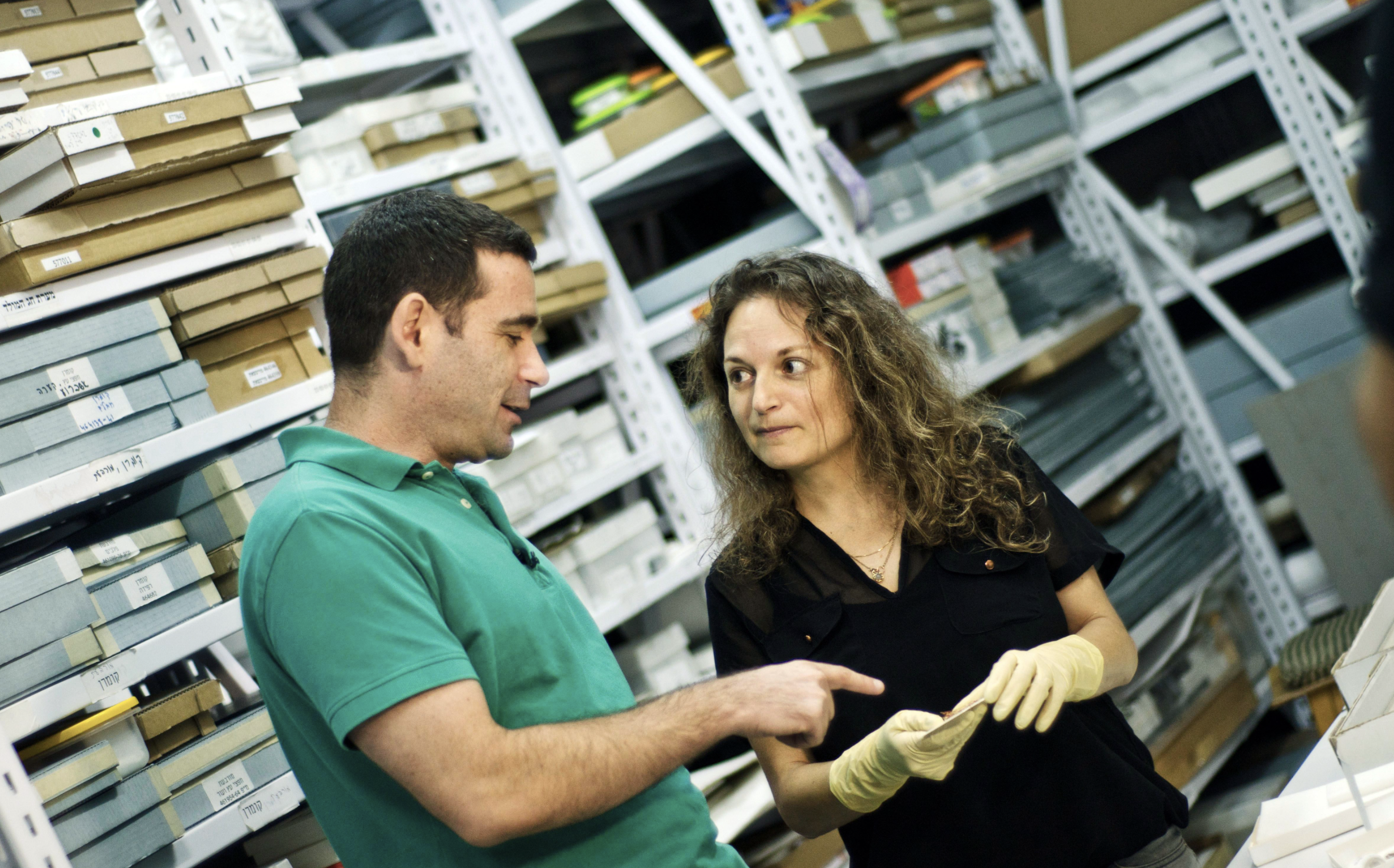
The research was carried out by Naama Sukenik from the Israel Antiquities Authority and Erez Ben-Yosef, from Tel Aviv University. The unexpected finds were published in the PLOS ONE journal.

“This is a very exciting and important discovery,” explains Sukenik, curator of organic finds at the Israel Antiquities Authority. “This is the first piece of textile ever found from the time of David and Solomon that is dyed with the prestigious purple dye,” she says.

The cloth of ancient nobility

“In antiquity, purple attire was associated with the nobility, with priests, and of course with royalty. The gorgeous shade of the purple, the fact that it does not fade, and the difficulty in producing the dye, which is found in minute quantities in the body of mollusks, all made it the most highly valued of the dyes, which often cost more than gold.

“Until the current discovery, we had only encountered mollusk-shell waste and potsherds with patches of dye, which provided evidence of the purple industry in the Iron Age. Now, for the first time, we have direct evidence of the dyed fabrics themselves, preserved for some 3000 years.”

Ben-Yosef from Tel Aviv University’s Archaeology Department says it’s the dryness of the region that helped preserve the fabric. “If we excavated for another hundred years in Jerusalem, we would not discover textiles from 3000 years ago. The state of preservation at Timna is exceptional and it is paralleled only by that at much later sites such as Masada and the Judean Desert Caves.

Naama Sukenik and Erez Ben Yosef

“We found it hard to believe that we had found true purple from such an ancient period”.

According to the researchers, true purple [argaman] was produced from three species of mollusk indigenous to the Mediterranean Sea: The Banded Dye-Murex (Hexaplex trunculus), the Spiny Dye-Murex (Bolinus brandaris) and the Red-Mouthed Rock-Shell (Stramonita haemastoma).

The dye was produced from a gland located within the body of the mollusk by means of a complex chemical process that lasted several days. Today, most scholars agree that the two precious dyes, purple [argaman] and light blue, or azure [tekhelet] were produced from the purple dye mollusk under different conditions of exposure to light.

King David annointed by Samuel wearing purple robe
King David being anointed by Samuel wearing the purple robe

When exposed to light, azure is obtained whereas without light exposure, a purple hue is obtained. These colors are often mentioned together in the ancient sources, and both have symbolic and religious significance to this day. The Temple priests, David and Solomon, and Jesus are all described as having worn clothing colored with purple.

In order to reconstruct the mollusk dyeing process, one researcher traveled to Italy where he cracked thousands of mollusks (which the Italians eat) and produced raw material from their dye glands that was used in hundreds of attempts to reconstruct ancient dyeing. 

The dye was identified with an advanced analytical tool (HPLC) that indicated the presence of unique dye molecules, originating only in certain species of mollusk. According to Sukenik, “Most of the colored textiles found at Timna, and in archaeological research in general, were dyed using various plant-based dyes that were readily available and easier to dye with.

Described by Pliny The Elder

“The use of animal-based dyes is regarded as much more prestigious, and served as an important indicator for the wearer’s high economic and social status. The remnants of the purple-dyed cloth that we found are not only the most ancient in Israel, but in the Southern Levant in general.

“We also believe that we have succeeded in identifying the double-dyeing method in one of the fragments, in which two species of mollusk were used in a sophisticated way, to enrich the dye. This technology is described by the Roman historian Pliny the Elder, from the first century CE, and the dye it produced was considered the most prestigious.”

Ben-Yosef identifies the copper-production center at Timna as part of the biblical Kingdom of Edom, which bordered the kingdom of Israel to the south. According to him, the dramatic finds should revolutionize our concepts of nomadic societies in the Iron Age.

Timna' slave's hill drone shot place purple dye was found
Site at Timna where the priestly purple was found

Was David a king without a palace?

“The new finds reinforce our assumption that there was an elite at Timna, attesting to a stratified society,” he says.

“In addition, since the mollusks are indigenous to the Mediterranean, this society obviously maintained trade relations with other peoples who lived on the coastal plain.

“However, we do not have evidence of any permanent settlements in the Edomite territory. The Edomite Kingdom was a kingdom of nomads. When we think of nomads, it is difficult for us to free ourselves from comparisons with contemporary Bedouins, and we therefore find it hard to imagine kings without magnificent stone palaces and walled cities.

“Yet in certain circumstances, nomads can also create a complex socio-political structure, one that the biblical writers could identify as a kingdom. Of course, this whole debate has repercussions for our understanding of Jerusalem. We know that the Tribes of Israel were originally nomadic and that the process of settlement was gradual and prolonged. Archaeologists are looking for King David’s palace.

“However, David may not have expressed his wealth in splendid buildings, but with objects more suited to a nomadic heritage such as textiles and artifacts.”

According to Ben-Yosef, “It is wrong to assume that if no grand buildings and fortresses have been found, then biblical descriptions of the United Kingdom in Jerusalem must be literary fiction.

“Our new research at Timna has showed us that even without such buildings, there were kings in our region who ruled over complex societies, formed alliances and trade relations, and waged war on each other.

“The wealth of a nomadic society was not measured in palaces and monuments made of stone, but in things that were no less valued in the ancient world – such as the copper produced at Timna and the purple dye that was traded with its copper smelters.”

Enjoy a Greener Experience with a Staycation

0

a frame cabin, solar in the woods

Going on vacation is something that we all love to do. Some people head overseas every year for their annual trip. However, over recent years a new trend has emerged, with many preferring to explore their own country with a staycation. For those who want to enjoy a more eco-friendly vacation experience, a staycation is the ideal choice.

When you travel abroad on your vacation, there is a lot of travel involved. This includes getting on a flight to reach your destination, which leaves behind a huge carbon footprint. For those that want to enjoy a change of scenery without doing as much harm to the environment, opting for a staycation and staying local is the ideal solution. In this article, we will look at some of the benefits of staycations in addition to the greener aspect of this type of vacation experience.

Why You Should Try a Staycation

There are many reasons you should try a staycation rather than heading overseas every time you want a relaxing holiday. Some of the benefits of doing this include:

A Chance to Explore Your Own Country

Often, people are so determined to go abroad for every vacation, they forget about exploring their own country! This is a shame, as there are many wonderful places that can be explored without heading overseas from exciting cities to rural escapes and natural adventures. By planning a staycation, you can stay nearer to home while also enjoying the chance to explore destinations in your own country.

More Affordable Experience

The cost of flights can be very high depending on where you are traveling to, and this can really bump up the cost of your vacation. When you choose a staycation, you can look forward to a far more affordable experience, which is ideal for those on a budget. You will find all sorts of ways to get a bargain – for instance, you can book Airbnb for winter holidays or summer breaks to save on accommodation costs. Depending on how local you are, you can eliminate the need to pay for flights, and you can save yourself a lot of time and hassle into the bargain.

Takes Less Time to Get There

When you go somewhere local for your staycation, it takes a lot less time to get there than if you go overseas. So, booking a staycation is a great way to save yourself a lot of time if you prefer to spend your vacation relaxing rather than traveling. It is also far less stressful when you do not have to spend many hours traveling to and from your destination so you can enjoy a far more relaxed experience.

Many Places to Choose From

You can also look forward to a huge variety of destinations for your staycation, so no matter what sort of experience you want, you will have no problem finding the right place. From dynamic cities to relaxing beaches, you will find it all within easy reach.

These are some of the reasons you should experience an eco-friendly and fun staycation.

10 Effective Email Marketing Growth Hacks

0
Dictaphone Group Beirut, email marketing going up the strairs
American consumers are more concerned about the planet than steady economic growth, new report. Email marketing is actually a sustainable way to grow your business

Email marketing and email users are on a constant rise. If you look at the data over the past few decades, you can see that email marketing has become a marketing staple, because of its reach, effectiveness and returns on investments or ROIs. Email marketing works because of the active user base.

sustainable email eco business

As of 2020, 99% of email users check their email daily. This means that if you have worked towards creating a robust email marketing campaign and a winning outreach strategy, chances are you will reach your target audience. Creating an email marketing campaign is not an easy task and involves many moving parts. It starts with the onboarding email and requires a steady stream of follow-ups.

But when you are sending each of these emails there is the text, the design, the images, the email signature generator, the call to action or CTA and many more things that are crucial to the outcome of your email marketing campaign. We have compiled a list of 10 effective email marketing growth hacks to ensure the email marketing campaign you design brings in the results you want. 

Collect emails everywhere

In order to yield the desired results from your email marketing campaign, you need to continuously grow your mailing list. Along with the run of the mill option in your blog to collect email addresses, you need to seek email addresses from all other possible channels. Many tools can help you collect emails including social media channels like Twitter and Linkedin. Use each marketing channel to your benefit and collect emails everywhere.

Add branded email signature

An email signature is a staple in your email marketing campaign. As a result, you want to give your email signature some thought and include a branded or well established email signature that has the personalization option to share all your contact relevant information and promote products and services accordingly. Adding a branded and reliable email signature will add to your email marketing efforts.

Unsubscribe customers from emails

The point of email marketing campaigns is to engage interested prospects and customers. If your mailing list is filled with uninterested individuals, you will not get the desired results. To increase the overall value of your active customer list, you need to remove those who don’t open or click your emails. While the goal is not to make recipients unsubscribe, make it accessible to those who are no longer interested in your brand. It’s also less carbon emissions – sending out targeted emails that declutter the cloud

Use email retargeting

Part of effective marketing is providing your target audience with what they want. Use email retargeting to make sure you effectively reach your audience. Instead of just guessing what your target audience wants, just look at the data you have and match your brand and their preferences. Many marketers use retargeting with advertisement networks but integrating this in an email marketing campaign and creating a presence in inboxes is a much more powerful approach.

Add CTA to emails

A call to action is designed to direct your readers towards something they need or want. A great CTA always acts as a means to grab attention. Integrating a CTA button either in the email text or in the email signature, will allow your readers to clearly click and continue engagement with your brand. While it is best to have one CTA, there are times where you can integrate a few into your email marketing text. 

Automate personal messages

With the increase in app development in today’s world, there is an increase in automation platforms as well. Automation does not mean that your email is suddenly impersonal. For starters, use plain text and make sure that your email has a real person that is a sender. Automating personal messages can significantly improve conversion rates.

Ask people to reply

Engagement is an integral part of your email marketing campaign. You want people to open emails, read the content, and follow through with your promotions. While you are interested in sending all your information, you also need to consider your prospect or customers queries. It is important to have an inbox where replies can be monitored and managed. What if a recipient needs one bit of information before turning into a customer? Ask people to reply and address their messages.

Give something free

While you are creating all sorts of marketing campaigns to generate a ROI and eventually make your prospects make a buying decision with your brand or your customers make additional purchases with your brand. Add that surprise element and give something for free. But, at times a solid coupon or discount can be the much needed push for a reluctant yet potential customer to make a buying decision.

Send emails often

Someone might require one contact for a purchase while someone else might require a dozen contacts or more. Companies send anywhere from 7 to 19 emails per month. Remember, email frequency and create a content calendar that gives your prospects the right amount of contact with your brand without overwhelming them. The idea is not to bombard them with messages, but to keep them interested and engaged. And of course clicking. 

Keep in mind you can use email marketing software tools like ActiveCamgaign or Hubspot for this purpose.

Proofread and edit

When you send out any email about your brand and your products or services, you want to establish yourself as an authority in your space. Always proofread and edit to make sure you maintain your authority with your readers.

Let your co-workers or contacts glance at your messages before hitting send to avoid any broken links, typos or any other formatting errors after the emails hit the inbox of your subscribers. Reading aloud is one way to catch errors that your eyes might gloss over.

While some customers are determined to make a buying decision with your brand with one contact to your product, there are plenty of prospects and customers that require constant brand exposure to associate with your brand. Chances are there are more of the latter, so, you need to make sure your efforts are always in sync with your targets. Use these effective email marketing growth hacks and get what you want from your email marketing campaign.

Winter floods out Syria’s displaced

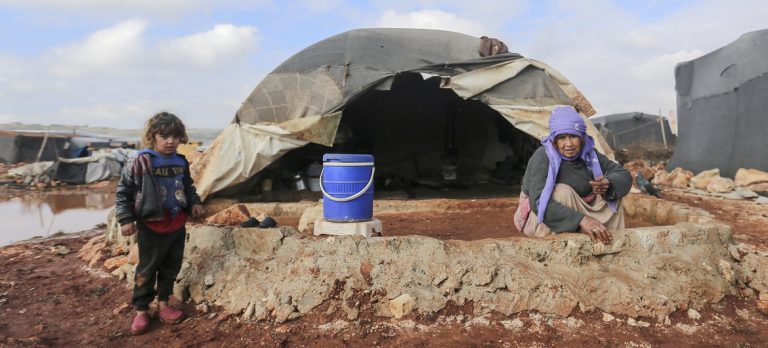
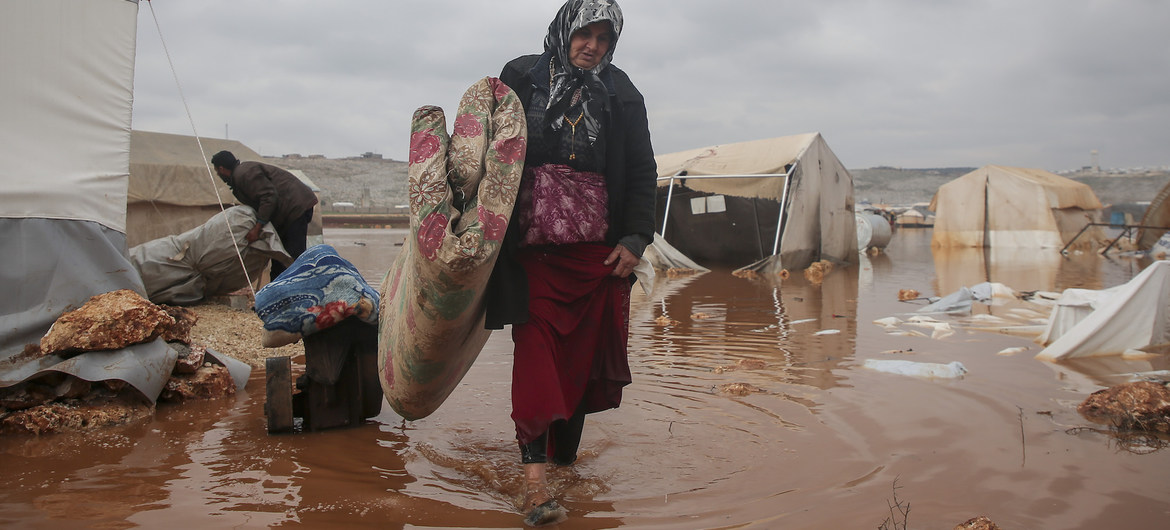
Syria displaced flooding tents
UNICEF/Khaled Akacha

At least 196 sites in Idlib and Aleppo, Syria reportedly sustained damage, with many roads leading to the camps cut off by heavy rains reported the United Nations in a humanitarian bulletin. At least 67,600 have reportedly been affected, and more than 3,760 tents destroyed, with over 7,720 damaged. 

“Thousands of people have been temporarily relocated, many requiring shelter, food, and non-food item support immediately, and in the long term”, the UN’s Humanitarian Affairs Office (OCHA) reported, underscoring the need for more sustainably-designed temporary shelter which may last longer than humanitarian development offices may plan for. 

Passive cooling for Syria’s beehive houses

Taking cues from the tiny home movement, we are sure colleges and design schools around the world, along with architects, can start planning some better solutions for temporary shelter for the world’s displaced – millions from the civil war with Syria, and millions more who end up in countries like Greece from Africa, seeking refuge or maybe just a better life. 

We’ve featured here 10 of the best refugee shelters as a starting point. Take our cues as a way to start designing shelter that may need to last at least a decade. Consider the elements, the weather, the environment and how low impact but long lasting shelters can be made, or even roll away after the displaced start to find more permanent conditions.

10 refugee shelters we hate to love

“The rain and low temperatures highlight the continued need for fuel and heating, winter clothes, blankets, food, livelihoods, and water, sanitation and hygiene,” the United Nations group has said. 

Without sufficient “winterization” – preparing shelters and camps to withstand the harsh conditions and keep occupants warm – people in need could resort to negative coping mechanisms, such as burning unsafe materials for heat, raising the risk of fire outbreaks and toxic fumes. 

The likelihood of accidental fires is increased by challenges in accessing safe fuels, as a result of scarcity and high prices of fuel as well as the general economic deterioration in northwest Syria, it added. Consider the Israeli company Homebiogas which makes clean cooking fuel from kitchen waste and human excrement. It’s a no brainer. We have all the solutions out there. Some motivated person needs to connect the dots. 

In the past month in Syria, some 17 fire incidents were reported that affected 28 households, destroyed 28 tents, resulting in one death and seven injuries. This is from fires and unsafe cooking. 

Meanwhile, ongoing fighting in the region continues to take a toll on civilians, especially near near the M4 and M5 highways – two key arteries linking the capital Damascus with Aleppo city and much of northern Syria. I travelled through Syria and the world is pretty bleak along these highways.  

A number of civilian casualties – including children – have been reported due to artillery shelling or improvised explosive devices or unexploded ordinances. Some incidents occurred in residential areas or at local markets, raising risk for civilians. 

Syria displaced tents flood
UNICEF/Khaled Akacha
 

Continued hostilities in Syria, new and protracted displacement and a sustained erosion of communities’ resilience after a decade of conflict, has left millions in desperate need of assistance. 

Across Syria, an estimated 13 million people – over 70 per cent of the population – are expected to require aid in 2021. The UN estimates that 10.5 million people will be targeted with humanitarian assistance through the year at a cost of $4.2 billion, which is a 10 per cent increase compared to 2020. With Covid we can expect everything to become worse. 


Piercey & Associates, Ltd. Answers 6 Critical Questions About Estate Planning

0
burial pods part of estate planning
Covid, time on our hands, what if? You may strive to live a meaningful life with purpose and sustainability goals in mind. But what happens if you lose someone you love? With offices closed, travel out of the question… how can you plan an estate? Above are burial pods that transform people in trees. 

According to Piercey & Associates, Ltd., an acclaimed team of trust, tax, real estate, probate, business succession, guardianship, and elder law attorneys, here are the answers to six critical questions about estate planning:

Why is estate planning important?

There are four fundamental reasons why estate planning is important: it helps protect beneficiaries, it helps protect children, it helps avoid difficult and complex family confrontations, and depending on the size of your estate it can prevent heirs from paying a huge tax bill.

“One of the biggest mistakes that people make is believing that if they have a will, then they do not need to have a comprehensive estate plan,” commented a spokesperson from Piercey & Associates, Ltd., which has earned more than a 99 percent satisfaction rating based on over 2,700 client surveys. “Many key details that are included in estate planning are not captured by a will, including an advanced directive, a power of attorney, and instructions regarding trusts for children, grandchildren, charitable organizations, and other desired beneficiaries.”

When should one start thinking about estate planning?

Waiting until later on — typically retirement — to focus on estate planning can be a catastrophic mistake for a rather grim but nevertheless valid reason: the future is promised to no one. When that tragedy occurs, the people who suffer most are those who typically grieve the most: children, siblings, other relatives, and close friends.

“One of the issues surrounding estate planning is that the word `estate’ may imply that one needs to have a high net worth before they start thinking about allocating their assets to heirs and beneficiaries,” commented a spokesperson from Piercey & Associates, Ltd., which has reduced millions in estate tax liability down to zero, and regularly eliminates probate fees for clients. “However, every adult should have an estate plan, especially if they have minor children. If something were to render them physically or mentally incapacitated, or if they should pass away, the instructions in their estate plan help ensure that their children would be looked after in a manner that they deemed appropriate.”

What happens if someone without a will passes away? 

When an individual passes away without a will, then certain assets are passed along based on beneficiary designation or operation of law. However, all other remaining assets are distributed based on state law (which differs from state to state).

“One of the most common and also the most traumatic things that can happen when an individual passes away without a will — is that families are often torn apart by conflict,” commented Rodney H. Piercey, a partner of Piercey & Associates, Ltd.  “For example, siblings can start going to battle over who should get what heirlooms and other assets, life insurance proceeds can end up in the wrong hands, and heirs can literally spend years and massive amounts of money trying to hunt down assets or litigate every dispute. What makes this scenario even more tragic, is that all of this happens when family members should be grieving and supporting one another through a very difficult time.”

What role does a trust play in estate planning?

For some individuals, a trust is a pivotal component of their estate plan. While there are many advantages of setting up a trust, the most crucial is that it helps avoid what would otherwise be a significant inheritance tax, and ensures that the majority of a deceased’s assets (e.g. cash, shares, equity, etc.), are passed along to the appropriate beneficiaries in the most efficient way, including the avoidance of a probate court case.  In addition, a trust can protect the inheritance of a child or other dependent who has a disability, learning difficulty, or financial issue(s) that are out of their control.

While a properly structured and executed trust is rock solid when it comes to legal standing, individuals who set up trusts can, if they wish, make changes during their lifetime based on their needs or preferences.

What is a durable power of attorney? 

Like a last will and testament, a durable power of attorney is an essential component of a robust estate plan. It authorizes someone (referred to as an agent or attorney-in-fact) to act on one’s behalf, in the event that one becomes physically or mentally incapacitated. A durable power of attorney for property is related to financial matters (e.g. buying and selling property), while a durable power of attorney for health is related to medical matters (e.g. instructions for physicians, etc.).

“In scenarios where an individual becomes incapacitated and does not have durable powers of attorney for finances and healthcare, respectively, then their family members will be required to go to court in order to declare that individual incompetent in order to access the assets or make decisions for the benefit of the incapacitated person,” stated a spokesperson from Piercey & Associates, Ltd. “This can be extremely stressful and painful for family members and friends, and it is usually very costly as well.”

Who should be the executor of an estate?

Choosing the executor of one’s estate is one of the most important and difficult decisions and should not be done without careful consideration. Generally, an individual who is likely to serve as an effective and appropriate executor is someone who is trustworthy, reliable, organized, and detail oriented. They should also have the ability to allocate a significant amount of time to the process, and preferably they will be local as well. And of vital importance, they should be willing to serve as an executor and understand that it is a legal responsibility that can be met with significant challenges. 

Ideally, executors will not face any significant issues carrying out the instructions contained in an estate plan. However, when issues like childcare and asset allocation are involved, there can be objections and confrontations among family members and other beneficiaries. An executor must be willing and able to professionally and diplomatically deal with these challenges, while at the same time understand that their role is not to make all family members and other beneficiaries happy. The responsibility is to carry out the wishes and instructions of the deceased in a lawful, transparent and completely documented manner, and often there are those that simply cannot be pleased, regardless of the fact that the executor acted in good faith and in a professional and legally proper manner at all times.

Should one conduct estate planning on their own?

While technically it not against the law for individuals to conduct their own estate planning, it is neither wise nor recommended. Estate planning is complex, and there are a multitude of questions that need to be answered (and which are often iterative — i.e. the answer to one question triggers new questions that must be answered). Furthermore, estate laws are not standard, but vary from state to state. They are also constantly changing, and so what may have been correct a handful of years may not be valid today.

“Given how enormously consequential an estate plan is for the individual who creates it, as well as for his or her dependants, family members, friends, favorite charitable organizations, and even their pets, it is not something that should be approached in a do-it-yourself manner,” commented Kenneth Piercey, a partner of Piercey & Associates, Ltd. “Working with a legal professional — or a team of legal professionals —ensures that everything is done properly and in a lawful manner. The peace of mind that comes from knowing that one’s estate plan is comprehensive and secure is immense.”

Bee-free honey to satisfy vegans and save the bees

0

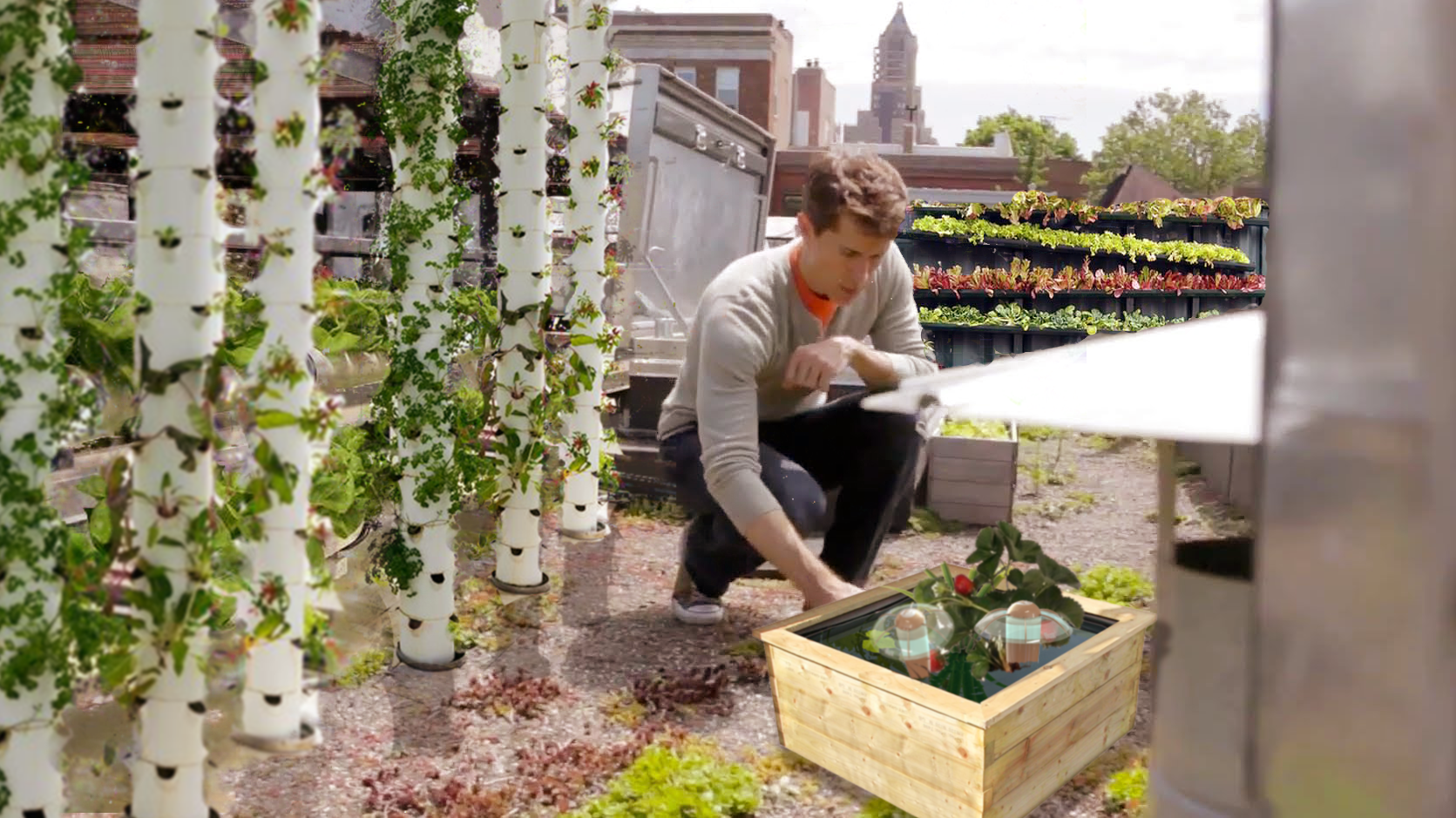
urban beehive young couple city roof new york

Engineering a bee’s stomach for vegan honey? This is the latest in the foodtech trend from Israel. Can technology solve any problem we are in?

A world without bees, or a world without honey? Which is worse? If you ask the bees, the choice is clear. Why bee populations are in decline is the same reason why the last male white rhinoceros has become extinct. The reason is us. But before the doom and gloom catches you in a cycle of despair, as individuals we can take the optimist’s approach. 

Pollinating bees are in decline because the conventional food industry relies on non-specific pesticides to kill animal pests in agriculture and forestry. I know this from my several years of work in Biology where I worked in a research institute that looks for non-chemical pesticide solutions –– or rather natural solutions to “pests” using nature and the in-built predator-prey relationship that exists in nature. 

Bees you could say are in decline because our desire for their honey has become more intense. Our industrialist mindset has put bees to work for our needs without considering their rights. For this reason vegans do not eat honey as honey cultivation involves animals –- and while it’s not a part of their body –– unlike flesh, milk or eggs –– honey is made from pollen inside the bee stomach. Honey is made to feed the bees. 

The last decade with the advances of Internet of Things products –– think Alexa, Canary the home security system, or a fridge that tells you when it’s empty (there is even a bird feeder on Kickstarter that takes pictures of birds and sends them to you) –– all rely on Wifi and low-cost sensors to connect to the Internet to help you get more out of your life. 

The technological hurdle of connecting these low cost sensors to data and software algorithms to figure out new things or to enact a change in the hardware – like shutting on or off your furnace, or adding light, a chemical or taking a picture –– is a no brainer. And geeks have been doing it for a decade with the help of low-cost computers like Raspberry Pi or Arduinos.

hydroponics cannabis internet of things

We did this in my startup where we invented an even smarter Arduino. Our application was to “speak for the plants” –– a robot that attempts to translate the language of nature so we can better water, feed, and grow plants according to our needs, and Nature’s. One of our applications was growing cannabis and another was for growing plants matched to a person’s optimal nutrient needs. 

So along with the advancement of consumer products the industrial Internet of Things market has grown faster and bigger. In agriculture this means drones that can speak with sensors and satellites to manage crops. It also means sensors in beehives to help fight bee colony collapse disorder which means loss of profit if you run an apiary. Apiaries are looking for data about their hives that tell them about the health of the bees: temperature, weight, sound, humidity – biological data like that. This paper offers a good background. 

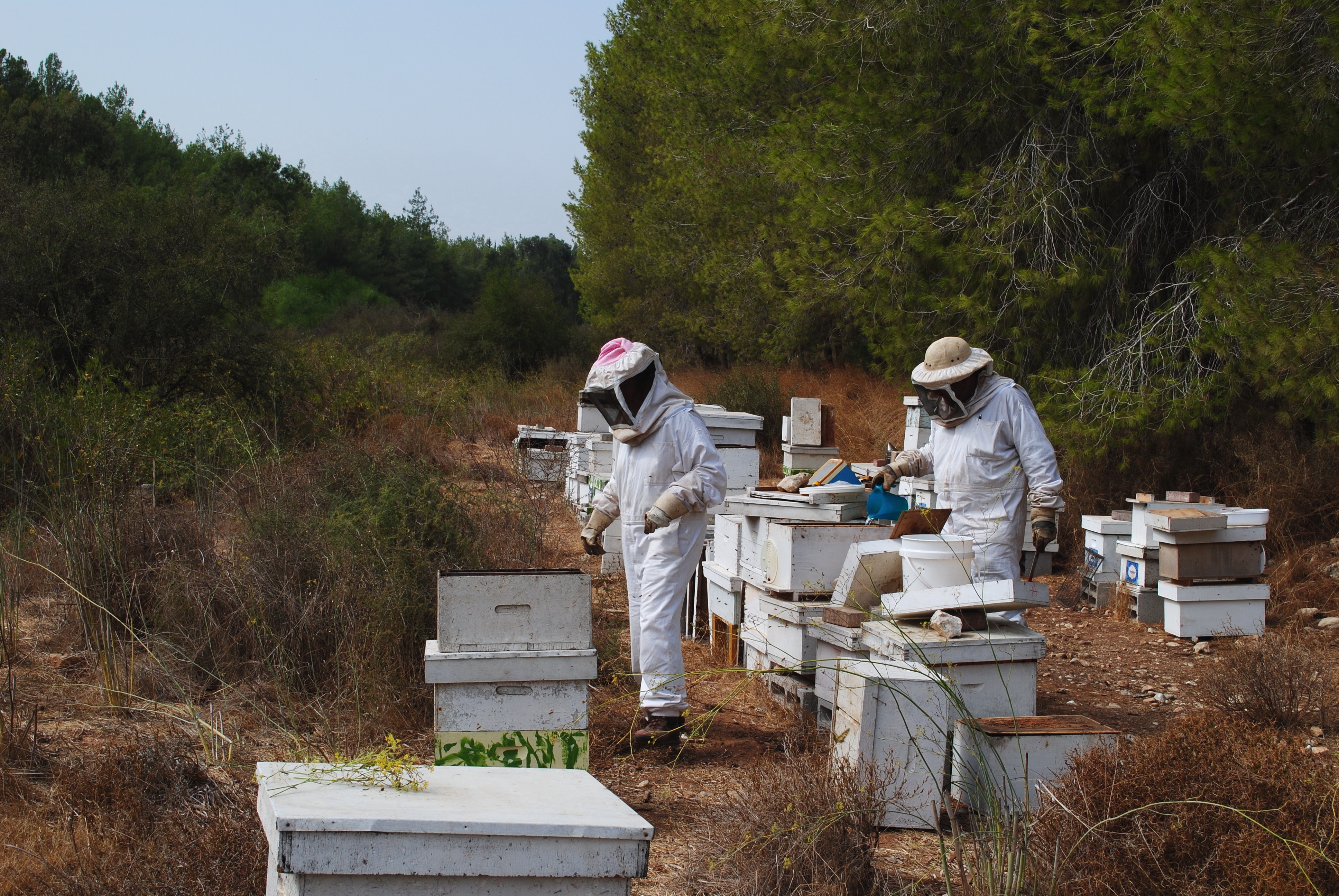
apiary Israel for making honey with bees

My experience in this area has led me to a few different “alternative” approaches to managing the bee decline in apiaries and the world in general. 

Free the Bees

I met Yan and Sherry from Piepird in Northern Ontario eight years ago. I found them on a poster in a small supermarket advertising a music event at their bed and breakfast. Turns out the couple also run an animal sanctuary where they take in goats, chickens, turkeys and animals that would otherwise be slaughtered.

yan animal sanctuary free the bees vegan

Yan (above) has liberated beehives and shown me some of the healthy hives he leaves to grow on his permaculture farm.

As vegans they do not take honey from the hives, and as permaculturists use all sorts of natural methods to help bring pollinators to their farm every summer. This method means no more eating honey. Read more about the Piebird Method here

Technology saves the day? 

You can find a large number of sensor-based solutions on the market that can give information about the hives. ApisTech (now called Beeyard), OS Beehives. This technology approach is selling the notion that technology can fix the problem by monitoring it and augmenting the hives.

They are doing their work and are looking for tools to better manage the outcomes of the honey crop every year. Looking for clues like weight and sound help beehive managers understand the health of their hives and if intervention is needed. Some beehive owners scatter their hives over a wide radius of thousands of acres and these apiaries need solutions that can help them spot a collapse. 

The vegan bee-free honey in a lab

I started to yawn when I read in the Haaretz newspaper today about another Israeli startup that thinks it can save the world using technology. Then I read on and understood this is something new. It’s not a company trying to farm the most out of bees –- they are working to make a honey substitute like Beyond Meat did for the vegan meat industry. Bee-io is trying to create cultured honey, without the bees. They have created an artificial bee stomach to imitate the enzymes that are present in real life bees. This is refreshing! But is the honey tasty and with health benefits? 

According to Haaretz (we didn’t link to the paywall), the CEO Ofer Dvash (means honey in Hebrew) said: “You can’t take sugar and turn it into honey. Honey needs to be made from a natural source, pollen, and it needs to pass through a honeybee’s stomach, because it contains enzymes that break down the sugars from the pollen in a certain way. Via genetic engineering and biological processes we can try to imitate what goes on in the bee’s stomach.”

According to the company cultured honey would harm no bees and would not be dependent on the season or bee colony collapse disorder. Which means one of two things –– “let them eat honey” while the world burns or –– we eat the fake honey giving us energy to take the pressure off of the bees, build them shelters and plant orchards and go back to the land so eventually we can eat real honey again, but in moderation and in a healthier, more balanced way.

Global honey prices have doubled in the past decade, notes Bee-io. “We want to disconnect human nutrition from animals, and we can’t go on exploiting animals. We’re seeing this happen with milk and meat, and also with honey,” states Dvash.

Honey substitutes are available today but they aren’t made in the same way as the Bee-io approach. It’s not clear if the Bee-io commercial approach is connected to the prize-winning student-led solution presented by students from the Technion in 2019. See the video below.

“Our vision is to create a sustainable BeeFree honey using engineered bacteria, which will process a nectar-like solution using secreted enzymes that mimic the honey stomach environment,” the students said. 

The role for urban beekeepers

Denver union station beehives honey
Denver’s Union Station Hotel

See the Vegan Society for more on the problems of farmed honey. Or for fun watch as Miriam gets swarmed on her visit to an apiary. You can also learn how to test if it’s real honey or fake, or the healing powers of honey

Could urban beekeepers buffer bee colony collapse? Maybe. Our writer Jeff discusses

Our eco-commentator/voice of reason Pablo Solomon says: “Why are we even talking about “Green” in the same breath as “man made fake”?? Every time I hear about these sorts of hair-brained nerd schemes, my head almost explodes.

“My broken record—use our money and brains to provide clean water, desalinate sea water, stop urban sprawl, plant greenery everywhere possible, teach people how to grow food in cities, etc. Enough with “Mars” and self driving cars and —for heaven’s sake fake honey.”

Americans should say bye to the honeybee

Steven Jacobs, who pioneered hydroponics systems at high tech companies like Microsoft, says:  “Thing is, this is putting in resources to help the bees. In the US for example, honeybee production is decimating the native bees. Honeybees are not native here and they spread diseases to, and compete directly with, our native honey-less bees.

“Eliminating honeybees entirely from the continent would do better for the bees than any other thing.

“So maybe in places where honeybees are native this isn’t an issue. But it is an issue in many places. Why reinvent the wheel? Well, what if that wheel is running over and crushing everything in its path? Maybe reinventing the wheel is needed sometimes.”

Make your own Bernie Sanders’ Recycled Mittens

0

Bernie sanders mitten memeAsk and you shall receive.  So I asked for something positive, a signal of simple goodness. After a year of COVID-19,  bush fires, Beirut explosions, Asian giant hornets, global economic fallout, and all-things Trump, I craved evidence that the quiet movements promoted by Green Prophet for love of each other and of our planet were still germinating beneath the weight of 2020 awfulness. 

And the sign appeared to me in Bernie Sanders’ clunky upcycled mittens. 

The octogenarian’s accessory nearly upstaged last week’s US presidential inauguration. Crafted by a Vermont schoolteacher out of repurposed sweaters and gifted to her Senator a few years back, Bernie’s choice of handwear kept him toasty during the crisp 40°F outdoor ceremony and launched a flurry of comic memes. 

The mittens’ pattern was loud, as was their message of sustainability. GP has long applauded rethinking, reusing, and recycling all we consume. Throughout history, we’ve applauded people who riff off Rumpelstiltskin, in this case making sartorial “gold” from cast-off clothes.  Think Scarlett O’Hara’s antebellum gown sewn from velvet drapes.  Maria Von Trapp outfitted her whole brood using the Baron’s old curtains.

Jen Ellis’ mittens are made from repurposed wool sweaters and lined with fleece made from recycled plastic bottles. Her sudden fame depleted her supply.

“Thanks for all the interest in Bernie’s mittens!”, she tweeted, “I’m so flattered that Bernie wore them to the inauguration. Sadly, I have no more mittens for sale. There are a lot of great crafters on ETSY who make them.”

No worries. You can make your own with an old sweater and any soft lining materials (t-shirts, sweatpants, or simply more old sweater).

While newsworthy, Bernie’s mitts aren’t new.  Six years ago – while living in Amman, Jordan – I stumbled onto this YouTube instructional video posted by Sandy Luft-Schafer – which sent me scouring for wool sweaters from the jumble at the weekend souk. 

Bernie  Sanders mittensBasic sewing skills are all you need.  But not feeling “handy”? Google will lead you to ready-made pairs. I’m smitten with Bernie, more so in his mittens.



The year 2021 is looking up.


Recycling Cooking Oil – The Benefits

0

India woman cooking with oil

Even with the increase in campaigns on the importance of protecting the environment, many people are still not conscious of the effects of their daily habits on the environment. Every day, people continuously make choices that harm the environment. One of the ways people harm the environment is through the disposal of used cooking oil.

Many restaurants, hotels, and homes dispose of used cooking oil through the drain. With time, this causes clogging in drainage pipes and sewer lines, as some of it finds its way to the environment and marine ecosystem. If proper measures are not taken while disposing of used oil, it becomes a risk to the environment.

Most people do not know any better because they are unaware that old cooking oil can be recycled and that there are numerous benefits associated with recycling used cooking oil.

Here are some of the benefits of recycling used cooking oil.

Used cooking oil can create renewable energy. 

According to statistics, more than 2.5 billion gallons of cooking oil are used every year, posing a major problem in disposal.

Most homes, restaurants, and hotels disposal of used cooking oil through the drainage system. Eventually, this leads to clogging, which causes major issues with the drainage system in the long run. Sometimes, the overflow can find its way to the streets and environment, which can cause irreversible damage.

As recycling methods continue to evolve, recycling used cooking oil produces biodiesel as one of the byproducts. Biodiesel is a renewable form of energy, making it environmentally friendly. This fuel is used as an alternative to fossil fuel for diesel engines used to power vehicles and machines.

Reducing cleanup costs 

Most hospitals, hotels, and restaurants dispose of used cooking oil through the drain, which is linked to a waste disposal plant. However, what most people do not know is that water and oil have different properties.

Unlike water, used cooking oil will solidify with a reduction in temperatures. This causes clogging, which eventually leads to drainage system complications in the entire building.

A simple plumbing job can cost the management a lot of money. Clogging in the drainage pipes also encourages pathogenic bacteria breeding, which puts the hotel or restaurant under threat of disease outbreaks and a possible shutdown.

Recycling cooking oil is a cheaper alternative when it comes to the disposal of used oil. With recycling, you will eliminate the possibility of clogging due to oil solids in the drains, which reduces the plumbing expenses.

Creating jobs

Production of safer and sustainable alternatives to diesel is becoming common in different parts of the world. In turn, there has been a rise in the number of oil recycling companies that invest in creating biodiesel. With this rise, the number of jobs created also increases.

Deciding to collaborate with an oil recycling company is one of the best ways your business can support economic growth and sustainability by creating job opportunities.

Recycling protects the environment. 

Protecting the environment should be the main reason for considering recycling used cooking oil. A major cause for the rise in environmental temperatures is greenhouse gases.

Greenhouse gases are emitted from modern transport methods such as ships, aircraft, trains, and cars powered using fossil fuel. These gases emitted to the environment include methane and carbon dioxide, affecting the ozone layer. This causes heat waves on the earth’s surface, in turn leading to a rise in temperatures.

Some countries have put in place strict regulatory measures to reduce the emission of these harmful gases to the environment by encouraging the use of renewable energy like biodiesel.

Biofuels can reduce the amount of greenhouse gases in the environment by up to 90%. When done long term, this helps to reverse the effects on the ozone layer.

When people understand the benefits they can enjoy from proper disposal of used cooking oil, they also understand the importance of proper disposal to the environment. This is the first step towards conversing the environment for humankind.

How to make working from home cheaper and warmer

0

Blu prefab homes

It was once a subject that some employers would have never breached. Now, it has become the new normal and for many of us, our homes feel as though they have become our permanent office space. And, well, they have. New backyard or basement offices. Tiny homes as offices. The whole idea sounds ideal but what if you have to hear your space or keep it cool? There are energy costs to consider.

Of course, while it has the obvious (pajama) benefits, there are some practical considerations that are starting to become more prominent. Many of us have gone from spending a few awake hours in a home, to the whole day. Ultimately, our energy bills are only going one way.

Bearing this in mind, today’s post is all about how you can send the costs of your energy plummeting if you are one of the many who are now working at home.

Easy infrastructure hacks

Firstly, don’t underestimate the ‘classic’ fixes. By these, we’re talking about the likes of insulation, double glazing and even draught stoppers.

All of the above has been contained in energy-saving guides for years, but if you are suddenly based at home all day, every day, the difference over the course of a year can be considerable.

About your boiler

For years, we have been told to consider energy efficient boilers – and for good reason.

However, this is only the tip of the iceberg when it comes to making the most of your boiler whilst working from home. These hydrogen boiler options might be new but can make a considerable dent in your energy bills (and are great for the planet as well).

Sure, an energy efficient boiler (or an A++ model, depending on where you are based) is an ideal solution in a lot of cases, but there are alternatives.

For example, what about ground or air source heat pumps? Or, if you really want to push technology, what about a hydrogen-fired boiler which have started to emerge?

These options might be new but can make a considerable dent in your energy bills (and are great for the planet as well).

It sometimes comes to opening the blind

OK, this subheading might have been a little understated. However, for many of us, working at home is quickly turning into rolling out of bed and grabbing the laptop. The result? Most of us don’t open the blinds or curtains until mid-morning at best.

Well, this is hurting us from an energy efficiency perspective. Quite often, the flurry of natural light in a morning is enough to gently nudge the temperature higher. Not only that, but particularly now we are in winter, you don’t have to rely on light switches as much.

Review what electrical devices you are using

Printer, monitor, desktop computer – the list of home working equipment could go on.

Quite often, we don’t use all of this at once though. Some of us will just sit with the laptop on our knee for a morning, while for others the printer only comes out once a week (or less).

As such, don’t leave these devices plugged in. It sounds small, but some sources believe that you could save up to 10% per year from your energy bill by unplugging or turning off switches for devices you are not using.

Choosing the Right Berkey Filter System Size

0

Remember the tale of Goldilocks? She tried out a few different options until the porridge, the chair and bed fit her just right. Berkey Filters offers several different water filter system sizes for just the right fit in any situation, but there’s no need to be a modern day Goldilocks. Find all of the information you need right here!

For When You’re On the Road

The smallest size is the Travel Berkey, and it lives up to its name. This one is ideal for those on the road. At a holding capacity of 1.5 gallons, it’s the perfect size for RV’s or camping. It best serves households that have one to three people. It sits at 19 inches tall and 7.5 inches wide. When the upper chamber is nested in the lower chamber it’s a compact 11 inches by 7.5 inches. The Travel Berkey holds a maximum of two black Berkey Filters and can accommodate two fluoride filters.

The Best Seller

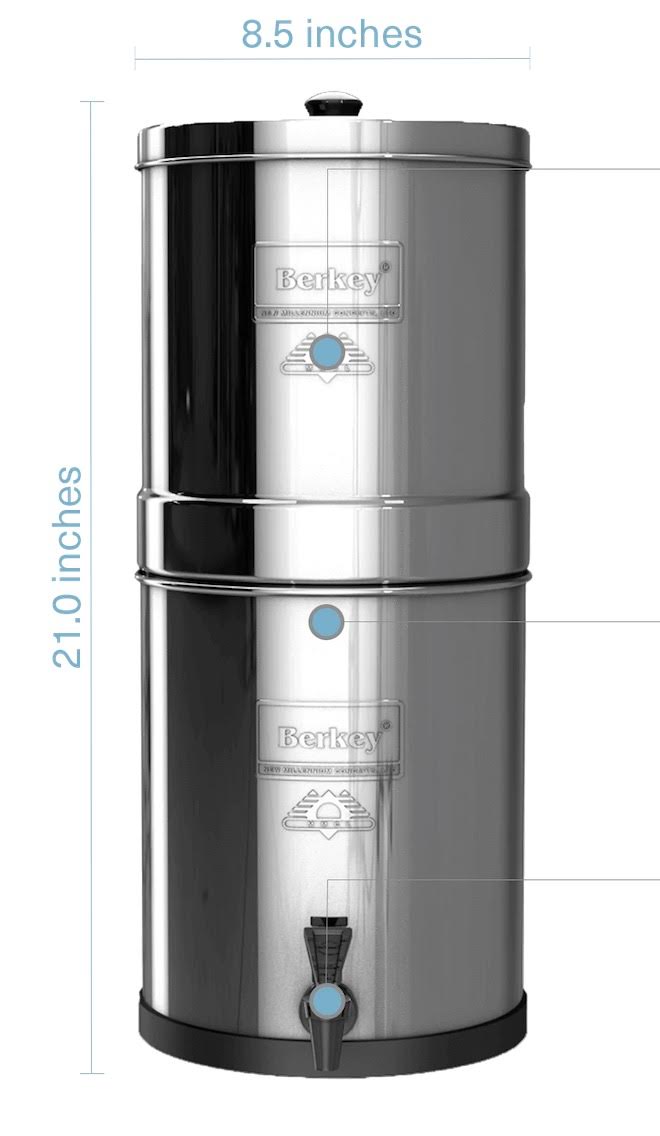
Everyone’s favorite is the Big Berkey. Perfect for couples and small families, it’s versatile and accommodates just about any situation. The Big Berkey holds 2.25 gallons and is 21 inches tall by 8.5 inches wide. It comes with two Black Berkey filters, but can hold up to four. Couples or families are easily served by the Big Berkey. It’s also great for active individuals who drink a lot of water or frequently have guests over. For storage or transport, the upper chamber fits into the lower chamber to make it 13 inches by 8.5 inches. First-time buyers usually purchase a Big Berkey because it’s suitable for many living situations.  It’s no surprise to see Big Berkey top the list of best countertop filters on the market, according to Waterfilterspot.

The Light (Plastic) Option

plastic berkey water counter top filter

The Berkey Light holds 2.75 gallons. It’s called the Berkey Light because it weighs less than its counterparts at seven pounds when empty. It is made of high quality, BPA free, food-grade, co-polyester plastic. It sits at a height of 28 inches and 9 inches wide. It is the only system that comes with a base, elevating it six inches. The Berkey Light is for those who hate surprises. The ability to see through the chambers removes any guessing of how much water is in the Berkey and when it’s time for a refill. It can hold up to four black Berkey filters. The Berkey Light works well for households of two people up to six people. 

For Large Families & Offices

A step up in water filtering capacity is the Imperial Berkey. It holds 4.5 gallons and is the first model to allow up to six black Berkey Filters, which also means it can hold up to six fluoride filters. The Imperial Berkey is 10 inches wide and 27 inches tall. When needed it can collapse to 10 inches by 19 inches. Large families or families with high water consumption are easily supplied with plenty of water. This is also a great option for small offices. Offer employees and patrons the purest water for a great experience. 

The Biggest Berkey of All

Sitting at a tall 31 inches and 11 inches across the Crown Berkey is the largest option. It holds a massive six gallons and eight black Berkey Filters. The Crown Berkey serves eight or more people like it’s nothing. That’s a lot of water! In an emergency situation, the Crown Berkey could provide enough drinking water for up to 150 people. This is for those who are extra thirsty or use Berkey water for everything–drinking, cooking, pets, watering plants, washing produce, canning, filling humidifiers, and whatever else. It would also be a great option for offices to keep employees hydrated or for yoga studios to offer participants. 

For Hikers and Backpackers

Don’t forget about the smaller, mobile options like the Go Berkey Kit holding one quart of water and the Berkey Sport bottle which holds 22 ounces. The Go Berkey Kit is 14 inches tall by 4 inches wide. The Sport Berkey dimensions are 11 inches by 2.5 inches.

BerkeyFilters.com offers several options for the right-sized system. Between the six different systems there are options for one person, all the way up to a dozen people.


Like tree rings, desalination heavy metals now mapped from seashells

0

Photomicrograph of shell structures. The mechanism that controls the creation of shells is still a mystery. Pali Nalu / Flickr

Princeton grad Prof. Sigal Abramovich has a mission. She wants to convince global regulators to include regular monitoring of the geochemistry of a certain type of teeny tiny shell of marine organisms (called forams) as an indicator of pollution in the ocean. She is in Israel studying the effects of desalination pollution, like heavy metals on the marine environment. And quantifying it from shells a the seashore near where effluent is produced. 

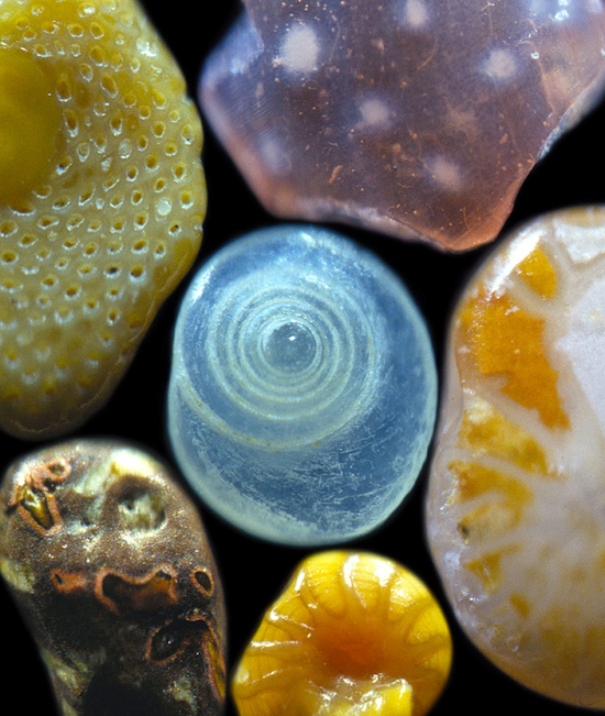
The tiny shells, as small as a grain of sand, reveal more than jewel-like characteristics under a microscope. 

Looking at the tiny shells or foraminifera, “We have been able to quantify the amounts of heavy metals pollution injected by the brine discharge from desalination plants across the Mediterranean coast of Israel,” explains Prof. Abramovich.

“Our research demonstrates the potential of using heavy metals anomalies in foraminiferal shells as a tool for detecting the industrial footprint of coastal facilities including areas that were considered clean nature reserves.”

What are forams?

Foraminifera (forams for short) are single-celled organisms (protists) with shells or tests (a technical term for internal shells). They are abundant as fossils for the last 540 million years.

Foraminifera

In a series of studies over the past three years, Abramovich and her team from Ben Gurion University, The Israel Oceanographic and Limnological Research Institute and the Geological Survey of Israel have found that foraminifera found on the ocean floor store evidence of the pollution around them within their shell formation.

Coastal infrastructure makes the marine ecosystem susceptible to incidental industrial metal introduction that, even if relatively short-term, could stress local ecosystems or affect the water quality. Traditional monitoring methods are insensitive to these events, and thus better and more comprehensive monitoring methods are required.

Sigal Abramovich
Sigal Abramovich

Foraminifera are unicellular organisms that produce calcite shells directly from seawater. They are among the most ancient and abundant fossils and their calcite shells accumulate in mass quantities in oceanic sediments and thus become one of the most important components of sedimentary (carbonate) rocks.

They are also really pretty. This whole article here shows how pretty forams can be

foram grains of sand shell

Their shells record the chemical and physical properties of their seawater, providing the basis for most climate research. This is the reason why foraminifera are considered one of the most important archives of ancient and modern oceans.

Foraminifera build their shells by sequential addition of chambers and each shell thus represents a natural monitoring sequence recording heavy metals in the ambient seawater over months. This chronological documentation of heavy metals in the seawater allows the recognition and quantification of short-term pollution events, and, since foraminifera are abundant, small and their shells are preserved after death, the monitoring can be carried out retroactively and at high spatial resolution.

She is working with an international network of oceanographers to encourage countries around the world to adopt regular foraminifera monitoring based on the methods developed in her lab.

Her research has been supported by the Israeli Ministry of Science through the BMBF-MOST program, by a GIF (German-Israeli Foundation for Scientific Research and Development) grant and the Israel Science Foundation.

Like rings on a tree, telling pollution story

An environmental record from the sea

As the animal grows, its home—the protective shell that surrounds it—must get bigger, and so they grow their shells layer upon layer, creating ‘growth-bands’, or growth increments, within the shell, according to Science. Some of these growth increments are visible on the external surface of the shell, while others are only visible in the internal structure.

But the interesting thing about the growth increments is that their width, or thickness, is affected by environmental conditions, like temperature. Some growth increments are a reflection of tidal cycles, some show annual periodicity. So the series of growth increments within a shell are essentially a record of the animal’s lifetime and, similar to the study of tree-rings, some scientists study them to make interpretations about the environment where that animal lived and grew. 

The chemical characteristics are significant too—other metals, like magnesium (Mg2+) or strontium (Sr2+) can substitute for the calcium in the calcium carbonate, and this often depends on environmental conditions like temperature or salinity. Heavy metals incorporated into the shell can provide a record of environmental contamination or pollution.