Maggie Baird, best known as the mother of Billie Eilish and Finneas O’Connell, is stepping into a much larger spotlight, this time as a climate storyteller.
Tillage is one of the clearest signals of how a farm treats its soil. Intensive plowing can degrade structure, release carbon, and increase erosion. Conservation practices—no-till, cover cropping, minimal disturbance—do the opposite. They build soil, retain water, and support biodiversity. But until now, measuring these practices at scale has been slow, expensive, and often self-reported.
Hydrophilis, Oliver Isler’s experimental rebreather suit, reimagines diving by reducing drag, eliminating bubbles, and bringing humans closer to the natural movement of marine life.
If you work as a roofer, landscaper, pool builder, or in construction, installing garden slabs or solar panels, building sheds, or working on outdoor home improvement projects, take note of new research that can help you protect your heart.
Maggie Baird, best known as the mother of Billie Eilish and Finneas O’Connell, is stepping into a much larger spotlight, this time as a climate storyteller.
Tillage is one of the clearest signals of how a farm treats its soil. Intensive plowing can degrade structure, release carbon, and increase erosion. Conservation practices—no-till, cover cropping, minimal disturbance—do the opposite. They build soil, retain water, and support biodiversity. But until now, measuring these practices at scale has been slow, expensive, and often self-reported.
Hydrophilis, Oliver Isler’s experimental rebreather suit, reimagines diving by reducing drag, eliminating bubbles, and bringing humans closer to the natural movement of marine life.
If you work as a roofer, landscaper, pool builder, or in construction, installing garden slabs or solar panels, building sheds, or working on outdoor home improvement projects, take note of new research that can help you protect your heart.
Maggie Baird, best known as the mother of Billie Eilish and Finneas O’Connell, is stepping into a much larger spotlight, this time as a climate storyteller.
Tillage is one of the clearest signals of how a farm treats its soil. Intensive plowing can degrade structure, release carbon, and increase erosion. Conservation practices—no-till, cover cropping, minimal disturbance—do the opposite. They build soil, retain water, and support biodiversity. But until now, measuring these practices at scale has been slow, expensive, and often self-reported.
Hydrophilis, Oliver Isler’s experimental rebreather suit, reimagines diving by reducing drag, eliminating bubbles, and bringing humans closer to the natural movement of marine life.
If you work as a roofer, landscaper, pool builder, or in construction, installing garden slabs or solar panels, building sheds, or working on outdoor home improvement projects, take note of new research that can help you protect your heart.
Maggie Baird, best known as the mother of Billie Eilish and Finneas O’Connell, is stepping into a much larger spotlight, this time as a climate storyteller.
Tillage is one of the clearest signals of how a farm treats its soil. Intensive plowing can degrade structure, release carbon, and increase erosion. Conservation practices—no-till, cover cropping, minimal disturbance—do the opposite. They build soil, retain water, and support biodiversity. But until now, measuring these practices at scale has been slow, expensive, and often self-reported.
Hydrophilis, Oliver Isler’s experimental rebreather suit, reimagines diving by reducing drag, eliminating bubbles, and bringing humans closer to the natural movement of marine life.
If you work as a roofer, landscaper, pool builder, or in construction, installing garden slabs or solar panels, building sheds, or working on outdoor home improvement projects, take note of new research that can help you protect your heart.
Maggie Baird, best known as the mother of Billie Eilish and Finneas O’Connell, is stepping into a much larger spotlight, this time as a climate storyteller.
Tillage is one of the clearest signals of how a farm treats its soil. Intensive plowing can degrade structure, release carbon, and increase erosion. Conservation practices—no-till, cover cropping, minimal disturbance—do the opposite. They build soil, retain water, and support biodiversity. But until now, measuring these practices at scale has been slow, expensive, and often self-reported.
Hydrophilis, Oliver Isler’s experimental rebreather suit, reimagines diving by reducing drag, eliminating bubbles, and bringing humans closer to the natural movement of marine life.
If you work as a roofer, landscaper, pool builder, or in construction, installing garden slabs or solar panels, building sheds, or working on outdoor home improvement projects, take note of new research that can help you protect your heart.
Maggie Baird, best known as the mother of Billie Eilish and Finneas O’Connell, is stepping into a much larger spotlight, this time as a climate storyteller.
Tillage is one of the clearest signals of how a farm treats its soil. Intensive plowing can degrade structure, release carbon, and increase erosion. Conservation practices—no-till, cover cropping, minimal disturbance—do the opposite. They build soil, retain water, and support biodiversity. But until now, measuring these practices at scale has been slow, expensive, and often self-reported.
Hydrophilis, Oliver Isler’s experimental rebreather suit, reimagines diving by reducing drag, eliminating bubbles, and bringing humans closer to the natural movement of marine life.
If you work as a roofer, landscaper, pool builder, or in construction, installing garden slabs or solar panels, building sheds, or working on outdoor home improvement projects, take note of new research that can help you protect your heart.
Maggie Baird, best known as the mother of Billie Eilish and Finneas O’Connell, is stepping into a much larger spotlight, this time as a climate storyteller.
Tillage is one of the clearest signals of how a farm treats its soil. Intensive plowing can degrade structure, release carbon, and increase erosion. Conservation practices—no-till, cover cropping, minimal disturbance—do the opposite. They build soil, retain water, and support biodiversity. But until now, measuring these practices at scale has been slow, expensive, and often self-reported.
Hydrophilis, Oliver Isler’s experimental rebreather suit, reimagines diving by reducing drag, eliminating bubbles, and bringing humans closer to the natural movement of marine life.
If you work as a roofer, landscaper, pool builder, or in construction, installing garden slabs or solar panels, building sheds, or working on outdoor home improvement projects, take note of new research that can help you protect your heart.
Maggie Baird, best known as the mother of Billie Eilish and Finneas O’Connell, is stepping into a much larger spotlight, this time as a climate storyteller.
Tillage is one of the clearest signals of how a farm treats its soil. Intensive plowing can degrade structure, release carbon, and increase erosion. Conservation practices—no-till, cover cropping, minimal disturbance—do the opposite. They build soil, retain water, and support biodiversity. But until now, measuring these practices at scale has been slow, expensive, and often self-reported.
Hydrophilis, Oliver Isler’s experimental rebreather suit, reimagines diving by reducing drag, eliminating bubbles, and bringing humans closer to the natural movement of marine life.
If you work as a roofer, landscaper, pool builder, or in construction, installing garden slabs or solar panels, building sheds, or working on outdoor home improvement projects, take note of new research that can help you protect your heart.
Over recent years, one thing that many people have turned to in order to enjoy a range of benefits is CBD. The world of CBD has come a long way in a short space of time, with legislative changes making it easier for people to access the wide range of CBD products available. When you purchase your CBD products from a reputable source such asFive CBD, you can benefit from superb quality, independent testing, products that are compliant, and effectiveness.
With the right provider, you can enjoy a wide choice of excellent CBD products, and this includesgummies made from Delta 8. When you use this type of product, you can enjoy huge benefits, and you also have the added bonus of enjoying a delicious treat while getting the benefits of the CBD. It is vital that you purchase these products from a reputable source for many reasons. In this article, we will look at some of the benefits of doing this.
How You Can Benefit
There are many benefits that you will be able to look forward to when you get your Delta 8 gummies from a respected and reputable provider. Some of these are:
Tested for Compliance
One of the things you need to ensure if you want to ensure when buying CBD Delta 8 gummies is that they are federally compliant. When you buy from a reputable source, you can ensure the products you purchase are properly tested for compliance. Purchasing from a respected provider means that you can ensure the gummies are made from federally compliant hemp, and that the THC levels are within the levels allowed. This is one of the reasons you should always get your CBD gummies and other CBD products from a reputable provider.
Excellent Quality Products
Another of the benefits of getting your gummies from a respected and reputable source is that you can look forward to excellent quality products. When it comes to something like CBD, the last thing you want is to end up with a product that is at best ineffective and at worst unsafe. When you go through a provider with a solid reputation, you can ensure you invest in CBD gummies that are of excellent quality and is both effective and safe.
Peace of Mind
When you first start buying CBD products, it can be confusing to determine which products to buy and which provider to use. When you go through a respected and reputable provider, you can benefit from total peace of mind, and you can purchase with confidence. It can be quite daunting to try and work out which products and providers to use, so you should always take the time to look at reviews from other people, which you can be done with ease online. However, you should also ensure you thoroughly research the provider and find one that has a solid reputation in the industry.
Safe and Effective
Naturally, when it comes to using CBD products, you want ones that are safe as well as effective. When you choose a reputable provider for your Delta 8 gummies, you can be sure of effectiveness and safety, as the products will be of the highest quality. This means that you can truly benefit from using the products, and you can look forward to excellent quality. With CBD products thatcontain THC such as Delta 8 gummies, there is always the worry that you will end up with ones that are unsafe and could cause harm. By going through a reputable source, you can eliminate this worry and risk.
Enjoy Total Peace of Mind
Using providers such as Five CBD means that you can look forward to total peace of mind when buying Delta 8 gummies. You can benefit from delicious fruity flavors, so you get to enjoy the sumptuous taste as well as the benefits of CBD. In addition, you can look forward to a vegan product, which means that it is suitable for those who only have plant-based products. On top of this, you can enjoy the reassurance that the products are tested for compliance and that they are safe to use.
Millions of tourists and vacationers embrace cruising across the Caribbean to explore new destinations and the islands. The Caribbean is indeed a true cruising paradise as there are no two islands that are truly alike, and it is hard to resist those white sand beaches with crystal clear waters. Cruising to the Galapagos is an adventure that is most popular with the vacationers.
As Caribbean cruising becomes more affordable and adventurous, one finds more and more people booking for the cruises. At the same time, there is a risk of high quantity of waste produced and lack of quantity of waste due to the growing tourism industry. What is much needed here is a waste management system across Caribbean States to control and get rid of polluting and hazardous substances.
Responsible and aware crises across the Caribbean are aware of the issue as tones of solid waste and debris gets generated by the cruise ships. If the hazardous waste is not disposed of properly, there is a risk of the marine litter getting discarded in marine and coastal environments. Passengers, too, are showing more concern about the impact of cruising on the marine environment and prefer to cruise only on those cruise ships that are taking sustainability initiatives and offer a more environmentally aware travel.
Given below are some initiatives taken by the on-board cruise ships across the Caribbean shores:
Eco-friendly initiatives such as using re-useable bottles aim at reducing plastic water bottle waste and eliminating millions of plastic water bottles that are used on-board every year.
Many cruise operators plan to install exhaust cleaning systems that make use of seawater to ‘wash’ dirty fuel before sending the wash water back into the ocean. Other ships are opting for more expensive low-sulphur alternatives instead of heavy sulphur fuel to reduce pollution.
Cruise lines across the Caribbean have implemented certain on-board policies to create more awareness regarding marine pollution and encourage passengers to be more sustainable in their behaviours.
Daily energy consumption is significantly reduced with the installation of LED lighting on the ships as fluorescent lighting is energy-saving, Card-activated cabin lighting and air-conditioning means that minimum energy is used by the guests.
Water reduction technology has been installed on many of those cruise ships in kitchens, laundry rooms and bathrooms. The objective is to minimise wastage of precious water resources by the ship and its crew and passengers.
Destination waste management companies are being consulted and hired by the cruise operators for waste minimization and reduce emissions from operations. Responsible waste management and resource recovery by cruise ships require a proper waste infrastructure for adequate handling of the waste.
Caribbean cruise operators are showing greater commitment to operate sustainably and adopt responsible options through GSTC-Accredited Certification Bodies. Collaborative processes along with motivated operators and dedicated team are a key part of the sustainable operations.
Caribbean destinations are crafting innovative cultural tours for the Generation Z travellers and millennials in search of sustainable experiences. It gives them a chance to explore ecotourism which they have been ignoring for years.
New technologies and Stricter regulations The subject of sustainability on cruise ships is still new and evolving, and all those efforts are likely to produce tangible results. Stricter cruise regulations can promise a greater impact and lower the waste production. New breakthroughs and technological advancements can further promote and support those efforts and sustainability by cruise ships. The tour operators company must realise the importance of certification and sustainable operations for maximizing social and economic benefits for the local environment and community.
As cruise ships have a lifespan of about thirty to forty years, the vessels built decades ago will not be able to meet the environmental goals of the future. Along with new technology and policies, it is essential to develop the necessary infrastructure to meet the current and future goals for sustainable cruising. The scale and scope of Caribbean Cruises’ commitment and initiatives are sure to elevate the sustainability bar for the entire travel and tourism industry
Caribbean islands and cruising is all set to back post-Covid as the tourism leaders are now well-positioned to target higher-value tourism and create authentic cultural experiences. What we are likely to see is a much more sustainable Caribbean tourism industry which is resilient and cares about the environment.
Climate change is unanimously viewed by the international scientific community as the preeminent problem confronting humanity in the 21st century. It is an existential threat whose impact is already being felt in many places around the world. While it is undoubtedly true that the world’s biggest corporations, and especially fossil fuel companies, account for a disproportionate amount of the carbon emissions causing man-made global warming and climate change, the consumption choices of individuals are a major driver as well. With that in mind, below are 3 ways to make more climate-friendly purchases.
Use a Green Credit Card
If you are interested in improving the positive climate and environmental impact of your purchases, you should begin with a green credit card. Green credit cards are those which have partnered with an environmental organization like the World Wildlife Fund, and they allocate a percentage of each dollar spent to the partner cause. If you are someone who puts a lot of money on their credit card(s) each month, particularly if you are a business owner with a dedicated business card, this spending can really add up.
These cards can be a great way to amplify your impact, offsetting the climate and environmental impact of your purchase by ensuring that a small amount of it goes towards things like combatting biodiversity loss, helping save endangered species or promoting reforestation. By shopping with these cards, you get to leverage the power of companies like Visa and Mastercard, extending reach you otherwise wouldn’t have.
Research the Supply Chain
For those who care enough to know, the supply chain information of just about everything you might want to buy is out there. It takes some time and effort on your part, but that is part of being a more informed and environmentally conscious consumer. Companies have also begun to recognize this new consumer conscientiousness and are working to incorporate increased transparency in their supply chains, allowing people to make more informed decisions about what they buy and why they buy it.
This is an especially powerful approach to our food purchasing decisions, considering the environmental impact of many of the off-the-shelf processed foods we consume. If you are worried about the environmental and climatic impact of what you are stocking your pantry and refrigerator with, consider doing a little research into where some of those main ingredients come from.
Buy Second Hand
If you are one of those people who have become aware of how many new products you buy a year–electronics, clothing, etcetera–and are eager to find a way to be less of a consumer, consider buying second hand. The next time you feel like buying a new phone, consider a Facebook or other online marketplace where people are selling refurbished ones. Used cars come with a range of financial benefits as well.
The next time you want a new pair of sneakers or some jeans, consider looking on a site that specializes in second-hand or making a trip to your local thrift or second-hand store. You don’t need new consumer items like clothes and electronics; you have been convinced by lifelong exposure to marketing that you do. While buying second-hand isn’t a panacea, it is undoubtedly a more environmentally-friendly purchasing decision.
Conclusion
There are plenty of ways you can make more climate and environmentally-friendly purchasing decisions in your daily life. You can also have these important conversations with friends and family and extend your reach and impact, helping them make changes to their own buying and consumption habits.
Keep the above three recommendations in mind and take better control of how your buying impacts the world around you. When everyone endeavours to do a handful of small things, big change can happen.
Signapore has an enchanting take on green space. Plan eco activities between business meetings. Try Project Jewel for a fascinating eco experience.
Singapore is a fascinating country that was built by passionate people who followed their hopes and desires when they formed it at the nexus of Southeast Asia. Every day, new experiences are produced and individuals from all walks of life come together in this city that serves as a blank canvas for their wildest dreams.
More than three times the population of Singapore visited Singapore last year because of its constant evolution, reinvention, and imagination. As a result, the time has come to Elevate your life and compile a list of Singapore’s top six most luxurious hotels.
RAFFLES SINGAPORE
Since the all-suite Raffles Singapore opened its doors more than 130 years ago, people from over the world have been singing the city praises. state’s The Raffles Hotel, a hallmark of colonial architecture, has become known for its unmatched service and elegance from bygone eras. The hotel’s 103 comfortable guest rooms feature antique furniture, ceiling fans, and Oriental rugs on teakwood floors.
Twelve “Personality Suites” are furnished with memorabilia from celebrities who have stayed there. Long Bar is where the Singapore Sling was born, while the Lobby Lounge serves English Afternoon Tea, so there’s something for everyone’s taste buds at this hotel.
Guests who book directly with a Cathay Pacific representative will receive complimentary VIP amenities, and they say they will make sure you’re taken care of once you land with their wide selection of hand-picked vacation activities. Every time you book a hotel stay or a trip with them, you’ll earn Asia Miles. As a result, every trip helps you plan and pay for the next one. You may use your miles to book hotels, rent cars, go on excursions, and much more.
CAPELLA SINGAPORE
Sentosa Island’s Capella Singapore is a quiet seaside haven just ten minutes from the city. The resort merges Singapore’s colonial past with contemporary aesthetics, taking inspiration from Tanah Merah’s Malay translation of red dirt.
Interior designer Jaya Ibrahim has designed all 112 of the hotel’s rooms, suites, villas, and manors. Swim in one of the three cascading pools, sunbathe among the lush foliage, enjoy the award-winning Auriga spa, or dine at Cassia for Chinese food or The Knolls for Mediterranean flavors at this resort. A drink at Bob’s Bar while watching the sunset, or an elegant Afternoon Tea at the hotel’s classic Chef’s Table are additional options for guests. The resort shot to stardom when it hosted the Trump-Kim nuclear summit in June of that year.
THE FULLERTON BAY HOTEL
The Fullerton Bay Hotel Singapore glows in the Marina Bay shoreline with its futuristic glass facade lighted by the sun. From the historic Clifford Pier in 1933, guests visit the hotel, which was designed by Andre Fu and erected entirely over water. Natural colors, rosewood latticed screens, leather, and chrome combine to provide elegant yet comfortable rooms. While eating options include La Brasserie, The Clifford Pier’s heritage-luxe restaurant, and The Landing Point, the hotel’s leisure amenities include an impressive rooftop pool.
THE FULLERTON HOTEL SINGAPORE
When it was completed in 1928, the Fullerton Building was Singapore’s General Post Office as well as Exchange Reference Library and the elite Singapore Club. The Fullerton Hotel Singapore is now a luxurious 400-room heritage hotel in the heart of Singapore’s business district.
The hotel’s dynamic location in the financial and arts areas allows it to give visitors a world-class lodging experience by fusing rich tradition with contemporary flair and customized service. Many of the rooms have views of the sunlight atrium, the river promenade, or the Marina Bay coastline. Next door, the 100-room Fullerton Bay Hotel, Singapore’s top hotel, is built in a new waterfront building and offers an equally exquisite experience.
SIX SENSES DUXTON & MAXWELL
Six Senses Duxton and Six Senses Maxwell are separated by a short walkway in Singapore’s Six Senses property. Anouska Hempel, a well-known British designer, has renovated a row of commercial cottages on the Six Senses Duxton property.
A rich Asian past permeates the 49 guestrooms and suites, making it impossible for two to be identical. 14 colonial-style buildings were erected on the site before it was transformed into the Six Senses Maxwell. These buildings were eventually brought together to form the resort’s current form. 120 guestrooms, including a spa and boardroom/club area, are available at this facility. Additional amenities include an outdoor lap pool with an adjacent Champagne bar. Guests have access to both buildings’ amenities as well as the vibrant neighborhood surrounding them.
THE RITZ-CARTON, MILLENIA SINGAPORE
As one of Singapore’s most prominent luxury hotels, the 608-room Ritz-Carlton Marina Bay continues to be defined by the legendary Ritz-Carlton hospitality. Gardens by the Bay, the Art Science Museum, the Integrated Resorts, and the Singapore Flyer are all within walking distance, and a covered sky bridge provides access to nearly 2,000 retail and dining establishments.
An exclusive Club Lounge on floor 32 of the hotel offers famous views from the hotel’s spacious guestrooms and suites. There are a variety of activities available for guests of the opulent hotel, including relaxing in the spa, working out in the 24-hour gym, and dining at Colony or the Michelin-starred Summer Pavilion, which serves Cantonese cuisine.
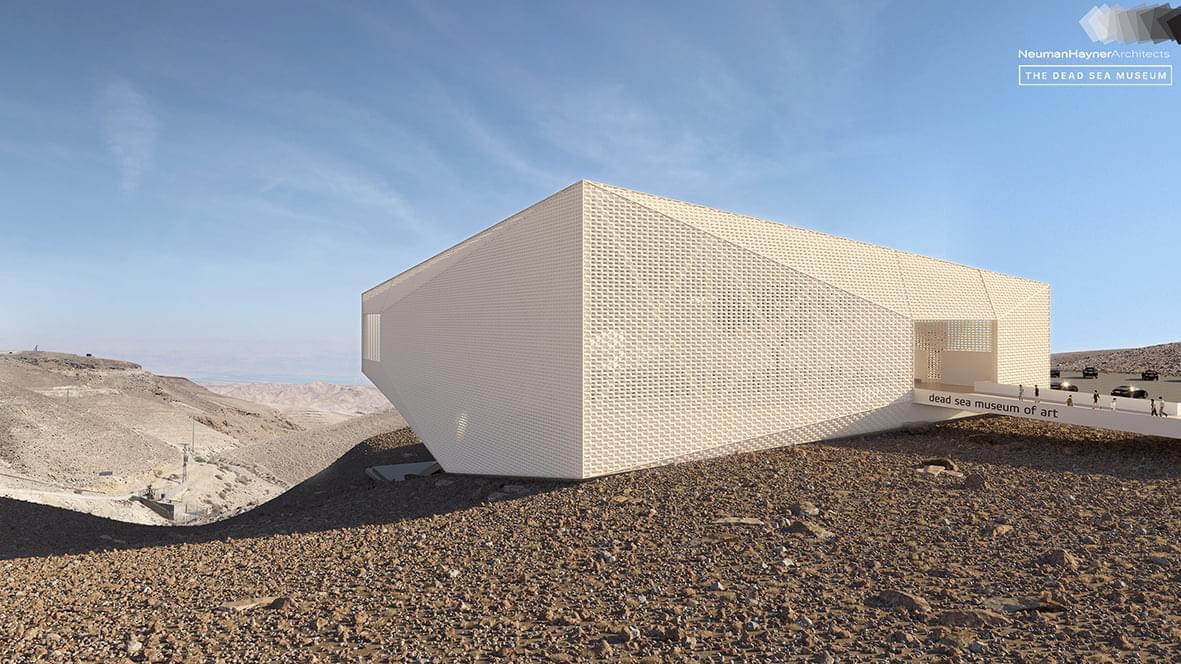
The Dead Sea is dying. A new museum is being built to hold onto what we are losing.
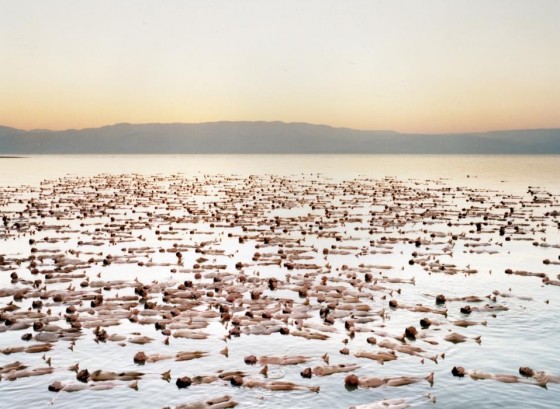
The Spencer Tunick event was arranged by Ari Leon Fruchter, who has launched a virtual museum to stage what kind of art will be showing at the real museum once it’s built on the Dead Sea shores in the upcoming years. Fruchter shared some renderings with Green Prophet.
The concept is designed by Neuman Hayner, a highly acclaimed architectural firm from Israel that creates contextual, original, environmentally aware architecture. We’d love to see a museum going up on the Jordanian side too.
The Dead Sea is dying. Lack of natural run-off from the River Jordan, and an ecological disaster created from mineral mining – for fertilizer – has created a situation where the Dead Sea is retreating quickly. The retreat has created an imbalance which results in dangerous sinkholes that can pop up at any time engulfing whole roads or a hotel beachfront.
Imagine creating a garbage dump in the middle of the Grand Canyon or scaling the top of off Mount Everest? In effect that’s what mineral mining is doing at the Dead Sea. And where politics and money can’t intervene Ari Leon Fruchter is hoping art will help. If you read on after the naked pics, you will see how businesses from Canada, Jordan, China and Israel are driving destruction.
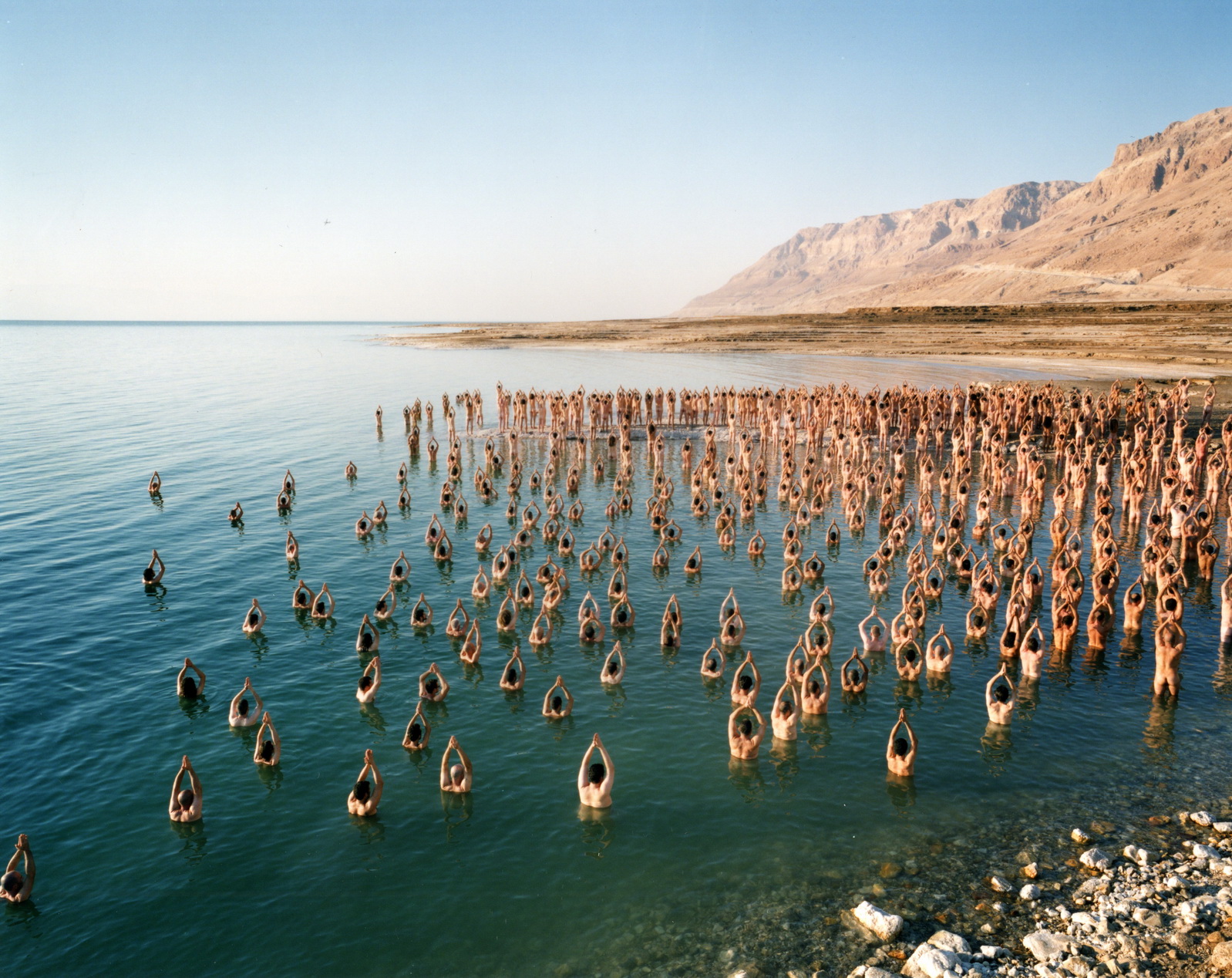
To highlight the beauty of the Dead Sea and to preserve its wonders before it is gone American-Israeli Fruchter invited his New York pal Spencer Tunick to Israel to photograph the Dead Sea in the backdrop of his iconic nude photographs.
The first Spencer photoshoot was 10 years ago and 1,200 Israelis stripped to be part of the moment. Tunick returned in 2016 and once again this week, in a less elaborate shoot, highlighted what we are losing.
“To immerse yourself in the preservation of a natural cause with one’s art is a very rewarding experience, but it also comes with the sad realization that often man-made disasters are hard to stop,” Tunick says.
“This does not mean one should not try to make a difference. With my works at the Dead Sea, I attempt to poetically visually create pushback against the loss of a natural wonder of the world. The works touch on the hope that early warnings of environmental catastrophe will spark quicker responses from people. Change does not happen in a vacuum, sometimes it takes art to spread the word.”
All the Spencer Tunick artwork until now is presented in the virtual museum, planned before any notion of Covid was in the air. The exhibition is on view through April 21, 2022 and can be visited from anywhere in the world.
Pushback against losing a natural wonder of the world
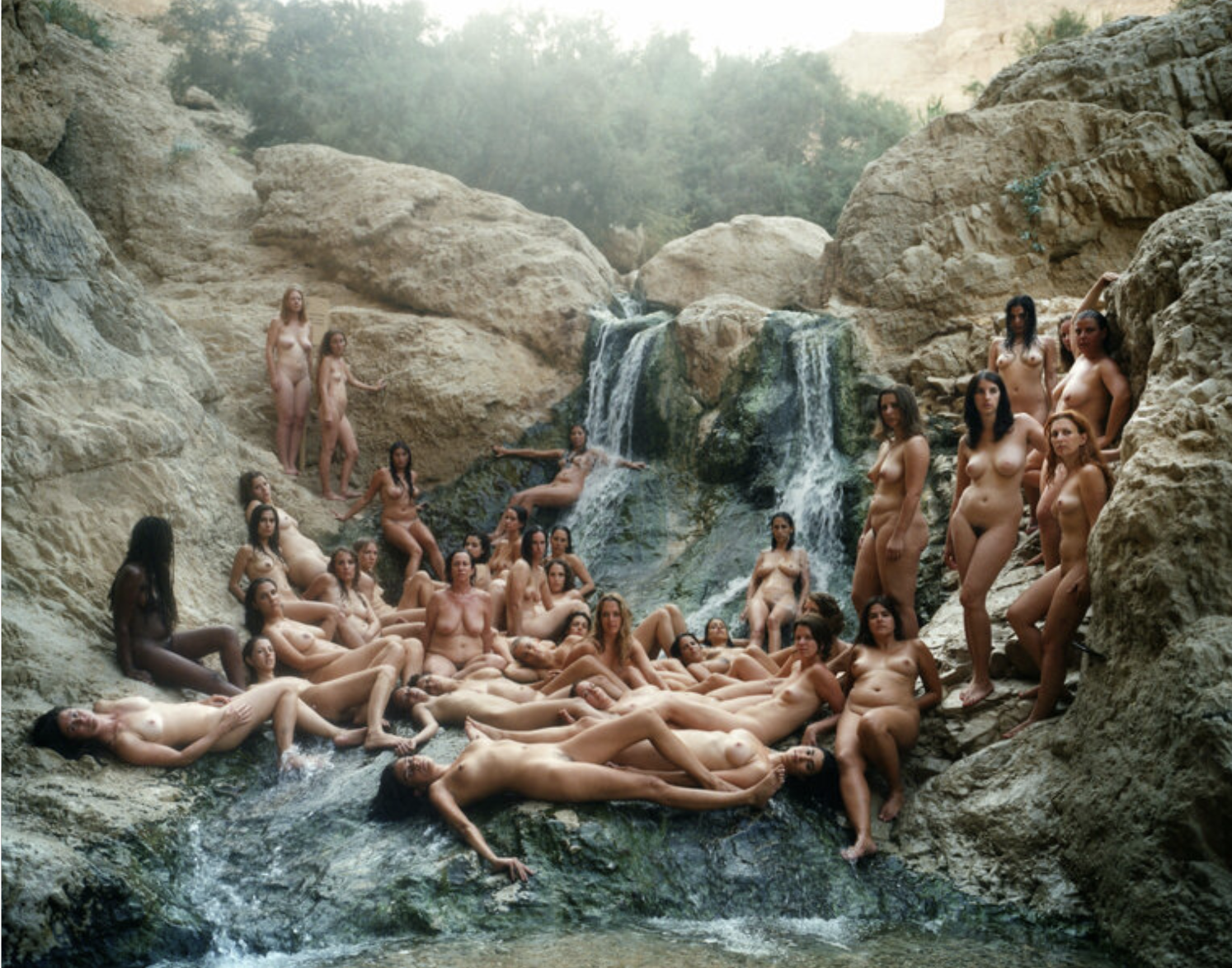
The exhibition contains photographs from 2011, 2012 and 2016, including never before seen photography from the Ein Gedi and Ein Bokek waterfalls where a group of 30 women participated.
The virtual exhibition consists of still photography, but also a video room, where a single-channel video is projected on the wall. Some well-known scenes come to life in this footage, bringing the visitor even closer to a long-gone natural environment that should still exist.
Ten years ago when Tunick created his first Dead Sea Installation his images captivated the world. Part of their appeal was an almost communal atmosphere; without clothes or any other artificial matter, the group of people transcends class, religion and nationality.
They simply appeared together in a moment in time, sharing an environment that welcomes their presence. A first glance at these images might invoke a Zen-like feeling, yet the harsh reality of the Dead Sea disappearing at a rapid pace is asking for a very different analysis. Knowing the urgency, one could also feel these people committed to a joined effort to protect the Dead Sea.
Now, time is of the essence, since the land and seascapes visible in these photographs are gone. Of course, the people in this installation moved on, too. They are a decade older; their bodies more seasoned, and their minds filled with ten additional years of experiences. Most still live, but way more alarming is that parts of the sea have perished.
Naked Dead Sea
The locations in Spencer Tunick’s original 2011 installation are now unrecognizable. The water has retreated and dangerous sinkholes have transformed Mineral Beach where the shoot was done and many other places in the region.
But the experience will show results, believes Fruchter. He tells Green Prophet: “What an incredible experience working with Spencer Tunick again in Israel for the 3rd time. In 2011 & 2016 our focus was on global awareness, hoping that the world would pay attention and do something for the Dead Sea.
“This time we came with our own plan to make a permanent change for the Dead Sea with design plans for a Dead Sea Museum in Arad. The city of Arad has embraced this and helped us produce the installation and have allocated 5.5 acres for the project, branding Arad as the gateway city to the Dead Sea.
“I was fortunate to find amazing partners to work with such as Nisan Ben Hamo, the Mayor of Arad, and Shani Senior Shiloa, the Director of the Arad Cultural Center, which helped ensure that the installation went off without any hurdles creating the best setting for Spencer Tunick and the participants to create incredible and breathtaking art together.”
Want to save the Dead Sea?
Mineral mining by the the Dead Sea Works on the Israel side, and Arab Potash on the Jordanian side, are widely known by environmentalists as the main cause for the destruction of the Dead Sea.
The companies also produce magnesium chloride, industrial salts, de-icers, bath salts, table salt, and raw materials for the cosmetic industry. The Dead Sea Works is a division of Israel Chemicals (ICL), by and large one of the most polluting companies in Israel. Arab Potash is now owned by Nutrien, a Canadian chemicals company trading on the New York Stock Exchange.
Potash, the mineral in question here, is a main fertilizer used in industrial agriculture. The main material we need for feeding the world. Another reason why we need to push for regenerative organic agriculture.
“Additional millions of cubic meters will be awarded to the company over the coming years — subject to information the Water Authority has requested — to compensate for losses of water for reasons such as seepage through the floors of its evaporation pools and increasing salinity of the Dead Sea, which itself is partly a result of the commercial pumping.”
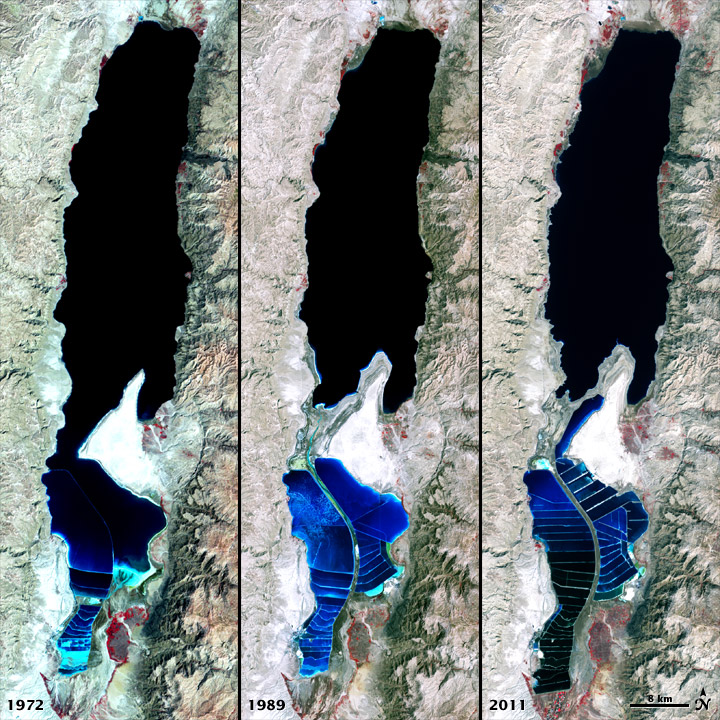
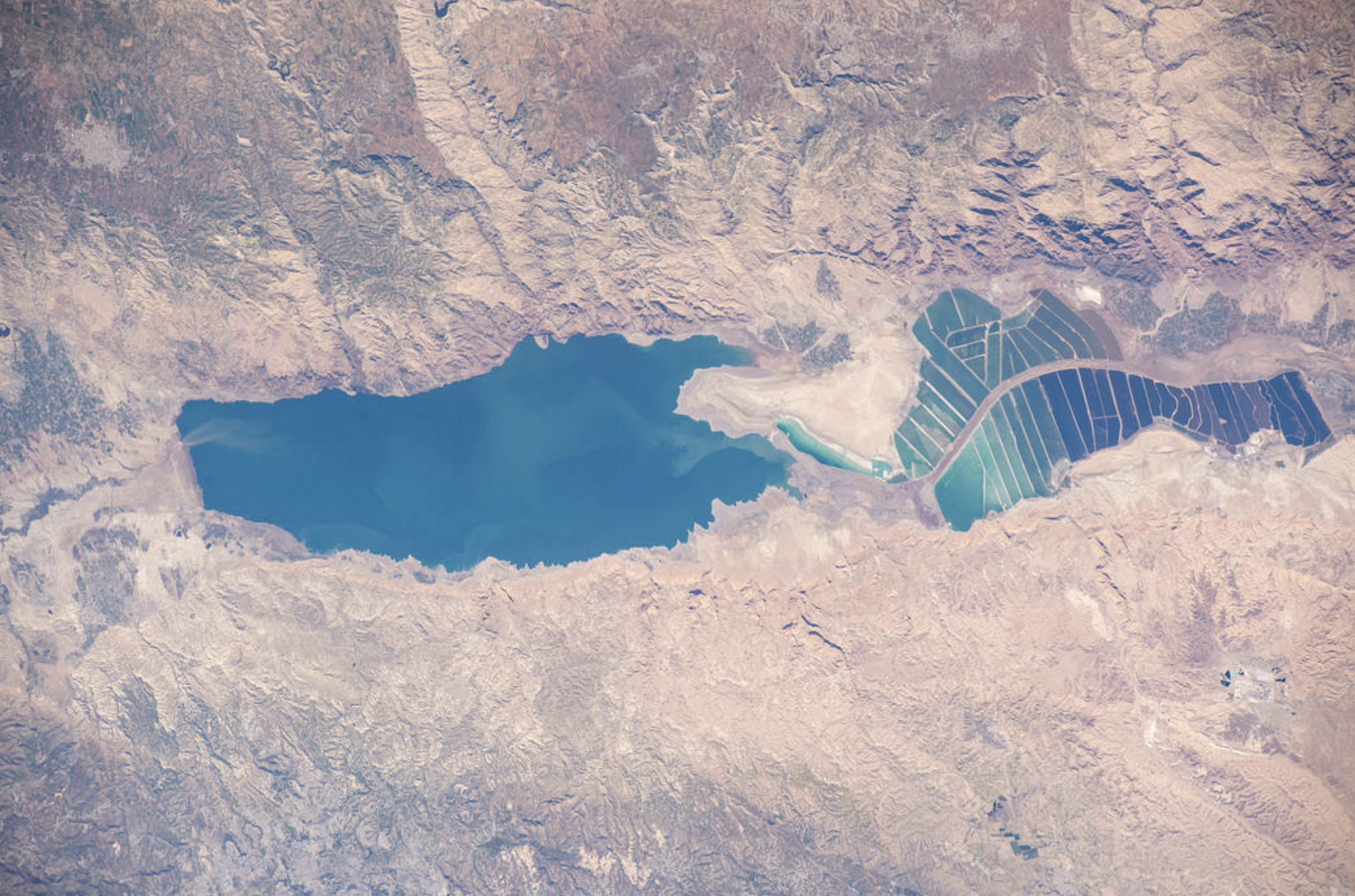
Part of the problem from the process at the Dead Sea is that rather than extracting the potash in mining, they use massive evaporation ponds. If you visit the Dead Sea in person the sight makes you want to cry. Below see how the evaporation pools have expanded from 1972 to 2011. About half of the Dead Sea has become an eyesore. It continues to retreat about a meter a year.
A brief history of Dead Sea profiteering
The Dead Sea was Cleopatra’s beauty secret, but the decision to start mining it for potash and destroying the world’s natural wonder may be blamed on the British.
Today who owns the Dead Sea looks confusing. When companies are bundled up in conglomerates it’s hard to know which actual companies and stakeholders are profiting from the Dead Sea destruction. A quick answer is ICL and Nutrien, based in Canada.
Already back in 1929, with British backing, the Dead Sea was estimated to be worth $4 billion pounds sterling, and an asset that “3 million Jews” settling the land should exploit, according to Sir Herbert Samuel, if they moved there under the British Mandate. That money could pay for the damages caused in the first world war, was his marketing pitch.
Under the British administration, concessions were given January 1, 1930, to extract salts and minerals in the Dead Sea.
On the surface of things, Israel and Jordan still share the land rights over the Dead Sea, which has been the biggest industrial site in the Middle East since the late 1920s. Dead Sea Works was founded by the State of Israel in 1952 as a state-owned enterprise. According to Wikipedia Dead Sea works extract 1.7 million tons of potash annually.
Arab Potash, owned by Jordan and formed in 1956 produces 2 million tons of potash. This company is now majorly owned by Nutrien, from Canada.
Both sides are equally destroying the Dead Sea but no doubt are partnered in a delicate political manoeuvre now involving multinational congomerates.
Who owns the Dead Sea today?
The short answer is Israel Corporation, owned by Idan Ofer, and Arab Potash, which is no longer a Jordanian company but controlled by a Canadian company called Nutrien trading on the Toronto and New York stock exchanges. So if you want to lobby, fight for environmental justice, scream, petition, or get naked: these are the top level stakeholders. Israelis living in London and New York, possibly Monaco, and on a yacht somewhere, and a multinational company trading out of Toronto and the Big Apple.
And this is why environmental protection is so hard to do at the local level.
But we will break it down a bit more if you want to dig deeper. Because we trust there will be some next-level environmental geeks reading this.
Israel and the Dead Sea
Israel Corporation
Israel’s largest holding company. Its holdings are fertilizers and specialty chemicals, energy, shipping and transportation. Israel Corp trades on the Tel Aviv Stock Exchange. It owns Israel Chemicals (now ICL Group),Oil Refineries Ltd, Tower Semiconductor, Kenon Holdings and Zim Integrated Shipping Services. A majority stake, 55%, is owned by a private family, The Ofer Family. The rest 18% is owned by a bank and the remaining is traded publicly.
ICL Group
ICL owns the Dead Sea Works. It greenwashes its operations at the Dead Sea by saying its company the Dead Sea Works is creating a salt wall, a “circular economy” in accordance with nature protection. It uses wording on its website like “sustainable agriculture:.
Jordan and the Dead Sea
Arab Potash is just as responsible for Dead Sea destruction as Israel. The Arab Potash Company (APC) is a company that is primarily involved in harvesting minerals from the Dead Sea. It is the eighth largest potash producer worldwide by volume of production and the sole Arab producer of potash.
The company was formed in 1956 in the Hashemite Kingdom of Jordan as a pan-Arab business venture and it has a 100-year concession (1958-2058) from the government of Jordan that grants it exclusive rights to extract, manufacture and market minerals from the Dead Sea.
It is headquartered in Amman and has its main plants at Ghor Al Safi. The company’s stock is listed on the Amman Stock Exchange’s ASE Weighted Index. It sold its major shares to a company in Canada that merged with another company, making it impossible to really see who owns anything anymore. But we did some tracing.
Canada and the Dead Sea
There was rumor a few years ago that Canada’s Potash Corporation of Saskatchewan (which later merged to Nutrien trading on the Toronto Stock Exchange) wanted to buy the Dead Sea Works. The deal didn’t go through. But PotashCorp (now Nutrien) holds nearly 27.7 percent, but a controlling stake of Arab Potash; the Jordanian government, through the Jordan Investment Corporation, holds more than 26.8 percent, and the Arab Mining Company, which holds more than 19.5 percent.
Ahava, a beauty products company was sold in a majority stake deal to China company Fosun for about $76 million USD is a player in mineral mining for the beauty industry. The company was stalked by the BDS movement so it sold to China to avoid the backlash. It is the only company with commercial rights to harvest mud from the Dead Sea. You can find their products in Walmart.
____
We know you came here for “naked” and not necessarily saving the Dead Sea. So…
Covid is a global phenomena which has caused us all to slow down and consume less. But if we aren’t safe we can’t save the world.
The media brushed off the early days of COVID-19 as just another version of the flu virus. Some 18 months later, the public is only aware that Influenza (Flu) and COVID-19 are both contagious respiratory infections caused by viruses. However, these diseases are caused by distinct viruses. Infection with a novel coronavirus (SARS-CoV-2) causes COVID-19, while flu results from the influenza viruses.
This strain of Covid is more contagious than flu and can cause more severe diseases in certain people. With other vital factors becoming apparent, it takes longer for patients to develop symptoms, and people with the virus are contagious for extended periods.
The world is waking up to the fact that life will never be the same again. However, after a summary of everything we know, we can advise you how to look after yourself and your family and try to resume some semblance of normality.
What is COVID-19?
Covid-19 is one of a collection of Coronaviruses, each having a more or less severe effect on people and animals. Medical experts were aware of the Coronavirus family, with the first batch of research being carried out in the mid-sixties.
Coronaviruses take their name from the noticeable spikes with rounded tops that cover their surface. These tips reminded virologists of a sun’s atmosphere. Coronavirus research has been around since 1963. In 1964 the first human Coronavirus was identified by scientists.
In January 2020, Chinese state media reported that a team of researchers led by Professor Xu Jianguo had identified the pathogen behind their mysterious outbreak in Wuhan as a novel, or new, Coronavirus. Although it became known initially as 2019 –nCoV and then renamed SARS –CoV 2, the virus remains commonly called just “the Coronavirus” or “COVID-19”.
The Coronaviruses reside in most people in the guise of the common cold or mild respiratory infection. In 2019, the virus mutated into something more serious, causing some people to become very ill.
The virus killed many people while others experienced common flu-like symptoms – it was clear this virus was nothing like any other disease experienced globally for at least 100 years.
Covid-19 has proved to be a problematic virus to deal with. For 18 months from the original breakout, over 4.65M people have lost their lives, and a significant amount of others live with post-COVID disorders or Long-COVID.
Research shows that more than four weeks after being infected with the virus that causes COVID-19, some people might develop a wide range of new, returning, or chronic health problems. COVID-19 mainly affects the elderly, pregnant women, and those with specific underlying medical disorders.
Covid testing in cities like London and Tel Aviv is using home screening rapid tests. But they are full of plastic and throwaways. Anyone out there have ideas to make the tests more sustainable?
How does COVID-19 spread?
Once the outbreak in Wuhan happened, the pandemic spread quickly. Suddenly it was not just a matter of being prepared with knowledge on how to protect yourself, but also it was vital to understand the risks and symptoms that come with it.
Scientists found the most common way for this virus to spread is through contact with bodily fluids or secretions, specifically sweat, blood, or saliva, and through contamination by droplets from an infected person’s coughs or sneezes.
Although there has been speculation about COVID-19, most experts agree transmission happens mainly in three ways.
Standing near an infected person breathing out minute droplets and particles containing the virus into the air will cause infection.
Having virus-carrying droplets and particles land in the eyes, nose, or mouth, mainly through splashes and sprays such as a cough or sneeze.
Anyone touching their face, eyes, mouth, or nose with virus-infected hands will become ill.
The general opinion is that people within 6 feet of an infected person are most likely to contract the disease.
Signs and symptoms of COVID-19
COVID-19 has been linked to a broad spectrum of symptoms, from minor aches to severe and life-changing illnesses. Symptoms will emerge from 2 days after exposure to the virus and as long as 14 days after being infected.
It’s vital to know what signs indicate COVID-19 exposure if this should happen because these can range anywhere from moderate (lasting several weeks) to severe (lasting months) and even death.
The following is a list of symptoms, but it’s essential to understand the list may not apply to everyone as different people have reported a vast range of symptoms and outcomes from contacting the virus – the list below is the most commonly reported symptoms.
Fever or chills
Dry coughs and coughing
Shortness of breath or difficulty breathing
Mild to extreme fatigue
Tingling muscles or body aches
Headaches and disorientation
Loss of taste or smell
Sore or itchy throat
Congestion or runny nose
Nausea or vomiting
Inability to stay awake
Prevention methods for COVID-19
To lessen your chances of contracting COVID-19 or spreading it to others, follow steps:
Meet people outside whenever possible.
If meeting people inside, limit the number of individuals you meet and avoid crowded settings.
If meeting people inside, try to open doors and windows to let in the fresh air whenever possible.
When it’s challenging to stay away from other people, use a facial covering.
Throughout the day, wash your hands with soap and water for at least 20 seconds.
Regularly use hand sanitizer, even if you have been washing your hands.
Prevent touching your eyes, nose, or mouth if your hands aren’t clean.
What will life be like after COVID-19?
There is no cure for C19. The vaccination program being rolled out throughout the world is the only effective tool against the virus, but the longer-term effects of the pandemic are far-reaching.
Until the entire world is vaccinated, travel restrictions will remain in place, and caution is recommended. There is a never-ending amount of speculation on what society will look like in five years. Experts in social studies suggest that positive things will emerge from our collective experiences.
People will most likely require yearly top-up vaccinations and regular testing for people who travel regularly.
On a positive note, experts suggest that there will be global solidarity against the effects of the virus with a broader view for the common good. Social scientists project that the pandemic’s common difficulties and experiences will create solidarity and bring people closer together – we hope this is true.
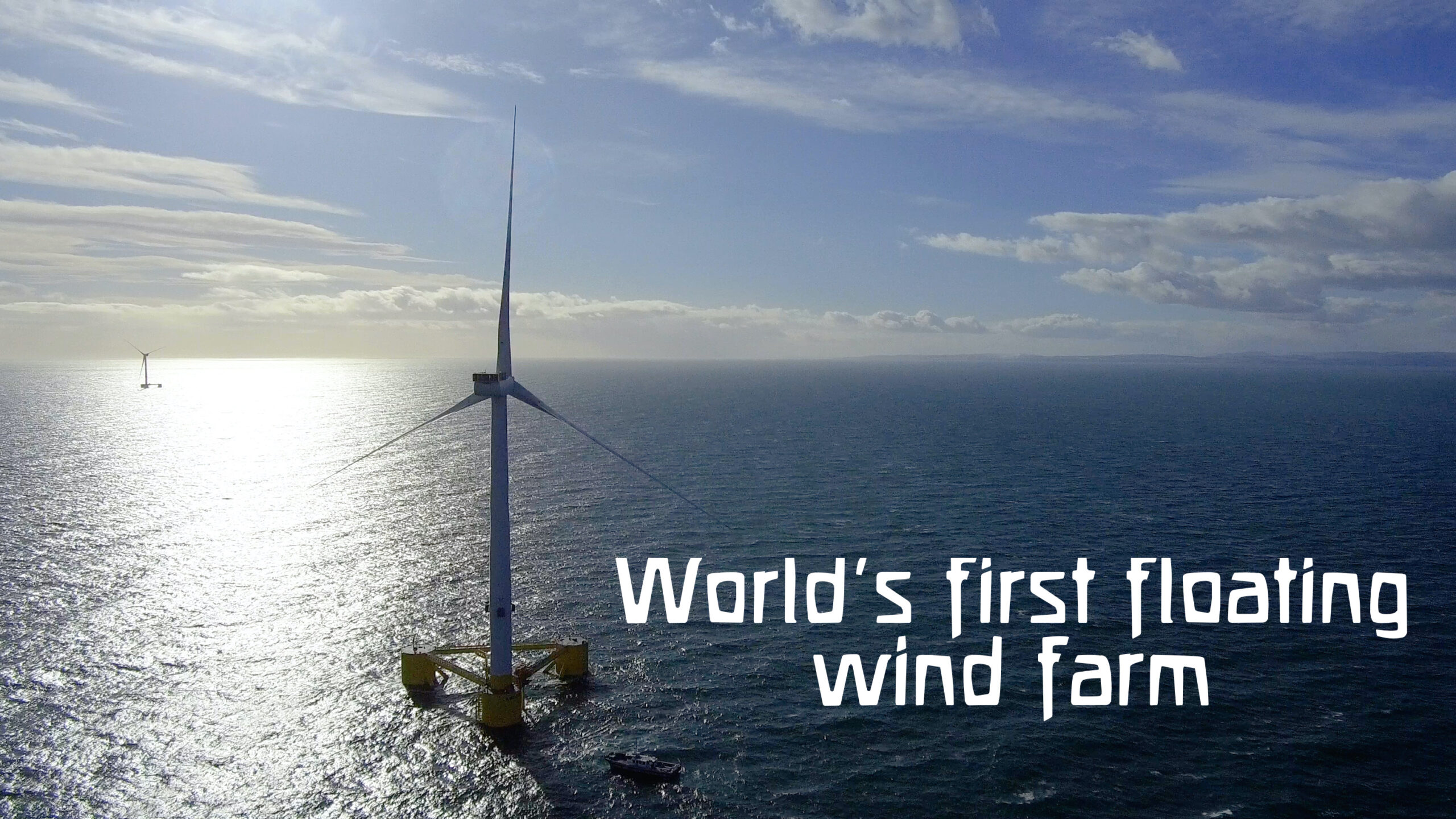
The world’s first floating windfarm is now fully commissioned and delivering green electricity to Scotland’s grid. It is called the Kincardine Offshore Windfarm Ltd. (KOWL)
An ode to my Scottish heritage and known among the world’s bravest inventors: Scotland has just launched the world’s first floating wind farm. Well it was launched a few years earlier but now is officially fully comissioned. I’ve travelled the coast of Scotland and seen onshore windfarms. Not all the locals like them. Are floating wind farms our future?
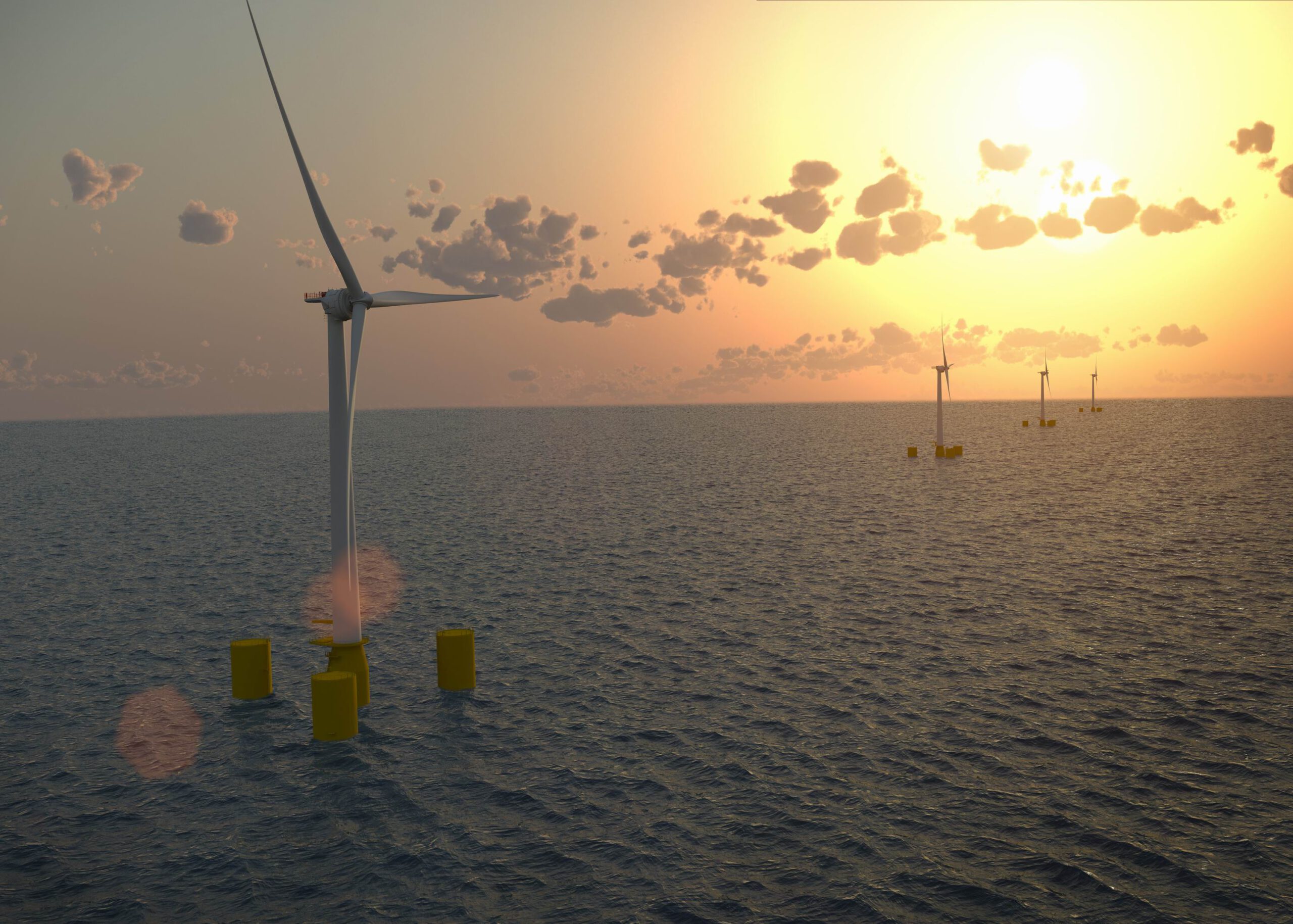
The 50 MW Kincardine Offshore Windfarm – or KOWL – is located 15 km off the coast of Aberdeenshire, in water depths ranging from 60m to 80m.
It takes a multitude of businesses to build a renewable energy farm of any kind and wind energy is no different. The project consists of five Vestas V164-9.5 MW and one V80-2 MW turbine, each installed on WindFloat semi-submersible platforms designed by Principle Power.
Cobra Wind, a subsidiary of Cobra Group, has been responsible for delivery of the project, including engineering, construction, installation and commissioning.
In addition to being the largest floating windfarm in the world, the development also features another first, using the highest capacity wind turbines ever installed on floating platforms.
Kincardine will generate over 200 GWh of green electricity a year, enough renewable electricity to power more than 50,000 Scottish households. I can just see my wee cousins making cups of tea sitting in front of their tellies — powered by the wind.
Jaime Altolaguirre, KOWL Project Director from Cobra, a partner of the project said: “The completion of Kincardine comes at a pivotal time in determining Scotland’s leadership in the floating offshore sector. Kincardine offshore windfarm has shown that the largest and most advanced wind turbines available can be installed on floating platforms in the challenging North Sea environment.
“The project proves that floating wind can play a vital role in tackling climate change not only in Scotland and the UK, but also around the world.”
The Kincardine team has also announced the selection of Aberdeen as its operations and maintenance base.
“The Kincardine project shows how boundaries of offshore wind technology are constantly being pushed forward. We have once again demonstrated that the world’s most powerful turbines can be installed on floating substructures,” said Nils de Baar, President, Vestas Central & Northern Europe:
“We stand ready for the next phase of commercial scale floating offshore wind. With appropriate policy and regulations, floating technology offers the UK an opportunity to expand its global leadership position in offshore wind and build further opportunities for the domestic supply chain. We are proud to be part of the pioneering Kincardine project.”
Muslims, Jews, Christians pray for climate change mitigation
Religious leaders of northwestern Nevada held a collective multi-faith prayer-vigil at Saint Anthony Greek Orthodox Church in Reno on October 17, seeking divine intervention to save the planet and for the successful outcome of upcoming United Nations Climate Change Conference (COP26) in Glasgow.
COP26 is the next annual UN climate change conference. COP stands for Conference of the Parties, and the summit will be attended by the countries that signed the United Nations Framework Convention on Climate Change (UNFCCC) – a treaty that came into force in 1994.
Coordinated by Hindu statesman Rajan Zed and hosted by Saint Anthony Greek Orthodox Church Presiding Priest Father Stephen R. Karcher; it included prayers by Christian (various denominations), Muslim, Hindu, Buddhist, Jewish, Baha’i, Pagan, Unitarian-Universalist, etc., leaders. In addition, prayers were also held through Taiko drums, bansuri (Indian flute), harp, etc. A lamp-lighting ritual by diverse religious leaders was also held on the occasion.
Zed, who is President of Universal Society of Hinduism, points out that it is our moral responsibility to preserve God’s creation, save the planet and care for the environment. It is our religious duty to stop damage to the environment and limit global warming, thus protecting the vulnerable communities across the world.
Father Karcher states that after listening to the pain of God given earth and world’s poor, we joined together to pray for the world leaders to make right decisions in COP26 (October 31-November 12) for the future of the planet and its occupants, committing to urgent global climate action; and for the global business leaders to adopt people-focused policies and embrace sustainable and just economies.
Rajan Zed adds that despite our seriously different faith traditions and doctrines, we are all deeply interconnected, and we should collaborate together for taking care of the creation so that everyone flourishes. In this climate crisis, we should pursue fairness instead of selfish gains and commit to a responsible attitude towards our planet. Exploitation of the planet, causing climate change, must stop immediately.
Father Karcher and Zed note that prayers coming from diverse traditions to the Almighty in a crisis like this are highly effective and intensely valuable and emit collective energy.
This prayer-vigil also urged the faithful, through individual and collective action, to: adopt more sustainable lifestyles, become aware of how we are depleting natural resources and degrading the environment, commit to care for the creation, listen to earth’s sufferings, pray, think of future generations, and work to protect and restore ecosystems.
A “Nevada Multi-faith Pronouncement for COP26” was jointly read by participating religious leaders on the occasion, which included: “We, the diverse faith communities, are united to protect and care-for our planet and all its people to ensure a healthy and resilient future for humankind.”
Thanks to the prayers of these fauth leaders:
Prayers on the occasion were read by Benjamin Katz, Rabbi of Congregation Temple Emanu-El; Father Stephen R. Karcher, Presiding Priest of Saint Anthony Greek Orthodox Church; Abdelaziz H. Elsheikh, Imam of Northern Nevada Muslim Community; Rajan Zed, President of Universal Society of Hinduism; Dr. Norris Delane DuPree, Assistant Pastor of Grace Tabernacle Church of God in Christ in Sparks; Rita C. Sloan, Coordinator of Life Peace & Justice Commission, Roman Catholic Diocese of Reno; Sherman W. Baker, Jr; Baptist Pastor & Chief Chaplain of VA Sierra Nevada Health Care System; Matthew E. Goddard, Buddhist thinker; Gaia Brown of Unitarian Universalist Fellowship of Northern Nevada; Excolas Danae M. Miller, President of Sabbat Celebrations—a non-denominational Pagan group; Norollah Sedigh, Baha’i Faith teacher; Azita Dastyar, Zoroastrian practitioner; Steep Weiss, Director of First Church of Christ, Scientist, in Carson City. Rieko Shimbo and Cindy Lu of Reno Taiko Tsurunokai showcased a Shinto prayer through Taiko drumming; Marina Roznitovsky Oster of University of Nevada-Reno delivered a prayer through harp; while Oscar Dallas Smith prayed through bansuri (A bamboo transverse flute from Indian sub-continent). Christine Jones Brady, Nevada’s Second Assistant Attorney General, also spoke.
Growing cannabis seems like a natural state of mind but professional growers are polluting. Cut your emissions with these tips.
When you think of the industries which are particularly harmful to the environment, industries such as fashion, meat, or oil probably first come to mind. However, there’s one industry often overlooked in this regard – the cannabis industry. Being eco-friendly while growing green is a tough effort, however ironic it may sound. Marijuana plants are usually grown inside and require specific lighting, water, and nutrition conditions which unfortunately result in a considerable carbon footprint. If you’re interested in growing on your own using cannabis seed while caring about sustainability, here are some top tips for you.
Reduce energy consumption
Cultivating weed indoors consumes a substantial amount of energy. It has been reported that 1% of the US’s energy consumption is due to weed cultivation. So, the best way you can reduce your buds’ carbon footprint is to grow it completely naturally, outside in the sunlight. However, outdoor growing may be impossible for a lot of aspiring weed farmers since cannabis plants require a lot of sun and indoor growing isn’t sustainable since it uses an incredible amount of energy. Luckily, there’s a solution for this. Greenhouses are a win-win game because they’ll let you control the conditions while being beneficial for the atmosphere. LED grow lights can be installed in any greenhouse, providing the best lighting condition for your buds, while utilizing considerably fewer resources that reduce energy consumption.
Save water
Grow you own cannabis using less water, applying methods of hydroponics
According to previous academic research, one commercially grown marijuana plant is said to require around 22 liters of water a day. Though this sounds like an absurd amount of water, it is the reality of the industry. However, home-grown plants need much less water due to different growth conditions and there are some ways to reduce the hydration needs of your plants. If you’d like to water your plant less, you should put some hay around the planting beds. Mulch, like hay, holds in the water for much longer, allowing it to evaporate at a much slower rate.
Use organic products
Though weed still can’t be certified organic, there are certain ways to ensure you grow your product with care and without harmful chemicals. Replace additional nutrients you use with those labeled as organic. If you’d like your green to be even more green, you can only use vegan board-certified products. These bottled nutrients don’t contain the ingredients such as bone meal, liquid fish, and other meat industry by-products.
Don’t fear the predators
Having an eco-friendly weed crop may lead to you having to deal with harmful pests. If you’d like to stay completely organic in your growth journey, you may want to introduce a predator into your midst. Thankfully, the feeding chain exists, and there’s always a species that will be happy to eat the little pests which are harming your plants. Be very careful when diagnosing your crop’s malady since a proper diagnosis of your problem will help you choose the enemy species adequately. When you pick out the predator, release it into your crop and enjoy watching the insect version of Fight Club.
Make your own compost
Growing pot leads to certain organic waste that instead of throwing out, you can use in further growing ventures. After you harvest, you may throw the remains of the plants into the compost bin, along with the waste after trimming. In a couple of months, you will have a healthy feed for your plants. You can also make some compost tea for your cannabis. Pour some of your compost into an old sock and put it into a bucket filled with water. You should leave the sock in for a full day. If you have an air pump lying around, you may use it to oxygenate this concoction which will make the tea even more effective in providing nutrition and protection to your plants.
Plan to give birth in the fall or spring, according to new research
An Israeli nation-wide study of more than 600,000 births, led by a researcher at Bar-Ilan University’s Azrieli Faculty of Medicine, reveals consistent links between high and low temperatures and low fetal birth weight, particularly exposure to heat during the second and third trimesters.
Published yesterday in the journal Environmental Health Perspectives, the study evaluates critical windows of susceptibility to extreme low and high temperatures during pregnancy and fetal growth in a nationwide cohort of 624,940 singleton term births in Israel during the period 2010-2014.
The study was led by Dr. Keren Agay-Shay, Director of the Health & Environment Research (HER) Lab at the Azrieli Faculty of Medicine of Bar-Ilan University, together with researchers from Bar-Ilan’s Department of Geography and Environment, the University of Haifa, Ben-Gurion University, the Israel Meteorological Service, and ISGlobal, Universitat Pompeu Fabra amd CIBER Epidemiologia y Salud Publica, all located in Spain.
The researchers collected, mapped, modeled and analyzed data on all recorded live births, residential information at the time of birth, and outdoor temperatures throughout the pregnancy. They subsequently divided the country into three climatic zones and performed a statistical analysis comparing all the data during the days, weeks and trimesters throughout the pregnancy.
Birth certificate data for all live births was obtained from the National Birth and Birth Defect Registry in the Ministry of Health. These data include infant birth outcomes, parental sociodemographic characteristics, and residential address at the time of birth.
Birth addresses were geocoded, or converted into geographic coordinates, using geocoding services such as HERE and Google, and the Israeli property-mapping database GZIRNET.
Eighty percent (80%) of all birth addresses at the home or street level were geocoded. The remaining 20% was geocoded at the settlement level. This 20% comprised births to women with no street address who live in small, non-urban settlements, such as local councils, villages, community settlements, and kibbutzim, as well as births with street address data missing.
Israel’s highly variable climate, determined by altitude, latitude, and proximity to the Mediterranean Sea, was classified into three climatic zones: Mediterranean (characterized by a dry, hot summer), and semi-arid and desert/arid, both characterized by dry climate and hot temperatures.
For each zone average daily temperatures during various time periods, such as days, weeks, trimesters and entire pregnancy were converted into percentiles based on the distribution among all women in the cohort who resided in the climatic zone. This was categorized to centiles.
Next, the researchers performed a statistical analysis and evaluated the associations between temperature centiles and birth weight adjusting for newborn ethnic-religious group, sex, and maternal marital status, origin, age, education, socioeconomic class and employment status.
Consistent associations were observed between high and low temperatures and fetal birth weight. The strongest links were observed during the second, and particularly the third, trimester for heat and cold.
Extreme cold and hot led to smaller babies
Analysis of associations between term mean birth weight and zone-specific temperature percentiles for all three climate zones combined indicated inverse U-shaped associations, such that the coldest and warmest temperatures were associated with lower term mean birth weights than were temperatures near the middle of each distribution.
The inverse U-shaped pattern was evident based on average temperature for the pregnancy as a whole. Exposure during pregnancy: compared with women exposed to average temperatures in the 41-50th percentile range, those women exposed to cold temperatures (equal to or below the 10th percentile) had lower estimated mean birth weight of 56g (95 CI%: –63g, –50g) and those exposed to hot temperatures (above the 90th percentile) had lower estimated mean birth weight of 65g (95 CI%: –72g, –58g).
Trimester-specific associations also showed inverse U-shaped patterns, with the strongest associations estimated for extreme temperatures during the third trimester. Inverse associations between term birth weight and the coolest and warmest temperatures were also significant for the first and second trimesters, but were weaker than corresponding estimates for the third trimester.
“Our study demonstrated the significant associations between exposure to high and low outdoor temperature and birthweight in all term births born in Israel during five years.
Lower birthweight may indicate abnormalities in intrauterine growth and is a risk factor for morbidity during early childhood and over the entire life course,” says Dr. Keren Agay-Shay, Director of the HER Lab at the Azrieli Faculty of Medicine of Bar-Ilan University.
How you can reduce risks in pregnancy
“In our study we used a novel high resolution spatiotemporal model that was not used previously. The patterns of associations were consistent when stratified by urbanicity and geocoding hierarchy, when estimated for daily minimum and maximum temperatures, when exposures were classified based on temperature distributions in 49 natural regions, and when estimated for all live births (including preterm births and those with birth defects),” adds Agay-Shay.
The identification of susceptible windows during pregnancy may clarify underlying mechanisms and potential strategies to reduce risks in pregnant women exposed to extreme temperatures. Study estimates suggest a potential window of vulnerability to cold from 3 to 36 weeks, with the strongest association during week 36, and potential windows of vulnerability to heat from weeks 3 to 9 and 19 to 34.
Due to increasing temperatures resulting from climate change, the researchers stress that public health organizations are advised to develop strategies to address these challenges on a national, as well as a community, level. Additionally, identifying windows of vulnerability to temperature can assist clinicians in constructing and refining the set of recommendations they provide to pregnant women.
Who is a better recruit? The guy who rides his bike to work to save carbon emissions or the one who flies to vegas every weekend for fun? You can determine who will fit your ESG policy before you hire.
When you hear the word “sustainability”, you’ll be more likely to think about green energy and environmental conservation than HR departments and hiring practices. However, sustainability is more than a buzzword: it’s a philosophy. Reducing waste is the central tenet of sustainability, and that goes for both carbon footprints and staff retention.
Inefficiency and waste are as bad for business as they are for the planet, and tackling these problems requires the same approach in both instances. Businesses wish to build more sustainable practices because they reduce waste, improve net profits, and help ensure commercial success. After all, a company is defined by its workforce, and pushing sustainability through recruitment practices can bring clear benefits to every level of a business.
What is Sustainability?
Once a business reaches a certain size, sustainability can become as important as growth. When a company begins to turn a consistent profit, stakeholders need to begin reassessing business processes to look at the parts of the firm that aren’t running as efficiently as they might be. In some cases, finding ways to pare down operating costs could be just as vital as incoming revenue in maintaining net profits.
While wasteful business practices exist, companies may as well be flushing their earnings down the drain. Furthermore, corporate inefficiency on a grand scale is something that the modern consumer is likely to take a very dim view on, resulting in sometimes irreparable damage to the brand.
On the other hand, a focus on stability could head off these problems before they even come to pass. Areas where sustainability is likely to prove a priority include material requirements, energy usage, productivity, and, especially, recruitment.
It’s almost impossible to disentangle commercial sustainability from environmentalism because it’s very rare to find one without the other: a firm that’s cut down on industrial waste and bloated business processes will, by design or otherwise, probably be generating a smaller carbon footprint.
Business Sustainability 101
There’s nothing stopping stakeholders and department heads from getting together to look at the ways a business can reduce waste and improve efficiency. However, a genuine commitment to sustainable business practices is an intensive process that requires a dedicated team. Sustainability departments usually employ a three-tier structure:
Chief sustainability officer: The chief sustainability officer (or head of sustainability) represents sustainability at a board level and will decide with other executives and stakeholders about the direction of a company’s sustainability policy.
Sustainability team members: This will usually be a small team comprised of a few members who report to the chief sustainability officer and help execute and administrate sustainability policy.
Sustainability Embeds: These will be staff integrated across the company’s business structure. They don’t report directly to the chief sustainability officer, but they do interface with the sustainability department to ensure sustainable practices are being followed across the company.
Sustainable Recruitment
Poor hiring practices can take a lot out of a company, both in terms of costs and efficiency. Hiring, onboarding, and training a single candidate costs the average company thousands in front-end investment, and if that hire is unsuitable or unmotivated, they can slow down a department and negatively impact the work rate of more competent staff.
Sustainable recruitment, therefore, is a drive to create productive long-term employee relationships that can prove mutually beneficial. Leveraging candidate data with the right online resources is the best way to find new prospects who tick all the boxes for a position and can bring a proven track record to the role.
Sustainable Employment Roles
Sustainability recruitment networks aim to give employers access to a wide talent pool of accomplished and motivated staff who can help enact sustainability practices and best advise a business where policy can be improved. Of course, the kinds of sustainability positions your company can benefit from will depend greatly on your industry. Some positions might include:
These are just a small sample of the different sustainability positions many companies will hire for. Sustainability recruitment networks and agencies can identify the positions most likely to bring about positive change for your company.
Sustainable Employee Retention
Sustainable recruitment puts the emphasis on finding the recruit most suited for a long-term future in a role. They will intermittently check back in a few months’ time to see how the new hire is getting on in their role. Sustainability recruiters aren’t just there to find a fit for a job; their role is also to educate firms about how to get the most out of their sustainability hires. In this way, both employees and employers have a mutual obligation to each other to help both parties further the goal of stability within the business.
To this end, it’s critical that new hires possess values that align with the brand values of the company they’re moving to, or they are likely to have trouble excelling in the position. Fortunately, there’s an easy way to avoid this: integrate sustainability into the way you market your brand during the hiring process.
Members of the modern workforce are more environmentally conscious than their forebearers, and the best and brightest will want to be able to go home and sleep at night knowing that the company they work for is one of the good guys. Sustainability can boost employee engagement, but it can also attract talented candidates who are onboard with your company’s values before they’ve even walked through the door on their first day on the job.
Elsewhere, you can look at the micro-processes within your company that can make sustainability happen. Converting your application processes to paperless systems is one obvious way you can save money and make your intentions known to prospective candidates. As more business processes move to digital, this is a small but important step in enacting greener business processes.
Final Thoughts
Sustainability needs to be more than just lip service to corporate respectability politics: it needs to be an influence on the orientation of your entire business, and recruitment is the best place to begin your journey to true sustainability. Hiring a sustainability department can set your company on the path to more efficient and environmentally friendly business practices which could also help save money and drive profits.
You can have a business and still live the #vanlife dream.
The sustainability movement isn’t new. In fact, the clamor for a greener world has been around for decades now. Recently, a large number of companies are joining the trend. Back then, many shied away from such practices due to the belief that it was harder to quantify their return on investments.
However, with modern advancements and approaches, that is not the case today. Apart from providing current needs without affecting the future generation’s ability to meet theirs, businesses that practice sustainability have also seen a positive impact on their growth. Since more people have become environmentally conscious, companies found that they meet consumer needs for more eco-friendly options.
Moreover, it is easier to attract talent and partnerships with other companies with the same stance. Of course, to truly make a change, even small business owners like you should do their part too. To give you an idea of how to start your green journey, we’ve listed down sustainability practices you can bring to your business.
Using Eco-Friendly Products
The first step to a greener business is to become conscious of the products you use. For instance, look into your suppliers and check on how they produce their materials. Do they comply with environmental laws? Are their employees paid fairly? If not, it’s best to look for other suppliers.
Eco-friendly packaging has become an important part of many businesses due to the increased focus on sustainability. Custom biodegradable packaging is one way to make your business more sustainable. Biodegradable packaging is made from materials that can be broken down by bacteria or other living organisms. This means that it will not contribute to the growing problem of plastic pollution. This type of packaging is a great option for businesses that want to reduce their environmental impact. Custom biodegradable packaging also allows you to send a message to your customers that you are committed to sustainability.
A great alternative is to look into local suppliers. Not only do you support fellow small businesses, but you also cut down on transportation costs. Furthermore, to reduce your businesses’ pollution, you should also switch to eco-friendly packaging.
Choose biodegradable products made from materials that break down quicker. For example, if you’re using labels, it’s best to use an eco-friendly option. You can check out the compostable labels by Wedderburn. Not only are these labels fairly easy to use, they also lessen the negative impact your business makes when it comes to the environment.
Buy handmade pottery from local craftsmen and women. These are cups made by Karin Kloosterman
Going Paperless
The transition to a paperless company requires a lot of planning. Fortunately, technology is there to help you through the process. Instead of keeping paper documents, your business can become more sustainable by trading them with digital receipts and files.
Scanners will be your biggest friend as you sort through old files to digitize them. Likewise, surveys and contracts need not be printed out with the help of PDF forms. Note-taking can be done through the notes app on your computer or phone during important meetings and business calls.
If you feel like going completely paperless is impossible, you may control your paper usage instead. Decide on what files can and cannot be printed. Similarly, avoid providing free access to notepads and sticky notes to employees. As an alternative, just designate them with a specific amount of paper for a certain period.
Making Use of Secondhand Finds
Furnishing your office with secondhand finds saves you not only money but also lessens your impact on the environment. As brand-new desks, chairs, and couches require lots of energy and raw material, why don’t you consider looking for vintage pieces to decorate your space?
Vintage finds will make your office look like a million bucks.
Visit your local thrift store, or keep an eye out for sales and auctions from companies going out of business. If you’re quick enough, it’s highly likely for you to score a quality item at a great price! To save even more, you may also take advantage of factory-refurbished printers and laptops online.
Doing Partnerships With Green Companies
As a small business owner, collaborating with other companies with the same goals for sustainability will help you become more successful as you pool your resources. Of course, ensure that you partner up with someone who has the same vision as you.
Align your interests and strategize on what can be mutually beneficial for you. It also helps to be aware of your current carbon footprint. Luckily, every industry has a carbon-neutral vendor you can choose to partner with. So, if you want to commit to becoming a more sustainable business, be wise about the partnerships you make.
Involving Customers and Employees
Lastly, you also have to include your customers and employees in all your initiatives. To start building a greener mindset, you may incentivize eco-friendly habits. Encourage customers to bring reusable cloth bags and reward them with a discount. Instead of giving away printed brochures and pamphlets, you can provide them with an option to send digital copies of your promotional materials to their emails.
On the other hand, offering employees remote work schedules can significantly reduce your business’s carbon footprint. Hosting virtual meetings can actually contribute to fewer cars on the road and cuts down on fossil fuel usage. This is especially true for employees who travel in their cars alone.
Takeaway
Sustainability practices not only save the world but also bring profit into your company. With the trend growing every year, it’s high time you switch to more eco-friendly business practices too. While not all strategies perfectly work for everyone, the list above can help you start your journey to prioritizing the planet.
Some online brands stock furniture that has eco credentials. Here are some names to look for.
While it is true that corporations shoulder most of the blame for our environmental concerns, the average person could play a vital role if everyone took action to save our planet. There are a lot of ways that you can decrease your own waste that goes to landfills. Some of the most popular include:
Purchase food and beverages that come in recyclable containers.
Use reusable shopping bags.
Upcycle items that can’t be recycled, as often as possible.
Purchase consumables with long lifespans to reduce waste.
Yet when most people consider how they can help their environment, their purchases of things such as furniture do not cross their minds. However, it is important to note that several tons of furniture go to landfills every year. A large amount of that furniture waste is not biodegradable.
The cheaper the furniture, the sooner it will become too dilapidated to use. When you buy a new couch every few years, you’re sending a lot of waste to the landfills that you aren’t even considering. By contrast, when you purchase more expensive and durable furniture it lasts much longer, which means less landfill waste. Not only does better furniture stay out of landfills longer, but they also save you a lot of money in the long run when your couch could last 15 years instead of 5 years.
Ready to jump into buying more eco-friendly furniture? Here are some of the most eco-conscious furniture brands available online from 1stop furniture.
Ashley Home Furniture
Ashley is a home furniture brand that is familiar to most of the world. This brand sells furniture in 155 countries, and they are working hard to reduce their carbon footprint. Their overall sustainability plan can be found on their website and encompasses several initiatives. Their top priorities are reducing the energy required for manufacturing, eco-friendly waste management and disposal, resource preservation, water conservation, and develop more sustainable packaging.
Acme furniture
Acme Furniture is one of the most well-known furniture brands in the world, selling on popular platforms like Amazon and Walmart, as well as a myriad of online furniture stores. They have been working on making their own furniture more sustainable, and recently released an eco-friendly kids’ line of furniture that features soft fabrics and rounded corners made with renewable resources.
Aspen Home furniture
Aspen Home is another furniture brand with a global presence and sustainability measures. Aspen furniture can be found in almost any online furniture store, and its manufacturing process begins with sustainable materials. Their site boasts that they do not take any wood or veneers from rain forests, and use primarily sustainable lumber sources.
Furniture of America
A popular furniture brand for budget-minded or amateur interior designers is Furniture of America. While they are not as far along on the sustainability chain as those furniture brands mentioned above, they are making some effort to source sustainable woods and other materials for their manufacturing process. They also recently released a specifically eco-friendly furniture collection.
Leonardo DiCaprio, known in his movie roles for What’s Eating Gilbert Grape and Titanic –– and for dating Bar Refaeli – has invested in not one but two alternative meat companies, Aleph Farms, based in Israel, and Mosa Meat from the Netherlands. Unlike the Impossible Burger and the OSI Group which creates alternative protein from peas, which is tasty, but hard to digest, Aleph and Mosa create meat in a lab using original cells from a real animal.
The idea is to create real meat that tastes like meat, not a plant-based substitute. But lab meat is exactly like meat, removing the suffering and methane gas production, oh and antibiotic use, so the argument goes.
Mosa’s plate of meatballs invested in by Leonardo Dicaprio
“One of the most impactful ways to combat the climate crisis is to transform our food system. Mosa Meat and Aleph Farms offer new ways to satisfy the world’s demand for beef, while solving some of the most pressing issues of current industrial beef production. I’m very pleased to join them as an advisor and investor, as they prepare to introduce cultivated beef to consumers,” said DiCaprio.
It’s common for celebrities to invest in startups, especially Israeli ones. Leonardo is in the footsteps of other Hollywood actors like Ashton Kutcher.
Both Mosa and Aleph have demonstrated the ability to grow beef directly from animal cells, with the unveiling of the first cultivated hamburger by Mosa Meat in 2013 and the first cultivated steak and ribeye by Aleph Farms in 2018 and 2021 respectively. The meat made still costs a mini fortune but new investments will help the companies scale production and cut back costs.
Aleph Farms are growing steaks in a lab. For now they might cost $2000 a pound but the goal is to grow to scale
Some of us have turned vegan or vegeaware or at least participate in Meatless Mondays. Eating meat –– until we find a better solution to satisfy meat eaters –– is here to stay. New innovations might help alleviate climate problems, as well as a growing interest to return back to the land, hunt one’s own meat, and eat less or whole animal meat eating.
With global meat consumption projected to grow 40-70% by 2050, cultivated meat offers a solution to greatly reduce the current negative impacts of industrial beef production. Analysts project the cultivated meat market could reach $25 billion by 2030, as part of the broader protein transformation.
According to an independent Life Cycle Analysis study, cultivated beef production is projected to reduce climate impact by 92%, air pollution by 93%, use 95% less land and 78% less water when compared to industrial beef production.
The automated process through which cultivated meat is produced, and the sterile environment of its manufacturing, will eliminate the use of antibiotics and greatly reduce the risk for pathogens, contaminants, and foodborne illnesses associated with concentrated and intensive animal farming.
Cultivated beef production offers the opportunity to use the spare land for re-wilding habitats which would naturally reduce emissions or for producing more food for people. Can we finally stop cutting down more Amazon rainforest? That’s us doing it – not them.









 Signapore has an enchanting take on green space. Plan eco activities between business meetings. Try Project Jewel for a fascinating eco experience.