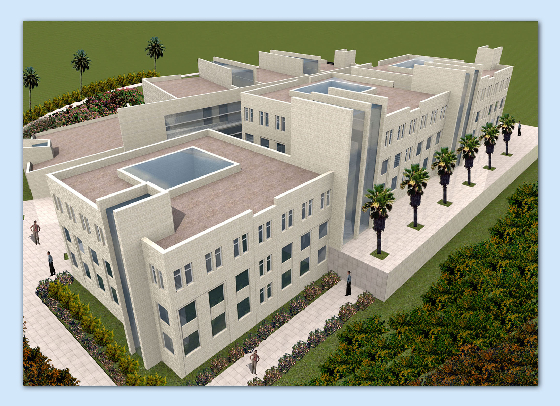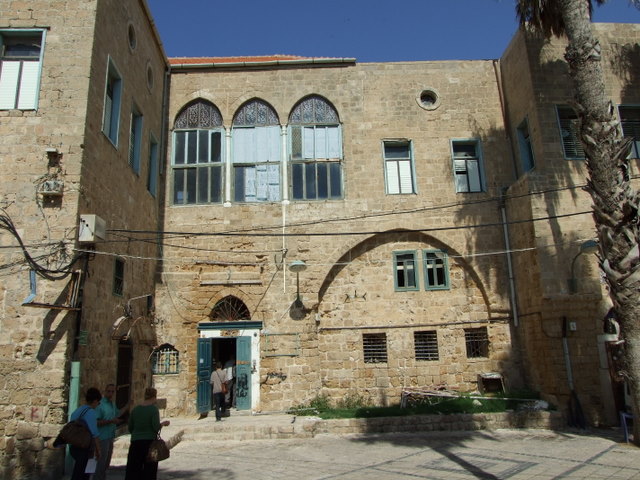

 A living conservation laboratory (above): a new partnership with Rome will boost Acre’s efforts to protect its ancient history, making it more sustainable architecturally and for its residents and visitors.
Declared a World Heritage site by the United Nations (UNESCO), for more than 20 years the Israeli city of Acre (pronounced “Akko” by the locals) has been a living conservation laboratory. Its history is apparent in its citadels and fortresses, churches and mosques, all of which tell a story about the people who came, conquered, ruled and then glorified this Mediterranean port town, once considered the key to the Levant.
A new partnership with the City of Rome will give a boost to Acre’s efforts to protect its unique history, making the city a more sustainable one.
The May inauguration of the International Conservation Center ‘Città di Roma’ celebrated a generous donation to Acre from the Mayor of Rome, Mr. Giovanni Alemanno. After winning the annual million dollar Dan David Prize, bestowed upon different people around the world by Israeli industrialist Dan David, Alemanno chose to funnel his prize back to Israel.
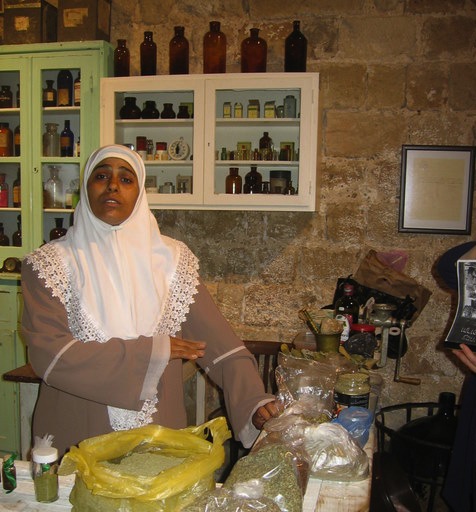 The donation is important, because maintaining the living city of Acre along with its preserved heritage sites is a challenge. With a marginalized, low socio-economic population that lacks higher education living within its Old City walls, overseeing and conserving the local treasures is a complex project.
With centuries-old traditions dating back to biblical times, Acre is one of the oldest continuously inhabited cities in the Holy Land, held dear by each of the monotheistic religions. Its territory has belonged to the Israelite tribe of Asher, the Greeks, the Crusaders and the Ottomans, and it is now home to an Israeli Arab population.
The city is a tourist attraction for contemporary reasons, too. It boasts a colorful oriental market, ancient, water-worn city walls, several museums, beaches, a fisherman’s port, a marina, hotels and colorful festivals including a popular annual fringe theater festival.
“We are a stage, this Old City of Acre. An ancient city for Crusaders and the Ottomans, and in all this the people of today live. It’s an archeological site, a historical city and a living city,” archeologist Shelley Ann Peleg, director of the conservation center, tells ISRAEL21c.
To conserve and preserve
The conservation center was established four years ago in an Ottoman building, in an effort to halt the current trend of deterioration and destruction of local heritage sites. The building that houses the center has its own story to tell. Dating from the Ottoman period – and constructed upon the foundations of other ancient structures – the center boasts a ceiling mural that’s due to be restored by future students, as well as impressive ornamentation and windows.
The recent official ceremony and renaming celebrated some of the International Conservation Center Città di Roma’s current programs and aims. “Preservation is a field that keeps things as they are and doesn’t do anything else,” says Peleg, while “conservation is about guarding and protecting.” She refers to Acre as a “living laboratory.”
Peleg relates that as part of a five-month program the center is hosting six internationals and three Israelis who are learning better practices to conserve Acre’s physical history, particularly its stone. Among the trainees is an Israeli-Arab stonecutter from Acre named Mohammad. The rest of the team comprises academics from various fields. “We’ve built a personal project according to field, interest, knowledge and what they want to develop. Each has their own personal tract. This takes place every year, twice a year, and it’s the flagship program of the center,” she tells ISRAEL21c.
The namesake of Rome’s Città di Roma is now the largest conservation laboratory in Israel. It will be run in partnership with the Israel Antiquities Authority, the Old Acre Development Company and the Acre Municipality, with the cooperation and support of Italian institutions and partners. Additional consultancy and professional training support is also provided by the Embassy of Italy in Israel and the Italian Ministry of Culture, which has been assisting the Israel Antiquities Authority since 2005.
Reaching out to the public, academia and tourists
“It’s to strengthen the people who live here,” she explains. “Conservation efforts are expensive, and we want to get the local people in Acre involved. Protected by Israel’s antiquities laws, it is against the law to destroy ruins.”
The locals are aware of the significance of their surroundings, Peleg explains. In the case of vandalism, for instance, “instead of charging them, we work with them to teach them the importance of their city. We manage to give them a kind of understanding of what needs to be done.”
Seeking to attract a broad range of people from the public, academia and also tourists, the center will offer professional academic courses and create projects worthy of international cooperation, including a summer program for international students who can come to Acre ‘Italian style’ to work on preserving buildings as they learn more about the field of conservation.
Underlining the importance of the event to all, guests invited to the inauguration ceremony included the Italian ambassador to Israel, Luigi Mattiolo, Prof. Umberto Broccoli, the superintendent of monuments and cultural properties of the City of Rome, the director-general of the Israel Antiquities Authority Mr. Shuka Dorfman, and many others.
Read more on sustainable cities:
Lessons from Colombia on Planning the Sustainable City
Re-assessing Masdar City
Energy City Qatar
(This story was first published on ISRAEL21c.org)