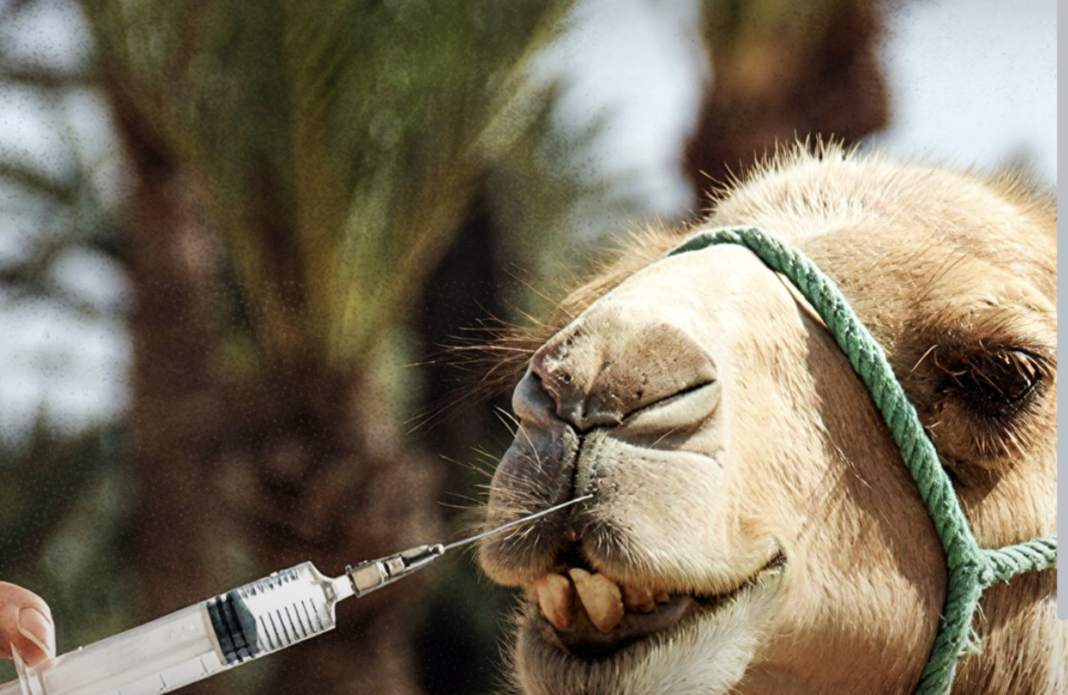

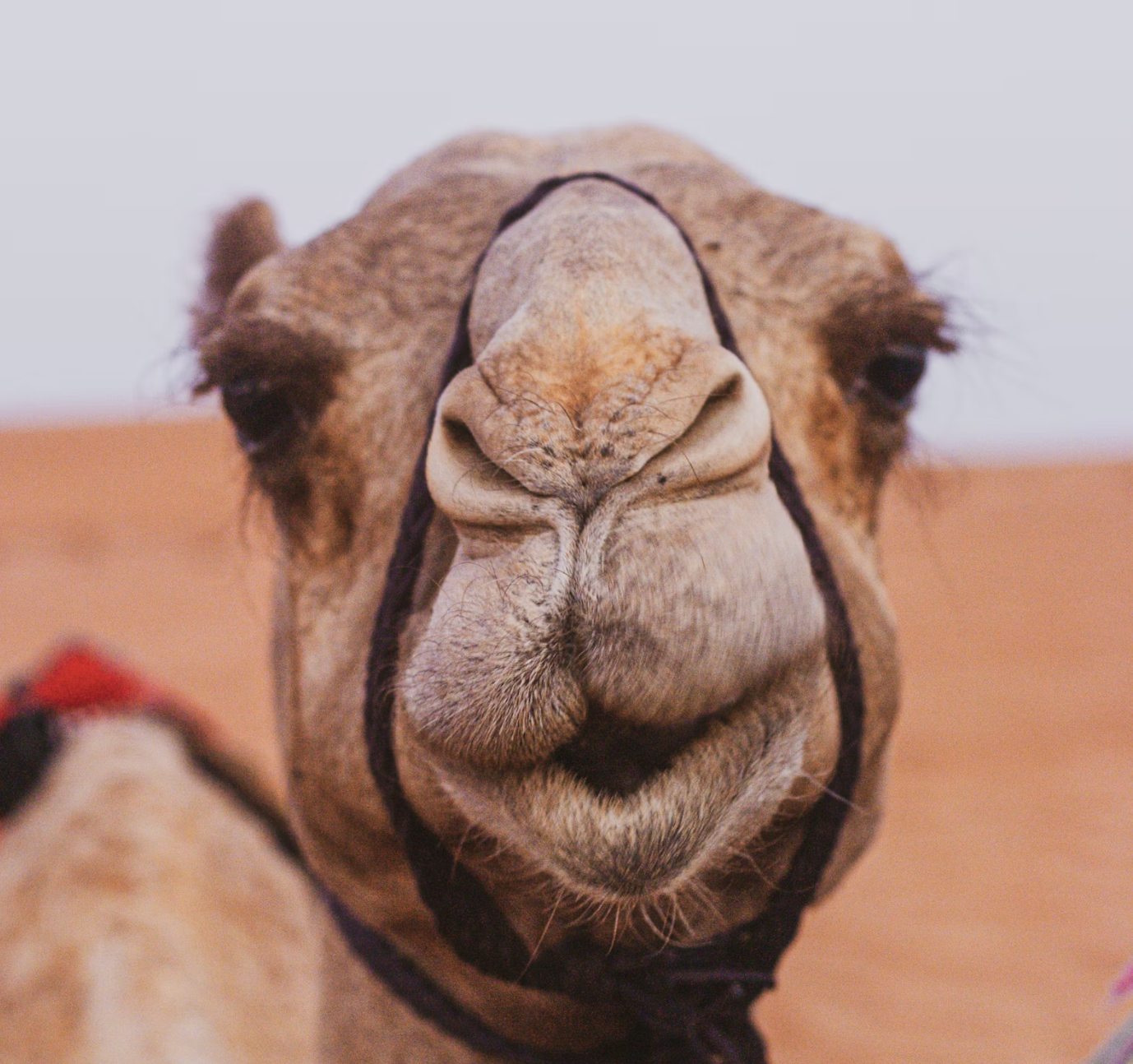
In the desert culture of Oman, camels are more than a transport system, camels are status, heritage, used for health products – especially their milk, and sometimes camels are beauty queens. But at this year’s 2026 Camel Beauty Show Festival in Al Musanaa in Oman, judges had to disqualify some of the contestants for the enhancements used to look their best.
Some 20 camels were disqualified by contest inspectors who found cosmetic enhancements used on the camels including Botox, dermal fillers, hyaluronic acid injections, and silicone used to inflate humps or alter facial features or the skin on the camels neck. Maybe one day the same beauty standards will be applied to women who undergo insane procedures to enhance their looks.
Related: the benefits of camel milk
We wrote about Botox on camels in 2018 at Saudi Arabian festivals and the practice hasn’t stopped. Camel beauty competitions judge animals on a variety of measures such as coat shine, neck strength, head shape and the size and symmetry of their humps. Winning camels, and those with the longest lashes and fullest lips, can increase their value by the thousands when used in breeding markets.

Festival organizers say they are starting to take a serious stance and are cracking down on beauty forgery and use X-rays and scans to see what Botox can’t hide: the beauty under the skin.
The stakes for beautiful camels are high. Some camels can fetch millions of dollars in prizes, including pageants at the Saudi Arabian King Abdulaziz Camel Festival, where similar cosmetic cheating has led to disqualifications in past years.
Festival organizers have said they are working to halt “all acts of tampering and deception in the beautification of camels,” adding that they would impose “strict penalties on manipulators” going forward.
Veterinarians and animal-welfare advocates warn that injecting camels with cosmetic substances can cause pain, infection and long-term health complications. In some cases the animal body parts are plumped by elastic bands that restrict blood flow and which can cause animal suffering and pain.
In Saudi Arabian camel contests that fetch prizes worth $60 million USD, owners are also required to swear on the Quran that they are telling the truth about camel appearance and ownership. Judges report that this is proving to be the best tactic to weed out cheaters.
In the desert, it seems even camels are not immune to the global pressure to look perfect. What’s worse is it’s a form of animal abuse, and such critiques should be passed on to people choosing wives, even if you don’t have to trade a certain number of camels to get one.