A Brief History of Basil From India to Italy

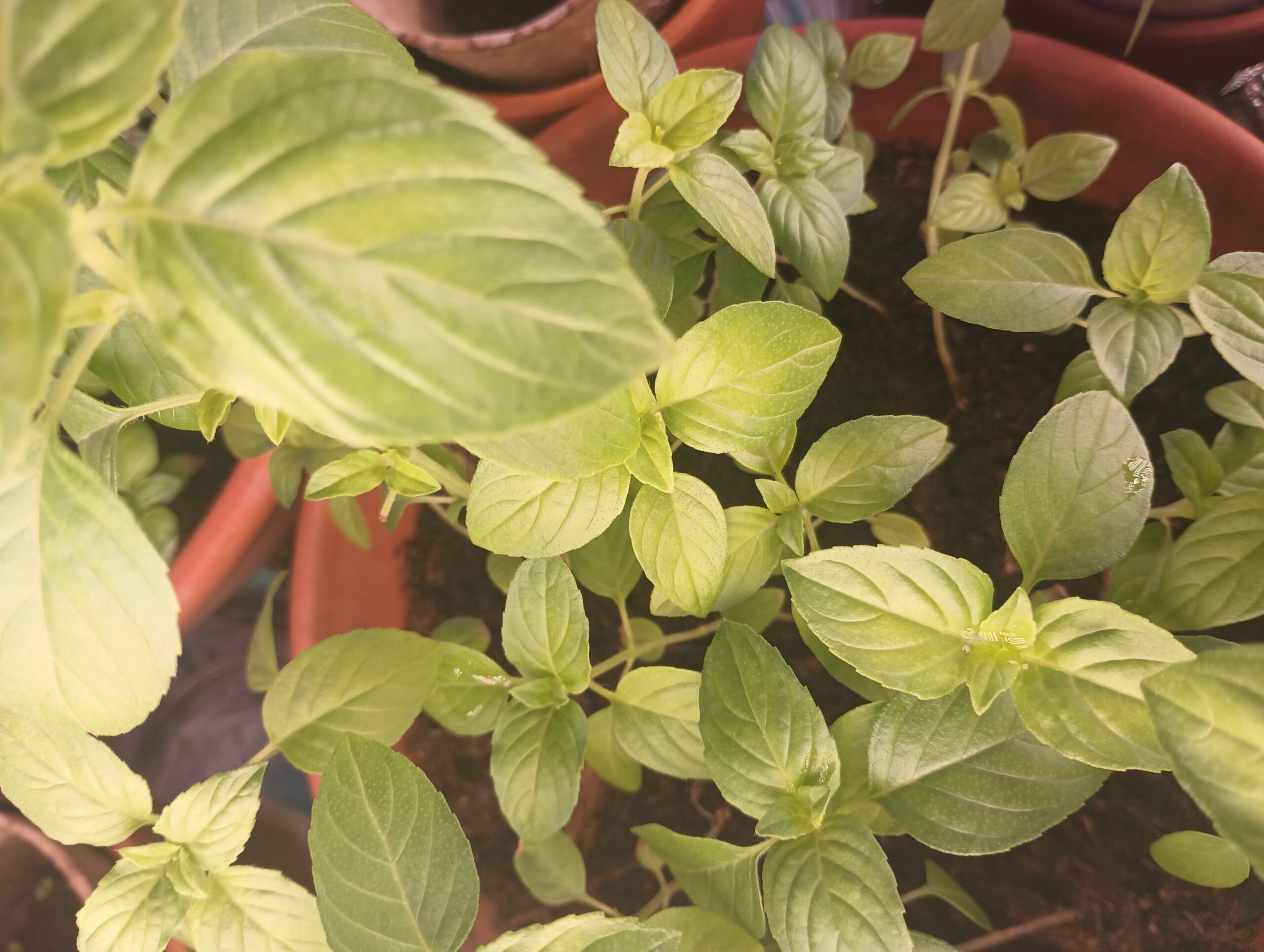
Iraqi rayhan growing in terracotta ciotola in an indoor garden
Iraqi rayhan basil growing in terracotta ciotola in an indoor garden. Image by Zara Nur.


Beloved, fortunate, sweet, and royal; an herb with a long and storied history in Asia and across the world. Called by many names, basil has featured in previous Green Prophet articles, so enjoy another serving, a brief history of basil. Humble yet vigorous, after Greek basilikon phyton or in English “royal plant”. Or basilikon okimon, which is the root of the Latin scientific name Ocimum basilicum.
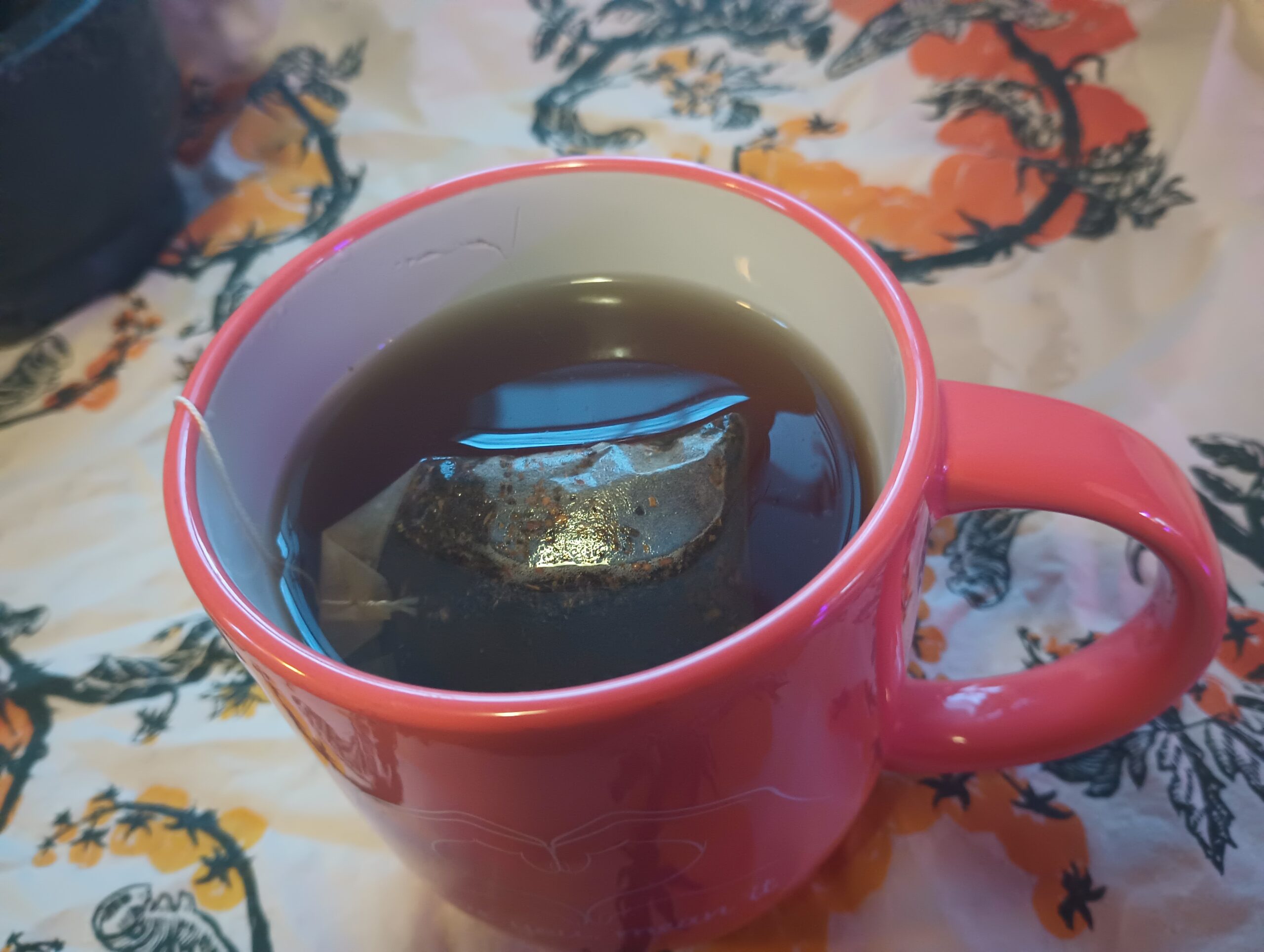
Tulsi tea in an orange tea mug sitting on a white cloth screenprinted with illustrations of hornworms crawling on tomato plants
Tulsi basil tea in an orange tea mug sitting on a white cloth screenprinted with illustrations of hornworms crawling on tomato plants.  Image by Zara Nur.

Tulsi: Revered in India, Embalmed in Egypt

Yet the historical origins of basil are literally “matchless” among plants, the Hindu goddess Tulasi’s name means just that. She’s the namesake for the plant tulsi or as many know her, “holy basil”. Ancient Indians cultivated the peerless plant intensely, seeing her as the goddess Tulasi. Then she spread her roots and legends in every direction out of India. Rooted in romance and royalty, Tulasi is the beloved of the deity Vishnu who Vaishnavites see as the Supreme Being. Just like humanity, basil herself has a deeper origin as plant medicine in the mother continent of Africa.

Various African cultures traditionally use basil for both magic and medicine by various cultures. Herodotus the Greek historian documented her as a component of the embalming process for Egyptian mummies. Despite the proximity to Northern Africa, Greeks basil isn’t from the Egyptians. Note that off the coast of Tanzania in Eastern Africa, basil is mrehani on the island of Zanzibar. Mrehani is a Swahili word, Swahili being an Arabic-flavored Bantu language.
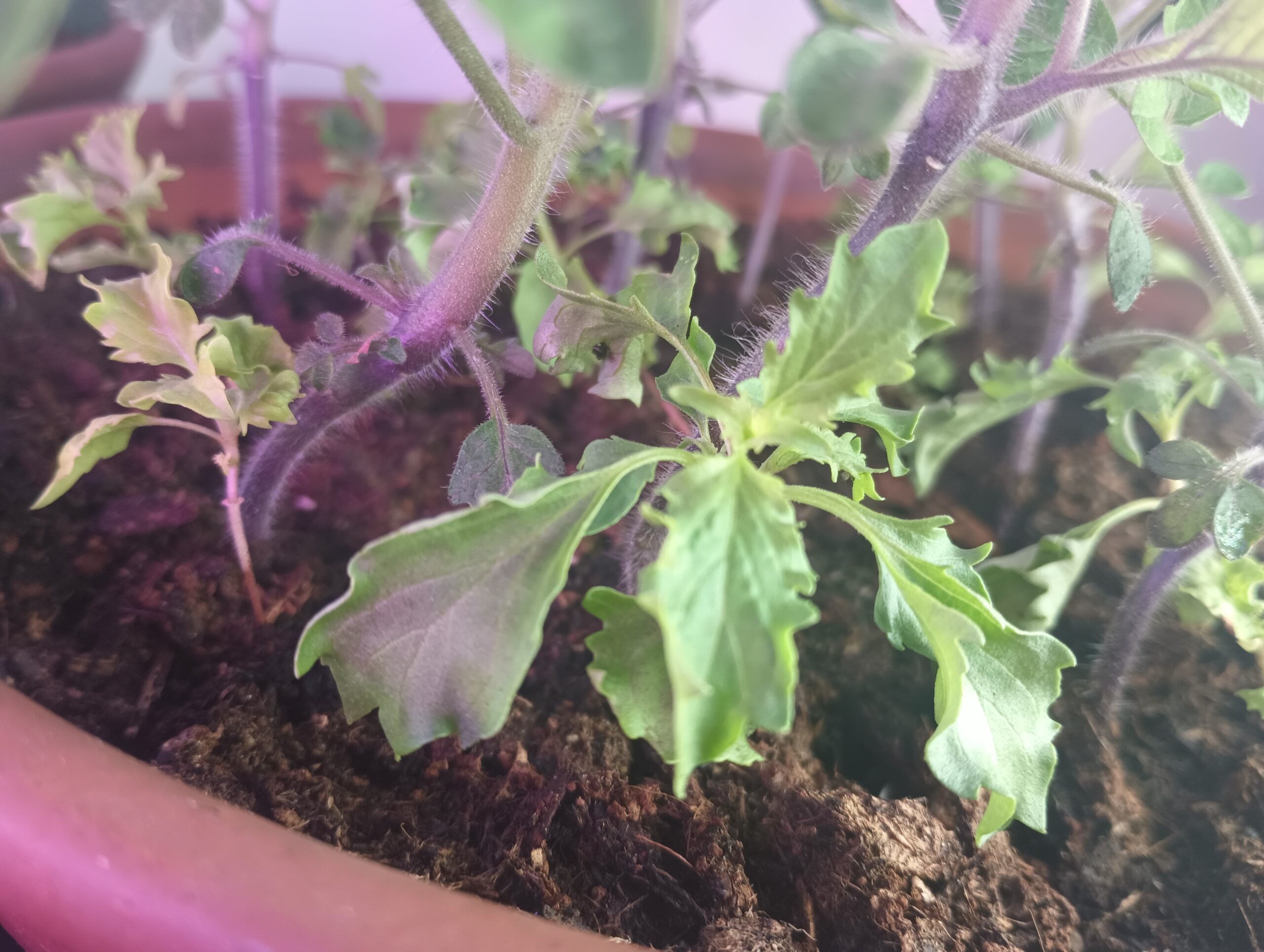
Mrehani seedlings growing beneath tomato seedlings in terracotta ciotola in an indoor garden
Mrehani basil seedlings growing beneath tomato seedlings in terracotta ciotola in an indoor garden. Image by Zara Nur.

Pho Cups in Vietnam

Instead basil traveled east from India to Southeast Asia. This includes the common use of tulsi in Thai cuisine where it’s called krapow. Thailand also lends its brand to the strongly anise-flavored “Thai basil” called horapha. Horapha and related cultivars are used in Vietnam as well in the popular soup called pho. While tulsi is locally known as selasih in Indonesian, there is a lemon-flavored variety called kemangi. Both kemangi and selasih are common in Malaysian and Laotian cuisines as well.
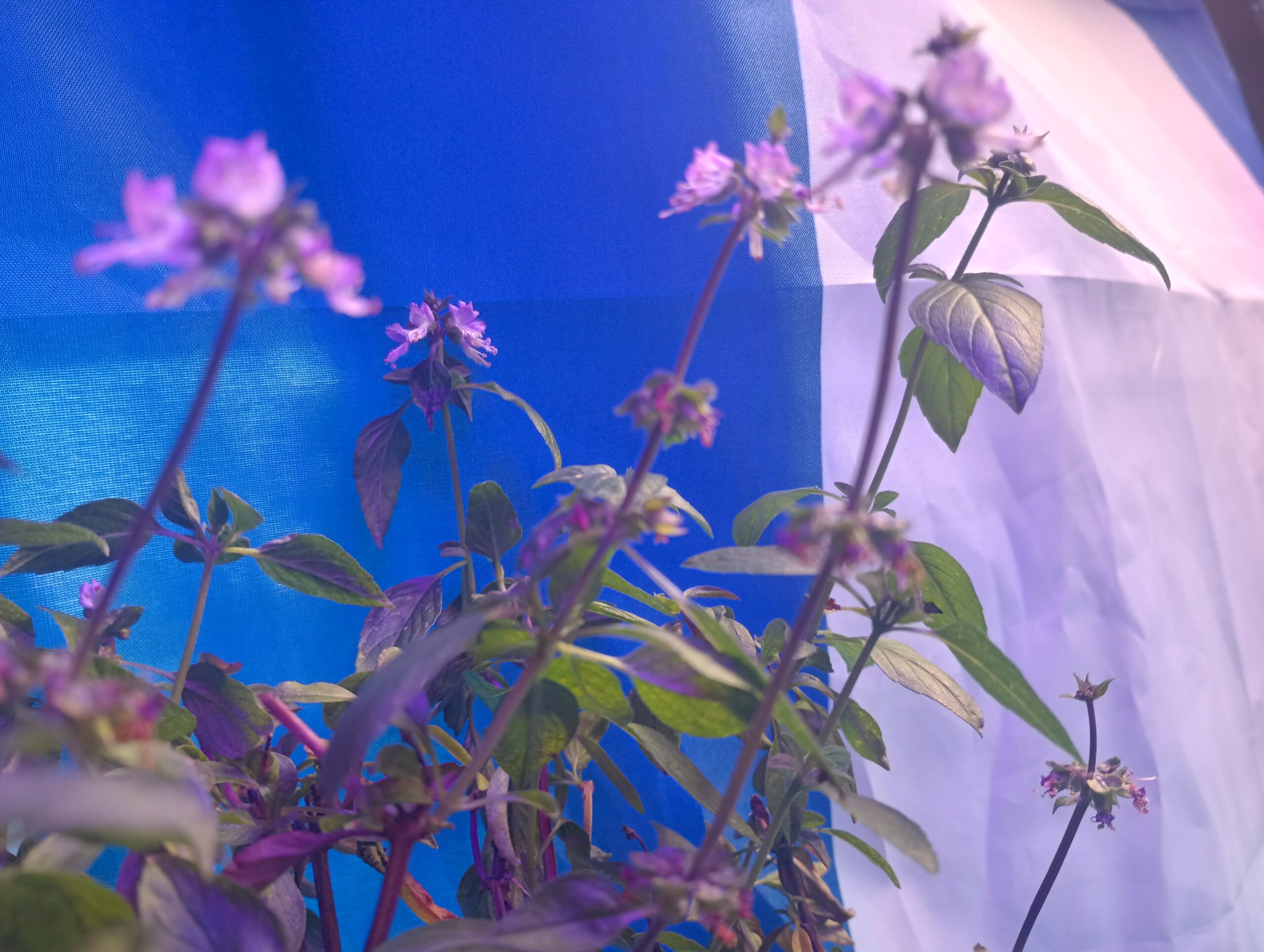
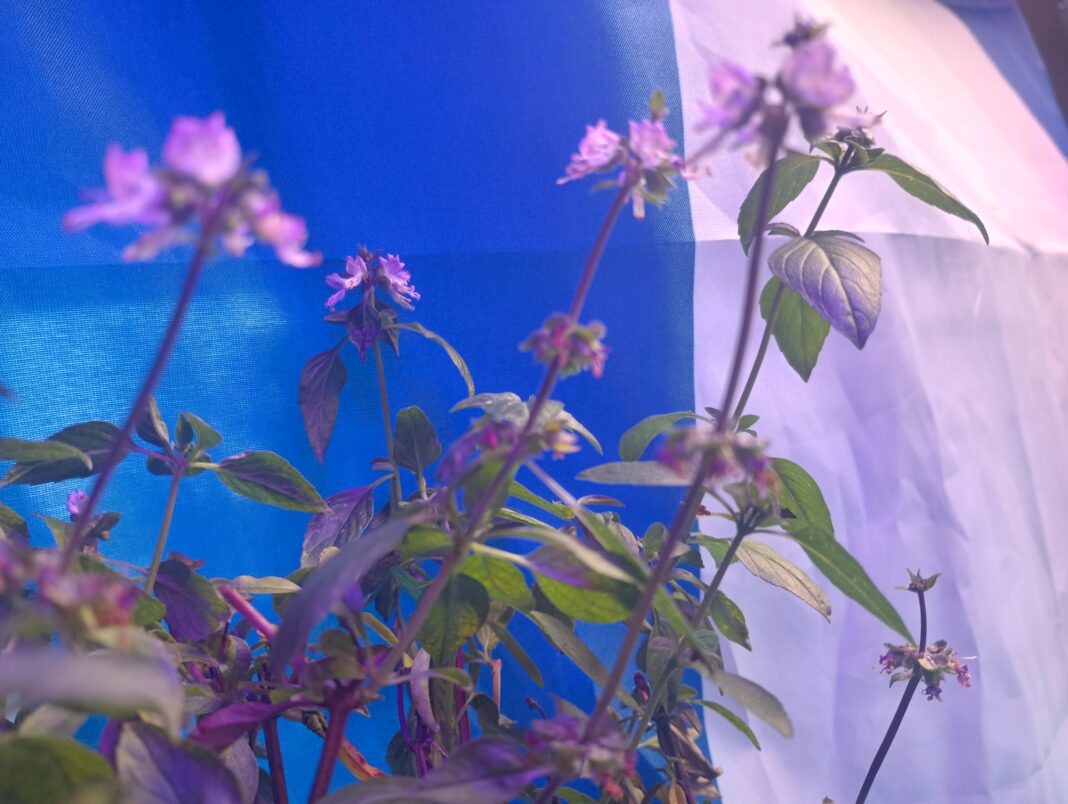
A Thai basil bush in with distinctive mauve flower in front of a blue and white flag
A horapha basil bush in with distinctive mauve flower in front of a blue and white flag. Image by Zara Nur.

Tokhm-e sharbati, a Cool Summer Drink

Traveling west through what’s now Pakistan, where sweet basil is niazboo in Urdu. Basil seeds are tukhmalanga soaked in water, creating a widely regionally-popular “cooling” beverage. Basil seeds as a beverage in Iran is tokhm-e sharbati, tokhm-e means “seeds” in Persian much like tukhmalanga in Urdu. Sharbati means a sweet drink like juice or syrup; this is a traditional and popular summer drink. Persia brought basil to West Asia, including the Levant.

In the Levant tulsi took on a new name from the Aramaic word ריחא or richa, meaning “smell” as in a scent. This became the basis for calling her rayḥān (Arabic), rayhān (Persian), and many other variants in Armenian, Azerbaijani, Georgian, Hebrew, Tajik, Turkish, and mrehani in Swahili as mentioned above.

You should not confuse rayhan with “Arabic basil” or habak, which is a mint plant from the mint genus Mentha. Both mints and basils are a part of Lamiaceae, somewhat confusingly called the mint family. Yet basils are from the genus Basilicum, the Latin for basilikon. Most of what we think of as mints are part of the Mentha genus. The wider Lamiaceae family contains many well-known herbs including rosemary, sage, oregano, hyssop/zaatar, thyme, lavender, perilla/shiso, catnip, bee balm, and many more.

From Moorish Romances to Pesto

From the Levant, rihan came to the beautiful volcanic island of Sicily where it became part of local magic, legend, and decor. Basil became basil there through Greek occupation as a calque the Greeks directly translated the Persian name meaning “kingly herb”.

Later on the Sicily, a custom rooted in old legends arose from the later Moorish occupation. Though often gruesome, the Moor’s Head is retold in many forms with both tragic and noble romances. In one such story a local girl falls in love with an invading Moor who turns out to have a family back home. She jealously beheads him, places his head in a decorative planter, then basil grows from it. In another story he’s still an invader but converts to the local religion and settles down to live happily ever after. There are other stories, some more tragic and others less so. Regardless of the story this is why you will find these oddly charming ceramic planters of a North African man and an Italian woman all over sunny Sicily.

And Pistare to Pistou

Emanuele Rossi concocted  pesto alla Genovese in 1852 CE, just over 170 years ago, the first common pesto to use basil as an ingredient. In Italian pesto simply means “paste”, a sauce properly made with a mortar and pestle to bring out the full flavor, based on the ancient Roman herb and cheese spread known as moretum and a more recent Ligurian garlic and vinegar innovation called aggiada. Likewise this is where French pistou originates; whether in French, Italian, or Sicilian we can see the common Latin root pisto/pistare that means “I pound”/”to pound”.
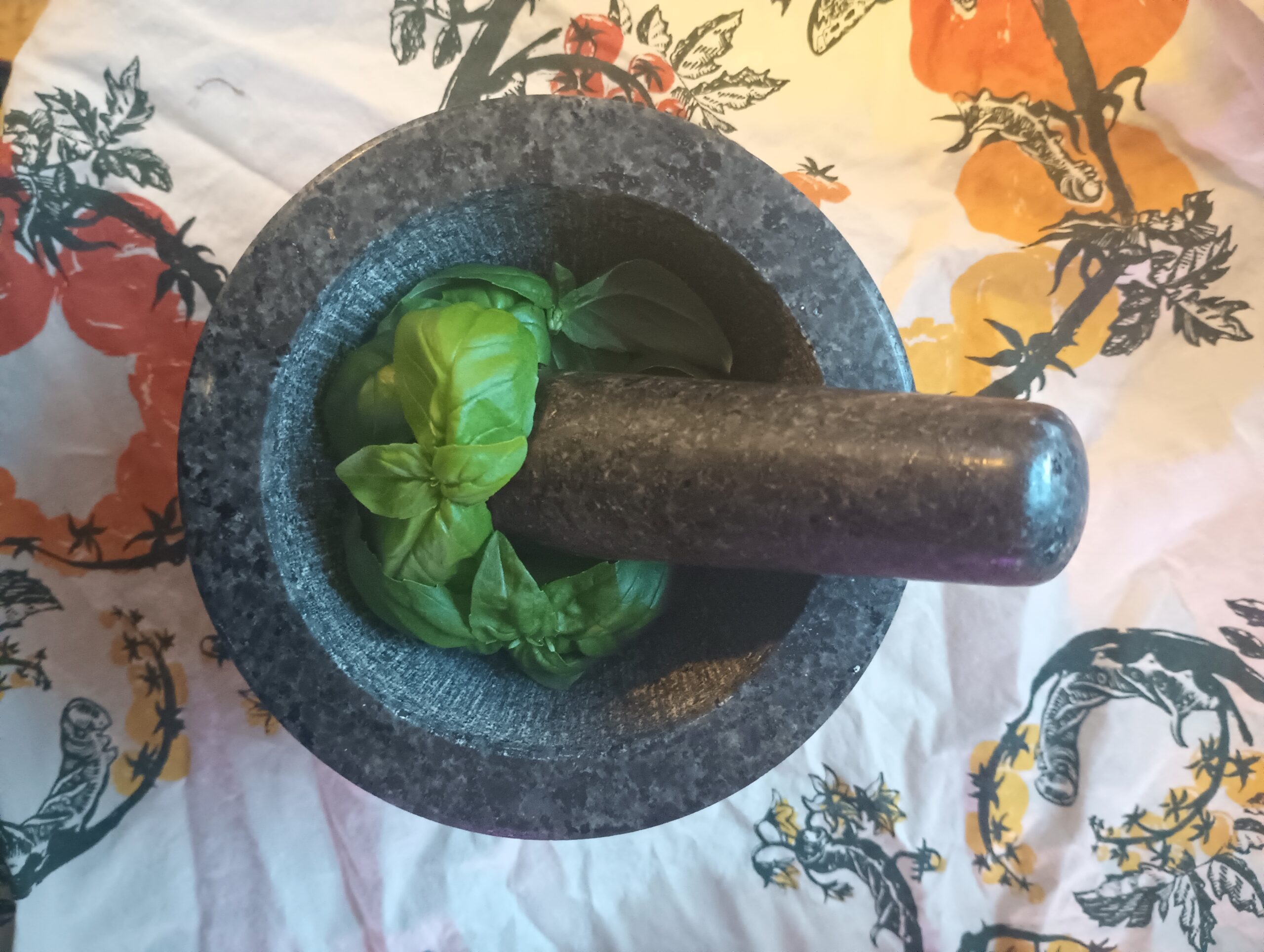
Siracusa basil tops next to a pestle, set in a mortar that is sitting on a white cloth screenprinted with illustrations of hornworms crawling on tomato plants
Siracusa basil tops next to a pestle, set in a mortar. Image by Zara Nur.

Two More Servings to Come

Delightfully, basil keeps growing vigorously wherever we plant her seeds, even in our heads! In each land the way basil spices up recipes varies as much as basil cultivars themselves. So if this gives you a taste for more basil knowledge, whet your appetite by reading the next two sweet chapters on basil; how to grow it from seed and cutting, as well as recipes beyond pesto alla Genovese!


Zara Nur
Zara Nurhttps://www.greenprophet.com/
A writer since childhood, Zara Nur has spent her life exploring the joys of learning every day. Her driving passion for Imma Teva (Mother Earth) and all life on it has led her into a love of documentaries, environmental science fiction including her own cli-fi (climate fiction) stories, vegetarianism with about a decade as a vegan in the past, holistic health including herbalism and embodied practices, studying both contemporary ecosystem science and traditional ecological knowledge of the Anishinaabeg who land she lives on and ithe Indigenous peoples including traditional plant medicines and foods of Levantine peoples, and to write about all of this since the path to a vital future starts by living in harmony and Oneness with the beautiful and miraculous planet we call home. She also loves animals, though she's especially particular to her cat and the many spiders that live in the basil and tomato plants she gardens year-round. Her love for the vast primal ocean of stars in sky is also reflected in her love of water, especially as she's lived on the shore of Gichigami (Lake Superior) most of her life with a brief stint in Los Angeles and some time in other desert places, which has left her with a deep fascination for life below the waves and for live eking out an existence in the harshest places on Earth with Antarctica being one of her favorite and most-mourned lands impacted by climate change. Adapting to and surviving climate change on a whole world level has been one of her many obsessions since before Y2K. Comic books, science fiction, computers, electronic, art, and DIY filled most of Zara's formative years along with hippie folk music festivals, organic food co-ops, swimming, and French Horn lessons. Over the years she's learned to read tarot, organic garden, program Arduino microcontrollers, build all kinds of things, and cook some great food. And over the past five years she's been entering the intersection between spiritual environmentalism and modern Chaddism which has led her to embark on a path from Michigan to Israel; she hopes to see you there at a potluck to share some delicious homemade food!
5 COMMENTS
  1. For the reason that the admin of this site is working, no uncertainty very quickly it will be renowned, due to its quality contents.

  2. i enjoy reading your articles, it is simply amazing, you are doing great work, do you post often? i will be checking you out again for your next post. you can check out webdesignagenturnürnberg.de the best webdesign agency in nuremberg Germany

  3. i enjoy reading your articles, it is simply amazing, you are doing great work, do you post often? i will be checking you out again for your next post. you can check out webdesignagenturnürnberg.de the best webdesign agency in nuremberg Germany

  4. i enjoy reading your articles, it is simply amazing, you are doing great work, do you post often? i will be checking you out again for your next post. you can check out webdesignagenturnürnberg.de the best webdesign agency in nuremberg Germany

  5. i enjoy reading your articles, it is simply amazing, you are doing great work, do you post often? i will be checking you out again for your next post. you can check out webdesignagenturnürnberg.de the best webdesign agency in nuremberg Germany

LEAVE A REPLY

Please enter your comment!
Please enter your name here

Hot this week

The Fitness App Revolution: Building the Future of Wellness Through Strategic Development

In an era where smartphones are ubiquitous and health consciousness is at an all-time high, the fitness industry has undergone a radical digital transformation. Fitness applications have moved far beyond simple pedometers, evolving into comprehensive wellness platforms that serve as personal trainers, nutritionists, and community hubs right in our pockets.

How Renewable Energy is Revolutionizing the Way We Power Our World

Solar has become the star of the transition thanks to modular hardware and straightforward installation. It fits dense cities and remote towns alike. Many companies are turning to rooftop arrays and carport systems - and exploring commercial solar installation as a practical way to lock in future savings.

How does one start prepping?

Faced with an extreme winter storm this year, Americans wonder how to be prepared for catastrophe. Miriam has lived through wars in the Middle East - so she's prepared on giving you a guide to prepping.

Fishermen sue tire manufacturers on behalf of the salmon

A federal trial in San Francisco has brought US tire manufacturers, fishing groups, and environmental scientists into court over a chemical most drivers have never heard of — but which scientists say may be silently reshaping aquatic ecosystems.

Listening to Water: Tarek Atoui’s Next Work for Tate Modern

Born in Beirut, Lebanon in 1980 and now living in Paris, Atoui has spent years building instruments that don’t sit comfortably in concert halls. Many of them involve water, glass, and ceramics — materials that react to sound instead of simply producing it.

Topics

The Fitness App Revolution: Building the Future of Wellness Through Strategic Development

In an era where smartphones are ubiquitous and health consciousness is at an all-time high, the fitness industry has undergone a radical digital transformation. Fitness applications have moved far beyond simple pedometers, evolving into comprehensive wellness platforms that serve as personal trainers, nutritionists, and community hubs right in our pockets.

How Renewable Energy is Revolutionizing the Way We Power Our World

Solar has become the star of the transition thanks to modular hardware and straightforward installation. It fits dense cities and remote towns alike. Many companies are turning to rooftop arrays and carport systems - and exploring commercial solar installation as a practical way to lock in future savings.

How does one start prepping?

Faced with an extreme winter storm this year, Americans wonder how to be prepared for catastrophe. Miriam has lived through wars in the Middle East - so she's prepared on giving you a guide to prepping.

Fishermen sue tire manufacturers on behalf of the salmon

A federal trial in San Francisco has brought US tire manufacturers, fishing groups, and environmental scientists into court over a chemical most drivers have never heard of — but which scientists say may be silently reshaping aquatic ecosystems.

Listening to Water: Tarek Atoui’s Next Work for Tate Modern

Born in Beirut, Lebanon in 1980 and now living in Paris, Atoui has spent years building instruments that don’t sit comfortably in concert halls. Many of them involve water, glass, and ceramics — materials that react to sound instead of simply producing it.

Leading Through a Dual-Energy Transition: Balancing Decarbonisation with Energy Security

Experience in one area of the energy industry isn't enough to guarantee readiness across all the others. That's where a structured program like an MBA in energy can come in. Today's advanced curricula explore energy economics, finance, policy, and strategic management alongside the technical subjects. And when pursuing an energy MBA online, professionals can skill up and retrain without having to step out of the labor market -- an important perk at a time when skilled professionals are already in short supply.

From Green Energy to Healthy Societies: Why old systems thinking is becoming relevant again

Across the Middle East and North Africa, large investments are being made in green hydrogen, renewable energy, water infrastructure and sustainability. Most of these efforts are discussed in the context of climate change, decarbonization and economic diversification. That framing is important, but it may not capture their full value.

We saw peace – an interreligious encounter deep in our eyes

They came from Israel, Palestine, Jordan, Iraq, Yemen, Morocco, Tunisia, Lebanon, Egypt… There are Sunni Muslims, Shiite Muslims, Jews (Orthodox and Reform), Orthodox Christians, Coptic Christians, Protestant Christians, Druze, Baha'is, a Scientologist.

Related Articles

Popular Categories