

Seaweed fashion brands can source from Saudi Arabian sea

King Abdullah University of Science and Technology (KAUST)
Seaweed abaya courtesy of King Abdullah University of Science and Technology (KAUST)

Fashion’s next material revolution may not come from a lab in Paris or Milan — but from the tides of the Red Sea. Along Saudi Arabia’s coastline, scientists, designers, and textile innovators are transforming Sargassum seaweed into a wearable fabric, turning a fast-growing marine biomass into a new generation of sustainable textile. The initiative, led by KAUST Beacon Development in collaboration with the Saudi Fashion Commission and PYRATEX, is part of a broader effort to rethink how fashion sources its raw materials.

The project was recently presented as the Red Sea Seaweed Textile, demonstrating how locally sourced algae can be converted into blended yarns and finished garments. Stella McCartney does it. So why not Saudis?

“This material represents a milestone in our mission to build a future-focused, sustainable fashion ecosystem in Saudi Arabia. It demonstrates how local resources, scientific excellence, and creative talent can come together to deliver solutions for the global fashion industry,” said Burak Çakmak, CEO of the Saudi Fashion Commission.

KAUST’s role has been central. Its marine scientists studied the biochemical structure of Red Sea seaweed and developed responsible harvesting methods that preserve both the ecosystem and the algae’s functional properties.

An abaya made from seaweed?

Seaweed abaya courtesy of King Abdullah University of Science and Technology (KAUST)

“By researching the biochemical properties of Red Sea seaweed, we were able to integrate local algae species into an innovative blended yarn,” said Fiona Symes, COO of KAUST Beacon Development.

PYRATEX  then translated that biomass into textile form, blending the algae with Lyocell and organic cotton to produce a fabric that is breathable, traceable, and suitable for garment production. The Saudi Fashion Commission’s development studio produced complete garments from the material — not as conceptual pieces, but as real clothing.

Saudi Arabia’s fashion scene has been showing dynamic evolution. Recent runway shows in the Kingdom featured bathing suits in a historically very modest country.

Saudi fashion week features Moroccan designer Yasmina Qanzal
Saudi fashion week features Moroccan designer Yasmina Qanzal. Courtesy photo.

These shows reflect a larger shift in how fashion in the Middle East engages global trends while honoring local sensibilities — moving beyond traditional expectations to embrace broader stylistic expressions that include functional, climate-appropriate swimwear alongside couture and everyday wear.

The seaweed fabric project reflects a growing shift across the fashion world. Designers such as Stella McCartney have long argued that sustainability cannot rely only on recycled synthetics or reduced harm. McCartney has repeatedly called for materials that are regenerative, ethical, and transparent — fibers that restore ecosystems rather than merely slow damage.

Luxury and performance brands alike are now experimenting with algae, mycelium, pineapple fiber, cactus leather, and agricultural waste. But what makes the Red Sea initiative distinctive is its regional grounding: a local marine resource transformed locally, with scientific validation and design integration.


Men's suit courtesy of King Abdullah University of Science and Technology (KAUST)
Men’s suit courtesy of King Abdullah University of Science and Technology (KAUST)

Fashion is one of the most environmentally demanding industries on Earth, responsible for heavy water use, chemical pollution, and carbon emissions. Changing fabrics may seem small, but materials determine supply chains, farming practices, and waste streams.

Seaweed offers a radically different model. It grows without freshwater irrigation, fertilizers, or farmland. It absorbs carbon and regenerates rapidly. It does not compete with food systems. And it invites coastal stewardship rather than land exploitation.
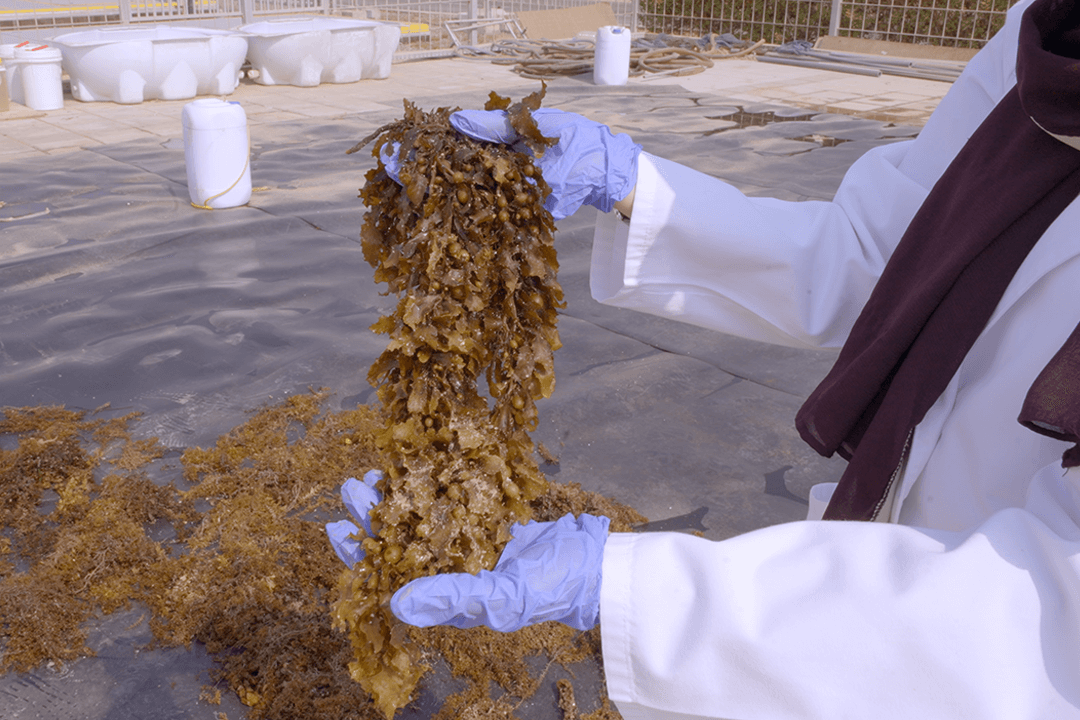
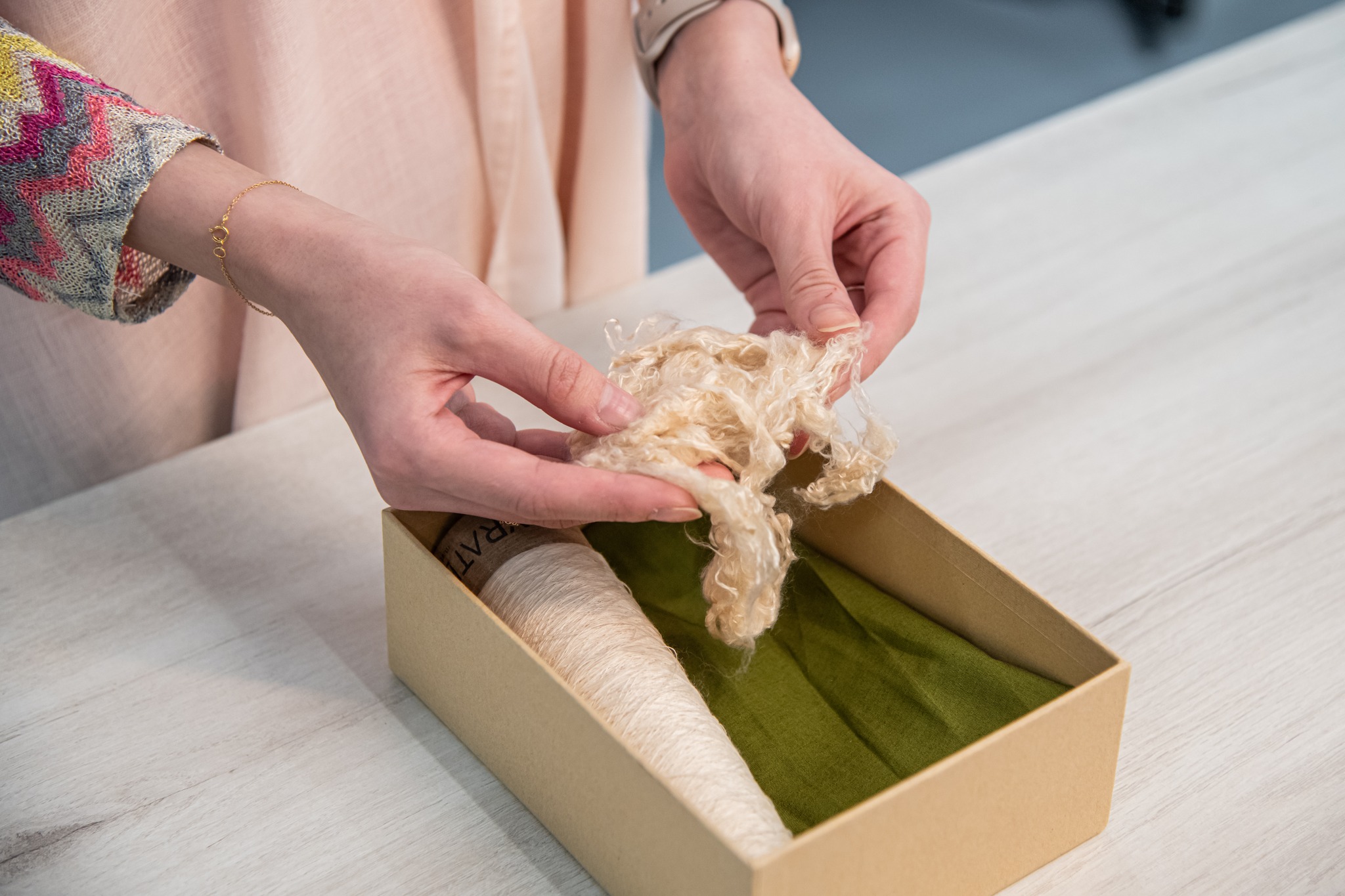
Images of seaweed courtesy of King Abdullah University of Science and Technology (KAUST)
Images of seaweed courtesy of King Abdullah University of Science and Technology (KAUST). From Red Sea seaweed to runway-ready fabric, Saudi Arabia is quietly reshaping fashion’s material future. KAUST scientists, designers, and textile innovators are proving that sustainability can begin in local ecosystems. As seaweed becomes wearable, fashion is learning to grow not from fields — but from tides.
Images of seaweed courtesy of King Abdullah University of Science and Technology (KAUST)

For Saudi Arabia, this project also signals a broader narrative shift. The Kingdom is increasingly positioning itself not only as an energy producer, but as a knowledge and innovation economy — where science, sustainability, and culture intersect.

For fashion, the message is equally clear: the future of luxury will not be defined only by design houses, but by material intelligence. Garments made from seaweed may not replace cotton or polyester tomorrow. But they challenge designers, investors, and consumers to imagine clothing that begins in ecosystems rather than factories.

As Stella McCartney and other sustainability leaders have shown, fashion does not change when trends shift. It changes when materials do.


Karin Kloosterman
Karin Kloostermanhttp://www.greenprophet.com
Karin Kloosterman is an award-winning journalist, innovation strategist, and founder of Green Prophet, one of the Middle East’s pioneering sustainability platforms. She has ranked in the Top 10 of Verizon innovation competitions, participated in NASA-linked challenges, and spoken worldwide on climate, food security, and future resilience. With an IoT technology patent, features in Canada’s National Post, and leadership inside teams building next-generation agricultural and planetary systems — including Mars-farming concepts — Karin operates at the intersection of storytelling, science, and systems change. She doesn’t report on the future – she helps design it. Reach out directly to [email protected]

TRENDING

What are AWG air-water generators, and why they aren’t a golden-bullet solution (yet)

Atmospheric water generators (AWGs) sound like magic: machines that can pull drinking water out of air. The idea is mentioned in the Bible, where the elders would pray for water collected as dew on plants and the catch on turning this into a machine is in the physics. To turn invisible vapor into liquid, you must remove heat, especially the latent heat of condensation.

Jordan’s $6 Billion Aqaba–Amman Desalination Project from the Red Sea Moves Forward

In 2025, the Jordanian government signed agreements with a consortium led by Meridiam and SUEZ, alongside VINCI Construction and Orascom Construction. Under a 30-year concession agreement, the consortium will design, build, finance, operate, and maintain the system before transferring it back to the Jordanian government. The total investment is estimated at approximately $6 billion USD.

Saudi Arabia cancels the Asian games at Neom’s Trojena

Neom, a bombastic collection of futuristic cities and resorts, has flopped as Saudi oil prices roll back reality. The Saudi plan of hosting the 2029 Asian games to be held at Trojena, a ski report in the desert, has been cancelled. 

Xcimer is the Denver-based startup that could put Saudi Arabia out of business

An American company can collapse OPEC if they can prove their approach to unlimited energy works.

The Saudi Startup Turning Desalination’s Toxic Waste Into Its Own Disinfectant

For millennia, the Middle East's water crisis seemed an immutable fact of geography — a region defined as much by what it lacked as by what lay beneath its sands. Today, a convergence of plummeting solar costs, advancing membrane technology, and hard-won engineering expertise is rewriting that story.

Should You Invest in the Private Market?

startustartup Unlike public stock exchanges, which offer daily trading, strict...

How to build a 100-year-company

Kongō Gumi is a Japanese construction company, purportedly founded in 578 A.D., making it the world's oldest documented company. What can we learn about building sustainable businesses from them?

From Pilot Plant to Global Stage: How Aduro Clean Technologies’ 2026 Expansion Signals a Turning Point for Chemical Recycling Investors Like Yazan Al Homsi

The company's Next Generation Process (NGP) Pilot Plant in London, Ontario, has officially moved into initial operating campaigns, generating the kind of structured, repeatable data that separates laboratory promise from commercial viability.

How AI Helps SaaS Companies Reduce Repetitive Customer Support Work

SaaS products are designed for large numbers of users with different levels of experience, and also in renewable energy.

Pulling Water from the Air

Faced with water shortage in Amman, Laurie digs up...

Turning Your Energy Consultancy into an LLC: 4 Legal Steps for Founders in Texas

If you are starting a renewable energy business in Texas, learn how to start an LLC by the books.

Tracking the Impacts of a Hydroelectric Dam Along the Tigris River

For the next two months, I'll be taking a break from my usual Green Prophet posts to report on a transnational environmental issue: the Ilısu Dam currently under construction in Turkey, and the ways it will transform life along the Tigris River.

6 Payment Processors With the Fastest Onboarding for SMBs

Get your SMB up and running fast with these 6 payment processors. Compare the quickest onboarding options to start accepting customer payments without delay.

Related Articles

Popular Categories