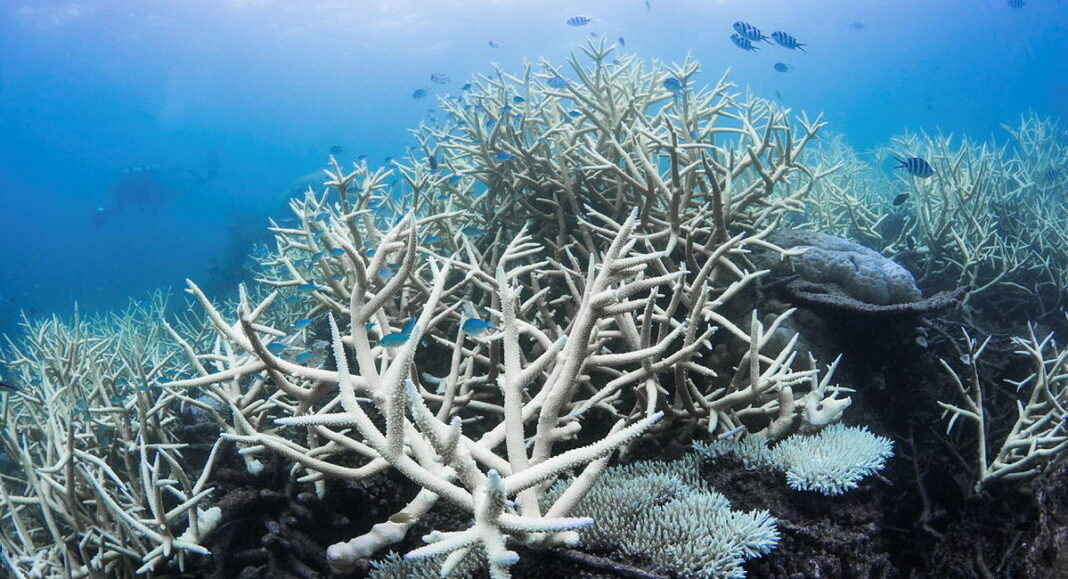

 Image of coral bleaching via the Great Barrier Reef Foundation[/caption]
The most pressing environmental story this week is the alarming escalation of the 2023–2025 global coral bleaching event, now recognized as the most extensive in recorded history. As of April 2025, approximately 84% of the world’s coral reefs have been affected, surpassing the previous record set during the 2014–2017 event.
This bleaching event, ongoing since February 2023, is primarily driven by elevated ocean temperatures linked to anthropogenic climate change. Regions such as the Barrier Reef, Florida, and the Chagos Archipelago have experienced severe impacts, with some areas reporting up to 95% coral mortality.
Coral reefs are vital ecosystems that support a vast array of marine life, protect coastlines from erosion, and provide livelihoods for millions through fishing and tourism. Coral reef home the food that fish eat. They protect fish and unique sea creatures.
The widespread bleaching and subsequent coral deaths threaten biodiversity, food security, and economic stability in many coastal communities. The International Coral Reef Initiative has officially declared this the fourth global bleaching event. Scientists and environmental organizations are urging immediate action to reduce greenhouse gas emissions and implement conservation strategies to protect remaining coral ecosystems. This event underscores the urgent need for global climate action to mitigate the impacts of climate change on critical ecosystems.
You can read the ICRI report here.
The world’s coral reefs are undergoing an unprecedented crisis. Since early 2023, the planet has been experiencing its fourth—and most severe—global coral bleaching event, with approximately 84% of reef areas affected across at least 82 countries. Coral bleaching occurs when corals, stressed by elevated water temperatures, expel the symbiotic algae (zooxanthellae) that provide them with color and essential nutrients. Without these algae, corals turn white and become more susceptible to disease and death. If stressful conditions persist, the likelihood of coral mortality increases significantly.
Related: feed the reef while wearing this sunscreen
Causes of the Current Crisis
The ongoing bleaching event is primarily driven by record-breaking ocean temperatures, a consequence of anthropogenic climate change and exacerbated by the El Niño climate pattern. In 2024, global sea surface temperatures reached an unprecedented average of 20.87°C (69.57°F), intensifying marine heatwaves and stressing coral ecosystems worldwide.
“We’ve eclipsed the previous record by 11.3% and surpassed the previous record in half the amount of time,” noted Derek Manzello, coordinator of NOAA’s Coral Reef Watch.
Global Impact
The bleaching event has affected reefs across the Pacific, Atlantic, and Indian Oceans, including regions previously considered thermal refuges, such as Raja Ampat in Indonesia and the Gulf of Eilat in Israel where intense research is ongoing at par with western standards. Significant coral losses have been recorded globally, with mortality rates ranging from 20% to over 90% in some areas.
In Honduras, for instance, a reef that maintained about 46% living coral in September 2023 declined to just 5% by February 2024—a drop described as unprecedented by marine researcher Melanie McField.
Coral reefs, covering less than 1% of the ocean floor, support approximately 25% of all marine species. Their decline threatens marine biodiversity, fisheries, tourism, and coastal protection. The economic value of coral reefs is estimated at $2.7 trillion annually, underscoring their significance to global economies.
Scientists emphasize that while local conservation efforts are vital, they are insufficient without addressing the root causes of climate change. “Without addressing the root causes of climate change, primarily fossil fuel emissions, restoration efforts may offer only temporary relief,” experts warn.
The current crisis serves as a stark reminder of the urgent need for global climate action to preserve these vital ecosystems for future generations.