

Tel Aviv one of 7 cities to win a world Green City Awards 2024
Tel Aviv has won Future Green City award for the Tel Chubez Agricultural Farm and the Lira Shapira initiative in Tel Aviv. The award was made at the Future Green City World Congress held in Utrecht, Netherlands. (In other news Tel Aviv gets an A- for sustainability).
The project was selected alongside six other cities for its unique model that bridges urban sustainability with community engagement that encourages a sustainable urban lifestyle.

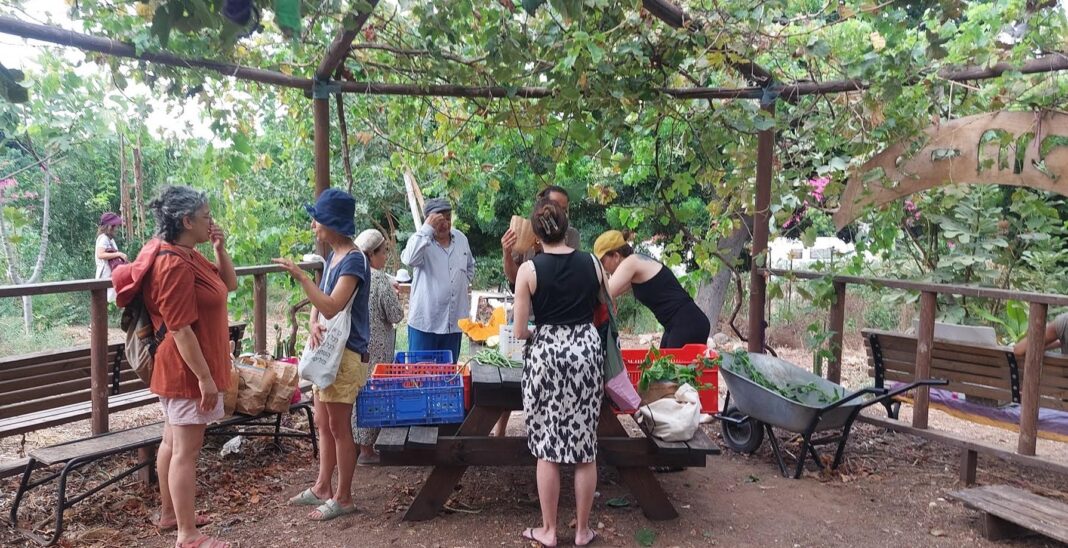
Lira Shapira is a green local currency that rewards residents for separating organic waste for compost to enrich the farm’s crops. For every kilogram of organic waste separated and processed, residents receive one Lira, which can be spent at local businesses—thus not only protecting the environment but also strengthening the local economy and community.


Lira, the name for the old form of currency in Israel, can be spent on buying food from the garden.
The initiative is operated by local residents from the Shapira neighborhood in collaboration with the Tel Aviv-Yafo Municipality’s Environmental and Sustainability Authority.
Ruth Molcho, represented Lira Shapira at the congress: “Receiving this award was especially moving, as we realized that our small initiative at the Shapira neighborhood was gaining global recognition.”
Tel Chubez is an urban agricultural farm located in the Shapira operating on principles of a circular economy. This vacant city land was transformed three years ago into a farm, providing residents with a green, productive space within the City, increasing wellness and access to fresh and healthy food while strengthening community resilience and increasing biodiversity.
Related: Fugee Fridays
Tel Aviv–Yafo is constantly growing with massive construction and infrastructure projects. Preserving urban nature and connecting residents to it, maintaining and increasing the quality of life in this intense urban growth are significant challenges. Shapira neighborhood is located in the southern part of the City. In addition to the urban renewal phases, it has been identified as a vulnerable neighborhood in the climate change era dealing with more extreme heat waves and potential floods.

The farm, occupying four dunams, is being maintained by city employees, Lira Shapira NGO and volunteers. The cultivation method incorporates principles from permaculture and Biodynamics without any pesticides, focusing on growing local species following the seasons and a variety of over 60 fruit trees and local wildflowers that create an ecological system and habitat for birds and insects. The farm includes workshop plots where courses and training sessions are held to transfer the practices to participants’ yards to improve biodiversity and attract butterflies and honeybees.
Tel Chubez was included in the City Urban Nature Sites Index, together with 100 more sites. It is on the infrastructure layer, and future planning will have to avoid violating the area, as it has become an anchor for future urban green belts.
Tel Chubez became a green anchor for residents, plants and animals within a relatively short time. A model for collaboration internally in the municipality and externally with non-profits and businesses working together to build a new nature-based platform where environmental, social, economic and health positively impact.