Want to advertise a product or service on Green Prophet? Email [email protected]

Why was the Morocco quake so deadly?

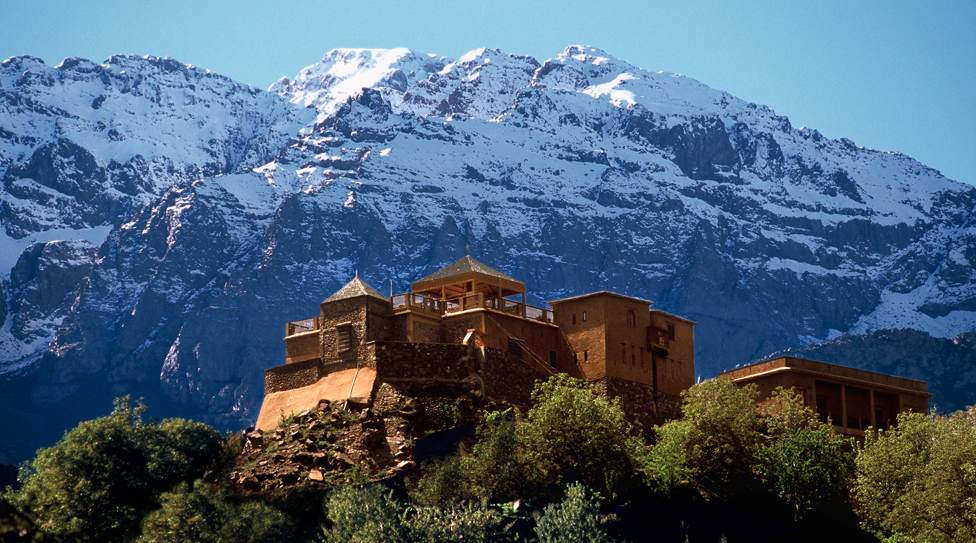
kasbah du toubkal

At the base of Toubkal in the Atlas Mountains. We visited this kasbah a decade ago. And it has taken some damage from the earthquake but all residents and guests were safe.

The earthquake that hit Morocco on 8 September in the Atlas Mountains was one of the most devastating that Morocco has seen decades: the quake killed more than 2,800 people and injured thousands more.

At 6.8 in magnitude, the earthquake was not huge, the disaster was exasperated by lack of preparedness, says disaster researcher Ilan Kelman: “Earthquakes don’t kill people, collapsing infrastructure does,” he says in a recent article.

Buildings in Morocco are often designed to control for extremes of temperature, which are an ever-present risk, whereas earthquake resilience has taken a back seat, he explains. This is the same problem that plagued Turkey and its devastating earthquake recently.

The question is how to rebuild sustainably with earthquakes in mind? The kasbah we visited in the Atlas Mountains is damaged but all the guests were spared, according to a story in The Independent. The Kasbah is also offering updates and ways to donate to the region in the earthquake aftermath.

One sustainable building method which has stood the test of time, and withstood earthquakes is the use of self-healing plaster used by the Romans in the Levant region and beyond. Straw bale building, one story high is supposed to be remarkably resilient against earthquakes, as are triangular shaped buildings. Perhaps these methods aren’t viable in mountain regions or cities.

We are looking for sustainable design engineers to help us write a guide for countries looking to earthquake proof with sustainable concepts in mind. Send your ideas to [email protected]

Facebook Comments
Karin Kloosterman
Author: Karin Kloosterman

Karin Kloosterman is an award-winning journalist, innovation strategist, and founder of Green Prophet, one of the Middle East’s pioneering sustainability platforms. She has ranked in the Top 10 of Verizon innovation competitions, participated in NASA-linked challenges, and spoken worldwide on climate, food security, and future resilience. With an IoT technology patent, features in Canada’s National Post, and leadership inside teams building next-generation agricultural and planetary systems — including Mars-farming concepts — Karin operates at the intersection of storytelling, science, and systems change. She doesn’t report on the future – she helps design it. Reach out directly to [email protected]

Share

PinIt
submit to reddit

About Karin Kloosterman

Karin Kloosterman is an award-winning journalist, innovation strategist, and founder of Green Prophet, one of the Middle East’s pioneering sustainability platforms. She has ranked in the Top 10 of Verizon innovation competitions, participated in NASA-linked challenges, and spoken worldwide on climate, food security, and future resilience. With an IoT technology patent, features in Canada’s National Post, and leadership inside teams building next-generation agricultural and planetary systems — including Mars-farming concepts — Karin operates at the intersection of storytelling, science, and systems change. She doesn’t report on the future – she helps design it. Reach out directly to [email protected]

Get featured on Green Prophet [email protected]