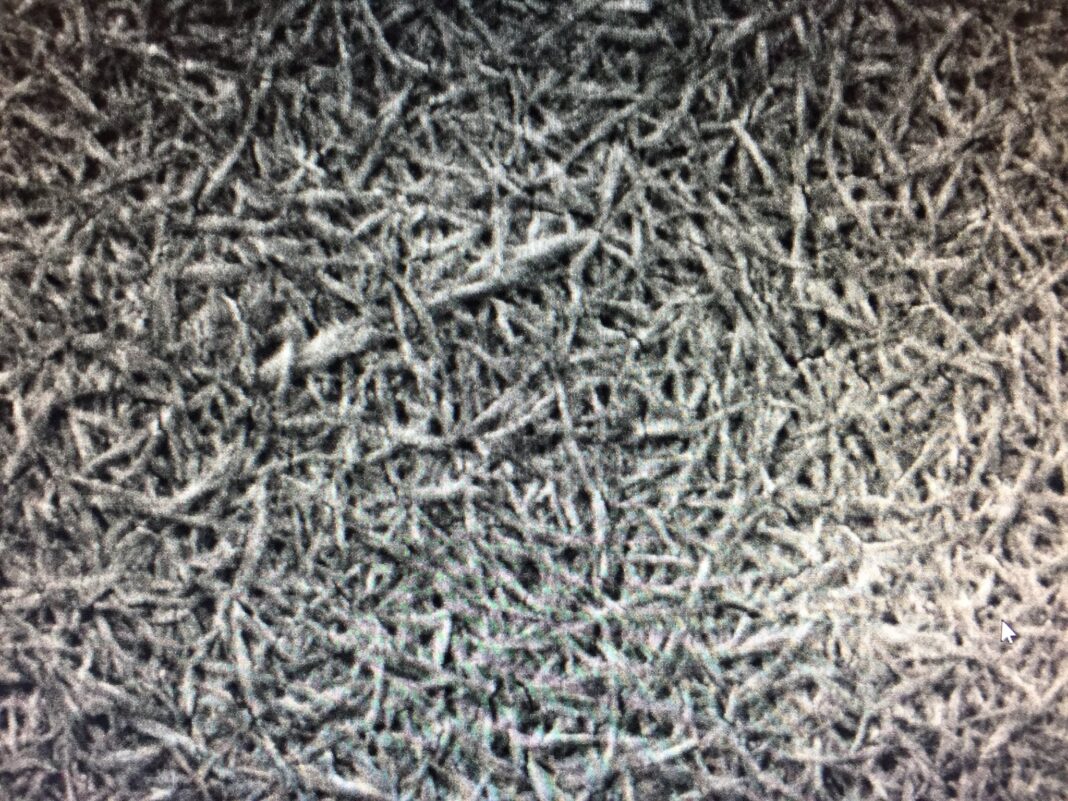
Can plants grow on the moon?

Lunar Plants Research Documentation, Via NASA

Can plants grow in a barren landscape such as the surface of the moon? If so, what types of plants will grow on the moon. Can we eat them? Could enough plants grow to support a future colony on the moon? Maybe these plants could grow on Mars too? Emiratis plan on living on Mars as much as Elon Musk. NASA has already shown that plants can grow on simulated moon soil. What’s the next step? The moon itself.

An Israeli and Australian team are going to launch a hydroponic system to the moon, called Lunariums, to see if plants will grow under controlled conditions on the moon’s surface. They will launch 2025 via an Israeli probe that will be going to the moon.

Lunariums, grow plants on the moon, agriculture lunar, grow plants in space, Israel and australia
Lunariums hope to help grow food on the moon to see if plants will grow on lunar soil

These are the ambitious questions the Lunaria One consortium has set out to answer. An experiment proposed by Lunaria One, known as Aleph, was selected by SpaceIL, an Israeli non-profit aerospace organization, to be included as one of the payloads on board their Beresheet2 lander. Beresheet means Genesis in Hebrew. Aleph is the first letter of the Hebrew alphabet. 

We covered SpaceIL more than 10 years ago when they first started dreaming about lunar research.

The Beresheet2 mission, planned to launch in mid-2025, will consist of two landers alighting on each side of the moon and an orbiter that will continue to orbit the moon for up to 5 years.

space plants, moon soil, NASA
NASA grows plants on volcanic soil and a medium resembling moon soil (right). 

Aleph will consist of a tray of seeds and dehydrated plants, a way to rehydrate and water them (a form of hydroponics), heaters, and cameras to monitor the plants. Israelis are specialists in hydroponic farming since most of their greenhouse crops in effect grow this way using a sand/soil medium, nutrients and irrigation.

Prof. Simon Barak at Ben-Gurion University of the Negev, is coordinating all the plant biologists and imaging specialists.

Space food – growing food on the moon

Shimon Sarid, SpaceIL CEO says: “The chosen experiment has enormous value both for our life here on Earth and for humanity’s progress in space exploration. Examining plant growth under extreme conditions will help us as far as food security is concerned. Plant growth in extreme conditions will help humanity in the long-term.”

Growing plants on the moon means overcoming several challenges such as massive temperature swings on the way to the moon, a water supply for the plants, and high temperatures when growing the plants. The plant types will need to be those that can germinate and grow to an appropriate size for imaging within 72 hours of deployment.

Matt Damon, grows potatoes, mars movie, food in space, elon musk, spaceIL, lunariums
NASA has been growing potatoes in Mars-like conditions since the 80s using hydroponics. Plants also grow on international space stations. Here, Matt Damon shows how he grows potatoes on Mars in the science fiction movie, The Martian

In the meantime, they expect their plant selections to be relevant for vertical farming, regenerative farming, and resource challenged landscapes here on Earth. Growing plants and food in the desert under our climate crisis is a growing global concern.

“The motivation for this mission comes from humanity’s passion to explore and see life thrive in barren landscapes,” explains Prof. Barak. “We see the Aleph payload as an important step towards our eventual goal of providing plants for food, medicine, oxygen production, CO2-scrubbing and general wellbeing for future astronauts inhabiting the moon and beyond.”
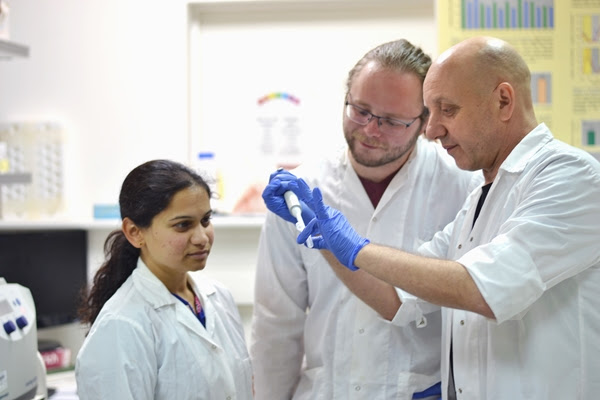
Simon Barak, growing plants on the moon
Prof. Simon Barak (right) with students. Ben Gurion University

“The central value guiding this project is that space exploration is for everyone; we don’t want a future where only autonomous and remote-controlled machines inhabit realms beyond earth, but where humans can live and thrive. The key to this is to get humans involved and to give them a say in how we get there. The ALEPH project aims to open up the science and engineering behind growing life on the Moon so that anyone can be involved,” explains Lunaria One Director Lauren Fell.

The project also has a strong citizen science component. Parallel science experiments will be carried out by amateurs (for example, high school students) and professionals to compare growth to that on the Moon.

Additional universities participating in Lunaria One include: QUT, RMIT, and ANU in Australia and The University of Cape Town in South Africa.


 
Karin Kloosterman
Karin Kloostermanhttp://www.greenprophet.com
Karin Kloosterman is an award-winning journalist, innovation strategist, and founder of Green Prophet, one of the Middle East’s pioneering sustainability platforms. She has ranked in the Top 10 of Verizon innovation competitions, participated in NASA-linked challenges, and spoken worldwide on climate, food security, and future resilience. With an IoT technology patent, features in Canada’s National Post, and leadership inside teams building next-generation agricultural and planetary systems — including Mars-farming concepts — Karin operates at the intersection of storytelling, science, and systems change. She doesn’t report on the future – she helps design it. Reach out directly to [email protected]

TRENDING

Why we might be missing messages from aliens

Alien signals might be getting scrambled near their own stars before they reach Earth, so scientists searching for perfectly clear signals could be missing them.

Elon Musk to create Mars base station on the Moon

For those unaware, SpaceX has already shifted focus to building a self-growing city on the Moon, as we can potentially achieve that in less than 10 years, whereas Mars would take 20+ years.

What a martian ice age left behind tells us about our future

We have heard that peak climate change might be...

Perseverance Rover Uncovers Ancient Martian Chemistry — And Raises the Question: Could This Hint at Past Life?

On Earth, similar mineral–organic interactions can be biological or abiotic. In Jezero Crater, the long geological timescales suggest the reduced vivianite and sulfides may have formed without biology — but organic compounds could still have driven the chemistry.

EU’s CAP reform continues trend of supporting small farmers in hour of need

Despite mounting political opposition, growing scientific criticism and even the retreat of many former industrial supporters like Nestlé and Danone, certain member-states and supermarket chains continue to prop up Nutri-Score. The Commission must therefore remain vigilant to ensure these attempts do not undermine farmers, distort fair competition or compromise the integrity of the single market – particularly as other pressing threats loom on the horizon.

Should You Invest in the Private Market?

startustartup Unlike public stock exchanges, which offer daily trading, strict...

How to build a 100-year-company

Kongō Gumi is a Japanese construction company, purportedly founded in 578 A.D., making it the world's oldest documented company. What can we learn about building sustainable businesses from them?

From Pilot Plant to Global Stage: How Aduro Clean Technologies’ 2026 Expansion Signals a Turning Point for Chemical Recycling Investors Like Yazan Al Homsi

The company's Next Generation Process (NGP) Pilot Plant in London, Ontario, has officially moved into initial operating campaigns, generating the kind of structured, repeatable data that separates laboratory promise from commercial viability.

How AI Helps SaaS Companies Reduce Repetitive Customer Support Work

SaaS products are designed for large numbers of users with different levels of experience, and also in renewable energy.

Pulling Water from the Air

Faced with water shortage in Amman, Laurie digs up...

Turning Your Energy Consultancy into an LLC: 4 Legal Steps for Founders in Texas

If you are starting a renewable energy business in Texas, learn how to start an LLC by the books.

Tracking the Impacts of a Hydroelectric Dam Along the Tigris River

For the next two months, I'll be taking a break from my usual Green Prophet posts to report on a transnational environmental issue: the Ilısu Dam currently under construction in Turkey, and the ways it will transform life along the Tigris River.

6 Payment Processors With the Fastest Onboarding for SMBs

Get your SMB up and running fast with these 6 payment processors. Compare the quickest onboarding options to start accepting customer payments without delay.

Related Articles

Popular Categories