Spend a few years or a dozen in a coastal city like Tel Aviv or Beirut and you’ll see how in a short time the season’s have changed. Tel Aviv this winter experienced an unprecedented level of flooding (we told you so), which killed two people and left people kayaking down the streets looking for stranded people in cars. The City Hall of Tel Aviv Jaffa says it has a plan, giving that the annual number of super hot days will increase by 30 in the next 10 years.
Tel Aviv has published a detailed climate action plan to cope with the threat of climate change, including the launch of a series of significant, new municipal initiatives. The action plan, we see, presents an in-depth look at the key threats and challenges facing the city, and details required actions to cope with them, with an emphasis on a rapid response for vulnerable population groups.

The plans were developed within the framework of its membership in the C40 Cities Climate Leadership Group, a global network of cities fighting global warming. As part of its membership, the municipality committed to adopting a program for adapting to climate change, including preparing for rising temperatures and changes to rainfall trends and quantities.
What are the threats to the western east Mediterranean?
- An increase of approximately 30 annual hot days (exceeding 33 degrees Celsius) over the next decade.
- Rising sea levels
- A decline in natural water sources and an increased risk of flooding
- An increase in population groups considered to be vulnerable
Plan for making Tel Aviv cool
- Urban forest management, edible forests, increasing green urban planning, increasing shaded areas, climate-appropriate construction, encouraging sustainable communities.
- Water management – including enhanced natural drainage, strengthening the resilience of the coastal ecosystem, preparations for coastal flooding and reducing risks, preparations for urban flooding, and saving water in gardening, buildings and infrastructure.
The 3 phase plan
- Immediate response (2020-2021): Formalizing an action plan for heatwaves and extreme heat; enabling solar energy independence for public buildings during times of crisis; reduced removal of trees; strict implementation of permeation requirements in construction plans and permits; and economic assessments for damages and measures required to cope with climate change.
- Gradual response (by 2030): A series of wide-scale operations to enhance the city’s ability to cope with climate change, commencing with vulnerable areas of the city and subsequently continuing in all neighborhoods. Operations include planning; infrastructure development; guidelines and regulations; community involvement and education.
- Fostering urban innovation: Activities to connect municipal preparations for climate change with efforts to reduce greenhouse gases, improve sustainability and enhance quality of life in the city. This will be facilitated by data collection and fostering research; advancing new technologies; the establishment of innovation zones for pilot programs and demonstrations; increasing competition; supporting community-based entrepreneurship; and encouraging businesses to operate in an eco-friendly manner.
Kibbutz in the city
“The climate crisis is not slowing down – even faced with COVID-19 – and if we do not act today, the resilience of our society will be drastically harmed in the generations to come,” says Ron Huldai, the Mayor of Tel Aviv-Yafo.
Read more about Israel’s Boring Company
“Among other trends in the coming years, we will see fewer vehicles and more trees, we will reduce greenhouse gas emissions and promote the use of renewable energies in all public buildings in the city.
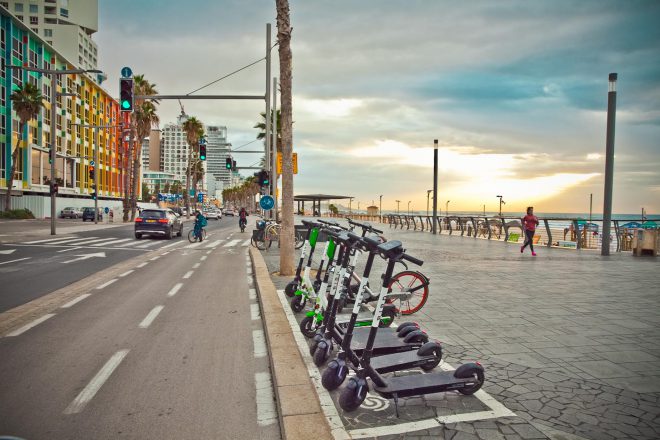
“This is not a straightforward process but we have already taken significant steps in the same direction: we are placing pedestrians and cyclists at the top of our priority list in transportation planning; we adopted a ‘kibbutz in the city’ approach for smart and shared use of resources;
“We are implementing the ‘Cool Cities’ approach in various parts of the city; and of course we are active in the C40 – together with leading cities in the world – to ensure that we, our children and our grandchildren, may continue to enjoy life in Tel Aviv-Yafo and all of Israel.”