
Quant’s 8-Volt EV supercar goes 600 miles on a tank of salt

Quant Nanoflowcell, salt powered EV

We wrote about the EV battery tech and concept car from Switzerland in 2014. A million dollar EV car that can run on salt water. This is about as opposite as you can get to the million dollar gold-plated Mercedes from Abu Dhabi. The thing is that the Swiss are usually making good on their EV promises: Remember the Swiss venture, the solar powered EV airplane the Solar Impulse that circled the globe? They did it. Or the Swiss-made ZeroTracer? The Swiss make good things and the world knows it. 

That’s why we paid attention then and again now that progress has been made on developing the original Quant Nanoflow into Quantino, a roadster. The Swiss company behind the salt battery tech is Nanoflowcell and they are showing off models of their all-electric cars at least on their website and in PR videos they add to Youtube. 

Like the original Quant luxury car prototype we covered, the Quantino runs on a special kind of non-toxic saltwater mixture that the company calls bi-ION electrolyte.

Is a car that runs on salt an electric car? 

Yes. A car that runs on salt is an electric car. To be technical, salt water is used as the storage medium but it’s not the fuel. The car runs by electrically charging ionic liquid – salt water – to store energy.

According to company materials, the 2+2 Quantino Roadster is the first fully electric car which runs entirely without a battery: “In the course of the development, a decision was made to forego using a lithium-ion starter battery given concerns regarding the environmental balance. Lithium mining causes problems. Read here about why the Serbs are revolting against Rio Tinto.

“Instead, a compact electrolytic capacitor is integrated into the electric vehicle’s starter system,” the company states. 

During the starting process, this powers up the nanoFlowcell 48VOLT electric drive. Once started, the nanoFlowcell supplies the energy to four 60 kW low-voltage electric motors and the consumers in the 48-volts vehicle network.

Offering 600 miles on one tank, makes it a fill ’em EV that will remove range worry and stress for current EV lovers. But the company is still not offering a lot of details on when consumers can start buying. Maybe they are building industry partnerships like the all-electric passenger plane, the Alice, by Eviation, which now has $2 Billion USD in pre-orders lined up. It takes millions, even billions, to build a great EV from top to bottom. Even mega companies like GM and Ford shows us that no-one in the industry, except for maybe Tesla, goes it alone.

What we know about Nanoflowcell so far:

Nanoflowcell Holdings  is a Swiss flow cell battery research and development company that claims to have developed the first flow battery small enough to be used in electric cars. Its battery, also branded nanoFlowcell, was first presented in the Quant E, Quant F and Quantino prototype vehicles.

The company was founded in 1996 and like drug makers doesn’t seem to be in any rush to release a product to the market. Slow and steady wins the race?

The Swiss Elon Musk who sings?
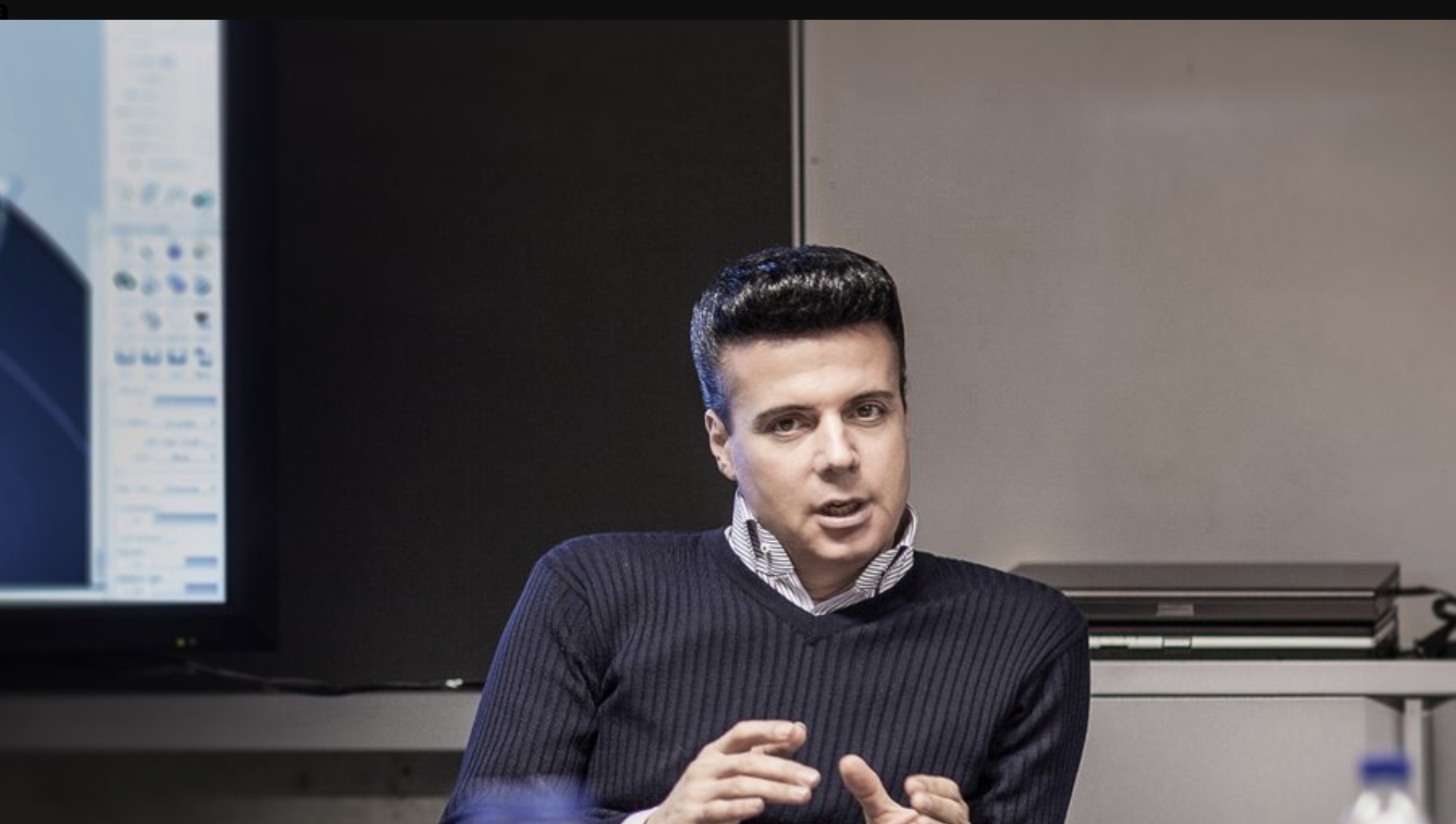
Nunzio La Vecchia
Nunzio La Vecchia, CEO of Nanoflowcell, Spotify artist. Image via Twitter

Key people at Nanoflowtech include Nunzio La Vecchia, company CEO and Hektor Bertschi, the COO. It is a privately held company based in Kilchberg, Switzerland. 

La Vecchia states on Twitter: “I am often asked why I’m not selling our technologies to the highest bidder and enjoy life. When you see #QUANTCity and learn more about our objectives, you will understand that we don’t work for the quick money, but that we are on a mission.”

Nunzio appears signing in this video and has music on Spotify.

Quant City aims to be an AI-run development hub for developing EV technology. It appears to be merely aspirational at this point, and its vision presented in the video:

Quant City “provides space for experimentation; it is a kind of experimental playground for innovation research in the fields of energy technologies and AI applications. In addition to discovering new technologies, we also evaluate their impact on society, the environment and the economy – always with an eye on future generations,” press materials explore.

Alternatives to Tesla in the Middle East

Other developments on our minds these days is the Ceer EV from Saudi Arabia. Lucid Motors, a joint EV between China, Saudi Arabia and the United States developers. Also from the Middle East area is Turkey’s Togg EV and Mays Motors from Oman.

Israel’s Better Place tried to reinvent the EV battery and the way cars are charged, rather replaced to quickly extend range, but failed after consumers didn’t love the price point or the unflashy Renault body offered to them. This is after about $1B USD of investments. You can see dusty charge point stations and battery swap stations littered throughout Israel.


Karin Kloosterman
Karin Kloostermanhttp://www.greenprophet.com
Karin Kloosterman is an award-winning journalist, innovation strategist, and founder of Green Prophet, one of the Middle East’s pioneering sustainability platforms. She has ranked in the Top 10 of Verizon innovation competitions, participated in NASA-linked challenges, and spoken worldwide on climate, food security, and future resilience. With an IoT technology patent, features in Canada’s National Post, and leadership inside teams building next-generation agricultural and planetary systems — including Mars-farming concepts — Karin operates at the intersection of storytelling, science, and systems change. She doesn’t report on the future – she helps design it. Reach out directly to [email protected]

Read More

TRENDING

How Responsible Tourism Could Help Protect the World’s Last Wild Places

From Antarctica and South Georgia to the Galápagos and Thailand, fragile destinations are finding ways to manage tourism without shutting visitors out. Visitor caps, conservation fees, biosecurity rules and controlled access can reduce environmental damage while helping fund the protection of wild places.

How Slow Travel Is Changing the Way We Explore

From trekking fees in Nepal and wildlife conservancies in Kenya to visitor limits in Patagonia and strict Arctic rules in Svalbard, responsible adventure travel can help fund conservation, protect habitats, and create sustainable income for local communities.

How Responsible Adventure Travel Can Protect the World’s Wild Places

From trekking fees in Nepal and wildlife conservancies in Kenya to visitor limits in Patagonia and strict Arctic rules in Svalbard, responsible adventure travel can help fund conservation, protect habitats, and create sustainable income for local communities.

Here is how Europe is still buying Russian gas

Greek-linked shipping vessels transported an estimated €2.35 billion worth of Russian Arctic liquefied natural gas to European ports during the first seven months of 2026, according to new analysis from Urgewald, a Germany-based environmental and human rights organization that investigates the financial institutions and companies supporting fossil fuel and other environmentally damaging industries.

Ancient Jewish New Year for Animals revived with global campaign against factory farming

Jewish Vegan Life has launched a global campaign celebrating the New Year for Animals, with synchronized events in Washington, D.C., Los Angeles, Pittsburgh, Montreal and Jerusalem, alongside an international livestream on August 9 featuring partners including Mercy for Animals, The Good Food Institute and Freedom Farm Animal Sanctuary.

The Essential Guide To Sustainability in Project Management

Sustainability is an approach where businesses and individuals balance the environmental, social, and economic aspects of a project such that current and future stakeholders are not overburdened with the impacts of the project in future.

Yerukim Forms a New Green Economy Where the Money is Really Green

The Yerukim members who pick up the recyclables get to keep the monetary reward, the public earns "green" bills that can be used in shops, and business owners get to be associated with environmentalism.

Choosing Riyadh over Dubai? What Investors Should Know

Saudi Arabia is deploying capital at unmatched scale to catalyze tourism and advanced industry while rewiring its power-and-water backbone. The investable frontier is widening—especially in renewables, grid storage, water efficiency/desal retrofits, and hospitality operating platforms. Prudent investors will insist on phased delivery, enforceable KPIs (energy, water, biodiversity), and RHQ/zone compliance—while pricing political-economy and reputational risks alongside growth upside.

Sell your cooking oil for biodiesel money

Want to make money on old french fry oil? Sell it.

Qatar Alternative Energy Summit Pairs Investors And Innovators

Alternative energy investors and innovators can meet n' greet in Doha, Qatar March 16 and 17.

Here’s How To Implement The Four Pillars Of Employee Engagement

If you throw a party for your work team and they are vegans, don't make it a barbecue. Know the sustainability values of your team to boost moral and retain good people.

Locals From Rishon Fight IKEA

Big Box stores are a pretty new concept in Israel, and thank God that not every Israeli city wants them in their backyard. A word from someone who has see the beautiful farmland around her hometown Newmarket, Ontario stripped and converted into vulgar strip malls of big box shops: they have no place in a healthy and sustainable town or city.

The Jewish National Fund Meets An Inconvenient Truth

According to the JNF, it has transformed thousands of acres of barren land into green forests in Israel. They state that each person emits about 23 tons of carbon per year, estimating that each tree planted can absorb one ton of carbon in its lifetime. That's a whole lot of trees you'd need to be planting. Could so many fit in Israel?

Popular Categories