Shale gas and fracking lies exposed in Tunisia by local bloggers

shell-kairouan-shale-gasThe fight against shale gas extraction through hydraulic fracturing continues in Tunisia where governments are lying and the water weary warn of disasters ahead. 

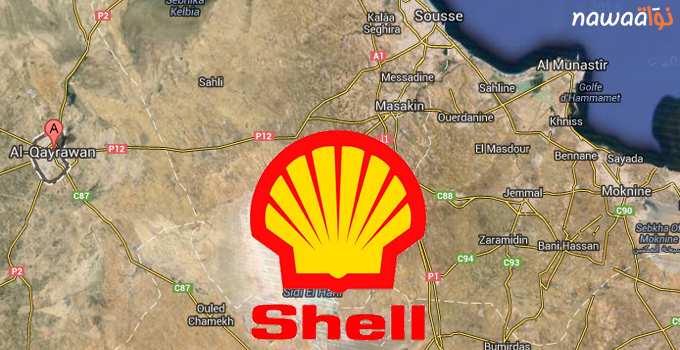
Last year, in November 2012, Shell was met with a surprisingly active Tunisian civil society following statements made ​​by Lamine Chakhari, former Minister of Industry, announcing that Shell had been granted exploration permits, where exploration wells would be expected to be drilled in 2013.

The production sharing agreement between the Tunisian Company of Petroleum Activities (ETAP) and Shell was concluded without waiting for the results of the Environmental Impact Assessment Study.

Since then, Tunisian environmentalists and various civil society organizations have continued to denounce Shell and the known environmental dangers associated with fracking activities.

On the 8th of December for example, a scientific debate at the National School of Engineers in Monastir took place between Tunisian experts in the field of fossil fuels. Meanwhile government authorities and company representatives have become increasingly elusive about what the future for shale extraction is in Tunisia.

Recent statements from Mohamed Akrout, CEO of ETAP, Ben Rchid Dali, CEO of energy,  Zuhair El Khadi, research director at the institute of Strategic Studies and various economist at the Tunisian Institute of Competitiveness and Quantitative Studies all deny the existence of shale gas drilling in Tunisia.

Sadly they are lying. In depth investigations by Nawaat, an independent group blog run by Tunisians, and leaked documents reveal that over 35 holes have already been drilled in 16 months in an area of ​​6 km squared by various companies such as Perenco, Rigo and Storm Oil Venture, and drilling company Schlumberger.

The confidential documents also reveal long lists of toxic chemicals being used in the multi-stage hydraulic fracturing activities, including practices which disregard warnings against the dumping of chemicals into the environment.

It turns out that SVI and Rigo Oil want, from 2013, to re-inject toxic laden liquids used in fracking back into the ground.

Lets speak facts and numbers: Shell’s Shale extraction in the region of Kairouan

Leaked confidential governments reveal that, in case the exploration phase is successful and production permits are granted, a total of 742 wells spread throughout the Kairouan region will be drilled by Shell for about 50 years.

This gives, on average, one well for every five square kilometers license Kairouan, a little over 2 miles between two wells drilled each month.

With 742 wells x 10 fracks per well x 20 million liters of water per frack = 300 billion liters of water consumed in 50 years.

Tunisia already suffers from issues of water scarcity – how can we even begin to think that shale extraction is sustainable for Tunisia?

For every job created in the shale gas industry in Tunisia, hundreds of agricultural jobs will be lost. It is sufficient to travel the country to see that Tunisia is still heavily dependent on its land for food production. Every day, millions of farmers still plow their land with donkeys and women are bent on their backs harvesting crops.

What will happen to these people if their irrigation waters are polluted or if water scarcity created by Shell and other oil companies prevents them from producing food?

Kairouan is not only situated in one of the most seismic areas in Tunisia but also it sits at the convergence of main groundwater and freshwater sources of mineral water for the country. Compromise of these waters with liquid toxic and carcinogenic fracking is no doubt an enormous ecologic, economic and social disaster in an already water scarce country.  

No country in the world can treat waste water from fracking which are laden with carcinogens, hormone disruptors, and dissolved gases. Tunisia is currently incapacitated to treat waste water for irrigation purposes, let alone deal with contaminated groundwater.

Arguments which state that Tunisia will benefit from shale extraction because it will become energetically independent (Tunisia currently imports expensive gas from Algeria for electricity production) forget that energy self-sufficiency can be garnered through a mix of solar energy, tides, geothermal, bio-oil and wind – resources which Tunisia has plenty of.

Even though these renewable energies have their drawbacks too, the reality of exploitation of shale gas portrays a far grimmer reality for Tunisians. Who will suffer the most? As always, the answer is: the poor, indigenous groups and the environment.

Image of Shale Gas Exploitation Tunisia from Nawaat

Linda Pappagallo
Linda Pappagallohttps://www.greenprophet.com/
Linda's love for nature started when at the age of eight she discovered, with her dog, a magical river in the valley of a mountainous region in Lebanon. For four years Linda and her dog explored along the river, until one day she saw construction scrapers pushing rock boulders down the valley to make way for new construction sites. The rubble came crashing into the river destroying her little paradise, and her pathetic reaction was to shout at the mechanic monsters. Of course that was not enough to stop the destructive processes. As she continued to observe severe environmental degradation across the different places she lived in the Middle East and Africa, these terrible images remained impressed in her mind. However, environmental issues where not her first love. Her initial academic and career choices veered towards sustainable economic development, with particular interest in savings led microfinance schemes. Nevertheless, through experience, she soon realized a seemingly obvious but undervalued concept. While humans can somewhat defend themselves from the greed of other humans, nature cannot. Also nature, the environment, is the main “system” that humans depend on, not economics. These conclusions changed her path and she is now studying a Masters in International Affairs with a concentration in Energy and the Environment in New York. Her interests lie on ecosystems management: that is how to preserve the integrity of an Ecosystem while allowing for sustainable economic development, in particular in the Middle East and Africa.

Read More

1 COMMENT

TRENDING

New pancreas cancer drug brings miracles to “incurable” cancer

One oncologist involved in the research, Dr. Rachna Shroff, said the results were so powerful that she cried in clinic.

Married People Have Lower Cancer Risk, But the Reason is Complex

According to the research, cancer risk was 68% higher in never-married men and 85% higher in never-married women.

Is artificial turf bad for your health?

Artificial turf, the green plastic stuff that is supposed to look like grass, was sold to many home-owners as a clever compromise: a green-looking surface that makes you feel homey, but which needs no mowing. It survives heavy use, and in dry places like Middle East deserts, and in California or Texas, it can replace thirsty lawns. But it is toxic.

Oil pollution in Basrah’s soil is 1,200% higher than it should be

Soil pollution levels in parts of Basra are 1,200% to 3,300% higher than those typically measured in cities like Toronto or New York, according to new comparative soil data. It's getting into water.

Factors That Determine the Payout of Asbestos Cases

Asbestos is found in eye shadow and talc. Know your rights of this deadly environmental hazard.

Yerukim Forms a New Green Economy Where the Money is Really Green

The Yerukim members who pick up the recyclables get to keep the monetary reward, the public earns "green" bills that can be used in shops, and business owners get to be associated with environmentalism.

Choosing Riyadh over Dubai? What Investors Should Know

Saudi Arabia is deploying capital at unmatched scale to catalyze tourism and advanced industry while rewiring its power-and-water backbone. The investable frontier is widening—especially in renewables, grid storage, water efficiency/desal retrofits, and hospitality operating platforms. Prudent investors will insist on phased delivery, enforceable KPIs (energy, water, biodiversity), and RHQ/zone compliance—while pricing political-economy and reputational risks alongside growth upside.

Sell your cooking oil for biodiesel money

Want to make money on old french fry oil? Sell it.

Qatar Alternative Energy Summit Pairs Investors And Innovators

Alternative energy investors and innovators can meet n' greet in Doha, Qatar March 16 and 17.

Here’s How To Implement The Four Pillars Of Employee Engagement

If you throw a party for your work team and they are vegans, don't make it a barbecue. Know the sustainability values of your team to boost moral and retain good people.

Locals From Rishon Fight IKEA

Big Box stores are a pretty new concept in Israel, and thank God that not every Israeli city wants them in their backyard. A word from someone who has see the beautiful farmland around her hometown Newmarket, Ontario stripped and converted into vulgar strip malls of big box shops: they have no place in a healthy and sustainable town or city.

The Jewish National Fund Meets An Inconvenient Truth

According to the JNF, it has transformed thousands of acres of barren land into green forests in Israel. They state that each person emits about 23 tons of carbon per year, estimating that each tree planted can absorb one ton of carbon in its lifetime. That's a whole lot of trees you'd need to be planting. Could so many fit in Israel?

How to quiet noise from construction in your office

Streets need to be resurfaced in New York but the humming and grinding noise is unsettling. Noise is environmental pollution. 

Popular Categories