
Disgusting Flood of Fracking Water Devastates Egyptian Village

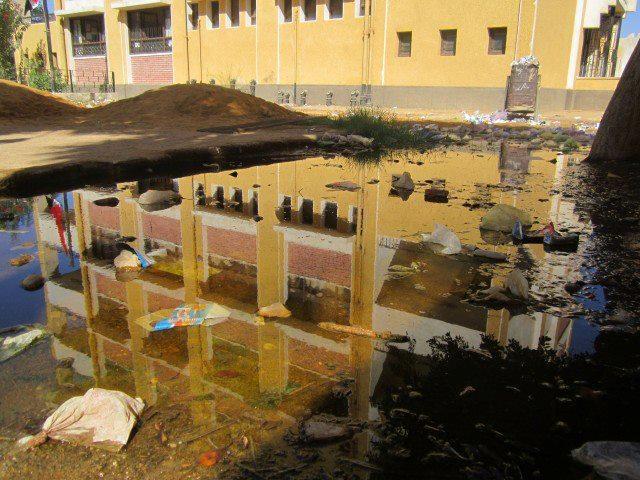
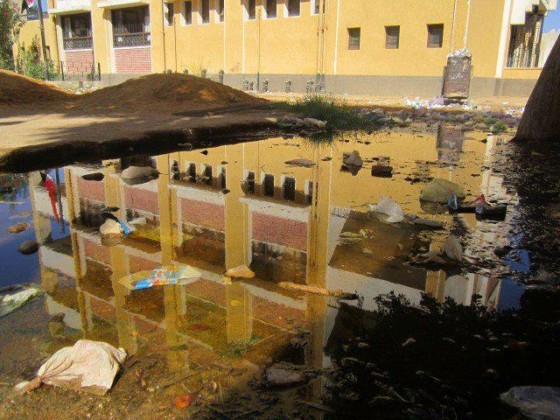
Floods, fracking, Egypt, agriculture, hydraulic fracturingImage of flooding in Fares by Abu El Fadl, Egypt Independent

Port Said and Cairo have been dominating Egyptian headlines of late, while Fares, a small agricultural community 75 km north of Aswan, has gone completely unnoticed despite enduring a humanitarian tragedy of epic proportions. Since 2009, after DanaGas began to drill pilot hydraulic fracturing wells in order to evacuate fossil fuels, a process commonly called fracking, poisonous water has been spewing from the holes, inundating farm lands and homes.

Egypt Independent’s Steven Viney wrote a brave expose of the story, which stars a shady cast of corporate and government characters who have bypassed all environmental and social due process standards in order to test their controversial technology. Scores of local residents have evacuated the area in search of higher, cleaner ground, but the paper reports that government officials are prohibiting them from settling on “private land.”

Fracking involves drilling deep vertical tunnels down to rock that is saturated with natural gas or oil. Vertical tunnels are then built through the rock and water and highly corrosive chemicals are pumped through those at high pressure in order to force expel the embedded fossil fuels.

Elsewhere in the world fracking has either been banned altogether or activists are working on making them so and for good reason. Not only has fracking been associated with groundwater contamination, but there is some evidence that fracking can cause earthquake disturbances in areas that are normally fairly stable.

But in Egypt, DanaGas proceeded to test its technology without suffering any repercussions for its apparent failure. Yet the firm flat out denies that the floodwaters which have destroyed crops and homes in Fares have anything to do with their fracking holes.

What’s more, the government agency responsible for monitoring environmental issues in the country, the Egyptian Environmental Affairs Agency (EEAA), has passed the buck to Ganope – the umbrella organization responsible for DanaGas’ projects that has a Production Sharing Agreement (PSA) with the Ministry of Petroleum.

“Mahmoud Shawki, the EEAA official responsible for overlooking oil and gas drilling environmental impact reports, stated that Fares was the sole responsibility of Ganope,”  EI reported.

Ganope, however, claims that the EEAA should be accountable.

Meanwhile, poisonous streams of water up to five foot high are flooding Fares and residents are pleading for help.

“Please help us,” Sheikh Ahmed Abdel Hameed, both a resident of Fares and one of its leading activists, begged Egypt Independent correspondents.

“We have tried all in our power and knocked on every door possible. Nothing is working and no one cares because we are a small village and far away, but we are Egyptians too, and we have nowhere to safely live and no land to farm to survive.”

Please head over to Egypt Independent for the full report.

Tafline Laylin
Tafline Laylinhttp://www.greenprophet.com
As a tour leader who led “eco-friendly” camping trips throughout North America, Tafline soon realized that she was instead leaving behind a trail of gas fumes, plastic bottles and Pringles. In fact, wherever she traveled – whether it was Viet Nam or South Africa or England – it became clear how inefficiently the mandate to re-think our consumer culture is reaching the general public. Born in Iran, raised in South Africa and the United States, she currently splits her time between Africa and the Middle East. Tafline can be reached at tafline (at) greenprophet (dot) com.

Read More

1 COMMENT

TRENDING

Who Owns the Farm Robot? A State of Jefferson Startup Takes on Carbon Robotics

In California's self-proclaimed State of Jefferson, a small agricultural technology company is challenging the dominant laser-weeding business model. Laudando & Associates believes farmers should own and repair their AI-powered weeding tools rather than pay ongoing subscription fees. The approach has put the company on a collision course with industry leader Carbon Robotics, sparking a patent dispute that has pushed the Jefferson startup toward overseas markets while raising broader questions about ownership, right-to-repair, and the future of farm automation.

Regenerative Wool or Greenwashing? Zentera Responds to Critics

Zentera responds to questions about ZQ wool, animal welfare, regenerative farming, ethical fashion and the fallout from PETA's New Zealand investigation.

Tanner Winterhof on the Custom Harvesters Quietly Holding American Agriculture Together

In late January, in a Des Moines hotel ballroom that smelled faintly of diesel and convention coffee, Tanner Winterhof spent three days hosting the members and attendees of the  U.S. Custom Harvesters Inc. annual convention on his podcast as Farm4Profit’s official media partner for the show.

Jujube, the sidr tree of medicine and magic

A magic holy sidr bath to deflect the evil eye? It needs 7 powdered sidr leaves stirred into a bucket of warm water. The hadith of the Prophet Muhammad allows to repeat healing prayers and verses from the Koran to increase the water’s potency. 5 grams, or 1 tablespoon of sidr powder equals 7 leaves.

Farm To Table Israel Connects People To The Land

Farm To Table Israel is transforming the traditional dining experience into a hands-on journey.

Yerukim Forms a New Green Economy Where the Money is Really Green

The Yerukim members who pick up the recyclables get to keep the monetary reward, the public earns "green" bills that can be used in shops, and business owners get to be associated with environmentalism.

Choosing Riyadh over Dubai? What Investors Should Know

Saudi Arabia is deploying capital at unmatched scale to catalyze tourism and advanced industry while rewiring its power-and-water backbone. The investable frontier is widening—especially in renewables, grid storage, water efficiency/desal retrofits, and hospitality operating platforms. Prudent investors will insist on phased delivery, enforceable KPIs (energy, water, biodiversity), and RHQ/zone compliance—while pricing political-economy and reputational risks alongside growth upside.

Sell your cooking oil for biodiesel money

Want to make money on old french fry oil? Sell it.

Qatar Alternative Energy Summit Pairs Investors And Innovators

Alternative energy investors and innovators can meet n' greet in Doha, Qatar March 16 and 17.

Here’s How To Implement The Four Pillars Of Employee Engagement

If you throw a party for your work team and they are vegans, don't make it a barbecue. Know the sustainability values of your team to boost moral and retain good people.

Locals From Rishon Fight IKEA

Big Box stores are a pretty new concept in Israel, and thank God that not every Israeli city wants them in their backyard. A word from someone who has see the beautiful farmland around her hometown Newmarket, Ontario stripped and converted into vulgar strip malls of big box shops: they have no place in a healthy and sustainable town or city.

The Jewish National Fund Meets An Inconvenient Truth

According to the JNF, it has transformed thousands of acres of barren land into green forests in Israel. They state that each person emits about 23 tons of carbon per year, estimating that each tree planted can absorb one ton of carbon in its lifetime. That's a whole lot of trees you'd need to be planting. Could so many fit in Israel?

How to quiet noise from construction in your office

Streets need to be resurfaced in New York but the humming and grinding noise is unsettling. Noise is environmental pollution. 

Popular Categories